Shivaji University, Kolhapur
Dept. of Environmental Science
Biodiversity Conservation
AMANULLAH ADEEL
Content
1. Biodiversity
2. Conservation
3. Methods of conservation
4. National parks
5. Sanctuaries
6. Biosphere reserves
7. Zoo
8. Botanical Gardens
9. Gene banking
10.conclusion
Biodiversity
Biodiversity:
The variety of life on Earth and its
interdependence is called biodiversity.
 The sum of all the organisms in a given area
Genes+species+ecosystem
Conservation
 conservation; reduce and (or) remove
of adverse effect.
 prevention of new negatively impacts.
 provides rules and regulation to
preserve the present situation of any
selected object.
National parks
 It is a strictly reserved area for the betterment of the
biodiversity.
 In National parks activities such as forestry, grazing,
cultivation are not permitted.
 First Indian National park is Jim Corbett in
Uttarakhand established in 1936.
 Madhya Pradesh with having 11 national parks is the
largest state in India.
 Famous national parks are: Salim Ali, Gulf of Kutch,
Hemis (largest 4400 sq.km), Himalayan….
sanctuaries
 A place provides safety or protects biodiversity.
 It can be a religious holy place or historical.
 It can a hotspot of biological place.
 Best tourism places can from sanctuaries.
 Almost all human activities are prohibited.
 eco-tourism, educational purposes and researchers
are allowed to visit them.
 Some famous in India: Sonal Rupa, Buxa, Darah,
Kawal, Desu, Nanda Devi, Tansa….
Biosphere Reserves
 These sites are established by countries recognized
under UNESCO`s man and the Biosphere (MAB)
programme to promote sustainable development
based on local community efforts.
 MAB launched in 1971, to decrease the impacts of
man activities on nature.
 Some famous in India: Manas, Norkrek, Panna,
Nilgiri….
Zones of Biosphere
Reserves
Ex- situ: zoo
 The areas where wildlife are kept in cages for
endangered species and recreational purposes.
 Indian famous zoo is Jaipur zoo was opened in 1877.
 Activities such as educational, recreational,
conservation and research are allowed in zoos.
Zoo
management
animals
Nutrition or
food
enclosures
display
Off-play
health
Seasonal
vaccination
antibiotics
Timely
check up
staff
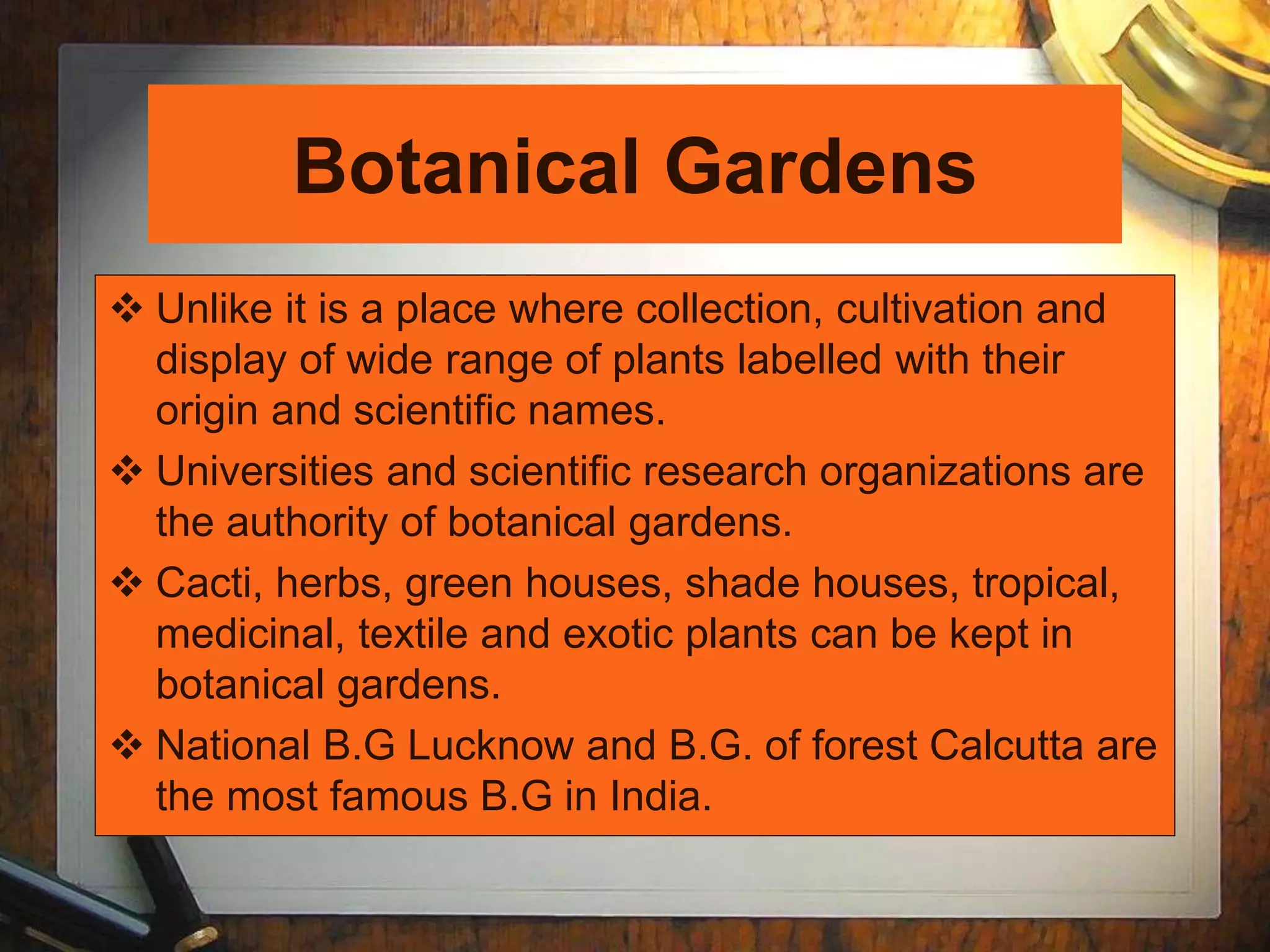
Botanical Gardens
 Unlike it is a place where collection, cultivation and
display of wide range of plants labelled with their
origin and scientific names.
 Universities and scientific research organizations are
the authority of botanical gardens.
 Cacti, herbs, green houses, shade houses, tropical,
medicinal, textile and exotic plants can be kept in
botanical gardens.
 National B.G Lucknow and B.G. of forest Calcutta are
the most famous B.G in India.
Gene banks
 Like bank for money, gene bank is for seeds, sperm,
eggs, of animal and plants.
 The biggest gene bank is (Svalbard Global Seed
Vault) in Arctic circle.
 This bank capacity is 2.5 billions seeds.
 The temperature required for gene seeds is -196 C
degree.
 These seeds are kept in Nitrogen liquid at -196 C
degree.
Gene banks
 Banking of genes; help for researchers and farmers
to find characteristics of plants.
 It is a kind conservation for plants and animal that are
endangered.
 Method of banking is digital DNA fingerprint.
Conclusion
 Biodiversity is one of the most essential part of nearly
everything life of human to their economics, culture
and social.
 Biodiversity conservation is now the only choice to
keep biota.
 Management of national parks, sanctuaries,
biosphere, zoos, botanical gardens and gene banking
are the useful approaches to protect biodiversity.
Thank you

Biodiversity Conservation Amanullah Adeel

  • 1.
    Shivaji University, Kolhapur Dept.of Environmental Science Biodiversity Conservation AMANULLAH ADEEL
  • 2.
    Content 1. Biodiversity 2. Conservation 3.Methods of conservation 4. National parks 5. Sanctuaries 6. Biosphere reserves 7. Zoo 8. Botanical Gardens 9. Gene banking 10.conclusion
  • 3.
    Biodiversity Biodiversity: The variety oflife on Earth and its interdependence is called biodiversity.  The sum of all the organisms in a given area Genes+species+ecosystem
  • 4.
    Conservation  conservation; reduceand (or) remove of adverse effect.  prevention of new negatively impacts.  provides rules and regulation to preserve the present situation of any selected object.
  • 6.
    National parks  Itis a strictly reserved area for the betterment of the biodiversity.  In National parks activities such as forestry, grazing, cultivation are not permitted.  First Indian National park is Jim Corbett in Uttarakhand established in 1936.  Madhya Pradesh with having 11 national parks is the largest state in India.  Famous national parks are: Salim Ali, Gulf of Kutch, Hemis (largest 4400 sq.km), Himalayan….
  • 7.
    sanctuaries  A placeprovides safety or protects biodiversity.  It can be a religious holy place or historical.  It can a hotspot of biological place.  Best tourism places can from sanctuaries.  Almost all human activities are prohibited.  eco-tourism, educational purposes and researchers are allowed to visit them.  Some famous in India: Sonal Rupa, Buxa, Darah, Kawal, Desu, Nanda Devi, Tansa….
  • 8.
    Biosphere Reserves  Thesesites are established by countries recognized under UNESCO`s man and the Biosphere (MAB) programme to promote sustainable development based on local community efforts.  MAB launched in 1971, to decrease the impacts of man activities on nature.  Some famous in India: Manas, Norkrek, Panna, Nilgiri….
  • 9.
  • 10.
    Ex- situ: zoo The areas where wildlife are kept in cages for endangered species and recreational purposes.  Indian famous zoo is Jaipur zoo was opened in 1877.  Activities such as educational, recreational, conservation and research are allowed in zoos.
  • 11.
  • 12.
    Botanical Gardens  Unlikeit is a place where collection, cultivation and display of wide range of plants labelled with their origin and scientific names.  Universities and scientific research organizations are the authority of botanical gardens.  Cacti, herbs, green houses, shade houses, tropical, medicinal, textile and exotic plants can be kept in botanical gardens.  National B.G Lucknow and B.G. of forest Calcutta are the most famous B.G in India.
  • 13.
    Gene banks  Likebank for money, gene bank is for seeds, sperm, eggs, of animal and plants.  The biggest gene bank is (Svalbard Global Seed Vault) in Arctic circle.  This bank capacity is 2.5 billions seeds.  The temperature required for gene seeds is -196 C degree.  These seeds are kept in Nitrogen liquid at -196 C degree.
  • 14.
    Gene banks  Bankingof genes; help for researchers and farmers to find characteristics of plants.  It is a kind conservation for plants and animal that are endangered.  Method of banking is digital DNA fingerprint.
  • 15.
    Conclusion  Biodiversity isone of the most essential part of nearly everything life of human to their economics, culture and social.  Biodiversity conservation is now the only choice to keep biota.  Management of national parks, sanctuaries, biosphere, zoos, botanical gardens and gene banking are the useful approaches to protect biodiversity.
  • 16.