Group Name: MBO.Adventures.10th cycle
Mohamed Hassan Ali Abdulla A.AlDarwish
Hamza Amr Azzam Abdulla M.AlYafei
• Introduction.
• Activity 1: comparing packing materials.
• Activity 2: hunting for biodegradable objects.
• Activity 3: Processing biodegradable materials and
comparing their mechanical properties.
• Activity 4: measuring the Degradation rate of
biodegradable materials.
• Design Project: Designing a new biodegradable
product.
• Product Idea: Fish feeding bio-capsules.
 What is biodegradable?
 A Biodegradable: product has the ability to break down safely.
By biological means, into the raw materials of nature and
disappear into the environment. These products can be solids
biodegrading into soil, or liquids biodegrading into water
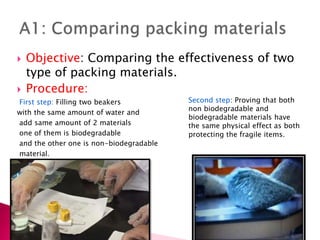
 Objective: Comparing the effectiveness of two
type of packing materials.
 Procedure:
First step: Filling two beakers
with the same amount of water and
add same amount of 2 materials
one of them is biodegradable
and the other one is non-biodegradable
material.

Second step: Proving that both
non biodegradable and
biodegradable materials have
the same physical effect as both
protecting the fragile items.
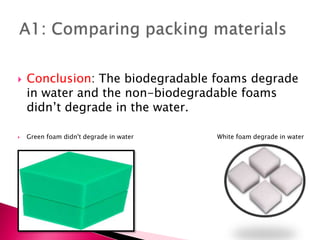
 Conclusion: The biodegradable foams degrade
in water and the non-biodegradable foams
didn’t degrade in the water.
 Green foam didn't degrade in water White foam degrade in water
 We have been searching about
biodegradable materials and
non-biodegradable materials.
 It shows that the biodegradable
materials degrade easily in natural and
the non-biodegradable materials don’t
degrade in natural, and it causes many
effects to the environment .
 in this activity we found out that there are many materials biodegradable like:
 Wood Some types of Paper Food
And non biodegradable materials:
Glass bottles aluminum cans plastic containers
 The development of biodegradable materials has also become important in the field of
medicine , for example, orthopedic pins and screw.
Example:Non
biodegradable
materials:
Example:Biodegradable
:Materials
Like: Tin cans,
Plastic bags
The materials
that wouldn’t
degrade even
after a long
time.
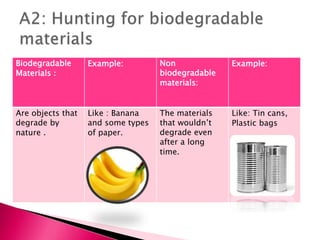
Like : Banana
and some types
of paper.
Are objects that
degrade by
nature .
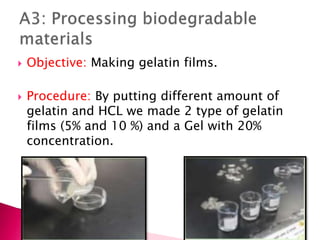
 Objective: Making gelatin films.
 Procedure: By putting different amount of
gelatin and HCL we made 2 type of gelatin
films (5% and 10 %) and a Gel with 20%
concentration.
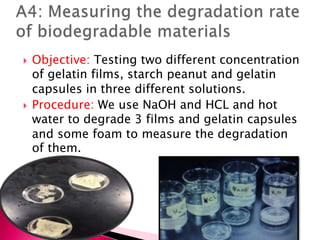
 Objective: Testing two different concentration
of gelatin films, starch peanut and gelatin
capsules in three different solutions.
 Procedure: We use NaOH and HCL and hot
water to degrade 3 films and gelatin capsules
and some foam to measure the degradation
of them.
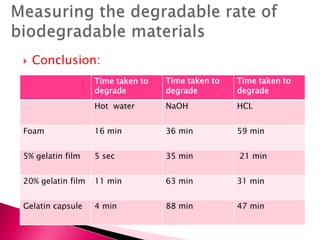
 Conclusion:
Time taken to
degrade
Time taken to
degrade
Time taken to
degrade
HCLNaOHHot water
59 min36 min16 minFoam
21 min35 min5 sec5% gelatin film
31 min63 min11 min20% gelatin film
47 min88 min4 minGelatin capsule
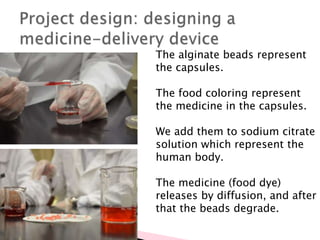
The alginate beads represent
the capsules.
The food coloring represent
the medicine in the capsules.
We add them to sodium citrate
solution which represent the
human body.
The medicine (food dye)
releases by diffusion, and after
that the beads degrade.
Final Project/ product:
-Make fish food inside capsules that degrade in water
after few days.
-Those capsules will contain fish food and when it
degrades the fish will take the food and it will be in
the period of the absence of the owner of the
aquarium.
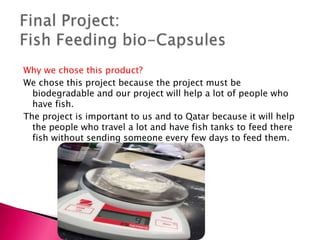
Why we chose this product?
We chose this project because the project must be
biodegradable and our project will help a lot of people who
have fish.
The project is important to us and to Qatar because it will help
the people who travel a lot and have fish tanks to feed there
fish without sending someone every few days to feed them.
 We expect that our project will help everyone who
owns a fish aquarium or marine scientists in long
term fish feeding from biodegradable materials
that are eco-friendly and could be available at
commercial scale.
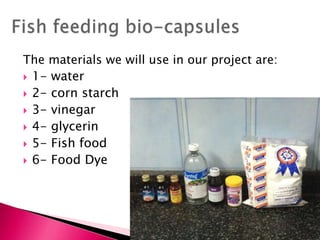
The materials we will use in our project are:
 1- water
 2- corn starch
 3- vinegar
 4- glycerin
 5- Fish food
 6- Food Dye
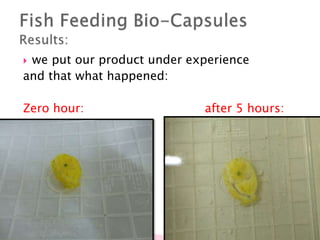
 we put our product under experience
and that what happened:
Zero hour: after 5 hours:
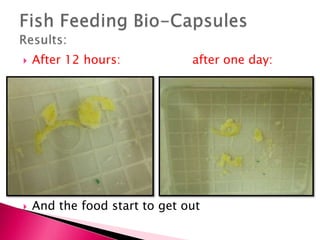
 After 12 hours: after one day:
 And the food start to get out
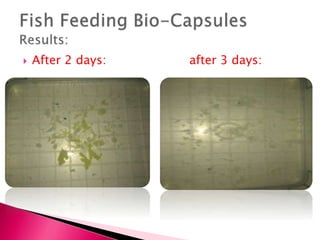
 After 2 days: after 3 days:
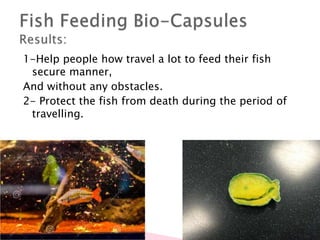
1-Help people how travel a lot to feed their fish
secure manner,
And without any obstacles.
2- Protect the fish from death during the period of
travelling.
 Further investigations could be done to
improve the product to be released in the
market.
 The idea can be improved by the experts and
presented for companies to solve that
problem completely.
Participating in Al-Bairaq project was really
useful. We learned a lot of things about
biodegradable materials and how some
materials degrade. We also did some
experiments that were definitely interesting.
Many thanks to my teachers, school and AL-Bairaq
team from Center for Advanced Materials (CAM),
Qatar University for supporting us during our journey
with a AL-Bairaq.
Also, I would like to thank the sponsors UNESCO,
Qatar National Commission, Ras Gas, Maersk and
Shell.

Biodegradable Materials, Fish Feeding Bio-capsules IDM10

  • 1.
    Group Name: MBO.Adventures.10thcycle Mohamed Hassan Ali Abdulla A.AlDarwish Hamza Amr Azzam Abdulla M.AlYafei
  • 2.
    • Introduction. • Activity1: comparing packing materials. • Activity 2: hunting for biodegradable objects. • Activity 3: Processing biodegradable materials and comparing their mechanical properties. • Activity 4: measuring the Degradation rate of biodegradable materials. • Design Project: Designing a new biodegradable product. • Product Idea: Fish feeding bio-capsules.
  • 3.
     What isbiodegradable?  A Biodegradable: product has the ability to break down safely. By biological means, into the raw materials of nature and disappear into the environment. These products can be solids biodegrading into soil, or liquids biodegrading into water
  • 4.
     Objective: Comparingthe effectiveness of two type of packing materials.  Procedure: First step: Filling two beakers with the same amount of water and add same amount of 2 materials one of them is biodegradable and the other one is non-biodegradable material.  Second step: Proving that both non biodegradable and biodegradable materials have the same physical effect as both protecting the fragile items.
  • 5.
     Conclusion: Thebiodegradable foams degrade in water and the non-biodegradable foams didn’t degrade in the water.  Green foam didn't degrade in water White foam degrade in water
  • 6.
     We havebeen searching about biodegradable materials and non-biodegradable materials.  It shows that the biodegradable materials degrade easily in natural and the non-biodegradable materials don’t degrade in natural, and it causes many effects to the environment .
  • 7.
     in thisactivity we found out that there are many materials biodegradable like:  Wood Some types of Paper Food And non biodegradable materials: Glass bottles aluminum cans plastic containers  The development of biodegradable materials has also become important in the field of medicine , for example, orthopedic pins and screw.
  • 8.
    Example:Non biodegradable materials: Example:Biodegradable :Materials Like: Tin cans, Plasticbags The materials that wouldn’t degrade even after a long time. Like : Banana and some types of paper. Are objects that degrade by nature .
  • 9.
     Objective: Makinggelatin films.  Procedure: By putting different amount of gelatin and HCL we made 2 type of gelatin films (5% and 10 %) and a Gel with 20% concentration.
  • 10.
     Objective: Testingtwo different concentration of gelatin films, starch peanut and gelatin capsules in three different solutions.  Procedure: We use NaOH and HCL and hot water to degrade 3 films and gelatin capsules and some foam to measure the degradation of them.
  • 11.
     Conclusion: Time takento degrade Time taken to degrade Time taken to degrade HCLNaOHHot water 59 min36 min16 minFoam 21 min35 min5 sec5% gelatin film 31 min63 min11 min20% gelatin film 47 min88 min4 minGelatin capsule
  • 12.
    The alginate beadsrepresent the capsules. The food coloring represent the medicine in the capsules. We add them to sodium citrate solution which represent the human body. The medicine (food dye) releases by diffusion, and after that the beads degrade.
  • 13.
    Final Project/ product: -Makefish food inside capsules that degrade in water after few days. -Those capsules will contain fish food and when it degrades the fish will take the food and it will be in the period of the absence of the owner of the aquarium.
  • 14.
    Why we chosethis product? We chose this project because the project must be biodegradable and our project will help a lot of people who have fish. The project is important to us and to Qatar because it will help the people who travel a lot and have fish tanks to feed there fish without sending someone every few days to feed them.
  • 15.
     We expectthat our project will help everyone who owns a fish aquarium or marine scientists in long term fish feeding from biodegradable materials that are eco-friendly and could be available at commercial scale.
  • 16.
    The materials wewill use in our project are:  1- water  2- corn starch  3- vinegar  4- glycerin  5- Fish food  6- Food Dye
  • 17.
     we putour product under experience and that what happened: Zero hour: after 5 hours:
  • 18.
     After 12hours: after one day:  And the food start to get out
  • 19.
     After 2days: after 3 days:
  • 20.
    1-Help people howtravel a lot to feed their fish secure manner, And without any obstacles. 2- Protect the fish from death during the period of travelling.
  • 21.
     Further investigationscould be done to improve the product to be released in the market.  The idea can be improved by the experts and presented for companies to solve that problem completely.
  • 22.
    Participating in Al-Bairaqproject was really useful. We learned a lot of things about biodegradable materials and how some materials degrade. We also did some experiments that were definitely interesting.
  • 23.
    Many thanks tomy teachers, school and AL-Bairaq team from Center for Advanced Materials (CAM), Qatar University for supporting us during our journey with a AL-Bairaq. Also, I would like to thank the sponsors UNESCO, Qatar National Commission, Ras Gas, Maersk and Shell.