
Ratherford
Noura Ali
Fatma Ali
Mounera Alkhawar
Maha Alobaidli
1) Introduction
2) Activity 1: Comparing Packing Materials.
3) Activity 2: Hunting for Biodegradable Objects.
4) Activity 3: Processing Biodegradable Materials and
Comparing Their Mechanical Properties.
5) Activity 4: Measuring the Degradation Rates of
Biodegradable Materials.
6) Design project: Designing a Medicine-Delivery
Device.
Activity (1)
.Comparing Packing Materials
Part A
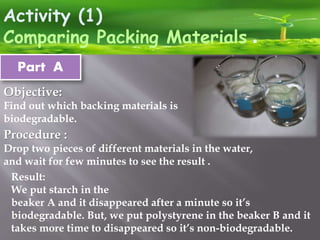
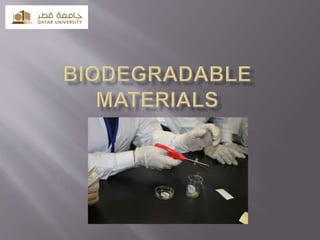
Procedure :
Drop two pieces of different materials in the water,
and wait for few minutes to see the result .
Objective:
Find out which backing materials is
biodegradable.
Result:
We put starch in the
beaker A and it disappeared after a minute so it’s
biodegradable. But, we put polystyrene in the beaker B and it
takes more time to disappeared so it’s non-biodegradable.
1) Introduction
2) Activity 1: Comparing packing materials
(part A&B)
3) Activity 2:Hunting for biodegradable
objects
4) Activity 3: Processing biodegradable
materials and comparing their
mechanical properties – Part A:
Processing gelatin into a gel and films –
Part B: Testing mechanical properties
5) Activity 4: : Measuring the degradation
rates of biodegradable materials
6) • Design Project: Designing a medicine
release capsule • Product Idea: Biowaste
to energy
Introduction
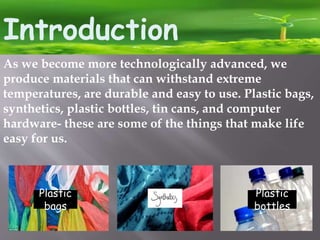
As we become more technologically advanced, we
produce materials that can withstand extreme
temperatures, are durable and easy to use. Plastic bags,
synthetics, plastic bottles, tin cans, and computer
hardware- these are some of the things that make life
easy for us.
Plastic
bags
Plastic
bottles
Activity (1)
.Comparing Packing Materials
Part B
Objective:
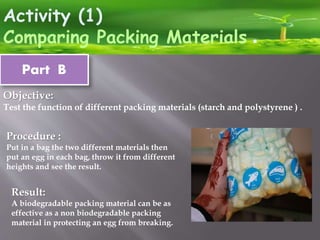
Test the function of different packing materials (starch and polystyrene ) .
Procedure :
Put in a bag the two different materials then
put an egg in each bag, throw it from different
heights and see the result.
Result:
A biodegradable packing material can be as
effective as a non biodegradable packing
material in protecting an egg from breaking.
Activity (2)
Hunting for Biodegradable Objects.
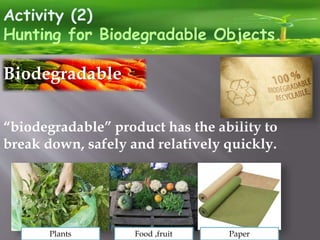
Biodegradable
“biodegradable” product has the ability to
break down, safely and relatively quickly.
Plants Food ,fruit Paper
Activity (2)
Hunting for Biodegradable Objects.
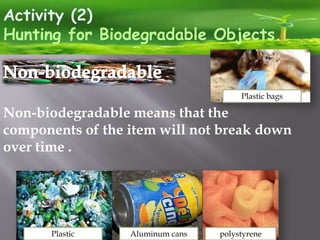
Non-biodegradable means that the
components of the item will not break down
over time .
Plastic bags
Plastic Aluminum cans polystyrene
Activity (3)
Processing Biodegradable Materials and
Comparing Their Mechanical Properties .
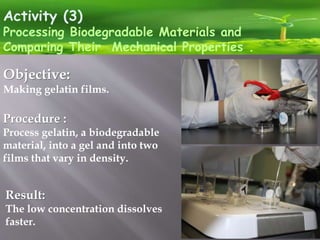
Objective:
Making gelatin films.
Procedure :
Process gelatin, a biodegradable
material, into a gel and into two
films that vary in density.
Result:
The low concentration dissolves
faster.
Activity (4)
Measuring the Degradation Rates of
Biodegradable Materials.
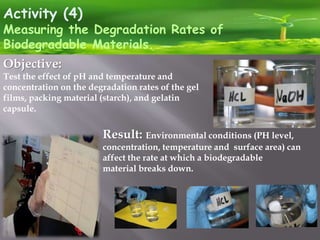
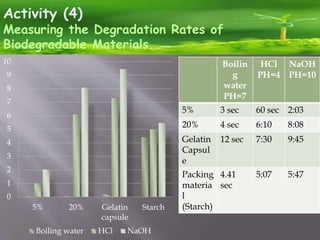
Objective:
Test the effect of pH and temperature and
concentration on the degradation rates of the gel
films, packing material (starch), and gelatin
capsule.
Result: Environmental conditions (PH level,
concentration, temperature and surface area) can
affect the rate at which a biodegradable
material breaks down.
Activity (4)
Measuring the Degradation Rates of
Biodegradable Materials.
Boilin
g
water
PH=7
HCl
PH=4
NaOH
PH=10
5% 3 sec 60 sec 2:03
20% 4 sec 6:10 8:08
Gelatin
Capsul
e
12 sec 7:30 9:45
Packing
materia
l
(Starch)
4.41
sec
5:07 5:47
0
1
2
3
4
5
6
7
8
9
10
5% 20% Gelatin
capsule
Starch
Boiling water HCl NaOH
Designing project Designing a Medicine-Delivery
Device
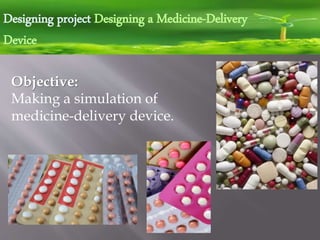
Objective:
Making a simulation of
medicine-delivery device.
Designing project
Designing a Medicine-Delivery Device
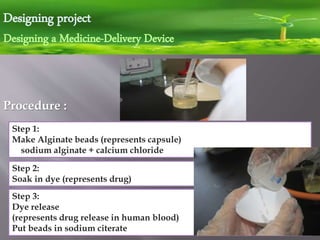
Procedure :
Step 3:
Dye release
(represents drug release in human blood)
Put beads in sodium citerate
Step 1:
Make Alginate beads (represents capsule)
sodium alginate + calcium chloride
Step 2:
Soak in dye (represents drug)
Designing project Designing a Medicine-Delivery
Device
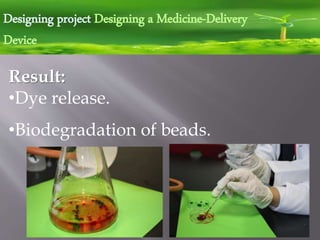
Result:
•Dye release.
•Biodegradation of beads.
 Introduction and Rationale:
 A Balance between Development Needs and Protecting the
Environment, Qatar National Vision 2030
 The State of Qatar has one of the highest waste generation rates
worldwide. In 2012, Qatar generated 8,000 tons of solid waste daily
(this is excluding construction waste which amounts to 20,000 tons
additional waste per day). This number is predicted to reach 19,000
tons/day in 2032, with an annual growth rate of roughly 4.2%.1
Most of these wastes end up in landfills – in 2012, more than 90% of
Qatar’s solid waste were sent to landfills although the government is
doing its efforts to reduce this amount. This percentage is extremely
high compared to many industrialized countries in Europe and Asia
(e.g. Austria, Denmark, Netherlands and Japan) where less than 10%
of solid waste are disposed of in landfills. These countries have high
recycling rates, have invested in technologies that convert waste into
energy
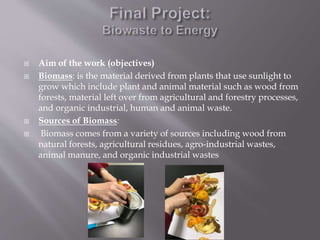
 Aim of the work (objectives)
 Biomass: is the material derived from plants that use sunlight to
grow which include plant and animal material such as wood from
forests, material left over from agricultural and forestry processes,
and organic industrial, human and animal waste.
 Sources of Biomass:
 Biomass comes from a variety of sources including wood from
natural forests, agricultural residues, agro-industrial wastes,
animal manure, and organic industrial wastes
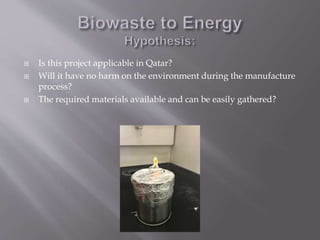
 Is this project applicable in Qatar?
 Will it have no harm on the environment during the manufacture
process?
 The required materials available and can be easily gathered?
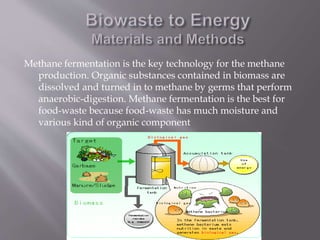
Methane fermentation is the key technology for the methane
production. Organic substances contained in biomass are
dissolved and turned in to methane by germs that perform
anaerobic-digestion. Methane fermentation is the best for
food-waste because food-waste has much moisture and
various kind of organic component
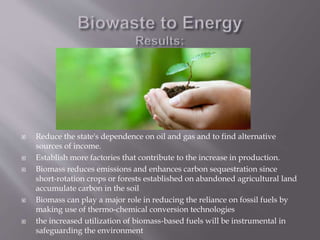
 Reduce the state's dependence on oil and gas and to find alternative
sources of income.
 Establish more factories that contribute to the increase in production.
 Biomass reduces emissions and enhances carbon sequestration since
short-rotation crops or forests established on abandoned agricultural land
accumulate carbon in the soil
 Biomass can play a major role in reducing the reliance on fossil fuels by
making use of thermo-chemical conversion technologies
 the increased utilization of biomass-based fuels will be instrumental in
safeguarding the environment
 Our dream that we can see this project on the
land of our country Qatar to save the
environment and produce new source of
energy according to Qatar National Vision
2030.
Using methane from bio-waste as a source of
energy will decrease pollution and save money
Many thanks to AL-Bairaq team from Center for Advanced
Materials (CAM), Qatar University for supporting us
during our journey with a AL-Bairaq.
Also, I would like to thank the sponsors UNESCO, Qatar
National Commission, and Shell.

Biodegradable, Biowaste to Energy

  • 1.
  • 2.
    1) Introduction 2) Activity1: Comparing Packing Materials. 3) Activity 2: Hunting for Biodegradable Objects. 4) Activity 3: Processing Biodegradable Materials and Comparing Their Mechanical Properties. 5) Activity 4: Measuring the Degradation Rates of Biodegradable Materials. 6) Design project: Designing a Medicine-Delivery Device.
  • 3.
    Activity (1) .Comparing PackingMaterials Part A Procedure : Drop two pieces of different materials in the water, and wait for few minutes to see the result . Objective: Find out which backing materials is biodegradable. Result: We put starch in the beaker A and it disappeared after a minute so it’s biodegradable. But, we put polystyrene in the beaker B and it takes more time to disappeared so it’s non-biodegradable.
  • 5.
    1) Introduction 2) Activity1: Comparing packing materials (part A&B) 3) Activity 2:Hunting for biodegradable objects 4) Activity 3: Processing biodegradable materials and comparing their mechanical properties – Part A: Processing gelatin into a gel and films – Part B: Testing mechanical properties 5) Activity 4: : Measuring the degradation rates of biodegradable materials 6) • Design Project: Designing a medicine release capsule • Product Idea: Biowaste to energy
  • 6.
    Introduction As we becomemore technologically advanced, we produce materials that can withstand extreme temperatures, are durable and easy to use. Plastic bags, synthetics, plastic bottles, tin cans, and computer hardware- these are some of the things that make life easy for us. Plastic bags Plastic bottles
  • 7.
    Activity (1) .Comparing PackingMaterials Part B Objective: Test the function of different packing materials (starch and polystyrene ) . Procedure : Put in a bag the two different materials then put an egg in each bag, throw it from different heights and see the result. Result: A biodegradable packing material can be as effective as a non biodegradable packing material in protecting an egg from breaking.
  • 8.
    Activity (2) Hunting forBiodegradable Objects. Biodegradable “biodegradable” product has the ability to break down, safely and relatively quickly. Plants Food ,fruit Paper
  • 9.
    Activity (2) Hunting forBiodegradable Objects. Non-biodegradable means that the components of the item will not break down over time . Plastic bags Plastic Aluminum cans polystyrene
  • 10.
    Activity (3) Processing BiodegradableMaterials and Comparing Their Mechanical Properties . Objective: Making gelatin films. Procedure : Process gelatin, a biodegradable material, into a gel and into two films that vary in density. Result: The low concentration dissolves faster.
  • 11.
    Activity (4) Measuring theDegradation Rates of Biodegradable Materials. Objective: Test the effect of pH and temperature and concentration on the degradation rates of the gel films, packing material (starch), and gelatin capsule. Result: Environmental conditions (PH level, concentration, temperature and surface area) can affect the rate at which a biodegradable material breaks down.
  • 12.
    Activity (4) Measuring theDegradation Rates of Biodegradable Materials. Boilin g water PH=7 HCl PH=4 NaOH PH=10 5% 3 sec 60 sec 2:03 20% 4 sec 6:10 8:08 Gelatin Capsul e 12 sec 7:30 9:45 Packing materia l (Starch) 4.41 sec 5:07 5:47 0 1 2 3 4 5 6 7 8 9 10 5% 20% Gelatin capsule Starch Boiling water HCl NaOH
  • 13.
    Designing project Designinga Medicine-Delivery Device Objective: Making a simulation of medicine-delivery device.
  • 14.
    Designing project Designing aMedicine-Delivery Device Procedure : Step 3: Dye release (represents drug release in human blood) Put beads in sodium citerate Step 1: Make Alginate beads (represents capsule) sodium alginate + calcium chloride Step 2: Soak in dye (represents drug)
  • 15.
    Designing project Designinga Medicine-Delivery Device Result: •Dye release. •Biodegradation of beads.
  • 16.
     Introduction andRationale:  A Balance between Development Needs and Protecting the Environment, Qatar National Vision 2030  The State of Qatar has one of the highest waste generation rates worldwide. In 2012, Qatar generated 8,000 tons of solid waste daily (this is excluding construction waste which amounts to 20,000 tons additional waste per day). This number is predicted to reach 19,000 tons/day in 2032, with an annual growth rate of roughly 4.2%.1 Most of these wastes end up in landfills – in 2012, more than 90% of Qatar’s solid waste were sent to landfills although the government is doing its efforts to reduce this amount. This percentage is extremely high compared to many industrialized countries in Europe and Asia (e.g. Austria, Denmark, Netherlands and Japan) where less than 10% of solid waste are disposed of in landfills. These countries have high recycling rates, have invested in technologies that convert waste into energy
  • 17.
     Aim ofthe work (objectives)  Biomass: is the material derived from plants that use sunlight to grow which include plant and animal material such as wood from forests, material left over from agricultural and forestry processes, and organic industrial, human and animal waste.  Sources of Biomass:  Biomass comes from a variety of sources including wood from natural forests, agricultural residues, agro-industrial wastes, animal manure, and organic industrial wastes
  • 18.
     Is thisproject applicable in Qatar?  Will it have no harm on the environment during the manufacture process?  The required materials available and can be easily gathered?
  • 19.
    Methane fermentation isthe key technology for the methane production. Organic substances contained in biomass are dissolved and turned in to methane by germs that perform anaerobic-digestion. Methane fermentation is the best for food-waste because food-waste has much moisture and various kind of organic component
  • 20.
     Reduce thestate's dependence on oil and gas and to find alternative sources of income.  Establish more factories that contribute to the increase in production.  Biomass reduces emissions and enhances carbon sequestration since short-rotation crops or forests established on abandoned agricultural land accumulate carbon in the soil  Biomass can play a major role in reducing the reliance on fossil fuels by making use of thermo-chemical conversion technologies  the increased utilization of biomass-based fuels will be instrumental in safeguarding the environment
  • 21.
     Our dreamthat we can see this project on the land of our country Qatar to save the environment and produce new source of energy according to Qatar National Vision 2030.
  • 22.
    Using methane frombio-waste as a source of energy will decrease pollution and save money
  • 23.
    Many thanks toAL-Bairaq team from Center for Advanced Materials (CAM), Qatar University for supporting us during our journey with a AL-Bairaq. Also, I would like to thank the sponsors UNESCO, Qatar National Commission, and Shell.