Biomedical Waste Management
(2016)
Speaker : Harpreet Singh
Teacher I/C: Dr. Manju Govil
Date: 11.07.17
Objectives of the
Waste Management System
• To reduce the infectious/hazardous nature of the
waste
• To reduce the volume of the waste
• To prevent misuse or abuse of the waste
• To ensure occupational safety and health
• To consider esthetically
• To reuse the items that can be of repeat utility
• To recycle the waste so that it can serve as another
utility item
Available Technologies
• Incineration
• Chemical disinfection
• Wet and dry thermal treatment
• Deep burial or landfilling
• Recycling
• Worm composting
Incineration
• It is burning the waste in a simple kiln or incinerator to a
very high temperature of about 1000 C resulting in
reduction of organic and combustible solid waste to
inorganic, incombustible matter.
• It offers a direct disposal technology with zero occupational
hazard and a volume reduction of 85-95 percent.
• It is usually selected to treat waste that cannot be recycled,
reused or disposed off in a landfill site.
Double Chamber Pyrolytic Incinerator-
• Designed to burn the infectious health care waste at
temperatures between 900 to 1200 C and has
pollution control devices.
• Also called ‘Controlled Air Incineration”.
• Designed for capacity of 50-250 kg of waste per hour.
• There is no manual handling of the waste.
All waste to be incinerated shall not be chemically treated with any
chlorinated disinfectants.
Chlorinated plastics shall not be incinerated.
Only low sulfur fuel like LDO/LSHS/Diesel shall be used as fuel in
the incinerator.
Single Chamber Incinerator-
• This is next best to pyrolytic incinerator.
• Good to incinerate infectious waste (including sharps),
pathological waste and general health care waste.
• Loading and de-ashing operations are performed manually.
• Temperature is 300 to 400 C.
• This should not be installed where air pollution is already a
problem.
Rotary Kiln Incinerator-
• Specifically used to burn the chemical waste
such as infectious waste (including sharps) and
pathological waste.
• Temperature is 1200 to 1600 C.
• Equipment and operation cost are high.
Chemical Disinfection
• This involves destruction of most of the pathogens from the
surface of the wastes, by using chemical disinfectants such as
bleaching powder, glutaraldehyde, alcohols or quaternary
ammonium compounds etc.
• Most suitable for treating liquid waste such as blood, urine, stools
or hospital sewage.
• Solid wastes such as instruments and equipment in contact with
patients, infected sharps, contaminated floor, beds etc may also be
disinfected chemically.
• However disinfected wastes should continue to be treated
hazardous, unless bacterial testing shows complete disinfection.
Wet and Dry Thermal Treament
Wet Thermal Treatment (Autoclaving)-
• In this technology the infectious wastes are steam heated at
specified temperature and pressure for specific period of time.
• The treated waste remains wet with no change in volume.
• Autoclaves can decontaminate most categories of waste except
biodegradable organic waste and toxic waste.
Dry Thermal Treatment (Screw-feed Technology)-
• Waste is reduced by 80% in volume and 20-35% in weight.
• Suitable for treating infectious waste and sharps but it should
not be used to process pathological, cytotoxic or radioactive
waste.
Deep Burial
Landfilling
• Sanitary landfills are specially constructed for disposal of non-
biodegradable infectious hospital wastes.
• This method is simple and cost effective.
• The area should be away from the residential area.
• A hospital with a bed strength of 100 may require a landfill site
of about 500 to 600 cu ft.
• Landfill should be double lined, it should have leachate
collection system and a ground water monitoring system to
check for the failure of the leachate collection system.
Newer Technologies
• Microwave irradiation
• Plasma torch technology
• Gamma irradiation
• Hydroclave
• Pyrolator
• Bacterial cultures
• Electron beaming
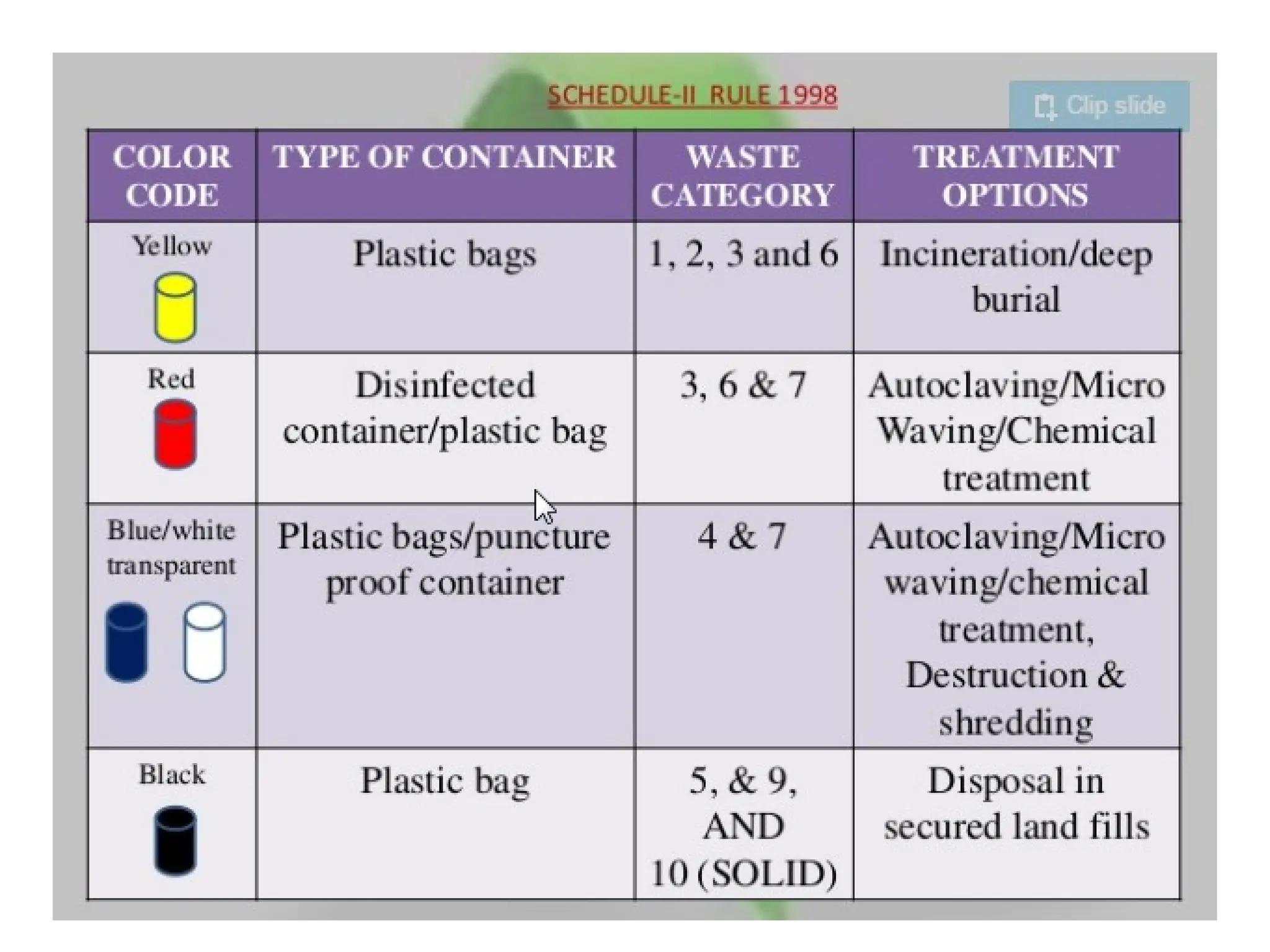
1998
1998
Do’s
• Segregate all waste at the point where they are generated itself.
• Have at least four types of containers in each area of waste.
 One to collect kitchen garbage
 Second to collect infected waste
 Third to collect all types of waste sharp
 Fourth to collect waste paper, wrappers and packing materials
• Do designate a separate place to keep the mop, wiping cloth, broom
and such other materials.
• Do ensure 5 to 6 latrines for every 50 to 60 patients in in-patients
settings an a minimum of 1 latrine in out patient settings.
• Do ensure adequate availability of water for sanitary and clean
maintenance of latrines.
• Do provide soap and water for washing of hands.
• Do ensure a systematic cleaning schedule.
• Participate to establish common co-operatives incinerate facility.
• Do consider sending the kitchen waste to piggeries or compost them.
Don’ts
• Do not consider any type of health care waste in a casual
manner.
• Do not throw any type of health care waste into the street
bins.
• Do not encourage reuse of the disposables.
• Do not attempt to recycle and/or dispose without ensuring
adequate decontamination.
• Do not incinerate all kind of waste. Only infected like
contaminated dressings, cotton, body parts, tissue sections
etc. need to be incinerated.
• Do not be ignorant of the legislative provisions regarding
waste management specially health care waste.
Bio Medical Waste Management  Rules 2016.pptx

Bio Medical Waste Management Rules 2016.pptx

  • 1.
    Biomedical Waste Management (2016) Speaker: Harpreet Singh Teacher I/C: Dr. Manju Govil Date: 11.07.17
  • 5.
    Objectives of the WasteManagement System • To reduce the infectious/hazardous nature of the waste • To reduce the volume of the waste • To prevent misuse or abuse of the waste • To ensure occupational safety and health • To consider esthetically • To reuse the items that can be of repeat utility • To recycle the waste so that it can serve as another utility item
  • 16.
    Available Technologies • Incineration •Chemical disinfection • Wet and dry thermal treatment • Deep burial or landfilling • Recycling • Worm composting
  • 17.
    Incineration • It isburning the waste in a simple kiln or incinerator to a very high temperature of about 1000 C resulting in reduction of organic and combustible solid waste to inorganic, incombustible matter. • It offers a direct disposal technology with zero occupational hazard and a volume reduction of 85-95 percent. • It is usually selected to treat waste that cannot be recycled, reused or disposed off in a landfill site.
  • 18.
    Double Chamber PyrolyticIncinerator- • Designed to burn the infectious health care waste at temperatures between 900 to 1200 C and has pollution control devices. • Also called ‘Controlled Air Incineration”. • Designed for capacity of 50-250 kg of waste per hour. • There is no manual handling of the waste.
  • 21.
    All waste tobe incinerated shall not be chemically treated with any chlorinated disinfectants. Chlorinated plastics shall not be incinerated. Only low sulfur fuel like LDO/LSHS/Diesel shall be used as fuel in the incinerator.
  • 22.
    Single Chamber Incinerator- •This is next best to pyrolytic incinerator. • Good to incinerate infectious waste (including sharps), pathological waste and general health care waste. • Loading and de-ashing operations are performed manually. • Temperature is 300 to 400 C. • This should not be installed where air pollution is already a problem.
  • 23.
    Rotary Kiln Incinerator- •Specifically used to burn the chemical waste such as infectious waste (including sharps) and pathological waste. • Temperature is 1200 to 1600 C. • Equipment and operation cost are high.
  • 24.
    Chemical Disinfection • Thisinvolves destruction of most of the pathogens from the surface of the wastes, by using chemical disinfectants such as bleaching powder, glutaraldehyde, alcohols or quaternary ammonium compounds etc. • Most suitable for treating liquid waste such as blood, urine, stools or hospital sewage. • Solid wastes such as instruments and equipment in contact with patients, infected sharps, contaminated floor, beds etc may also be disinfected chemically. • However disinfected wastes should continue to be treated hazardous, unless bacterial testing shows complete disinfection.
  • 25.
    Wet and DryThermal Treament Wet Thermal Treatment (Autoclaving)- • In this technology the infectious wastes are steam heated at specified temperature and pressure for specific period of time. • The treated waste remains wet with no change in volume. • Autoclaves can decontaminate most categories of waste except biodegradable organic waste and toxic waste. Dry Thermal Treatment (Screw-feed Technology)- • Waste is reduced by 80% in volume and 20-35% in weight. • Suitable for treating infectious waste and sharps but it should not be used to process pathological, cytotoxic or radioactive waste.
  • 26.
  • 27.
    Landfilling • Sanitary landfillsare specially constructed for disposal of non- biodegradable infectious hospital wastes. • This method is simple and cost effective. • The area should be away from the residential area. • A hospital with a bed strength of 100 may require a landfill site of about 500 to 600 cu ft. • Landfill should be double lined, it should have leachate collection system and a ground water monitoring system to check for the failure of the leachate collection system.
  • 28.
    Newer Technologies • Microwaveirradiation • Plasma torch technology • Gamma irradiation • Hydroclave • Pyrolator • Bacterial cultures • Electron beaming
  • 45.
  • 46.
  • 56.
    Do’s • Segregate allwaste at the point where they are generated itself. • Have at least four types of containers in each area of waste.  One to collect kitchen garbage  Second to collect infected waste  Third to collect all types of waste sharp  Fourth to collect waste paper, wrappers and packing materials • Do designate a separate place to keep the mop, wiping cloth, broom and such other materials. • Do ensure 5 to 6 latrines for every 50 to 60 patients in in-patients settings an a minimum of 1 latrine in out patient settings. • Do ensure adequate availability of water for sanitary and clean maintenance of latrines. • Do provide soap and water for washing of hands. • Do ensure a systematic cleaning schedule. • Participate to establish common co-operatives incinerate facility. • Do consider sending the kitchen waste to piggeries or compost them.
  • 57.
    Don’ts • Do notconsider any type of health care waste in a casual manner. • Do not throw any type of health care waste into the street bins. • Do not encourage reuse of the disposables. • Do not attempt to recycle and/or dispose without ensuring adequate decontamination. • Do not incinerate all kind of waste. Only infected like contaminated dressings, cotton, body parts, tissue sections etc. need to be incinerated. • Do not be ignorant of the legislative provisions regarding waste management specially health care waste.