The BioEngineering
               Technical Interest Group

                      Dr. Bruno Frazier
             School of Electrical and Computer Engineering
                Georgia Institute of Technology
                     Atlanta, GA 30332-0250


B. Frazier                                               BioEngineering TIG
Summary Page

      • ECE’s bioengineering group is on the leading
        edge of developing physical and
        mathematical concepts and techniques that
        are applied to medicine and biology. Specific
        applications include feature extraction in
        cardiac imagery, MEMS devices for direct
        interfacing with biological systems, modeling
        of biological sensory and motor systems, and
        the development of sensors for the detection
        of cancer cells.


B. Frazier                                   BioEngineering TIG
Outline
  A. What is the ECE Bioengineering Technical Interest Group?

  B. ECE Bioengineering Courses

  C. Research
                i.   Faculty List
                ii. Highlighted Research Labs
  D. Industry Opportunities

  E. Educational Opportunities


B. Frazier                                         BioEngineering TIG
What is the ECE BioEngineering Technical
                    Interest Group?
      • TIGs are groups of professionals, aligned by common technical
        interests, who come together in a community to share
        information and ideas, discuss topics of interest, and answer
        questions posed by other community members.

      • They can participate in discussions, share documents with other
        members, and many other functions (depending on the specific
        TIG).

      • Bioengineering is concerned with the application of engineering
        principles to the study and control of biological processes. In
        this area, mathematical models and physical systems are
        developed and subsequently applied to medicine and biology.


B. Frazier                                                  BioEngineering TIG
Undergraduate Courses Offered by the
                     BioEngineering TIG
   1.   ECE 1750 - Introduction to Bioengineering
        An introduction to the field of bioengineering, including the application of engineering principles and methods to problems in
        biology and medicine, the integration of engineering with biology, and the emerging industrial opportunities.

   2.   ECE 4020 - Bioengineering Design
        Students will work in teams on bioengineering design projects. Course lectures will address topics related to the art of the
        design process and the practical design issues facing the bioengineer.

   3.   ECE 4781-Biomedical Instrumentation
        A study of medical instrumentation from a systems viewpoint. Pertinent physiological and electro-physiological concepts
        will be covered. Crosslisted with CHE and ME 4781.

   4.   ECE 4782- Biosystems Analysis
        Analytical methods for modeling biological systems, including white-noise protocols for characterizing nonlinear systems.
        Crosslisted with CHE and ME 4782.

   5.   ECE 47XX- Introduction to Medical Image Processing
        A study of methods for enhancing, analyzing, interpreting and visualizing information from two- and three-dimensional data
        obtained from a variety of medical imaging modalities. Cross-listed with BMED 47xx

   6.   ECE47XX – Bioelectricity
        An introduction into electrophysiology and the instrumentation used to analyze electrophysiological signals.


B. Frazier                                                                                                   BioEngineering TIG
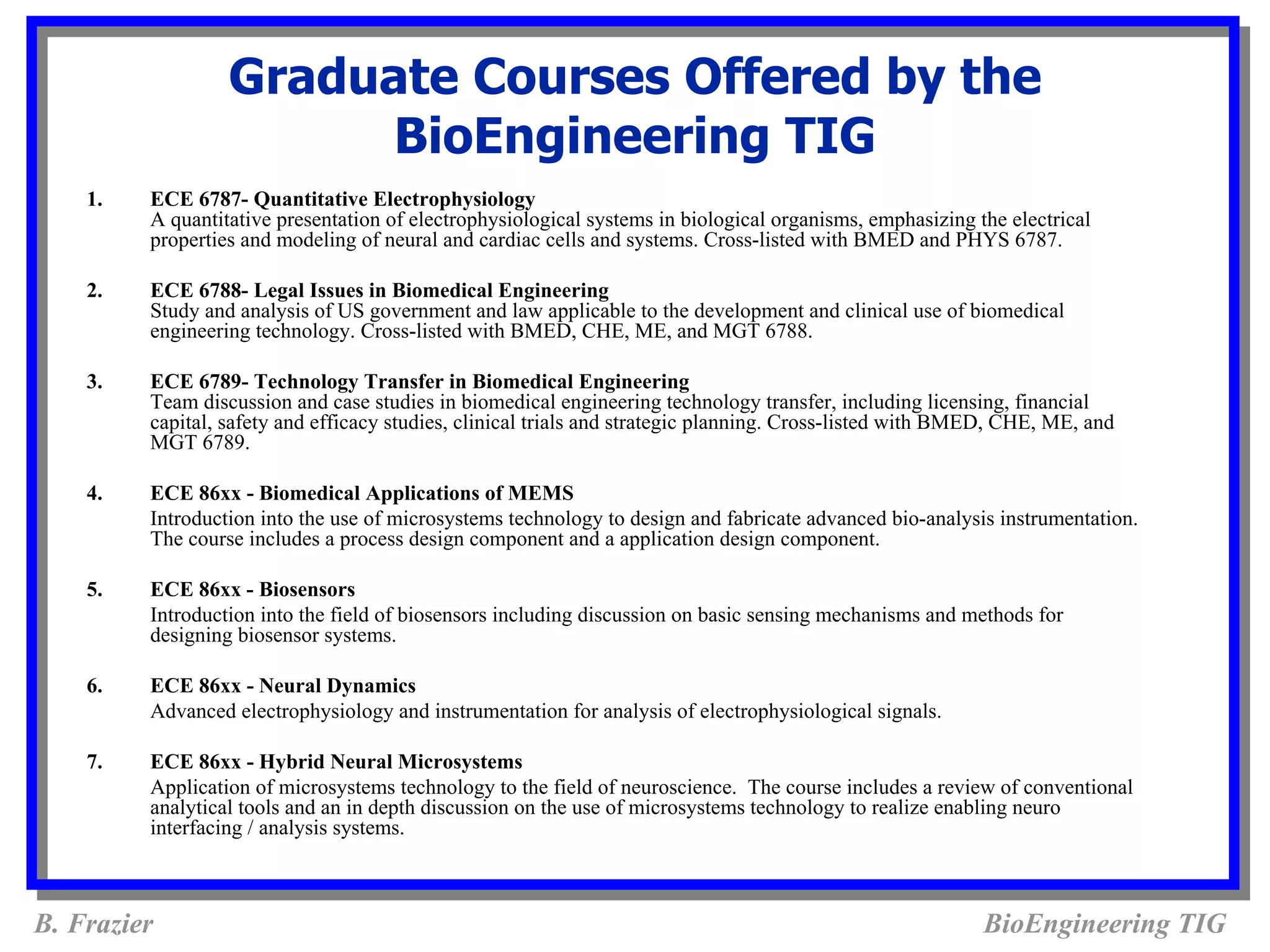
Graduate Courses Offered by the
                       BioEngineering TIG
    1.   ECE 6787- Quantitative Electrophysiology
         A quantitative presentation of electrophysiological systems in biological organisms, emphasizing the electrical
         properties and modeling of neural and cardiac cells and systems. Cross-listed with BMED and PHYS 6787.

    2.   ECE 6788- Legal Issues in Biomedical Engineering
         Study and analysis of US government and law applicable to the development and clinical use of biomedical
         engineering technology. Cross-listed with BMED, CHE, ME, and MGT 6788.

    3.   ECE 6789- Technology Transfer in Biomedical Engineering
         Team discussion and case studies in biomedical engineering technology transfer, including licensing, financial
         capital, safety and efficacy studies, clinical trials and strategic planning. Cross-listed with BMED, CHE, ME, and
         MGT 6789.

    4.   ECE 86xx - Biomedical Applications of MEMS
         Introduction into the use of microsystems technology to design and fabricate advanced bio-analysis instrumentation.
         The course includes a process design component and a application design component.

    5.   ECE 86xx - Biosensors
         Introduction into the field of biosensors including discussion on basic sensing mechanisms and methods for
         designing biosensor systems.

    6.   ECE 86xx - Neural Dynamics
         Advanced electrophysiology and instrumentation for analysis of electrophysiological signals.

    7.   ECE 86xx - Hybrid Neural Microsystems
         Application of microsystems technology to the field of neuroscience. The course includes a review of conventional
         analytical tools and an in depth discussion on the use of microsystems technology to realize enabling neuro
         interfacing / analysis systems.


B. Frazier                                                                                                 BioEngineering TIG
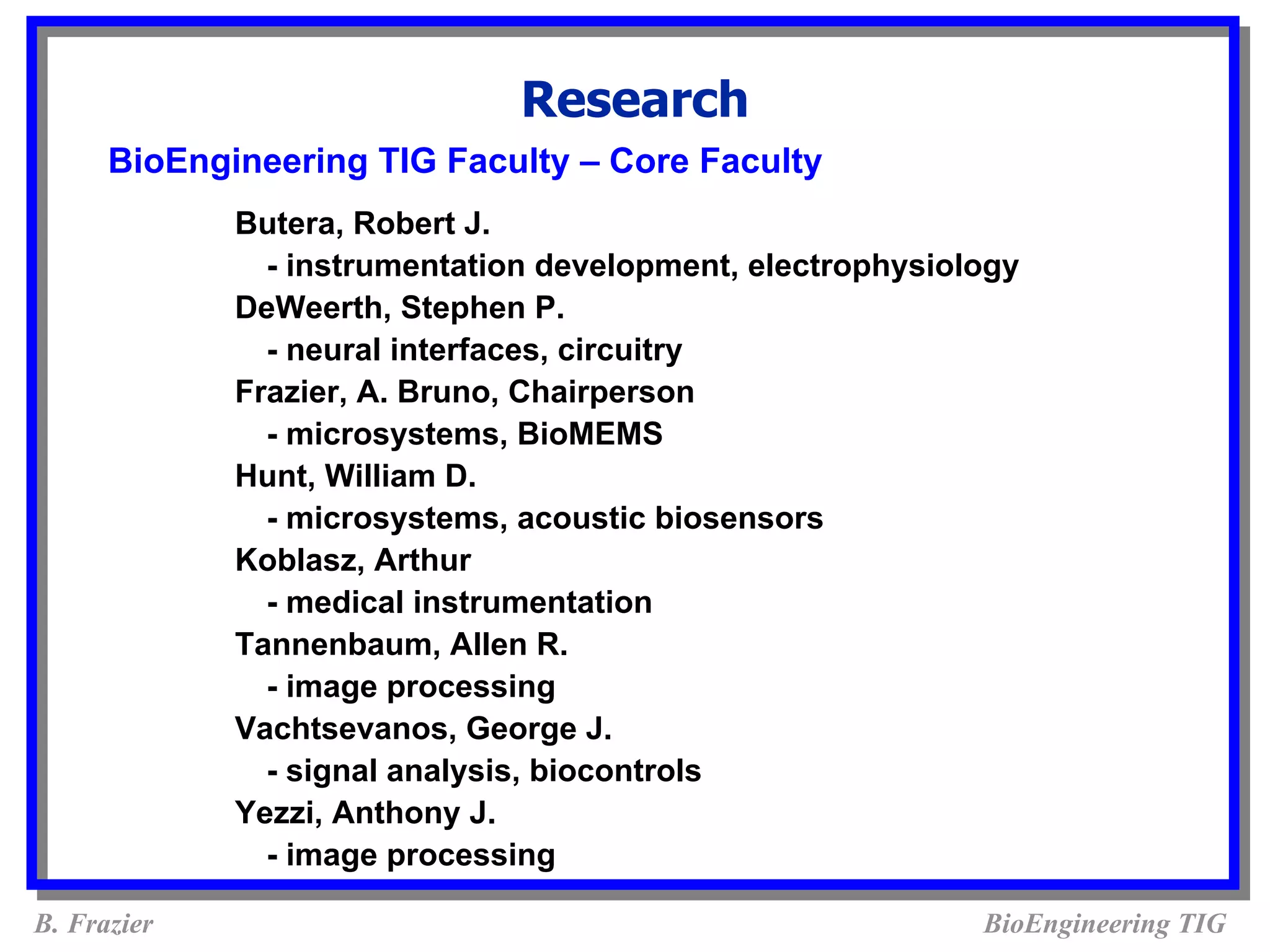
Research
      BioEngineering TIG Faculty – Core Faculty
             Butera, Robert J.
               - instrumentation development, electrophysiology
             DeWeerth, Stephen P.
               - neural interfaces, circuitry
             Frazier, A. Bruno, Chairperson
               - microsystems, BioMEMS
             Hunt, William D.
               - microsystems, acoustic biosensors
             Koblasz, Arthur
               - medical instrumentation
             Tannenbaum, Allen R.
               - image processing
             Vachtsevanos, George J.
               - signal analysis, biocontrols
             Yezzi, Anthony J.
               - image processing

B. Frazier                                                  BioEngineering TIG
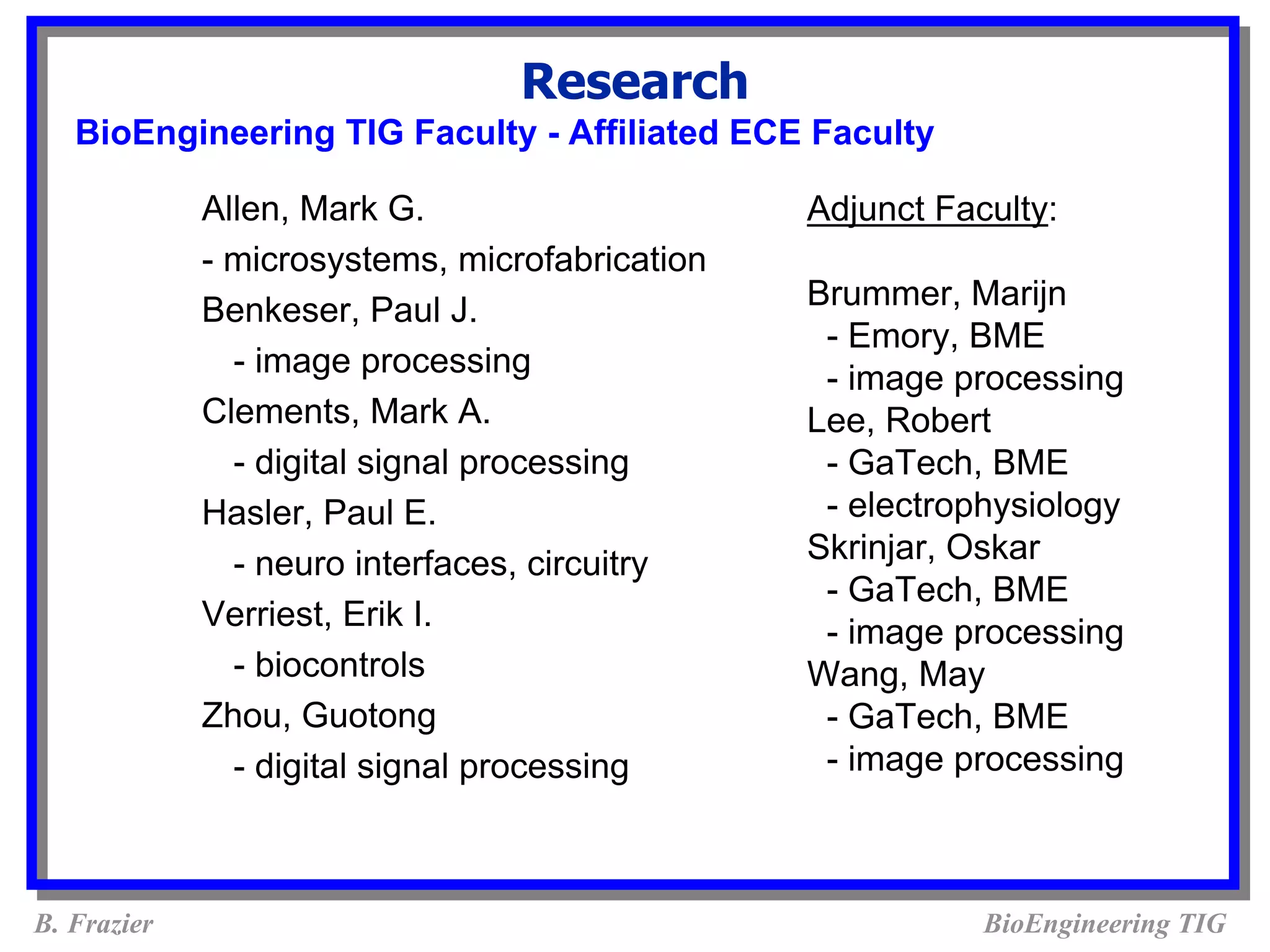
Research
   BioEngineering TIG Faculty - Affiliated ECE Faculty

             Allen, Mark G.                     Adjunct Faculty:
             - microsystems, microfabrication
             Benkeser, Paul J.                  Brummer, Marijn
                                                 - Emory, BME
               - image processing                - image processing
             Clements, Mark A.                  Lee, Robert
               - digital signal processing       - GaTech, BME
             Hasler, Paul E.                     - electrophysiology
               - neuro interfaces, circuitry    Skrinjar, Oskar
                                                 - GaTech, BME
             Verriest, Erik I.
                                                 - image processing
               - biocontrols                    Wang, May
             Zhou, Guotong                       - GaTech, BME
               - digital signal processing       - image processing


B. Frazier                                                 BioEngineering TIG
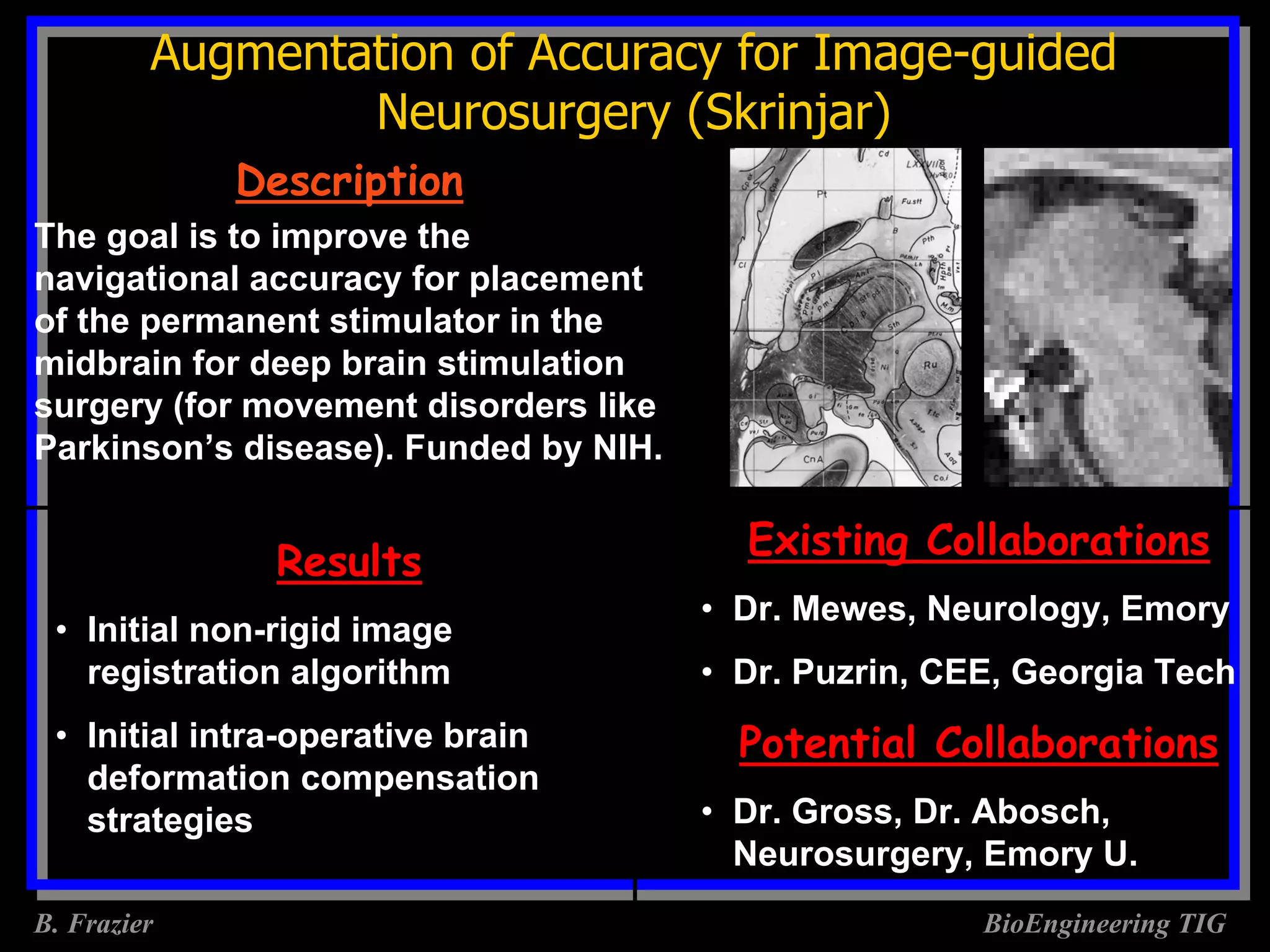
Augmentation of Accuracy for Image-guided
                 Neurosurgery (Skrinjar)
             Description
The goal is to improve the
navigational accuracy for placement
of the permanent stimulator in the
midbrain for deep brain stimulation
surgery (for movement disorders like
Parkinson’s disease). Funded by NIH.

                                         Existing Collaborations
               Results
                                       • Dr. Mewes, Neurology, Emory
 • Initial non-rigid image
   registration algorithm              • Dr. Puzrin, CEE, Georgia Tech
 • Initial intra-operative brain         Potential Collaborations
   deformation compensation
   strategies                          • Dr. Gross, Dr. Abosch,
                                         Neurosurgery, Emory U.
B. Frazier                                             BioEngineering TIG
Research
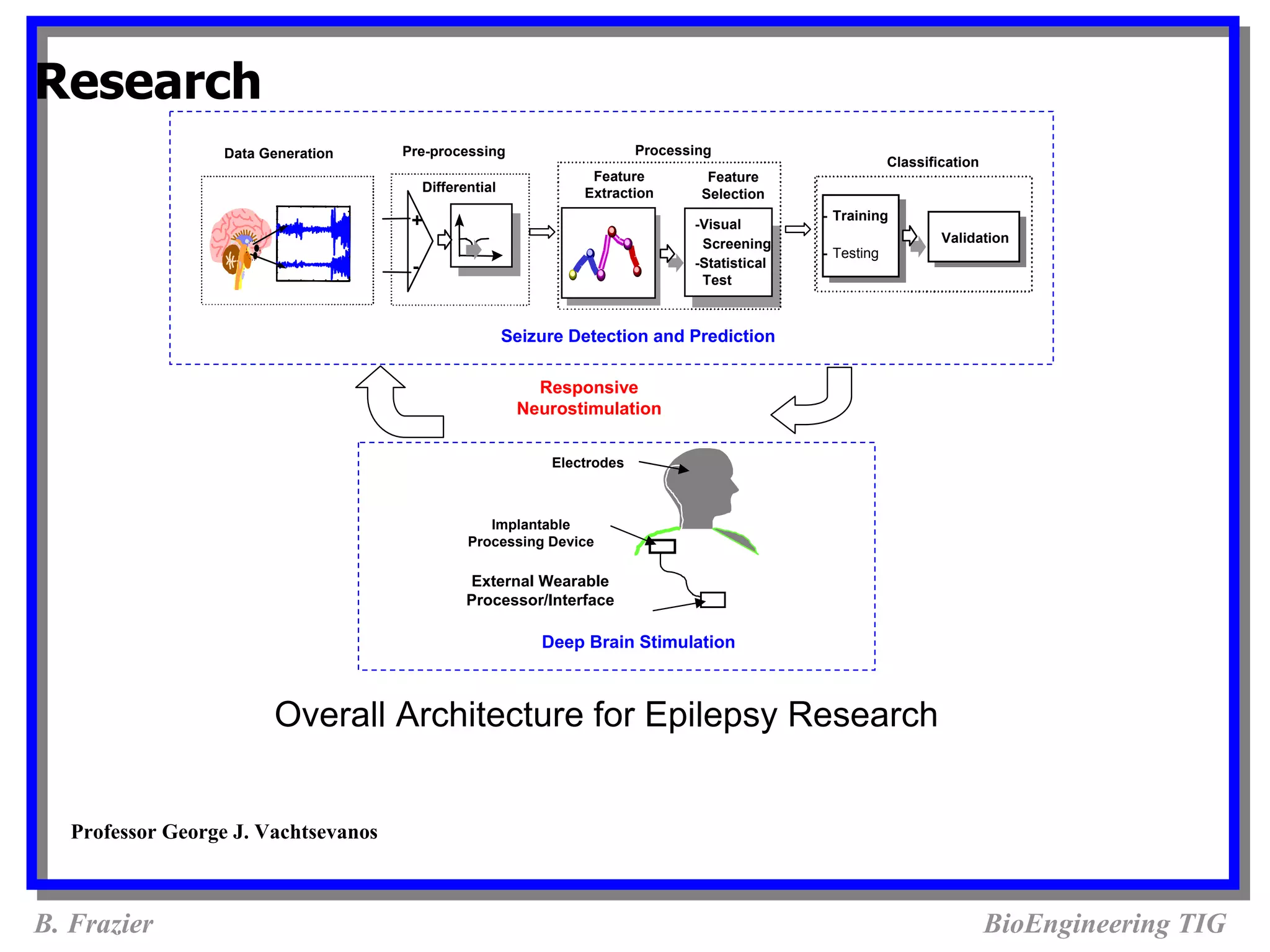
                   Data Generation    Pre-processing                        Processing
                                                                                                              Classification
                                                                    Feature          Feature
                                           Differential            Extraction       Selection

                                       +                                                          - Training
                                                                                   -Visual            WN
                                                                                    Screening                         Validation
                                                                                                     -N
                                                                                                  - Testing
                                       -                                           -Statistical
                                                                                    Test
                                                                                                    -


                                                          Seizure Detection and Prediction

                                                             Responsive
                                                           Neurostimulation


                                                               Electrodes


                                                     Implantable
                                                  Processing Device

                                                  External Wearable
                                                  Processor/Interface

                                                              Deep Brain Stimulation


                         Overall Architecture for Epilepsy Research


   Professor George J. Vachtsevanos


B. Frazier                                                                                                                     BioEngineering TIG
Research
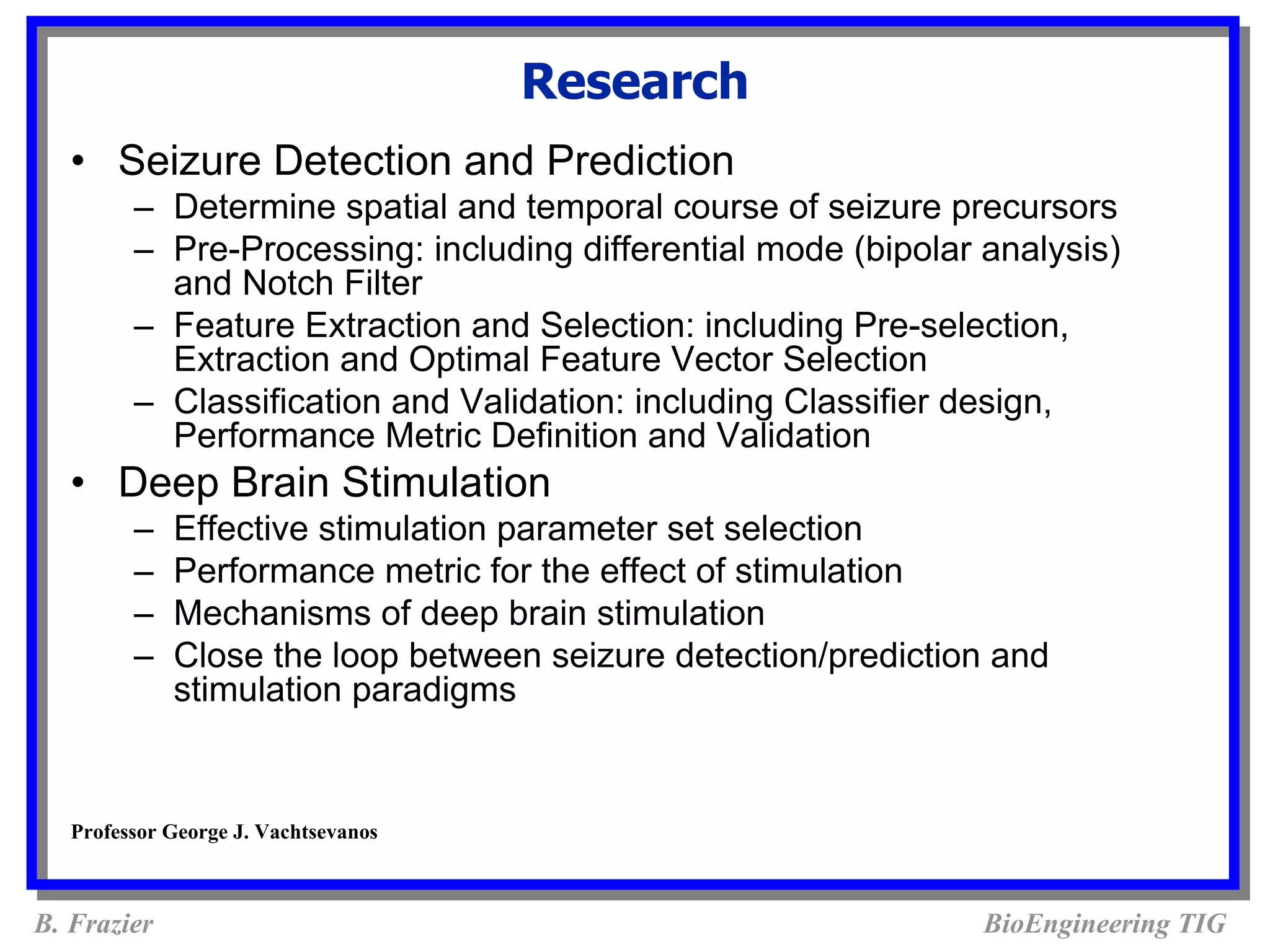
   • Seizure Detection and Prediction
         – Determine spatial and temporal course of seizure precursors
         – Pre-Processing: including differential mode (bipolar analysis)
           and Notch Filter
         – Feature Extraction and Selection: including Pre-selection,
           Extraction and Optimal Feature Vector Selection
         – Classification and Validation: including Classifier design,
           Performance Metric Definition and Validation
   • Deep Brain Stimulation
         –   Effective stimulation parameter set selection
         –   Performance metric for the effect of stimulation
         –   Mechanisms of deep brain stimulation
         –   Close the loop between seizure detection/prediction and
             stimulation paradigms


   Professor George J. Vachtsevanos


B. Frazier                                                      BioEngineering TIG
Research
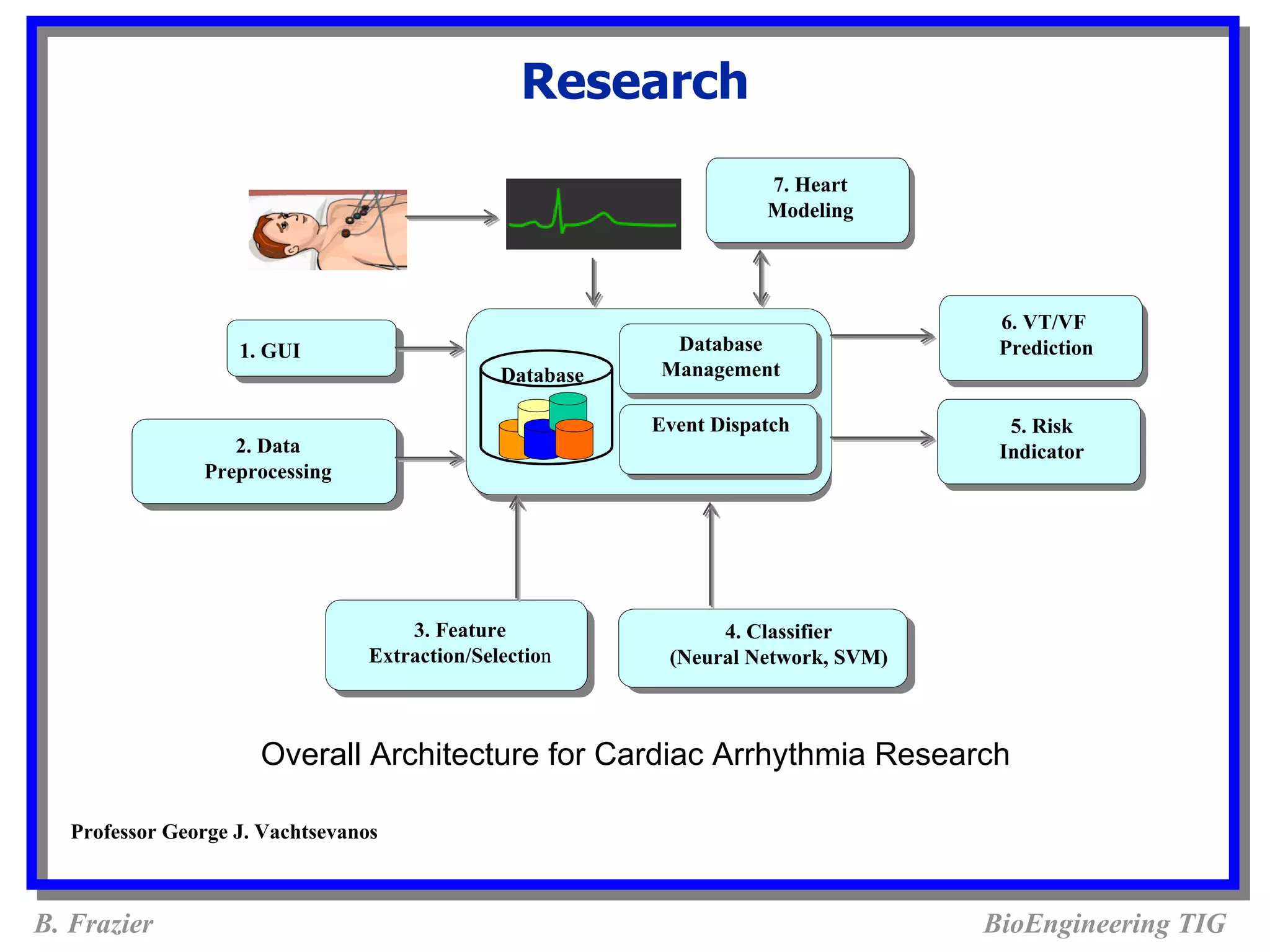
                                                                      7. Heart
                                                                      Modeling


                                                                                     6. VT/VF
                    1. GUI
                     1. GUI
                                                            Database                 Prediction
                                                Database   Management

                                                           Event Dispatch             5. Risk
                   2. Data                                                           Indicator
                Preprocessing


                                      3. Feature                 4. Classifier
                                  Extraction/Selection      (Neural Network, SVM)


                      Overall Architecture for Cardiac Arrhythmia Research

   Professor George J. Vachtsevanos


B. Frazier                                                                          BioEngineering TIG
Research
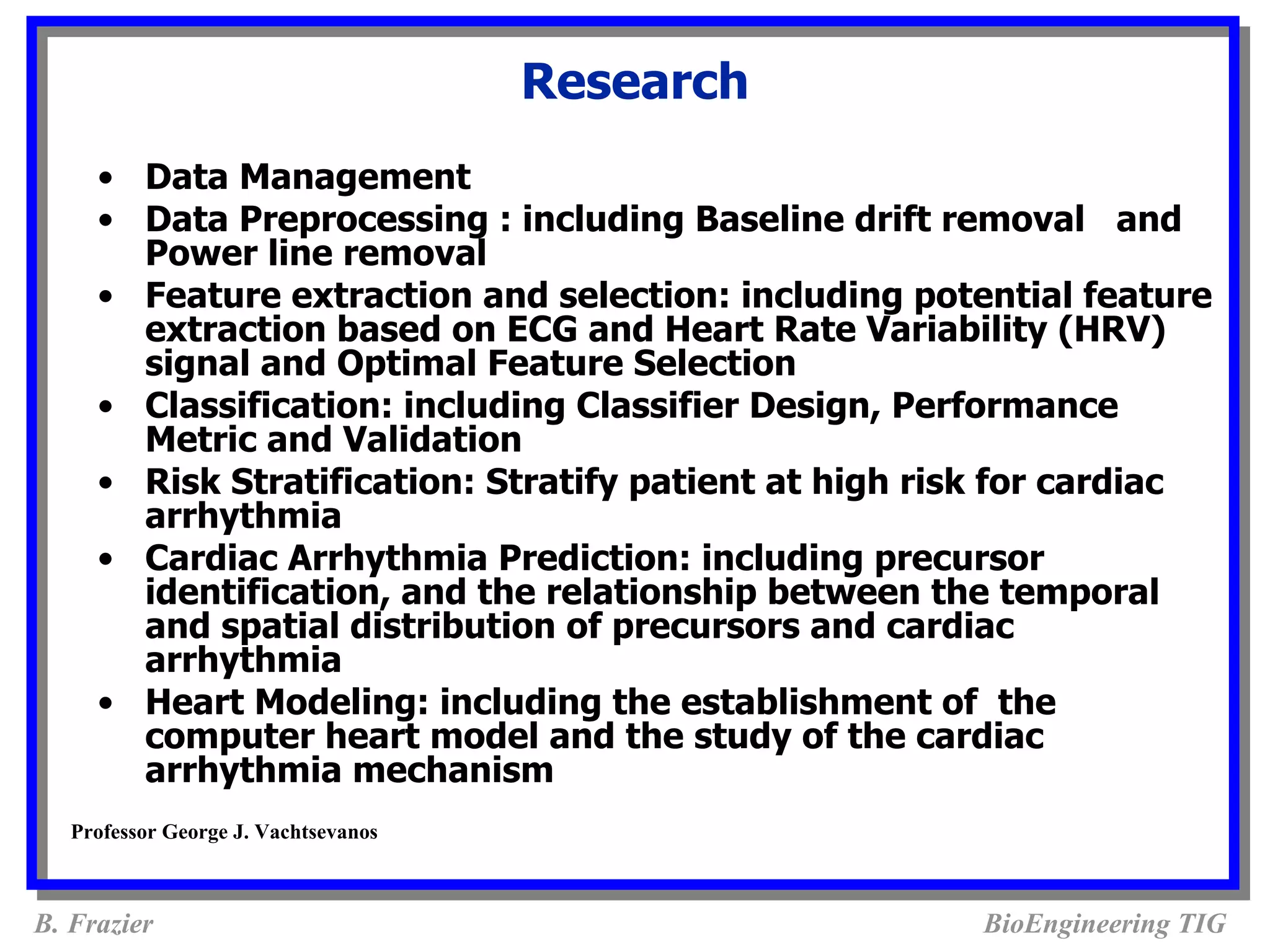
     • Data Management
     • Data Preprocessing : including Baseline drift removal and
       Power line removal
     • Feature extraction and selection: including potential feature
       extraction based on ECG and Heart Rate Variability (HRV)
       signal and Optimal Feature Selection
     • Classification: including Classifier Design, Performance
       Metric and Validation
     • Risk Stratification: Stratify patient at high risk for cardiac
       arrhythmia
     • Cardiac Arrhythmia Prediction: including precursor
       identification, and the relationship between the temporal
       and spatial distribution of precursors and cardiac
       arrhythmia
     • Heart Modeling: including the establishment of the
       computer heart model and the study of the cardiac
       arrhythmia mechanism
   Professor George J. Vachtsevanos


B. Frazier                                             BioEngineering TIG
Research


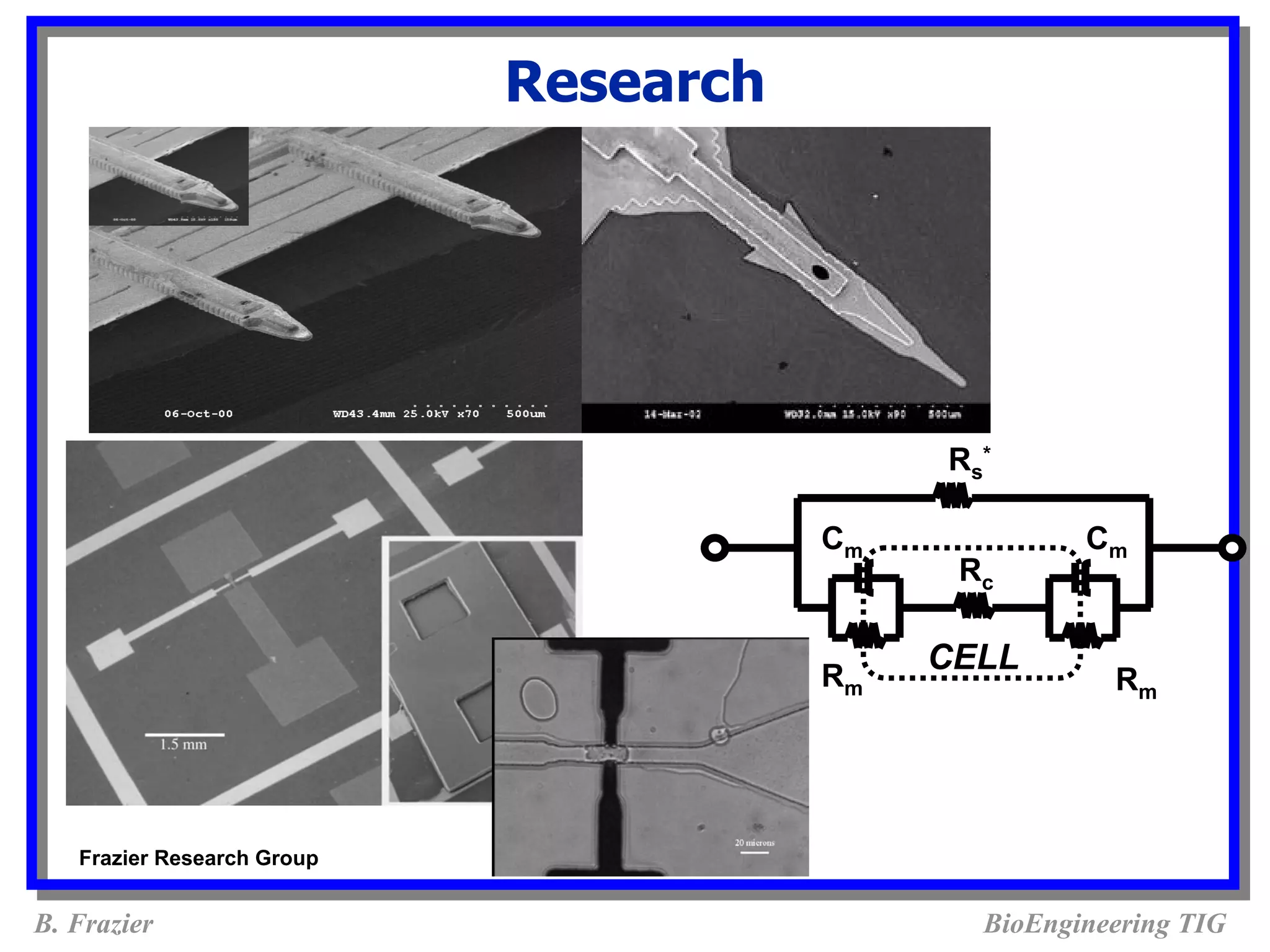
                                            Rs*

                                       Cm            Cm
                                             Rc


                                       Rm
                                            CELL
                                                       Rm


   Frazier Research Group


B. Frazier                                    BioEngineering TIG
Industry Opportunities

      •      Biomedical instrumentation is a rapidly growing market
             sector driven by the need for better clinical diagnostic /
             monitoring tools and instruments with novel analysis
             capabilities.
      •      There are many small, medium & large size companies
             developing biomedical instrumentation in the United States
             and abroad.
      •      Many opportunities for employment in Georgia. The
             Georgia Biomedical Partnerships, Inc. is a central source
             for Georgia Biomedical industry activities.
      •      Several GaTech start-up companies developing new
             products for the market.
      •      Example applications: Imaging systems, pacemakers,
             catheters, EKG systems, cancer diagnostic equipment,
             drug discovery tools, neural monitoring systems, hybrid
             computing systems, nanosystems, biosensors


B. Frazier                                                   BioEngineering TIG
Educational Opportunities

      • Georgia Tech Bioengineering undergraduate students
        have multiple options for pursuing graduate degrees
        in ECE, Biomedical Engineering, as well as Medical
        School.
      • Numerous ECE faculty are members of the
        interdepartmental Bioengineering Graduate Program.
        Thus, students entering ECE who want to pursue an
        M.S. or Ph.D. in Bioengineering can matriculate either
        as traditional ECE students with a focus in
        Bioengineering or into the interdepartmental
        Bioengineering program with ECE as their home
        school.


B. Frazier                                          BioEngineering TIG

Bio find at httpsfc.ece.gatech.edutig.html

  • 1.
    The BioEngineering Technical Interest Group Dr. Bruno Frazier School of Electrical and Computer Engineering Georgia Institute of Technology Atlanta, GA 30332-0250 B. Frazier BioEngineering TIG
  • 2.
    Summary Page • ECE’s bioengineering group is on the leading edge of developing physical and mathematical concepts and techniques that are applied to medicine and biology. Specific applications include feature extraction in cardiac imagery, MEMS devices for direct interfacing with biological systems, modeling of biological sensory and motor systems, and the development of sensors for the detection of cancer cells. B. Frazier BioEngineering TIG
  • 3.
    Outline A.What is the ECE Bioengineering Technical Interest Group? B. ECE Bioengineering Courses C. Research i. Faculty List ii. Highlighted Research Labs D. Industry Opportunities E. Educational Opportunities B. Frazier BioEngineering TIG
  • 4.
    What is theECE BioEngineering Technical Interest Group? • TIGs are groups of professionals, aligned by common technical interests, who come together in a community to share information and ideas, discuss topics of interest, and answer questions posed by other community members. • They can participate in discussions, share documents with other members, and many other functions (depending on the specific TIG). • Bioengineering is concerned with the application of engineering principles to the study and control of biological processes. In this area, mathematical models and physical systems are developed and subsequently applied to medicine and biology. B. Frazier BioEngineering TIG
  • 5.
    Undergraduate Courses Offeredby the BioEngineering TIG 1. ECE 1750 - Introduction to Bioengineering An introduction to the field of bioengineering, including the application of engineering principles and methods to problems in biology and medicine, the integration of engineering with biology, and the emerging industrial opportunities. 2. ECE 4020 - Bioengineering Design Students will work in teams on bioengineering design projects. Course lectures will address topics related to the art of the design process and the practical design issues facing the bioengineer. 3. ECE 4781-Biomedical Instrumentation A study of medical instrumentation from a systems viewpoint. Pertinent physiological and electro-physiological concepts will be covered. Crosslisted with CHE and ME 4781. 4. ECE 4782- Biosystems Analysis Analytical methods for modeling biological systems, including white-noise protocols for characterizing nonlinear systems. Crosslisted with CHE and ME 4782. 5. ECE 47XX- Introduction to Medical Image Processing A study of methods for enhancing, analyzing, interpreting and visualizing information from two- and three-dimensional data obtained from a variety of medical imaging modalities. Cross-listed with BMED 47xx 6. ECE47XX – Bioelectricity An introduction into electrophysiology and the instrumentation used to analyze electrophysiological signals. B. Frazier BioEngineering TIG
  • 6.
    Graduate Courses Offeredby the BioEngineering TIG 1. ECE 6787- Quantitative Electrophysiology A quantitative presentation of electrophysiological systems in biological organisms, emphasizing the electrical properties and modeling of neural and cardiac cells and systems. Cross-listed with BMED and PHYS 6787. 2. ECE 6788- Legal Issues in Biomedical Engineering Study and analysis of US government and law applicable to the development and clinical use of biomedical engineering technology. Cross-listed with BMED, CHE, ME, and MGT 6788. 3. ECE 6789- Technology Transfer in Biomedical Engineering Team discussion and case studies in biomedical engineering technology transfer, including licensing, financial capital, safety and efficacy studies, clinical trials and strategic planning. Cross-listed with BMED, CHE, ME, and MGT 6789. 4. ECE 86xx - Biomedical Applications of MEMS Introduction into the use of microsystems technology to design and fabricate advanced bio-analysis instrumentation. The course includes a process design component and a application design component. 5. ECE 86xx - Biosensors Introduction into the field of biosensors including discussion on basic sensing mechanisms and methods for designing biosensor systems. 6. ECE 86xx - Neural Dynamics Advanced electrophysiology and instrumentation for analysis of electrophysiological signals. 7. ECE 86xx - Hybrid Neural Microsystems Application of microsystems technology to the field of neuroscience. The course includes a review of conventional analytical tools and an in depth discussion on the use of microsystems technology to realize enabling neuro interfacing / analysis systems. B. Frazier BioEngineering TIG
  • 7.
    Research BioEngineering TIG Faculty – Core Faculty Butera, Robert J. - instrumentation development, electrophysiology DeWeerth, Stephen P. - neural interfaces, circuitry Frazier, A. Bruno, Chairperson - microsystems, BioMEMS Hunt, William D. - microsystems, acoustic biosensors Koblasz, Arthur - medical instrumentation Tannenbaum, Allen R. - image processing Vachtsevanos, George J. - signal analysis, biocontrols Yezzi, Anthony J. - image processing B. Frazier BioEngineering TIG
  • 8.
    Research BioEngineering TIG Faculty - Affiliated ECE Faculty Allen, Mark G. Adjunct Faculty: - microsystems, microfabrication Benkeser, Paul J. Brummer, Marijn - Emory, BME - image processing - image processing Clements, Mark A. Lee, Robert - digital signal processing - GaTech, BME Hasler, Paul E. - electrophysiology - neuro interfaces, circuitry Skrinjar, Oskar - GaTech, BME Verriest, Erik I. - image processing - biocontrols Wang, May Zhou, Guotong - GaTech, BME - digital signal processing - image processing B. Frazier BioEngineering TIG
  • 9.
    Augmentation of Accuracyfor Image-guided Neurosurgery (Skrinjar) Description The goal is to improve the navigational accuracy for placement of the permanent stimulator in the midbrain for deep brain stimulation surgery (for movement disorders like Parkinson’s disease). Funded by NIH. Existing Collaborations Results • Dr. Mewes, Neurology, Emory • Initial non-rigid image registration algorithm • Dr. Puzrin, CEE, Georgia Tech • Initial intra-operative brain Potential Collaborations deformation compensation strategies • Dr. Gross, Dr. Abosch, Neurosurgery, Emory U. B. Frazier BioEngineering TIG
  • 10.
    Research Data Generation Pre-processing Processing Classification Feature Feature Differential Extraction Selection + - Training -Visual WN Screening Validation -N - Testing - -Statistical Test - Seizure Detection and Prediction Responsive Neurostimulation Electrodes Implantable Processing Device External Wearable Processor/Interface Deep Brain Stimulation Overall Architecture for Epilepsy Research Professor George J. Vachtsevanos B. Frazier BioEngineering TIG
  • 11.
    Research • Seizure Detection and Prediction – Determine spatial and temporal course of seizure precursors – Pre-Processing: including differential mode (bipolar analysis) and Notch Filter – Feature Extraction and Selection: including Pre-selection, Extraction and Optimal Feature Vector Selection – Classification and Validation: including Classifier design, Performance Metric Definition and Validation • Deep Brain Stimulation – Effective stimulation parameter set selection – Performance metric for the effect of stimulation – Mechanisms of deep brain stimulation – Close the loop between seizure detection/prediction and stimulation paradigms Professor George J. Vachtsevanos B. Frazier BioEngineering TIG
  • 12.
    Research 7. Heart Modeling 6. VT/VF 1. GUI 1. GUI Database Prediction Database Management Event Dispatch 5. Risk 2. Data Indicator Preprocessing 3. Feature 4. Classifier Extraction/Selection (Neural Network, SVM) Overall Architecture for Cardiac Arrhythmia Research Professor George J. Vachtsevanos B. Frazier BioEngineering TIG
  • 13.
    Research • Data Management • Data Preprocessing : including Baseline drift removal and Power line removal • Feature extraction and selection: including potential feature extraction based on ECG and Heart Rate Variability (HRV) signal and Optimal Feature Selection • Classification: including Classifier Design, Performance Metric and Validation • Risk Stratification: Stratify patient at high risk for cardiac arrhythmia • Cardiac Arrhythmia Prediction: including precursor identification, and the relationship between the temporal and spatial distribution of precursors and cardiac arrhythmia • Heart Modeling: including the establishment of the computer heart model and the study of the cardiac arrhythmia mechanism Professor George J. Vachtsevanos B. Frazier BioEngineering TIG
  • 14.
    Research Rs* Cm Cm Rc Rm CELL Rm Frazier Research Group B. Frazier BioEngineering TIG
  • 15.
    Industry Opportunities • Biomedical instrumentation is a rapidly growing market sector driven by the need for better clinical diagnostic / monitoring tools and instruments with novel analysis capabilities. • There are many small, medium & large size companies developing biomedical instrumentation in the United States and abroad. • Many opportunities for employment in Georgia. The Georgia Biomedical Partnerships, Inc. is a central source for Georgia Biomedical industry activities. • Several GaTech start-up companies developing new products for the market. • Example applications: Imaging systems, pacemakers, catheters, EKG systems, cancer diagnostic equipment, drug discovery tools, neural monitoring systems, hybrid computing systems, nanosystems, biosensors B. Frazier BioEngineering TIG
  • 16.
    Educational Opportunities • Georgia Tech Bioengineering undergraduate students have multiple options for pursuing graduate degrees in ECE, Biomedical Engineering, as well as Medical School. • Numerous ECE faculty are members of the interdepartmental Bioengineering Graduate Program. Thus, students entering ECE who want to pursue an M.S. or Ph.D. in Bioengineering can matriculate either as traditional ECE students with a focus in Bioengineering or into the interdepartmental Bioengineering program with ECE as their home school. B. Frazier BioEngineering TIG