Big Data & Data Mining
by Emran Hossain
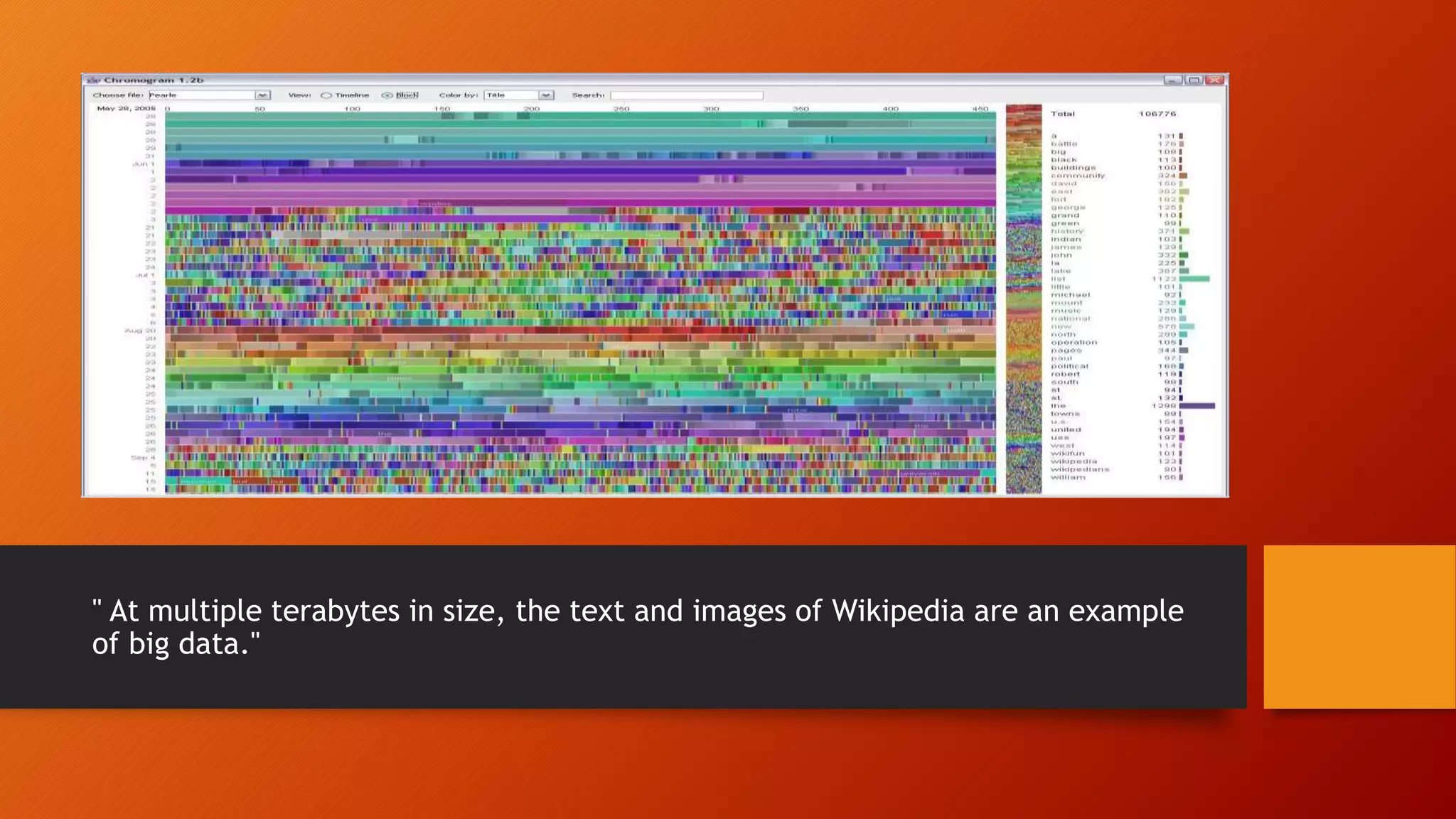
" At multiple terabytes in size, the text and images of Wikipedia are an example
of big data."
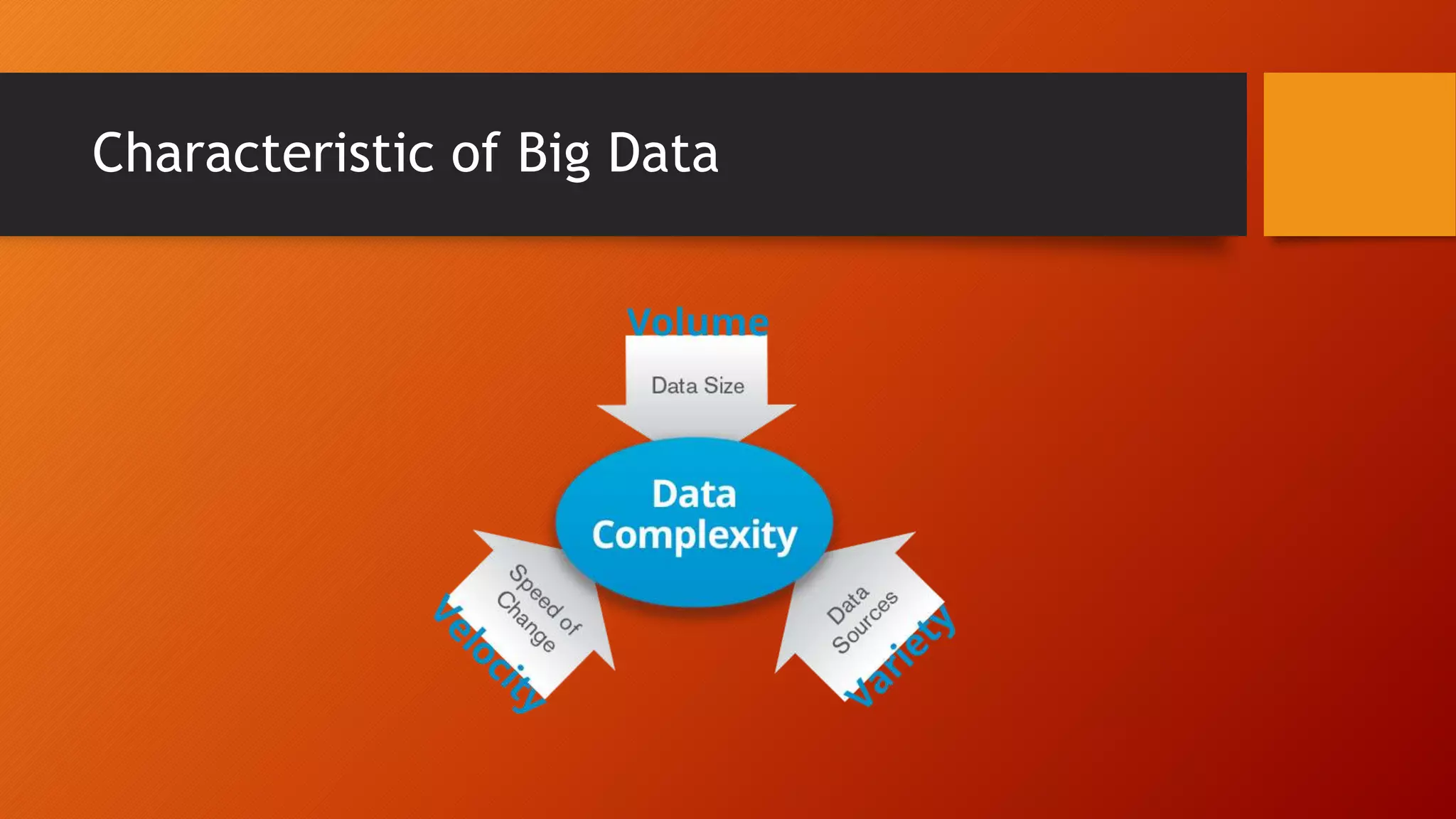
Characteristic of Big Data
Storing, selecting and processing of Big Data
Employing Hadoop MapReduce
• Creating the components of Hadoop MapReduce jobs
• Distributing data processing across server farms
• Executing Hadoop MapReduce jobs • Monitoring the progress of
job flows
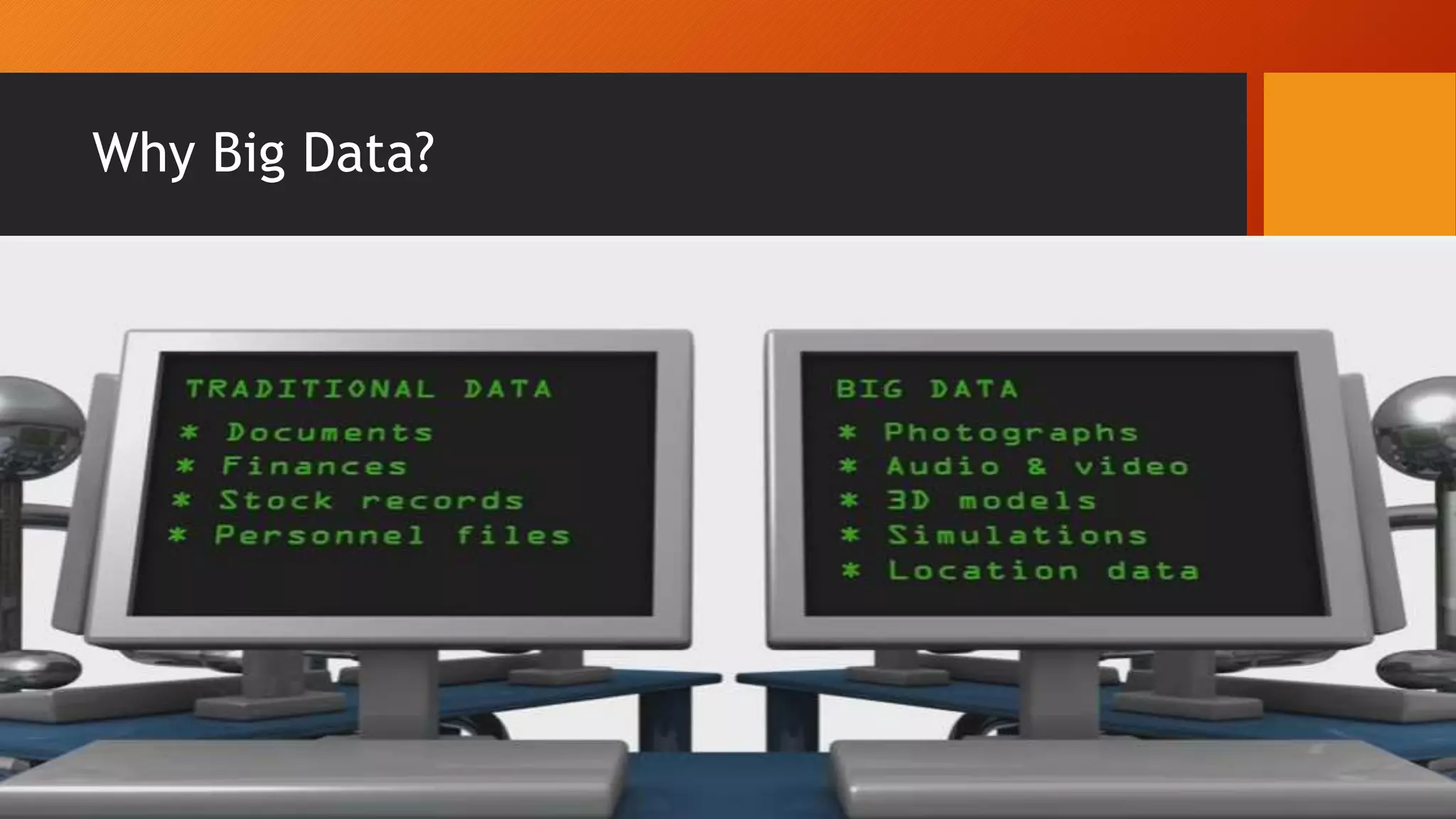
Why Big Data?
How Is Big Data Different?
Automatically generated by a machine (e.g. Sensor embedded in
an engine)
Typically an entirely new source of data (e.g. Use of the internet)
Not designed to be friendly (e.g. Text streams) 4) May not have
much values
Big Data Analytics
• Examining large amount of data
• Appropriate information
• Identification of hidden patterns, unknown correlations
• Competitive advantage
• Better business decisions: strategic and operational
• Effective marketing, customer satisfaction, increased revenue
Types of tools used in Big-Data
Where processing is hosted?
– Distributed Servers / Cloud (e.g. Amazon EC2)
 Where data is stored?
– Distributed Storage (e.g. Amazon S3)
 What is the programming model?
– Distributed Processing (e.g. MapReduce)
 How data is stored & indexed?
– High-performance schema-free databases (e.g. MongoDB)
 What operations are performed on data?
– Analytic / Semantic Processing
Usage of Data mining
• For businesses, data mining is used to discover patterns and
relationships in the data in order to help make better business
decisions. Data mining can help spot sales trends, develop
smarter marketing campaigns, and accurately predict customer
loyalty.
Application Of Big Data
Smarter Healthcare
Homeland Security
Traffic Control
Manufacturing
Multi-channel sales
Telecom
Trading Analytics
Search Quality
Risks of Big Data
Will be so overwhelmed
 Need the right people and solve the right problems
Costs escalate too fast
 Isn’t necessary to capture 100%
Many sources of big data is privacy
 self-regulation
 Legal regulation 22
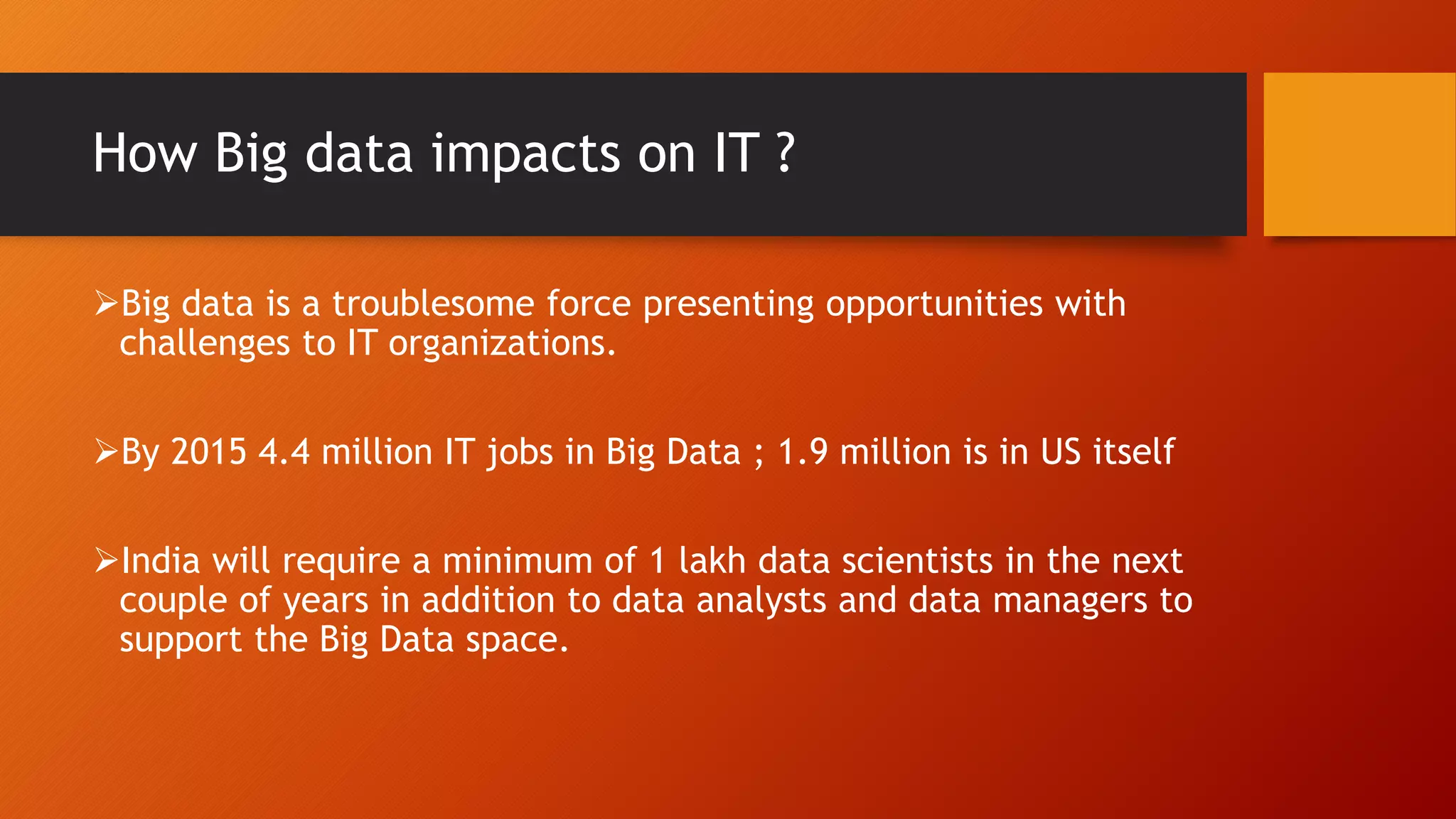
How Big data impacts on IT ?
Big data is a troublesome force presenting opportunities with
challenges to IT organizations.
By 2015 4.4 million IT jobs in Big Data ; 1.9 million is in US itself
India will require a minimum of 1 lakh data scientists in the next
couple of years in addition to data analysts and data managers to
support the Big Data space.
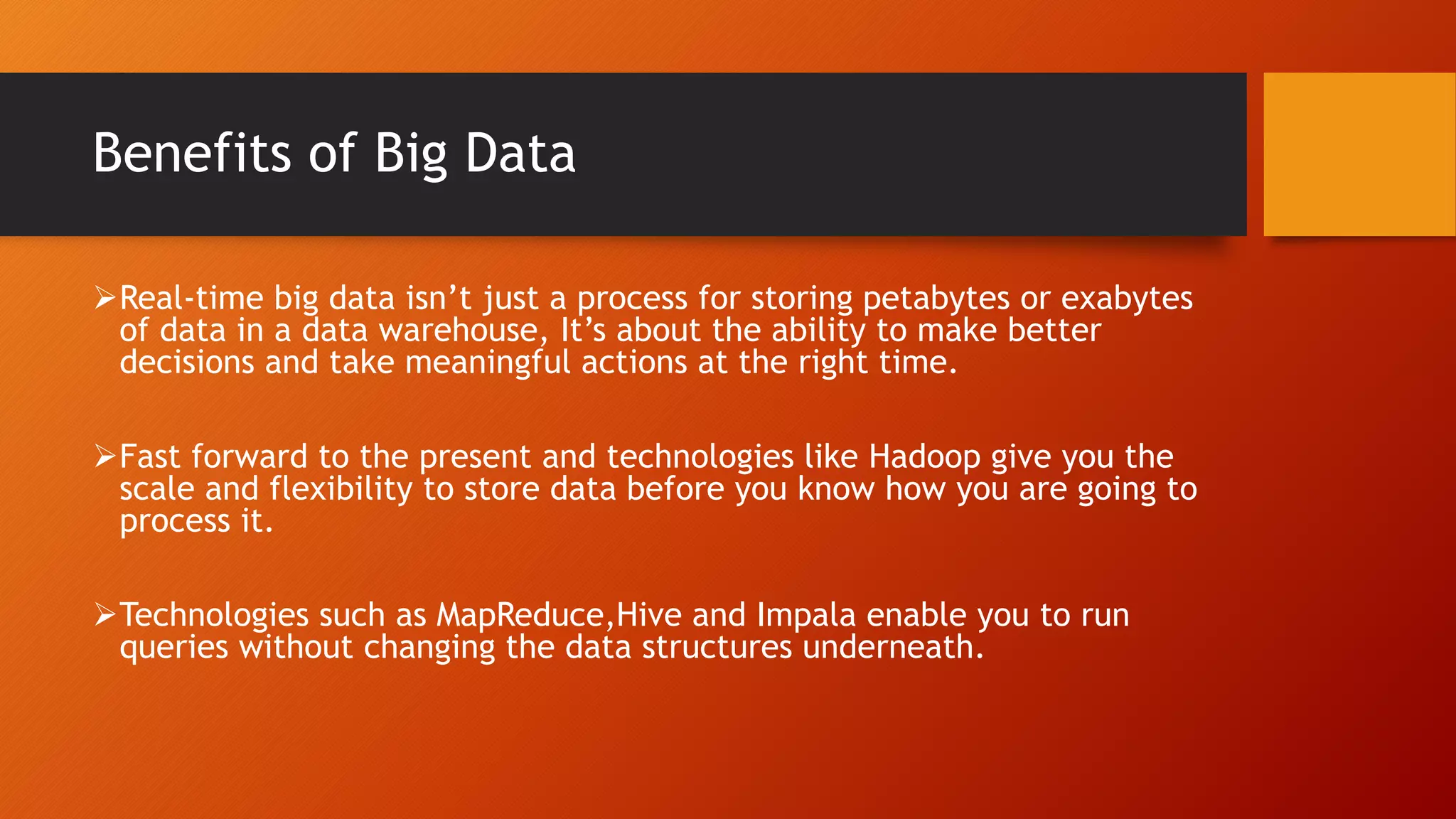
Benefits of Big Data
Real-time big data isn’t just a process for storing petabytes or exabytes
of data in a data warehouse, It’s about the ability to make better
decisions and take meaningful actions at the right time.
Fast forward to the present and technologies like Hadoop give you the
scale and flexibility to store data before you know how you are going to
process it.
Technologies such as MapReduce,Hive and Impala enable you to run
queries without changing the data structures underneath.
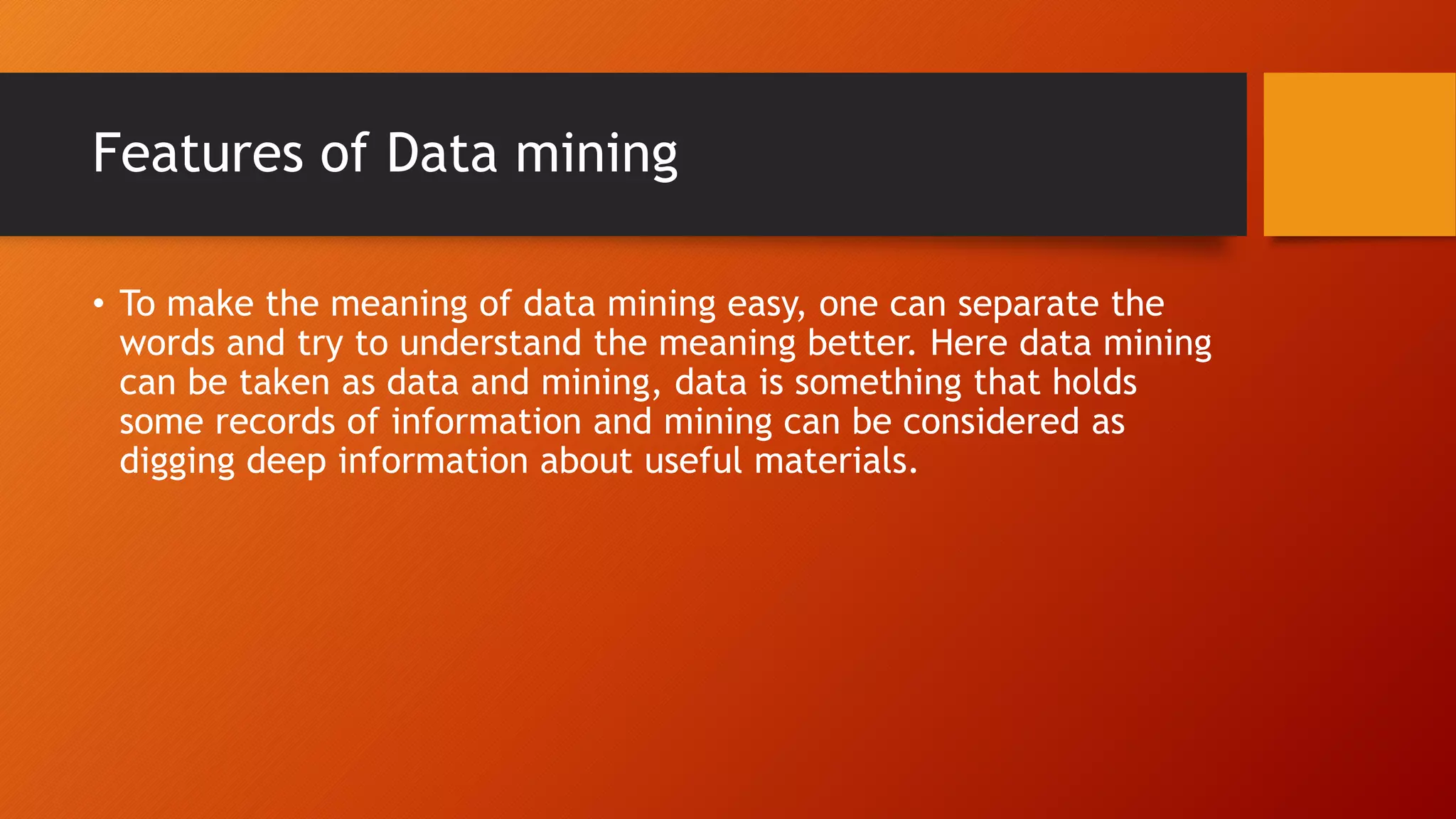
Features of Data mining
• To make the meaning of data mining easy, one can separate the
words and try to understand the meaning better. Here data mining
can be taken as data and mining, data is something that holds
some records of information and mining can be considered as
digging deep information about useful materials.
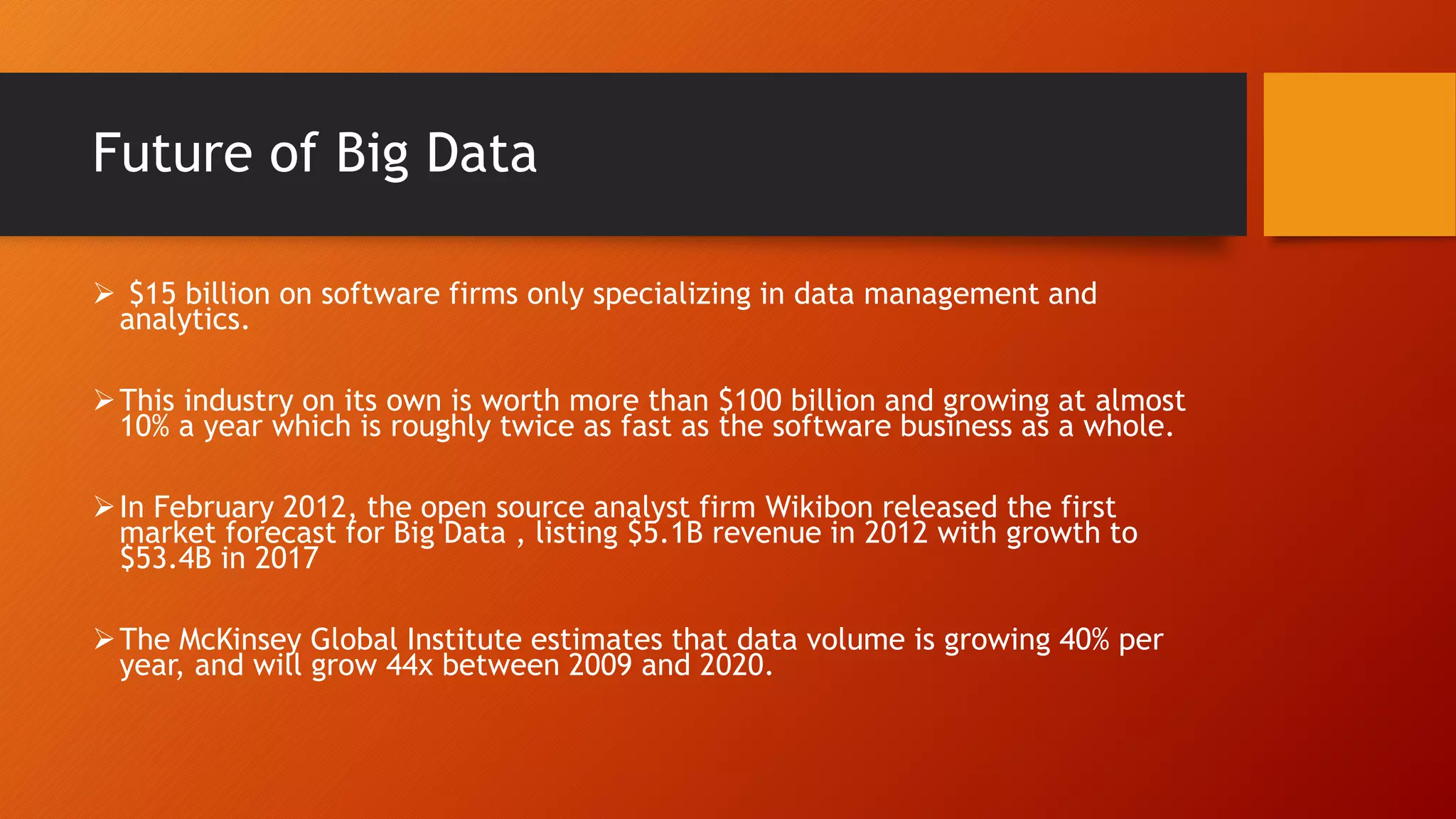
Future of Big Data
 $15 billion on software firms only specializing in data management and
analytics.
This industry on its own is worth more than $100 billion and growing at almost
10% a year which is roughly twice as fast as the software business as a whole.
In February 2012, the open source analyst firm Wikibon released the first
market forecast for Big Data , listing $5.1B revenue in 2012 with growth to
$53.4B in 2017
The McKinsey Global Institute estimates that data volume is growing 40% per
year, and will grow 44x between 2009 and 2020.
Presented By
• 1398-Emran Hossain
Big data and data mining

Big data and data mining

  • 1.
    Big Data &Data Mining by Emran Hossain
  • 3.
    " At multipleterabytes in size, the text and images of Wikipedia are an example of big data."
  • 5.
  • 6.
    Storing, selecting andprocessing of Big Data Employing Hadoop MapReduce • Creating the components of Hadoop MapReduce jobs • Distributing data processing across server farms • Executing Hadoop MapReduce jobs • Monitoring the progress of job flows
  • 7.
  • 8.
    How Is BigData Different? Automatically generated by a machine (e.g. Sensor embedded in an engine) Typically an entirely new source of data (e.g. Use of the internet) Not designed to be friendly (e.g. Text streams) 4) May not have much values
  • 9.
    Big Data Analytics •Examining large amount of data • Appropriate information • Identification of hidden patterns, unknown correlations • Competitive advantage • Better business decisions: strategic and operational • Effective marketing, customer satisfaction, increased revenue
  • 10.
    Types of toolsused in Big-Data Where processing is hosted? – Distributed Servers / Cloud (e.g. Amazon EC2)  Where data is stored? – Distributed Storage (e.g. Amazon S3)  What is the programming model? – Distributed Processing (e.g. MapReduce)  How data is stored & indexed? – High-performance schema-free databases (e.g. MongoDB)  What operations are performed on data? – Analytic / Semantic Processing
  • 11.
    Usage of Datamining • For businesses, data mining is used to discover patterns and relationships in the data in order to help make better business decisions. Data mining can help spot sales trends, develop smarter marketing campaigns, and accurately predict customer loyalty.
  • 12.
    Application Of BigData Smarter Healthcare Homeland Security Traffic Control Manufacturing Multi-channel sales Telecom Trading Analytics Search Quality
  • 13.
    Risks of BigData Will be so overwhelmed  Need the right people and solve the right problems Costs escalate too fast  Isn’t necessary to capture 100% Many sources of big data is privacy  self-regulation  Legal regulation 22
  • 14.
    How Big dataimpacts on IT ? Big data is a troublesome force presenting opportunities with challenges to IT organizations. By 2015 4.4 million IT jobs in Big Data ; 1.9 million is in US itself India will require a minimum of 1 lakh data scientists in the next couple of years in addition to data analysts and data managers to support the Big Data space.
  • 15.
    Benefits of BigData Real-time big data isn’t just a process for storing petabytes or exabytes of data in a data warehouse, It’s about the ability to make better decisions and take meaningful actions at the right time. Fast forward to the present and technologies like Hadoop give you the scale and flexibility to store data before you know how you are going to process it. Technologies such as MapReduce,Hive and Impala enable you to run queries without changing the data structures underneath.
  • 16.
    Features of Datamining • To make the meaning of data mining easy, one can separate the words and try to understand the meaning better. Here data mining can be taken as data and mining, data is something that holds some records of information and mining can be considered as digging deep information about useful materials.
  • 17.
    Future of BigData  $15 billion on software firms only specializing in data management and analytics. This industry on its own is worth more than $100 billion and growing at almost 10% a year which is roughly twice as fast as the software business as a whole. In February 2012, the open source analyst firm Wikibon released the first market forecast for Big Data , listing $5.1B revenue in 2012 with growth to $53.4B in 2017 The McKinsey Global Institute estimates that data volume is growing 40% per year, and will grow 44x between 2009 and 2020.
  • 18.