Swipe
A Brief Introduction to
B I G D A T A
Big data is a collection of problems that test the limits of
current IT and computational technologies, as well as
existing algorithms.
Big data is traditionally described as a large volume of
data (in excess of 1 terabyte) processed at a high rate
with a high degree of variety and veracity
The vast amount of data – both structured and
unstructured – that inundates a company on a daily basis
is referred to as big data. What counts is what companies
do with the data. Big data may be analysed for
perspectives that contribute to stronger business choices
and strategic steps.
Introduction
3 V's of Big Data
Data Volume
Tera Byte
Records
Transaction
Tables, File's
Data Velocity
Real Time
Streams
Near Time
Batches
Data Variety
Mixed
Structure
Unstructure
Semi-structured
3 V's of Big Data
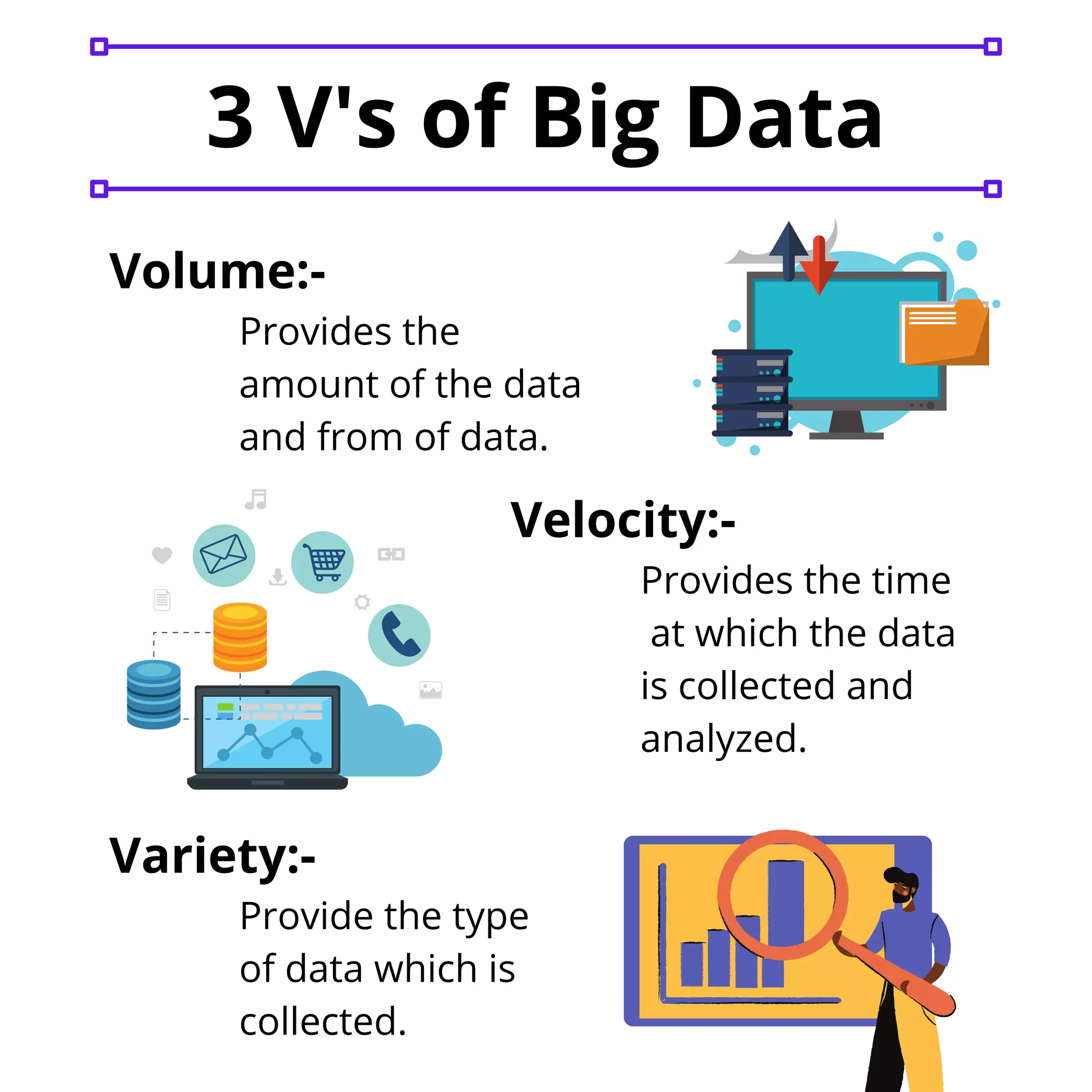
Volume:-
Provides the
amount of the data
and from of data.
Velocity:-
Provides the time
at which the data
is collected and
analyzed.
Variety:-
Provide the type
of data which is
collected.
Hive
H Base
Hadoop Distributed File System
Data models: Key value, graph, document,
column-family.
Storing Big Data
Analyse your data characteristics
Select data source for analysis
Eliminate redundant data
Establishing the role of NoSQL
Overview of Big Data stores
Selecting Big Data Stores
Depending on your data characteristics, choose
the appropriate data stores
Transferring code to data
Putting in place a polyglot data storage solution
Aligning market objectives for the most suitable
data repository
Stay Tuned With
Decision Tree
Artificial Intelligence
Machine Learning
Topics for next Post

Big data.

  • 1.
  • 2.
    Big data isa collection of problems that test the limits of current IT and computational technologies, as well as existing algorithms. Big data is traditionally described as a large volume of data (in excess of 1 terabyte) processed at a high rate with a high degree of variety and veracity The vast amount of data – both structured and unstructured – that inundates a company on a daily basis is referred to as big data. What counts is what companies do with the data. Big data may be analysed for perspectives that contribute to stronger business choices and strategic steps. Introduction
  • 3.
    3 V's ofBig Data Data Volume Tera Byte Records Transaction Tables, File's Data Velocity Real Time Streams Near Time Batches Data Variety Mixed Structure Unstructure Semi-structured
  • 4.
    3 V's ofBig Data Volume:- Provides the amount of the data and from of data. Velocity:- Provides the time at which the data is collected and analyzed. Variety:- Provide the type of data which is collected.
  • 5.
    Hive H Base Hadoop DistributedFile System Data models: Key value, graph, document, column-family. Storing Big Data Analyse your data characteristics Select data source for analysis Eliminate redundant data Establishing the role of NoSQL Overview of Big Data stores
  • 6.
    Selecting Big DataStores Depending on your data characteristics, choose the appropriate data stores Transferring code to data Putting in place a polyglot data storage solution Aligning market objectives for the most suitable data repository
  • 7.
    Stay Tuned With DecisionTree Artificial Intelligence Machine Learning Topics for next Post