Big Data and Artificial Intelligence (AI) in Pharma
Keynote @ College of Pharmacy Graduate Retreat
University of South Carolina, Columbia, SC, 11 October 2019
Amit Sheth
USC Artificial Intelligence Institute
http://ai.sc.edu
Icon source used in the entire presentation - https://thenounproject.com
Presentationtemplate by SlidesCarnival
UGUR
Kursuncu
UTKARSHANI
Jaimini
JOEY
Yip
Thanks for help
in preparing this
presentation
ABSTRACT
I have framed this talk to encourage Pharmacy students to embrace computing in general, and
data science and artificial intelligence techniques in particular. The reason is that data-driven
science has overtaken traditional lab science; chemistry and biology that underlie pharmacy
have become data-driven sciences, and a significant majority of the new jobs in pharma
industries demand data analysis skills. Increasingly, traditional bioinformatics approaches are
being complemented or replaced by machine learning or deep learning algorithms, especially
for cases that have large data sets. I will provide a few examples (e.g., drug discovery, finding
adverse drug reactions and broadly pharmacovigilance, and selecting patients for clinical trials)
to demonstrate how big data and/or AI are indispensable to pharma research and industry
today.
Source: Raconteur, taken from http://rcnt.eu/un8bg
5% of all Google searches
are health-related.
Source: https://googleblog.blogspot.com/2015/02/health-info-knowledge-
graph.html
Healthcare data will
experience a compound
annual growth rate (CAGR)
of 36% through 2025.
Source: https://healthitanalytics.com/news/big-data-to-see-explosive-growth-
challenging-healthcare-organizations
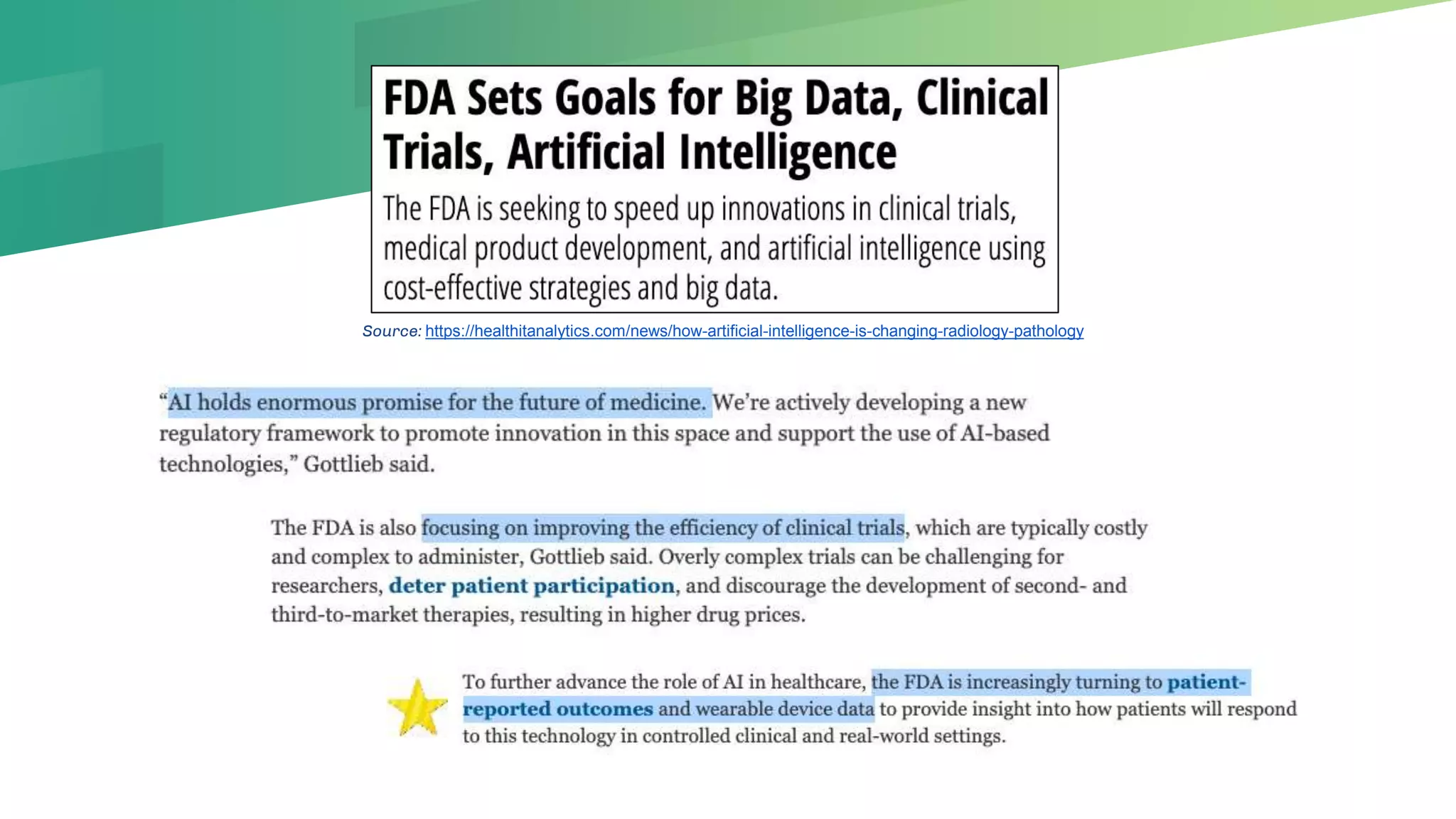
FDA Sets Goals for
Big Data, Clinical Trials,
Artificial Intelligence.
Source: https://healthitanalytics.com/news/fda-sets-goals-for-big-
data-clinical-trials-artificial-intelligence
Source: https://healthitanalytics.com/news/how-artificial-intelligence-is-changing-radiology-pathology
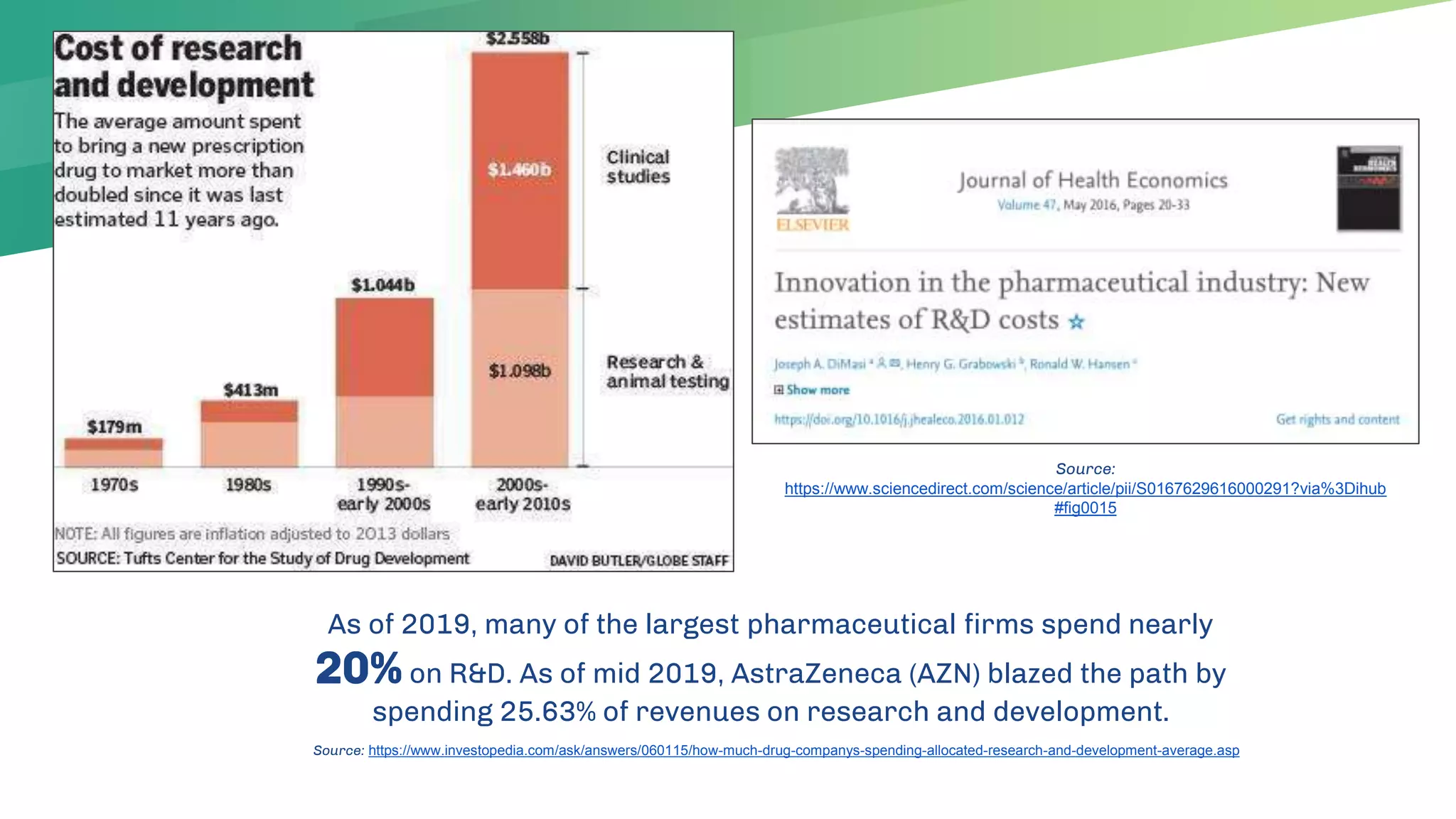
Source:
https://www.sciencedirect.com/science/article/pii/S0167629616000291?via%3Dihub
#fig0015
As of 2019, many of the largest pharmaceutical firms spend nearly
20% on R&D. As of mid 2019, AstraZeneca (AZN) blazed the path by
spending 25.63% of revenues on research and development.
Source: https://www.investopedia.com/ask/answers/060115/how-much-drug-companys-spending-allocated-research-and-development-average.asp
“Information is cheap.
Understanding is expensive.
Karl Fast,
Professor of UX Design,
Kent State University
AI is about converting data into
knowledge, insights and actions.
Source: https://www.cbinsights.com/research/ai-healthcare-startups-market-map-expert-research/
AI Startups in
Drug Discovery
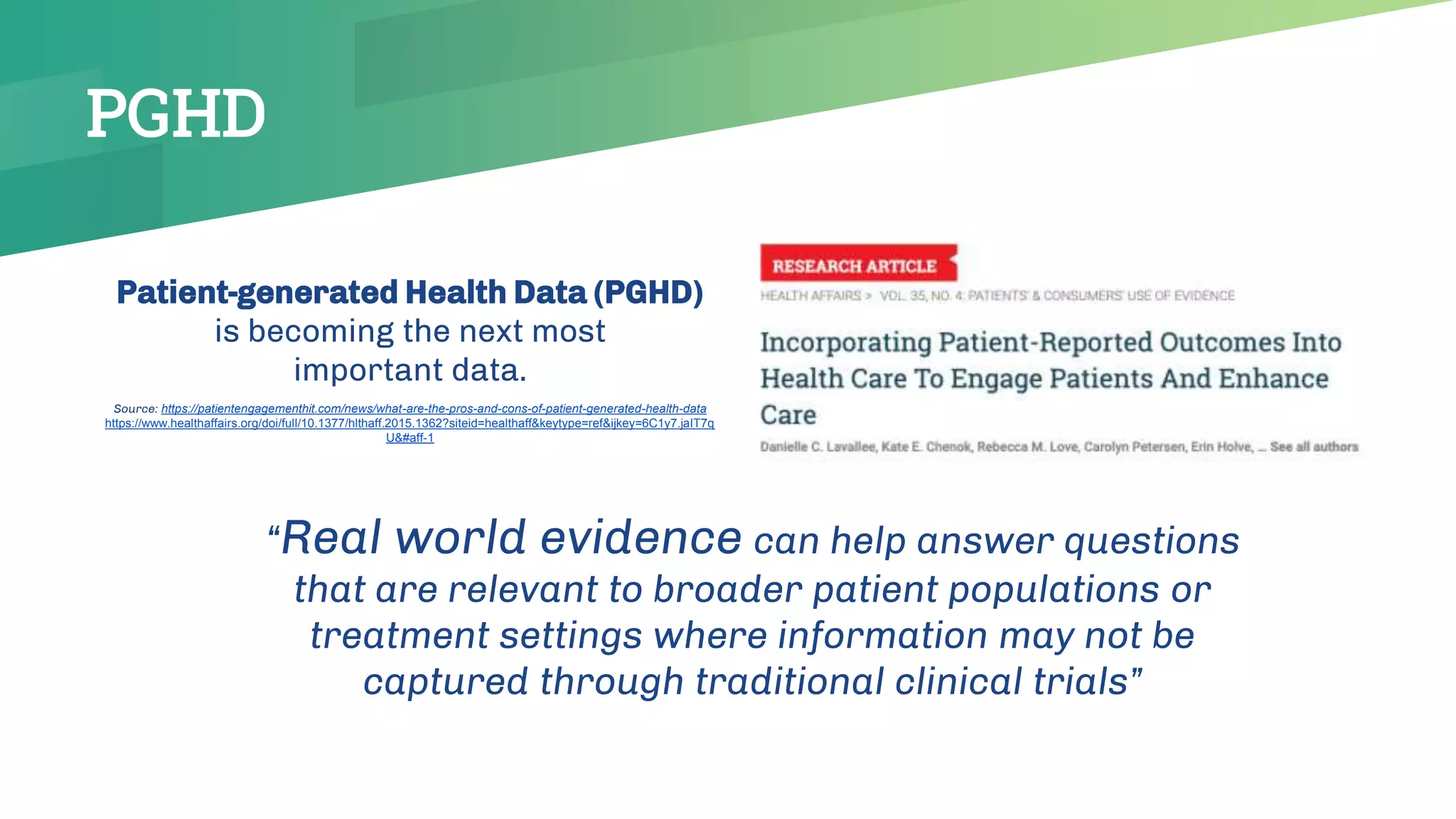
Patient-generated Health Data (PGHD)
is becoming the next most
important data.
Source: https://patientengagementhit.com/news/what-are-the-pros-and-cons-of-patient-generated-health-data
https://www.healthaffairs.org/doi/full/10.1377/hlthaff.2015.1362?siteid=healthaff&keytype=ref&ijkey=6C1y7.jaIT7q
U&#aff-1
“Real world evidence can help answer questions
that are relevant to broader patient populations or
treatment settings where information may not be
captured through traditional clinical trials”
PGHD
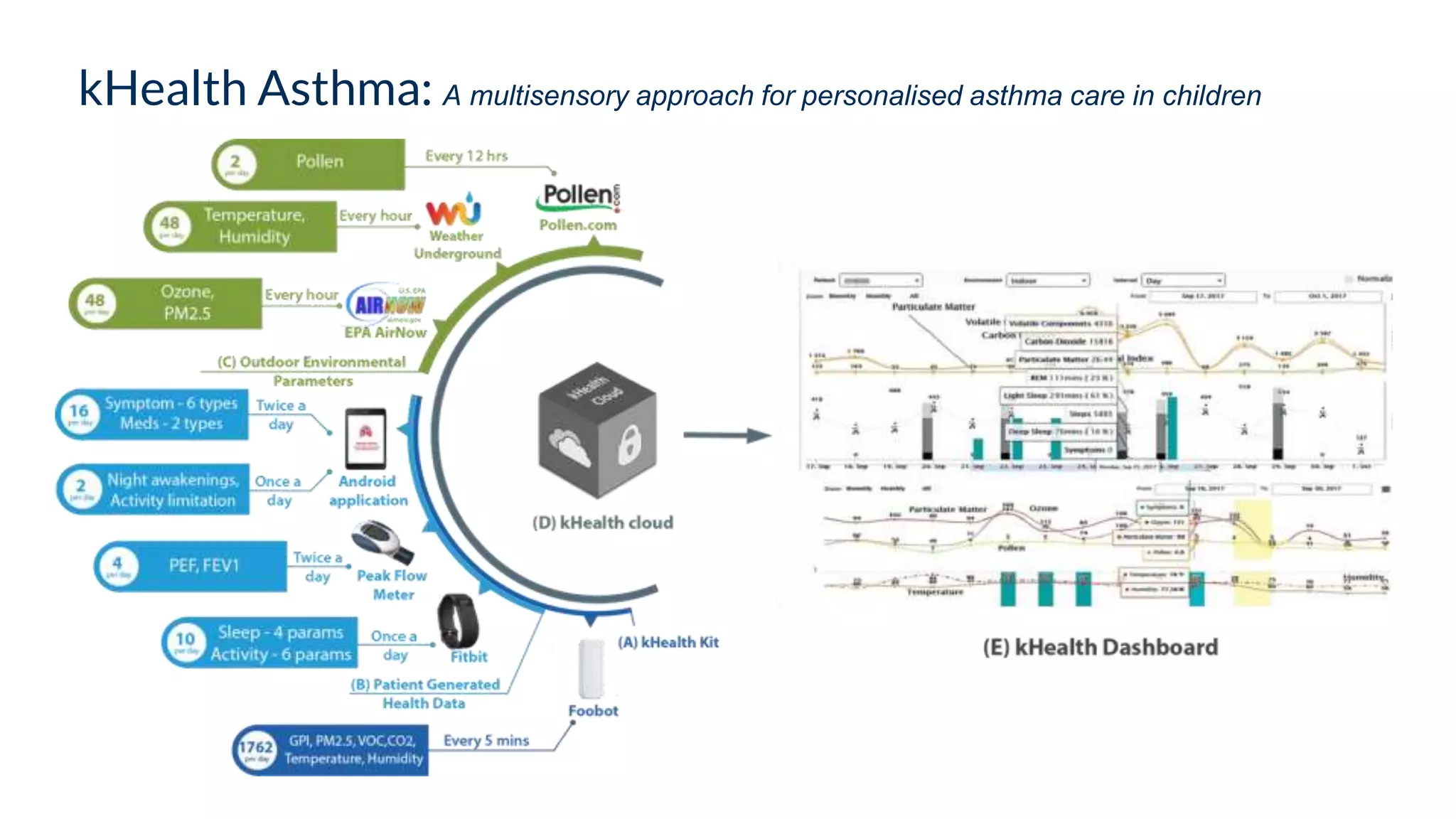
kHealth Asthma: A multisensory approach for personalised asthma care in children
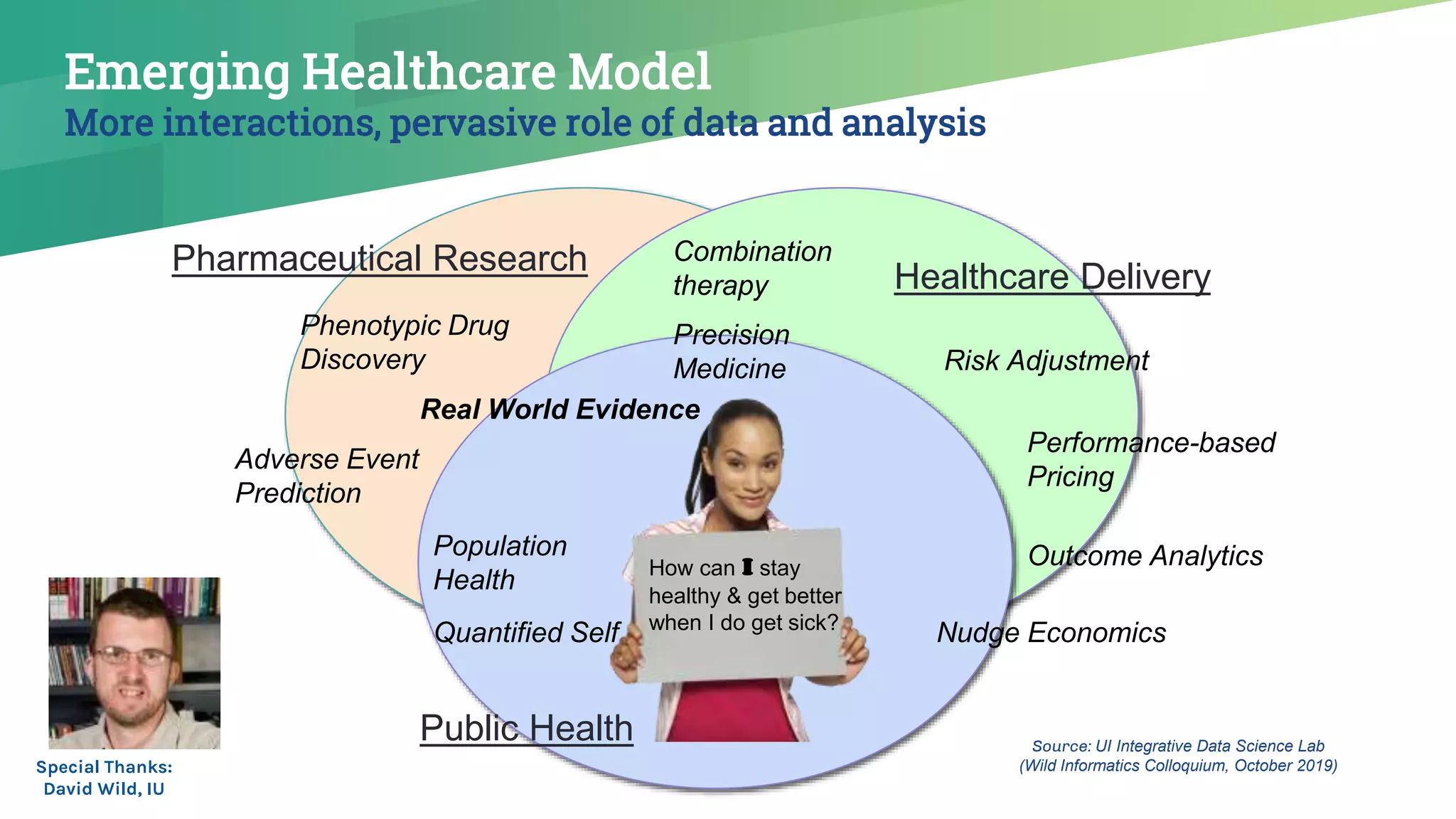
Emerging Healthcare Model
More interactions, pervasive role of data and analysis
Pharmaceutical Research
Healthcare Delivery
Public Health
Precision
Medicine
Population
Health
Real World Evidence
Combination
therapy
Outcome Analytics
Nudge EconomicsQuantified Self
Performance-based
Pricing
Risk Adjustment
Phenotypic Drug
Discovery
Adverse Event
Prediction
How can I stay
healthy & get better
when I do get sick?
Source: UI Integrative Data Science Lab
(Wild Informatics Colloquium, October 2019)Special Thanks:
David Wild, IU
“Data-driven science has overtaken
traditional lab science and a significant
majority of the new jobs in pharma
industries demand data analysis skills.
Increasingly, traditional bioinformatics
approaches are being complemented or
replaced by AI algorithms, especially for
cases that have large data sets (Big Data).
• There is an incredibly rich resource of public information relating
compounds, targets, genes, pathways, and diseases.
• 96 million compounds (PubChem)
• 268 million compound bioactivities (PubChem Bioassay)
• 10,256 drugs (DrugBank)
• 560,000 protein sequences (SwissProt)
• 2.3 billion nucleotide sequences (EMBL)
• 99 million life science publications
• Even more important are the relationships between these entities.
• Biological assay with percent inhibition, IC50, etc (e.g. ChEMBL, PubChem)
• Crystal structure of ligand/protein complex
• Co-occurrence in a paper abstract
• Computational experiment (docking, predictive model)
• Statistical relationship
• System association (e.g. involved in same pathways cellular processes)
Big Data in the Public
Domain
Source: UI Integrative Data Science Lab
(Wild Informatics Colloquium, October 2019)
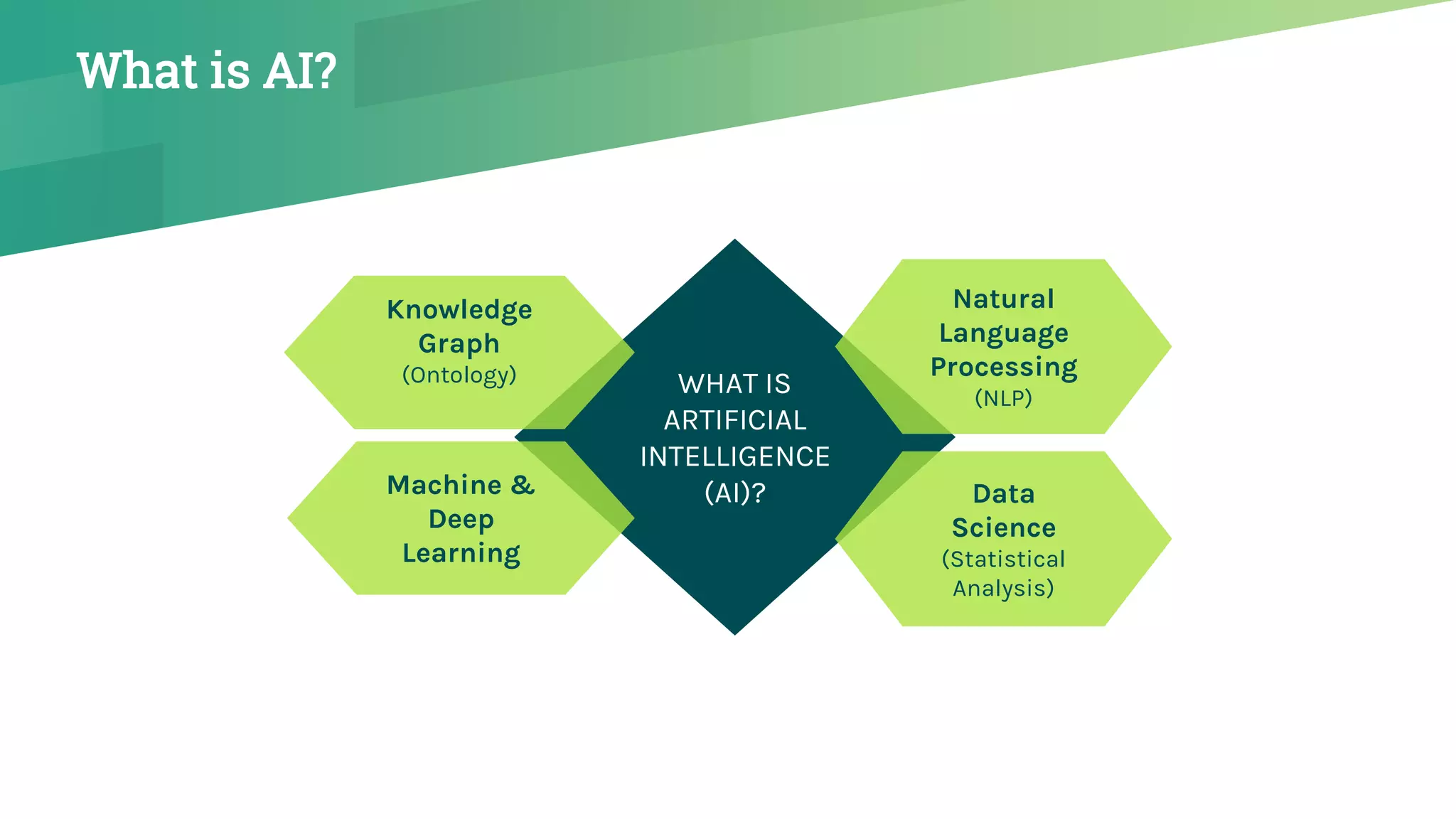
WHAT IS
ARTIFICIAL
INTELLIGENCE
(AI)?
Knowledge
Graph
(Ontology)
Machine &
Deep
Learning
Natural
Language
Processing
(NLP)
Data
Science
(Statistical
Analysis)
What is AI?
AI for Big Data
Integrate complex,
disparate data
sources to gain
insights
Techniques:
Semantic technologies, entity mapping,
path-based prediction
Integrate disparate
data, algorithms, and
human knowledge to
impact big problems
Technologies:
Deep Learning, Knowledge Graphs,
graph analytics, hypothesis testing and
generation, visualization
Integrate the worlds of
data, things & humanity
in a way that enables us
to thrive as a society
Fields:
Design thinking, data science,
IoT/sensors, networks, ethics, social
sciences, computing, culture & society
Based in part on: https://www.pwc.com/gx/en/industries/healthcare/publications/ai-robotics-new-health/transforming-
healthcare.html
Knowledge
Graph
(Ontology)
Source: UI Integrative Data Science Lab
(Wild Informatics Colloquium, October 2019)
Chem2Bio2RDF
Source: BMC Bioinformatics, 2010, 11,
255; chem2bio2rdf.org
Comprehensive knowledge extraction
from multiple sources
-> Knowledge Graph
Source: https://dzone.com/articles/drug-discovery-knowledge-graphs
Drug Discovery
Knowledge Graph
(Representation as
structured data)
● Constrained association search between myocardial infarction and rosiglitazone.
● Showing ranked paths up to three edges in length that (i) contain a gene and (ii) are ranked highly
by KL-divergence showing literature support.
Source: D.J.. Wild, et al., Systems chemical biology and the Semantic Web: what they mean for the future of drug discovery research, Drug Discov Today (2012), doi:10.1016/j.drudis.2011.12.019
Knowledge
Graph for
Systems
Chemical Biology
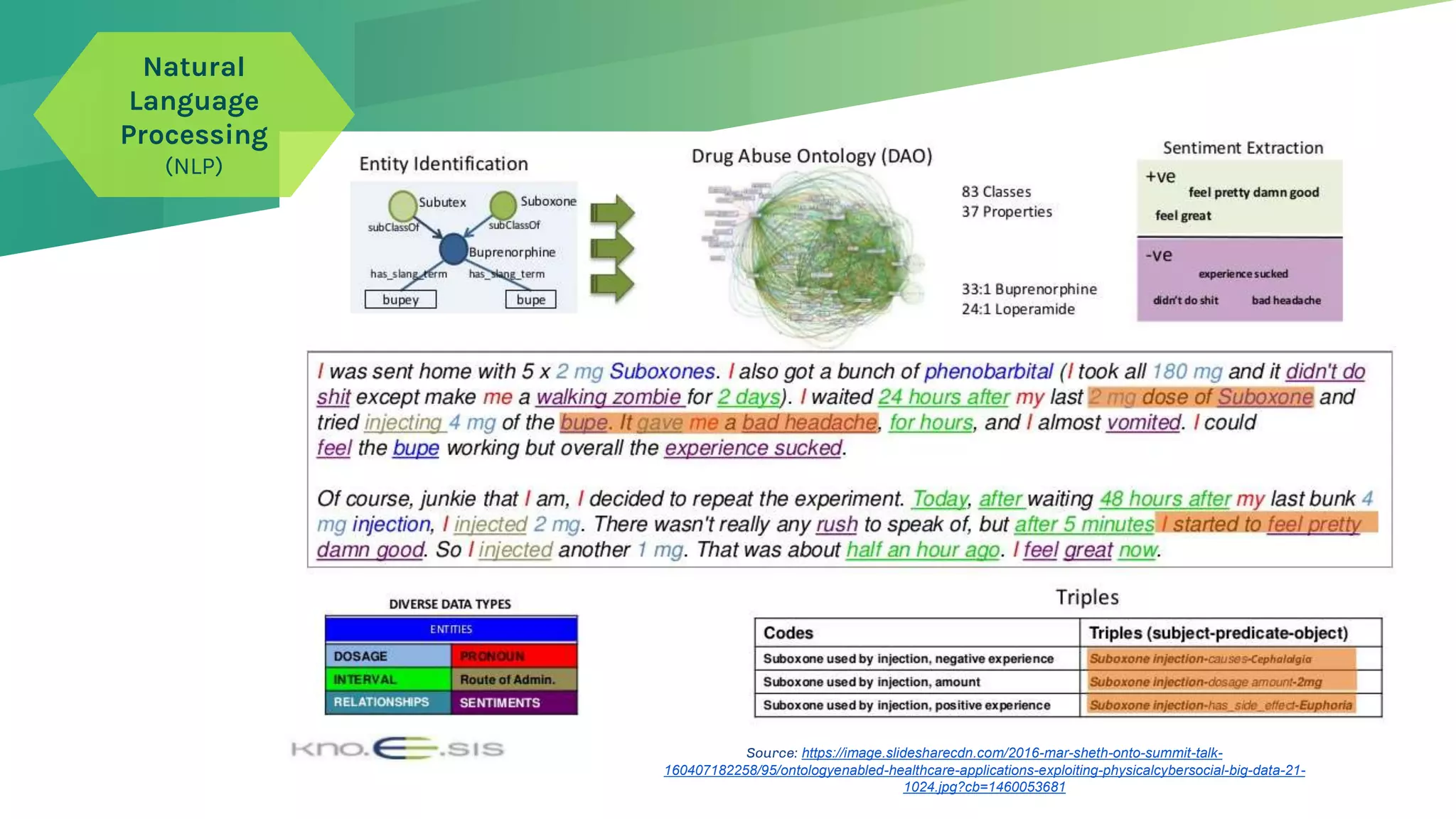
Source: https://image.slidesharecdn.com/2016-mar-sheth-onto-summit-talk-
160407182258/95/ontologyenabled-healthcare-applications-exploiting-physicalcybersocial-big-data-21-
1024.jpg?cb=1460053681
Natural
Language
Processing
(NLP)
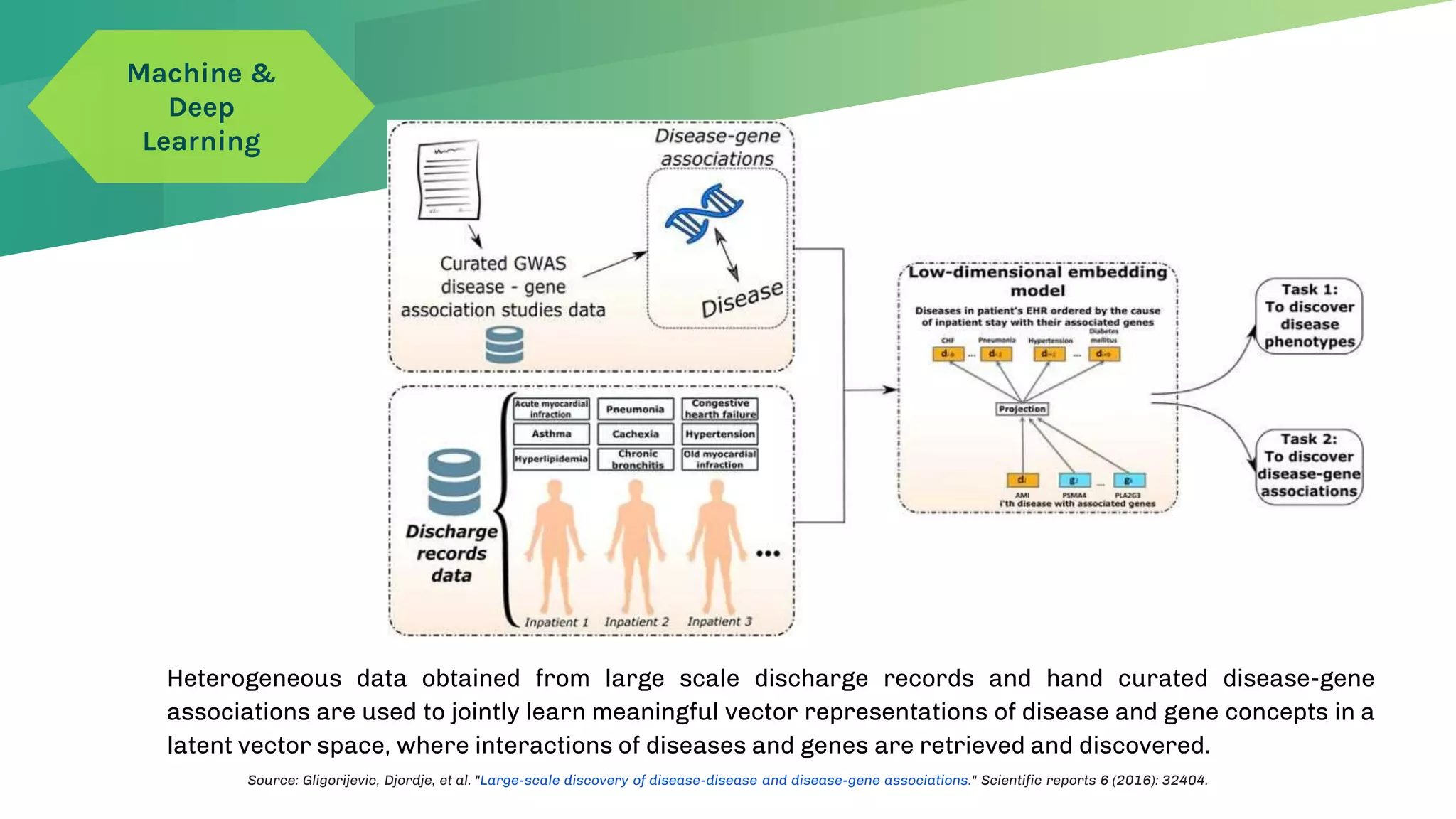
Heterogeneous data obtained from large scale discharge records and hand curated disease-gene
associations are used to jointly learn meaningful vector representations of disease and gene concepts in a
latent vector space, where interactions of diseases and genes are retrieved and discovered.
Source: Gligorijevic, Djordje, et al. "Large-scale discovery of disease-disease and disease-gene associations." Scientific reports 6 (2016): 32404.
Machine &
Deep
Learning
Data
Science
(Statistical
Analysis)
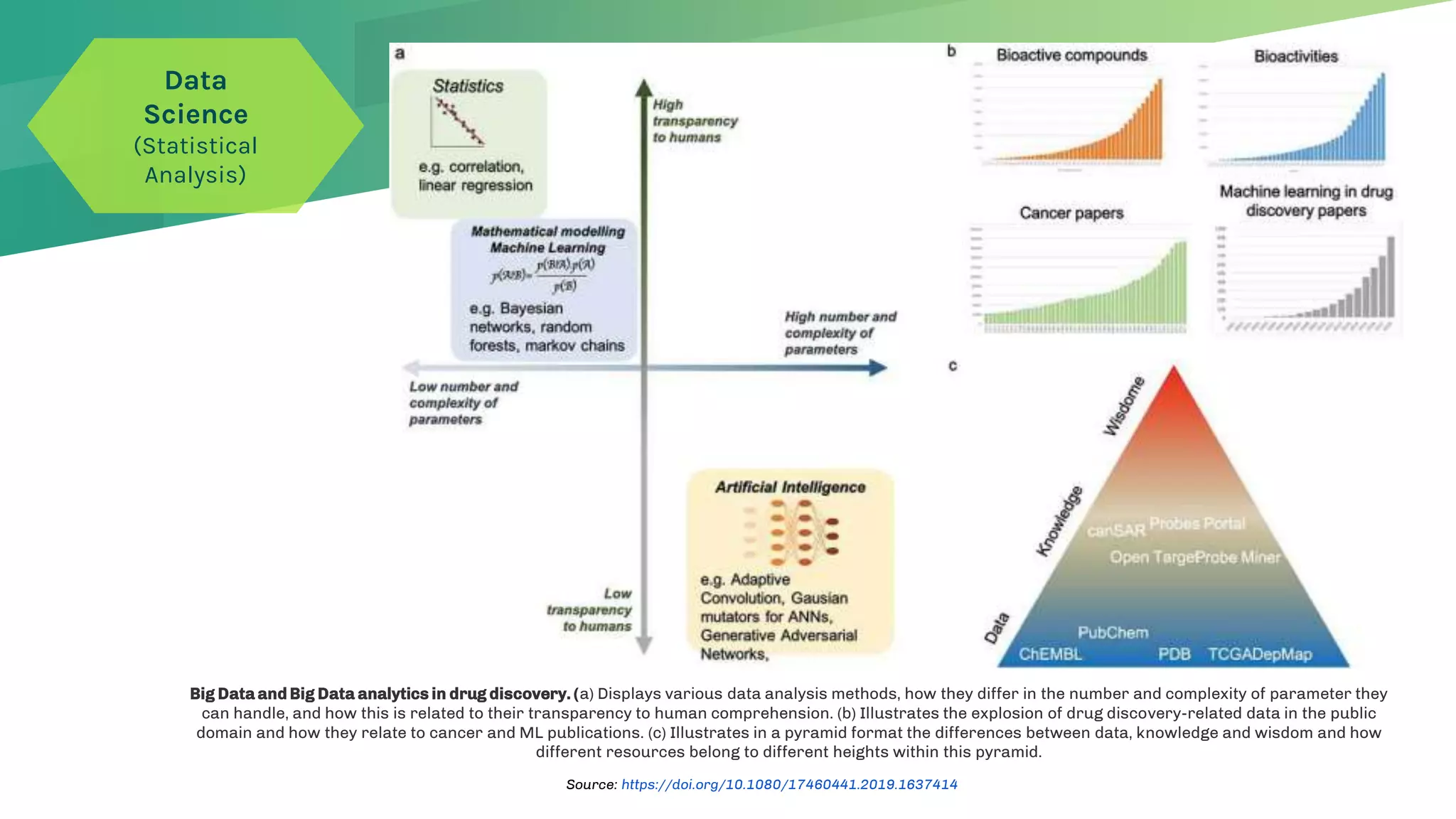
Source: https://doi.org/10.1080/17460441.2019.1637414
Big Data and Big Data analytics in drug discovery. (a) Displays various data analysis methods, how they differ in the number and complexity of parameter they
can handle, and how this is related to their transparency to human comprehension. (b) Illustrates the explosion of drug discovery-related data in the public
domain and how they relate to cancer and ML publications. (c) Illustrates in a pyramid format the differences between data, knowledge and wisdom and how
different resources belong to different heights within this pyramid.
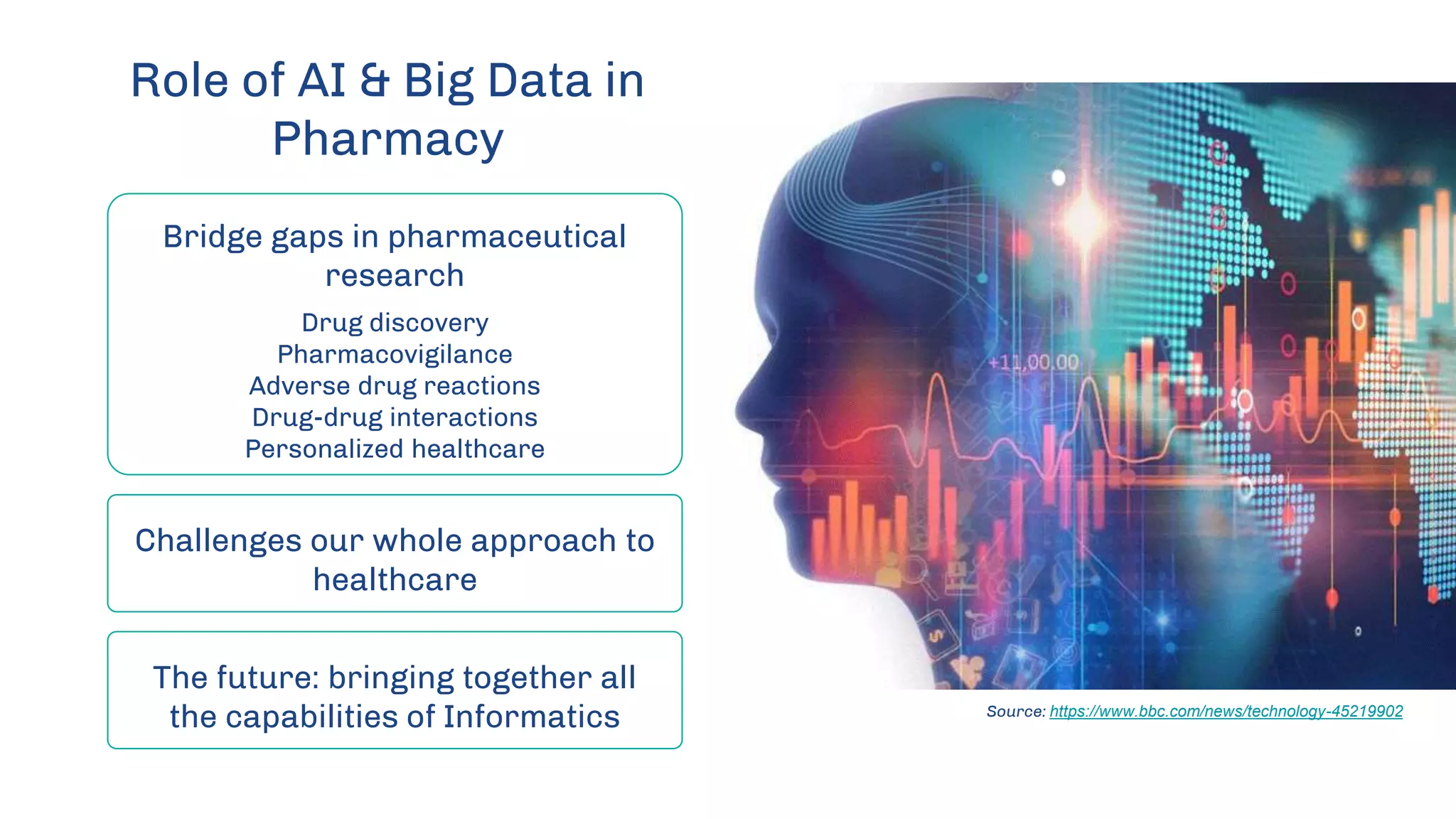
Source: https://www.bbc.com/news/technology-45219902
Bridge gaps in pharmaceutical
research
Drug discovery
Pharmacovigilance
Adverse drug reactions
Drug-drug interactions
Personalized healthcare
Challenges our whole approach to
healthcare
The future: bringing together all
the capabilities of Informatics
Role of AI & Big Data in
Pharmacy
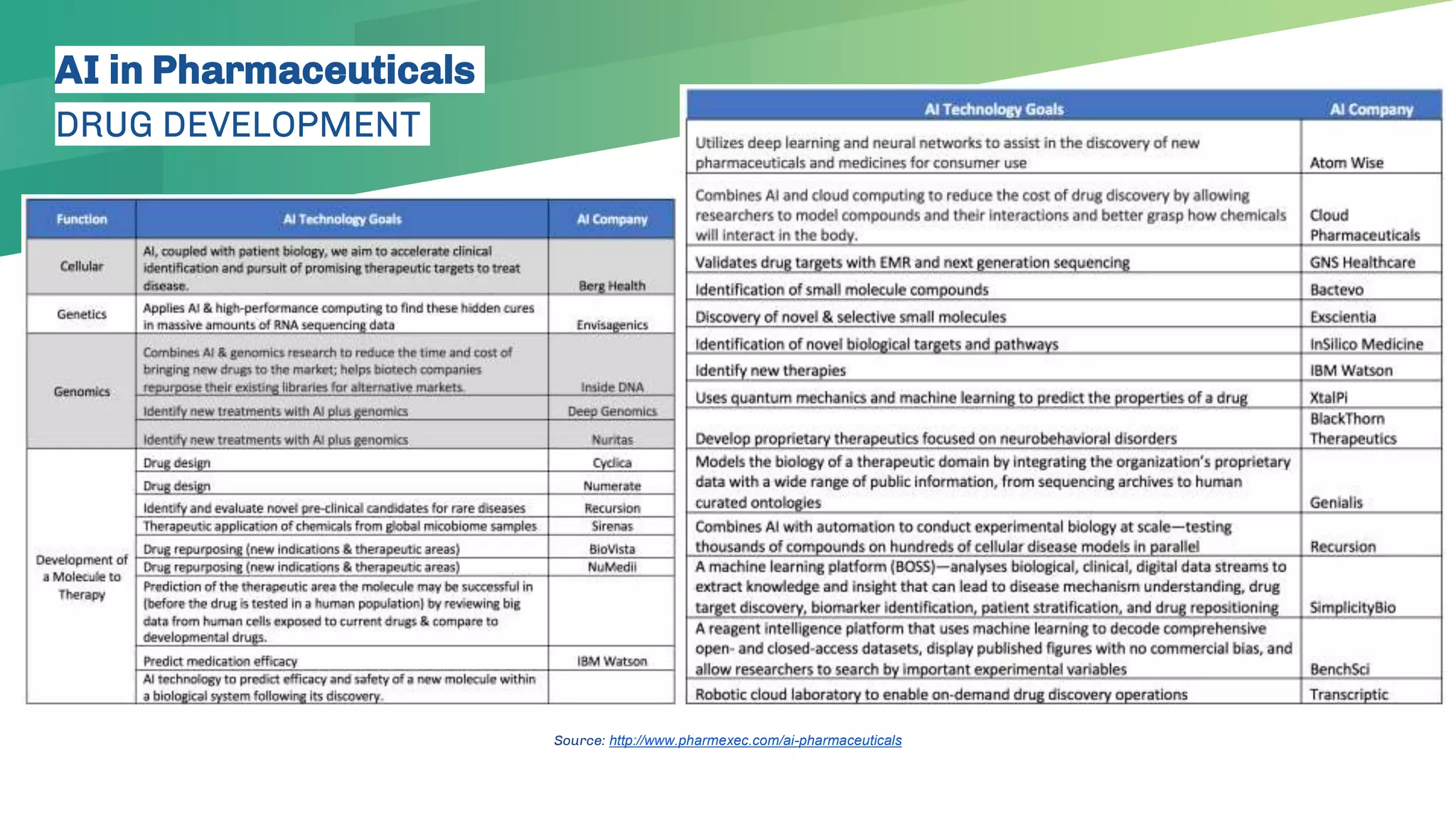
AI in Pharmaceuticals
DRUG DEVELOPMENT
Source: http://www.pharmexec.com/ai-pharmaceuticals
AI in Pharmaceuticals
MEDICAL DEVELOPMENT &
COMMERCIALIZATION
Source: http://www.pharmexec.com/ai-pharmaceuticals
DRUG DISCOVERY
SELECTION OF
PATIENTS FOR
CLINICAL TRIALS
AUTOMATION OF
PHARMACEUTICAL
REPORTING
○ Modelling of different types of
cancer cells to work out what
conditions allowed the disease
to develop
○ Use the information to try and
create new treatments
○ AI Matches drugs to
larger databases of
patients quicker than
human annotation
● Using data from clinical trials to
generate sections of the CSR report
● Using AI to automate pharma reports
● Frees up medical writers’ time
● Allowing them focus on more high value
analysis and adding technical insight to
reports.Automate report writing
Source: https://pixabay.com/de/illustrations/medizin-pharma-pille-flasche-2801025/, https://www.resources.yseop.com/CSR-use-case
AI in Pharmaceuticals
PHARMA
AI in Pharmaceuticals
DRUG DISCOVERY
The application of Big Data analysis and Machine Learning across the drug discovery cycle. In contrast to the traditional
linear diagram often used to illustrate drug discovery, iterative clinical Big Data and ML are increasingly used to inform
target identification, transforming drug discovery into a more iteratively ‘circular’ endeavour.
Source: https://doi.org/10.1080/17460441.2019.1637414
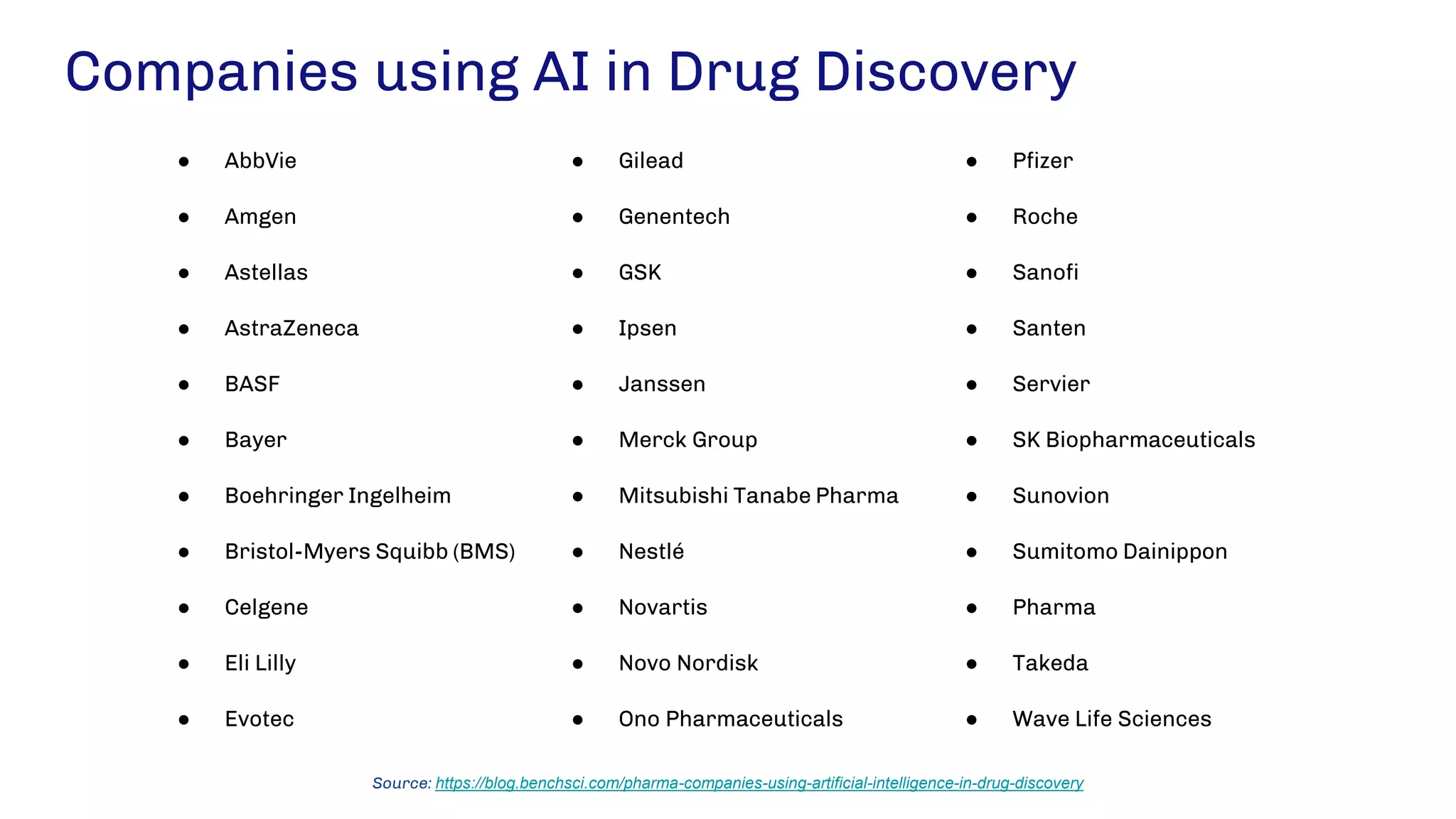
Companies using AI in Drug Discovery
● AbbVie ● Gilead ● Pfizer
● Amgen ● Genentech ● Roche
● Astellas ● GSK ● Sanofi
● AstraZeneca ● Ipsen ● Santen
● BASF ● Janssen ● Servier
● Bayer ● Merck Group ● SK Biopharmaceuticals
● Boehringer Ingelheim ● Mitsubishi Tanabe Pharma ● Sunovion
● Bristol-Myers Squibb (BMS) ● Nestlé ● Sumitomo Dainippon
● Celgene ● Novartis ● Pharma
● Eli Lilly ● Novo Nordisk ● Takeda
● Evotec ● Ono Pharmaceuticals ● Wave Life Sciences
Source: https://blog.benchsci.com/pharma-companies-using-artificial-intelligence-in-drug-discovery
AI in Pharmaceuticals
PHARMACOVIGILANCE
Source: https://journals.sagepub.com/doi/full/10.1177/2042098617736422
Post-marketing
safety analysis
Decision-relevant
evidence
Facilitate
pharmacoepidemiologic
studies conducted across
multiple databases
Development of large
networks of observational
databases of Electronic
Healthcare Records
across North America,
Europe and Asia.
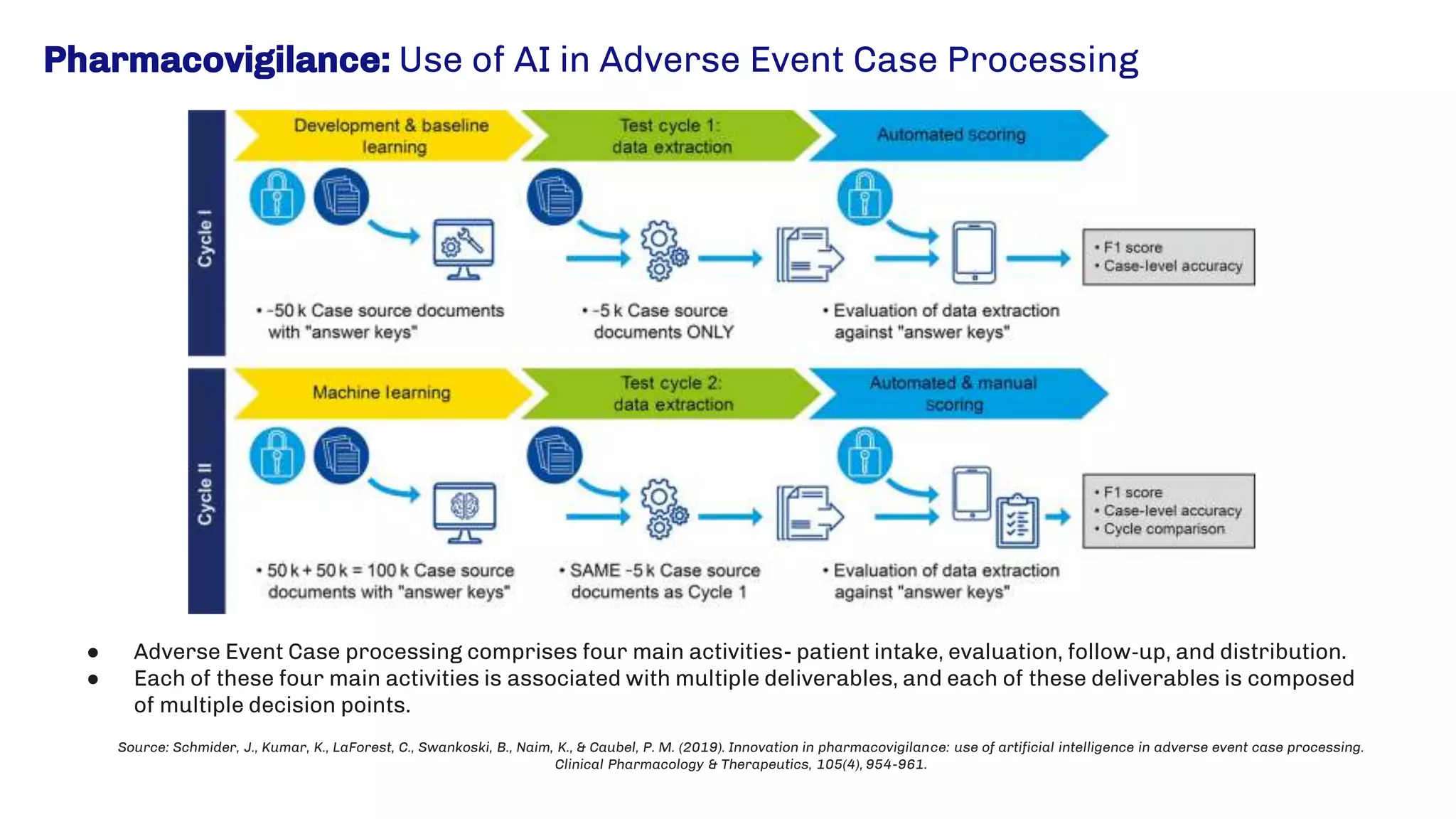
Pharmacovigilance: Use of AI in Adverse Event Case Processing
● Adverse Event Case processing comprises four main activities- patient intake, evaluation, follow‐up, and distribution.
● Each of these four main activities is associated with multiple deliverables, and each of these deliverables is composed
of multiple decision points.
Source: Schmider, J., Kumar, K., LaForest, C., Swankoski, B., Naim, K., & Caubel, P. M. (2019). Innovation in pharmacovigilance: use of artificial intelligence in adverse event case processing.
Clinical Pharmacology & Therapeutics, 105(4), 954-961.
AI in Pharmaceuticals
ADVERSE DRUG
REACTIONS Drug Use/Abuse:
Loperamide Discovery
▰ In a Web forum dataset, it was observed that users reported taking the anti-diarrhea treatment drug
Loperamide (sold over the counter in Imodium) to self-medicate from withdrawal symptoms. The opioid
addictions treatment drugs Buprenorphine and Methadone are commonly prescribed for treatment of
withdrawal symptoms. Until now, it was unknown that Loperamide, can be (and is being) used for the
same purpose. Which is more, it was observed that users reported the possibility of mild psychoactive
(opiated) effects from megadosing - which is the practice of taking severely excessive amounts of a
drug.
▰ Three toxicology studies followed citing our work.
▰ FDA Warning in 2016.
▰ More at: http://wiki.knoesis.org/index.php/PREDOSE
Source: R. Daniulaityte, R. Carlson, R. Falck, D. Cameron, S. Perera, L. Chen, A. P. Sheth. "I Just Wanted to Tell You That Loperamide WILL
WORK": A Web-Based Study of Extra-Medical Use of Loperamide. Journal of Drug and Alcohol Dependence. 130(1-3): 241-244, 2013.
AI in Pharmaceuticals
DETECTING DRUG TO
DRUG INTERACTION RISKS
Applicability of data mining using different sources: applicability showing the importance of Drug Drug Interactions (DDIs) as the
cause of Adverse Drug Effects (ADES), in the detection of novel DDIs and in the development of knowledge databases.
Source: https://www.ncbi.nlm.nih.gov/pmc/articles/PMC6454455/
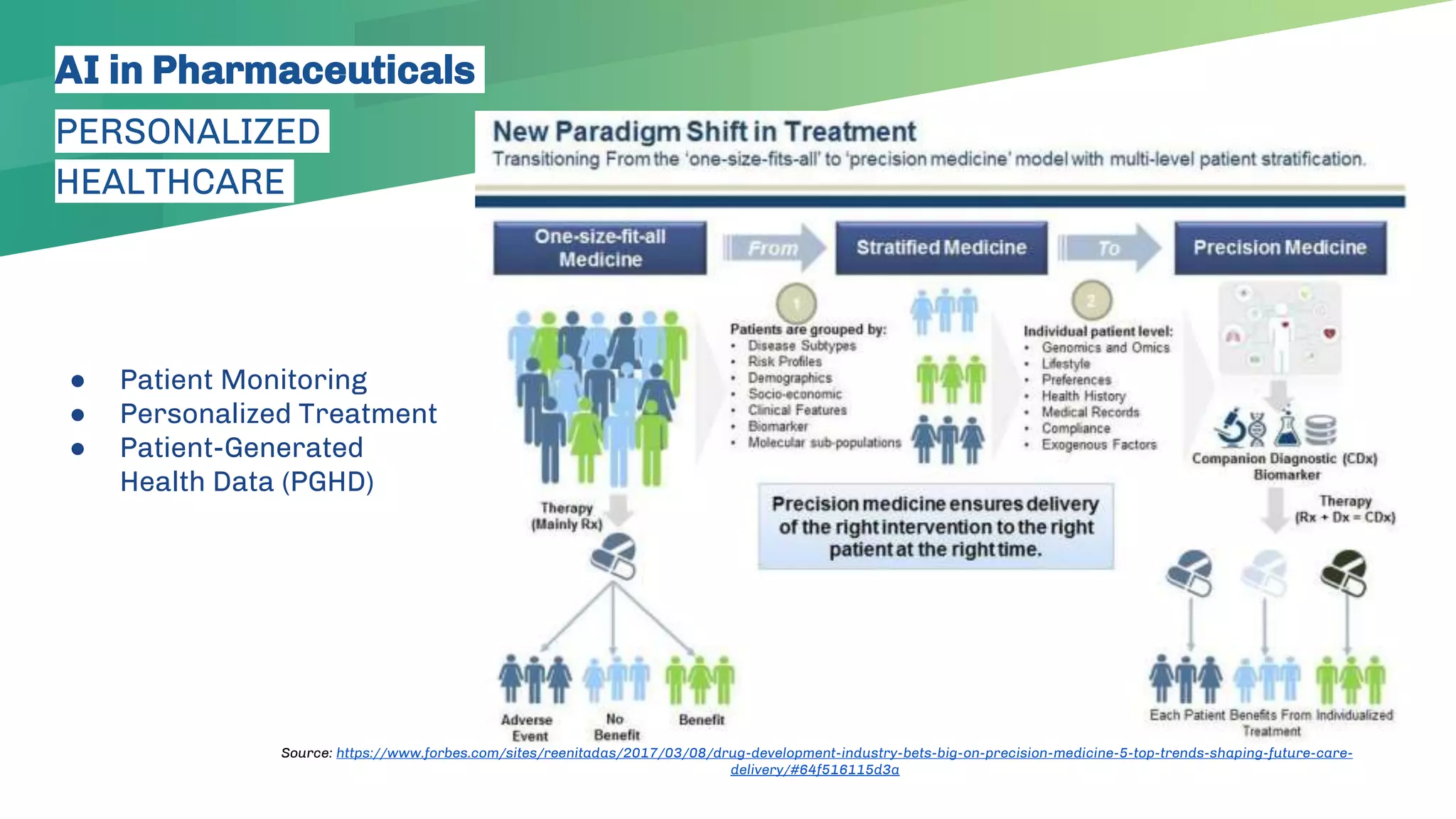
AI in Pharmaceuticals
PERSONALIZED
HEALTHCARE
Source: https://www.forbes.com/sites/reenitadas/2017/03/08/drug-development-industry-bets-big-on-precision-medicine-5-top-trends-shaping-future-care-
delivery/#64f516115d3a
● Patient Monitoring
● Personalized Treatment
● Patient-Generated
Health Data (PGHD)
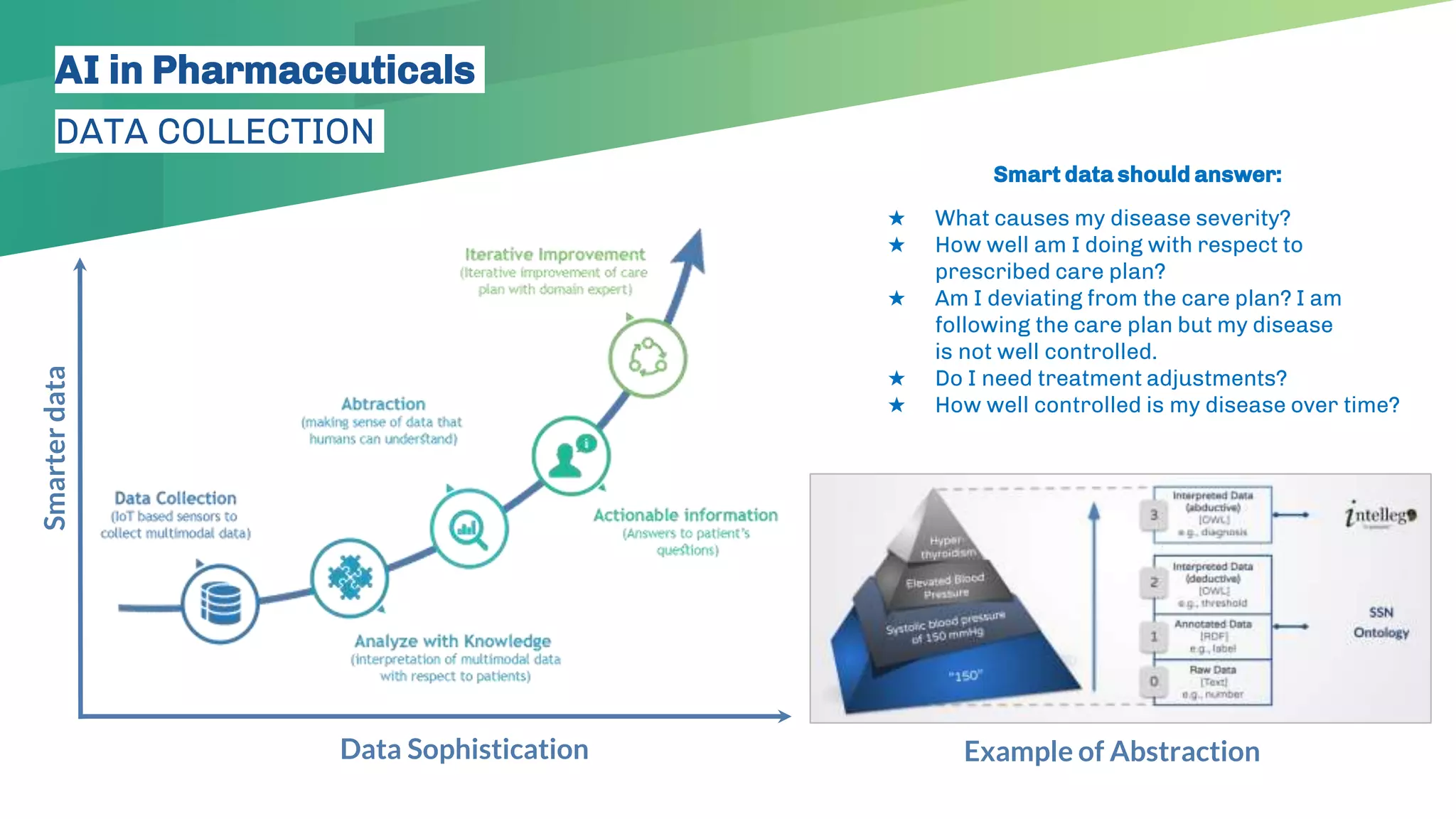
AI in Pharmaceuticals
DATA COLLECTION
Smarterdata
Data Sophistication
Smart data should answer:
★ What causes my disease severity?
★ How well am I doing with respect to
prescribed care plan?
★ Am I deviating from the care plan? I am
following the care plan but my disease
is not well controlled.
★ Do I need treatment adjustments?
★ How well controlled is my disease over time?
Example of Abstraction
AI and Pharma Conferences
Source: https://www.aiinpharma.com/
Members in AI in Pharma Summit
Source: https://www.aiinpharma.com/
Big Data and
Artificial
Intelligence
in Pharma
36
CONCLUSION
Domain
Knowledge
Graph
BIG Data
(Public & PGHD)
ARTIFICIAL
INTELLIGENCE
with Data Science
& NLP
PERSONALIZED
PHARMACY

Big Data, AI, and Pharma

  • 1.
    Big Data andArtificial Intelligence (AI) in Pharma Keynote @ College of Pharmacy Graduate Retreat University of South Carolina, Columbia, SC, 11 October 2019 Amit Sheth USC Artificial Intelligence Institute http://ai.sc.edu Icon source used in the entire presentation - https://thenounproject.com Presentationtemplate by SlidesCarnival UGUR Kursuncu UTKARSHANI Jaimini JOEY Yip Thanks for help in preparing this presentation
  • 2.
    ABSTRACT I have framedthis talk to encourage Pharmacy students to embrace computing in general, and data science and artificial intelligence techniques in particular. The reason is that data-driven science has overtaken traditional lab science; chemistry and biology that underlie pharmacy have become data-driven sciences, and a significant majority of the new jobs in pharma industries demand data analysis skills. Increasingly, traditional bioinformatics approaches are being complemented or replaced by machine learning or deep learning algorithms, especially for cases that have large data sets. I will provide a few examples (e.g., drug discovery, finding adverse drug reactions and broadly pharmacovigilance, and selecting patients for clinical trials) to demonstrate how big data and/or AI are indispensable to pharma research and industry today.
  • 3.
    Source: Raconteur, takenfrom http://rcnt.eu/un8bg
  • 4.
    5% of allGoogle searches are health-related. Source: https://googleblog.blogspot.com/2015/02/health-info-knowledge- graph.html Healthcare data will experience a compound annual growth rate (CAGR) of 36% through 2025. Source: https://healthitanalytics.com/news/big-data-to-see-explosive-growth- challenging-healthcare-organizations FDA Sets Goals for Big Data, Clinical Trials, Artificial Intelligence. Source: https://healthitanalytics.com/news/fda-sets-goals-for-big- data-clinical-trials-artificial-intelligence
  • 5.
  • 6.
    Source: https://www.sciencedirect.com/science/article/pii/S0167629616000291?via%3Dihub #fig0015 As of 2019,many of the largest pharmaceutical firms spend nearly 20% on R&D. As of mid 2019, AstraZeneca (AZN) blazed the path by spending 25.63% of revenues on research and development. Source: https://www.investopedia.com/ask/answers/060115/how-much-drug-companys-spending-allocated-research-and-development-average.asp
  • 7.
    “Information is cheap. Understandingis expensive. Karl Fast, Professor of UX Design, Kent State University AI is about converting data into knowledge, insights and actions.
  • 8.
  • 9.
    Patient-generated Health Data(PGHD) is becoming the next most important data. Source: https://patientengagementhit.com/news/what-are-the-pros-and-cons-of-patient-generated-health-data https://www.healthaffairs.org/doi/full/10.1377/hlthaff.2015.1362?siteid=healthaff&keytype=ref&ijkey=6C1y7.jaIT7q U&#aff-1 “Real world evidence can help answer questions that are relevant to broader patient populations or treatment settings where information may not be captured through traditional clinical trials” PGHD
  • 10.
    kHealth Asthma: Amultisensory approach for personalised asthma care in children
  • 11.
    Emerging Healthcare Model Moreinteractions, pervasive role of data and analysis Pharmaceutical Research Healthcare Delivery Public Health Precision Medicine Population Health Real World Evidence Combination therapy Outcome Analytics Nudge EconomicsQuantified Self Performance-based Pricing Risk Adjustment Phenotypic Drug Discovery Adverse Event Prediction How can I stay healthy & get better when I do get sick? Source: UI Integrative Data Science Lab (Wild Informatics Colloquium, October 2019)Special Thanks: David Wild, IU
  • 12.
    “Data-driven science hasovertaken traditional lab science and a significant majority of the new jobs in pharma industries demand data analysis skills. Increasingly, traditional bioinformatics approaches are being complemented or replaced by AI algorithms, especially for cases that have large data sets (Big Data).
  • 13.
    • There isan incredibly rich resource of public information relating compounds, targets, genes, pathways, and diseases. • 96 million compounds (PubChem) • 268 million compound bioactivities (PubChem Bioassay) • 10,256 drugs (DrugBank) • 560,000 protein sequences (SwissProt) • 2.3 billion nucleotide sequences (EMBL) • 99 million life science publications • Even more important are the relationships between these entities. • Biological assay with percent inhibition, IC50, etc (e.g. ChEMBL, PubChem) • Crystal structure of ligand/protein complex • Co-occurrence in a paper abstract • Computational experiment (docking, predictive model) • Statistical relationship • System association (e.g. involved in same pathways cellular processes) Big Data in the Public Domain Source: UI Integrative Data Science Lab (Wild Informatics Colloquium, October 2019)
  • 14.
  • 15.
    AI for BigData Integrate complex, disparate data sources to gain insights Techniques: Semantic technologies, entity mapping, path-based prediction Integrate disparate data, algorithms, and human knowledge to impact big problems Technologies: Deep Learning, Knowledge Graphs, graph analytics, hypothesis testing and generation, visualization Integrate the worlds of data, things & humanity in a way that enables us to thrive as a society Fields: Design thinking, data science, IoT/sensors, networks, ethics, social sciences, computing, culture & society Based in part on: https://www.pwc.com/gx/en/industries/healthcare/publications/ai-robotics-new-health/transforming- healthcare.html
  • 16.
    Knowledge Graph (Ontology) Source: UI IntegrativeData Science Lab (Wild Informatics Colloquium, October 2019) Chem2Bio2RDF Source: BMC Bioinformatics, 2010, 11, 255; chem2bio2rdf.org Comprehensive knowledge extraction from multiple sources -> Knowledge Graph
  • 17.
  • 18.
    ● Constrained associationsearch between myocardial infarction and rosiglitazone. ● Showing ranked paths up to three edges in length that (i) contain a gene and (ii) are ranked highly by KL-divergence showing literature support. Source: D.J.. Wild, et al., Systems chemical biology and the Semantic Web: what they mean for the future of drug discovery research, Drug Discov Today (2012), doi:10.1016/j.drudis.2011.12.019 Knowledge Graph for Systems Chemical Biology
  • 19.
  • 20.
    Heterogeneous data obtainedfrom large scale discharge records and hand curated disease-gene associations are used to jointly learn meaningful vector representations of disease and gene concepts in a latent vector space, where interactions of diseases and genes are retrieved and discovered. Source: Gligorijevic, Djordje, et al. "Large-scale discovery of disease-disease and disease-gene associations." Scientific reports 6 (2016): 32404. Machine & Deep Learning
  • 21.
    Data Science (Statistical Analysis) Source: https://doi.org/10.1080/17460441.2019.1637414 Big Dataand Big Data analytics in drug discovery. (a) Displays various data analysis methods, how they differ in the number and complexity of parameter they can handle, and how this is related to their transparency to human comprehension. (b) Illustrates the explosion of drug discovery-related data in the public domain and how they relate to cancer and ML publications. (c) Illustrates in a pyramid format the differences between data, knowledge and wisdom and how different resources belong to different heights within this pyramid.
  • 22.
    Source: https://www.bbc.com/news/technology-45219902 Bridge gapsin pharmaceutical research Drug discovery Pharmacovigilance Adverse drug reactions Drug-drug interactions Personalized healthcare Challenges our whole approach to healthcare The future: bringing together all the capabilities of Informatics Role of AI & Big Data in Pharmacy
  • 23.
    AI in Pharmaceuticals DRUGDEVELOPMENT Source: http://www.pharmexec.com/ai-pharmaceuticals
  • 24.
    AI in Pharmaceuticals MEDICALDEVELOPMENT & COMMERCIALIZATION Source: http://www.pharmexec.com/ai-pharmaceuticals
  • 25.
    DRUG DISCOVERY SELECTION OF PATIENTSFOR CLINICAL TRIALS AUTOMATION OF PHARMACEUTICAL REPORTING ○ Modelling of different types of cancer cells to work out what conditions allowed the disease to develop ○ Use the information to try and create new treatments ○ AI Matches drugs to larger databases of patients quicker than human annotation ● Using data from clinical trials to generate sections of the CSR report ● Using AI to automate pharma reports ● Frees up medical writers’ time ● Allowing them focus on more high value analysis and adding technical insight to reports.Automate report writing Source: https://pixabay.com/de/illustrations/medizin-pharma-pille-flasche-2801025/, https://www.resources.yseop.com/CSR-use-case AI in Pharmaceuticals PHARMA
  • 26.
    AI in Pharmaceuticals DRUGDISCOVERY The application of Big Data analysis and Machine Learning across the drug discovery cycle. In contrast to the traditional linear diagram often used to illustrate drug discovery, iterative clinical Big Data and ML are increasingly used to inform target identification, transforming drug discovery into a more iteratively ‘circular’ endeavour. Source: https://doi.org/10.1080/17460441.2019.1637414
  • 27.
    Companies using AIin Drug Discovery ● AbbVie ● Gilead ● Pfizer ● Amgen ● Genentech ● Roche ● Astellas ● GSK ● Sanofi ● AstraZeneca ● Ipsen ● Santen ● BASF ● Janssen ● Servier ● Bayer ● Merck Group ● SK Biopharmaceuticals ● Boehringer Ingelheim ● Mitsubishi Tanabe Pharma ● Sunovion ● Bristol-Myers Squibb (BMS) ● Nestlé ● Sumitomo Dainippon ● Celgene ● Novartis ● Pharma ● Eli Lilly ● Novo Nordisk ● Takeda ● Evotec ● Ono Pharmaceuticals ● Wave Life Sciences Source: https://blog.benchsci.com/pharma-companies-using-artificial-intelligence-in-drug-discovery
  • 28.
    AI in Pharmaceuticals PHARMACOVIGILANCE Source:https://journals.sagepub.com/doi/full/10.1177/2042098617736422 Post-marketing safety analysis Decision-relevant evidence Facilitate pharmacoepidemiologic studies conducted across multiple databases Development of large networks of observational databases of Electronic Healthcare Records across North America, Europe and Asia.
  • 29.
    Pharmacovigilance: Use ofAI in Adverse Event Case Processing ● Adverse Event Case processing comprises four main activities- patient intake, evaluation, follow‐up, and distribution. ● Each of these four main activities is associated with multiple deliverables, and each of these deliverables is composed of multiple decision points. Source: Schmider, J., Kumar, K., LaForest, C., Swankoski, B., Naim, K., & Caubel, P. M. (2019). Innovation in pharmacovigilance: use of artificial intelligence in adverse event case processing. Clinical Pharmacology & Therapeutics, 105(4), 954-961.
  • 30.
    AI in Pharmaceuticals ADVERSEDRUG REACTIONS Drug Use/Abuse: Loperamide Discovery ▰ In a Web forum dataset, it was observed that users reported taking the anti-diarrhea treatment drug Loperamide (sold over the counter in Imodium) to self-medicate from withdrawal symptoms. The opioid addictions treatment drugs Buprenorphine and Methadone are commonly prescribed for treatment of withdrawal symptoms. Until now, it was unknown that Loperamide, can be (and is being) used for the same purpose. Which is more, it was observed that users reported the possibility of mild psychoactive (opiated) effects from megadosing - which is the practice of taking severely excessive amounts of a drug. ▰ Three toxicology studies followed citing our work. ▰ FDA Warning in 2016. ▰ More at: http://wiki.knoesis.org/index.php/PREDOSE Source: R. Daniulaityte, R. Carlson, R. Falck, D. Cameron, S. Perera, L. Chen, A. P. Sheth. "I Just Wanted to Tell You That Loperamide WILL WORK": A Web-Based Study of Extra-Medical Use of Loperamide. Journal of Drug and Alcohol Dependence. 130(1-3): 241-244, 2013.
  • 31.
    AI in Pharmaceuticals DETECTINGDRUG TO DRUG INTERACTION RISKS Applicability of data mining using different sources: applicability showing the importance of Drug Drug Interactions (DDIs) as the cause of Adverse Drug Effects (ADES), in the detection of novel DDIs and in the development of knowledge databases. Source: https://www.ncbi.nlm.nih.gov/pmc/articles/PMC6454455/
  • 32.
    AI in Pharmaceuticals PERSONALIZED HEALTHCARE Source:https://www.forbes.com/sites/reenitadas/2017/03/08/drug-development-industry-bets-big-on-precision-medicine-5-top-trends-shaping-future-care- delivery/#64f516115d3a ● Patient Monitoring ● Personalized Treatment ● Patient-Generated Health Data (PGHD)
  • 33.
    AI in Pharmaceuticals DATACOLLECTION Smarterdata Data Sophistication Smart data should answer: ★ What causes my disease severity? ★ How well am I doing with respect to prescribed care plan? ★ Am I deviating from the care plan? I am following the care plan but my disease is not well controlled. ★ Do I need treatment adjustments? ★ How well controlled is my disease over time? Example of Abstraction
  • 34.
    AI and PharmaConferences Source: https://www.aiinpharma.com/
  • 35.
    Members in AIin Pharma Summit Source: https://www.aiinpharma.com/
  • 36.
    Big Data and Artificial Intelligence inPharma 36 CONCLUSION Domain Knowledge Graph BIG Data (Public & PGHD) ARTIFICIAL INTELLIGENCE with Data Science & NLP PERSONALIZED PHARMACY

Editor's Notes

  • #30 AE case processing comprises four main activities, including intake, evaluation, follow‐up, and distribution. Each of these four main activities is associated with multiple deliverables, and each of these deliverables is composed of multiple decision points.
  • #37 https://www.pharmaceuticalonline.com/doc/big-data-and-ai-in-pharmaceutical-development-manufacturing-an-inside-look-0001 https://www.forbes.com/sites/nicolemartin1/2019/08/30/how-healthcare-is-using-big-data-and-ai-to-cure-disease/#3bce56fb45cf https://www.forbes.com/sites/forbestechcouncil/2018/05/10/how-data-analytics-and-artificial-intelligence-are-changing-the-pharmaceutical-industry/#4b4eddd13644 https://becominghuman.ai/artificial-intelligence-in-pharma-4608b076a503