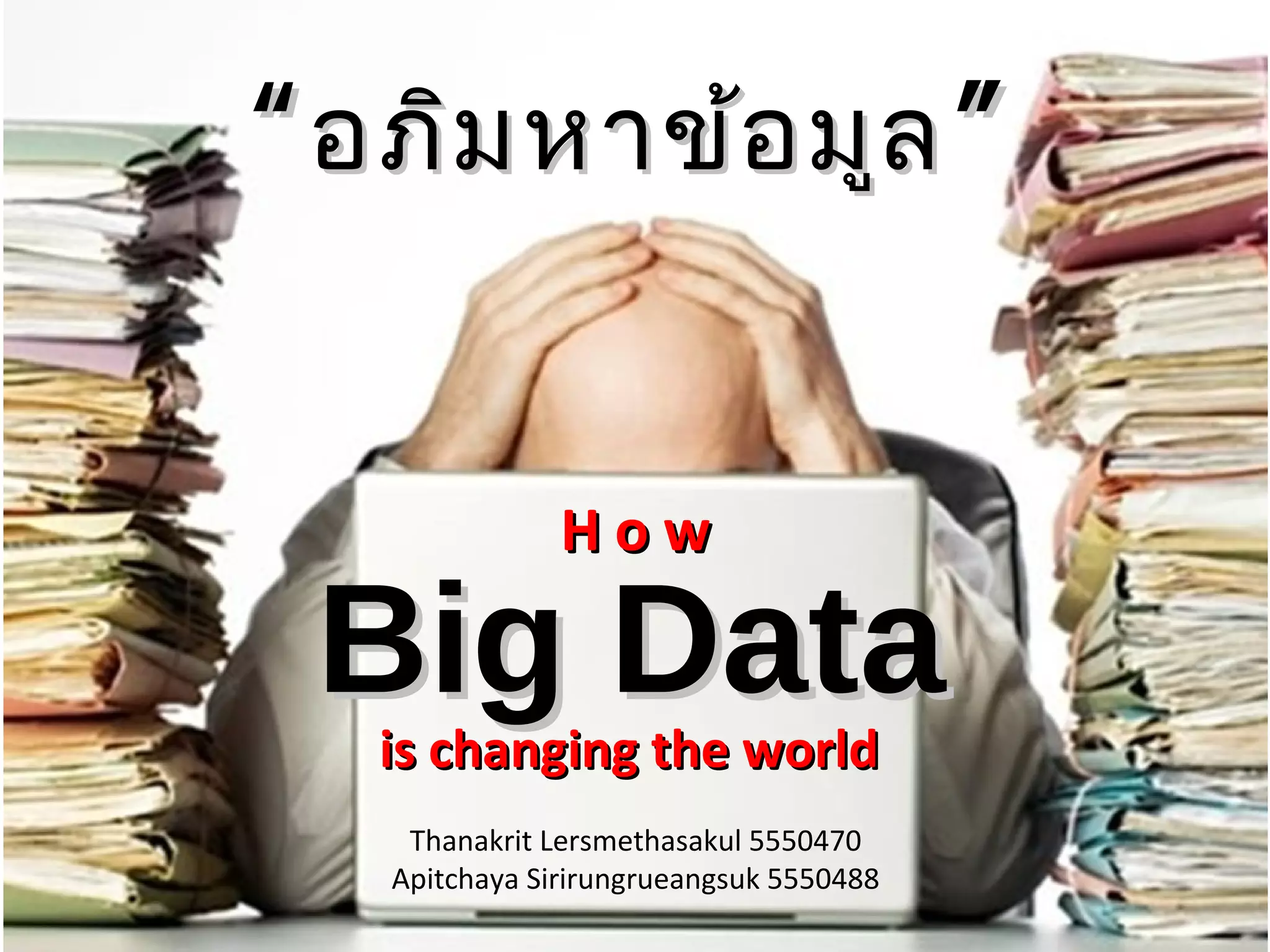
“ อภิม หาข้อ มูล ”
How

Big Data
is changing the world
Thanakrit Lersmethasakul 5550470
Apitchaya Sirirungrueangsuk 5550488
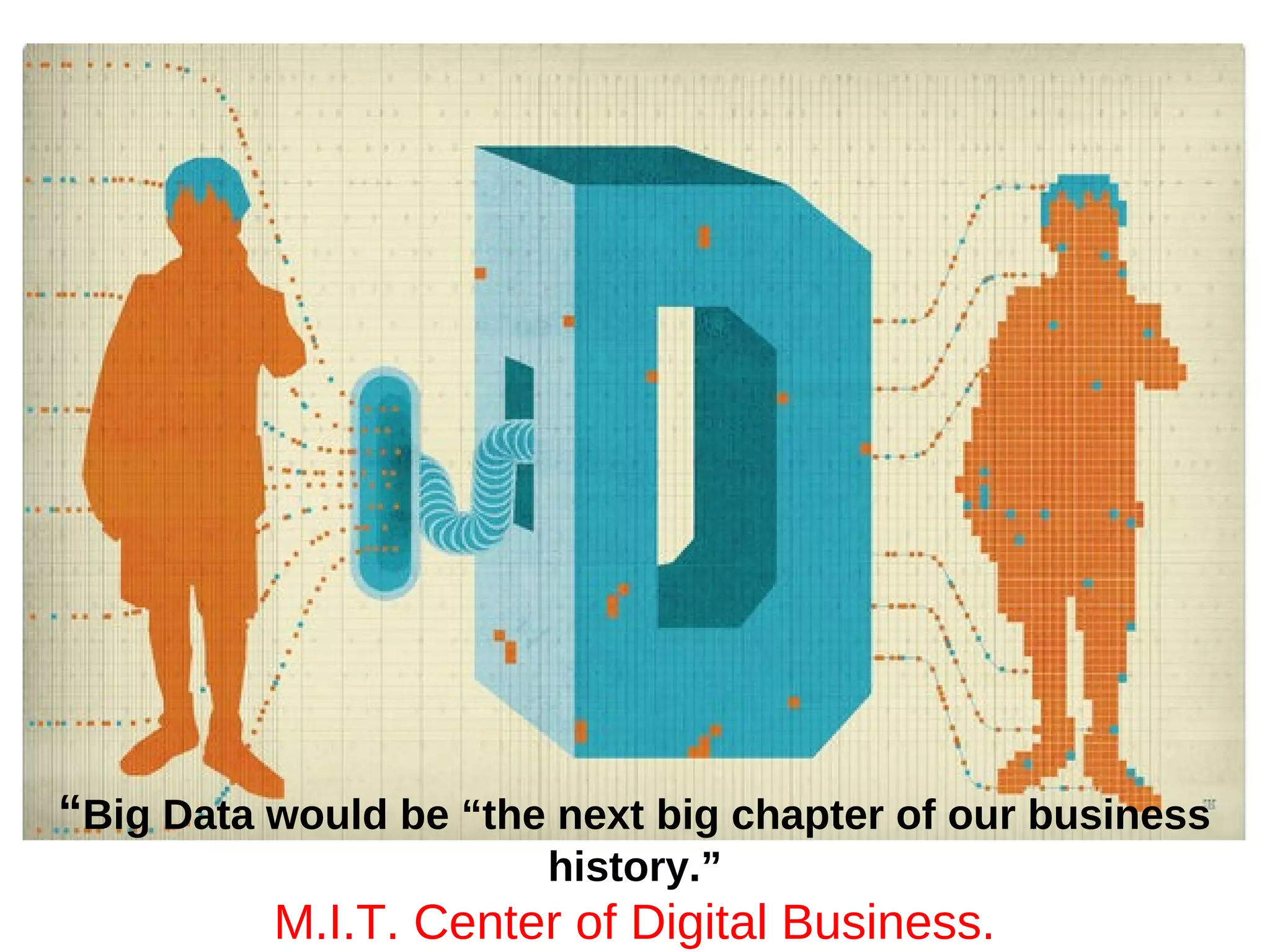
“Big Data would be “the next big chapter of our business
history.”

M.I.T. Center of Digital Business.
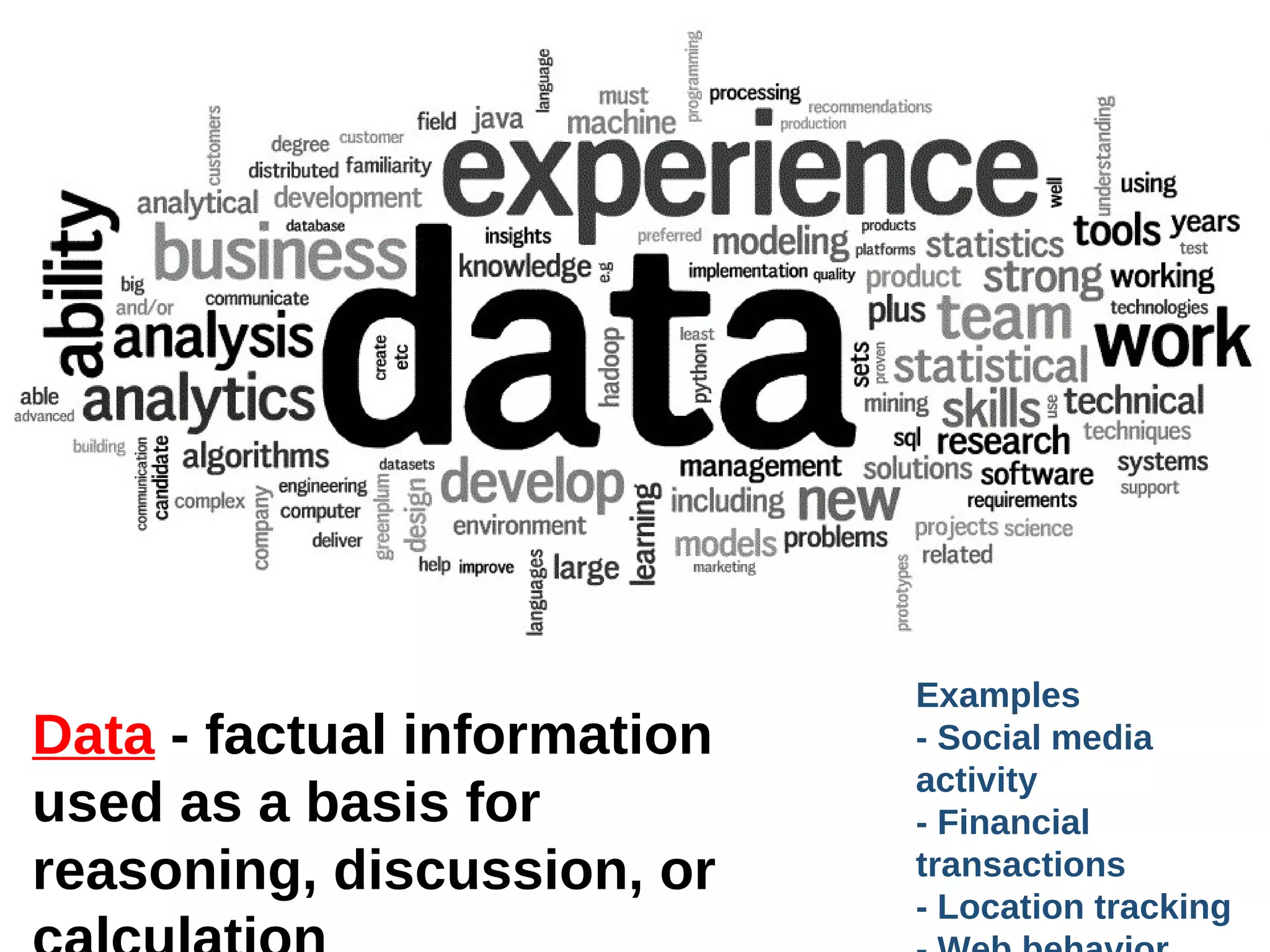
Data - factual information
used as a basis for
reasoning, discussion, or

Examples
- Social media
activity
- Financial
transactions
- Location tracking
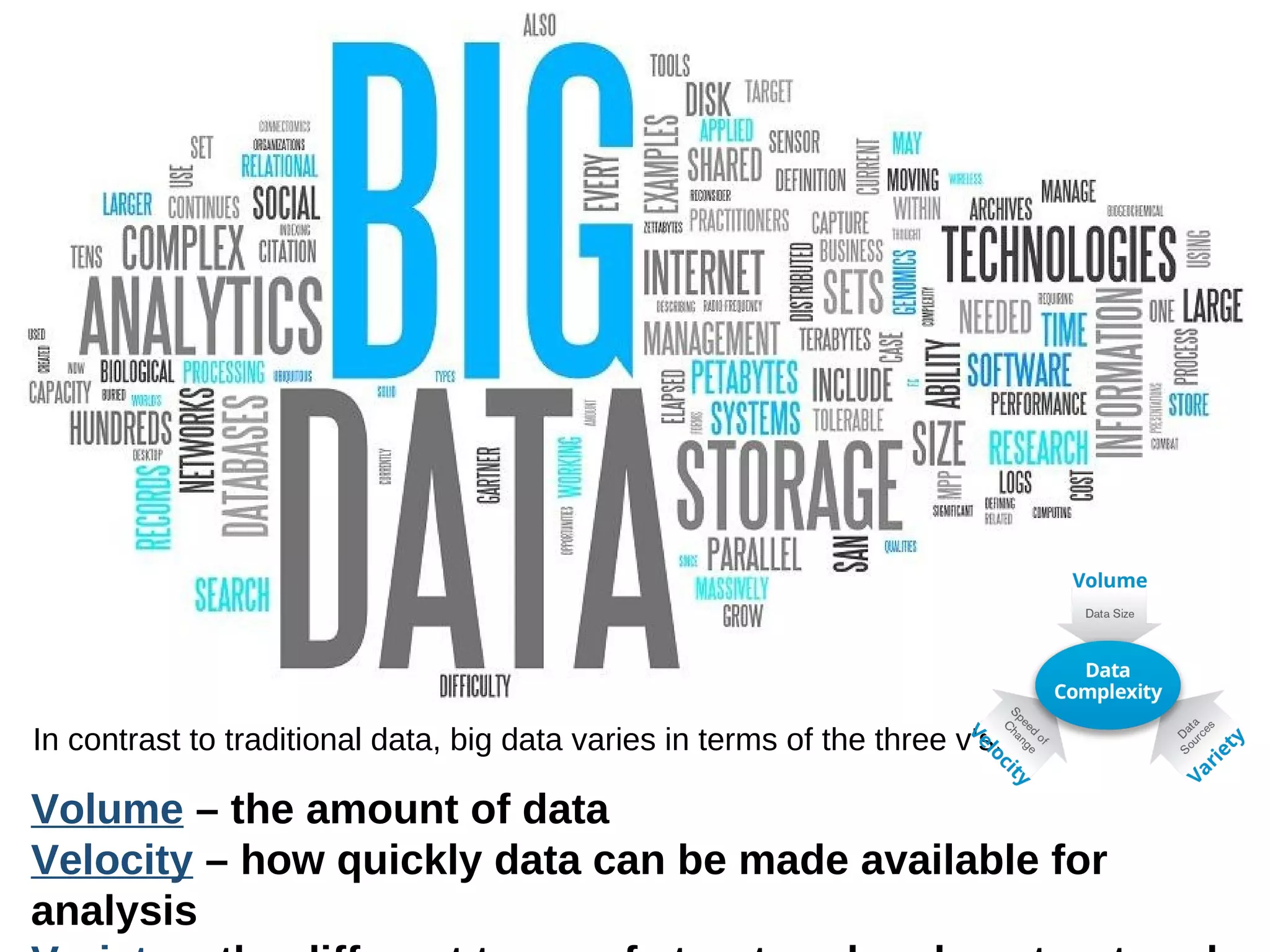
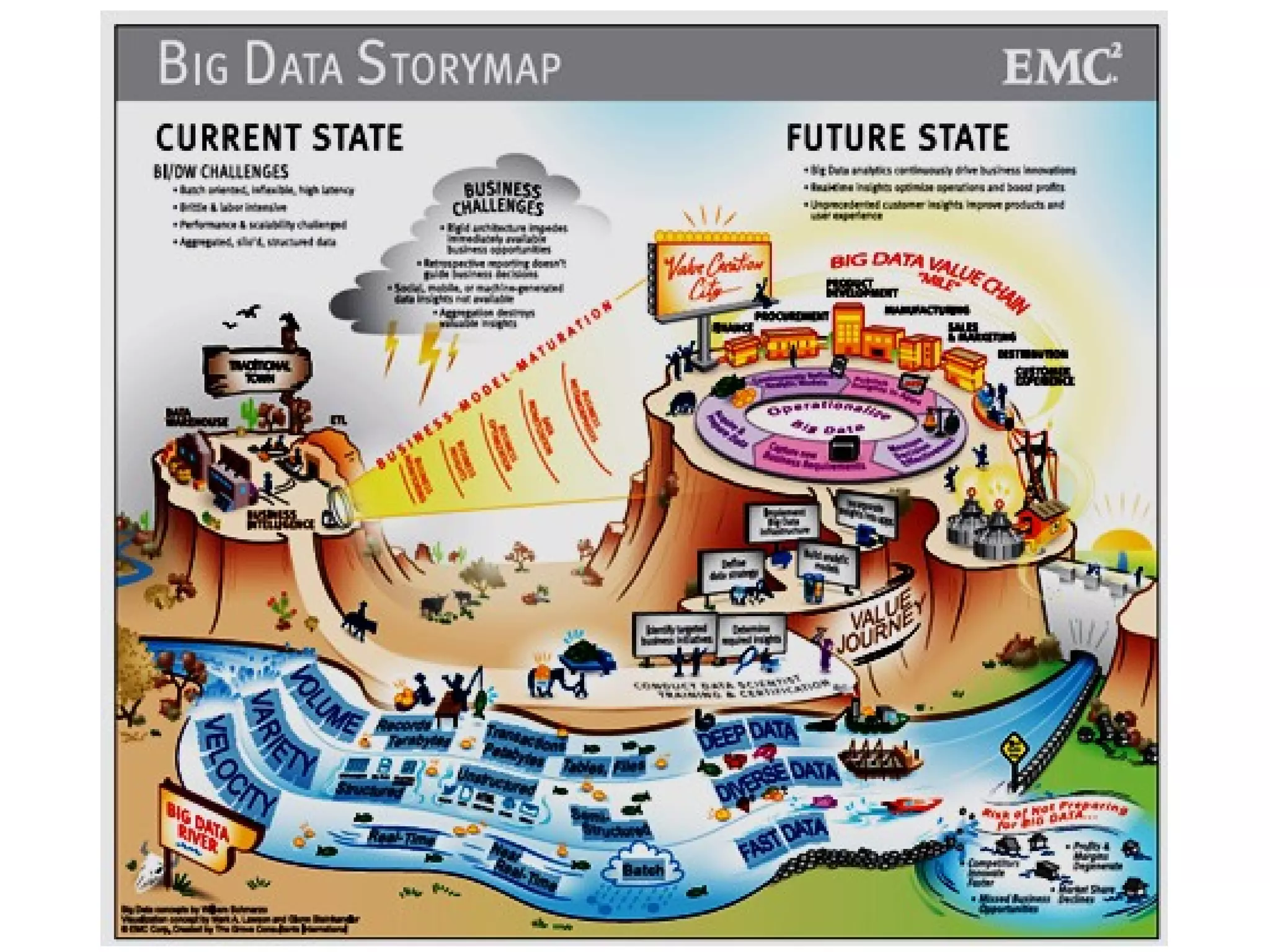
In contrast to traditional data, big data varies in terms of the three v’s.

Volume – the amount of data
Velocity – how quickly data can be made available for
analysis
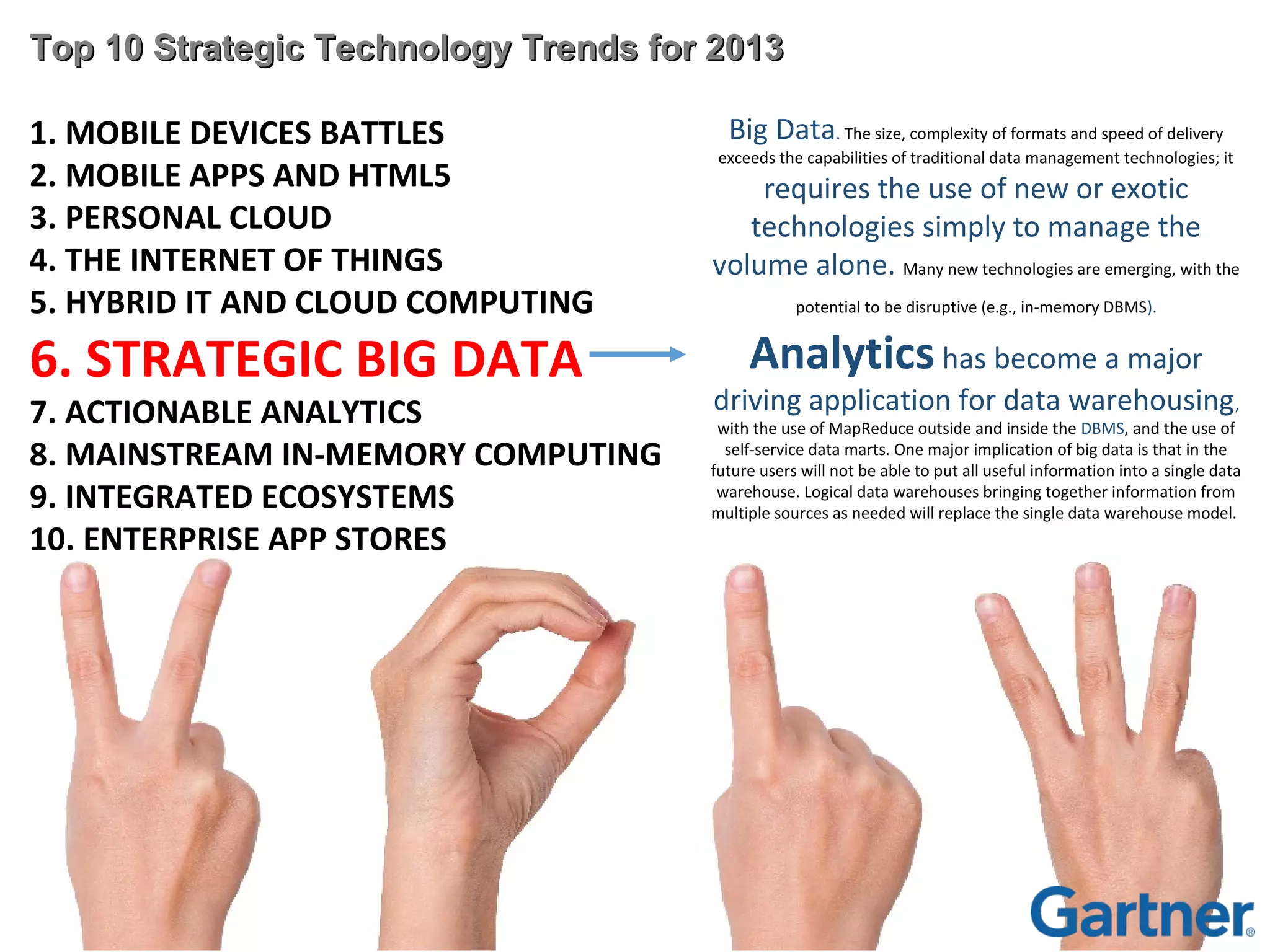
Top 10 Strategic Technology Trends for 2013
1. MOBILE DEVICES BATTLES
2. MOBILE APPS AND HTML5
3. PERSONAL CLOUD
4. THE INTERNET OF THINGS
5. HYBRID IT AND CLOUD COMPUTING

6. STRATEGIC BIG DATA

7. ACTIONABLE ANALYTICS
8. MAINSTREAM IN-MEMORY COMPUTING
9. INTEGRATED ECOSYSTEMS
10. ENTERPRISE APP STORES

Big Data. The size, complexity of formats and speed of delivery

exceeds the capabilities of traditional data management technologies; it

requires the use of new or exotic
technologies simply to manage the
volume alone. Many new technologies are emerging, with the
potential to be disruptive (e.g., in-memory DBMS).

Analytics has become a major

driving application for data warehousing,

with the use of MapReduce outside and inside the DBMS, and the use of
self-service data marts. One major implication of big data is that in the
future users will not be able to put all useful information into a single data
warehouse. Logical data warehouses bringing together information from
multiple sources as needed will replace the single data warehouse model.
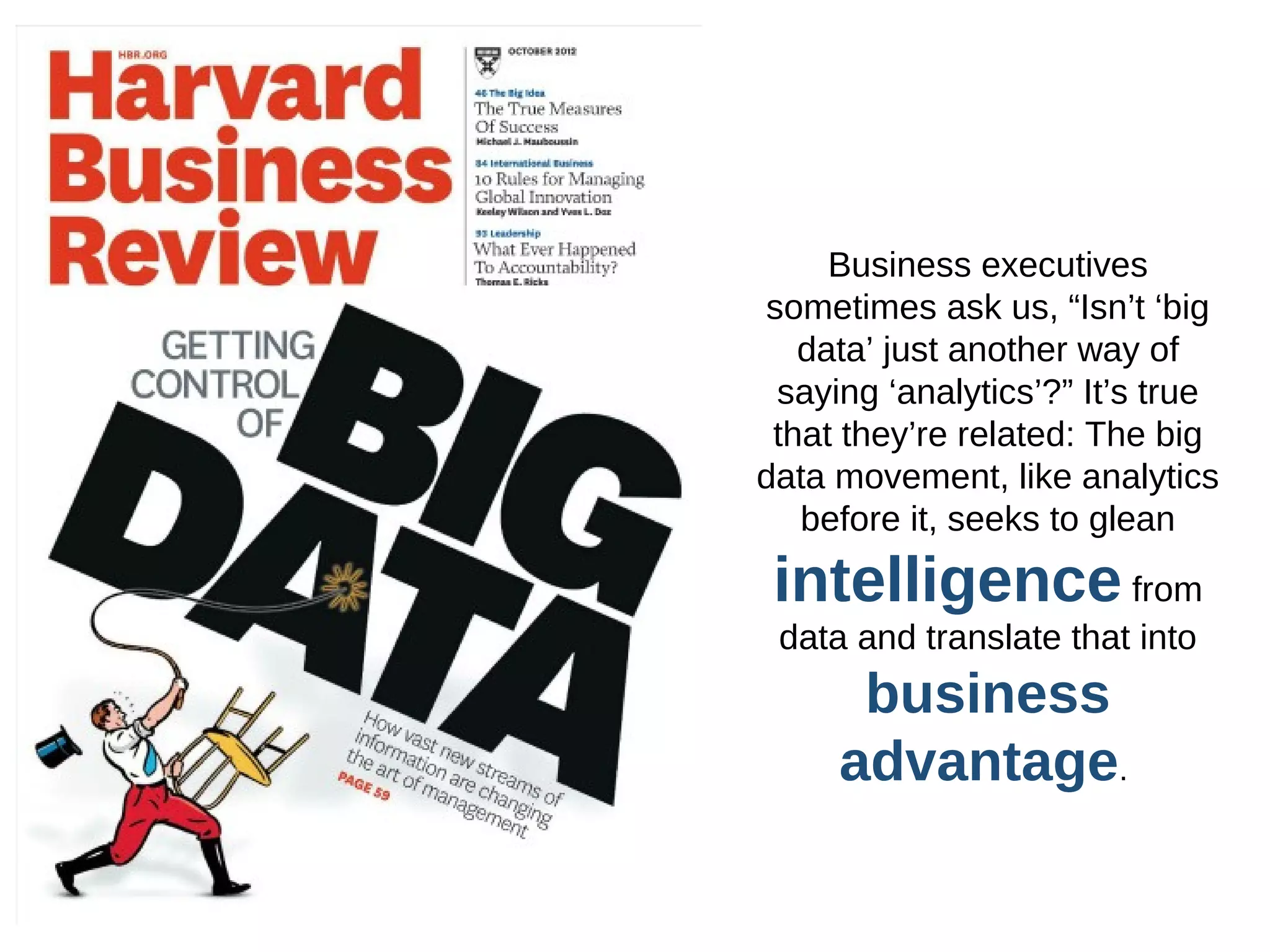
Business executives
sometimes ask us, “Isn’t ‘big
data’ just another way of
saying ‘analytics’?” It’s true
that they’re related: The big
data movement, like analytics
before it, seeks to glean

intelligence from
data and translate that into

business
advantage.
Big Data
Big Data
Big Data
Big Data
Big Data
Big Data
Big Data
Big Data

Big Data

  • 1.
    “ อภิม หาข้อมูล ” How Big Data is changing the world Thanakrit Lersmethasakul 5550470 Apitchaya Sirirungrueangsuk 5550488
  • 2.
    “Big Data wouldbe “the next big chapter of our business history.” M.I.T. Center of Digital Business.
  • 3.
    Data - factualinformation used as a basis for reasoning, discussion, or Examples - Social media activity - Financial transactions - Location tracking
  • 11.
    In contrast totraditional data, big data varies in terms of the three v’s. Volume – the amount of data Velocity – how quickly data can be made available for analysis
  • 17.
    Top 10 StrategicTechnology Trends for 2013 1. MOBILE DEVICES BATTLES 2. MOBILE APPS AND HTML5 3. PERSONAL CLOUD 4. THE INTERNET OF THINGS 5. HYBRID IT AND CLOUD COMPUTING 6. STRATEGIC BIG DATA 7. ACTIONABLE ANALYTICS 8. MAINSTREAM IN-MEMORY COMPUTING 9. INTEGRATED ECOSYSTEMS 10. ENTERPRISE APP STORES Big Data. The size, complexity of formats and speed of delivery exceeds the capabilities of traditional data management technologies; it requires the use of new or exotic technologies simply to manage the volume alone. Many new technologies are emerging, with the potential to be disruptive (e.g., in-memory DBMS). Analytics has become a major driving application for data warehousing, with the use of MapReduce outside and inside the DBMS, and the use of self-service data marts. One major implication of big data is that in the future users will not be able to put all useful information into a single data warehouse. Logical data warehouses bringing together information from multiple sources as needed will replace the single data warehouse model.
  • 18.
    Business executives sometimes askus, “Isn’t ‘big data’ just another way of saying ‘analytics’?” It’s true that they’re related: The big data movement, like analytics before it, seeks to glean intelligence from data and translate that into business advantage.