BIBLIOTHERAPY
AS A
PROCESS


  Heidi Barcelo-Macahilig, Ph.D.
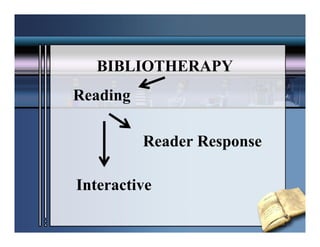
BIBLIOTHERAPY
Reading

          Reader Response

Interactive
What is BIBLIOTHERAPHY ?
• Greek words: Biblion – book
               Therapeia – healing

• A program of selected activity involving
  reading materials, planned, conducted,
  and controlled as treatment under the
  guidance of the physician for emotional
  and other problems.
• The use of selected reading materials as
  therapeutic adjuncts in medicine and in
  psychiatry; and, guidance in the solution
  of personal problems through directed
  reading.

• the use of literature to treat mental,
  emotional, and nervous disorders
• A process of dynamic interaction between
  the personality of the reader and
  literature-interaction which may be utilized
  for personality assessment, adjustment,
  and growth.(Bodart)
Therapeutic Reading vs. Ordinary Reading


              INTERACTIVE


       INTENSITY OF EXPERIENCE
Two Components of Therapeutic Reading:


 1. The author engages the reader in a
    silent dialogue, and the reader
    becomes part of the unfolding
    intellectual and emotional process
    of the book
2. The reader must struggle to
   understand what is being
   communicated at the deepest levels
   and, as a direct consequence of
   that communication, responds by
   making a positive alternation or
   modification in behavior or attitude
Bibliotherapy:


          Art or
          Science?
as an ART


• Non-medical use of reading to heal.

• Nondirective form of reading
  guidance or as a private means of
  self-help.
• Non-medical practitioners of the art,
  such as teachers and librarians,
  make available carefully selected
  texts for use by individuals in solving
  minor personal problems or
  setbacks.
• For a classroom teacher, the art
  lends itself best to a group
  approach. Working with books in a
  group may lead an individual to
  develop a different perspective on
  the problems of others and/or gain
  insight into his or her own personal
  struggles.
• Individuals can also utilize the
  art of bibliotherapy as a private,
  self-directed means of healing.
as a Science


• A directed therapy defined as “a
  family of technique for
  structuring interaction between a
  facilitator and a participant
  based on the mutual sharing of
  literature.”
ART                       SCIENCE
• is a nondirective   • focuses on treating
  approach to           those who suffer from
  resolving minor       serious physical or
  personal problems     mental illness under
                        the close direction of
                        a medical
                        professional
The Process of Bibliotherapy
1. IDENTIFICATION

The reader associates himself or
    herself with a character or
       situation in a book.
2. CATHARSIS

The reader shares the feelings
     and motivations of the
       book’s character.
3. INSIGHT

The reader realizes his or her
  situation can be dealt with
 more effectively by imitating
  or adapting the ideas from
     the reading material.
•   Identification
•   Selection
•   Presentation
•   Follow-up  (Pardeck)
The Basic Procedures in Conducting Bibliotherapy

   1. Motivate the individual or individuals
      with introductory activities

   2. Provide time for reading the
      material

   3. Allow incubation time
4. Provide follow-up discussion time,
  using questions that will lead
  persons from literal recall of
  information through interpretation,
  application, analysis, synthesis, and
  evaluation of that information
5. Conduct evaluation and direct the
  individual or individuals toward
  closure--this involves both
  evaluation by the practitioner and by
  the individual.
Activities in Bibliotherapy are designed to:

• provide information
• provide insight
• stimulate discussion about problems
• communicate new values and attitudes
• create awareness that other people have
  similar problems
• provide realistic solutions to problems
BIBLIOTHERAPY


      FAQ’s
DOES IT WORK?
WHEN SHOULD
   BIBLIOTHERAPY BE USED?

• Bibliotherapeutic intervention may
  be undertaken for many reasons:
1. to develop an individual's self-
   concept;
2. to increase an individual's
   understanding of human behavior
   or motivations;
3. to foster an individual's honest self-
  appraisal;

4. to provide a way for a person to find
  interests outside of self;

5. to relieve emotional or mental
  pressure;
6. to show an individual that he or she
  is not the first or only person to
  encounter such a problem;

7. to show an individual that there is
  more than one solution to a problem;
8. to help a person discuss a problem
  more freely; and

9. to help an individual plan a
  constructive course of action to
  solve a problem.
WHO SHOULD CONDUCT
      BIBLIOTHERAPY?

• a classroom teacher
• a librarian
• a mental health professional
HOW SHOULD IT BE USED?

• What books?

• Individual or Group?
ARE THERE LIMITATIONS?

• the availability of materials on
  certain topics
• the lack of client readiness and
  willingness to read
• participants may be defensive, thus
  discounting the actions of characters
  and failing to identify with them
• facilitators may have limited
  knowledge of human development
  and developmental problems, and
  inadequate knowledge about
  appropriate literature
• clients may be unwilling to discuss
  areas that are uncomfortable, or
  facilitators may insist on making a
  point at the client's expense
• if both the client and counselor stay
  on surface issues
THANK YOU VERY MUCH!

Bibliotherapy as a process

  • 1.
    BIBLIOTHERAPY AS A PROCESS Heidi Barcelo-Macahilig, Ph.D.
  • 2.
    BIBLIOTHERAPY Reading Reader Response Interactive
  • 3.
    What is BIBLIOTHERAPHY? • Greek words: Biblion – book Therapeia – healing • A program of selected activity involving reading materials, planned, conducted, and controlled as treatment under the guidance of the physician for emotional and other problems.
  • 4.
    • The useof selected reading materials as therapeutic adjuncts in medicine and in psychiatry; and, guidance in the solution of personal problems through directed reading. • the use of literature to treat mental, emotional, and nervous disorders
  • 5.
    • A processof dynamic interaction between the personality of the reader and literature-interaction which may be utilized for personality assessment, adjustment, and growth.(Bodart)
  • 6.
    Therapeutic Reading vs.Ordinary Reading INTERACTIVE INTENSITY OF EXPERIENCE
  • 7.
    Two Components ofTherapeutic Reading: 1. The author engages the reader in a silent dialogue, and the reader becomes part of the unfolding intellectual and emotional process of the book
  • 8.
    2. The readermust struggle to understand what is being communicated at the deepest levels and, as a direct consequence of that communication, responds by making a positive alternation or modification in behavior or attitude
  • 9.
    Bibliotherapy: Art or Science?
  • 10.
    as an ART •Non-medical use of reading to heal. • Nondirective form of reading guidance or as a private means of self-help.
  • 11.
    • Non-medical practitionersof the art, such as teachers and librarians, make available carefully selected texts for use by individuals in solving minor personal problems or setbacks.
  • 12.
    • For aclassroom teacher, the art lends itself best to a group approach. Working with books in a group may lead an individual to develop a different perspective on the problems of others and/or gain insight into his or her own personal struggles.
  • 13.
    • Individuals canalso utilize the art of bibliotherapy as a private, self-directed means of healing.
  • 14.
    as a Science •A directed therapy defined as “a family of technique for structuring interaction between a facilitator and a participant based on the mutual sharing of literature.”
  • 15.
    ART SCIENCE • is a nondirective • focuses on treating approach to those who suffer from resolving minor serious physical or personal problems mental illness under the close direction of a medical professional
  • 16.
    The Process ofBibliotherapy
  • 17.
    1. IDENTIFICATION The readerassociates himself or herself with a character or situation in a book.
  • 18.
    2. CATHARSIS The readershares the feelings and motivations of the book’s character.
  • 19.
    3. INSIGHT The readerrealizes his or her situation can be dealt with more effectively by imitating or adapting the ideas from the reading material.
  • 20.
    Identification • Selection • Presentation • Follow-up (Pardeck)
  • 21.
    The Basic Proceduresin Conducting Bibliotherapy 1. Motivate the individual or individuals with introductory activities 2. Provide time for reading the material 3. Allow incubation time
  • 22.
    4. Provide follow-updiscussion time, using questions that will lead persons from literal recall of information through interpretation, application, analysis, synthesis, and evaluation of that information
  • 23.
    5. Conduct evaluationand direct the individual or individuals toward closure--this involves both evaluation by the practitioner and by the individual.
  • 24.
    Activities in Bibliotherapyare designed to: • provide information • provide insight • stimulate discussion about problems • communicate new values and attitudes • create awareness that other people have similar problems • provide realistic solutions to problems
  • 25.
  • 26.
  • 27.
    WHEN SHOULD BIBLIOTHERAPY BE USED? • Bibliotherapeutic intervention may be undertaken for many reasons: 1. to develop an individual's self- concept; 2. to increase an individual's understanding of human behavior or motivations;
  • 28.
    3. to fosteran individual's honest self- appraisal; 4. to provide a way for a person to find interests outside of self; 5. to relieve emotional or mental pressure;
  • 29.
    6. to showan individual that he or she is not the first or only person to encounter such a problem; 7. to show an individual that there is more than one solution to a problem;
  • 30.
    8. to helpa person discuss a problem more freely; and 9. to help an individual plan a constructive course of action to solve a problem.
  • 31.
    WHO SHOULD CONDUCT BIBLIOTHERAPY? • a classroom teacher • a librarian • a mental health professional
  • 32.
    HOW SHOULD ITBE USED? • What books? • Individual or Group?
  • 33.
    ARE THERE LIMITATIONS? •the availability of materials on certain topics • the lack of client readiness and willingness to read • participants may be defensive, thus discounting the actions of characters and failing to identify with them
  • 34.
    • facilitators mayhave limited knowledge of human development and developmental problems, and inadequate knowledge about appropriate literature • clients may be unwilling to discuss areas that are uncomfortable, or facilitators may insist on making a point at the client's expense
  • 35.
    • if boththe client and counselor stay on surface issues
  • 36.