Downloaded 12 times
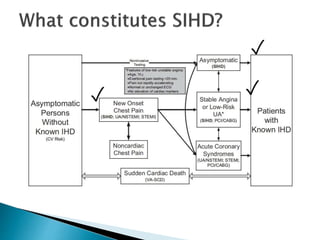
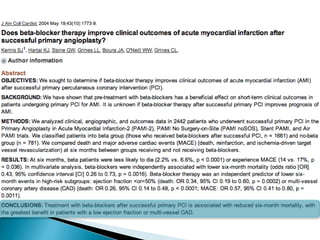
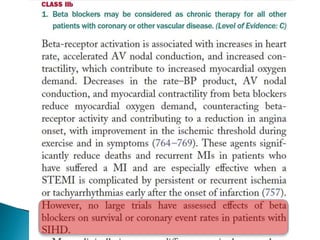
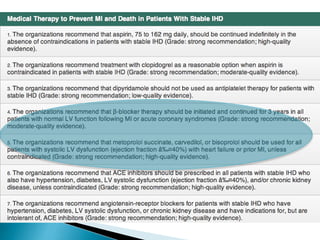
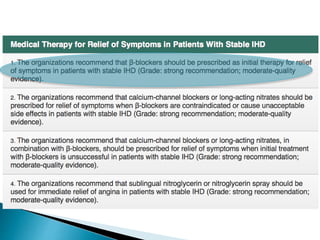
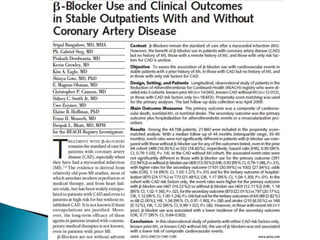
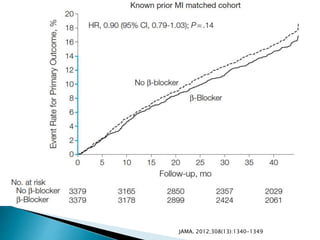
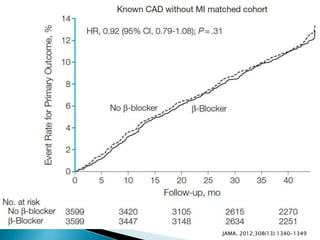
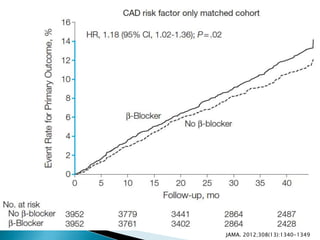
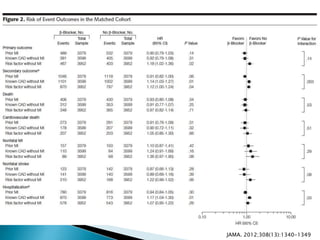
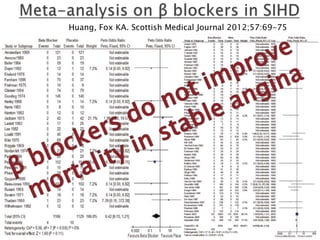
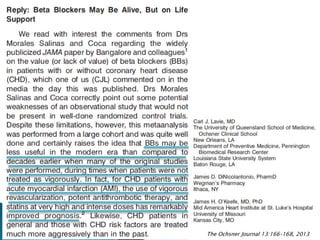

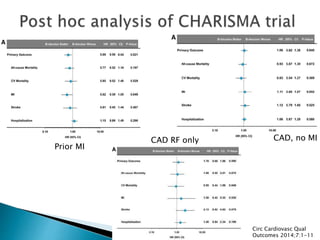
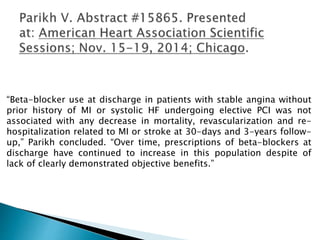
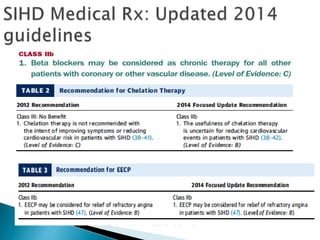
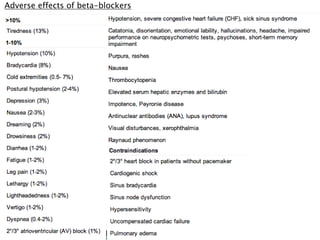
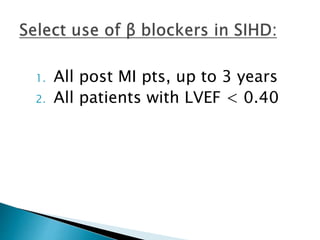
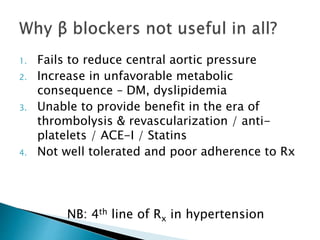
Dr. Amit Vora discusses the use of beta-blockers in certain patient populations. While beta-blockers are clearly beneficial for up to 3 years in post-MI patients and for those with LV ejection fraction below 0.40, their use in other groups is less certain. Specifically, a study found beta-blockers given at discharge to stable angina patients without prior MI or HF undergoing elective PCI did not decrease mortality, revascularization or rehospitalization. Additionally, beta-blockers have potential adverse effects and may fail to provide benefits given current standard therapies. Their use should be limited to post-MI patients and those with CHF and reduced LVEF.


![Bello presentation[2]](https://cdn.slidesharecdn.com/ss_thumbnails/bellopresentation2-141217092301-conversion-gate01-thumbnail.jpg?width=640&height=640&fit=bounds)


![ANTIANGINAL DRUGS AND EVIDENCE OF THEIR USE IN [Autosaved].pptx](https://cdn.slidesharecdn.com/ss_thumbnails/antianginaldrugsandevidenceoftheiruseinautosaved-250909143324-412e49b1-thumbnail.jpg?width=640&height=640&fit=bounds)


