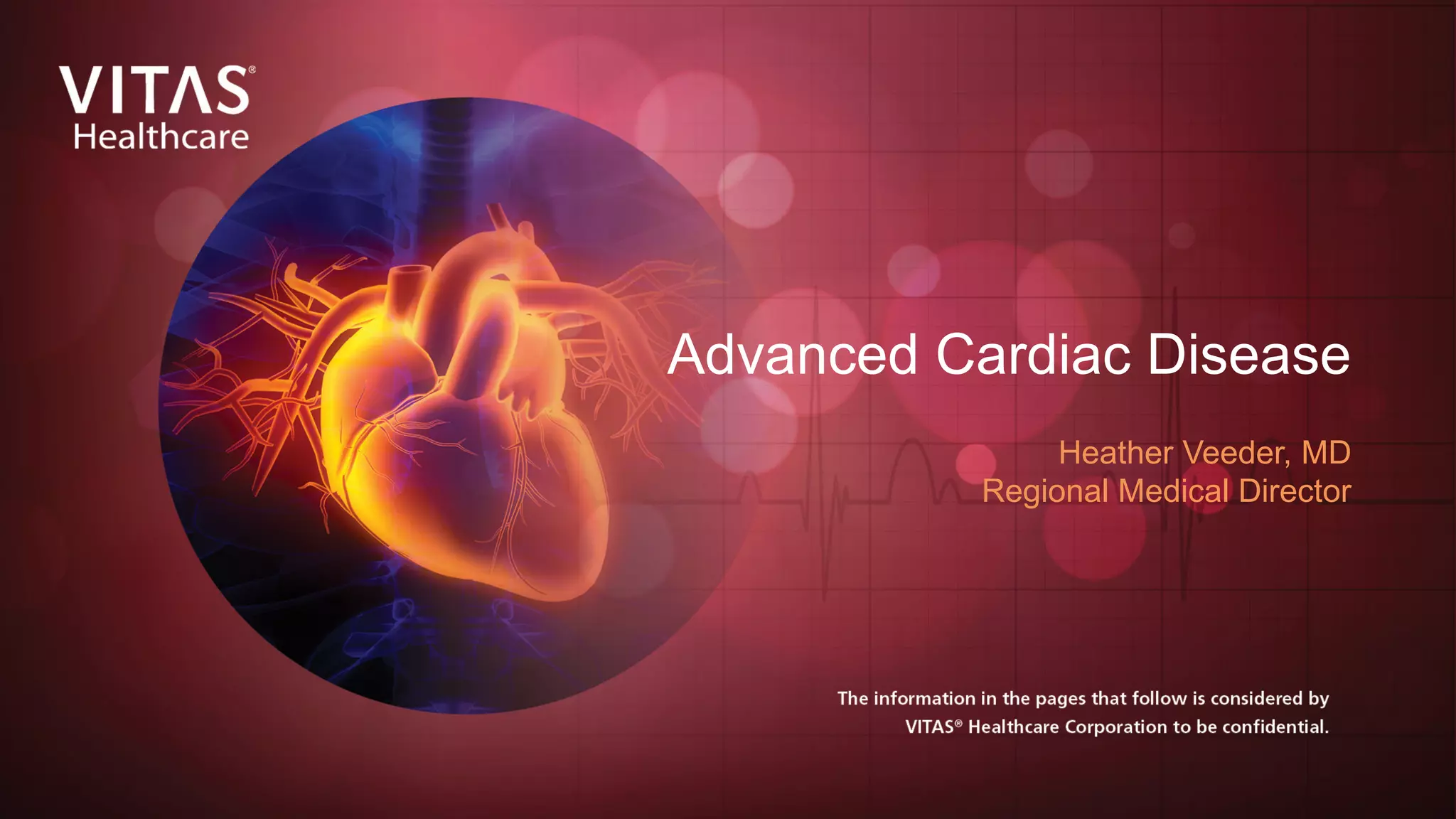



Advanced Cardiac Disease
Heather Veeder, MD
Regional Medical Director
VITAS Healthcare programs are provided CE credits for their Nurses/Social Workers and Nursing Home Administrators through:
VITAS Healthcare Corporation of Florida, Inc./CE Broker Number: 50-2135. Approved by: Florida Board of Nursing/Florida Board
of Nursing Home Administrators/Florida Board of Clinical Social Workers, Marriage and Family Therapy & Mental Health Counseling.
VITAS Healthcare programs in Illinois are provided CE credit for their Nursing Home Administrators and Respiratory Therapists
through: VITAS Healthcare Corporation of Illinois, Inc./8525 West 183 Street, Tinley Park, IL 60487/NHA CE Provider Number:
139000207/RT CE Provider Number: 195000028/Approved by the Illinois Division of Profession Regulation for: Licensed Nursing
Home Administrators and Illinois Respiratory Care Practitioners.
VITAS Healthcare, #1222, is approved to offer social work continuing education by the Association of Social Work Boards (ASWB)
Approved Continuing Education (ACE) program. Organizations, not individual courses, are approved as ACE providers. State and
provincial regulatory boards have the final authority to determine whether an individual course may be accepted for continuing
education credit. VITAS Healthcare maintains responsibility for this course. ACE provider approval period: 06/06/2018 – 06/06/2021.
Social workers completing this course receive 1.0 continuing education credits.
VITAS Healthcare Corporation of California, 310 Commerce, Suite 200, Irvine, CA 92602. Provider approved by the California Board
of Registered Nursing, Provider Number 10517, expiring 01/31/2021.
Exceptions to the above are as follows: AL: No NHAs, DE: No NHAs, DC: No NHAs, GA: No NHAs, KS: No NHAs, NJ: No NHAs, OH: No
NHAs, PA: No NHAs, TX: No NHAs, VA: No NHAs, WI: No NHAs and Nurses are not required – RT only receive
CE Credit in Illinois
06-2019
CE Provider Information
CME Provider Information
To leverage evidence-based data and case studies to understand hospice
eligibility and benefits for patients with advanced cardiac disease (ACD)
who have a prognosis of ≤6 months.
Goal
By the end of this presentation, you should be able to:
• Recognize the burden association with heart failure
• Identify patients with advanced heart failure who are eligible for hospice
• Comprehend evidence-based research supporting hospice eligibility for
heart failure patients
• Understand the role of advanced technologies in end-of-life care
Objectives
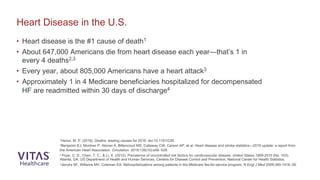
• Heart disease is the #1 cause of death1
• About 647,000 Americans die from heart disease each year—that’s 1 in
every 4 deaths2,3
• Every year, about 805,000 Americans have a heart attack3
• Approximately 1 in 4 Medicare beneficiaries hospitalized for decompensated
HF are readmitted within 30 days of discharge4
Heart Disease in the U.S.
1Heron, M. P. (2018). Deaths: leading causes for 2016. doi:10.1161/CIR.
2Benjamin EJ, Muntner P, Alonso A, Bittencourt MS, Callaway CW, Carson AP, et al. Heart disease and stroke statistics—2019 update: a report from
the American Heart Association. Circulation. 2019;139(10):e56–528.
3 Fryar, C. D., Chen, T. C., & Li, X. (2012). Prevalence of uncontrolled risk factors for cardiovascular disease: United States,1999-2010 (No. 103).
Atlanta, GA: US Department of Health and Human Services, Centers for Disease Control and Prevention, National Center for Health Statistics.
4Jencks SF, Williams MV, Coleman EA. Rehospitalizations among patients in the Medicare fee-for-service program. N Engl J Med 2009;360:1418–28.
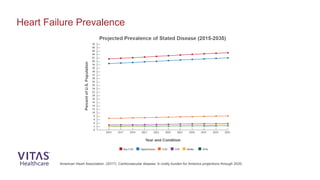
Heart Failure Prevalence
American Heart Association. (2017). Cardiovascular disease: A costly burden for America projections through 2035.
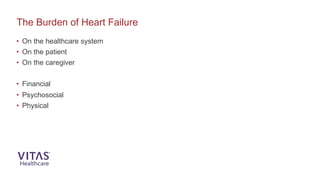
The Burden of Heart Failure
• On the healthcare system
• On the patient
• On the caregiver
• Financial
• Psychosocial
• Physical
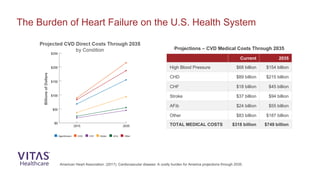
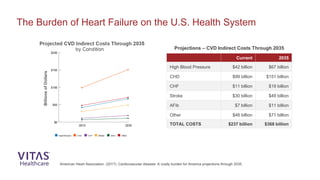
The Burden of Heart Failure on the U.S. Health System
American Heart Association. (2017). Cardiovascular disease: A costly burden for America projections through 2035.
Current 2035
High Blood Pressure $68 billion $154 billion
CHD $89 billion $215 billion
CHF $18 billion $45 billion
Stroke $37 billion $94 billion
AFib $24 billion $55 billion
Other $83 billion $187 billion
TOTAL MEDICAL COSTS $318 billion $749 billion
Projections – CVD Medical Costs Through 2035
The Burden of Heart Failure on the U.S. Health System
American Heart Association. (2017). Cardiovascular disease: A costly burden for America projections through 2035.
Current 2035
High Blood Pressure $42 billion $67 billion
CHD $99 billion $151 billion
CHF $11 billion $19 billion
Stroke $30 billion $49 billion
AFib $7 billion $11 billion
Other $48 billion $71 billion
TOTAL COSTS $237 billion $368 billion
Projections – CVD Indirect Costs Through 2035
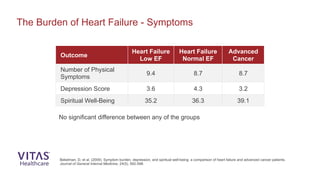
The Burden of Heart Failure - Symptoms
Bekelman, D, et al. (2009). Symptom burden, depression, and spiritual well-being: a comparison of heart failure and advanced cancer patients.
Journal of General Internal Medicine, 24(5), 592-598.
Outcome
Heart Failure
Low EF
Heart Failure
Normal EF
Advanced
Cancer
Number of Physical
Symptoms
9.4 8.7 8.7
Depression Score 3.6 4.3 3.2
Spiritual Well-Being 35.2 36.3 39.1
No significant difference between any of the groups
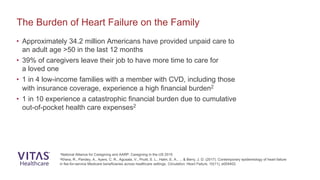
• Approximately 34.2 million Americans have provided unpaid care to
an adult age >50 in the last 12 months
• 39% of caregivers leave their job to have more time to care for
a loved one
• 1 in 4 low-income families with a member with CVD, including those
with insurance coverage, experience a high financial burden2
• 1 in 10 experience a catastrophic financial burden due to cumulative
out-of-pocket health care expenses2
The Burden of Heart Failure on the Family
1National Alliance for Caregiving and AARP. Caregiving in the US 2015
2Khera, R., Pandey, A., Ayers, C. R., Agusala, V., Pruitt, S. L., Halm, E. A., ... & Berry, J. D. (2017). Contemporary epidemiology of heart failure
in fee-for-service Medicare beneficiaries across healthcare settings. Circulation: Heart Failure, 10(11), e004402.
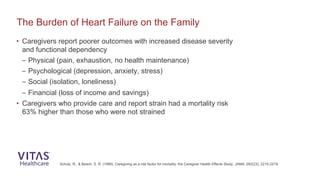
• Caregivers report poorer outcomes with increased disease severity
and functional dependency
– Physical (pain, exhaustion, no health maintenance)
– Psychological (depression, anxiety, stress)
– Social (isolation, loneliness)
– Financial (loss of income and savings)
• Caregivers who provide care and report strain had a mortality risk
63% higher than those who were not strained
The Burden of Heart Failure on the Family
Schulz, R., & Beach, S. R. (1999). Caregiving as a risk factor for mortality: the Caregiver Health Effects Study. JAMA, 282(23), 2215-2219.
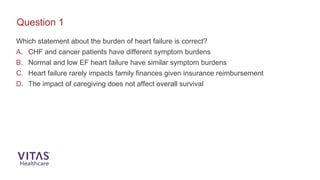
Which statement about the burden of heart failure is correct?
A. CHF and cancer patients have different symptom burdens
B. Normal and low EF heart failure have similar symptom burdens
C. Heart failure rarely impacts family finances given insurance reimbursement
D. The impact of caregiving does not affect overall survival
Question 1
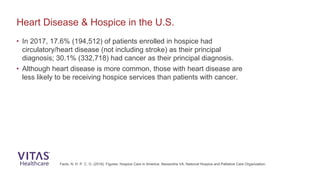
Heart Disease & Hospice in the U.S.
Facts, N. H. P. C. O. (2018). Figures: Hospice Care in America. Alexandria VA: National Hospice and Palliative Care Organization.
• In 2017, 17.6% (194,512) of patients enrolled in hospice had
circulatory/heart disease (not including stroke) as their principal
diagnosis; 30.1% (332,718) had cancer as their principal diagnosis.
• Although heart disease is more common, those with heart disease are
less likely to be receiving hospice services than patients with cancer.
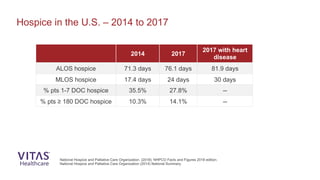
Hospice in the U.S. – 2014 to 2017
National Hospice and Palliative Care Organization. (2018). NHPCO Facts and Figures 2018 edition.
National Hospice and Palliative Care Organization (2014) National Summary.
2014 2017
2017 with heart
disease
ALOS hospice 71.3 days 76.1 days 81.9 days
MLOS hospice 17.4 days 24 days 30 days
% pts 1-7 DOC hospice 35.5% 27.8% --
% pts ≥ 180 DOC hospice 10.3% 14.1% --
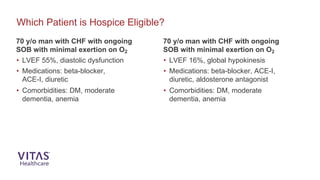
70 y/o man with CHF with ongoing
SOB with minimal exertion on O2
• LVEF 55%, diastolic dysfunction
• Medications: beta-blocker,
ACE-I, diuretic
• Comorbidities: DM, moderate
dementia, anemia
Which Patient is Hospice Eligible?
70 y/o man with CHF with ongoing
SOB with minimal exertion on O2
• LVEF 16%, global hypokinesis
• Medications: beta-blocker, ACE-I,
diuretic, aldosterone antagonist
• Comorbidities: DM, moderate
dementia, anemia
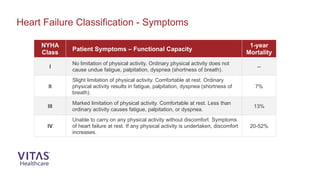
NYHA
Class
Patient Symptoms – Functional Capacity
1-year
Mortality
I
No limitation of physical activity. Ordinary physical activity does not
cause undue fatigue, palpitation, dyspnea (shortness of breath).
--
II
Slight limitation of physical activity. Comfortable at rest. Ordinary
physical activity results in fatigue, palpitation, dyspnea (shortness of
breath).
7%
III
Marked limitation of physical activity. Comfortable at rest. Less than
ordinary activity causes fatigue, palpitation, or dyspnea.
13%
IV
Unable to carry on any physical activity without discomfort. Symptoms
of heart failure at rest. If any physical activity is undertaken, discomfort
increases.
20-52%
Heart Failure Classification - Symptoms
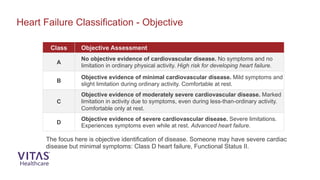
Class Objective Assessment
A
No objective evidence of cardiovascular disease. No symptoms and no
limitation in ordinary physical activity. High risk for developing heart failure.
B
Objective evidence of minimal cardiovascular disease. Mild symptoms and
slight limitation during ordinary activity. Comfortable at rest.
C
Objective evidence of moderately severe cardiovascular disease. Marked
limitation in activity due to symptoms, even during less-than-ordinary activity.
Comfortable only at rest.
D
Objective evidence of severe cardiovascular disease. Severe limitations.
Experiences symptoms even while at rest. Advanced heart failure.
Heart Failure Classification - Objective
The focus here is objective identification of disease. Someone may have severe cardiac
disease but minimal symptoms: Class D heart failure, Functional Status II.
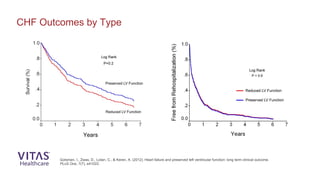
CHF Outcomes by Type
Gotsman, I., Zwas, D., Lotan, C., & Keren, A. (2012). Heart failure and preserved left ventricular function: long term clinical outcome.
PLoS One, 7(7), e41022.
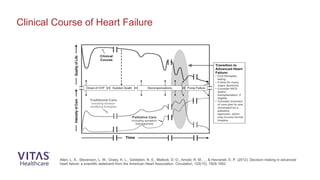
Clinical Course of Heart Failure
Allen, L. A., Stevenson, L. W., Grady, K. L., Goldstein, N. E., Matlock, D. D., Arnold, R. M., ... & Havranek, E. P. (2012). Decision making in advanced
heart failure: a scientific statement from the American Heart Association. Circulation, 125(15), 1928-1952.
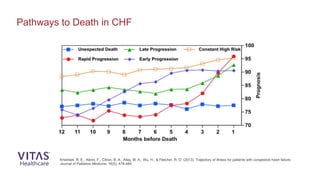
Pathways to Death in CHF
Kheirbek, R. E., Alemi, F., Citron, B. A., Afaq, M. A., Wu, H., & Fletcher, R. D. (2013). Trajectory of illness for patients with congestive heart failure.
Journal of Palliative Medicine, 16(5), 478-484.
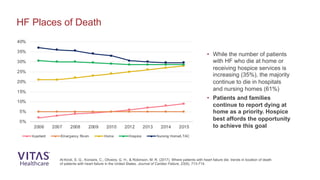
HF Places of Death
• While the number of patients
with HF who die at home or
receiving hospice services is
increasing (35%), the majority
continue to die in hospitals
and nursing homes (61%)
• Patients and families
continue to report dying at
home as a priority. Hospice
best affords the opportunity
to achieve this goal
Al-Kindi, S. G., Koniaris, C., Oliveira, G. H., & Robinson, M. R. (2017). Where patients with heart failure die: trends in location of death
of patients with heart failure in the United States. Journal of Cardiac Failure, 23(9), 713-714.
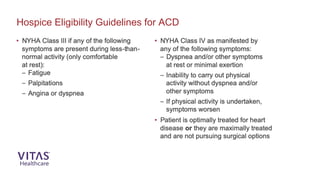
Hospice Eligibility Guidelines for ACD
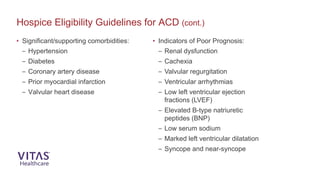
Hospice Eligibility Guidelines for ACD (cont.)
• Significant/supporting comorbidities:
– Hypertension
– Diabetes
– Coronary artery disease
– Prior myocardial infarction
– Valvular heart disease
• Indicators of Poor Prognosis:
– Renal dysfunction
– Cachexia
– Valvular regurgitation
– Ventricular arrhythmias
– Low left ventricular ejection
fractions (LVEF)
– Elevated B-type natriuretic
peptides (BNP)
– Low serum sodium
– Marked left ventricular dilatation
– Syncope and near-syncope
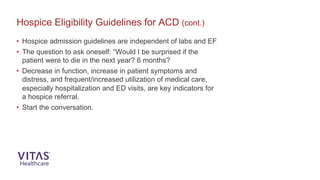
• Hospice admission guidelines are independent of labs and EF
• The question to ask oneself: “Would I be surprised if the
patient were to die in the next year? 6 months?
• Decrease in function, increase in patient symptoms and
distress, and frequent/increased utilization of medical care,
especially hospitalization and ED visits, are key indicators for
a hospice referral.
• Start the conversation.
Hospice Eligibility Guidelines for ACD (cont.)
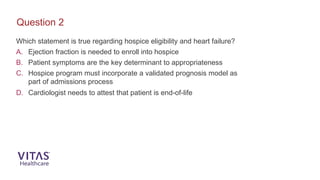
Which statement is true regarding hospice eligibility and heart failure?
A. Ejection fraction is needed to enroll into hospice
B. Patient symptoms are the key determinant to appropriateness
C. Hospice program must incorporate a validated prognosis model as
part of admissions process
D. Cardiologist needs to attest that patient is end-of-life
Question 2
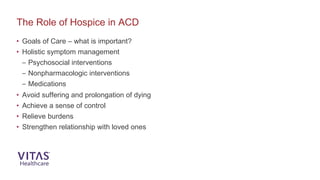
• Goals of Care – what is important?
• Holistic symptom management
– Psychosocial interventions
– Nonpharmacologic interventions
– Medications
• Avoid suffering and prolongation of dying
• Achieve a sense of control
• Relieve burdens
• Strengthen relationship with loved ones
The Role of Hospice in ACD
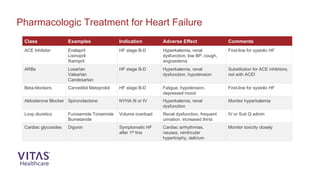
Pharmacologic Treatment for Heart Failure
Class Examples Indication Adverse Effect Comments
ACE Inhibitor Enalapril
Lisinopril
Ramipril
HF stage B-D Hyperkalemia, renal
dysfunction, low BP, cough,
angioedema
First-line for systolic HF
ARBs Losartan
Valsartan
Candesartan
HF stage B-D Hyperkalemia, renal
dysfunction, hypotension
Substitution for ACE inhibitors,
not with ACEI
Beta-blockers Carvedilol Metoprolol HF stage B-D Fatigue, hypotension,
depressed mood
First-line for systolic HF
Aldosterone Blocker Spironolactone NYHA III or IV Hyperkalemia, renal
dysfunction
Monitor hyperkalemia
Loop diuretics Furosemide Torsemide
Bumetanide
Volume overload Renal dysfunction, frequent
urination, increased thirst
IV or Sub Q admin
Cardiac glycosides Digoxin Symptomatic HF
after 1st line
Cardiac arrhythmias,
nausea, ventricular
hypertrophy, delirium
Monitor toxicity closely
• 84 y/o female, 2-year history of CHF, relatively stable until today,
with acute worsening of symptoms
– PMH: stroke, hypertension, osteoarthritis, hard of hearing
– Recent EF 48% with diastolic dysfunction and left atrial enlargement
– Long-standing ACE inhibitor, not able to tolerate beta-blocker
– EKG in office displays rapid afib
– Room air saturation 87%, 2L 96%
– BP 130/70, pulse 148, RR 32, afebrile
– Dopplers negative for DVT
• Goals of care conversation
Case of AF
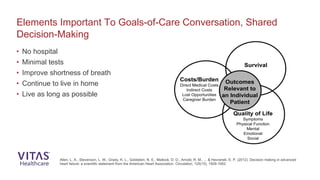
• No hospital
• Minimal tests
• Improve shortness of breath
• Continue to live in home
• Live as long as possible
Elements Important To Goals-of-Care Conversation, Shared
Decision-Making
Allen, L. A., Stevenson, L. W., Grady, K. L., Goldstein, N. E., Matlock, D. D., Arnold, R. M., ... & Havranek, E. P. (2012). Decision making in advanced
heart failure: a scientific statement from the American Heart Association. Circulation, 125(15), 1928-1952.
• Started Cardizem and increased furosemide
• Felt much improved by the next day, with a decrease in heart rate to low 100s
• Still shortness of breath at rest with oxygen
• Able to walk a little farther than day before
• How to best support patient goals?
• Home health or hospice?
Case of AF (cont.)
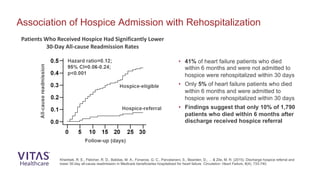
Association of Hospice Admission with Rehospitalization
Kheirbek, R. E., Fletcher, R. D., Bakitas, M. A., Fonarow, G. C., Parvataneni, S., Bearden, D., ... & Zile, M. R. (2015). Discharge hospice referral and
lower 30-day all-cause readmission in Medicare beneficiaries hospitalized for heart failure. Circulation: Heart Failure, 8(4), 733-740.
• 41% of heart failure patients who died
within 6 months and were not admitted to
hospice were rehospitalized within 30 days
• Only 5% of heart failure patients who died
within 6 months and were admitted to
hospice were rehospitalized within 30 days
• Findings suggest that only 10% of 1,790
patients who died within 6 months after
discharge received hospice referral
Patients Who Received Hospice Had Significantly Lower
30-Day All-cause Readmission Rates
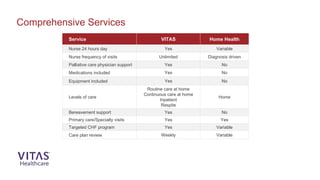
Comprehensive Services
Service VITAS Home Health
Nurse 24 hours day Yes Variable
Nurse frequency of visits Unlimited Diagnosis driven
Palliative care physician support Yes No
Medications included Yes No
Equipment included Yes No
Levels of care
Routine care at home
Continuous care at home
Inpatient
Respite
Home
Bereavement support Yes No
Primary care/Specialty visits Yes Yes
Targeted CHF program Yes Variable
Care plan review Weekly Variable
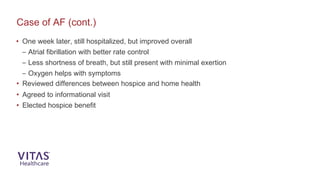
• One week later, still hospitalized, but improved overall
– Atrial fibrillation with better rate control
– Less shortness of breath, but still present with minimal exertion
– Oxygen helps with symptoms
• Reviewed differences between hospice and home health
• Agreed to informational visit
• Elected hospice benefit
Case of AF (cont.)
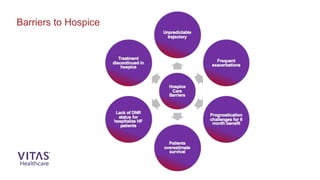
Barriers to Hospice
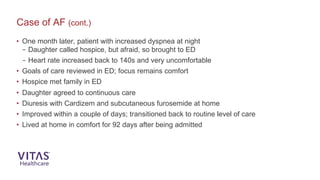
• One month later, patient with increased dyspnea at night
– Daughter called hospice, but afraid, so brought to ED
– Heart rate increased back to 140s and very uncomfortable
• Goals of care reviewed in ED; focus remains comfort
• Hospice met family in ED
• Daughter agreed to continuous care
• Diuresis with Cardizem and subcutaneous furosemide at home
• Improved within a couple of days; transitioned back to routine level of care
• Lived at home in comfort for 92 days after being admitted
Case of AF (cont.)
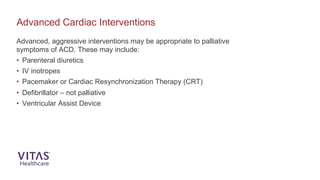
Advanced Cardiac Interventions
Advanced, aggressive interventions may be appropriate to palliative
symptoms of ACD. These may include:
• Parenteral diuretics
• IV inotropes
• Pacemaker or Cardiac Resynchronization Therapy (CRT)
• Defibrillator – not palliative
• Ventricular Assist Device
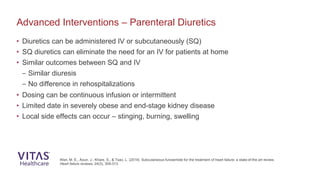
Advanced Interventions – Parenteral Diuretics
Afari, M. E., Aoun, J., Khare, S., & Tsao, L. (2019). Subcutaneous furosemide for the treatment of heart failure: a state-of-the art review.
Heart failure reviews, 24(3), 309-313.
• Diuretics can be administered IV or subcutaneously (SQ)
• SQ diuretics can eliminate the need for an IV for patients at home
• Similar outcomes between SQ and IV
– Similar diuresis
– No difference in rehospitalizations
• Dosing can be continuous infusion or intermittent
• Limited date in severely obese and end-stage kidney disease
• Local side effects can occur – stinging, burning, swelling
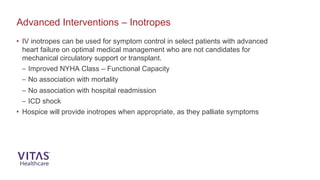
Advanced Interventions – Inotropes
• IV inotropes can be used for symptom control in select patients with advanced
heart failure on optimal medical management who are not candidates for
mechanical circulatory support or transplant.
– Improved NYHA Class – Functional Capacity
– No association with mortality
– No association with hospital readmission
– ICD shock
• Hospice will provide inotropes when appropriate, as they palliate symptoms
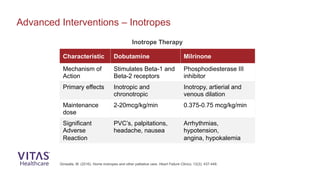
Advanced Interventions – Inotropes
Ginwalla, M. (2016). Home inotropes and other palliative care. Heart Failure Clinics, 12(3), 437-448.
Characteristic Dobutamine Milrinone
Mechanism of
Action
Stimulates Beta-1 and
Beta-2 receptors
Phosphodiesterase III
inhibitor
Primary effects Inotropic and
chronotropic
Inotropy, artierial and
venous dilation
Maintenance
dose
2-20mcg/kg/min 0.375-0.75 mcg/kg/min
Significant
Adverse
Reaction
PVC’s, palpitations,
headache, nausea
Arrhythmias,
hypotension,
angina, hypokalemia
Inotrope Therapy
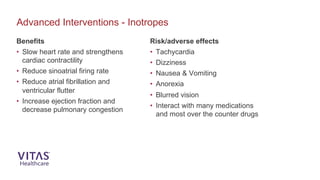
Benefits
• Slow heart rate and strengthens
cardiac contractility
• Reduce sinoatrial firing rate
• Reduce atrial fibrillation and
ventricular flutter
• Increase ejection fraction and
decrease pulmonary congestion
Advanced Interventions - Inotropes
Risk/adverse effects
• Tachycardia
• Dizziness
• Nausea & Vomiting
• Anorexia
• Blurred vision
• Interact with many medications
and most over the counter drugs
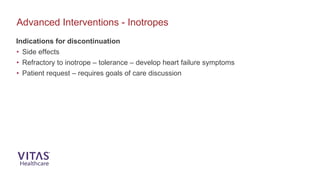
Indications for discontinuation
• Side effects
• Refractory to inotrope – tolerance – develop heart failure symptoms
• Patient request – requires goals of care discussion
Advanced Interventions - Inotropes
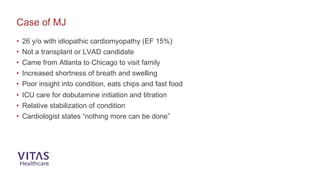
Case of MJ
• 26 y/o with idiopathic cardiomyopathy (EF 15%)
• Not a transplant or LVAD candidate
• Came from Atlanta to Chicago to visit family
• Increased shortness of breath and swelling
• Poor insight into condition, eats chips and fast food
• ICU care for dobutamine initiation and titration
• Relative stabilization of condition
• Cardiologist states “nothing more can be done”
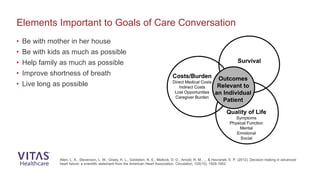
• Be with mother in her house
• Be with kids as much as possible
• Help family as much as possible
• Improve shortness of breath
• Live long as possible
Elements Important to Goals of Care Conversation
Allen, L. A., Stevenson, L. W., Grady, K. L., Goldstein, N. E., Matlock, D. D., Arnold, R. M., ... & Havranek, E. P. (2012). Decision making in advanced
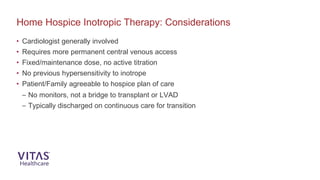
heart failure: a scientific statement from the American Heart Association. Circulation, 125(15), 1928-1952.
• Cardiologist generally involved
• Requires more permanent central venous access
• Fixed/maintenance dose, no active titration
• No previous hypersensitivity to inotrope
• Patient/Family agreeable to hospice plan of care
– No monitors, not a bridge to transplant or LVAD
– Typically discharged on continuous care for transition
Home Hospice Inotropic Therapy: Considerations
• Admitted to VITAS on Intensive Comfort Care®
• Electricity issues developed and needed to be transferred to
inpatient unit
• Died comfortably 7 days after enrollment
– Intense family support
– High-risk bereavement plan
Case of MJ (cont.)
Case of RZ
• 73 y/o male with end-stage CHF
• Mechanical circulatory support with LVAD
• Developed infection and on suppressive antibiotics for several weeks
• Clot started to form despite anticoagulation
• Patient functional status declined; now can ambulate only
a few steps
• Hospitalized; palliative care consult goals of care
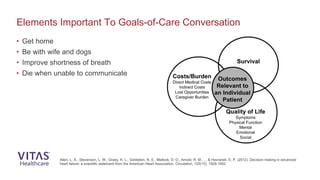
• Get home
• Be with wife and dogs
• Improve shortness of breath
• Die when unable to communicate
Elements Important To Goals-of-Care Conversation
Allen, L. A., Stevenson, L. W., Grady, K. L., Goldstein, N. E., Matlock, D. D., Arnold, R. M., ... & Havranek, E. P. (2012). Decision making in advanced
heart failure: a scientific statement from the American Heart Association. Circulation, 125(15), 1928-1952.
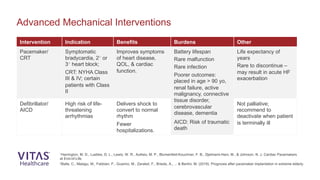
Intervention Indication Benefits Burdens Other
Pacemaker/
CRT
Symptomatic
bradycardia, 2○
or
3○
heart block;
CRT: NYHA Class
III & IV; certain
patients with Class
II
Improves symptoms
of heart disease,
QOL, & cardiac
function.
Battery lifespan
Rare malfunction
Rare infection
Poorer outcomes:
placed in age > 90 yo,
renal failure, active
malignancy, connective
tissue disorder,
cerebrovascular
disease, dementia
AICD: Risk of traumatic
death
Life expectancy of
years
Rare to discontinue –
may result in acute HF
exacerbation
Defibrillator/
AICD
High risk of life-
threatening
arrhythmias
Delivers shock to
convert to normal
rhythm
Fewer
hospitalizations.
Not palliative;
recommend to
deactivate when patient
is terminally ill
Advanced Mechanical Interventions
1Harrington, M. D., Luebke, D. L., Lewis, W. R., Aullisio, M. P., Blumenfeld-Kouchner, F. B., Djelmami-Hani, M., & Johnson, N. J. Cardiac Pacemakers
at End-of-Life.
2Balla, C., Malagu, M., Fabbian, F., Guarino, M., Zaraket, F., Brieda, A., ... & Bertini, M. (2019). Prognosis after pacemaker implantation in extreme elderly.
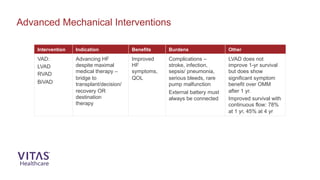
Intervention Indication Benefits Burdens Other
VAD:
LVAD
RVAD
BiVAD
Advancing HF
despite maximal
medical therapy –
bridge to
transplant/decision/
recovery OR
destination
therapy
Improved
HF
symptoms,
QOL
Complications –
stroke, infection,
sepsis/ pneumonia,
serious bleeds, rare
pump malfunction
External battery must
always be connected
LVAD does not
improve 1-yr survival
but does show
significant symptom
benefit over OMM
after 1 yr.
Improved survival with
continuous flow: 78%
at 1 yr, 45% at 4 yr
Advanced Mechanical Interventions
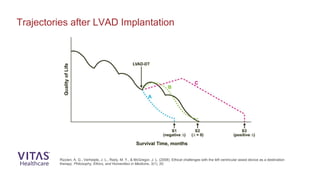
Trajectories after LVAD Implantation
Rizzieri, A. G., Verheijde, J. L., Rady, M. Y., & McGregor, J. L. (2008). Ethical challenges with the left ventricular assist device as a destination
therapy. Philosophy, Ethics, and Humanities in Medicine, 3(1), 20.
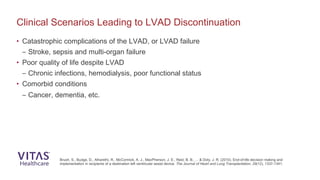
Clinical Scenarios Leading to LVAD Discontinuation
Brush, S., Budge, D., Alharethi, R., McCormick, A. J., MacPherson, J. E., Reid, B. B., ... & Doty, J. R. (2010). End-of-life decision making and
implementation in recipients of a destination left ventricular assist device. The Journal of Heart and Lung Transplantation, 29(12), 1337-1341.
• Catastrophic complications of the LVAD, or LVAD failure
– Stroke, sepsis and multi-organ failure
• Poor quality of life despite LVAD
– Chronic infections, hemodialysis, poor functional status
• Comorbid conditions
– Cancer, dementia, etc.
Case of RZ (cont.)
• Recognizes has only days left to live
• Concerned about family well-being
• Would prefer to be at home with his wife and dogs
• Beginning to develop shortness of breath and some confusion
• Hospice nurse trained in device deactivation
• Communication with Cardiology team
• Patient went home on Intensive Comfort Care®
• Did well for three days and then more confused and became unconscious
• Per goals of care conversation, LVAD deactivated when unconscious
– Symptoms controlled beforehand; meds available
– IDT team present
– Nurse deactivated LVAD
• Patient died 5 minutes later
Case of RZ (cont.)
• Deactivation can occur at home
– Address family concern about hospice’s knowledge of LVADs
• Hospice nurse/physician trained on device deactivation
– Includes silencing of alarm
• Survival after deactivation ranges from minutes to a few days
– Explain the heterogeneity of survival time to family
– Average time to death with device deactivation: 20 minutes
LVAD Discontinuation
Brush, S., Budge, D., Alharethi, R., McCormick, A. J., MacPherson, J. E., Reid, B. B., ... & Doty, J. R. (2010). End-of-life decision making and
implementation in recipients of a destination left ventricular assist device. The Journal of Heart and Lung Transplantation, 29(12), 1337-1341.
Which statement is true about discontinuation of advanced technologies?
A. ICD deactivation near the end of life improves patient quality of life
B. CRT deactivation near the end of life improves patient quality of life
C. Pacemaker deactivation near the end of life improves patient quality of life
D. Inotrope discontinuation near the end of life improves patient quality of life
Question 3
Afari, M. E., Aoun, J., Khare, S., & Tsao, L. (2019). Subcutaneous furosemide for the treatment of heart failure: a state-of-the
art review. Heart failure reviews, 24(3), 309-313.
Al-Kindi, S. G., Koniaris, C., Oliveira, G. H., & Robinson, M. R. (2017). Where patients with heart failure die: trends in location
of death of patients with heart failure in the United States. Journal of Cardiac Failure, 23(9), 713-714.
Allen, L. A., Stevenson, L. W., Grady, K. L., Goldstein, N. E., Matlock, D. D., Arnold, R. M., ... & Havranek, E. P. (2012). Decision
making in advanced heart failure: a scientific statement from the American Heart Association. Circulation, 125(15), 1928-1952.
American Heart Association. (2017). Cardiovascular disease: A costly burden for America projections through 2035.
Atkins, D. L., de Caen, A. R., Berger, S., Samson, R. A., Schexnayder, S. M., Joyner Jr, B. L., ... & Meaney, P. A. (2018). 2017
American Heart Association focused update on pediatric basic life support and cardiopulmonary resuscitation quality: an update
to the American Heart Association Guidelines for Cardiopulmonary Resuscitation and Emergency Cardiovascular
Care. Circulation, 137(1), e1-e6.
Balla, C., Malagu, M., Fabbian, F., Guarino, M., Zaraket, F., Brieda, A., ... & Bertini, M. (2019). Prognosis after pacemaker
implantation in extreme elderly.
Bekelman, D, et al. (2009). Symptom burden, depression, and spiritual well-being: a comparison of heart failure and advanced
cancer patients. Journal of General Internal Medicine, 24(5), 592-598.
References
Benjamin EJ, Muntner P, Alonso A, Bittencourt MS, Callaway CW, Carson AP, et al. Heart disease and stroke statistics—
2019 update: a report from the American Heart Association. Circulation. 2019;139(10):e56–528.
Brush, S., Budge, D., Alharethi, R., McCormick, A. J., MacPherson, J. E., Reid, B. B., ... & Doty, J. R. (2010). End-of-life
decision making and implementation in recipients of a destination left ventricular assist device. The Journal of Heart and
Lung Transplantation, 29(12), 1337-1341.
Fryar, C. D., Chen, T. C., & Li, X. (2012). Prevalence of uncontrolled risk factors for cardiovascular disease: United States,
1999-2010 (No. 103). Atlanta, GA: US Department of Health and Human Services, Centers for Disease Control and Prevention,
National Center for Health Statistics.
Jencks SF, Williams MV, Coleman EA. Rehospitalizations among patients in the Medicare fee-for-service program. N Engl J
Med 2009;360:1418–28.
Ginwalla, M. (2016). Home inotropes and other palliative care. Heart failure clinics, 12(3), 437-448.
Gotsman, I., Zwas, D., Lotan, C., & Keren, A. (2012). Heart failure and preserved left ventricular function: long term clinical
outcome. PLoS One, 7(7), e41022
Harrington, M. D., Luebke, D. L., Lewis, W. R., Aullisio, M. P., Blumenfeld-Kouchner, F. B., Djelmami-Hani, M., & Johnson,
N. J. Cardiac Pacemakers at End-of-Life.
Heron, M. P. (2018). Deaths: leading causes for 2016. doi:10.1161/CIR
References
Kheirbek, R. E., Alemi, F., Citron, B. A., Afaq, M. A., Wu, H., & Fletcher, R. D. (2013). Trajectory of illness for patients with
congestive heart failure. Journal of Palliative Medicine, 16(5), 478-484.
Kheirbek, R. E., Fletcher, R. D., Bakitas, M. A., Fonarow, G. C., Parvataneni, S., Bearden, D., ... & Zile, M. R. (2015). Discharge
hospice referral and lower 30-day all-cause readmission in Medicare beneficiaries hospitalized for heart failure. Circulation: Heart
Failure, 8(4), 733-740.
Khera, R., Pandey, A., Ayers, C. R., Agusala, V., Pruitt, S. L., Halm, E. A., ... & Berry, J. D. (2017). Contemporary epidemiology of
heart failure in fee-for-service Medicare beneficiaries across healthcare settings. Circulation: Heart Failure, 10(11), e004402.
National Alliance for Caregiving and AARP. Caregiving in the US 2015.
N. H. P. C. O. (2018). Facts & Figures: Hospice Care in America. Alexandria VA: National Hospice and Palliative Care Organization.
Perkins, M., Howard, V. J., Wadley, V. G., Crowe, M., Safford, M. M., Haley, W. E., ... & Roth, D. L. (2012). Caregiving strain and
all-cause mortality: evidence from the REGARDS study. Journals of Gerontology Series B: Psychological Sciences and Social
Sciences, 68(4), 504-512.
Rizzieri, A. G., Verheijde, J. L., Rady, M. Y., & McGregor, J. L. (2008). Ethical challenges with the left ventricular assist device as a
destination therapy. Philosophy, Ethics, and Humanities in Medicine, 3(1), 20.
Schulz, R., & Beach, S. R. (1999). Caregiving as a risk factor for mortality: the Caregiver Health Effects Study. JAMA, 282(23),
2215-2219.
References
Questions
Advanced Cardiac Disease

Advanced Cardiac Disease

  • 1.
    Advanced Cardiac Disease HeatherVeeder, MD Regional Medical Director
  • 2.
    VITAS Healthcare programsare provided CE credits for their Nurses/Social Workers and Nursing Home Administrators through: VITAS Healthcare Corporation of Florida, Inc./CE Broker Number: 50-2135. Approved by: Florida Board of Nursing/Florida Board of Nursing Home Administrators/Florida Board of Clinical Social Workers, Marriage and Family Therapy & Mental Health Counseling. VITAS Healthcare programs in Illinois are provided CE credit for their Nursing Home Administrators and Respiratory Therapists through: VITAS Healthcare Corporation of Illinois, Inc./8525 West 183 Street, Tinley Park, IL 60487/NHA CE Provider Number: 139000207/RT CE Provider Number: 195000028/Approved by the Illinois Division of Profession Regulation for: Licensed Nursing Home Administrators and Illinois Respiratory Care Practitioners. VITAS Healthcare, #1222, is approved to offer social work continuing education by the Association of Social Work Boards (ASWB) Approved Continuing Education (ACE) program. Organizations, not individual courses, are approved as ACE providers. State and provincial regulatory boards have the final authority to determine whether an individual course may be accepted for continuing education credit. VITAS Healthcare maintains responsibility for this course. ACE provider approval period: 06/06/2018 – 06/06/2021. Social workers completing this course receive 1.0 continuing education credits. VITAS Healthcare Corporation of California, 310 Commerce, Suite 200, Irvine, CA 92602. Provider approved by the California Board of Registered Nursing, Provider Number 10517, expiring 01/31/2021. Exceptions to the above are as follows: AL: No NHAs, DE: No NHAs, DC: No NHAs, GA: No NHAs, KS: No NHAs, NJ: No NHAs, OH: No NHAs, PA: No NHAs, TX: No NHAs, VA: No NHAs, WI: No NHAs and Nurses are not required – RT only receive CE Credit in Illinois 06-2019 CE Provider Information
  • 3.
  • 4.
    To leverage evidence-baseddata and case studies to understand hospice eligibility and benefits for patients with advanced cardiac disease (ACD) who have a prognosis of ≤6 months. Goal
  • 5.
    By the endof this presentation, you should be able to: • Recognize the burden association with heart failure • Identify patients with advanced heart failure who are eligible for hospice • Comprehend evidence-based research supporting hospice eligibility for heart failure patients • Understand the role of advanced technologies in end-of-life care Objectives
  • 6.
    • Heart diseaseis the #1 cause of death1 • About 647,000 Americans die from heart disease each year—that’s 1 in every 4 deaths2,3 • Every year, about 805,000 Americans have a heart attack3 • Approximately 1 in 4 Medicare beneficiaries hospitalized for decompensated HF are readmitted within 30 days of discharge4 Heart Disease in the U.S. 1Heron, M. P. (2018). Deaths: leading causes for 2016. doi:10.1161/CIR. 2Benjamin EJ, Muntner P, Alonso A, Bittencourt MS, Callaway CW, Carson AP, et al. Heart disease and stroke statistics—2019 update: a report from the American Heart Association. Circulation. 2019;139(10):e56–528. 3 Fryar, C. D., Chen, T. C., & Li, X. (2012). Prevalence of uncontrolled risk factors for cardiovascular disease: United States,1999-2010 (No. 103). Atlanta, GA: US Department of Health and Human Services, Centers for Disease Control and Prevention, National Center for Health Statistics. 4Jencks SF, Williams MV, Coleman EA. Rehospitalizations among patients in the Medicare fee-for-service program. N Engl J Med 2009;360:1418–28.
  • 7.
    Heart Failure Prevalence AmericanHeart Association. (2017). Cardiovascular disease: A costly burden for America projections through 2035.
  • 8.
    The Burden ofHeart Failure • On the healthcare system • On the patient • On the caregiver • Financial • Psychosocial • Physical
  • 9.
    The Burden ofHeart Failure on the U.S. Health System American Heart Association. (2017). Cardiovascular disease: A costly burden for America projections through 2035. Current 2035 High Blood Pressure $68 billion $154 billion CHD $89 billion $215 billion CHF $18 billion $45 billion Stroke $37 billion $94 billion AFib $24 billion $55 billion Other $83 billion $187 billion TOTAL MEDICAL COSTS $318 billion $749 billion Projections – CVD Medical Costs Through 2035
  • 10.
    The Burden ofHeart Failure on the U.S. Health System American Heart Association. (2017). Cardiovascular disease: A costly burden for America projections through 2035. Current 2035 High Blood Pressure $42 billion $67 billion CHD $99 billion $151 billion CHF $11 billion $19 billion Stroke $30 billion $49 billion AFib $7 billion $11 billion Other $48 billion $71 billion TOTAL COSTS $237 billion $368 billion Projections – CVD Indirect Costs Through 2035
  • 11.
    The Burden ofHeart Failure - Symptoms Bekelman, D, et al. (2009). Symptom burden, depression, and spiritual well-being: a comparison of heart failure and advanced cancer patients. Journal of General Internal Medicine, 24(5), 592-598. Outcome Heart Failure Low EF Heart Failure Normal EF Advanced Cancer Number of Physical Symptoms 9.4 8.7 8.7 Depression Score 3.6 4.3 3.2 Spiritual Well-Being 35.2 36.3 39.1 No significant difference between any of the groups
  • 12.
    • Approximately 34.2million Americans have provided unpaid care to an adult age >50 in the last 12 months • 39% of caregivers leave their job to have more time to care for a loved one • 1 in 4 low-income families with a member with CVD, including those with insurance coverage, experience a high financial burden2 • 1 in 10 experience a catastrophic financial burden due to cumulative out-of-pocket health care expenses2 The Burden of Heart Failure on the Family 1National Alliance for Caregiving and AARP. Caregiving in the US 2015 2Khera, R., Pandey, A., Ayers, C. R., Agusala, V., Pruitt, S. L., Halm, E. A., ... & Berry, J. D. (2017). Contemporary epidemiology of heart failure in fee-for-service Medicare beneficiaries across healthcare settings. Circulation: Heart Failure, 10(11), e004402.
  • 13.
    • Caregivers reportpoorer outcomes with increased disease severity and functional dependency – Physical (pain, exhaustion, no health maintenance) – Psychological (depression, anxiety, stress) – Social (isolation, loneliness) – Financial (loss of income and savings) • Caregivers who provide care and report strain had a mortality risk 63% higher than those who were not strained The Burden of Heart Failure on the Family Schulz, R., & Beach, S. R. (1999). Caregiving as a risk factor for mortality: the Caregiver Health Effects Study. JAMA, 282(23), 2215-2219.
  • 14.
    Which statement aboutthe burden of heart failure is correct? A. CHF and cancer patients have different symptom burdens B. Normal and low EF heart failure have similar symptom burdens C. Heart failure rarely impacts family finances given insurance reimbursement D. The impact of caregiving does not affect overall survival Question 1
  • 15.
    Heart Disease &Hospice in the U.S. Facts, N. H. P. C. O. (2018). Figures: Hospice Care in America. Alexandria VA: National Hospice and Palliative Care Organization. • In 2017, 17.6% (194,512) of patients enrolled in hospice had circulatory/heart disease (not including stroke) as their principal diagnosis; 30.1% (332,718) had cancer as their principal diagnosis. • Although heart disease is more common, those with heart disease are less likely to be receiving hospice services than patients with cancer.
  • 16.
    Hospice in theU.S. – 2014 to 2017 National Hospice and Palliative Care Organization. (2018). NHPCO Facts and Figures 2018 edition. National Hospice and Palliative Care Organization (2014) National Summary. 2014 2017 2017 with heart disease ALOS hospice 71.3 days 76.1 days 81.9 days MLOS hospice 17.4 days 24 days 30 days % pts 1-7 DOC hospice 35.5% 27.8% -- % pts ≥ 180 DOC hospice 10.3% 14.1% --
  • 17.
    70 y/o manwith CHF with ongoing SOB with minimal exertion on O2 • LVEF 55%, diastolic dysfunction • Medications: beta-blocker, ACE-I, diuretic • Comorbidities: DM, moderate dementia, anemia Which Patient is Hospice Eligible? 70 y/o man with CHF with ongoing SOB with minimal exertion on O2 • LVEF 16%, global hypokinesis • Medications: beta-blocker, ACE-I, diuretic, aldosterone antagonist • Comorbidities: DM, moderate dementia, anemia
  • 18.
    NYHA Class Patient Symptoms –Functional Capacity 1-year Mortality I No limitation of physical activity. Ordinary physical activity does not cause undue fatigue, palpitation, dyspnea (shortness of breath). -- II Slight limitation of physical activity. Comfortable at rest. Ordinary physical activity results in fatigue, palpitation, dyspnea (shortness of breath). 7% III Marked limitation of physical activity. Comfortable at rest. Less than ordinary activity causes fatigue, palpitation, or dyspnea. 13% IV Unable to carry on any physical activity without discomfort. Symptoms of heart failure at rest. If any physical activity is undertaken, discomfort increases. 20-52% Heart Failure Classification - Symptoms
  • 19.
    Class Objective Assessment A Noobjective evidence of cardiovascular disease. No symptoms and no limitation in ordinary physical activity. High risk for developing heart failure. B Objective evidence of minimal cardiovascular disease. Mild symptoms and slight limitation during ordinary activity. Comfortable at rest. C Objective evidence of moderately severe cardiovascular disease. Marked limitation in activity due to symptoms, even during less-than-ordinary activity. Comfortable only at rest. D Objective evidence of severe cardiovascular disease. Severe limitations. Experiences symptoms even while at rest. Advanced heart failure. Heart Failure Classification - Objective The focus here is objective identification of disease. Someone may have severe cardiac disease but minimal symptoms: Class D heart failure, Functional Status II.
  • 20.
    CHF Outcomes byType Gotsman, I., Zwas, D., Lotan, C., & Keren, A. (2012). Heart failure and preserved left ventricular function: long term clinical outcome. PLoS One, 7(7), e41022.
  • 21.
    Clinical Course ofHeart Failure Allen, L. A., Stevenson, L. W., Grady, K. L., Goldstein, N. E., Matlock, D. D., Arnold, R. M., ... & Havranek, E. P. (2012). Decision making in advanced heart failure: a scientific statement from the American Heart Association. Circulation, 125(15), 1928-1952.
  • 22.
    Pathways to Deathin CHF Kheirbek, R. E., Alemi, F., Citron, B. A., Afaq, M. A., Wu, H., & Fletcher, R. D. (2013). Trajectory of illness for patients with congestive heart failure. Journal of Palliative Medicine, 16(5), 478-484.
  • 23.
    HF Places ofDeath • While the number of patients with HF who die at home or receiving hospice services is increasing (35%), the majority continue to die in hospitals and nursing homes (61%) • Patients and families continue to report dying at home as a priority. Hospice best affords the opportunity to achieve this goal Al-Kindi, S. G., Koniaris, C., Oliveira, G. H., & Robinson, M. R. (2017). Where patients with heart failure die: trends in location of death of patients with heart failure in the United States. Journal of Cardiac Failure, 23(9), 713-714.
  • 24.
  • 25.
    Hospice Eligibility Guidelinesfor ACD (cont.) • Significant/supporting comorbidities: – Hypertension – Diabetes – Coronary artery disease – Prior myocardial infarction – Valvular heart disease • Indicators of Poor Prognosis: – Renal dysfunction – Cachexia – Valvular regurgitation – Ventricular arrhythmias – Low left ventricular ejection fractions (LVEF) – Elevated B-type natriuretic peptides (BNP) – Low serum sodium – Marked left ventricular dilatation – Syncope and near-syncope
  • 26.
    • Hospice admissionguidelines are independent of labs and EF • The question to ask oneself: “Would I be surprised if the patient were to die in the next year? 6 months? • Decrease in function, increase in patient symptoms and distress, and frequent/increased utilization of medical care, especially hospitalization and ED visits, are key indicators for a hospice referral. • Start the conversation. Hospice Eligibility Guidelines for ACD (cont.)
  • 27.
    Which statement istrue regarding hospice eligibility and heart failure? A. Ejection fraction is needed to enroll into hospice B. Patient symptoms are the key determinant to appropriateness C. Hospice program must incorporate a validated prognosis model as part of admissions process D. Cardiologist needs to attest that patient is end-of-life Question 2
  • 28.
    • Goals ofCare – what is important? • Holistic symptom management – Psychosocial interventions – Nonpharmacologic interventions – Medications • Avoid suffering and prolongation of dying • Achieve a sense of control • Relieve burdens • Strengthen relationship with loved ones The Role of Hospice in ACD
  • 29.
    Pharmacologic Treatment forHeart Failure Class Examples Indication Adverse Effect Comments ACE Inhibitor Enalapril Lisinopril Ramipril HF stage B-D Hyperkalemia, renal dysfunction, low BP, cough, angioedema First-line for systolic HF ARBs Losartan Valsartan Candesartan HF stage B-D Hyperkalemia, renal dysfunction, hypotension Substitution for ACE inhibitors, not with ACEI Beta-blockers Carvedilol Metoprolol HF stage B-D Fatigue, hypotension, depressed mood First-line for systolic HF Aldosterone Blocker Spironolactone NYHA III or IV Hyperkalemia, renal dysfunction Monitor hyperkalemia Loop diuretics Furosemide Torsemide Bumetanide Volume overload Renal dysfunction, frequent urination, increased thirst IV or Sub Q admin Cardiac glycosides Digoxin Symptomatic HF after 1st line Cardiac arrhythmias, nausea, ventricular hypertrophy, delirium Monitor toxicity closely
  • 30.
    • 84 y/ofemale, 2-year history of CHF, relatively stable until today, with acute worsening of symptoms – PMH: stroke, hypertension, osteoarthritis, hard of hearing – Recent EF 48% with diastolic dysfunction and left atrial enlargement – Long-standing ACE inhibitor, not able to tolerate beta-blocker – EKG in office displays rapid afib – Room air saturation 87%, 2L 96% – BP 130/70, pulse 148, RR 32, afebrile – Dopplers negative for DVT • Goals of care conversation Case of AF
  • 31.
    • No hospital •Minimal tests • Improve shortness of breath • Continue to live in home • Live as long as possible Elements Important To Goals-of-Care Conversation, Shared Decision-Making Allen, L. A., Stevenson, L. W., Grady, K. L., Goldstein, N. E., Matlock, D. D., Arnold, R. M., ... & Havranek, E. P. (2012). Decision making in advanced heart failure: a scientific statement from the American Heart Association. Circulation, 125(15), 1928-1952.
  • 32.
    • Started Cardizemand increased furosemide • Felt much improved by the next day, with a decrease in heart rate to low 100s • Still shortness of breath at rest with oxygen • Able to walk a little farther than day before • How to best support patient goals? • Home health or hospice? Case of AF (cont.)
  • 33.
    Association of HospiceAdmission with Rehospitalization Kheirbek, R. E., Fletcher, R. D., Bakitas, M. A., Fonarow, G. C., Parvataneni, S., Bearden, D., ... & Zile, M. R. (2015). Discharge hospice referral and lower 30-day all-cause readmission in Medicare beneficiaries hospitalized for heart failure. Circulation: Heart Failure, 8(4), 733-740. • 41% of heart failure patients who died within 6 months and were not admitted to hospice were rehospitalized within 30 days • Only 5% of heart failure patients who died within 6 months and were admitted to hospice were rehospitalized within 30 days • Findings suggest that only 10% of 1,790 patients who died within 6 months after discharge received hospice referral Patients Who Received Hospice Had Significantly Lower 30-Day All-cause Readmission Rates
  • 34.
    Comprehensive Services Service VITASHome Health Nurse 24 hours day Yes Variable Nurse frequency of visits Unlimited Diagnosis driven Palliative care physician support Yes No Medications included Yes No Equipment included Yes No Levels of care Routine care at home Continuous care at home Inpatient Respite Home Bereavement support Yes No Primary care/Specialty visits Yes Yes Targeted CHF program Yes Variable Care plan review Weekly Variable
  • 35.
    • One weeklater, still hospitalized, but improved overall – Atrial fibrillation with better rate control – Less shortness of breath, but still present with minimal exertion – Oxygen helps with symptoms • Reviewed differences between hospice and home health • Agreed to informational visit • Elected hospice benefit Case of AF (cont.)
  • 36.
  • 37.
    • One monthlater, patient with increased dyspnea at night – Daughter called hospice, but afraid, so brought to ED – Heart rate increased back to 140s and very uncomfortable • Goals of care reviewed in ED; focus remains comfort • Hospice met family in ED • Daughter agreed to continuous care • Diuresis with Cardizem and subcutaneous furosemide at home • Improved within a couple of days; transitioned back to routine level of care • Lived at home in comfort for 92 days after being admitted Case of AF (cont.)
  • 38.
    Advanced Cardiac Interventions Advanced,aggressive interventions may be appropriate to palliative symptoms of ACD. These may include: • Parenteral diuretics • IV inotropes • Pacemaker or Cardiac Resynchronization Therapy (CRT) • Defibrillator – not palliative • Ventricular Assist Device
  • 39.
    Advanced Interventions –Parenteral Diuretics Afari, M. E., Aoun, J., Khare, S., & Tsao, L. (2019). Subcutaneous furosemide for the treatment of heart failure: a state-of-the art review. Heart failure reviews, 24(3), 309-313. • Diuretics can be administered IV or subcutaneously (SQ) • SQ diuretics can eliminate the need for an IV for patients at home • Similar outcomes between SQ and IV – Similar diuresis – No difference in rehospitalizations • Dosing can be continuous infusion or intermittent • Limited date in severely obese and end-stage kidney disease • Local side effects can occur – stinging, burning, swelling
  • 40.
    Advanced Interventions –Inotropes • IV inotropes can be used for symptom control in select patients with advanced heart failure on optimal medical management who are not candidates for mechanical circulatory support or transplant. – Improved NYHA Class – Functional Capacity – No association with mortality – No association with hospital readmission – ICD shock • Hospice will provide inotropes when appropriate, as they palliate symptoms
  • 41.
    Advanced Interventions –Inotropes Ginwalla, M. (2016). Home inotropes and other palliative care. Heart Failure Clinics, 12(3), 437-448. Characteristic Dobutamine Milrinone Mechanism of Action Stimulates Beta-1 and Beta-2 receptors Phosphodiesterase III inhibitor Primary effects Inotropic and chronotropic Inotropy, artierial and venous dilation Maintenance dose 2-20mcg/kg/min 0.375-0.75 mcg/kg/min Significant Adverse Reaction PVC’s, palpitations, headache, nausea Arrhythmias, hypotension, angina, hypokalemia Inotrope Therapy
  • 42.
    Benefits • Slow heartrate and strengthens cardiac contractility • Reduce sinoatrial firing rate • Reduce atrial fibrillation and ventricular flutter • Increase ejection fraction and decrease pulmonary congestion Advanced Interventions - Inotropes Risk/adverse effects • Tachycardia • Dizziness • Nausea & Vomiting • Anorexia • Blurred vision • Interact with many medications and most over the counter drugs
  • 43.
    Indications for discontinuation •Side effects • Refractory to inotrope – tolerance – develop heart failure symptoms • Patient request – requires goals of care discussion Advanced Interventions - Inotropes
  • 44.
    Case of MJ •26 y/o with idiopathic cardiomyopathy (EF 15%) • Not a transplant or LVAD candidate • Came from Atlanta to Chicago to visit family • Increased shortness of breath and swelling • Poor insight into condition, eats chips and fast food • ICU care for dobutamine initiation and titration • Relative stabilization of condition • Cardiologist states “nothing more can be done”
  • 45.
    • Be withmother in her house • Be with kids as much as possible • Help family as much as possible • Improve shortness of breath • Live long as possible Elements Important to Goals of Care Conversation Allen, L. A., Stevenson, L. W., Grady, K. L., Goldstein, N. E., Matlock, D. D., Arnold, R. M., ... & Havranek, E. P. (2012). Decision making in advanced heart failure: a scientific statement from the American Heart Association. Circulation, 125(15), 1928-1952.
  • 46.
    • Cardiologist generallyinvolved • Requires more permanent central venous access • Fixed/maintenance dose, no active titration • No previous hypersensitivity to inotrope • Patient/Family agreeable to hospice plan of care – No monitors, not a bridge to transplant or LVAD – Typically discharged on continuous care for transition Home Hospice Inotropic Therapy: Considerations
  • 47.
    • Admitted toVITAS on Intensive Comfort Care® • Electricity issues developed and needed to be transferred to inpatient unit • Died comfortably 7 days after enrollment – Intense family support – High-risk bereavement plan Case of MJ (cont.)
  • 48.
    Case of RZ •73 y/o male with end-stage CHF • Mechanical circulatory support with LVAD • Developed infection and on suppressive antibiotics for several weeks • Clot started to form despite anticoagulation • Patient functional status declined; now can ambulate only a few steps • Hospitalized; palliative care consult goals of care
  • 49.
    • Get home •Be with wife and dogs • Improve shortness of breath • Die when unable to communicate Elements Important To Goals-of-Care Conversation Allen, L. A., Stevenson, L. W., Grady, K. L., Goldstein, N. E., Matlock, D. D., Arnold, R. M., ... & Havranek, E. P. (2012). Decision making in advanced heart failure: a scientific statement from the American Heart Association. Circulation, 125(15), 1928-1952.
  • 50.
    Intervention Indication BenefitsBurdens Other Pacemaker/ CRT Symptomatic bradycardia, 2○ or 3○ heart block; CRT: NYHA Class III & IV; certain patients with Class II Improves symptoms of heart disease, QOL, & cardiac function. Battery lifespan Rare malfunction Rare infection Poorer outcomes: placed in age > 90 yo, renal failure, active malignancy, connective tissue disorder, cerebrovascular disease, dementia AICD: Risk of traumatic death Life expectancy of years Rare to discontinue – may result in acute HF exacerbation Defibrillator/ AICD High risk of life- threatening arrhythmias Delivers shock to convert to normal rhythm Fewer hospitalizations. Not palliative; recommend to deactivate when patient is terminally ill Advanced Mechanical Interventions 1Harrington, M. D., Luebke, D. L., Lewis, W. R., Aullisio, M. P., Blumenfeld-Kouchner, F. B., Djelmami-Hani, M., & Johnson, N. J. Cardiac Pacemakers at End-of-Life. 2Balla, C., Malagu, M., Fabbian, F., Guarino, M., Zaraket, F., Brieda, A., ... & Bertini, M. (2019). Prognosis after pacemaker implantation in extreme elderly.
  • 51.
    Intervention Indication BenefitsBurdens Other VAD: LVAD RVAD BiVAD Advancing HF despite maximal medical therapy – bridge to transplant/decision/ recovery OR destination therapy Improved HF symptoms, QOL Complications – stroke, infection, sepsis/ pneumonia, serious bleeds, rare pump malfunction External battery must always be connected LVAD does not improve 1-yr survival but does show significant symptom benefit over OMM after 1 yr. Improved survival with continuous flow: 78% at 1 yr, 45% at 4 yr Advanced Mechanical Interventions
  • 52.
    Trajectories after LVADImplantation Rizzieri, A. G., Verheijde, J. L., Rady, M. Y., & McGregor, J. L. (2008). Ethical challenges with the left ventricular assist device as a destination therapy. Philosophy, Ethics, and Humanities in Medicine, 3(1), 20.
  • 53.
    Clinical Scenarios Leadingto LVAD Discontinuation Brush, S., Budge, D., Alharethi, R., McCormick, A. J., MacPherson, J. E., Reid, B. B., ... & Doty, J. R. (2010). End-of-life decision making and implementation in recipients of a destination left ventricular assist device. The Journal of Heart and Lung Transplantation, 29(12), 1337-1341. • Catastrophic complications of the LVAD, or LVAD failure – Stroke, sepsis and multi-organ failure • Poor quality of life despite LVAD – Chronic infections, hemodialysis, poor functional status • Comorbid conditions – Cancer, dementia, etc.
  • 54.
    Case of RZ(cont.) • Recognizes has only days left to live • Concerned about family well-being • Would prefer to be at home with his wife and dogs • Beginning to develop shortness of breath and some confusion • Hospice nurse trained in device deactivation • Communication with Cardiology team
  • 55.
    • Patient wenthome on Intensive Comfort Care® • Did well for three days and then more confused and became unconscious • Per goals of care conversation, LVAD deactivated when unconscious – Symptoms controlled beforehand; meds available – IDT team present – Nurse deactivated LVAD • Patient died 5 minutes later Case of RZ (cont.)
  • 56.
    • Deactivation canoccur at home – Address family concern about hospice’s knowledge of LVADs • Hospice nurse/physician trained on device deactivation – Includes silencing of alarm • Survival after deactivation ranges from minutes to a few days – Explain the heterogeneity of survival time to family – Average time to death with device deactivation: 20 minutes LVAD Discontinuation Brush, S., Budge, D., Alharethi, R., McCormick, A. J., MacPherson, J. E., Reid, B. B., ... & Doty, J. R. (2010). End-of-life decision making and implementation in recipients of a destination left ventricular assist device. The Journal of Heart and Lung Transplantation, 29(12), 1337-1341.
  • 57.
    Which statement istrue about discontinuation of advanced technologies? A. ICD deactivation near the end of life improves patient quality of life B. CRT deactivation near the end of life improves patient quality of life C. Pacemaker deactivation near the end of life improves patient quality of life D. Inotrope discontinuation near the end of life improves patient quality of life Question 3
  • 58.
    Afari, M. E.,Aoun, J., Khare, S., & Tsao, L. (2019). Subcutaneous furosemide for the treatment of heart failure: a state-of-the art review. Heart failure reviews, 24(3), 309-313. Al-Kindi, S. G., Koniaris, C., Oliveira, G. H., & Robinson, M. R. (2017). Where patients with heart failure die: trends in location of death of patients with heart failure in the United States. Journal of Cardiac Failure, 23(9), 713-714. Allen, L. A., Stevenson, L. W., Grady, K. L., Goldstein, N. E., Matlock, D. D., Arnold, R. M., ... & Havranek, E. P. (2012). Decision making in advanced heart failure: a scientific statement from the American Heart Association. Circulation, 125(15), 1928-1952. American Heart Association. (2017). Cardiovascular disease: A costly burden for America projections through 2035. Atkins, D. L., de Caen, A. R., Berger, S., Samson, R. A., Schexnayder, S. M., Joyner Jr, B. L., ... & Meaney, P. A. (2018). 2017 American Heart Association focused update on pediatric basic life support and cardiopulmonary resuscitation quality: an update to the American Heart Association Guidelines for Cardiopulmonary Resuscitation and Emergency Cardiovascular Care. Circulation, 137(1), e1-e6. Balla, C., Malagu, M., Fabbian, F., Guarino, M., Zaraket, F., Brieda, A., ... & Bertini, M. (2019). Prognosis after pacemaker implantation in extreme elderly. Bekelman, D, et al. (2009). Symptom burden, depression, and spiritual well-being: a comparison of heart failure and advanced cancer patients. Journal of General Internal Medicine, 24(5), 592-598. References
  • 59.
    Benjamin EJ, MuntnerP, Alonso A, Bittencourt MS, Callaway CW, Carson AP, et al. Heart disease and stroke statistics— 2019 update: a report from the American Heart Association. Circulation. 2019;139(10):e56–528. Brush, S., Budge, D., Alharethi, R., McCormick, A. J., MacPherson, J. E., Reid, B. B., ... & Doty, J. R. (2010). End-of-life decision making and implementation in recipients of a destination left ventricular assist device. The Journal of Heart and Lung Transplantation, 29(12), 1337-1341. Fryar, C. D., Chen, T. C., & Li, X. (2012). Prevalence of uncontrolled risk factors for cardiovascular disease: United States, 1999-2010 (No. 103). Atlanta, GA: US Department of Health and Human Services, Centers for Disease Control and Prevention, National Center for Health Statistics. Jencks SF, Williams MV, Coleman EA. Rehospitalizations among patients in the Medicare fee-for-service program. N Engl J Med 2009;360:1418–28. Ginwalla, M. (2016). Home inotropes and other palliative care. Heart failure clinics, 12(3), 437-448. Gotsman, I., Zwas, D., Lotan, C., & Keren, A. (2012). Heart failure and preserved left ventricular function: long term clinical outcome. PLoS One, 7(7), e41022 Harrington, M. D., Luebke, D. L., Lewis, W. R., Aullisio, M. P., Blumenfeld-Kouchner, F. B., Djelmami-Hani, M., & Johnson, N. J. Cardiac Pacemakers at End-of-Life. Heron, M. P. (2018). Deaths: leading causes for 2016. doi:10.1161/CIR References
  • 60.
    Kheirbek, R. E.,Alemi, F., Citron, B. A., Afaq, M. A., Wu, H., & Fletcher, R. D. (2013). Trajectory of illness for patients with congestive heart failure. Journal of Palliative Medicine, 16(5), 478-484. Kheirbek, R. E., Fletcher, R. D., Bakitas, M. A., Fonarow, G. C., Parvataneni, S., Bearden, D., ... & Zile, M. R. (2015). Discharge hospice referral and lower 30-day all-cause readmission in Medicare beneficiaries hospitalized for heart failure. Circulation: Heart Failure, 8(4), 733-740. Khera, R., Pandey, A., Ayers, C. R., Agusala, V., Pruitt, S. L., Halm, E. A., ... & Berry, J. D. (2017). Contemporary epidemiology of heart failure in fee-for-service Medicare beneficiaries across healthcare settings. Circulation: Heart Failure, 10(11), e004402. National Alliance for Caregiving and AARP. Caregiving in the US 2015. N. H. P. C. O. (2018). Facts & Figures: Hospice Care in America. Alexandria VA: National Hospice and Palliative Care Organization. Perkins, M., Howard, V. J., Wadley, V. G., Crowe, M., Safford, M. M., Haley, W. E., ... & Roth, D. L. (2012). Caregiving strain and all-cause mortality: evidence from the REGARDS study. Journals of Gerontology Series B: Psychological Sciences and Social Sciences, 68(4), 504-512. Rizzieri, A. G., Verheijde, J. L., Rady, M. Y., & McGregor, J. L. (2008). Ethical challenges with the left ventricular assist device as a destination therapy. Philosophy, Ethics, and Humanities in Medicine, 3(1), 20. Schulz, R., & Beach, S. R. (1999). Caregiving as a risk factor for mortality: the Caregiver Health Effects Study. JAMA, 282(23), 2215-2219. References
  • 61.