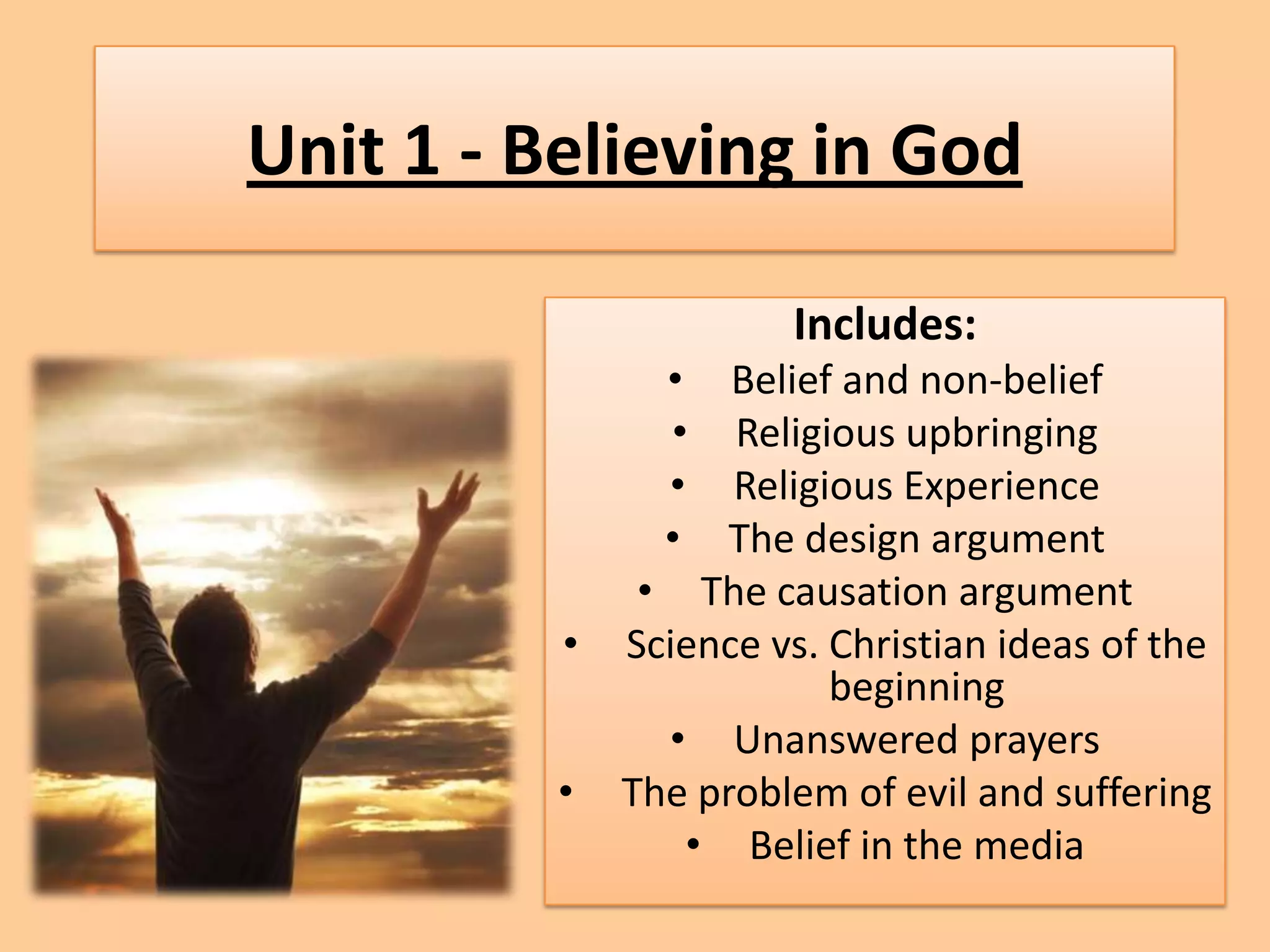
Unit 1 - Believing in God

                      Includes:
              • Belief and non-belief
               • Religious upbringing
              • Religious Experience
              • The design argument
             • The causation argument
          • Science vs. Christian ideas of the
                        beginning
              • Unanswered prayers
          • The problem of evil and suffering
                • Belief in the media
Tuesday, 06 December 2011


         Belief and non-belief in God
                             Aims:
       Understand and explain what it means to be a
                  theist, atheist or agnostic
               Describe what a theist believes
       Explain reasons why an atheist rejects belief in
                             God
      Give your own opinions and the reasons for them
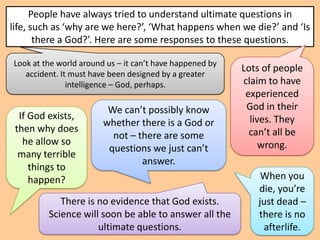
People have always tried to understand ultimate questions in
life, such as ‘why are we here?’, ‘What happens when we die?’ and ‘Is
       there a God?’. Here are some responses to these questions.

Look at the world around us – it can’t have happened by
                                                          Lots of people
   accident. It must have been designed by a greater
               intelligence – God, perhaps.               claim to have
                                                           experienced
                         We can’t possibly know            God in their
  If God exists,                                            lives. They
                        whether there is a God or
 then why does                                              can’t all be
                          not – there are some
   he allow so                                                 wrong.
                         questions we just can’t
  many terrible
                                 answer.
     things to
     happen?                                                  When you
                                                             die, you’re
            There is no evidence that God exists.            just dead –
         Science will soon be able to answer all the         there is no
                     ultimate questions.                      afterlife.
• Someone who believes in God is called a
  ‘theist’

• Someone who does not is called an ‘atheist’

• A person who is not sure and thinks it is
  impossible to know for certain if God exists or
  not is called an ‘agnostic’.
Activities:
1. Look at the speech bubbles carefully.
a) Decide for each one whether it is from a theist, an atheist, or
    an agnostic; or whether you cannot tell.
b) Which of the speech bubbles do you agree with? Give your
    reasons.
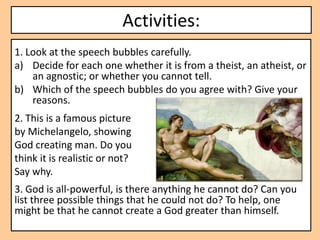
2. This is a famous picture
by Michelangelo, showing
God creating man. Do you
think it is realistic or not?
Say why.
3. God is all-powerful, is there anything he cannot do? Can you
list three possible things that he could not do? To help, one
might be that he cannot create a God greater than himself.
Christian beliefs about God
A Christian believes that:
• God created the world
• People can have a relationship with God
• He answers prayers and can perform miracles
• God is omnipotent, omniscient and omni-
  benevolent.
• Belief in God gives meaning to life and helps
  people to answer difficult questions about
  death and suffering.
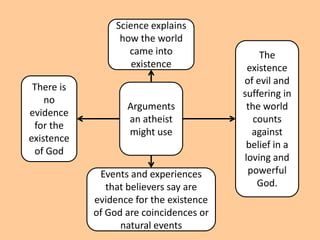
Atheists have different reasons for not
           believing in God.
• Some atheists suggest that there is evidence
  that God does not exist.
• Others do not believe because, in their
  opinion, there is no evidence that he does
  exist.
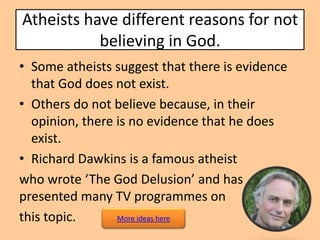
• Richard Dawkins is a famous atheist
who wrote ‘The God Delusion’ and has
presented many TV programmes on
this topic.      More ideas here
Science explains
                  how the world
                    came into                The
                     existence            existence
                                         of evil and
 There is
                                         suffering in
    no
                   Arguments              the world
evidence
                   an atheist               counts
 for the
                   might use               against
existence
                                          belief in a
 of God
                                         loving and
             Events and experiences       powerful
               that believers say are        God.
            evidence for the existence
            of God are coincidences or
                  natural events
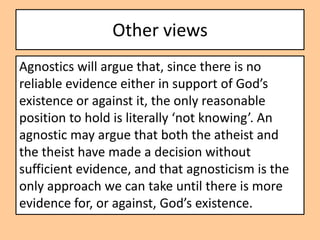
Other views
Agnostics will argue that, since there is no
reliable evidence either in support of God’s
existence or against it, the only reasonable
position to hold is literally ‘not knowing’. An
agnostic may argue that both the atheist and
the theist have made a decision without
sufficient evidence, and that agnosticism is the
only approach we can take until there is more
evidence for, or against, God’s existence.
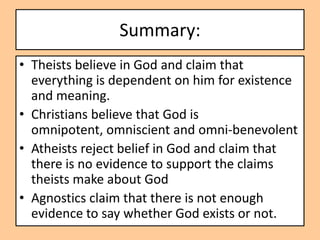
Summary:
• Theists believe in God and claim that
  everything is dependent on him for existence
  and meaning.
• Christians believe that God is
  omnipotent, omniscient and omni-benevolent
• Atheists reject belief in God and claim that
  there is no evidence to support the claims
  theists make about God
• Agnostics claim that there is not enough
  evidence to say whether God exists or not.
Tuesday, 06 December
2011


    Does our upbringing affect our
              beliefs?
   Aims:
    • Describe ways in which Christian families encourage
                    children to believe in God
    • Describe how religious communities contribute to a
                       religious upbringing
    • Evaluate the importance of a religious upbringing on
                    coming to believe in God
      • Give your own opinion on religious upbringing
What is Humanism?

• What did you find out for homework?
• How would you summarise their views?
• Humanists don’t rely on a god for answers –
  does this mean that they don’t have a moral
  code?
• What would you like to ask about Humanism?
• What do you like about Humanism?
• Many people come to believe in God through
  the way they are brought up. For
  Christians, one of the purposes of marriage is
  to have children and to bring them up in a
  secure Christian home. Christian parents
  introduce their children to belief in God and
  encourage their children to develop a
  relationship with God because they believe
  that this is the way God intended us to live
  and that it gives meaning and purpose to life.
• Sometimes, as they grow up, it is difficult for
  children to continue to accept their family’s
  religious beliefs. The children will learn about
  other beliefs and ways of life and, at some
  point, will need to work out for themselves if
  what they have learned while growing up will
  be right for them in the future. This can be
  difficult for parents to understand. For other
  children, the comfort of growing up in a
  religious home can help them through
  difficulties and give them a secure basis for
  adulthood.
Discussion:
• ‘Parents should not force their religion onto
  their children.’ Do you agree?
• How might Christian parents who attend
  church and believe in God avoid bringing up
  their children to believe in the same things as
  themselves? Is this possible?
• What other things might influence a person as
  they get older? Would these things affect their
  belief in God?
Summary:
• Parents help children to believe in God by
  bringing them up in a religious family.
• Parents and their children may share beliefs,
  practices and activities together with their
  religious community.
• Children will need to make their own choices
  about what they believe when they are older.

Belief intro

  • 1.
    Unit 1 -Believing in God Includes: • Belief and non-belief • Religious upbringing • Religious Experience • The design argument • The causation argument • Science vs. Christian ideas of the beginning • Unanswered prayers • The problem of evil and suffering • Belief in the media
  • 2.
    Tuesday, 06 December2011 Belief and non-belief in God Aims: Understand and explain what it means to be a theist, atheist or agnostic Describe what a theist believes Explain reasons why an atheist rejects belief in God Give your own opinions and the reasons for them
  • 3.
    People have alwaystried to understand ultimate questions in life, such as ‘why are we here?’, ‘What happens when we die?’ and ‘Is there a God?’. Here are some responses to these questions. Look at the world around us – it can’t have happened by Lots of people accident. It must have been designed by a greater intelligence – God, perhaps. claim to have experienced We can’t possibly know God in their If God exists, lives. They whether there is a God or then why does can’t all be not – there are some he allow so wrong. questions we just can’t many terrible answer. things to happen? When you die, you’re There is no evidence that God exists. just dead – Science will soon be able to answer all the there is no ultimate questions. afterlife.
  • 4.
    • Someone whobelieves in God is called a ‘theist’ • Someone who does not is called an ‘atheist’ • A person who is not sure and thinks it is impossible to know for certain if God exists or not is called an ‘agnostic’.
  • 5.
    Activities: 1. Look atthe speech bubbles carefully. a) Decide for each one whether it is from a theist, an atheist, or an agnostic; or whether you cannot tell. b) Which of the speech bubbles do you agree with? Give your reasons. 2. This is a famous picture by Michelangelo, showing God creating man. Do you think it is realistic or not? Say why. 3. God is all-powerful, is there anything he cannot do? Can you list three possible things that he could not do? To help, one might be that he cannot create a God greater than himself.
  • 6.
    Christian beliefs aboutGod A Christian believes that: • God created the world • People can have a relationship with God • He answers prayers and can perform miracles • God is omnipotent, omniscient and omni- benevolent. • Belief in God gives meaning to life and helps people to answer difficult questions about death and suffering.
  • 7.
    Atheists have differentreasons for not believing in God. • Some atheists suggest that there is evidence that God does not exist. • Others do not believe because, in their opinion, there is no evidence that he does exist. • Richard Dawkins is a famous atheist who wrote ‘The God Delusion’ and has presented many TV programmes on this topic. More ideas here
  • 8.
    Science explains how the world came into The existence existence of evil and There is suffering in no Arguments the world evidence an atheist counts for the might use against existence belief in a of God loving and Events and experiences powerful that believers say are God. evidence for the existence of God are coincidences or natural events
  • 9.
    Other views Agnostics willargue that, since there is no reliable evidence either in support of God’s existence or against it, the only reasonable position to hold is literally ‘not knowing’. An agnostic may argue that both the atheist and the theist have made a decision without sufficient evidence, and that agnosticism is the only approach we can take until there is more evidence for, or against, God’s existence.
  • 10.
    Summary: • Theists believein God and claim that everything is dependent on him for existence and meaning. • Christians believe that God is omnipotent, omniscient and omni-benevolent • Atheists reject belief in God and claim that there is no evidence to support the claims theists make about God • Agnostics claim that there is not enough evidence to say whether God exists or not.
  • 11.
    Tuesday, 06 December 2011 Does our upbringing affect our beliefs? Aims: • Describe ways in which Christian families encourage children to believe in God • Describe how religious communities contribute to a religious upbringing • Evaluate the importance of a religious upbringing on coming to believe in God • Give your own opinion on religious upbringing
  • 12.
    What is Humanism? •What did you find out for homework? • How would you summarise their views? • Humanists don’t rely on a god for answers – does this mean that they don’t have a moral code? • What would you like to ask about Humanism? • What do you like about Humanism?
  • 13.
    • Many peoplecome to believe in God through the way they are brought up. For Christians, one of the purposes of marriage is to have children and to bring them up in a secure Christian home. Christian parents introduce their children to belief in God and encourage their children to develop a relationship with God because they believe that this is the way God intended us to live and that it gives meaning and purpose to life.
  • 14.
    • Sometimes, asthey grow up, it is difficult for children to continue to accept their family’s religious beliefs. The children will learn about other beliefs and ways of life and, at some point, will need to work out for themselves if what they have learned while growing up will be right for them in the future. This can be difficult for parents to understand. For other children, the comfort of growing up in a religious home can help them through difficulties and give them a secure basis for adulthood.
  • 16.
    Discussion: • ‘Parents shouldnot force their religion onto their children.’ Do you agree? • How might Christian parents who attend church and believe in God avoid bringing up their children to believe in the same things as themselves? Is this possible? • What other things might influence a person as they get older? Would these things affect their belief in God?
  • 17.
    Summary: • Parents helpchildren to believe in God by bringing them up in a religious family. • Parents and their children may share beliefs, practices and activities together with their religious community. • Children will need to make their own choices about what they believe when they are older.