What can you see in
this picture?


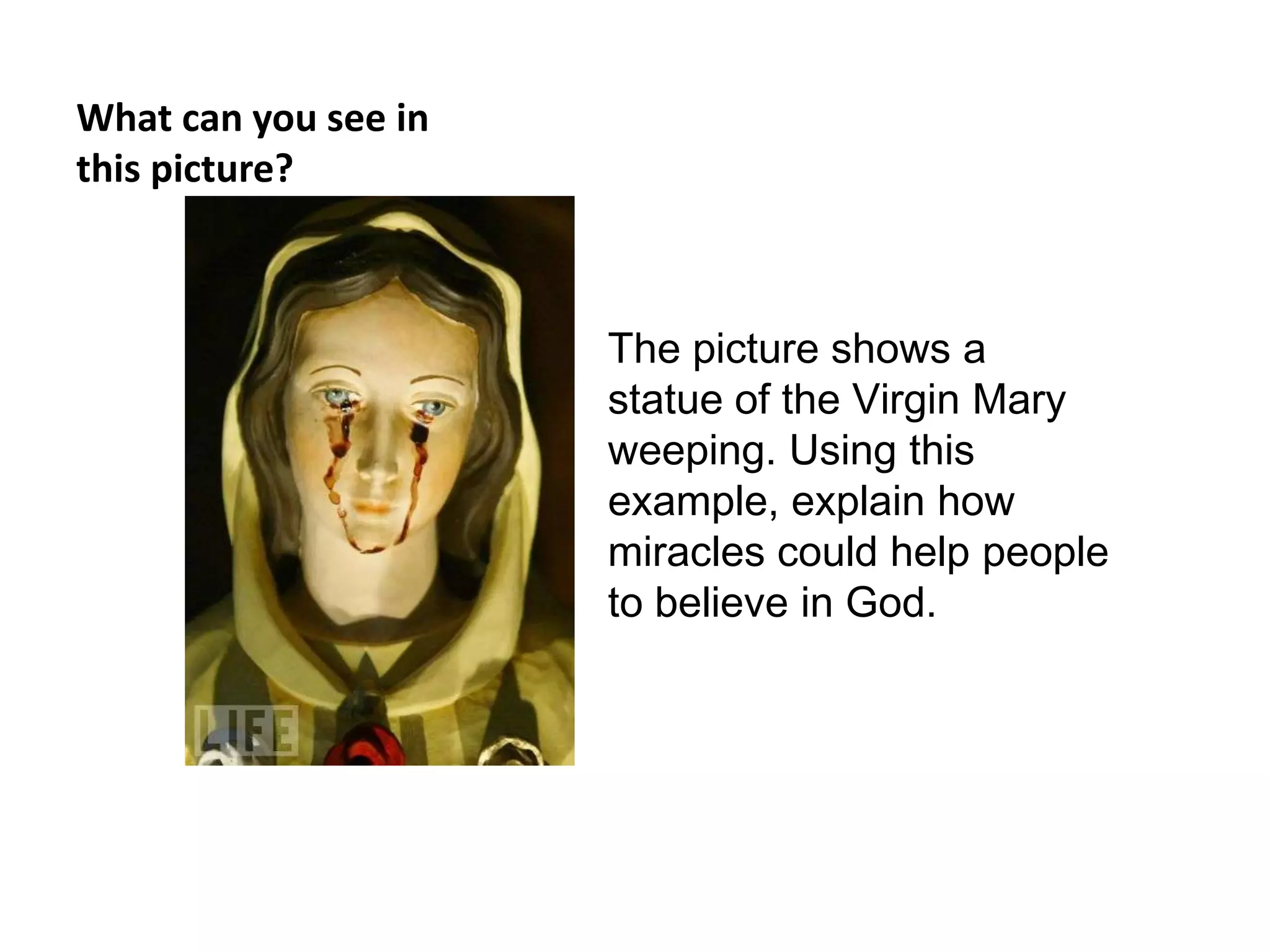
                      The picture shows a
                      statue of the Virgin Mary
                      weeping. Using this
                      example, explain how
                      miracles could help people
                      to believe in God.
Can ‘religious experiences’
change a persons’ belief in god?
Aims:
 • To know and give examples of religious
            experiences including
      numinous, miracles, conversion and
                   prayer
  • Understand how religious experiences
          may lead to belief in God
Religious Experience:

Many people claim to have had a religious experience –
some studies suggest that it may be as many as 75%
of the population. They don’t have to be dramatic, but
might be an answered prayer or simply the feeling of
God being with them, but such an experience can make
a significant difference to how a person views the
world and may change their life in an important way.
Think:
 Do you think that people can really
hear God’s voice or see visions? Give
 reasons for or against your views.
What is a miracle?


A miracle is an act of God that goes against the laws
of nature and is performed for religious reasons.

Jesus performed many miracles during his ministry
to make known who he was and illustrate his
teaching.
Key Glossary words:


   • Conversion
   • Numinous
      • Prayer
Numinous:
• A numinous experience is when something
  completely astonishes you. It is such an
  experience that words are not enough to
  describe the feeling, but it leaves you knowing
  that there must be something more powerful
  than you.
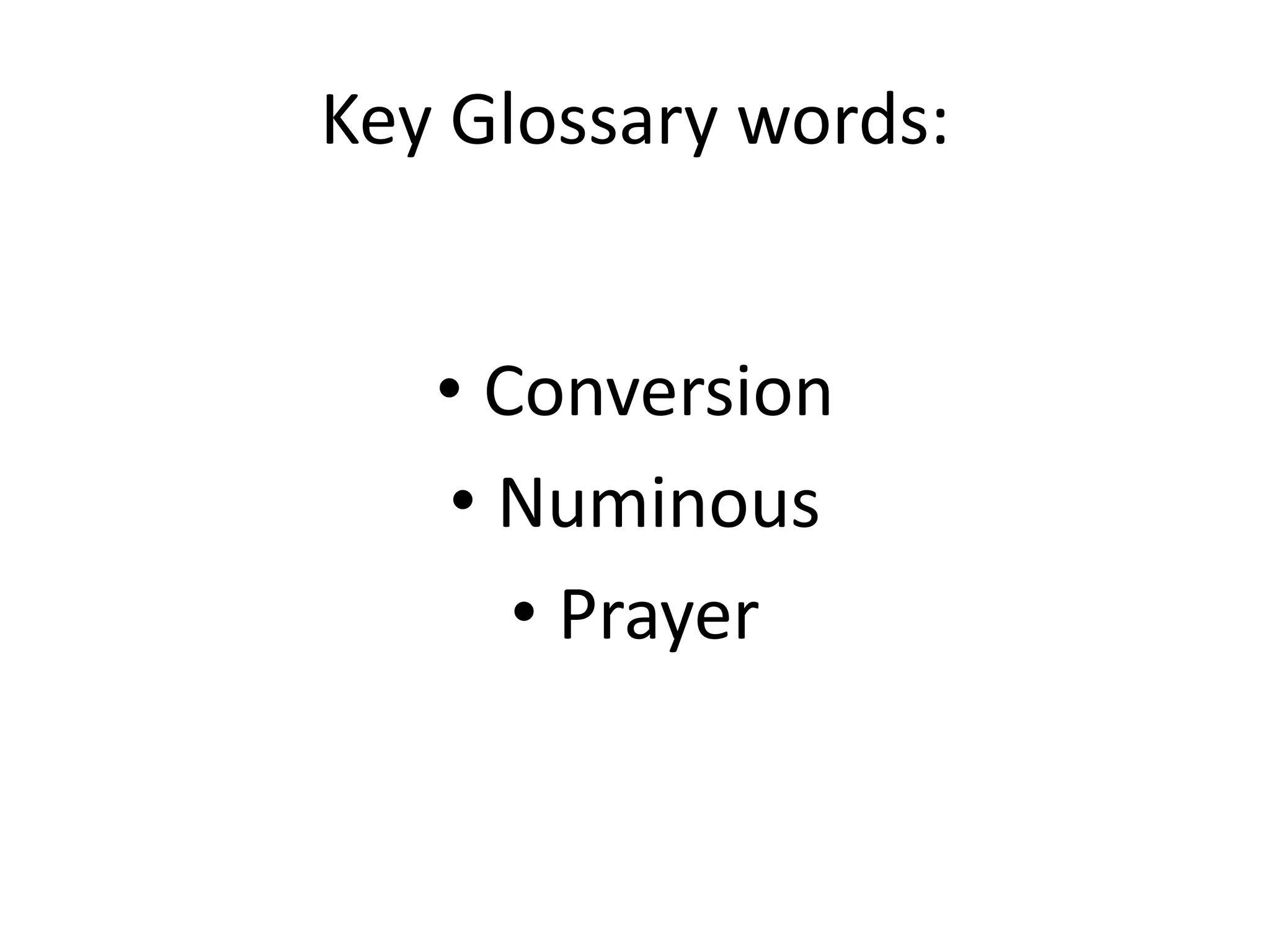
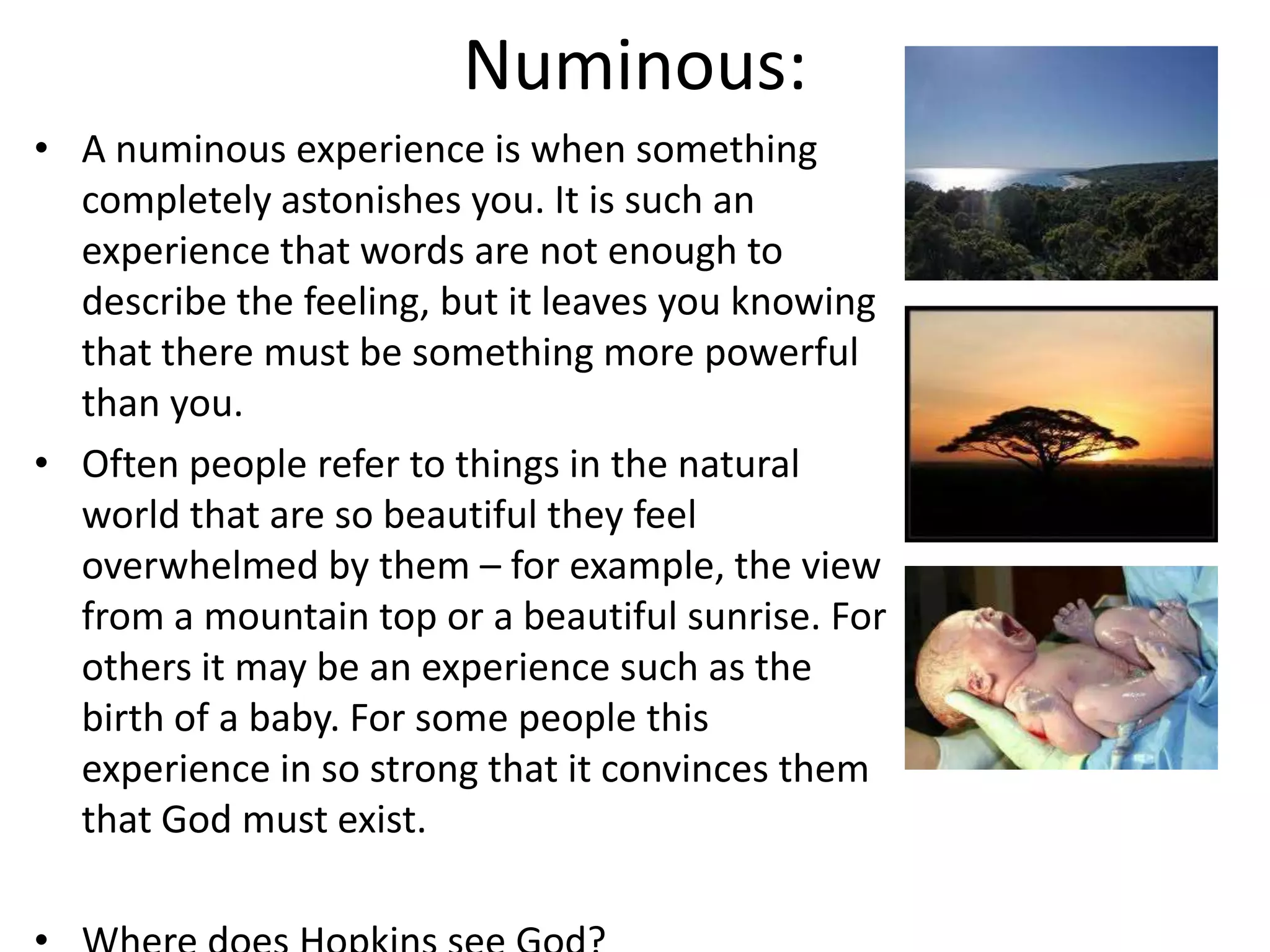
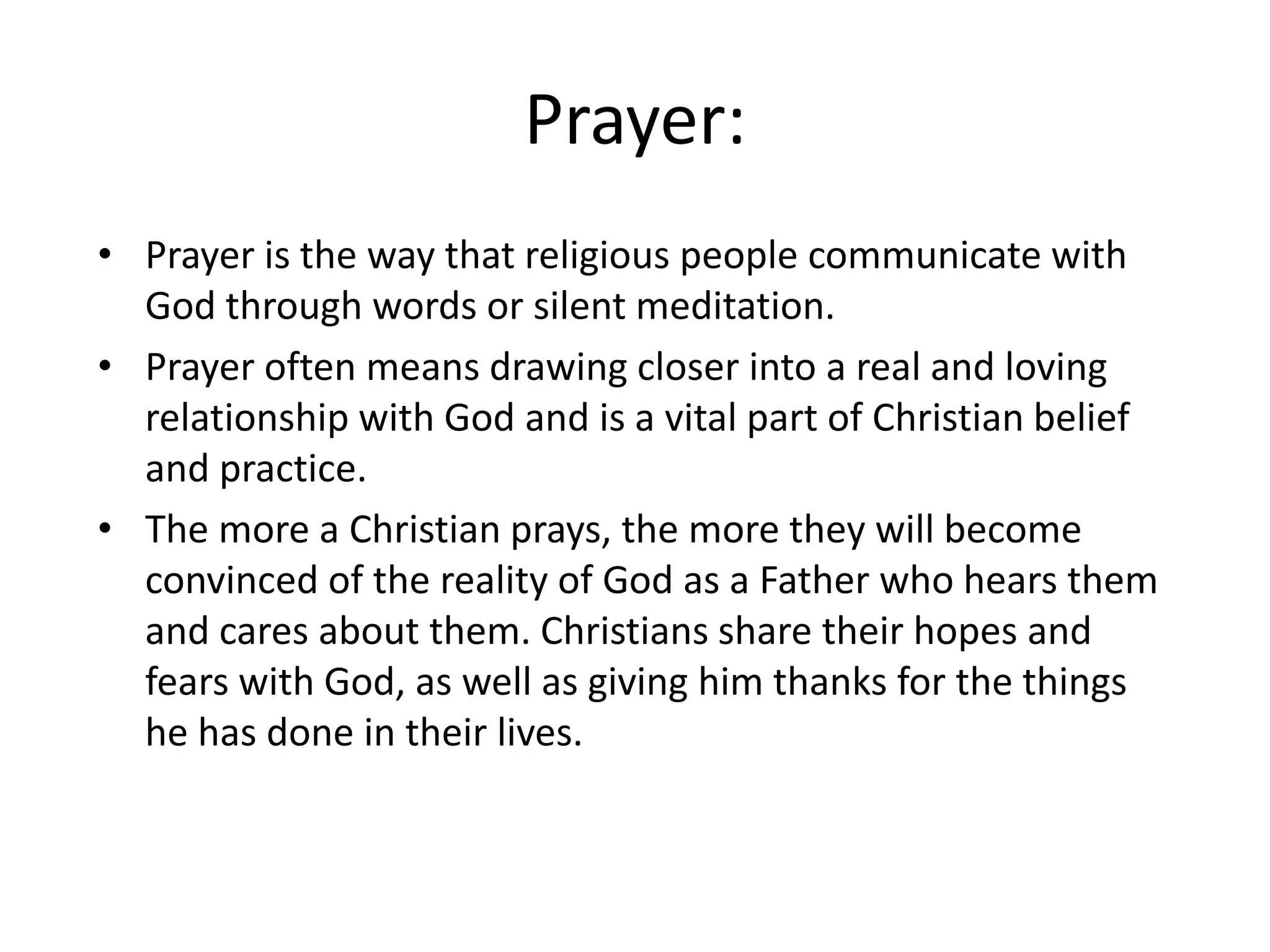
• Often people refer to things in the natural
  world that are so beautiful they feel
  overwhelmed by them – for example, the view
  from a mountain top or a beautiful sunrise. For
  others it may be an experience such as the
  birth of a baby. For some people this
  experience in so strong that it convinces them
  that God must exist.
Prayer:
• Prayer is the way that religious people communicate with
  God through words or silent meditation.
• Prayer often means drawing closer into a real and loving
  relationship with God and is a vital part of Christian belief
  and practice.
• The more a Christian prays, the more they will become
  convinced of the reality of God as a Father who hears them
  and cares about them. Christians share their hopes and
  fears with God, as well as giving him thanks for the things
  he has done in their lives.
A useful mnemonic:
• P – Petition (Asking for things for
  yourself or others)
• A – Adoration (Telling God how great
  he is)
• C – Confession (Saying sorry for your
  sins)
• T - Thanks
The Lord’s prayer:
 Our Father, who art in heaven,            Our Father in heaven,
     hallowed be thy name.                hallowed be your name.
       Thy Kingdom come,                   Your Kingdom come,
        thy will be done,                    your will be done,
    on earth as it is in heaven            on earth as in heaven
Give us this day our daily bread.      Give us today our daily bread.
 And forgive us our trespasses,             Forgive us our sins,
as we forgive those who trespass    as we forgive those who sin against
           against us.                               us.
And lead us not into temptation,       Lead us not into temptation,
     but deliver us from evil             but deliver us from evil.
What about this version?

dad@hvn,ur spshl.we want wot u
want&urth2b like hvn.giv us food&4giv r
sins lyk we 4giv uvaz.don't test us!save
us!bcos we kno ur boss,ur tuf&ur cool 4
eva!ok?
How do Christians Pray?
A Christian may pray alone or with a group. Many
Christian prayers are formal and liturgical (read from
a written form of service). However, other Christians
prefer to pray spontaneously, devising prayers to
meet particular needs. Some believers meditate
quietly, focusing their thoughts on the nature of
God, on a verse from scripture, or on listening in
order to hear God’s voice.

Christian prayer for young people
What about conversion?
• Some believers have conversion
  experiences, during which they
  change their beliefs from one
  faith to another, or from no faith
  to believing in God. Some
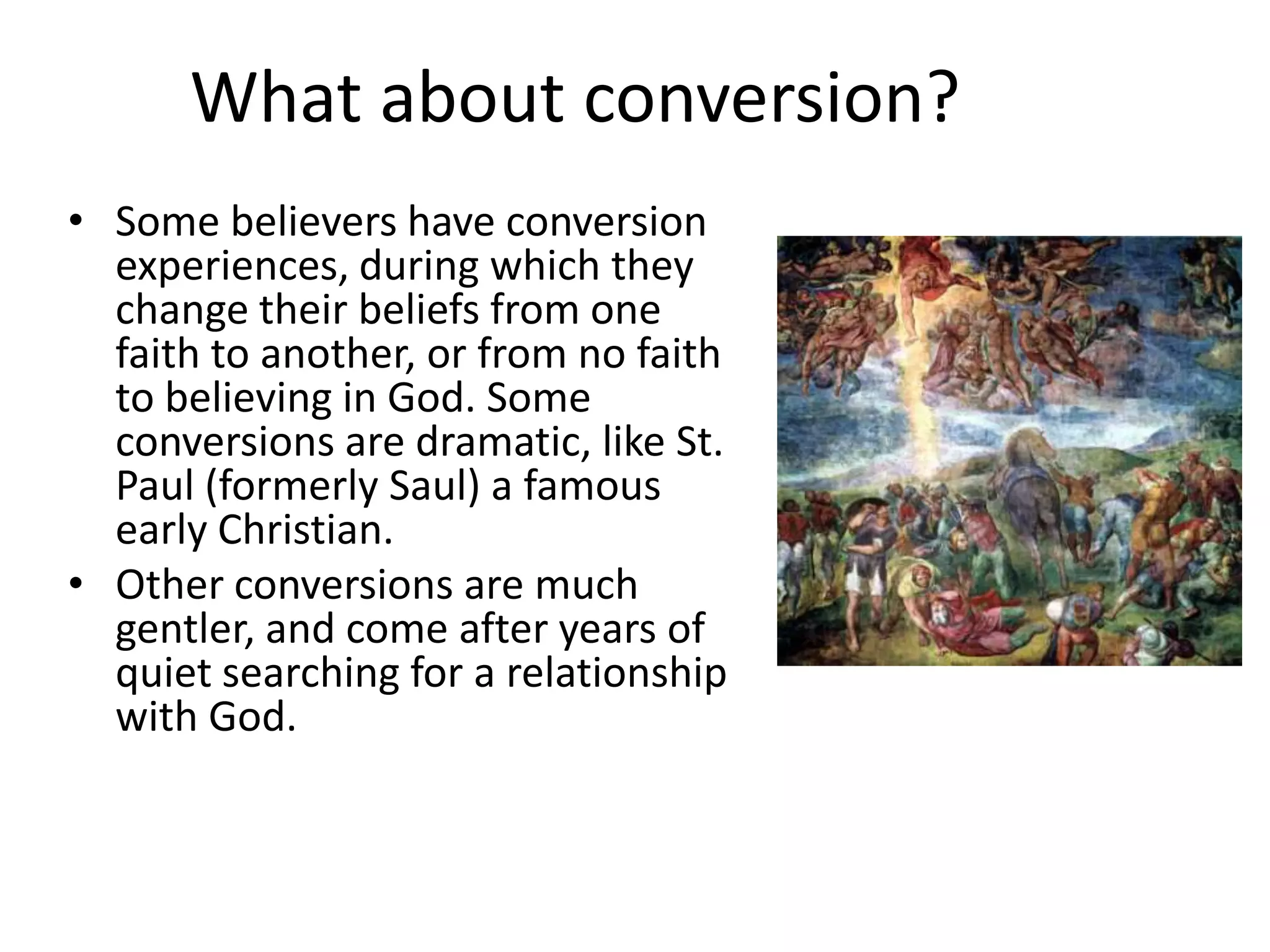
  conversions are dramatic, like St.
  Paul (formerly Saul) a famous
  early Christian.
• Other conversions are much
  gentler, and come after years of
  quiet searching for a relationship
  with God.

2 miracles

  • 1.
    What can yousee in this picture? The picture shows a statue of the Virgin Mary weeping. Using this example, explain how miracles could help people to believe in God.
  • 2.
    Can ‘religious experiences’ changea persons’ belief in god? Aims: • To know and give examples of religious experiences including numinous, miracles, conversion and prayer • Understand how religious experiences may lead to belief in God
  • 3.
    Religious Experience: Many peopleclaim to have had a religious experience – some studies suggest that it may be as many as 75% of the population. They don’t have to be dramatic, but might be an answered prayer or simply the feeling of God being with them, but such an experience can make a significant difference to how a person views the world and may change their life in an important way.
  • 4.
    Think: Do youthink that people can really hear God’s voice or see visions? Give reasons for or against your views.
  • 5.
    What is amiracle? A miracle is an act of God that goes against the laws of nature and is performed for religious reasons. Jesus performed many miracles during his ministry to make known who he was and illustrate his teaching.
  • 6.
    Key Glossary words: • Conversion • Numinous • Prayer
  • 7.
    Numinous: • A numinousexperience is when something completely astonishes you. It is such an experience that words are not enough to describe the feeling, but it leaves you knowing that there must be something more powerful than you. • Often people refer to things in the natural world that are so beautiful they feel overwhelmed by them – for example, the view from a mountain top or a beautiful sunrise. For others it may be an experience such as the birth of a baby. For some people this experience in so strong that it convinces them that God must exist.
  • 8.
    Prayer: • Prayer isthe way that religious people communicate with God through words or silent meditation. • Prayer often means drawing closer into a real and loving relationship with God and is a vital part of Christian belief and practice. • The more a Christian prays, the more they will become convinced of the reality of God as a Father who hears them and cares about them. Christians share their hopes and fears with God, as well as giving him thanks for the things he has done in their lives.
  • 9.
    A useful mnemonic: •P – Petition (Asking for things for yourself or others) • A – Adoration (Telling God how great he is) • C – Confession (Saying sorry for your sins) • T - Thanks
  • 10.
    The Lord’s prayer: Our Father, who art in heaven, Our Father in heaven, hallowed be thy name. hallowed be your name. Thy Kingdom come, Your Kingdom come, thy will be done, your will be done, on earth as it is in heaven on earth as in heaven Give us this day our daily bread. Give us today our daily bread. And forgive us our trespasses, Forgive us our sins, as we forgive those who trespass as we forgive those who sin against against us. us. And lead us not into temptation, Lead us not into temptation, but deliver us from evil but deliver us from evil.
  • 11.
    What about thisversion? dad@hvn,ur spshl.we want wot u want&urth2b like hvn.giv us food&4giv r sins lyk we 4giv uvaz.don't test us!save us!bcos we kno ur boss,ur tuf&ur cool 4 eva!ok?
  • 12.
    How do ChristiansPray? A Christian may pray alone or with a group. Many Christian prayers are formal and liturgical (read from a written form of service). However, other Christians prefer to pray spontaneously, devising prayers to meet particular needs. Some believers meditate quietly, focusing their thoughts on the nature of God, on a verse from scripture, or on listening in order to hear God’s voice. Christian prayer for young people
  • 13.
    What about conversion? •Some believers have conversion experiences, during which they change their beliefs from one faith to another, or from no faith to believing in God. Some conversions are dramatic, like St. Paul (formerly Saul) a famous early Christian. • Other conversions are much gentler, and come after years of quiet searching for a relationship with God.