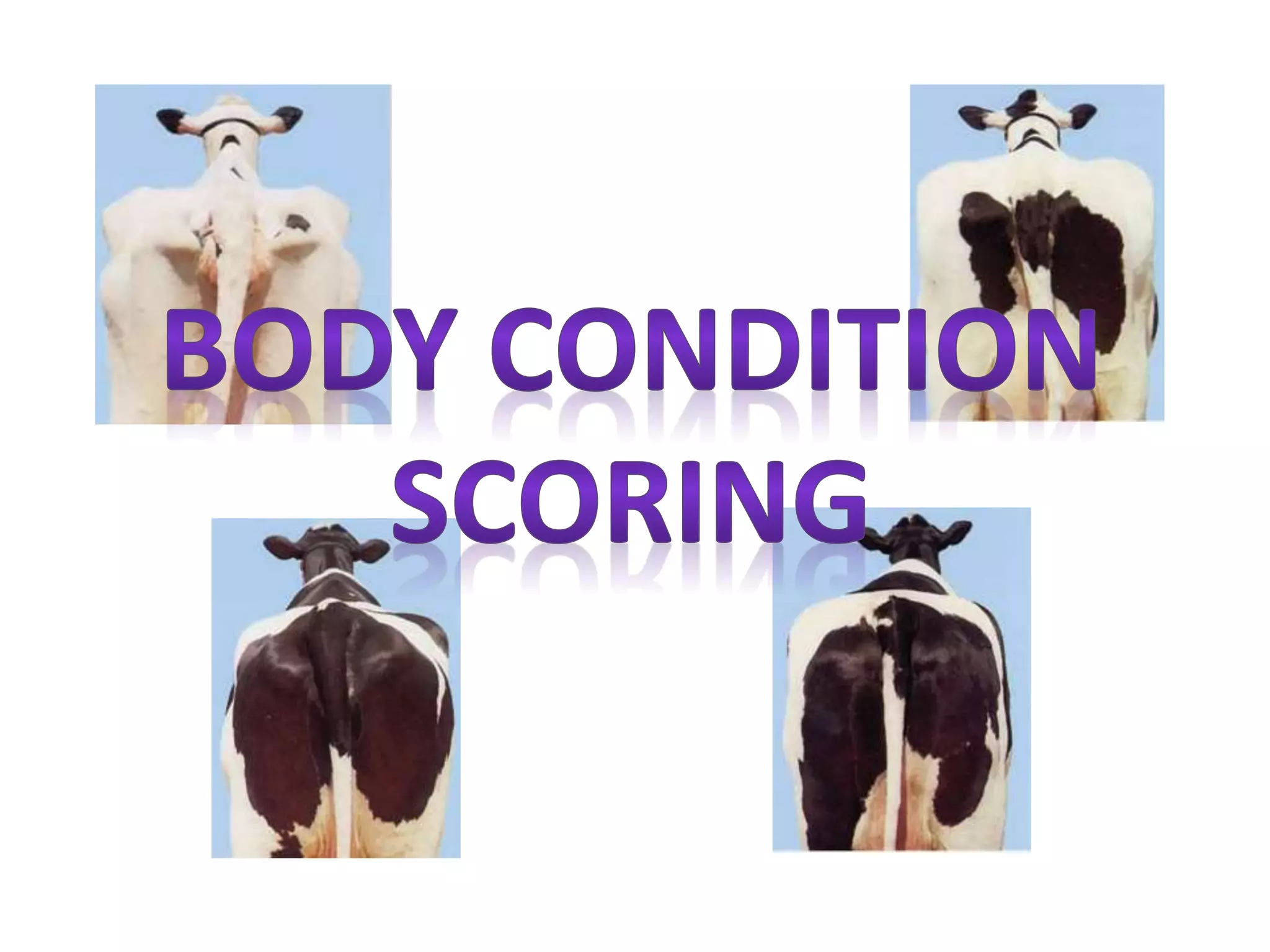
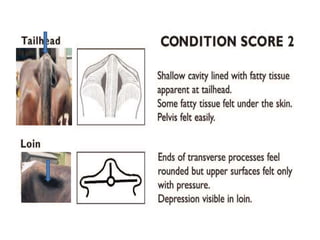
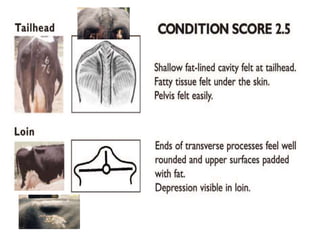
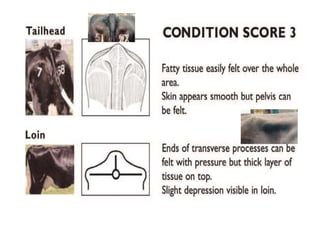
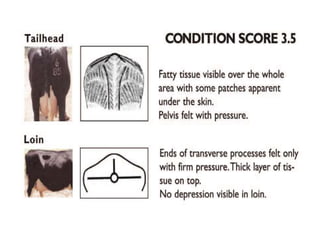
Body condition scoring involves the assessment of
the cow’s fat reserves through a combination of
handling the cow and visually assessing the level
of fat cover.
• Breeding soundness examination is a tool used to
adjust feeding and management practices in order
to maximize the potential for milk production and
minimise reproductive disorders.
• To compare the condition of cows with
recommended targets.
• To detect health problems in a herd.
• Is also conducted on behalf of intending vendors
and purchasers.
Two types of BCS
1. Whole herd basis : Done every 1-2 months
2. An individual cow: Done at the most important
stages of lactation.
The key stages of lactation to condition score an
individual cow includes
• two months before drying off
• during the dry period
• at monthly intervals in early lactation
Condition scoring at these stages helps to:
1. Allow the dairy farmers to make adjustments to
dairy cow rations to ensure that cows dry off
and calve in the ideal condition score.
2. Regular condition scoring in early lactation will
allow any excessive loss in body condition score
to be identified and corrected to ensure that
fertility performance is not compromised.
a. 1-5 point body condition scale: Most
commonly used system which allows each cow
to be given a body condition score on a scale
from 1 (extremely thin) to 5 (extremely fat) in
increments of 0.5 condition score units.
1.0, 1.5, 2.0, 2.5, 3.0, 3.5, 4.0, 4.5, 5.0
b. 1-8 point body condition scale: Not commonly
used system.
• Body condition scoring is a simple process carried
out in the paddock or dairy
Stand directly behind the cow to score
Cows should be first visually scored
Secondly by handling the backbone,
loin and rump areas.
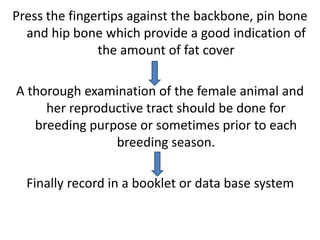
Press the fingertips against the backbone, pin bone
and hip bone which provide a good indication of
the amount of fat cover
A thorough examination of the female animal and
her reproductive tract should be done for
breeding purpose or sometimes prior to each
breeding season.
Finally record in a booklet or data base system
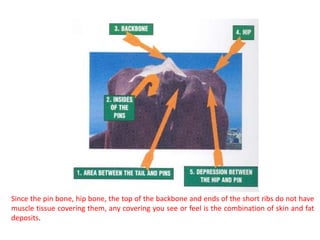
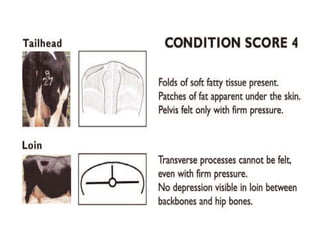
Since the pin bone, hip bone, the top of the backbone and ends of the short ribs do not have
muscle tissue covering them, any covering you see or feel is the combination of skin and fat
deposits.
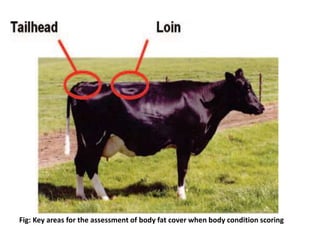
Fig: Key areas for the assessment of body fat cover when body condition scoring
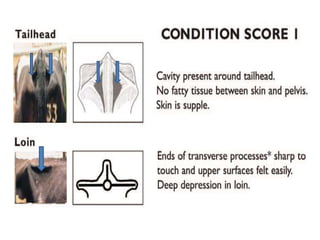
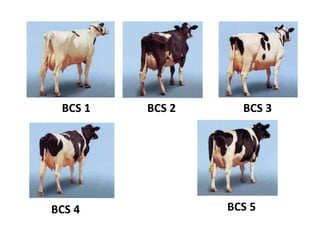
BCS 1 BCS 2 BCS 3
BCS 4 BCS 5
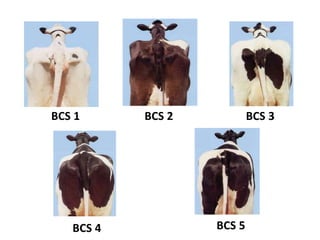
BCS 1
BCS 5
BCS 4
BCS 2 BCS 3
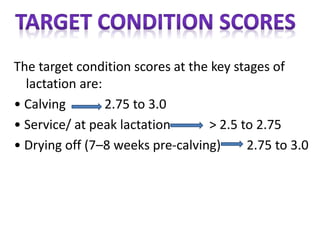
The target condition scores at the key stages of
lactation are:
• Calving 2.75 to 3.0
• Service/ at peak lactation > 2.5 to 2.75
• Drying off (7–8 weeks pre-calving) 2.75 to 3.0
This technique links together three major factors
BCS.pptx

BCS.pptx

  • 2.
    Body condition scoringinvolves the assessment of the cow’s fat reserves through a combination of handling the cow and visually assessing the level of fat cover.
  • 3.
    • Breeding soundnessexamination is a tool used to adjust feeding and management practices in order to maximize the potential for milk production and minimise reproductive disorders. • To compare the condition of cows with recommended targets. • To detect health problems in a herd. • Is also conducted on behalf of intending vendors and purchasers.
  • 4.
    Two types ofBCS 1. Whole herd basis : Done every 1-2 months 2. An individual cow: Done at the most important stages of lactation.
  • 5.
    The key stagesof lactation to condition score an individual cow includes • two months before drying off • during the dry period • at monthly intervals in early lactation
  • 6.
    Condition scoring atthese stages helps to: 1. Allow the dairy farmers to make adjustments to dairy cow rations to ensure that cows dry off and calve in the ideal condition score. 2. Regular condition scoring in early lactation will allow any excessive loss in body condition score to be identified and corrected to ensure that fertility performance is not compromised.
  • 7.
    a. 1-5 pointbody condition scale: Most commonly used system which allows each cow to be given a body condition score on a scale from 1 (extremely thin) to 5 (extremely fat) in increments of 0.5 condition score units. 1.0, 1.5, 2.0, 2.5, 3.0, 3.5, 4.0, 4.5, 5.0 b. 1-8 point body condition scale: Not commonly used system.
  • 8.
    • Body conditionscoring is a simple process carried out in the paddock or dairy Stand directly behind the cow to score Cows should be first visually scored Secondly by handling the backbone, loin and rump areas.
  • 9.
    Press the fingertipsagainst the backbone, pin bone and hip bone which provide a good indication of the amount of fat cover A thorough examination of the female animal and her reproductive tract should be done for breeding purpose or sometimes prior to each breeding season. Finally record in a booklet or data base system
  • 10.
    Since the pinbone, hip bone, the top of the backbone and ends of the short ribs do not have muscle tissue covering them, any covering you see or feel is the combination of skin and fat deposits.
  • 11.
    Fig: Key areasfor the assessment of body fat cover when body condition scoring
  • 18.
    BCS 1 BCS2 BCS 3 BCS 4 BCS 5
  • 19.
    BCS 1 BCS 5 BCS4 BCS 2 BCS 3
  • 20.
    The target conditionscores at the key stages of lactation are: • Calving 2.75 to 3.0 • Service/ at peak lactation > 2.5 to 2.75 • Drying off (7–8 weeks pre-calving) 2.75 to 3.0
  • 21.
    This technique linkstogether three major factors