STUDY MODELBASING AND
TRIMMING
PRESENTED BY
SUSNA SARAH PAUL
DEPT. OF ORTHODONTICS
CONTENTS
●

INTRODUCTION

●

STUDY MODELS

●

BASING

●

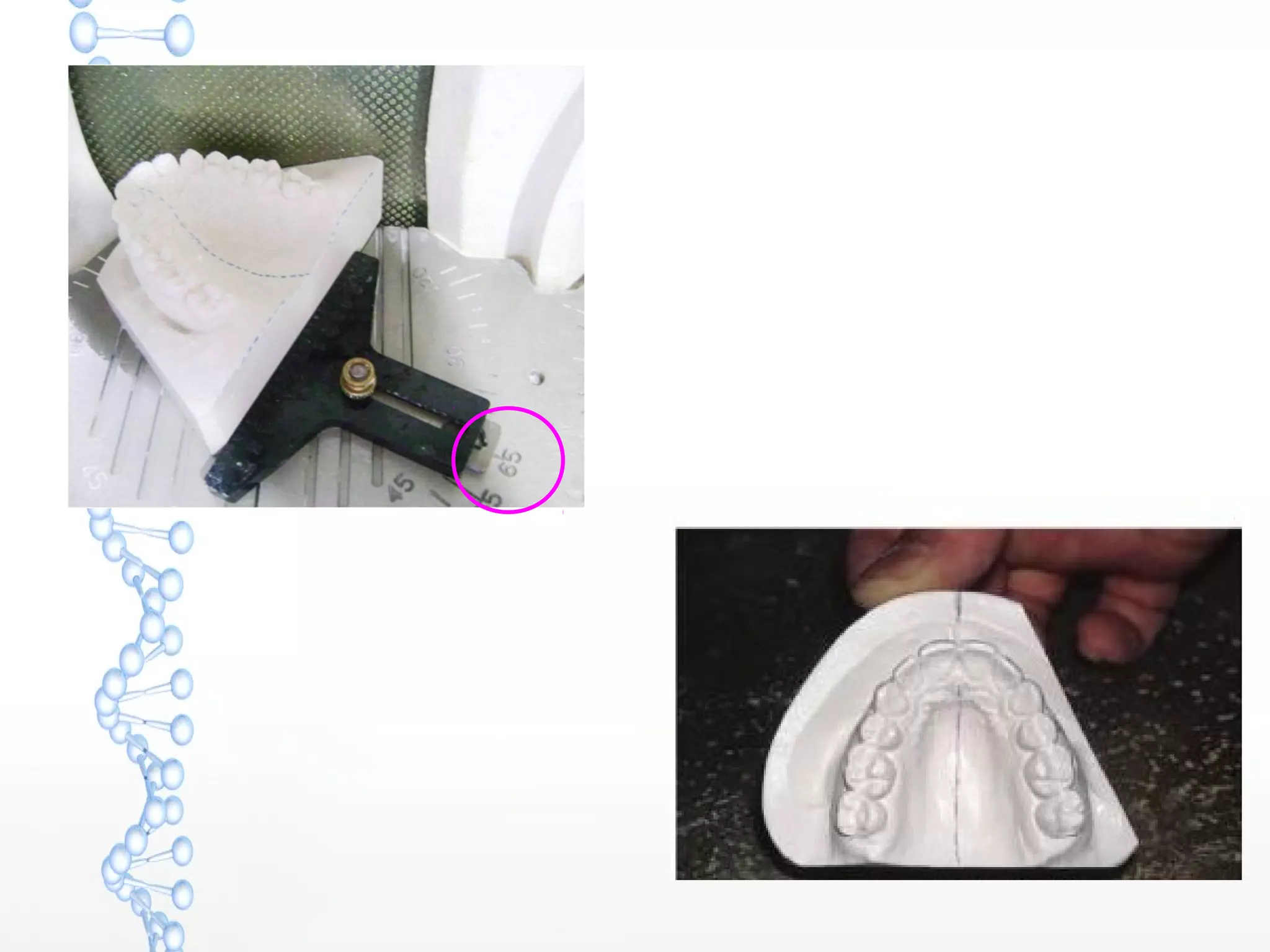
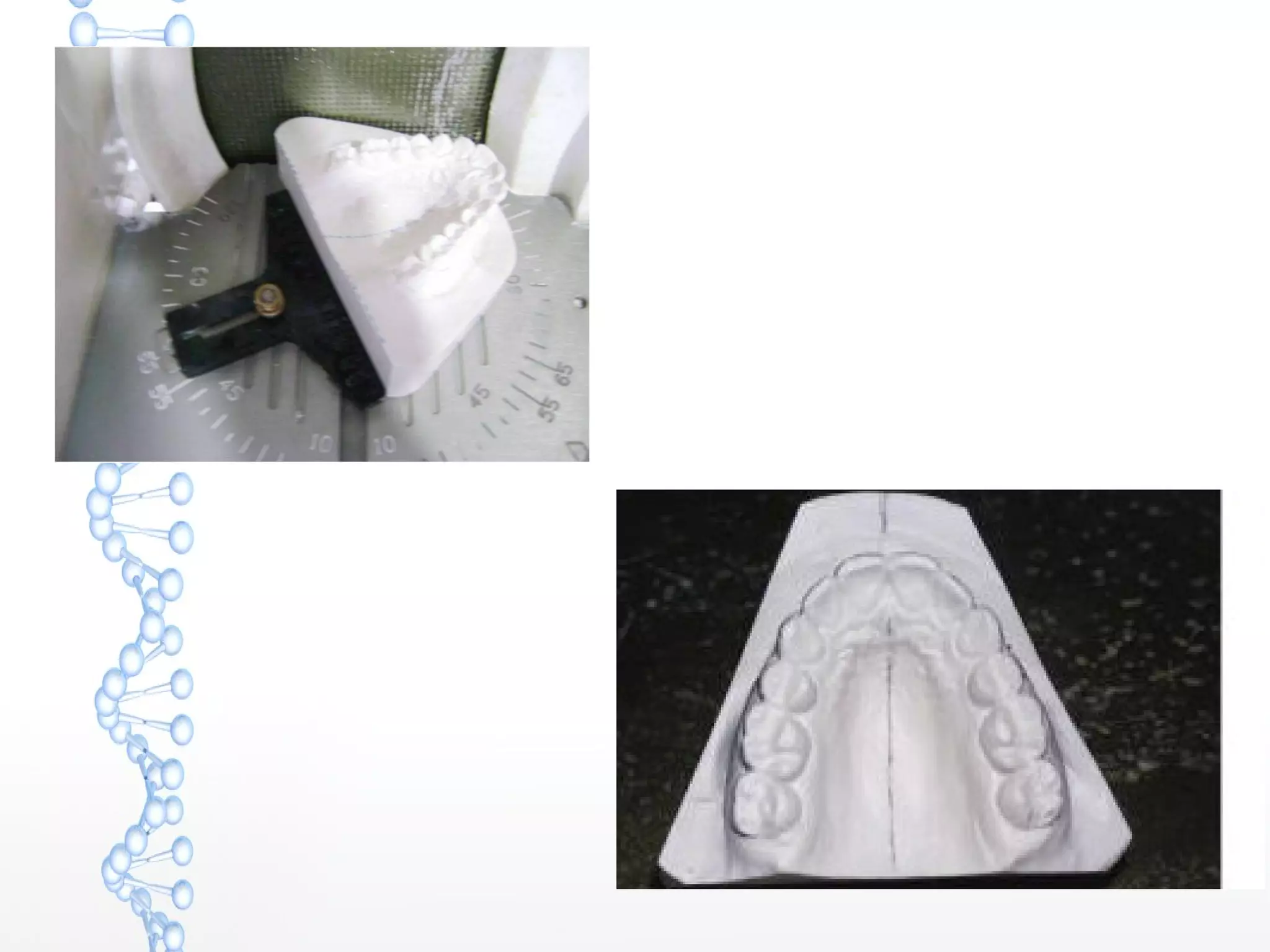
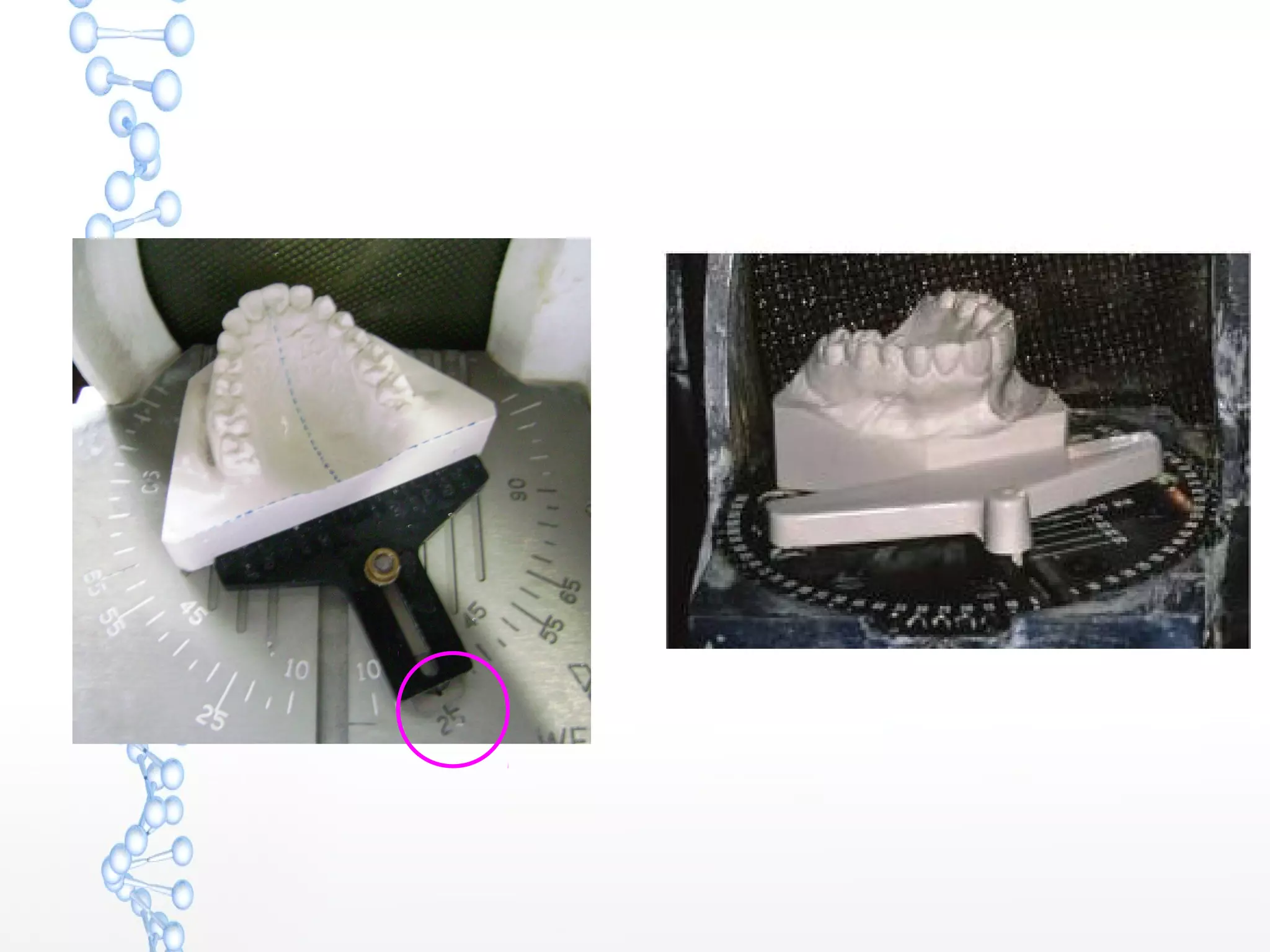
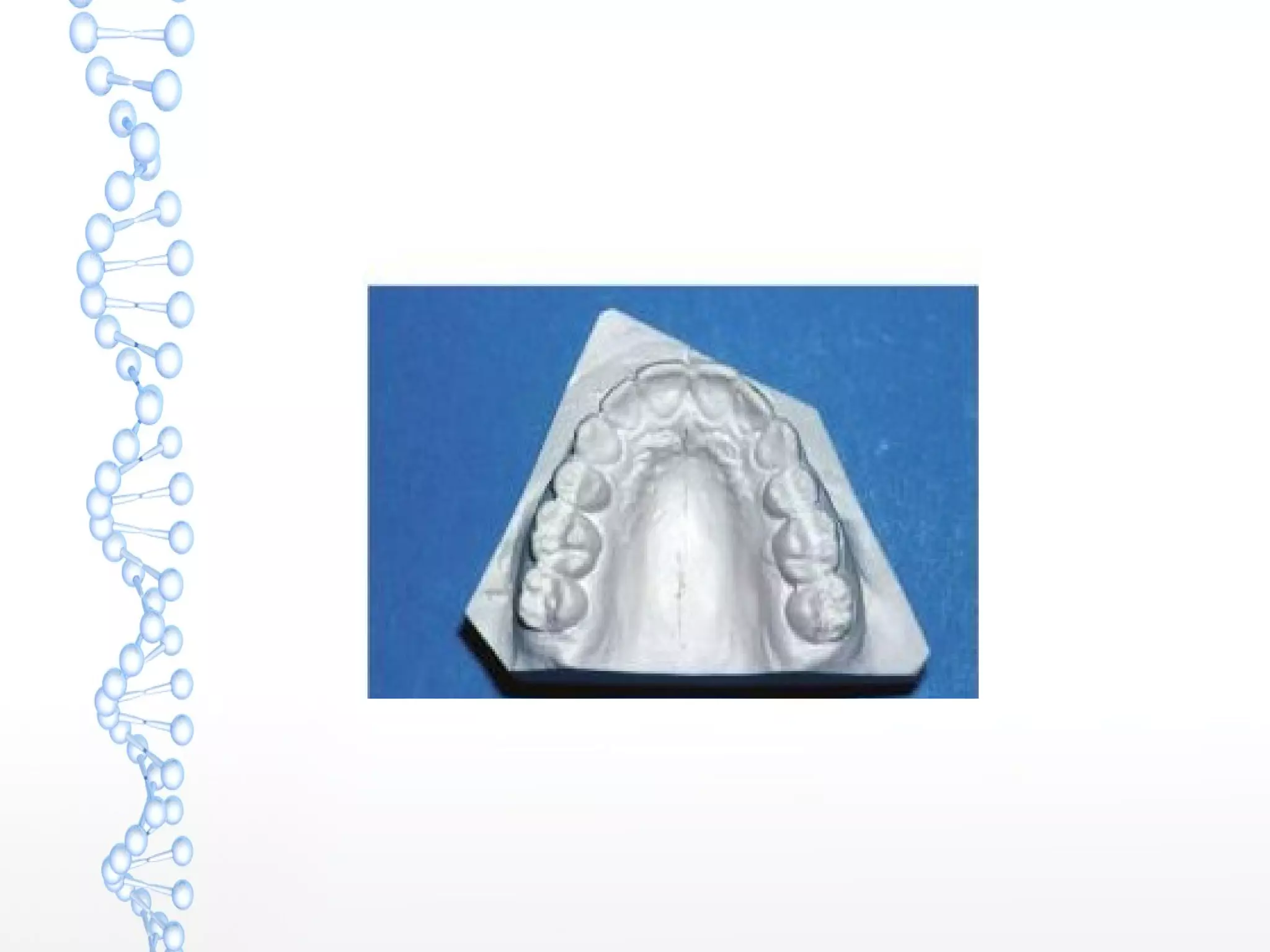
TRIMMING OF MAXILLARY CAST

●

TRIMMING OF MANDIBULAR CAST

●

CONCLUSION
●

Orthodontic diagnosis deals with recognition of
the various characteristics of the malocclusion.
Diagnostic aids fall into two categories
-Essential Diagnostic Records
-Supplemental Diagnostic Records
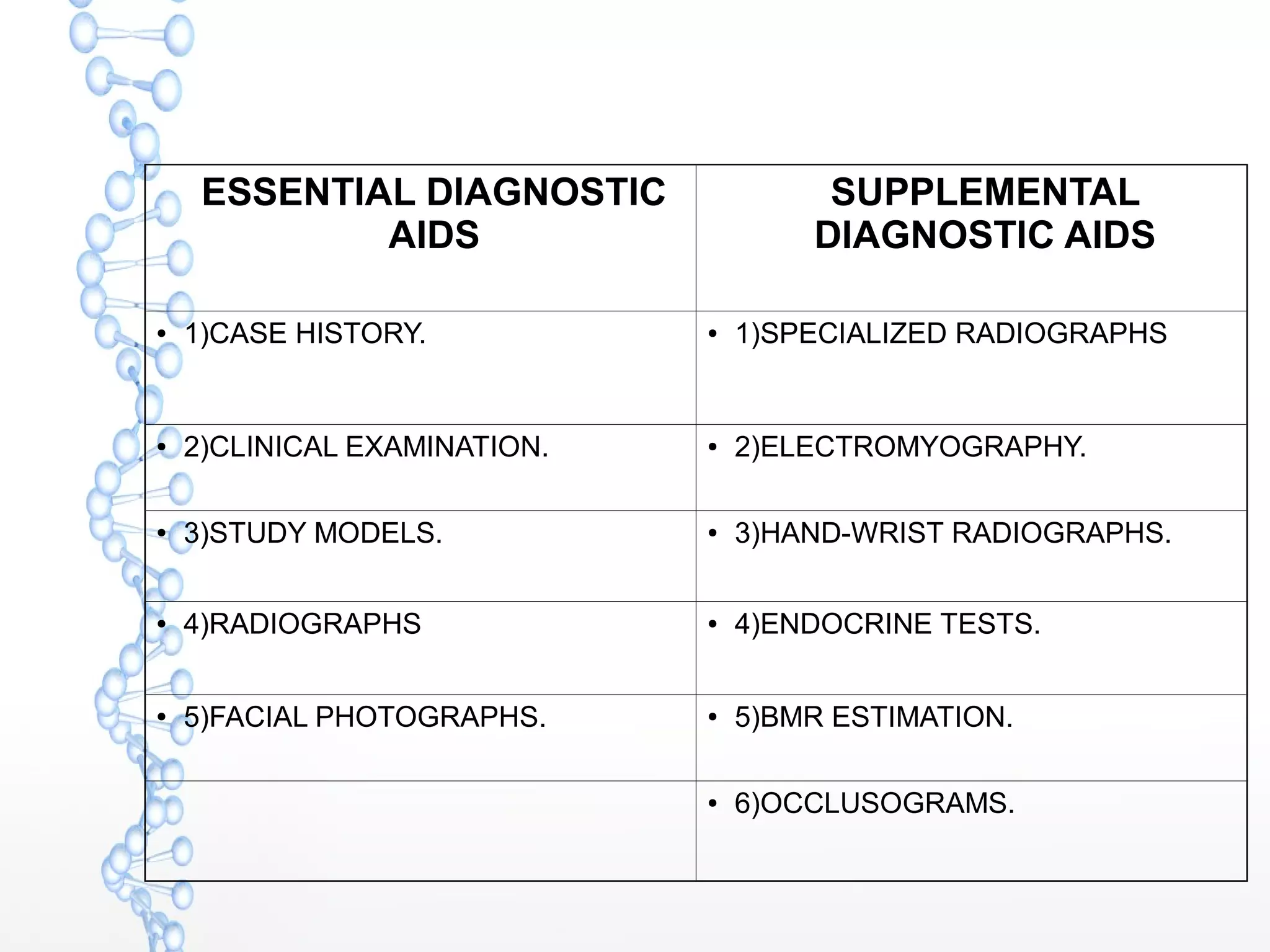
ESSENTIAL DIAGNOSTIC
AIDS

SUPPLEMENTAL
DIAGNOSTIC AIDS

●

1)CASE HISTORY.

●

1)SPECIALIZED RADIOGRAPHS

●

2)CLINICAL EXAMINATION.

●

2)ELECTROMYOGRAPHY.

●

3)STUDY MODELS.

●

3)HAND-WRIST RADIOGRAPHS.

●

4)RADIOGRAPHS

●

4)ENDOCRINE TESTS.

●

5)FACIAL PHOTOGRAPHS.

●

5)BMR ESTIMATION.

●

6)OCCLUSOGRAMS.
●

According to Proffit, these records fall
into three categories:

I. Teeth and oral structures
II.Evaluation of facial proportion
III.Occlusal evaluation
STUDY MODELS
●

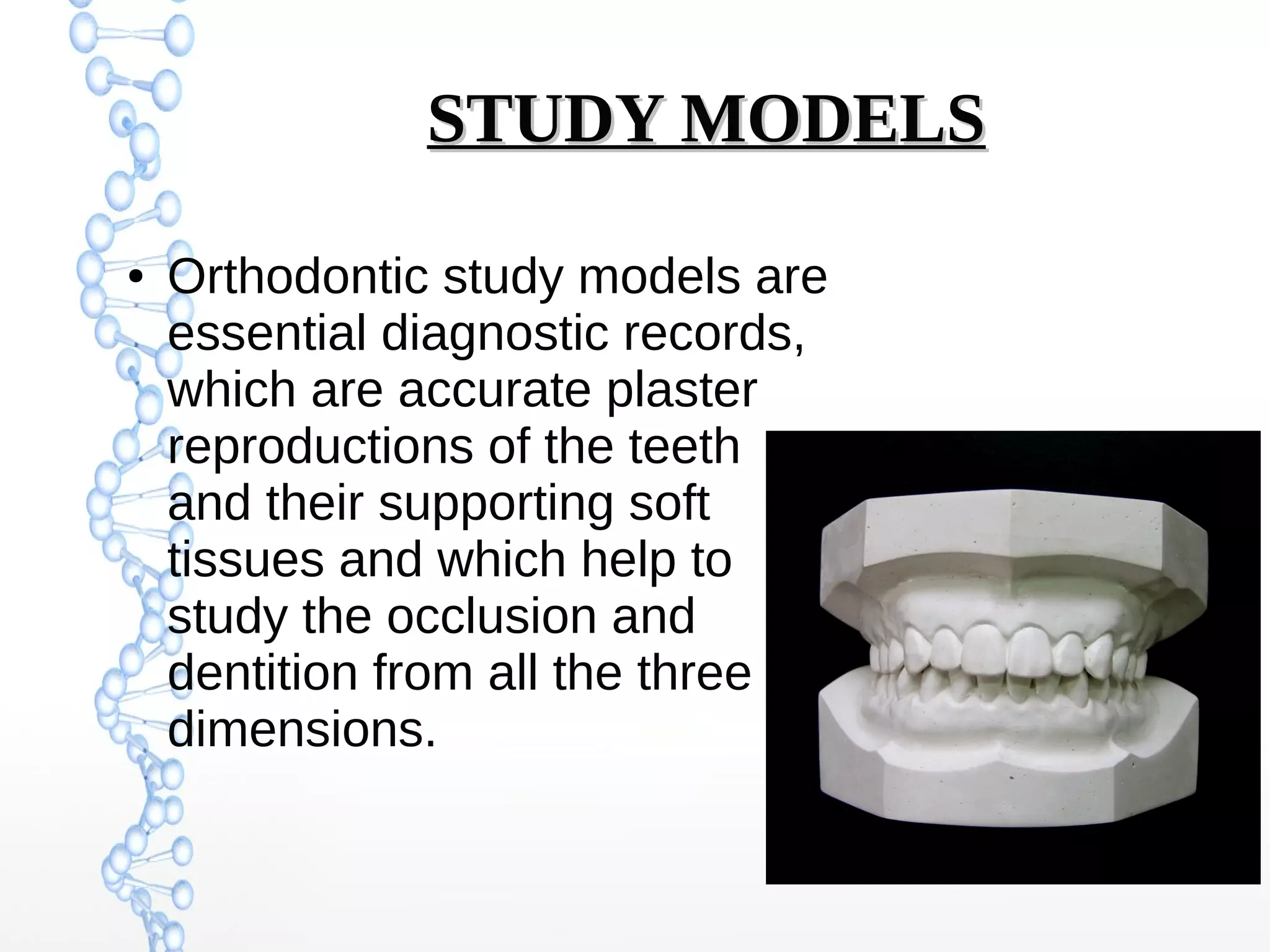
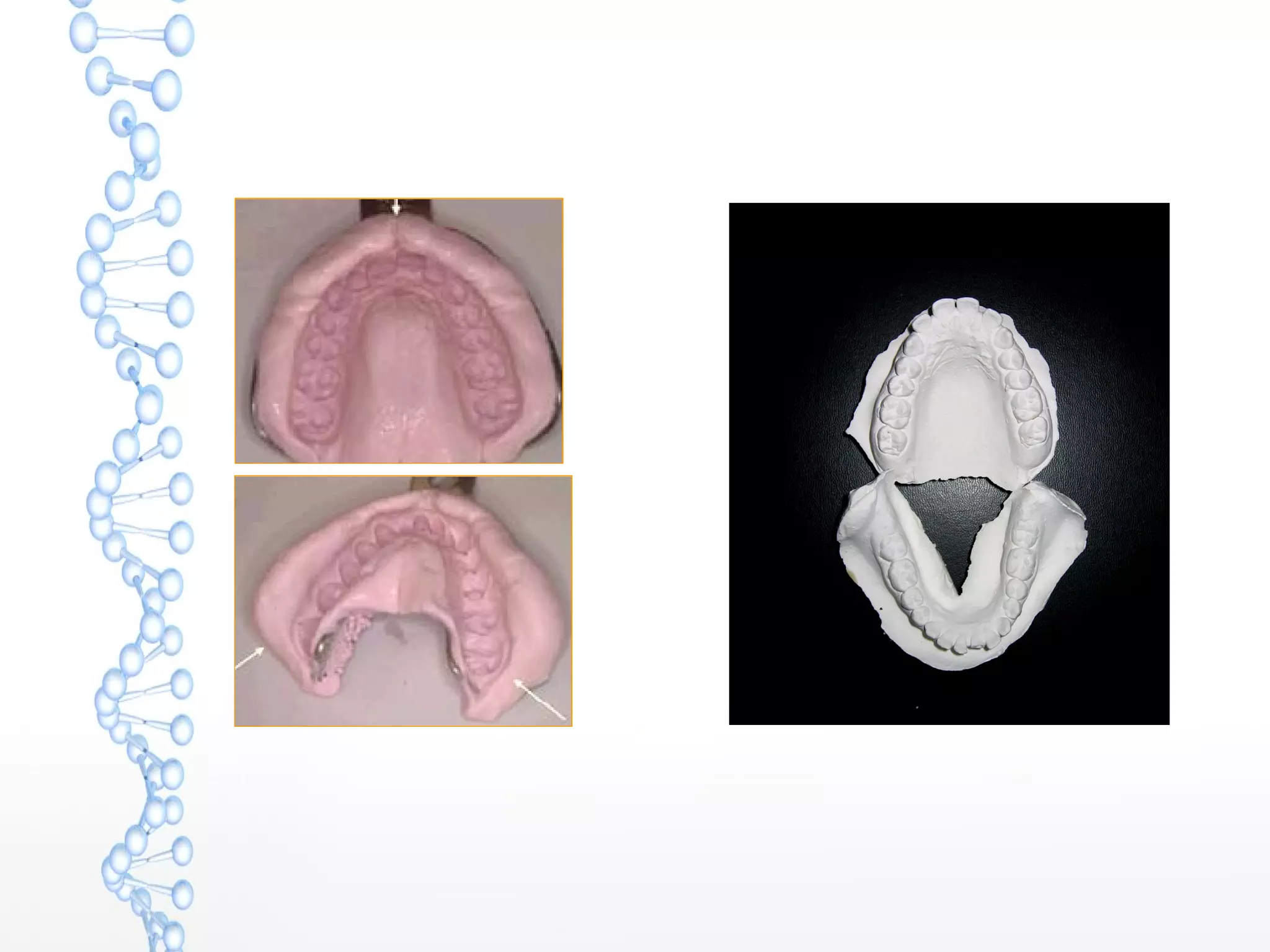
Orthodontic study models are
essential diagnostic records,
which are accurate plaster
reproductions of the teeth
and their supporting soft
tissues and which help to
study the occlusion and
dentition from all the three
dimensions.
Purpose of Making Study Models
1) Valuable in planning treatment as threedimensional records of patients dentition.
2) Occlusion can be visualized from all
aspects.
3) Provide a permanent record at the start of
therapy..
4)nature and severity of the malocclusion.
5)explain the treatment plan and progress..
6)transfer records.
Steps in construction of study
models.
1.Impression making.
2.Taking a wax bite.
3.Disinfection of the impression.
4.Casting the impression.
5.Basing and trimming.
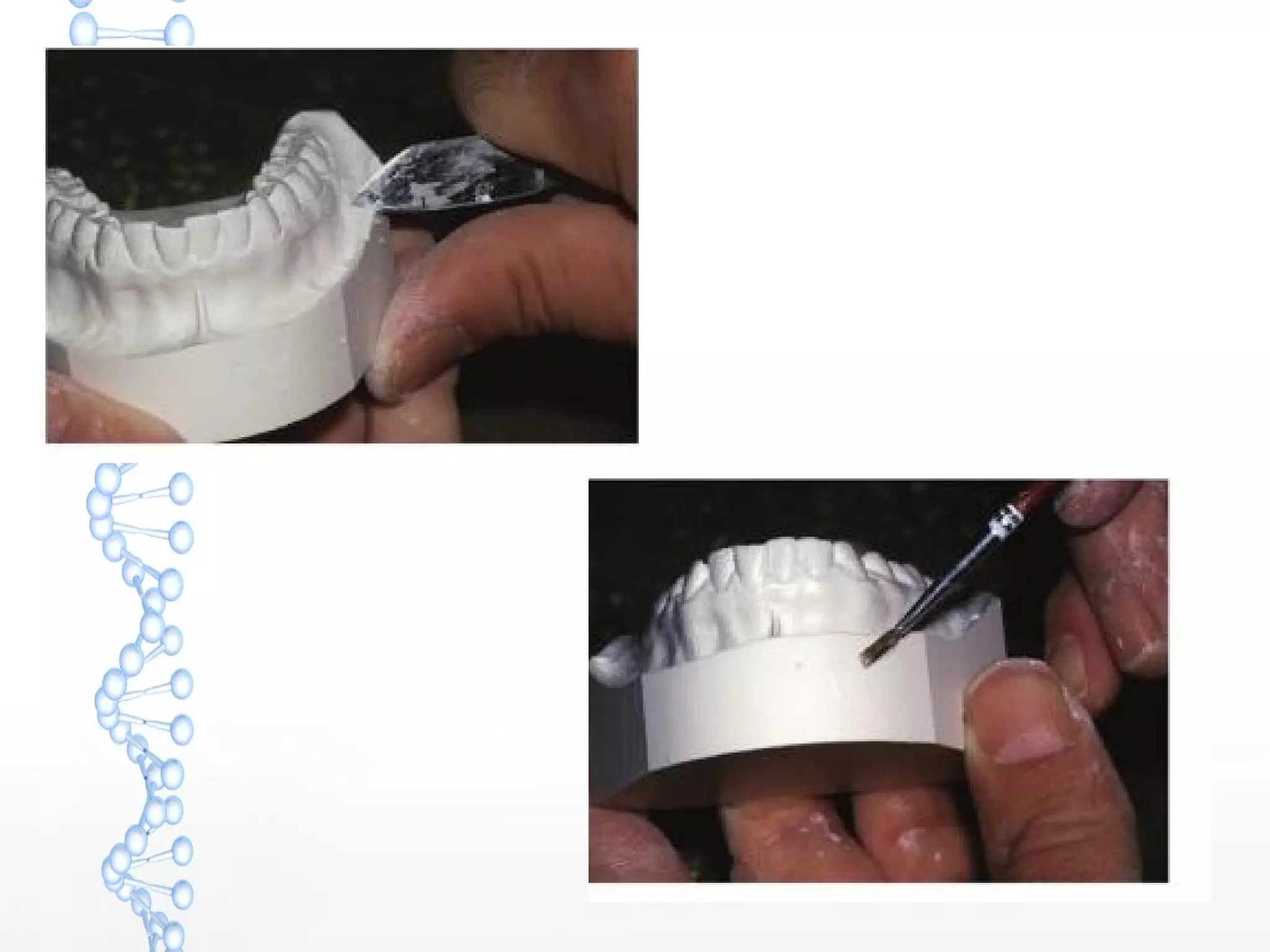
6.Finishing and polishing.
7.Care of the study models.
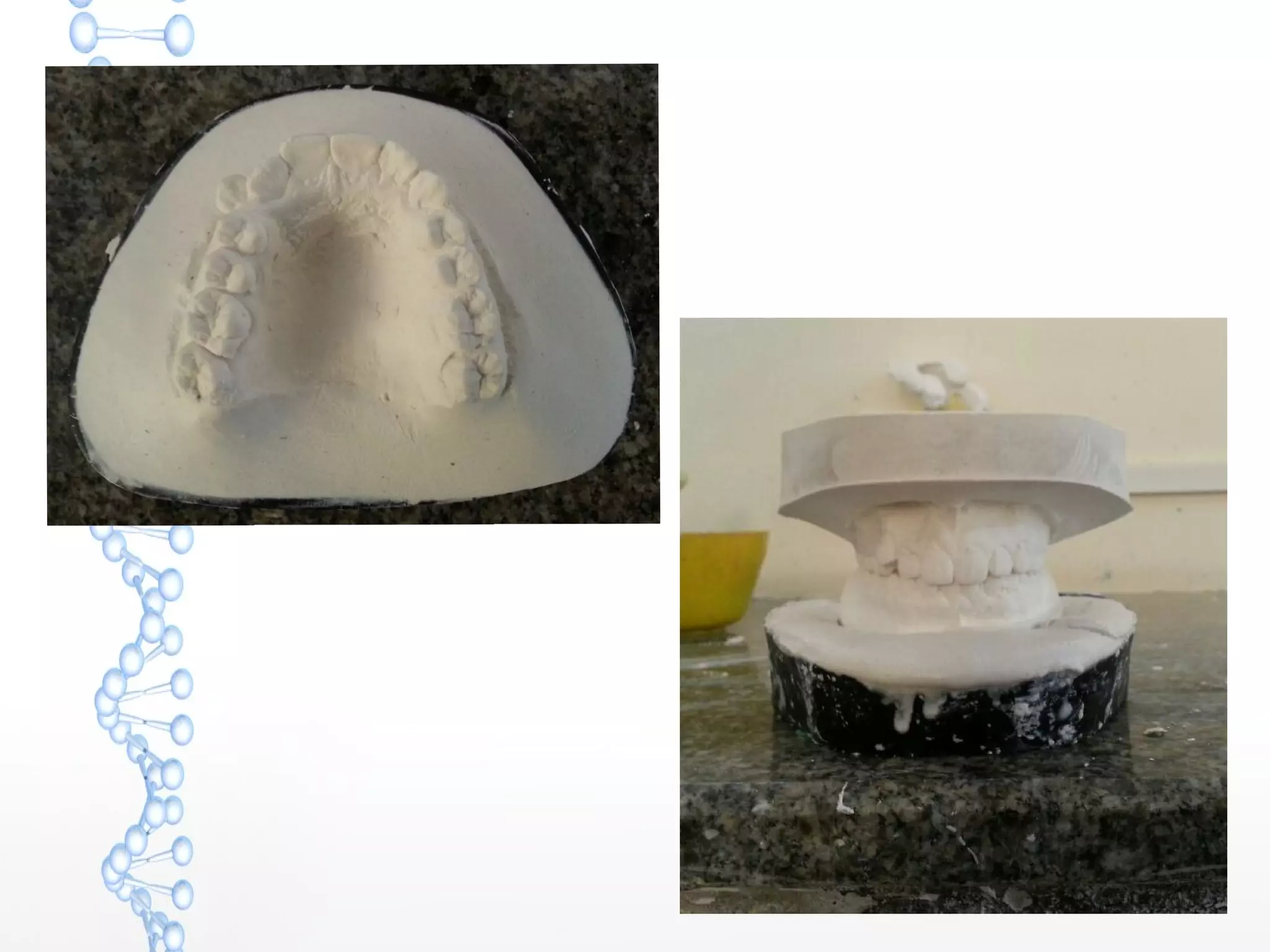
BASING
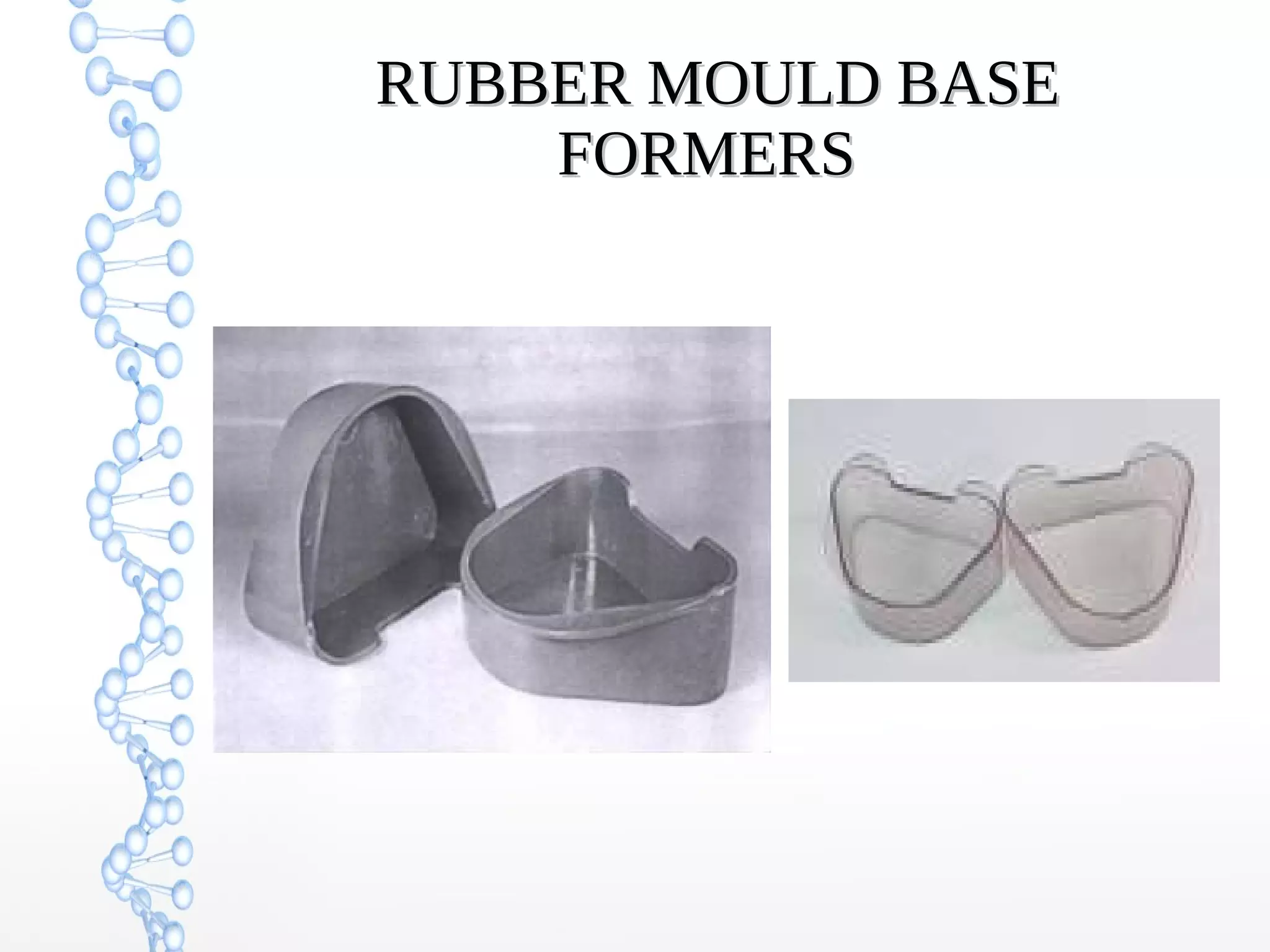
RUBBER MOULD BASE
FORMERS
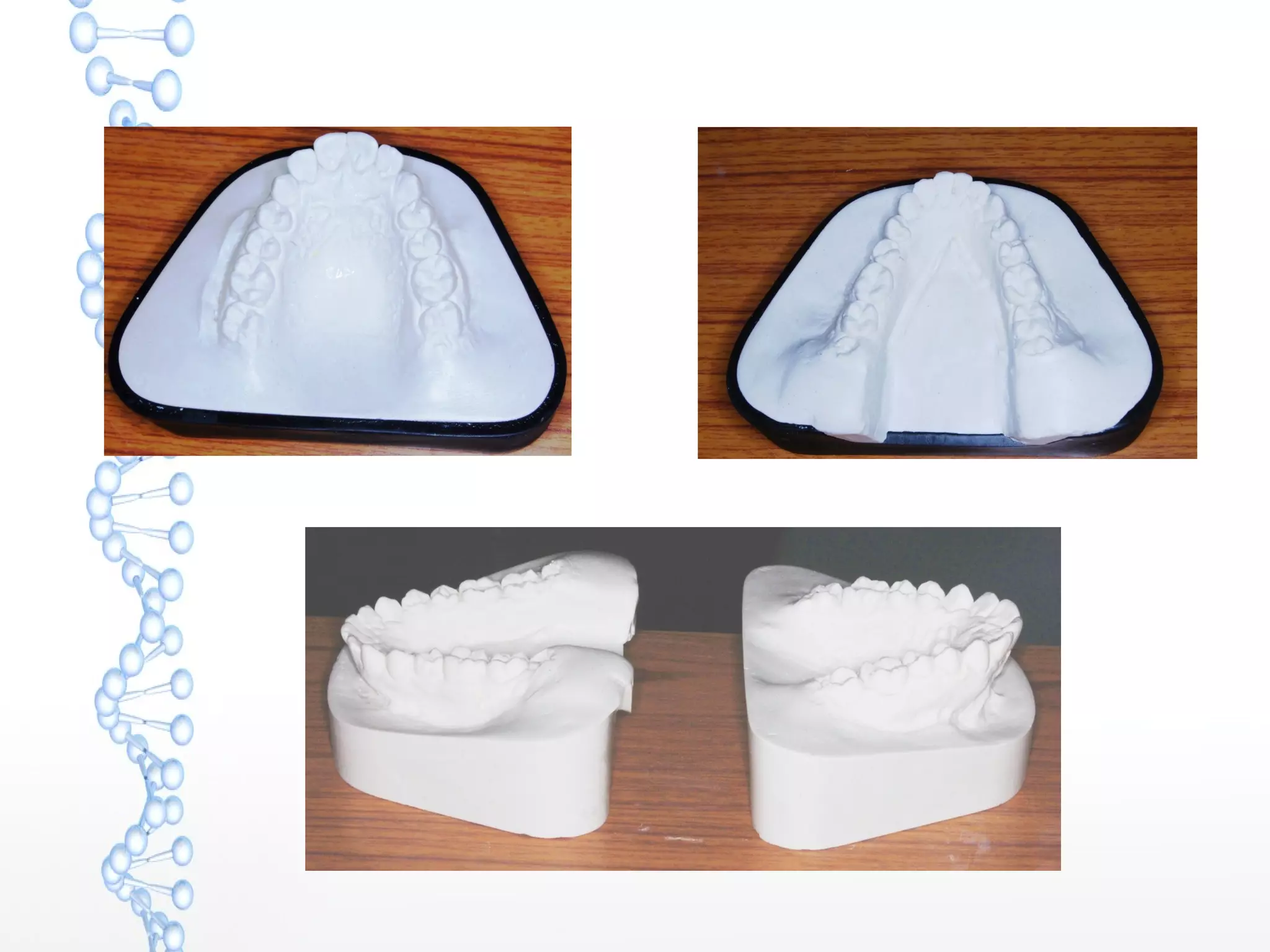
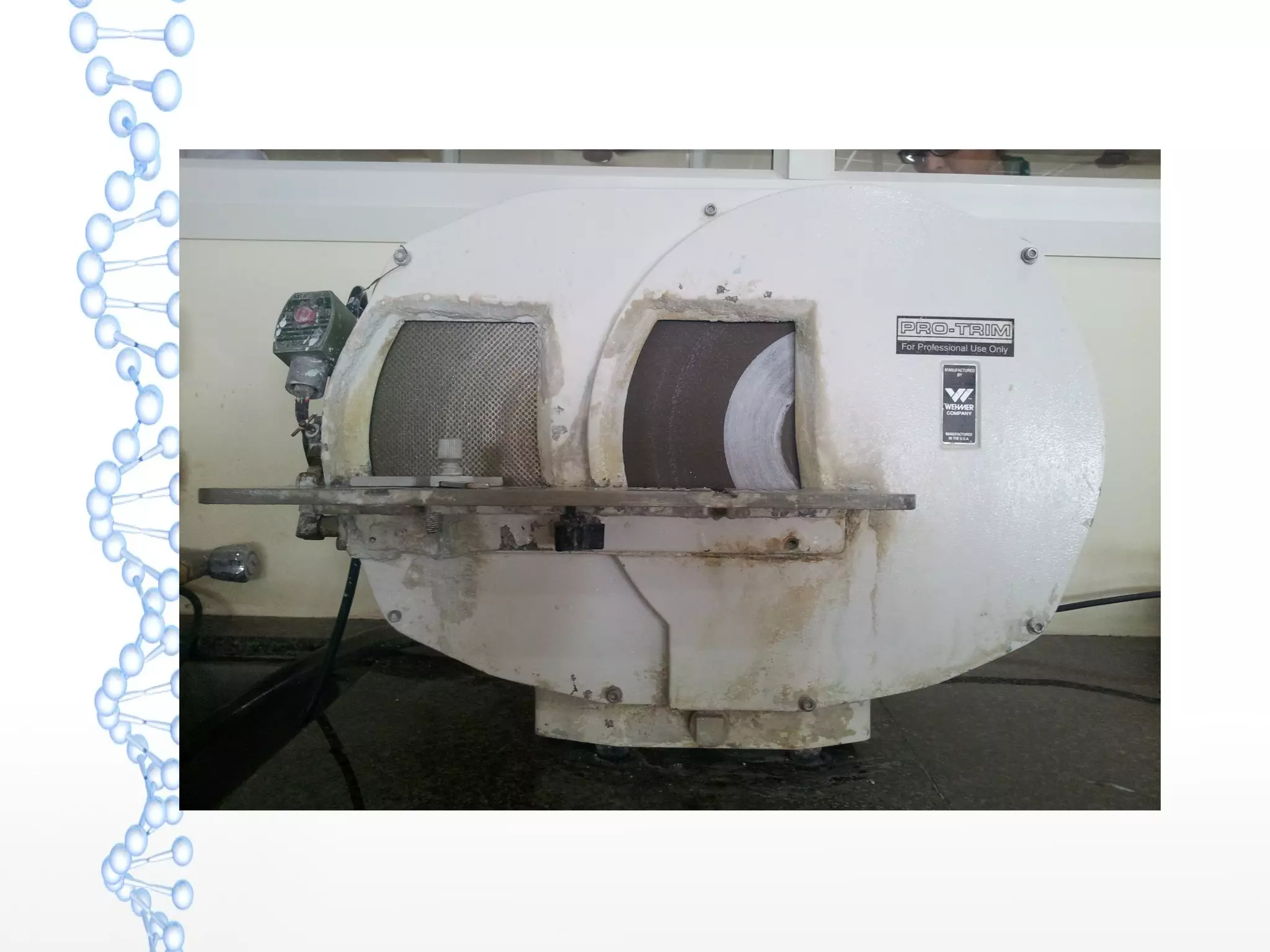
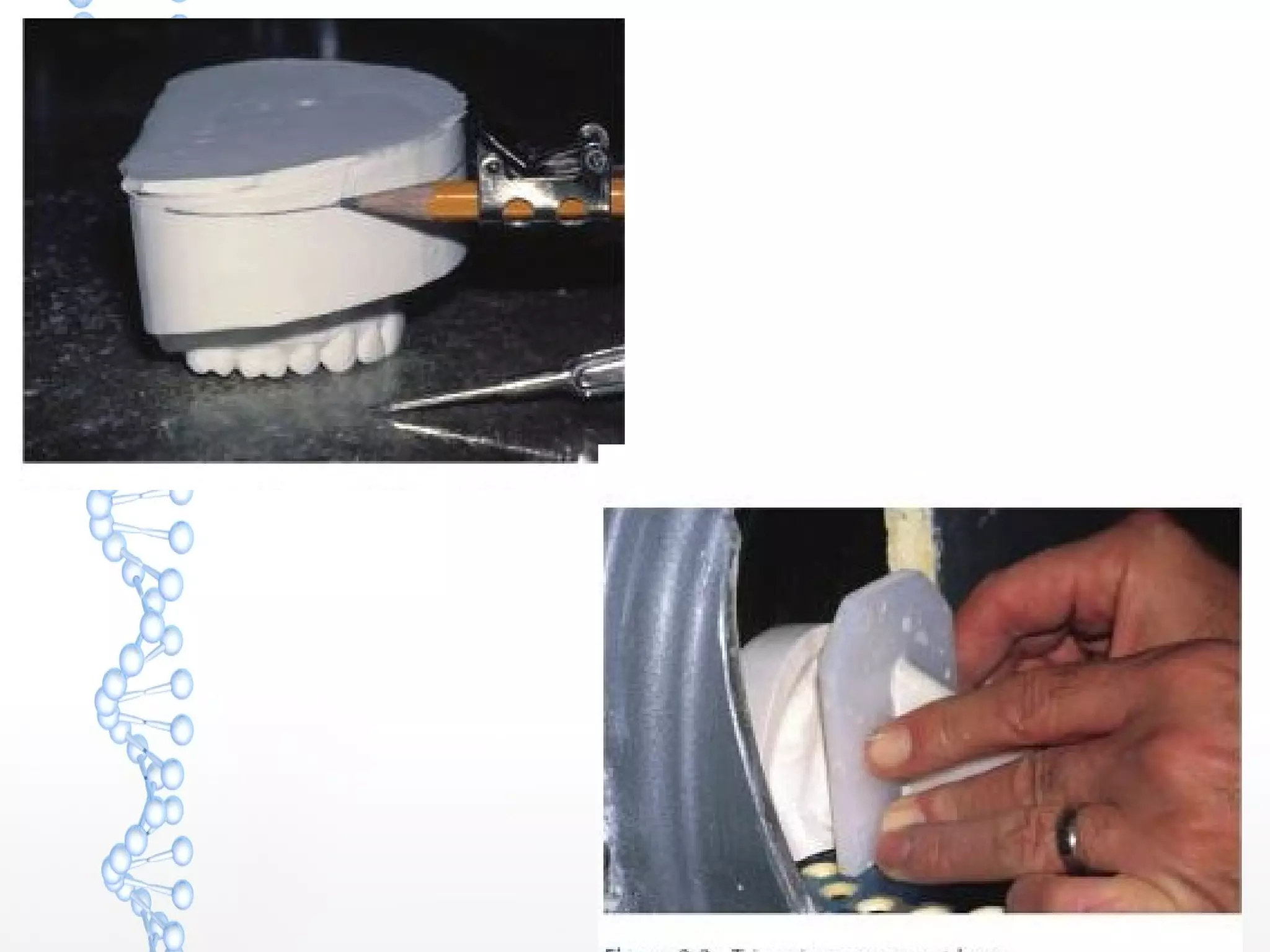
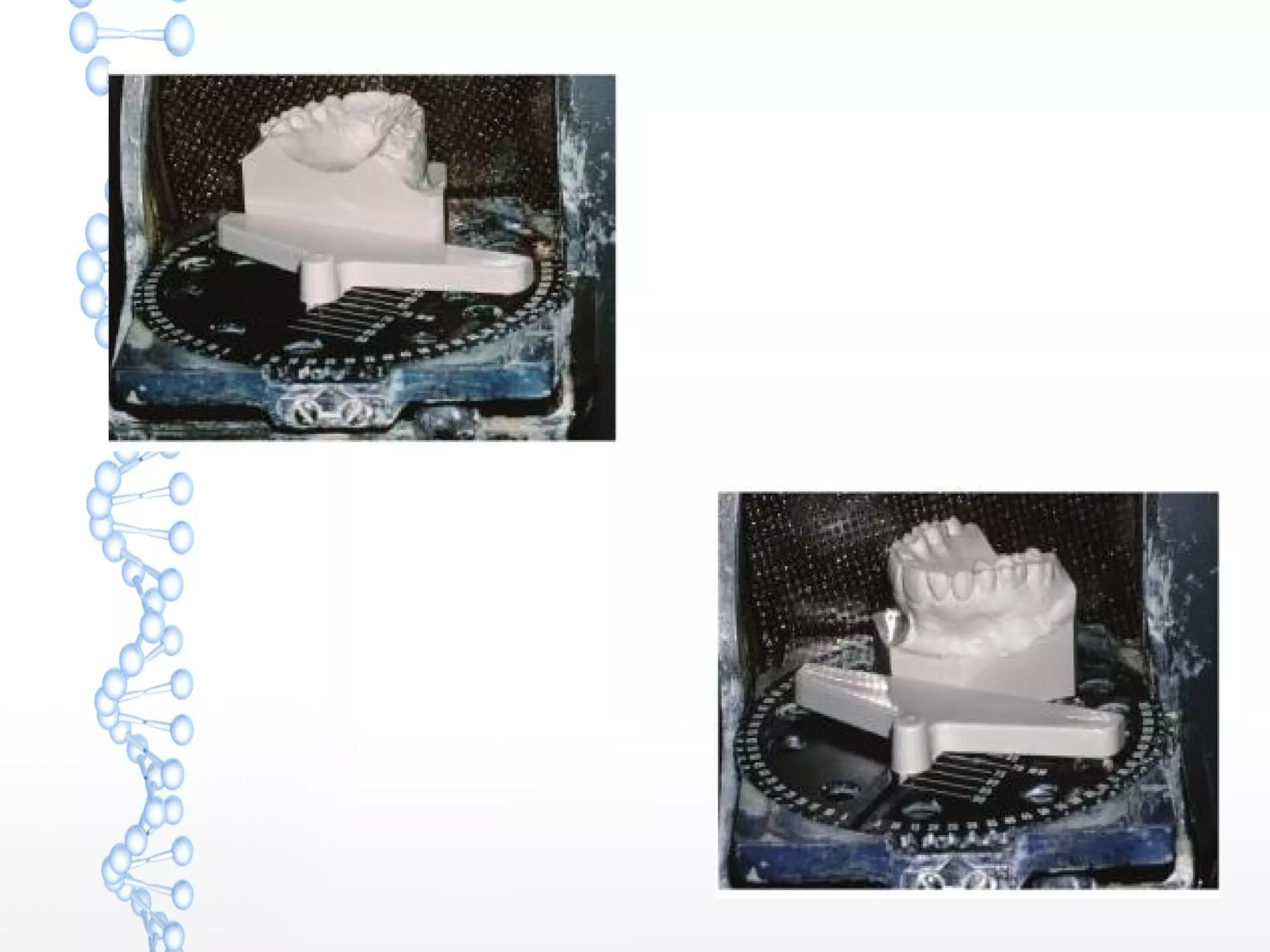
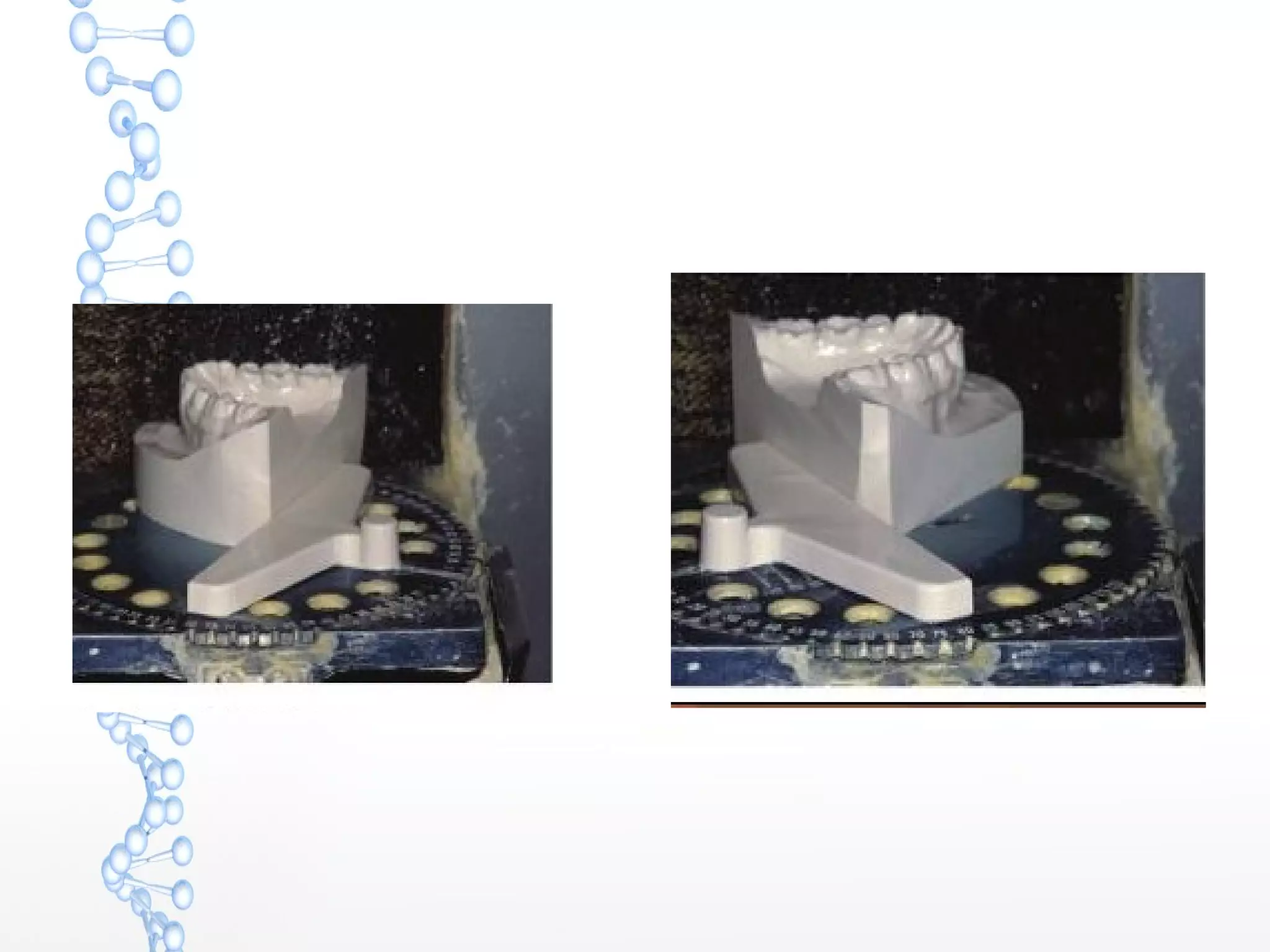
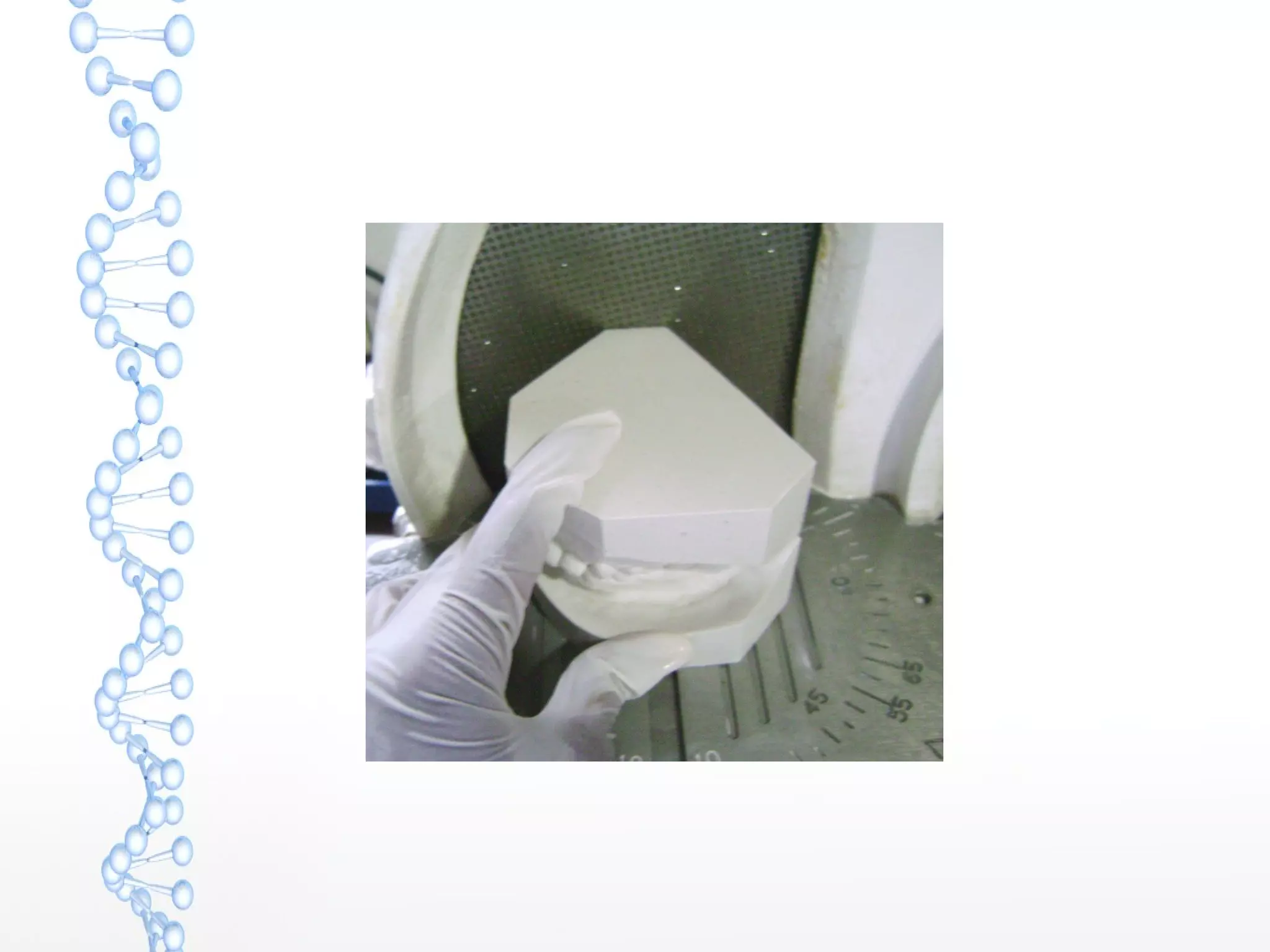
TRIMMING OF MODELS
Template or degree plate
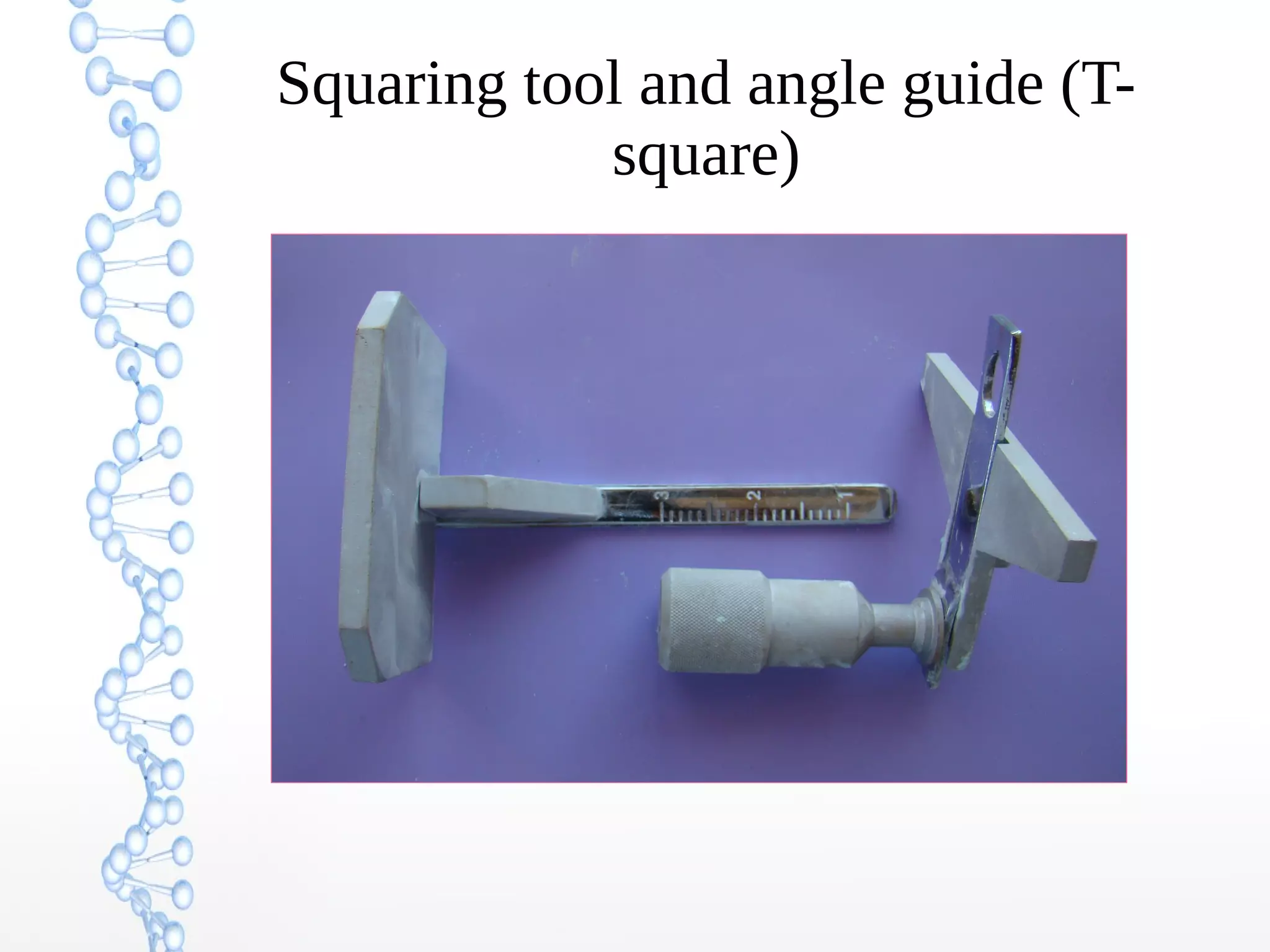
Squaring tool and angle guide (Tsquare)
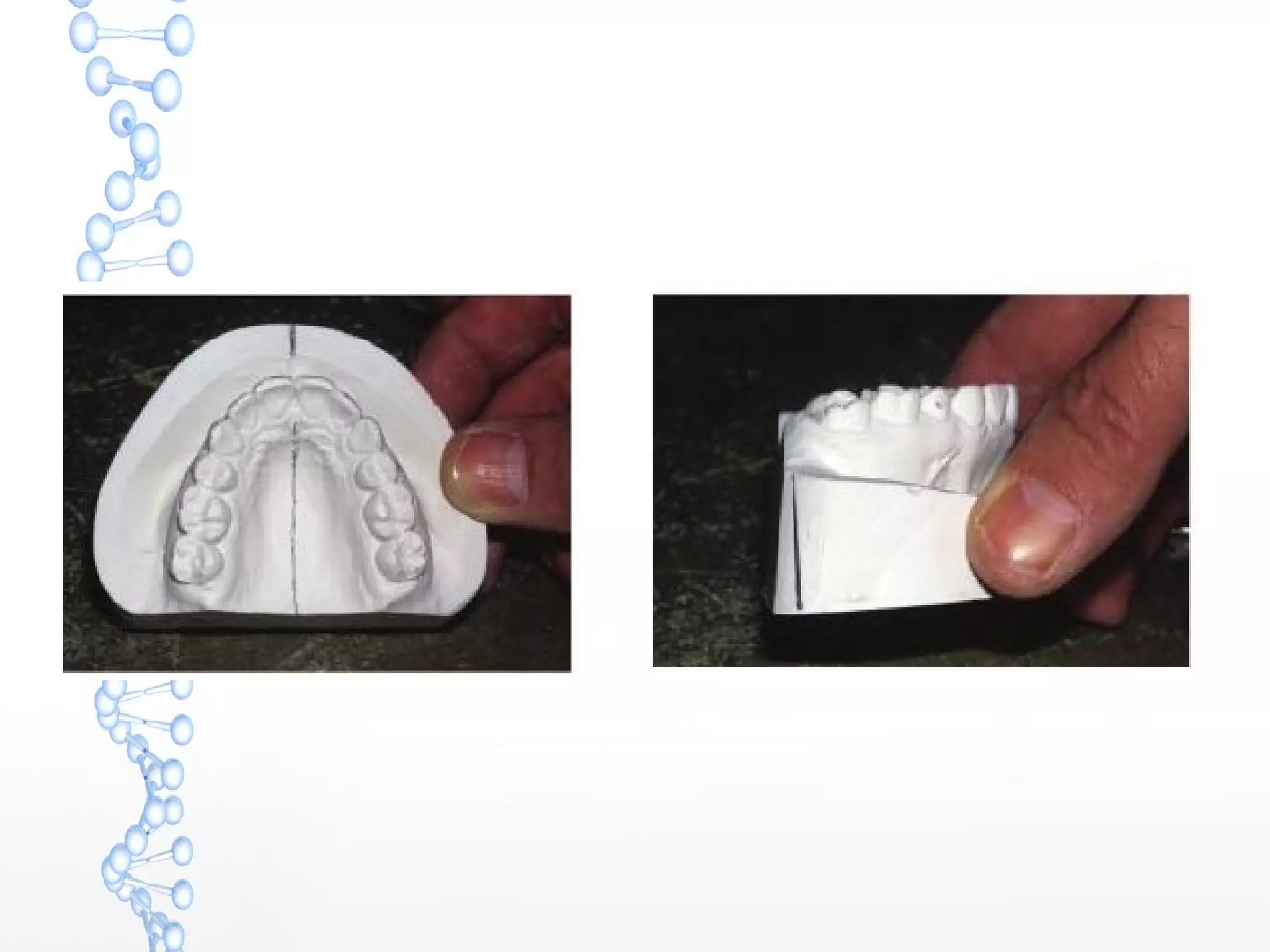
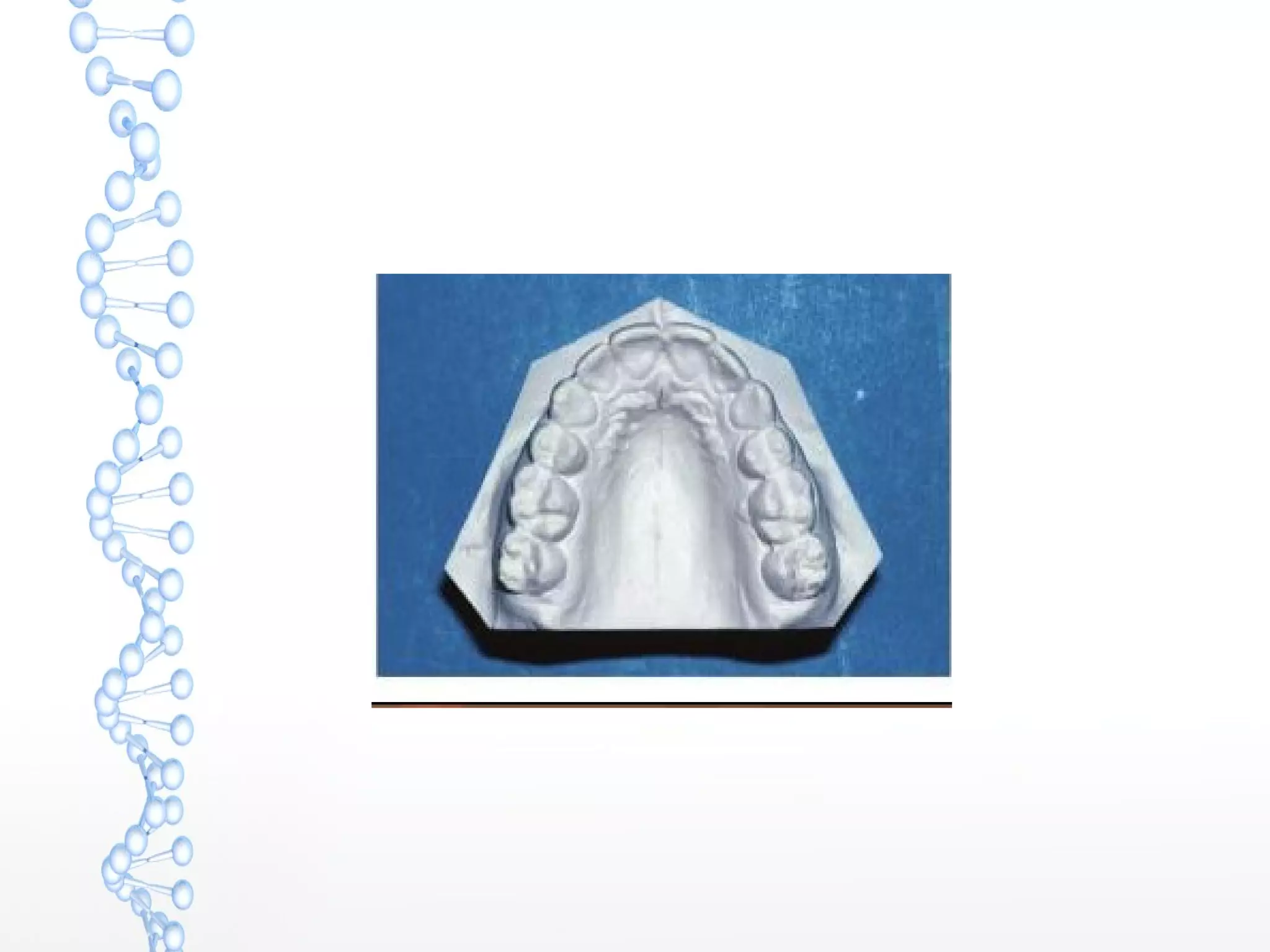
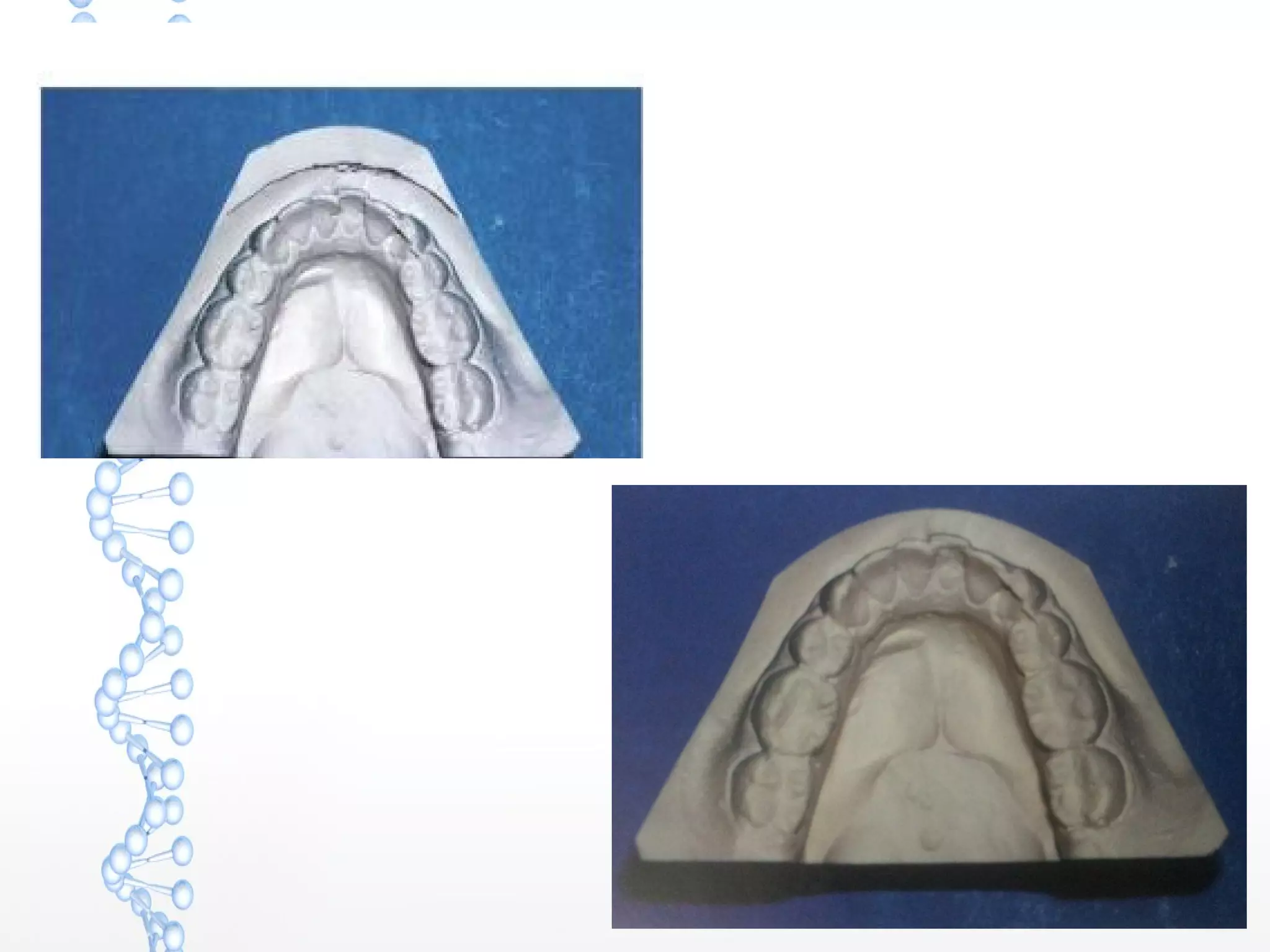
TRIMMING OF MAXILLA
TRIMMING OF MANDIBLE
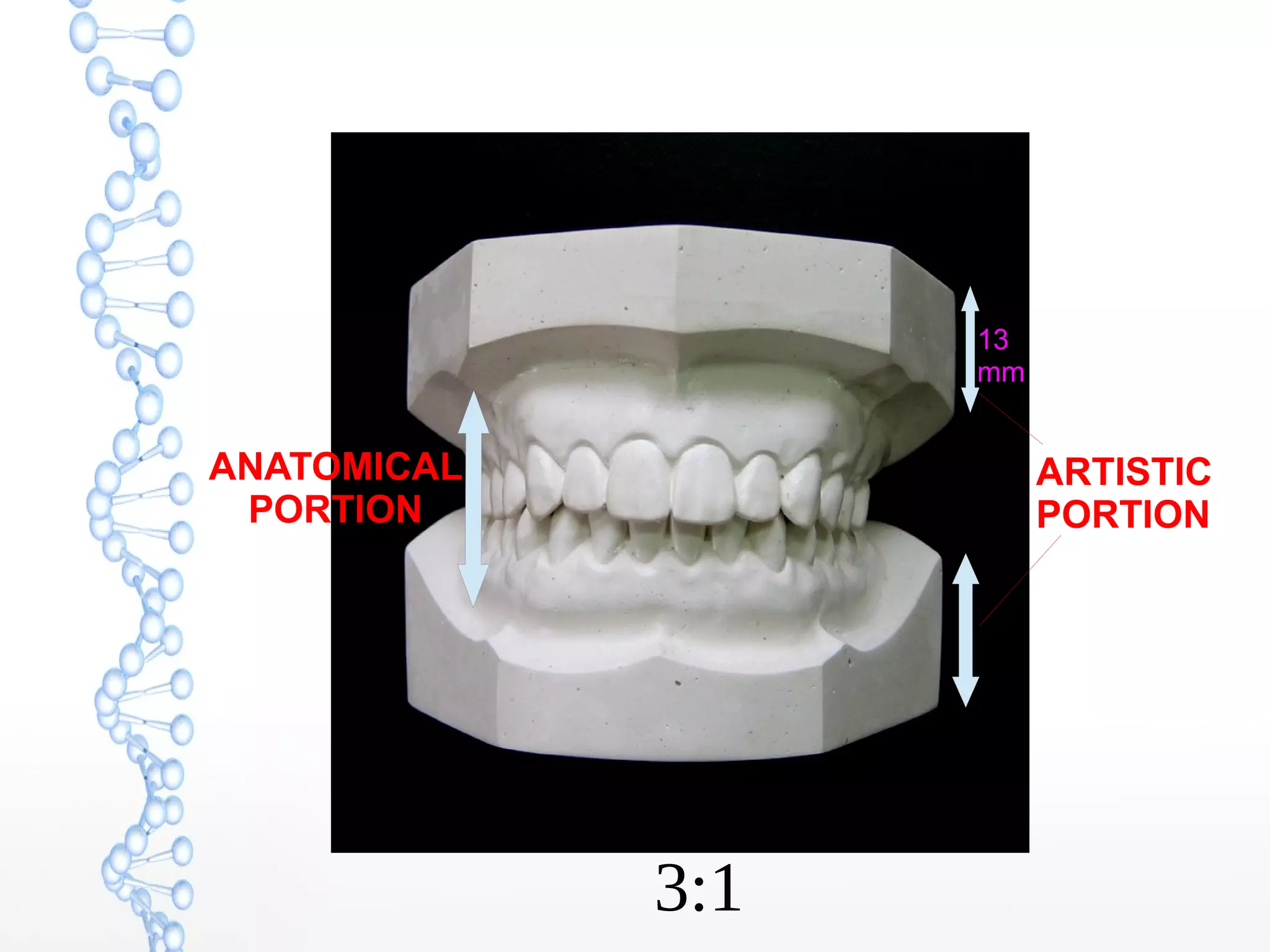
13
mm

ANATOMICAL
PORTION

ARTISTIC
PORTION

3:1
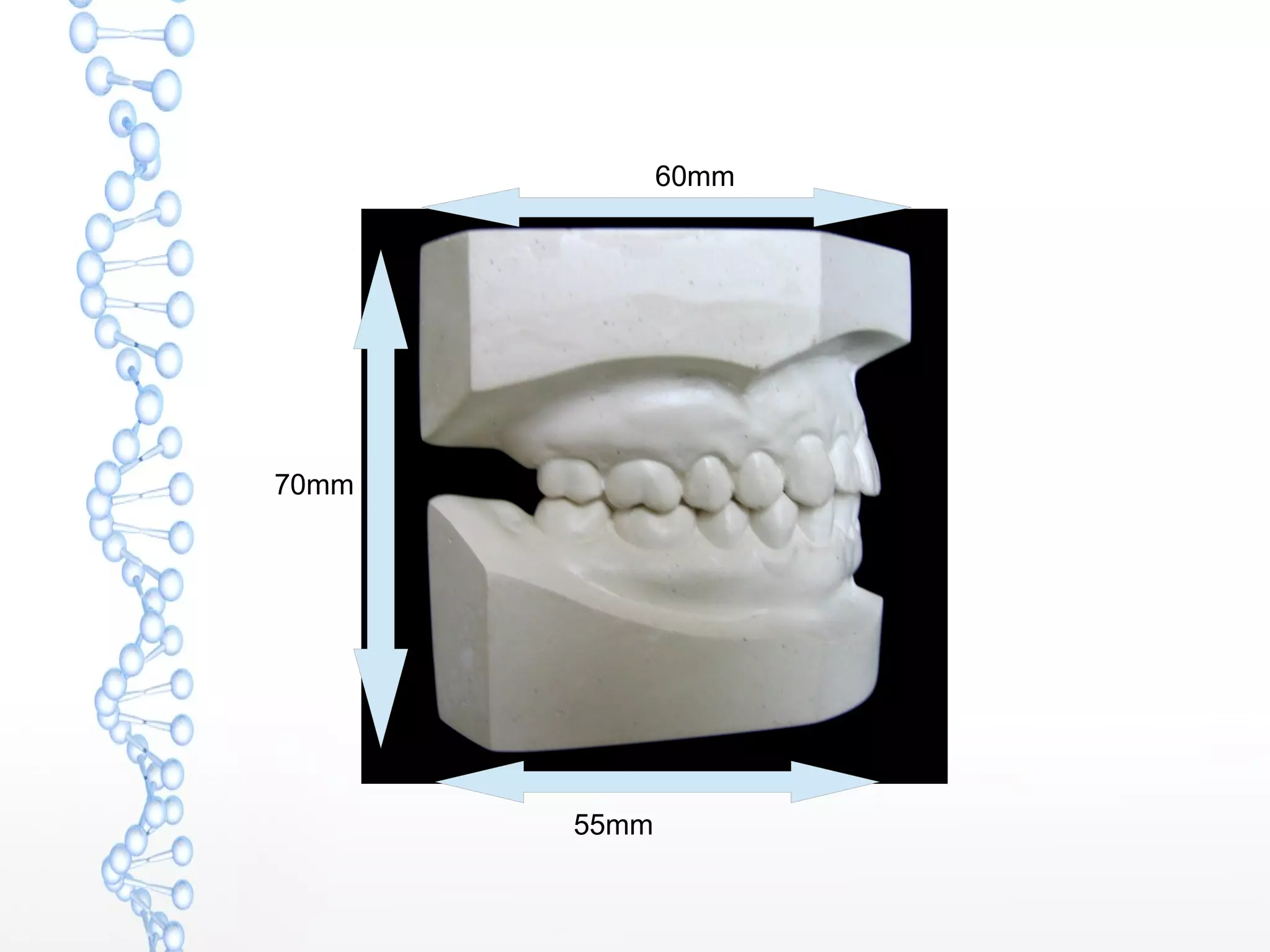
60mm

70mm

55mm
CONCLUSION
Models accurately reproduce the teeth and their
surrounding soft tissues.
Models are to be trimmed so that they are
symmetrical and pleasing to the eye.
Models are to be trimmed so that they meet the
measurements and angles as proposed for trimming
them.
Models are to have a clean, smooth, bubble free
surfaces with sharp angles where the cuts meet.
BASING AND TRIMMING OF ORTHODONTIC MODELS

BASING AND TRIMMING OF ORTHODONTIC MODELS