PRESENTED BY :
TAMANASH PRAMANICK
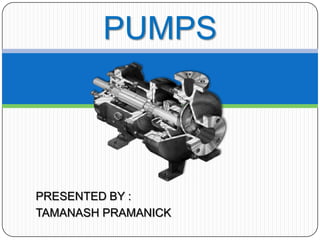
PUMPS
Pump
A pump is a device used to move fluids, such as
liquids, gases or slurries. It increases the
mechanical energy of the fluid. The additional
energy can be used to increase -
 Velocity (flow rate)
 Pressure
 Elevation
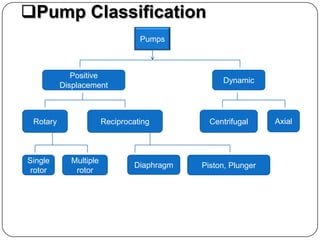
Pump Classification
Pumps
Positive
Displacement
Dynamic
Rotary Reciprocating Centrifugal Axial
Single
rotor
Multiple
rotor
Diaphragm Piston, Plunger
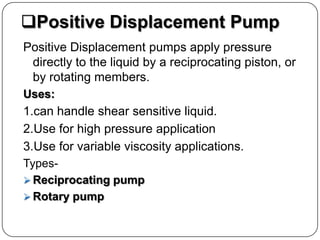
Positive Displacement Pump
Positive Displacement pumps apply pressure
directly to the liquid by a reciprocating piston, or
by rotating members.
Uses:
1.can handle shear sensitive liquid.
2.Use for high pressure application
3.Use for variable viscosity applications.
Types-
 Reciprocating pump
 Rotary pump
Reciprocating Pump
In Reciprocating pumps, the chamber is a
stationary cylinder that contains a piston or
plunger.
Types-
 Piston Pump
 Plunger Pump
 Diaphragm Pump
Piston Pump
USE=
1.transmission of fluids or
gases under pressure.
2.Power consumption is
low.
3.Ensure maximum safety.
Piston Pump (double acting)
B
C
A
D
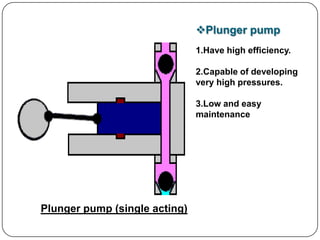
Plunger pump
1.Have high efficiency.
2.Capable of developing
very high pressures.
3.Low and easy
maintenance
Plunger pump (single acting)
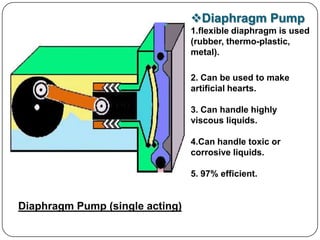
Diaphragm Pump
1.flexible diaphragm is used
(rubber, thermo-plastic,
metal).
2. Can be used to make
artificial hearts.
3. Can handle highly
viscous liquids.
4.Can handle toxic or
corrosive liquids.
5. 97% efficient.
Diaphragm Pump (single acting)
Rotary Pump
In Rotary pumps, the chamber moves from inlet to
discharge and back to the inlet. A wide variety of
rotary pumps are available like
gear pumps, lobe pumps, screw pumps, cam
pumps, vane pumps.
 Most popular: gear pumps
 Relatively constant output
Types-
 Single Rotor
 Multiple Rotor
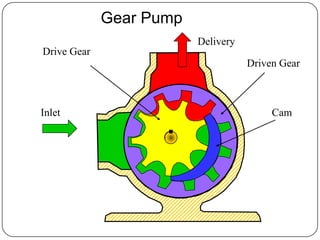
Gear Pump
Drive Gear
Inlet Cam
Driven Gear
Delivery
Screw Pump
Elastomer Stator Universal Coupling
Single Screw Rotor
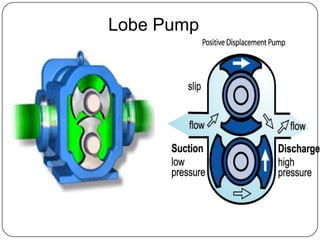
Lobe Pump
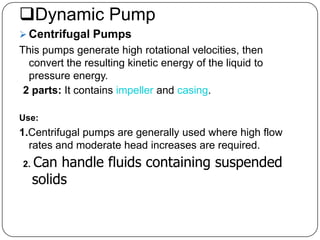
Dynamic Pump
 Centrifugal Pumps
This pumps generate high rotational velocities, then
convert the resulting kinetic energy of the liquid to
pressure energy.
2 parts: It contains impeller and casing.
Use:
1.Centrifugal pumps are generally used where high flow
rates and moderate head increases are required.
2. Can handle fluids containing suspended
solids
14
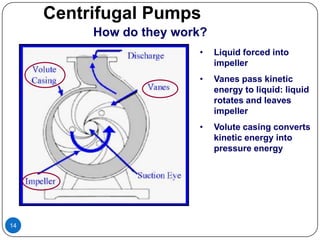
Centrifugal Pumps
How do they work?
• Liquid forced into
impeller
• Vanes pass kinetic
energy to liquid: liquid
rotates and leaves
impeller
• Volute casing converts
kinetic energy into
pressure energy
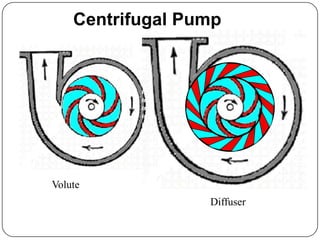
Centrifugal Pump
Volute
Diffuser
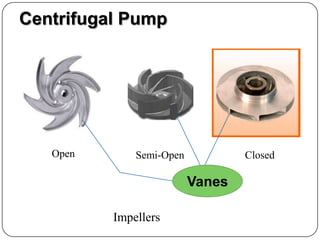
Centrifugal Pump
Open Semi-Open Closed
Impellers
Vanes
Positive Displacement
Characteristic
Actual
Theoretical
Flow Q m3/h
Total
Head
H m
Centrifugal Pump
Characteristic
Flow Q m3/h
Total
Head
H m
Theoretical
Actual Discharge Characteristic
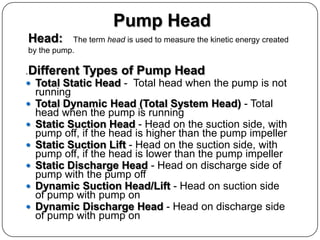
Head: The term head is used to measure the kinetic energy created
by the pump.
.Different Types of Pump Head
 Total Static Head - Total head when the pump is not
running
 Total Dynamic Head (Total System Head) - Total
head when the pump is running
 Static Suction Head - Head on the suction side, with
pump off, if the head is higher than the pump impeller
 Static Suction Lift - Head on the suction side, with
pump off, if the head is lower than the pump impeller
 Static Discharge Head - Head on discharge side of
pump with the pump off
 Dynamic Suction Head/Lift - Head on suction side
of pump with pump on
 Dynamic Discharge Head - Head on discharge side
of pump with pump on
Pump Head
Static
Suction
Head
Pump Head
Static
Delivery
Head
Total
Head
-ve
+ve
Suction Head
Pumps do not SUCK.
It is not possible to PULL a fluid
A pump simply lowers the pressure at its inlet and
the fluid is pushed in
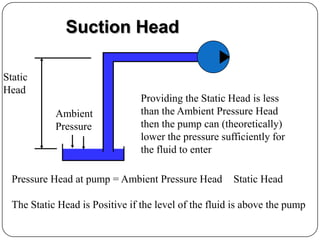
Suction Head
Static
Head
Ambient
Pressure
Providing the Static Head is less
than the Ambient Pressure Head
then the pump can (theoretically)
lower the pressure sufficiently for
the fluid to enter
Pressure Head at pump = Ambient Pressure Head Static Head
The Static Head is Positive if the level of the fluid is above the pump
Suction Head
Static
Head
Ambient
Pressure
When the fluid is in motion
further losses occur due to
friction, obstructions, in the
pipeline and fittings
Pressure Head at pump =
Ambient Pressure Head Static Head – Friction Head
Friction Head
Net Positive Suction Head
The pump has a NPSH requirement in order to prevent
cavitation damage occurring and causing severe
damage.
The NPSH increases with flow due to pump internal
losses - friction, impeller losses etc.
Net Positive Suction Head
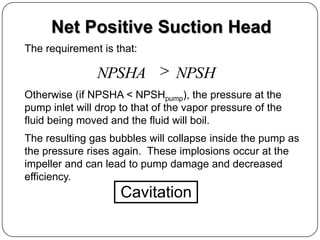
The requirement is that:
NPSHNPSHA
Otherwise (if NPSHA < NPSHpump), the pressure at the
pump inlet will drop to that of the vapor pressure of the
fluid being moved and the fluid will boil.
The resulting gas bubbles will collapse inside the pump as
the pressure rises again. These implosions occur at the
impeller and can lead to pump damage and decreased
efficiency.
Cavitation
THANK YOU

PUMPS

  • 1.
    PRESENTED BY : TAMANASHPRAMANICK PUMPS
  • 2.
    Pump A pump isa device used to move fluids, such as liquids, gases or slurries. It increases the mechanical energy of the fluid. The additional energy can be used to increase -  Velocity (flow rate)  Pressure  Elevation
  • 3.
    Pump Classification Pumps Positive Displacement Dynamic Rotary ReciprocatingCentrifugal Axial Single rotor Multiple rotor Diaphragm Piston, Plunger
  • 4.
    Positive Displacement Pump PositiveDisplacement pumps apply pressure directly to the liquid by a reciprocating piston, or by rotating members. Uses: 1.can handle shear sensitive liquid. 2.Use for high pressure application 3.Use for variable viscosity applications. Types-  Reciprocating pump  Rotary pump
  • 5.
    Reciprocating Pump In Reciprocatingpumps, the chamber is a stationary cylinder that contains a piston or plunger. Types-  Piston Pump  Plunger Pump  Diaphragm Pump
  • 6.
    Piston Pump USE= 1.transmission offluids or gases under pressure. 2.Power consumption is low. 3.Ensure maximum safety. Piston Pump (double acting) B C A D
  • 7.
    Plunger pump 1.Have highefficiency. 2.Capable of developing very high pressures. 3.Low and easy maintenance Plunger pump (single acting)
  • 8.
    Diaphragm Pump 1.flexible diaphragmis used (rubber, thermo-plastic, metal). 2. Can be used to make artificial hearts. 3. Can handle highly viscous liquids. 4.Can handle toxic or corrosive liquids. 5. 97% efficient. Diaphragm Pump (single acting)
  • 9.
    Rotary Pump In Rotarypumps, the chamber moves from inlet to discharge and back to the inlet. A wide variety of rotary pumps are available like gear pumps, lobe pumps, screw pumps, cam pumps, vane pumps.  Most popular: gear pumps  Relatively constant output Types-  Single Rotor  Multiple Rotor
  • 10.
    Gear Pump Drive Gear InletCam Driven Gear Delivery
  • 11.
    Screw Pump Elastomer StatorUniversal Coupling Single Screw Rotor
  • 12.
  • 13.
    Dynamic Pump  CentrifugalPumps This pumps generate high rotational velocities, then convert the resulting kinetic energy of the liquid to pressure energy. 2 parts: It contains impeller and casing. Use: 1.Centrifugal pumps are generally used where high flow rates and moderate head increases are required. 2. Can handle fluids containing suspended solids
  • 14.
    14 Centrifugal Pumps How dothey work? • Liquid forced into impeller • Vanes pass kinetic energy to liquid: liquid rotates and leaves impeller • Volute casing converts kinetic energy into pressure energy
  • 15.
  • 16.
    Centrifugal Pump Open Semi-OpenClosed Impellers Vanes
  • 17.
  • 18.
    Centrifugal Pump Characteristic Flow Qm3/h Total Head H m Theoretical Actual Discharge Characteristic
  • 19.
    Head: The termhead is used to measure the kinetic energy created by the pump. .Different Types of Pump Head  Total Static Head - Total head when the pump is not running  Total Dynamic Head (Total System Head) - Total head when the pump is running  Static Suction Head - Head on the suction side, with pump off, if the head is higher than the pump impeller  Static Suction Lift - Head on the suction side, with pump off, if the head is lower than the pump impeller  Static Discharge Head - Head on discharge side of pump with the pump off  Dynamic Suction Head/Lift - Head on suction side of pump with pump on  Dynamic Discharge Head - Head on discharge side of pump with pump on Pump Head
  • 20.
  • 21.
    Suction Head Pumps donot SUCK. It is not possible to PULL a fluid A pump simply lowers the pressure at its inlet and the fluid is pushed in
  • 22.
    Suction Head Static Head Ambient Pressure Providing theStatic Head is less than the Ambient Pressure Head then the pump can (theoretically) lower the pressure sufficiently for the fluid to enter Pressure Head at pump = Ambient Pressure Head Static Head The Static Head is Positive if the level of the fluid is above the pump
  • 23.
    Suction Head Static Head Ambient Pressure When thefluid is in motion further losses occur due to friction, obstructions, in the pipeline and fittings Pressure Head at pump = Ambient Pressure Head Static Head – Friction Head Friction Head
  • 24.
    Net Positive SuctionHead The pump has a NPSH requirement in order to prevent cavitation damage occurring and causing severe damage. The NPSH increases with flow due to pump internal losses - friction, impeller losses etc.
  • 25.
    Net Positive SuctionHead The requirement is that: NPSHNPSHA Otherwise (if NPSHA < NPSHpump), the pressure at the pump inlet will drop to that of the vapor pressure of the fluid being moved and the fluid will boil. The resulting gas bubbles will collapse inside the pump as the pressure rises again. These implosions occur at the impeller and can lead to pump damage and decreased efficiency. Cavitation
  • 26.