









BASICS OF
MARKETIN
G
UNIT-2
PRESENTED BY
UNIT - II
Market Segmentation, Target Market and Product
Positioning: Levels of Market Segmentation, Bases
for Segmenting Consumer Markets, Bases for
Segmenting Industrial Markets. Target Market and
Product Positioning Tools.
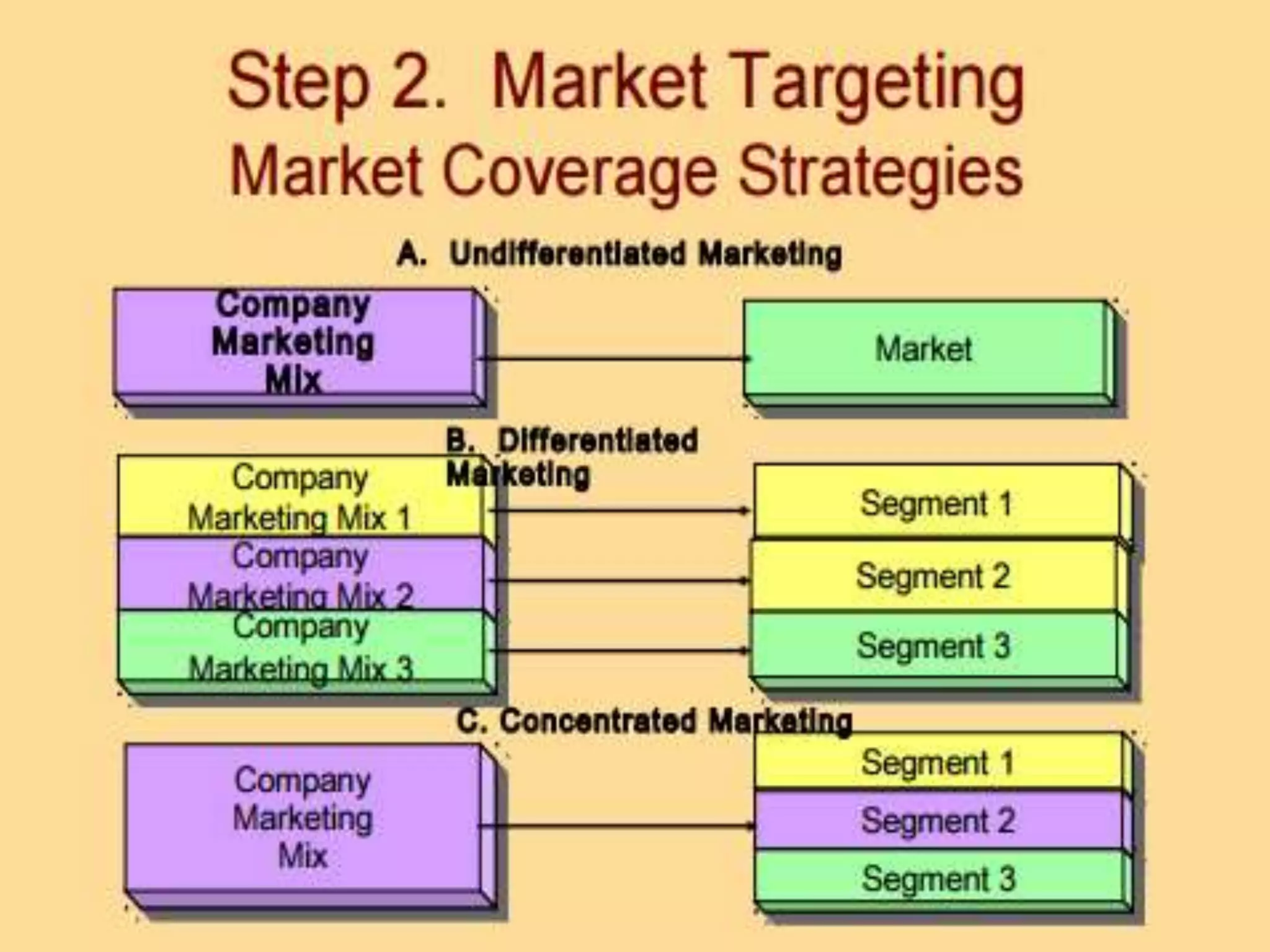
Mass Marketing
 The term mass market refers to a large, undifferentiated
market of consumers with widely varied backgrounds.
 Products and services needed by almost every member of
society are suited for the mass market. Such items as
electric and gas utilities, soap, paper towels and gasoline,
for example, can be advertised and sold to almost anyone,
making them mass market goods.
 An attempt to appeal to an entire market with one basic
marketing strategy utilizing mass distribution and mass
media.
Product Variety
 After the mass marketing strategy another strategy
with similar characteristics but overcoming its
predecessor’s shortcomings came into existence.
That is product variety strategy.
 An attempt to appeal to the entire market with a
huge variety of products produced in mass is
made.
 However, like Mass marketing in this case also the
customers needs & wants are not taken into
account while developing the product.
Target Marketing
Target marketing is particularly effective for
small companies with limited resources
because it enables the company to achieve a
strong market position in the specific market
segment it serves without mass production,
mass distribution, or mass advertising.
It enables firms to capitalize on the
respective serve market share
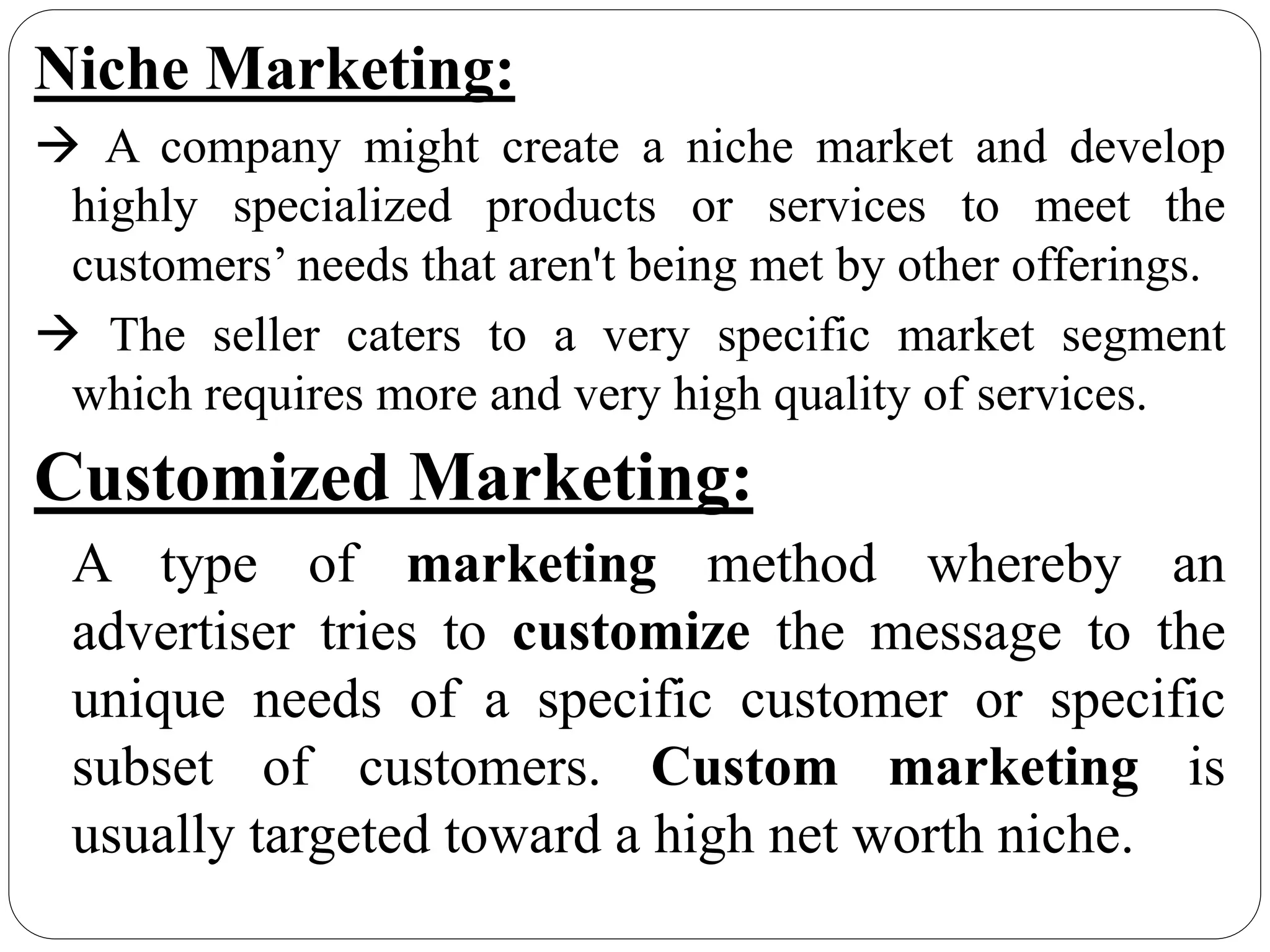
Niche Marketing:
 A company might create a niche market and develop
highly specialized products or services to meet the
customers’ needs that aren't being met by other offerings.
 The seller caters to a very specific market segment
which requires more and very high quality of services.
Customized Marketing:
A type of marketing method whereby an
advertiser tries to customize the message to the
unique needs of a specific customer or specific
subset of customers. Custom marketing is
usually targeted toward a high net worth niche.
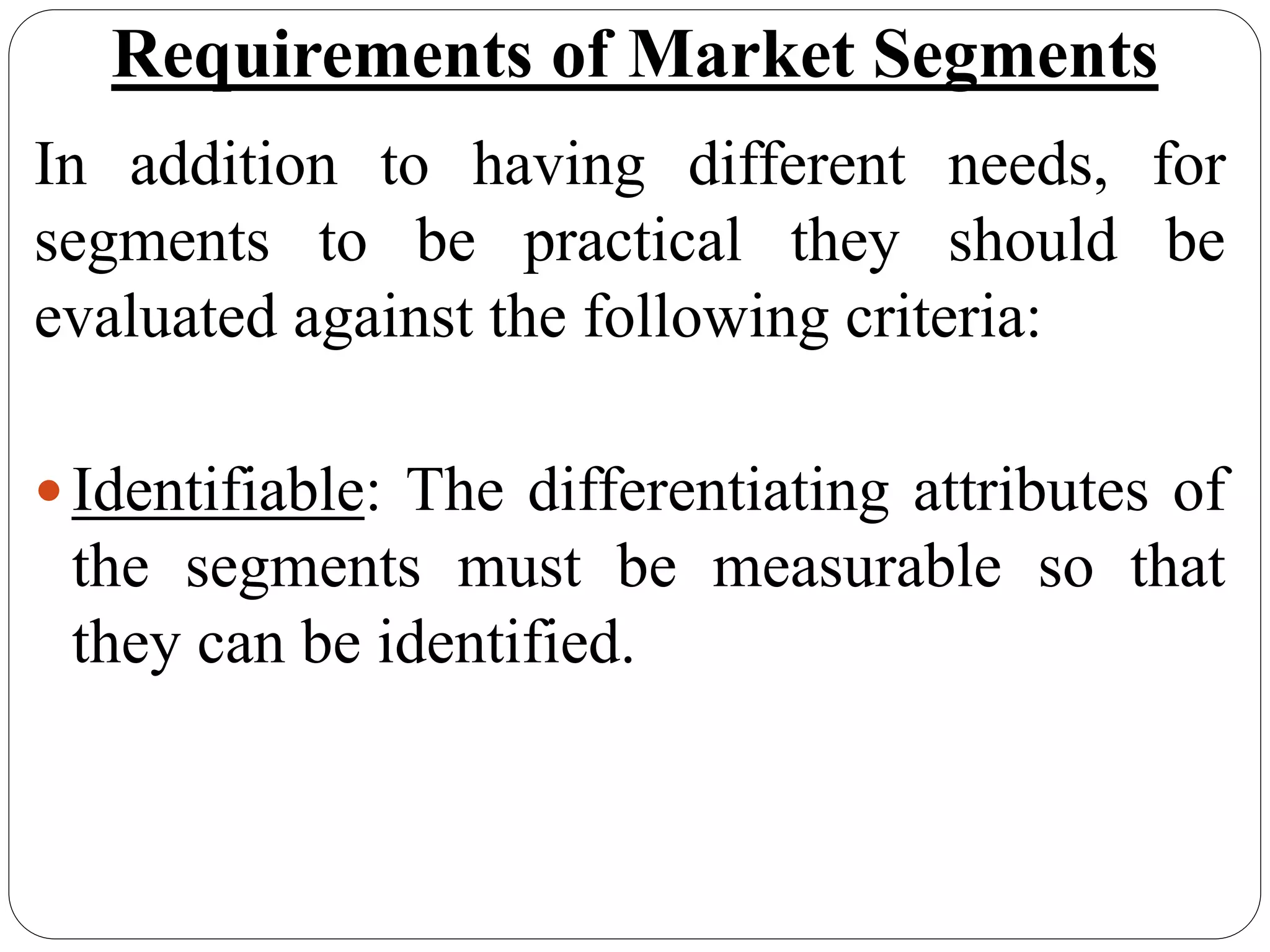
Requirements of Market Segments
In addition to having different needs, for
segments to be practical they should be
evaluated against the following criteria:
Identifiable: The differentiating attributes of
the segments must be measurable so that
they can be identified.
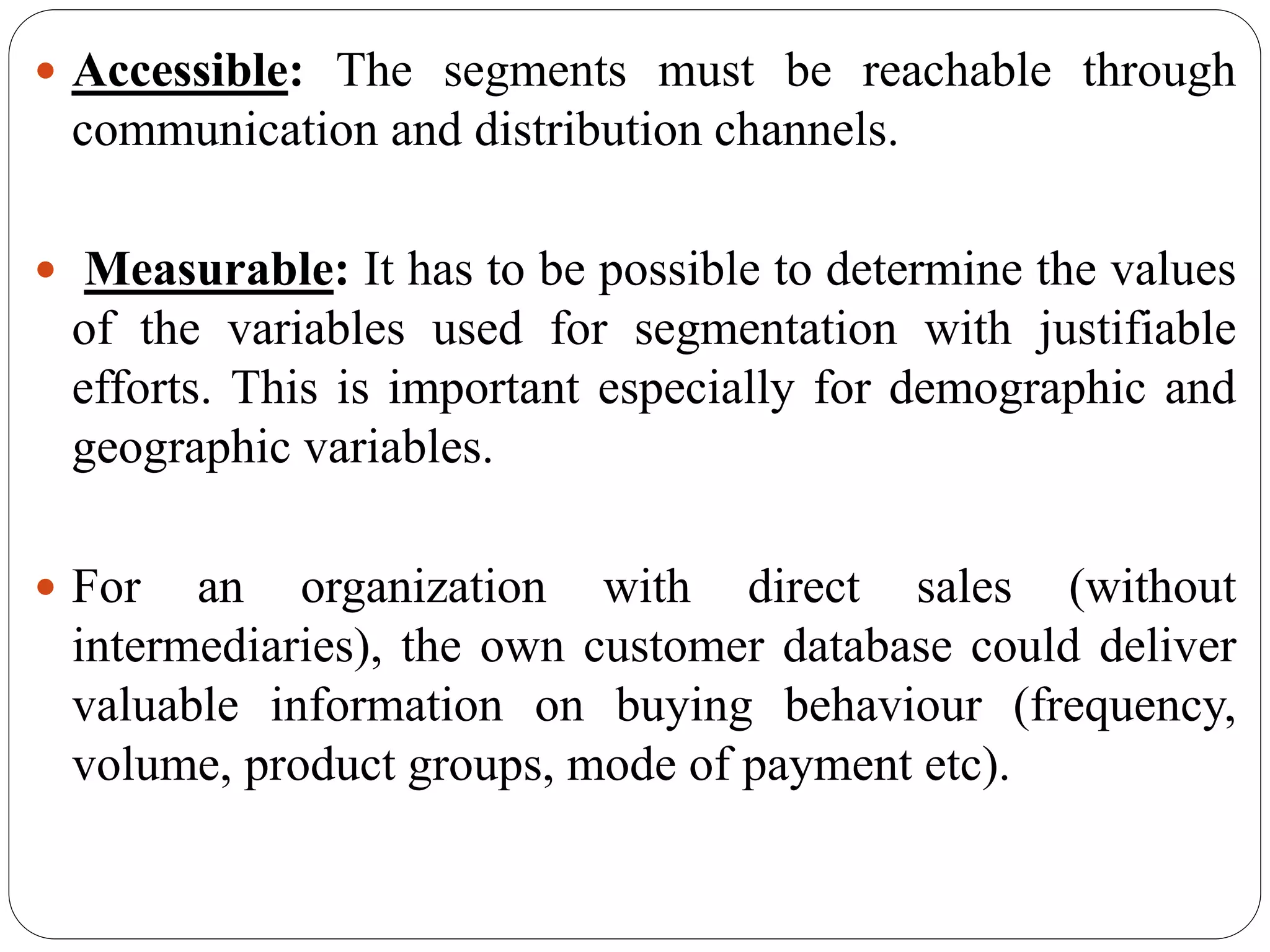
 Accessible: The segments must be reachable through
communication and distribution channels.
 Measurable: It has to be possible to determine the values
of the variables used for segmentation with justifiable
efforts. This is important especially for demographic and
geographic variables.
 For an organization with direct sales (without
intermediaries), the own customer database could deliver
valuable information on buying behaviour (frequency,
volume, product groups, mode of payment etc).
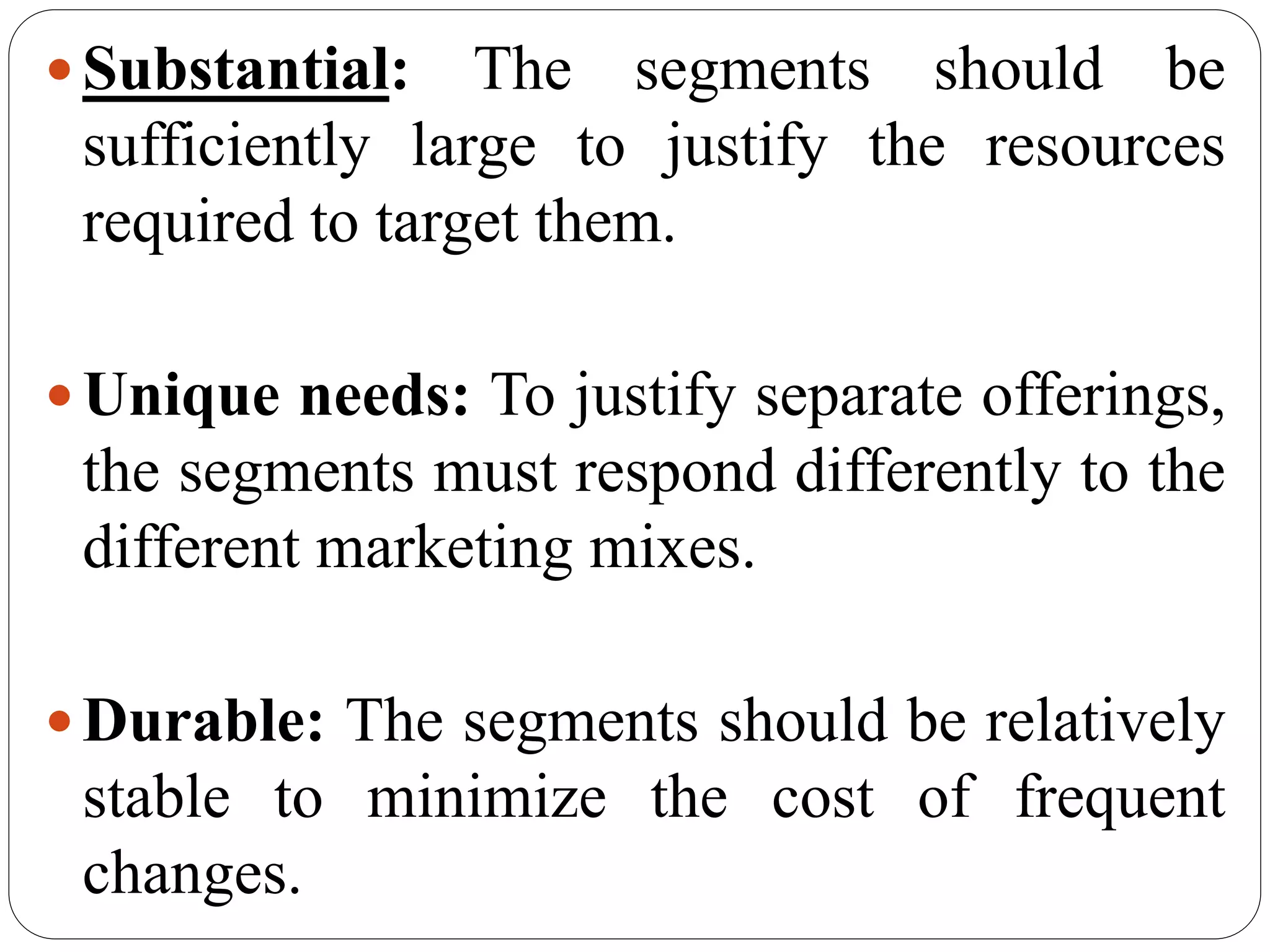
Substantial: The segments should be
sufficiently large to justify the resources
required to target them.
Unique needs: To justify separate offerings,
the segments must respond differently to the
different marketing mixes.
Durable: The segments should be relatively
stable to minimize the cost of frequent
changes.
‘Market Segmentation’
Market Segmentation is the sub-
dividing of customers into homogenous
sub-set of customers where any sub-set
may conceivably selected as market
target to be reached with distinct
Marketing Mix – Philip Kotler
Segmentation is essentially the identification
of subsets of buyers within a market that
share similar needs and demonstrate similar
buyer behaviour.
 Segmentation aims to match groups of
purchasers with the same set of needs and
buyer behaviour. Such a group is known as a
'segment‘.
The process of defining and subdividing
a large homogenous market into clearly
identifiable segments having similar
needs, wants, or demand characteristics
is called Segmentation.
BASES FOR SEGMENTING
CONSUMER MARKETS
• Group characteristics—such as age, gender, geographic
location, income, and buying patterns—are key.
• Four common bases for segmenting consumer markets:
• Geographic segmentation.
• Demographic segmentation.
• Psychographic segmentation.
• Product-related segmentation.
GEOGRAPHIC SEGMENTATION
•Division of an overall market into homogenous
groups based on their locations.
• Pay close attention to areas with overall large
population and quickly growing populations.
• Government now classifies urban data in
several categories based population size and
characteristics.
DEMOGRAPHIC SEGMENTATION
•Division of an overall market into homogenous
groups based on variables such as gender, age,
income, occupation, education, household size, and
stage in the family life cycle; also called Socio-
Economic Segmentation.
SEGMENTING BY GENDER
• Working women who regularly use the Internet
make most of the decisions about retail items,
healthcare goods and services, and fitness products.
SEGMENTING BY AGE
• The cohort effect—tendency of generation members to be influenced
and bound together by significant events in their formative years, ages 17
to 22.
• School-age children—have significant influence over family
purchases.
• Generation X—family-oriented, well educated, and optimistic.
• Baby boomers(People born between the end of World War 2 (1945) and the late
1960s)— lucrative, diverse segment that generally tends to value health
and quality of life.
• Seniors—heads of households more than 55 years old control about
three-quarters of the country’s total assets.
SEGMENTING BY FAMILY LIFE CYCLE STAGES
• Family life cycle—the process of family formation
and dissolution.
• Life stage, not age, is primary concern of marketer.
SEGMENTING BY HOUSEHOLD TYPE
• Households vary by life stage and the presence or
absence of children.
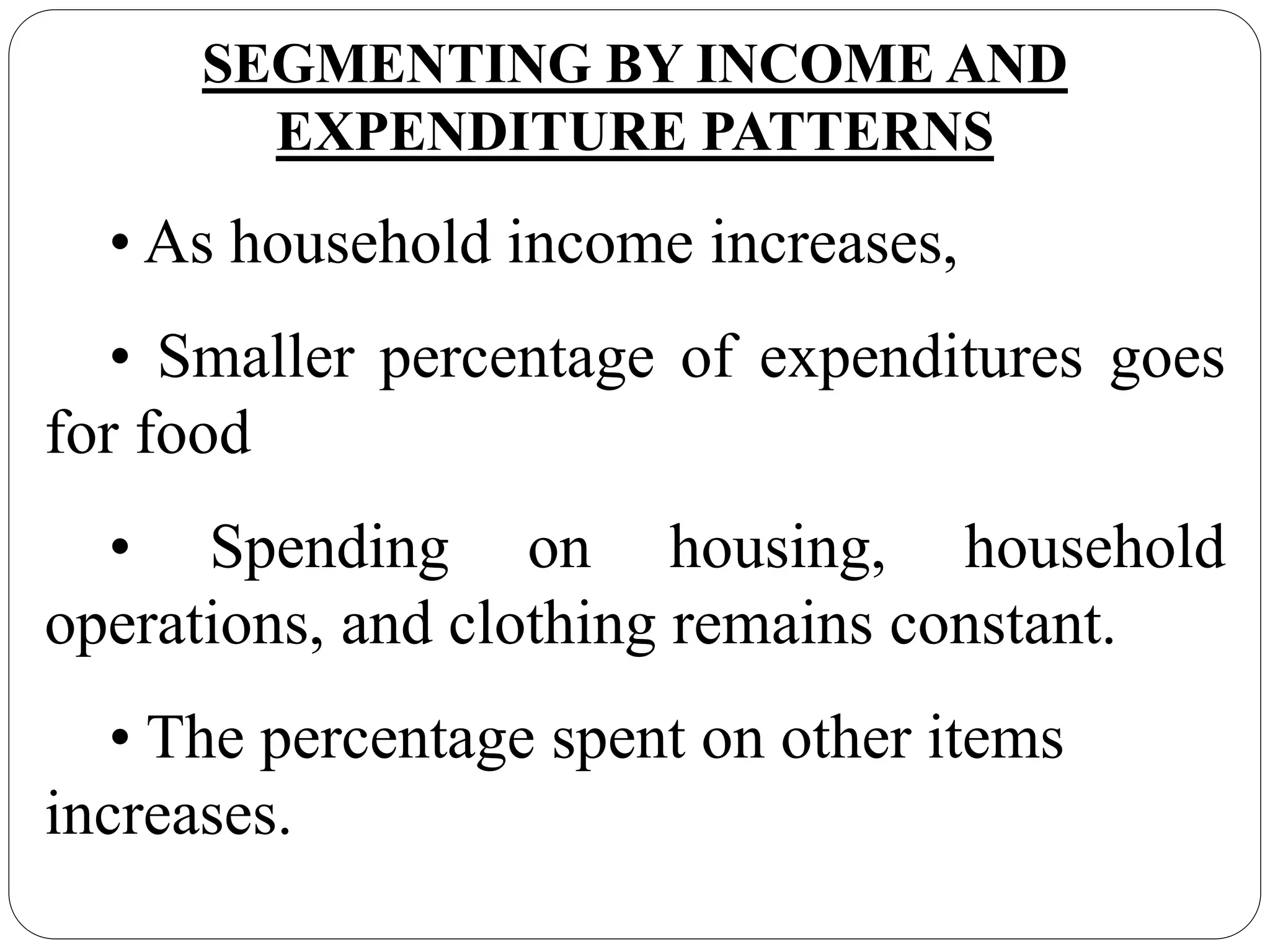
SEGMENTING BY INCOME AND
EXPENDITURE PATTERNS
• As household income increases,
• Smaller percentage of expenditures goes
for food
• Spending on housing, household
operations, and clothing remains constant.
• The percentage spent on other items
increases.
PSYCHOGRAPHIC SEGMENTATION
Division of a population into groups that have
similar psychological characteristics, values, and
lifestyles.
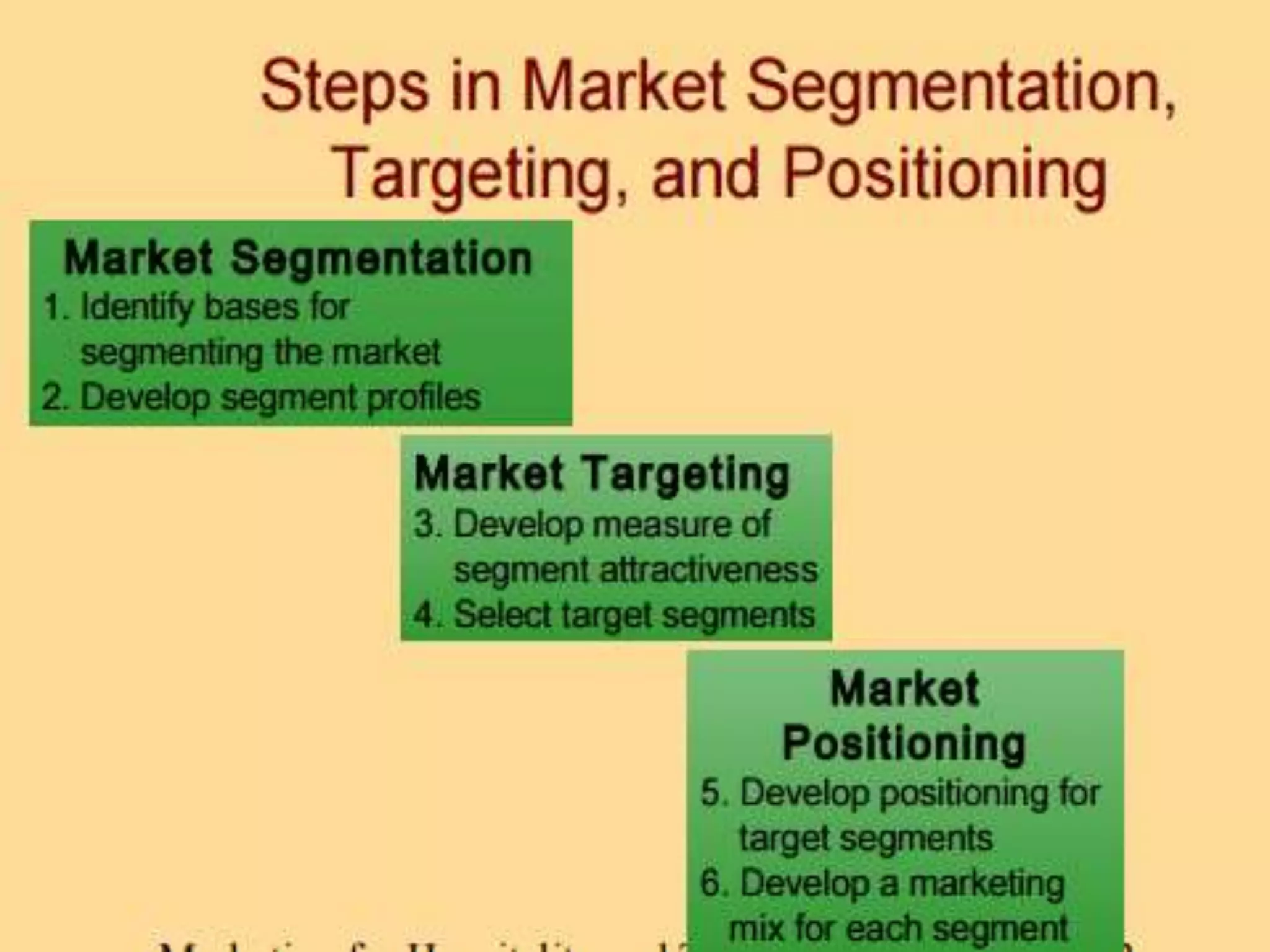
THE MARKET SEGMENTATION
PROCESS
DEVELOPA RELEVANT PROFILE FOR EACH SEGMENT
• In-depth analysis that helps managers accurately match buyers’ needs
with the firm’s offerings.
FORECAST MARKET POTENTIAL
• Sets upper limit on potential demand and maximum sales potential.
FORECAST PROBABLE MARKET SHARE
• Comes from analysis of competitors’ market position and development
of marketing strategy.
SELECT SPECIFIC MARKET SEGMENTS
• Use demand forecasts and cost projections to determine return on
investment from each segment.
• Assesses nonfinancial factors such as firm’s ability to launch product.
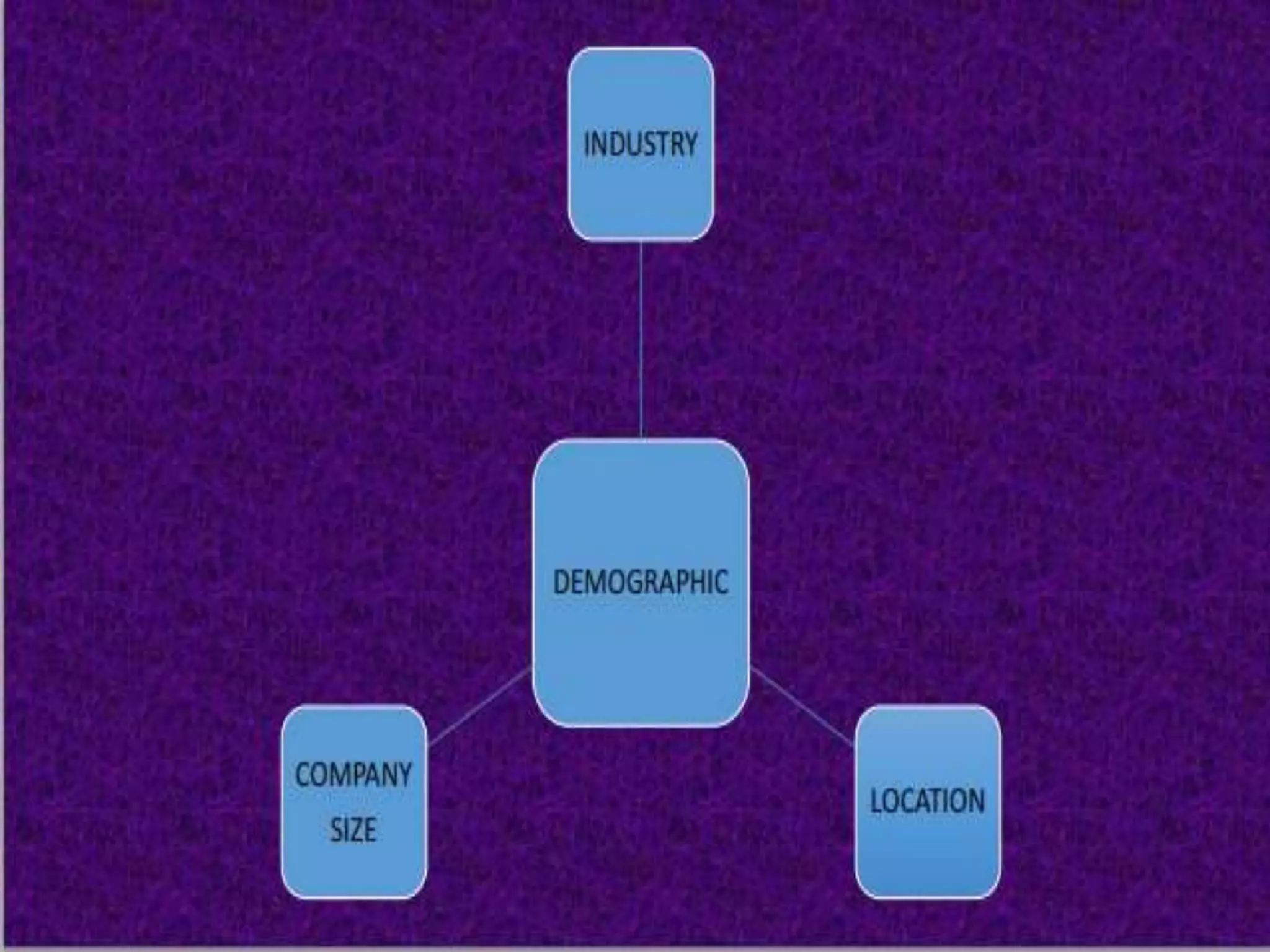
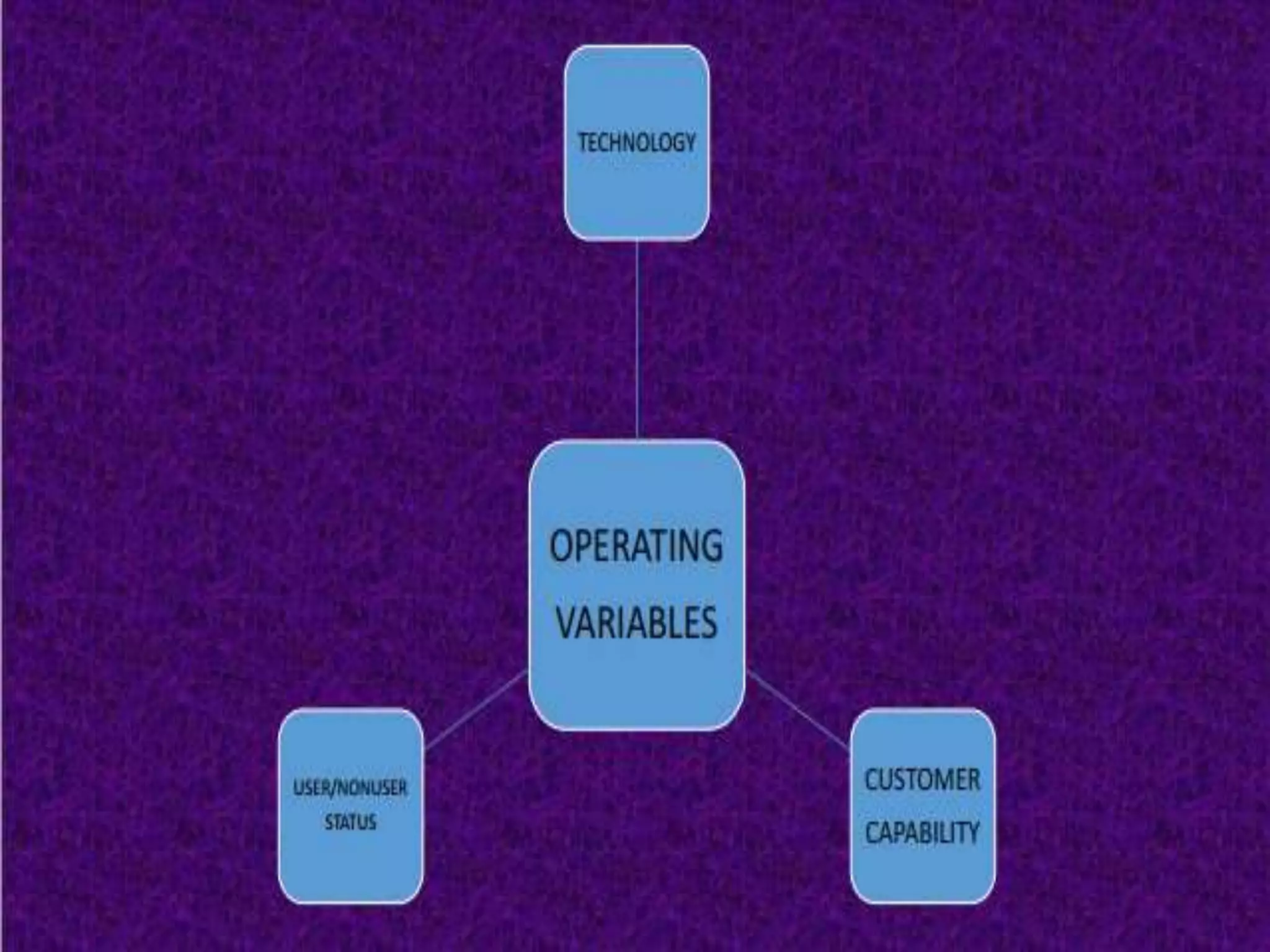
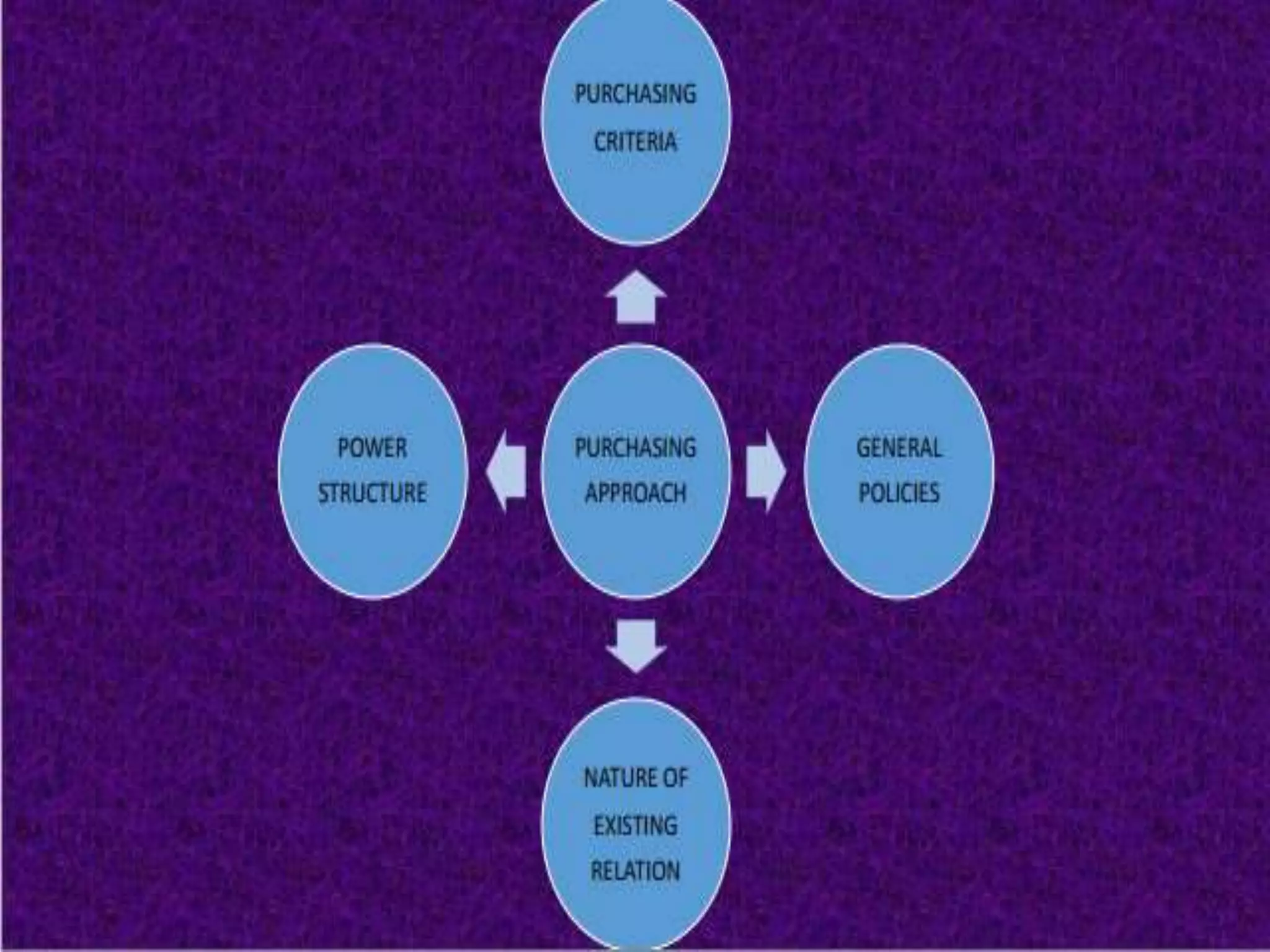
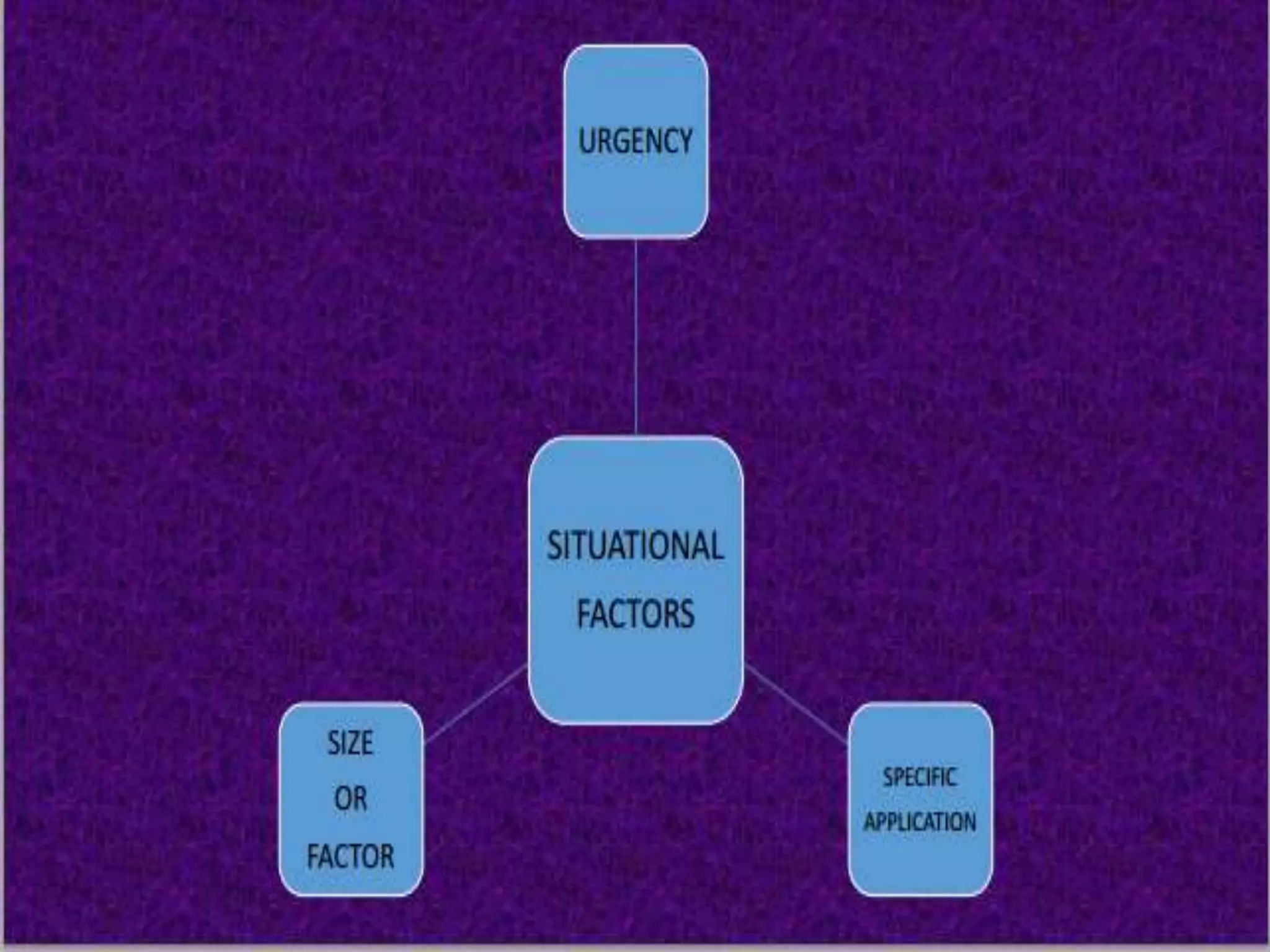
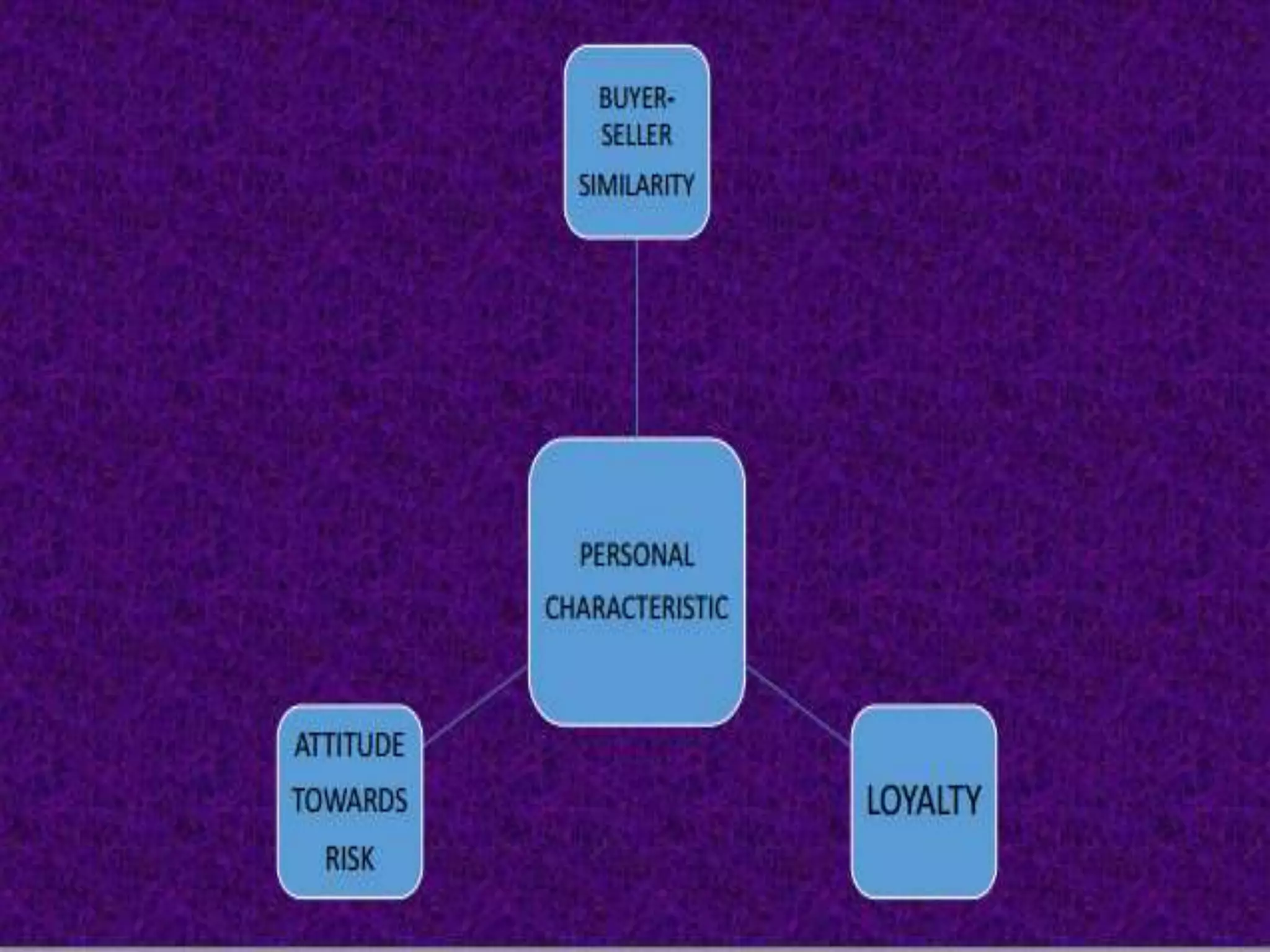
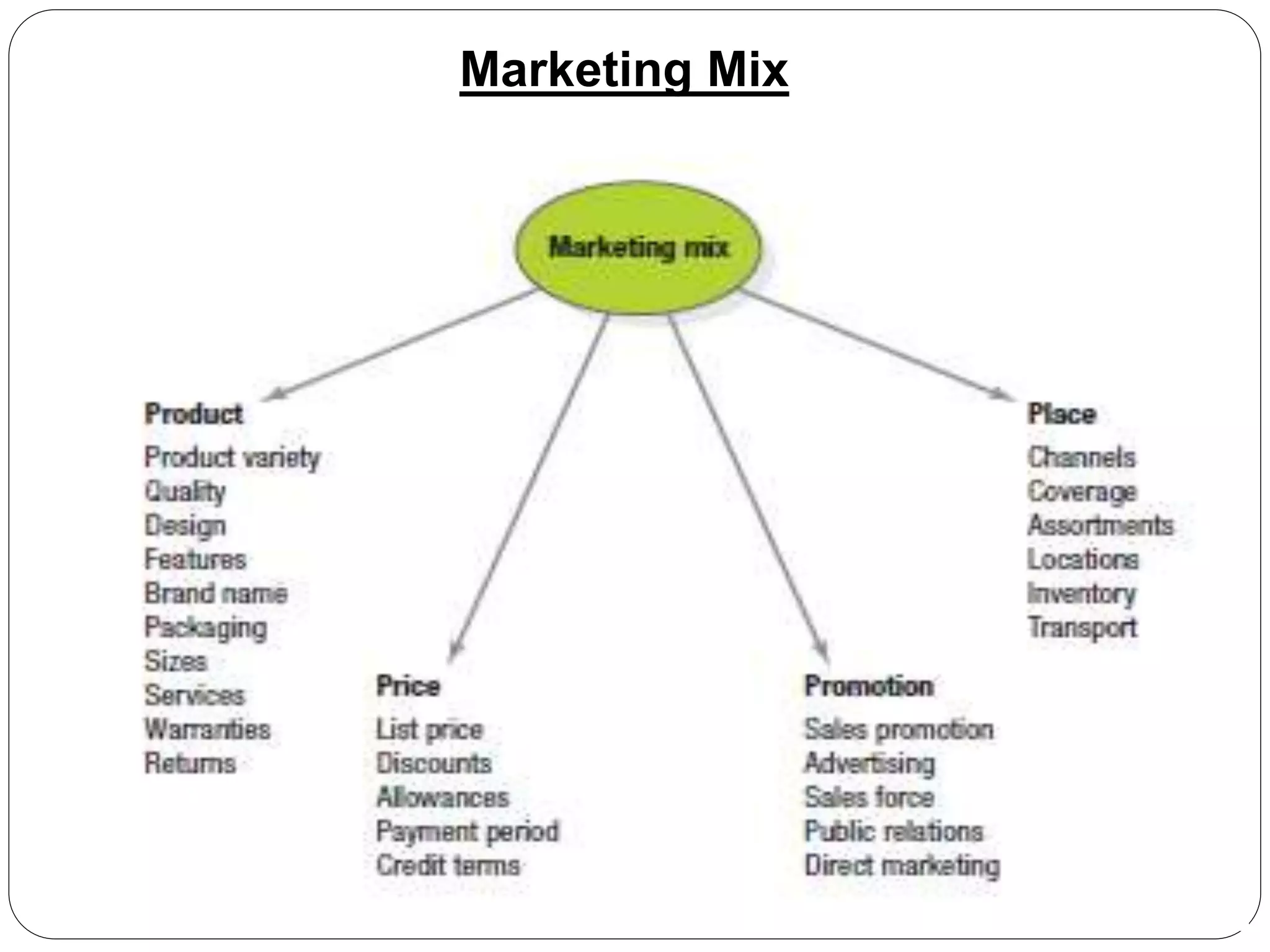
Bases for Segmenting
Industrial Markets
Marketing Mix
BASICS OF MARKETING - Unit-2- Osmania University

BASICS OF MARKETING - Unit-2- Osmania University

  • 1.
  • 2.
    UNIT - II MarketSegmentation, Target Market and Product Positioning: Levels of Market Segmentation, Bases for Segmenting Consumer Markets, Bases for Segmenting Industrial Markets. Target Market and Product Positioning Tools.
  • 3.
    Mass Marketing  Theterm mass market refers to a large, undifferentiated market of consumers with widely varied backgrounds.  Products and services needed by almost every member of society are suited for the mass market. Such items as electric and gas utilities, soap, paper towels and gasoline, for example, can be advertised and sold to almost anyone, making them mass market goods.  An attempt to appeal to an entire market with one basic marketing strategy utilizing mass distribution and mass media.
  • 4.
    Product Variety  Afterthe mass marketing strategy another strategy with similar characteristics but overcoming its predecessor’s shortcomings came into existence. That is product variety strategy.  An attempt to appeal to the entire market with a huge variety of products produced in mass is made.  However, like Mass marketing in this case also the customers needs & wants are not taken into account while developing the product.
  • 5.
    Target Marketing Target marketingis particularly effective for small companies with limited resources because it enables the company to achieve a strong market position in the specific market segment it serves without mass production, mass distribution, or mass advertising. It enables firms to capitalize on the respective serve market share
  • 6.
    Niche Marketing:  Acompany might create a niche market and develop highly specialized products or services to meet the customers’ needs that aren't being met by other offerings.  The seller caters to a very specific market segment which requires more and very high quality of services. Customized Marketing: A type of marketing method whereby an advertiser tries to customize the message to the unique needs of a specific customer or specific subset of customers. Custom marketing is usually targeted toward a high net worth niche.
  • 7.
    Requirements of MarketSegments In addition to having different needs, for segments to be practical they should be evaluated against the following criteria: Identifiable: The differentiating attributes of the segments must be measurable so that they can be identified.
  • 8.
     Accessible: Thesegments must be reachable through communication and distribution channels.  Measurable: It has to be possible to determine the values of the variables used for segmentation with justifiable efforts. This is important especially for demographic and geographic variables.  For an organization with direct sales (without intermediaries), the own customer database could deliver valuable information on buying behaviour (frequency, volume, product groups, mode of payment etc).
  • 9.
    Substantial: The segmentsshould be sufficiently large to justify the resources required to target them. Unique needs: To justify separate offerings, the segments must respond differently to the different marketing mixes. Durable: The segments should be relatively stable to minimize the cost of frequent changes.
  • 10.
    ‘Market Segmentation’ Market Segmentationis the sub- dividing of customers into homogenous sub-set of customers where any sub-set may conceivably selected as market target to be reached with distinct Marketing Mix – Philip Kotler
  • 11.
    Segmentation is essentiallythe identification of subsets of buyers within a market that share similar needs and demonstrate similar buyer behaviour.  Segmentation aims to match groups of purchasers with the same set of needs and buyer behaviour. Such a group is known as a 'segment‘.
  • 12.
    The process ofdefining and subdividing a large homogenous market into clearly identifiable segments having similar needs, wants, or demand characteristics is called Segmentation.
  • 13.
    BASES FOR SEGMENTING CONSUMERMARKETS • Group characteristics—such as age, gender, geographic location, income, and buying patterns—are key. • Four common bases for segmenting consumer markets: • Geographic segmentation. • Demographic segmentation. • Psychographic segmentation. • Product-related segmentation.
  • 14.
    GEOGRAPHIC SEGMENTATION •Division ofan overall market into homogenous groups based on their locations. • Pay close attention to areas with overall large population and quickly growing populations. • Government now classifies urban data in several categories based population size and characteristics.
  • 15.
    DEMOGRAPHIC SEGMENTATION •Division ofan overall market into homogenous groups based on variables such as gender, age, income, occupation, education, household size, and stage in the family life cycle; also called Socio- Economic Segmentation. SEGMENTING BY GENDER • Working women who regularly use the Internet make most of the decisions about retail items, healthcare goods and services, and fitness products.
  • 16.
    SEGMENTING BY AGE •The cohort effect—tendency of generation members to be influenced and bound together by significant events in their formative years, ages 17 to 22. • School-age children—have significant influence over family purchases. • Generation X—family-oriented, well educated, and optimistic. • Baby boomers(People born between the end of World War 2 (1945) and the late 1960s)— lucrative, diverse segment that generally tends to value health and quality of life. • Seniors—heads of households more than 55 years old control about three-quarters of the country’s total assets.
  • 17.
    SEGMENTING BY FAMILYLIFE CYCLE STAGES • Family life cycle—the process of family formation and dissolution. • Life stage, not age, is primary concern of marketer. SEGMENTING BY HOUSEHOLD TYPE • Households vary by life stage and the presence or absence of children.
  • 18.
    SEGMENTING BY INCOMEAND EXPENDITURE PATTERNS • As household income increases, • Smaller percentage of expenditures goes for food • Spending on housing, household operations, and clothing remains constant. • The percentage spent on other items increases.
  • 19.
    PSYCHOGRAPHIC SEGMENTATION Division ofa population into groups that have similar psychological characteristics, values, and lifestyles.
  • 20.
    THE MARKET SEGMENTATION PROCESS DEVELOPARELEVANT PROFILE FOR EACH SEGMENT • In-depth analysis that helps managers accurately match buyers’ needs with the firm’s offerings. FORECAST MARKET POTENTIAL • Sets upper limit on potential demand and maximum sales potential. FORECAST PROBABLE MARKET SHARE • Comes from analysis of competitors’ market position and development of marketing strategy. SELECT SPECIFIC MARKET SEGMENTS • Use demand forecasts and cost projections to determine return on investment from each segment. • Assesses nonfinancial factors such as firm’s ability to launch product.
  • 21.
  • 33.