BASIC PATTERNSGRAMMAR  +  MECHANICSPART 1
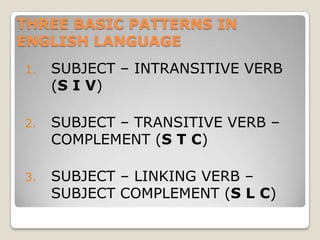
THREE BASIC PATTERNS IN ENGLISH LANGUAGESUBJECT – INTRANSITIVE VERB (S I V)SUBJECT – TRANSITIVE VERB – COMPLEMENT (S T C)SUBJECT – LINKING VERB – SUBJECT COMPLEMENT (S L C)
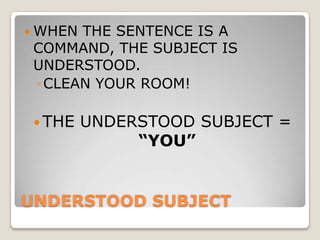
UNDERSTOOD SUBJECTWHEN THE SENTENCE IS A COMMAND, THE SUBJECT IS UNDERSTOOD.CLEAN YOUR ROOM!THE UNDERSTOOD SUBJECT = “YOU”
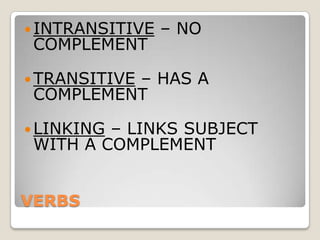
VERBSINTRANSITIVE – NO COMPLEMENTTRANSITIVE – HAS A COMPLEMENTLINKING – LINKS SUBJECT WITH A COMPLEMENT
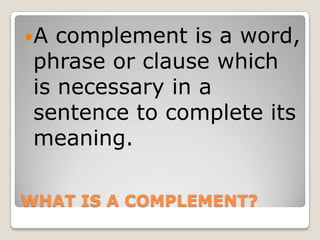
WHAT IS A COMPLEMENT?A complement is a word, phrase or clause which is necessary in a sentence to complete its meaning.
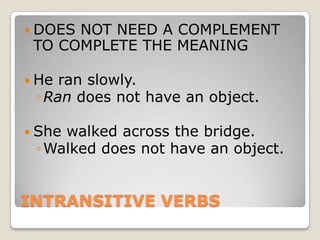
INTRANSITIVE VERBSDOES NOT NEED A COMPLEMENT TO COMPLETE THE MEANINGHe ran slowly. Ran does not have an object. She walked across the bridge.Walked does not have an object.
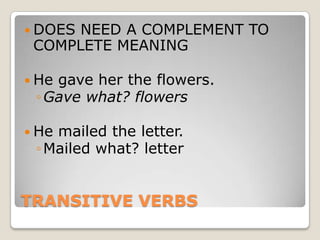
TRANSITIVE VERBSDOES NEED A COMPLEMENT TO COMPLETE MEANING He gave her the flowers. Gave what? flowersHe mailed the letter.Mailed what? letter
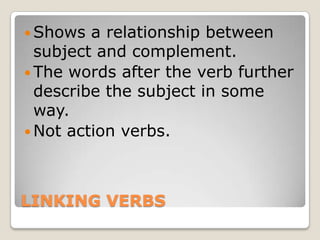
LINKING VERBSShows a relationship between subject and complement. The words after the verb further describe the subject in some way.Not action verbs.
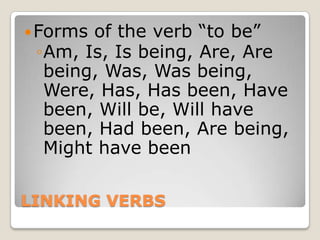
LINKING VERBSForms of the verb “to be”Am, Is, Is being, Are, Are being, Was, Was being, Were, Has, Has been, Have been, Will be, Will have been, Had been, Are being, Might have been
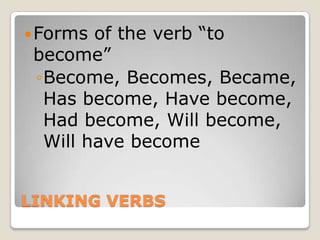
LINKING VERBSForms of the verb “to become”Become, Becomes, Became, Has become, Have become, Had become, Will become, Will have become
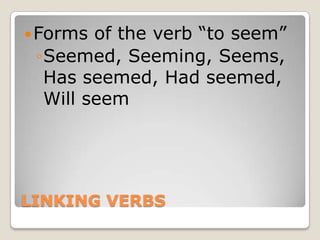
LINKING VERBSForms of the verb “to seem”Seemed, Seeming, Seems, Has seemed, Had seemed, Will seem
LINKING VERBS"I am glad it is Friday." Here the linking verb "am" connects the subject (I) to the state of being glad."Laura is excited about her new bike." Here "is" describes Laura's emotional state of excitement."My birds are hungry." The word "are" identifies that the birds currently exist in a physical state of hunger.
LINKING VERBSAction verbs that can be linking verbsGrow, Look, Prove, Remain, Smell, Sound, Taste, Turn, Stay, Get, Appear, Feel
LINKING VERBSThe flowered looked wilted.Looked = linkingShe looked for flowers.Looked = Action (Transitive)
LINKING VERBS The sauce tasted delicious. Tasted = linkingShe tasted the sauce.Tasted = Action (transitive)
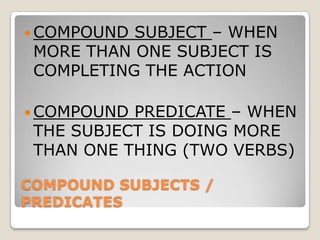
COMPOUND SUBJECTS / PREDICATES COMPOUND SUBJECT – WHEN MORE THAN ONE SUBJECT IS COMPLETING THE ACTIONCOMPOUND PREDICATE – WHEN THE SUBJECT IS DOING MORE THAN ONE THING (TWO VERBS)
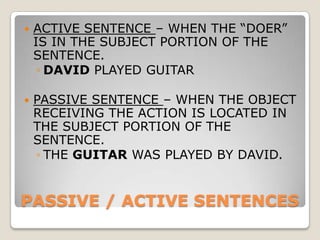
PASSIVE / ACTIVE SENTENCESACTIVE SENTENCE – WHEN THE “DOER” IS IN THE SUBJECT PORTION OF THE SENTENCE.DAVID PLAYED GUITAR PASSIVE SENTENCE – WHEN THE OBJECT RECEIVING THE ACTION IS LOCATED IN THE SUBJECT PORTION OF THE SENTENCE.THE GUITAR WAS PLAYED BY DAVID.

Basic Patterns

  • 1.
    BASIC PATTERNSGRAMMAR + MECHANICSPART 1
  • 2.
    THREE BASIC PATTERNSIN ENGLISH LANGUAGESUBJECT – INTRANSITIVE VERB (S I V)SUBJECT – TRANSITIVE VERB – COMPLEMENT (S T C)SUBJECT – LINKING VERB – SUBJECT COMPLEMENT (S L C)
  • 3.
    UNDERSTOOD SUBJECTWHEN THESENTENCE IS A COMMAND, THE SUBJECT IS UNDERSTOOD.CLEAN YOUR ROOM!THE UNDERSTOOD SUBJECT = “YOU”
  • 4.
    VERBSINTRANSITIVE – NOCOMPLEMENTTRANSITIVE – HAS A COMPLEMENTLINKING – LINKS SUBJECT WITH A COMPLEMENT
  • 5.
    WHAT IS ACOMPLEMENT?A complement is a word, phrase or clause which is necessary in a sentence to complete its meaning.
  • 6.
    INTRANSITIVE VERBSDOES NOTNEED A COMPLEMENT TO COMPLETE THE MEANINGHe ran slowly. Ran does not have an object. She walked across the bridge.Walked does not have an object.
  • 7.
    TRANSITIVE VERBSDOES NEEDA COMPLEMENT TO COMPLETE MEANING He gave her the flowers. Gave what? flowersHe mailed the letter.Mailed what? letter
  • 8.
    LINKING VERBSShows arelationship between subject and complement. The words after the verb further describe the subject in some way.Not action verbs.
  • 9.
    LINKING VERBSForms ofthe verb “to be”Am, Is, Is being, Are, Are being, Was, Was being, Were, Has, Has been, Have been, Will be, Will have been, Had been, Are being, Might have been
  • 10.
    LINKING VERBSForms ofthe verb “to become”Become, Becomes, Became, Has become, Have become, Had become, Will become, Will have become
  • 11.
    LINKING VERBSForms ofthe verb “to seem”Seemed, Seeming, Seems, Has seemed, Had seemed, Will seem
  • 12.
    LINKING VERBS"I amglad it is Friday." Here the linking verb "am" connects the subject (I) to the state of being glad."Laura is excited about her new bike." Here "is" describes Laura's emotional state of excitement."My birds are hungry." The word "are" identifies that the birds currently exist in a physical state of hunger.
  • 13.
    LINKING VERBSAction verbsthat can be linking verbsGrow, Look, Prove, Remain, Smell, Sound, Taste, Turn, Stay, Get, Appear, Feel
  • 14.
    LINKING VERBSThe floweredlooked wilted.Looked = linkingShe looked for flowers.Looked = Action (Transitive)
  • 15.
    LINKING VERBS Thesauce tasted delicious. Tasted = linkingShe tasted the sauce.Tasted = Action (transitive)
  • 16.
    COMPOUND SUBJECTS /PREDICATES COMPOUND SUBJECT – WHEN MORE THAN ONE SUBJECT IS COMPLETING THE ACTIONCOMPOUND PREDICATE – WHEN THE SUBJECT IS DOING MORE THAN ONE THING (TWO VERBS)
  • 17.
    PASSIVE / ACTIVESENTENCESACTIVE SENTENCE – WHEN THE “DOER” IS IN THE SUBJECT PORTION OF THE SENTENCE.DAVID PLAYED GUITAR PASSIVE SENTENCE – WHEN THE OBJECT RECEIVING THE ACTION IS LOCATED IN THE SUBJECT PORTION OF THE SENTENCE.THE GUITAR WAS PLAYED BY DAVID.