Basic Mechanical Engineering
UNIT-2
Thermodynamics' Laws
Part-Two (Second Law of Thermodynamics)
By
Mr. Varun Pratap Singh
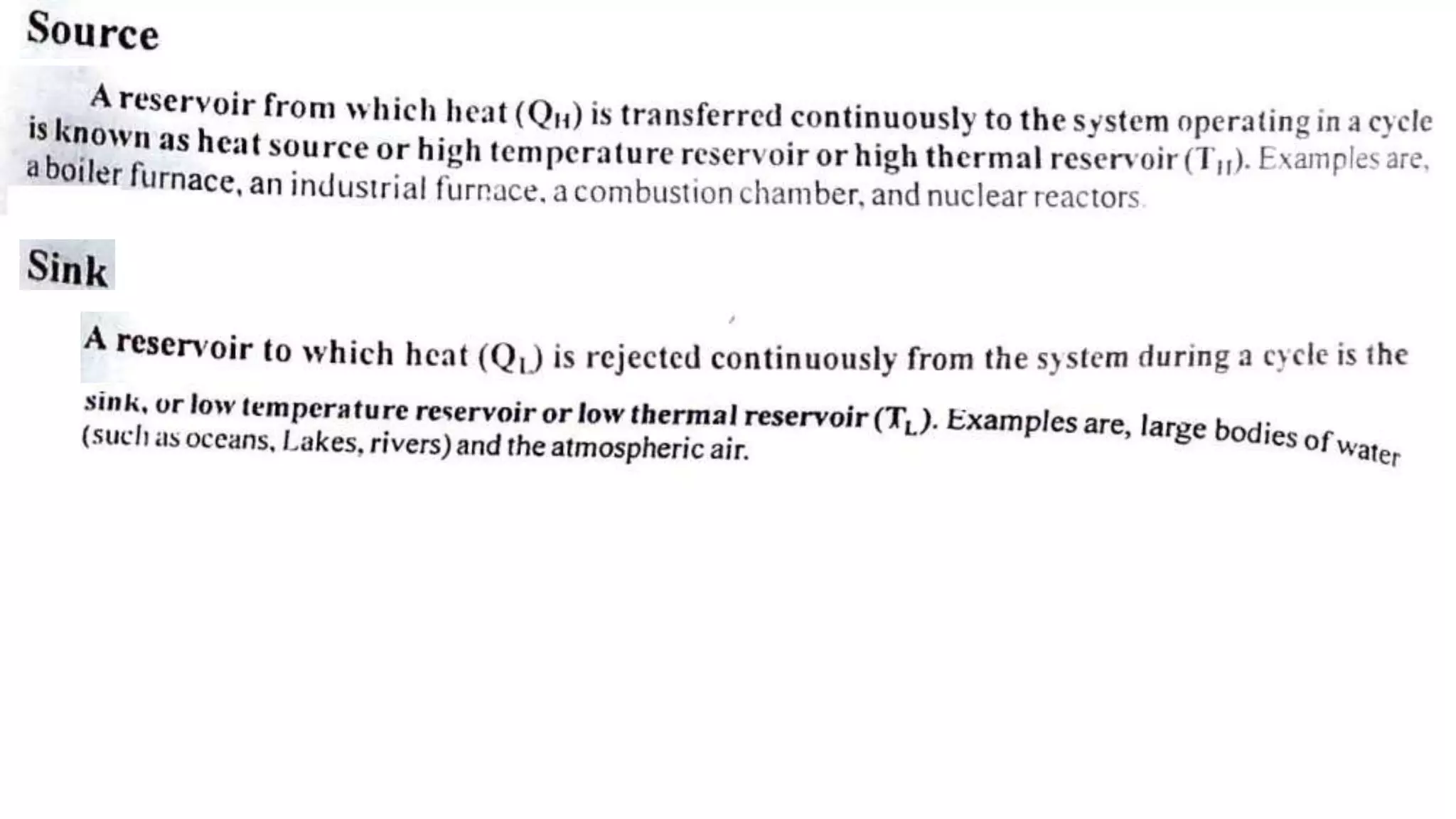
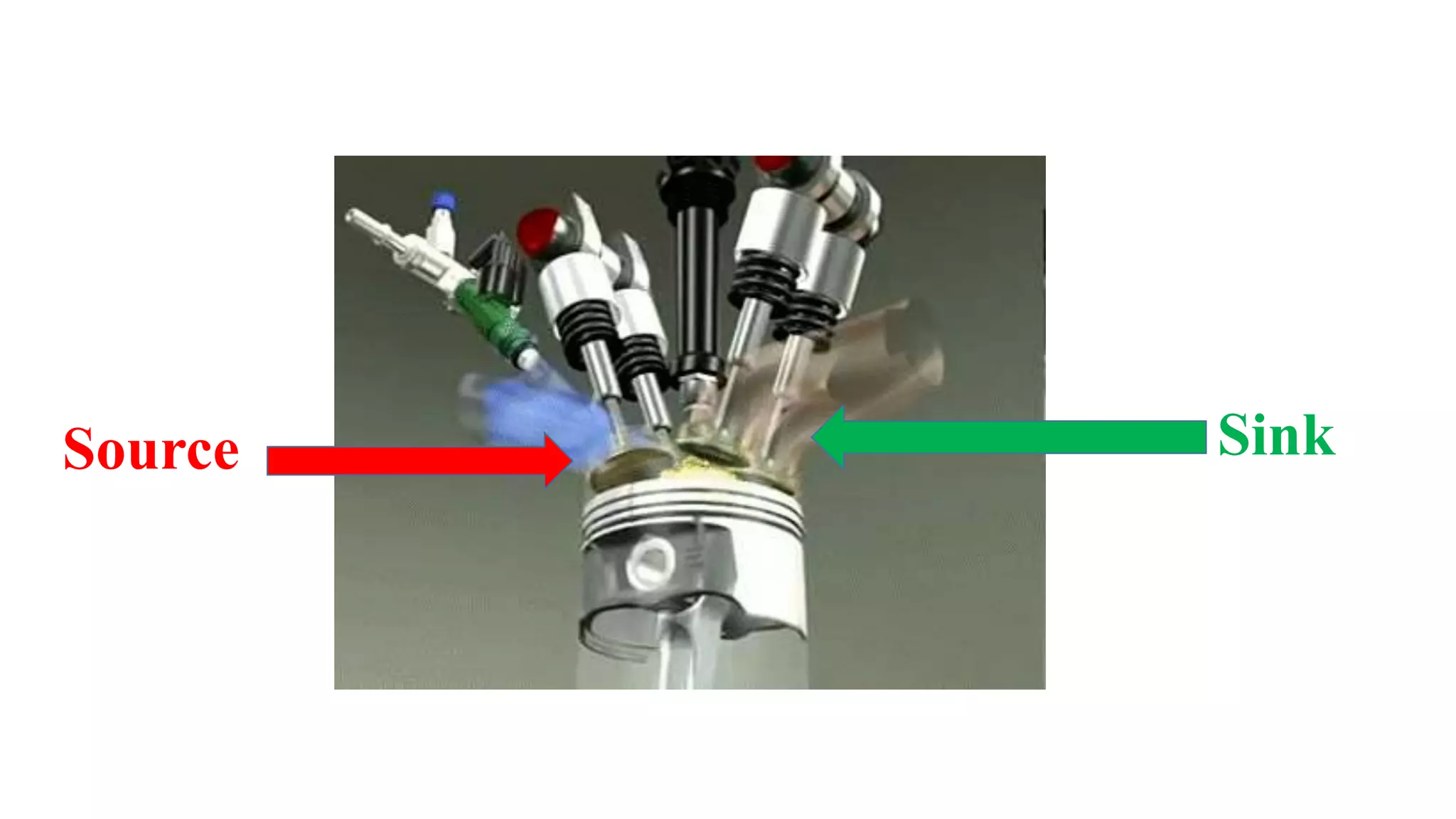
Source Sink
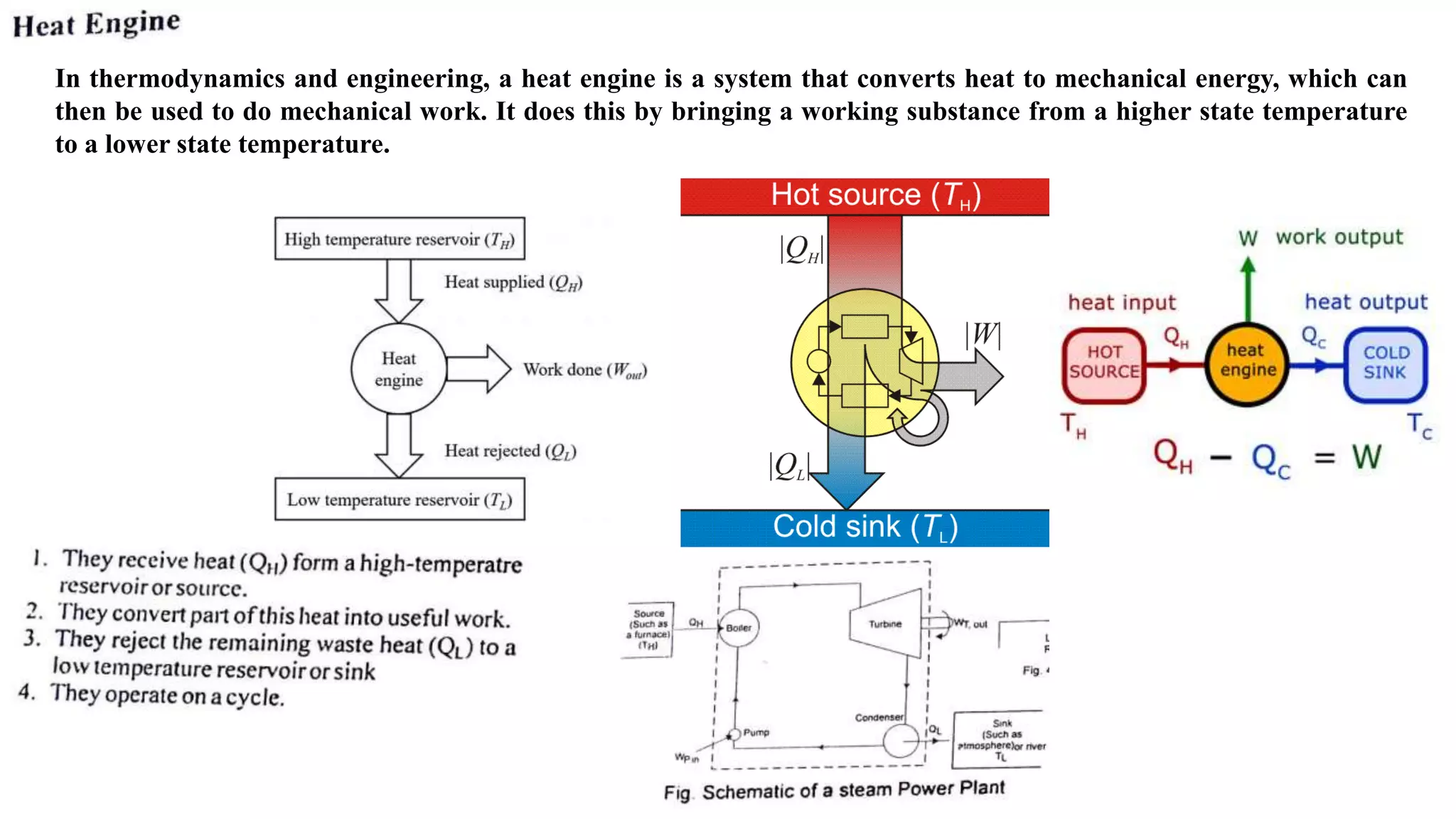
In thermodynamics and engineering, a heat engine is a system that converts heat to mechanical energy, which can
then be used to do mechanical work. It does this by bringing a working substance from a higher state temperature
to a lower state temperature.
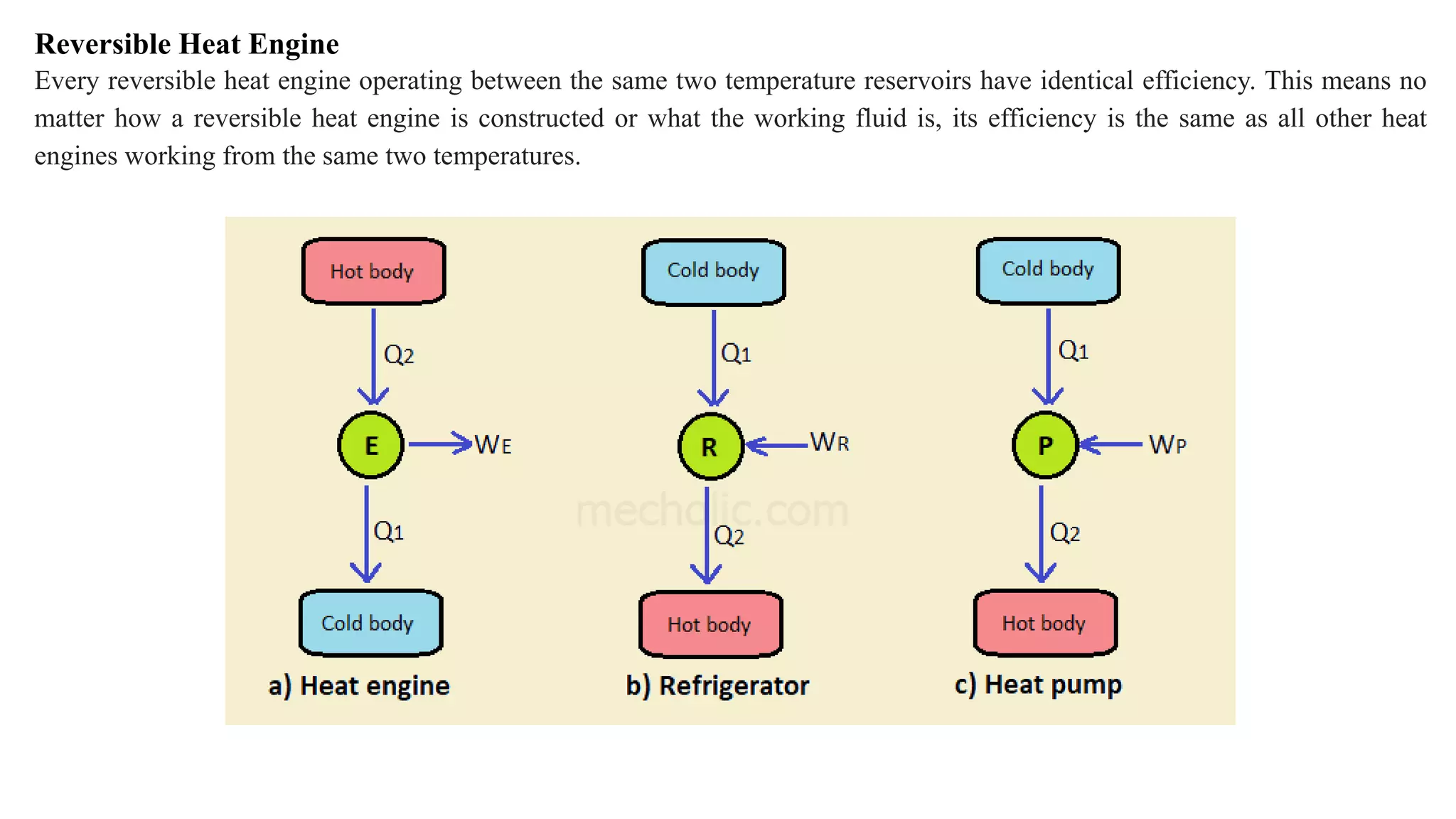
Reversible Heat Engine
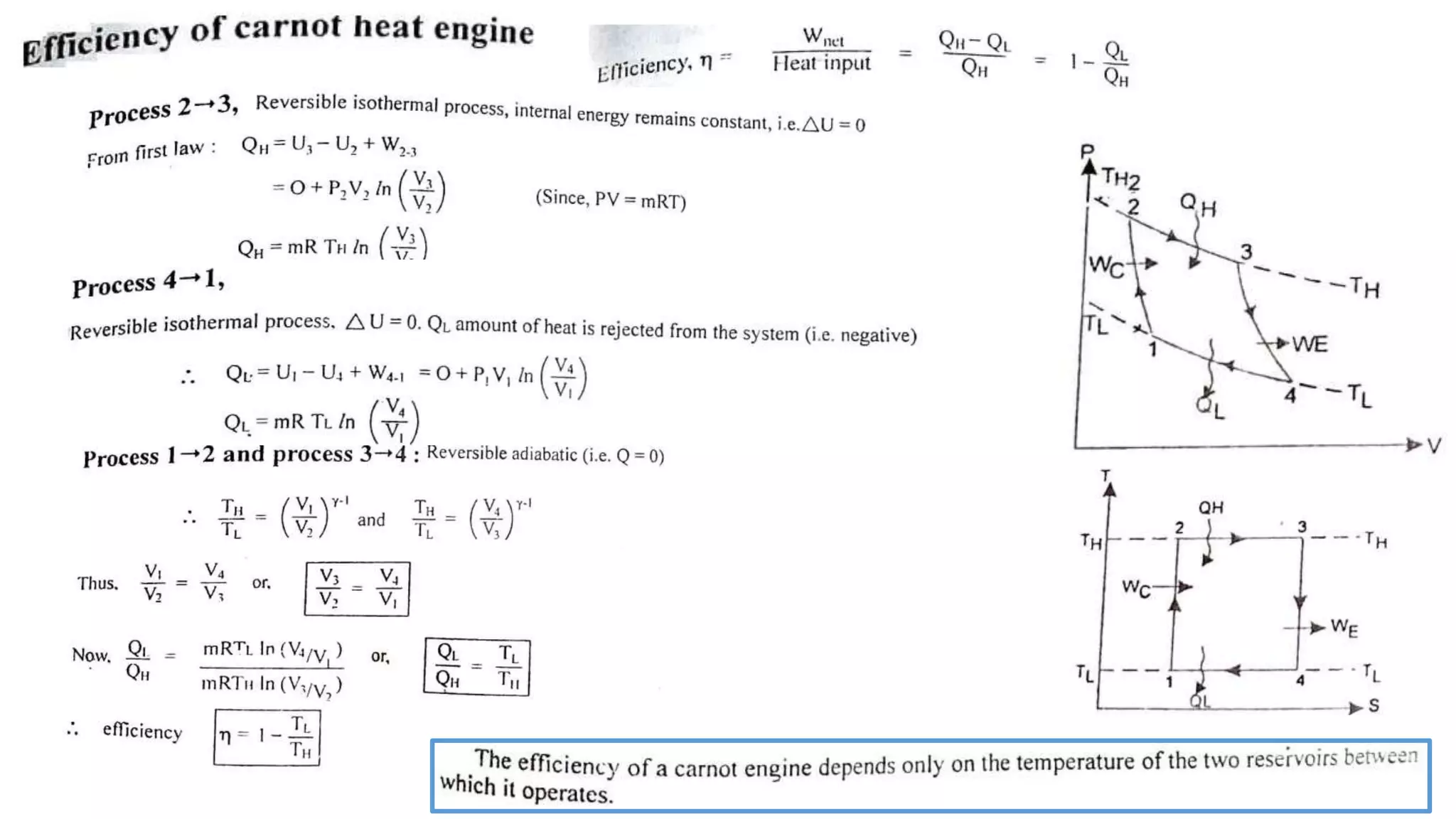
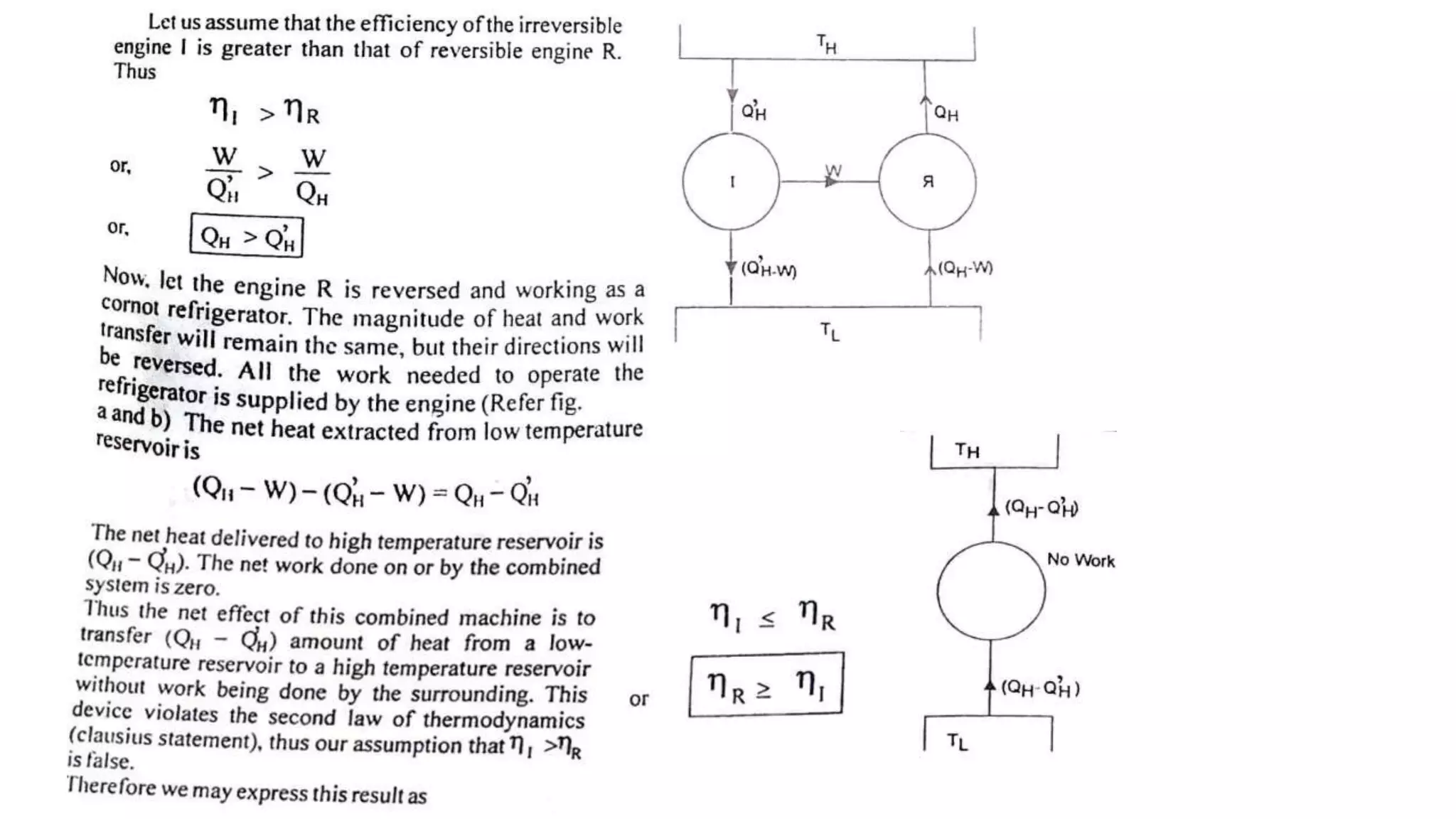
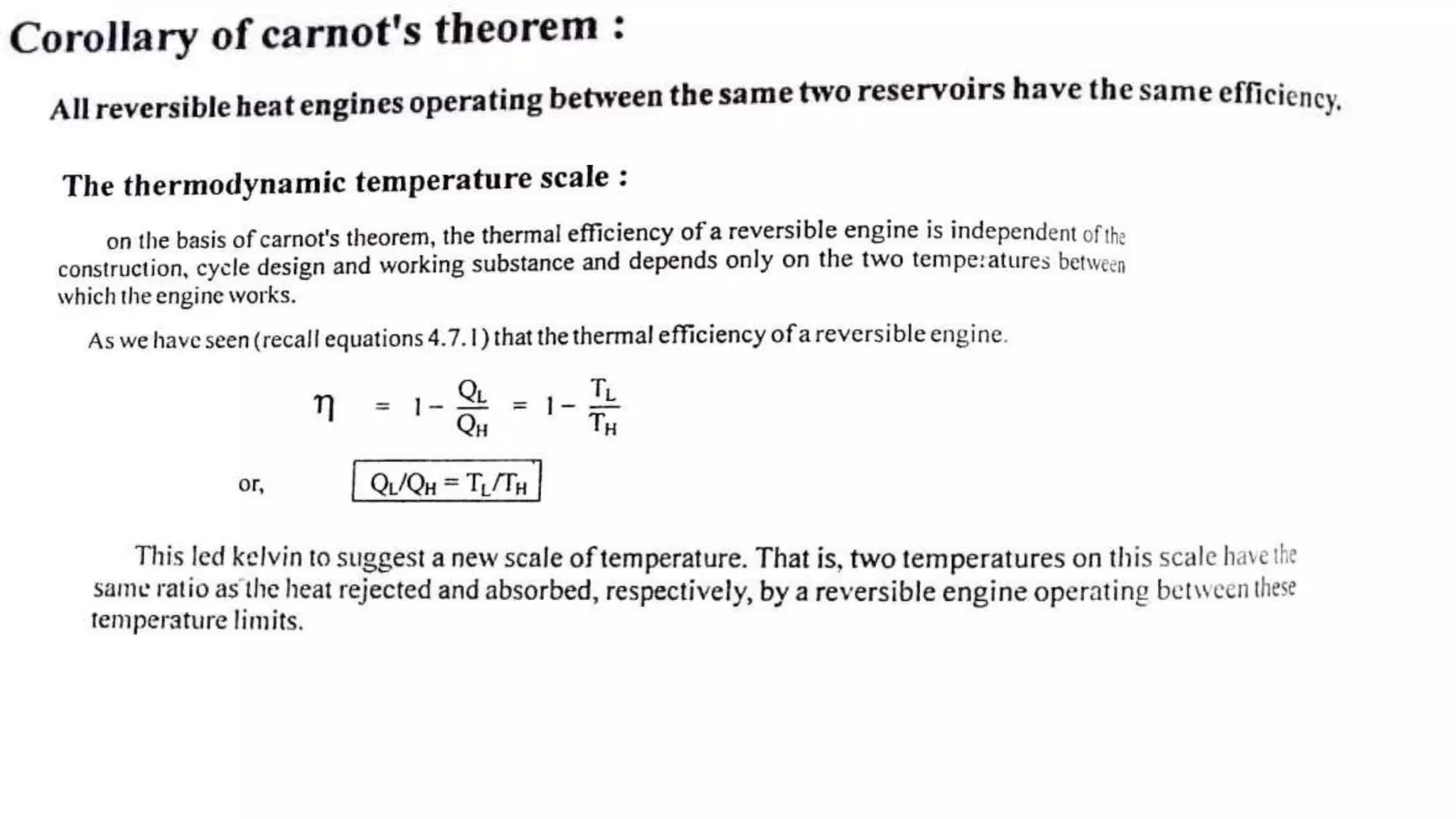
Every reversible heat engine operating between the same two temperature reservoirs have identical efficiency. This means no
matter how a reversible heat engine is constructed or what the working fluid is, its efficiency is the same as all other heat
engines working from the same two temperatures.
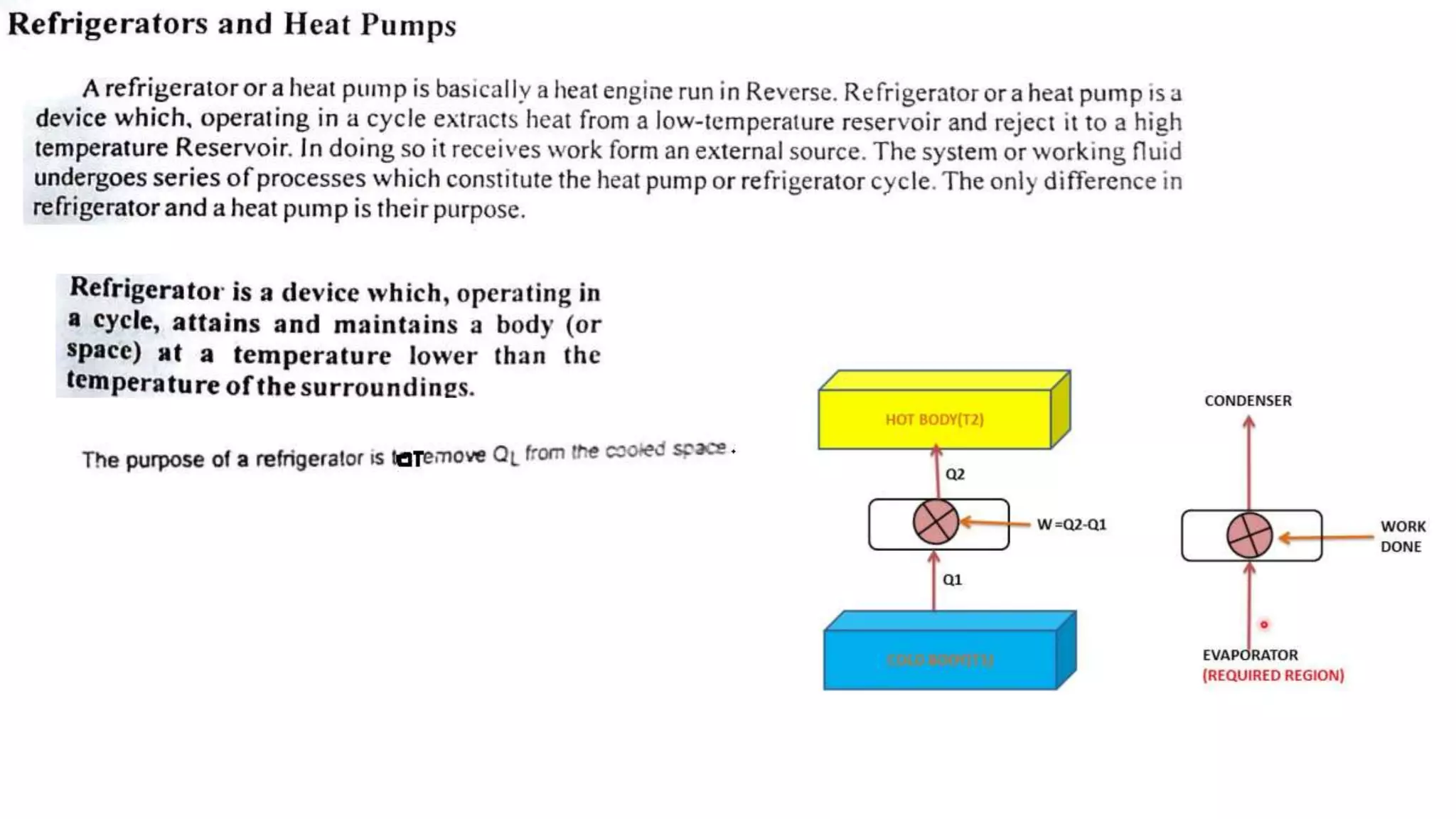
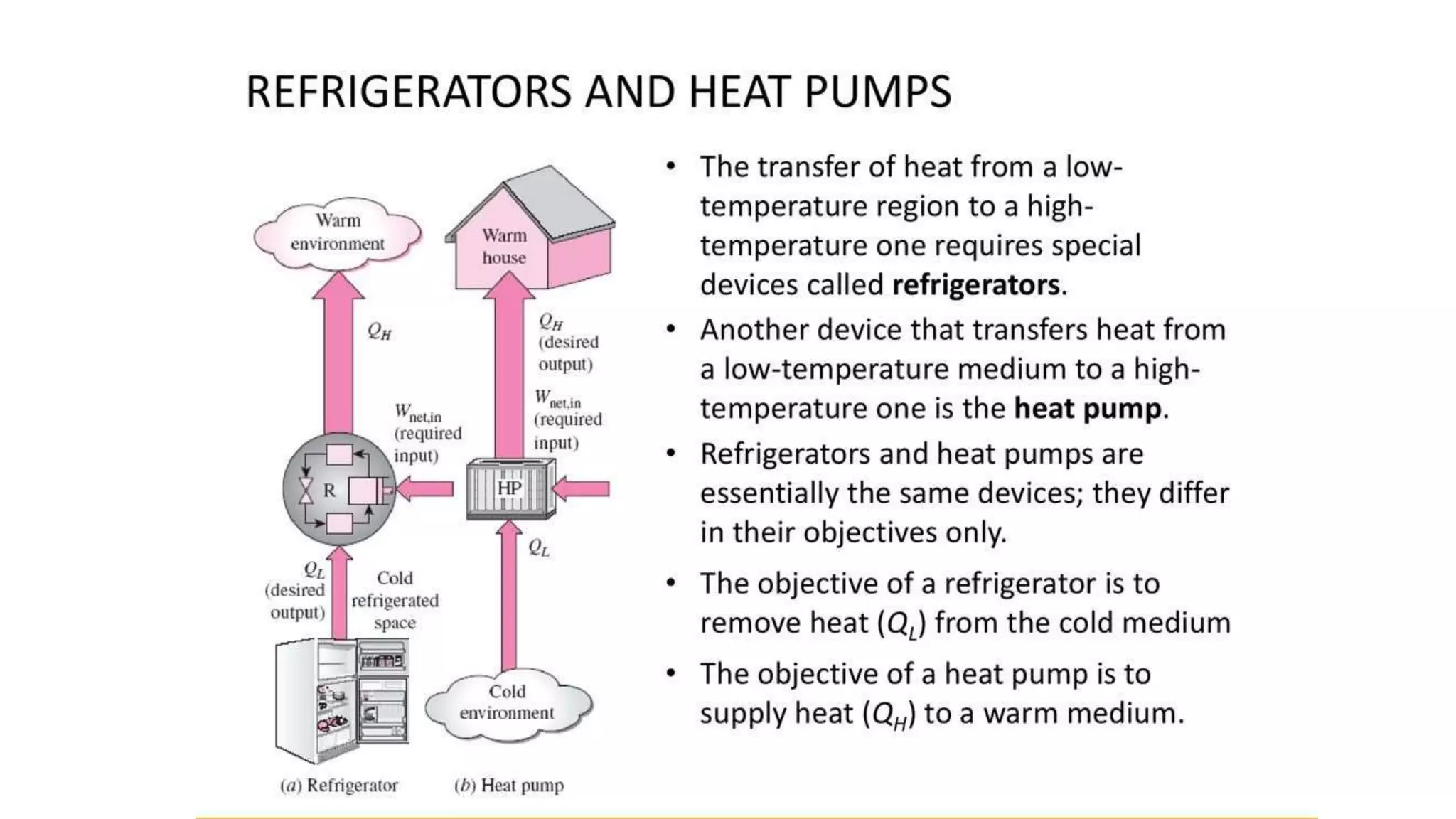
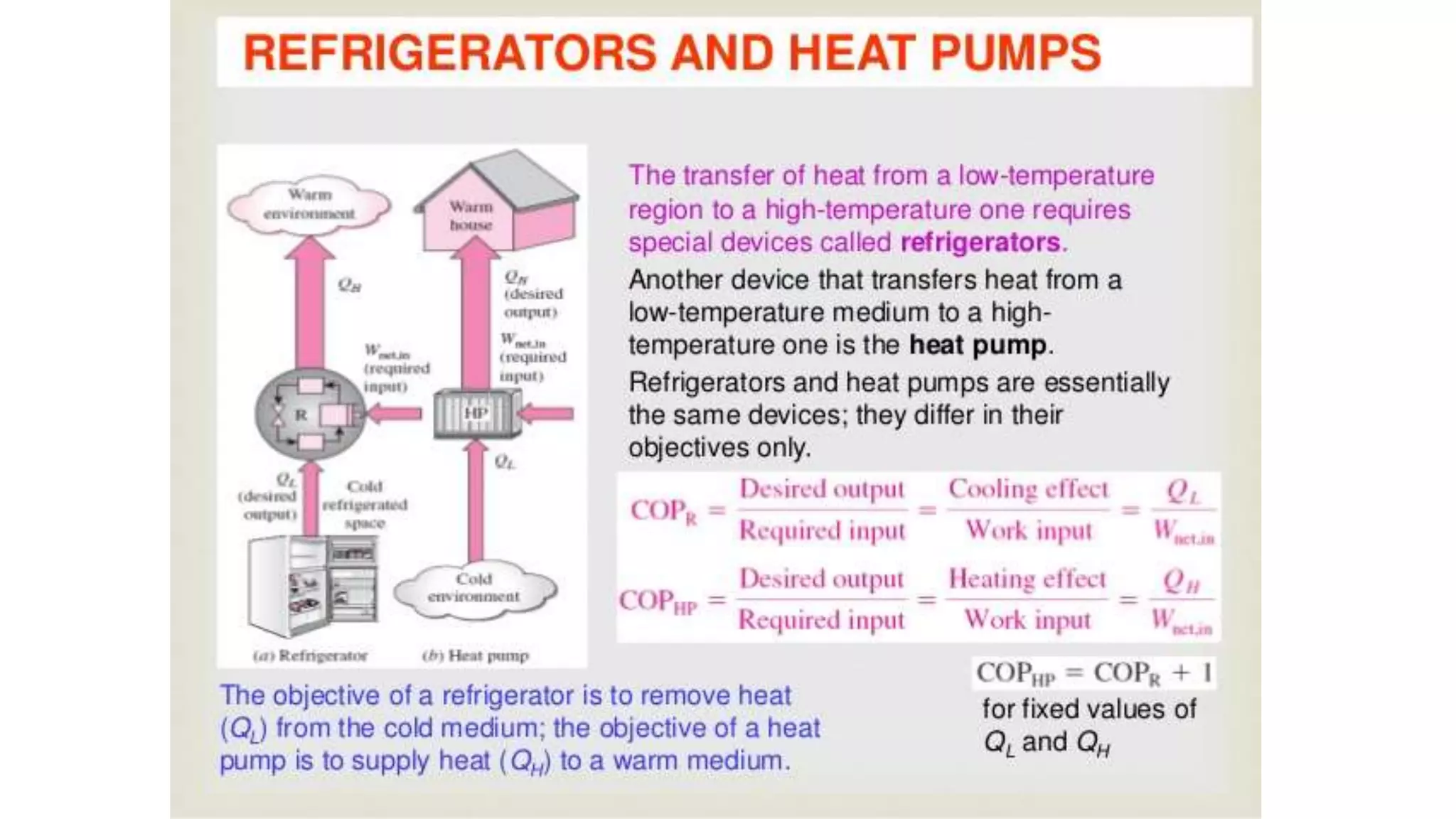
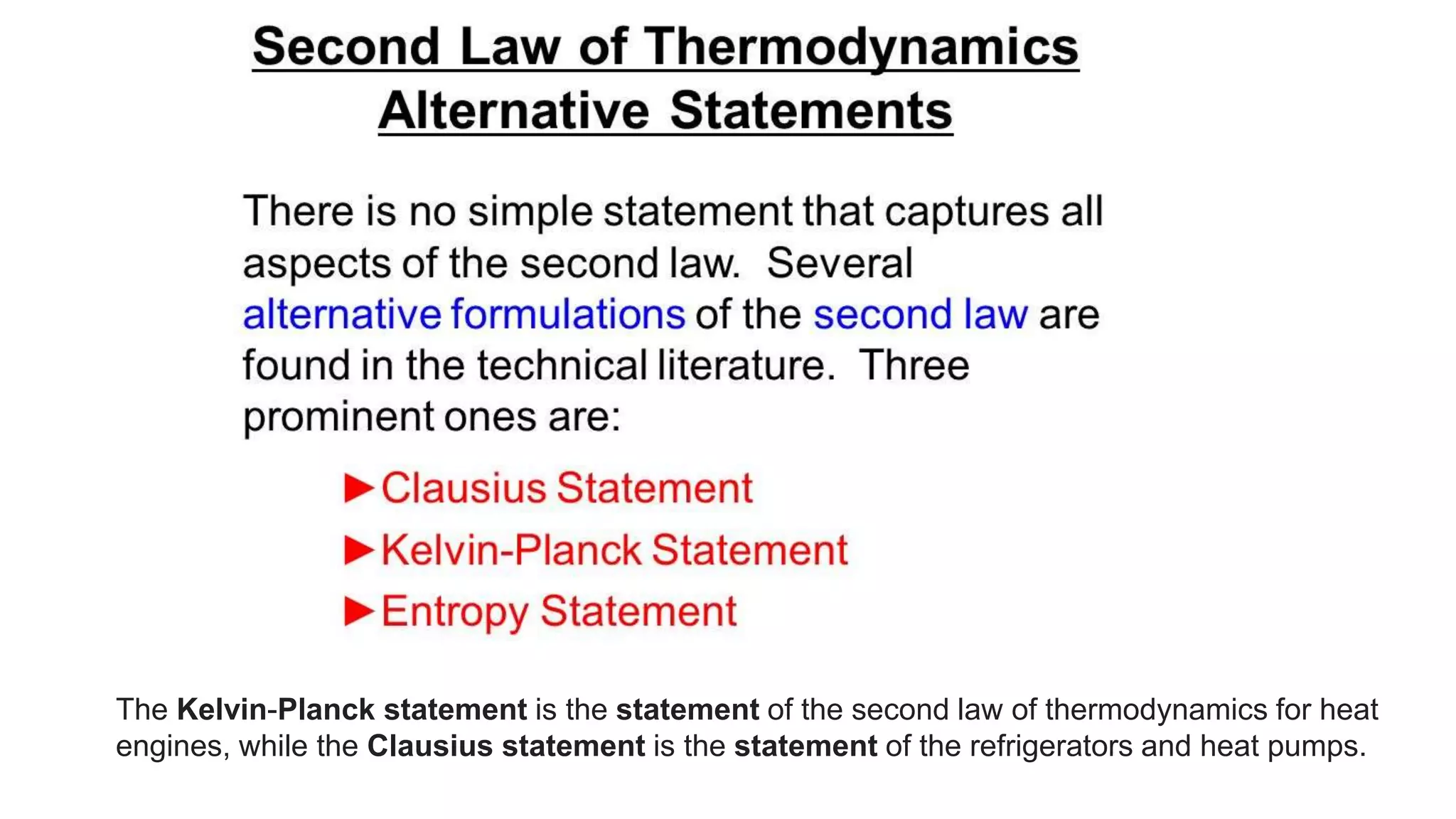
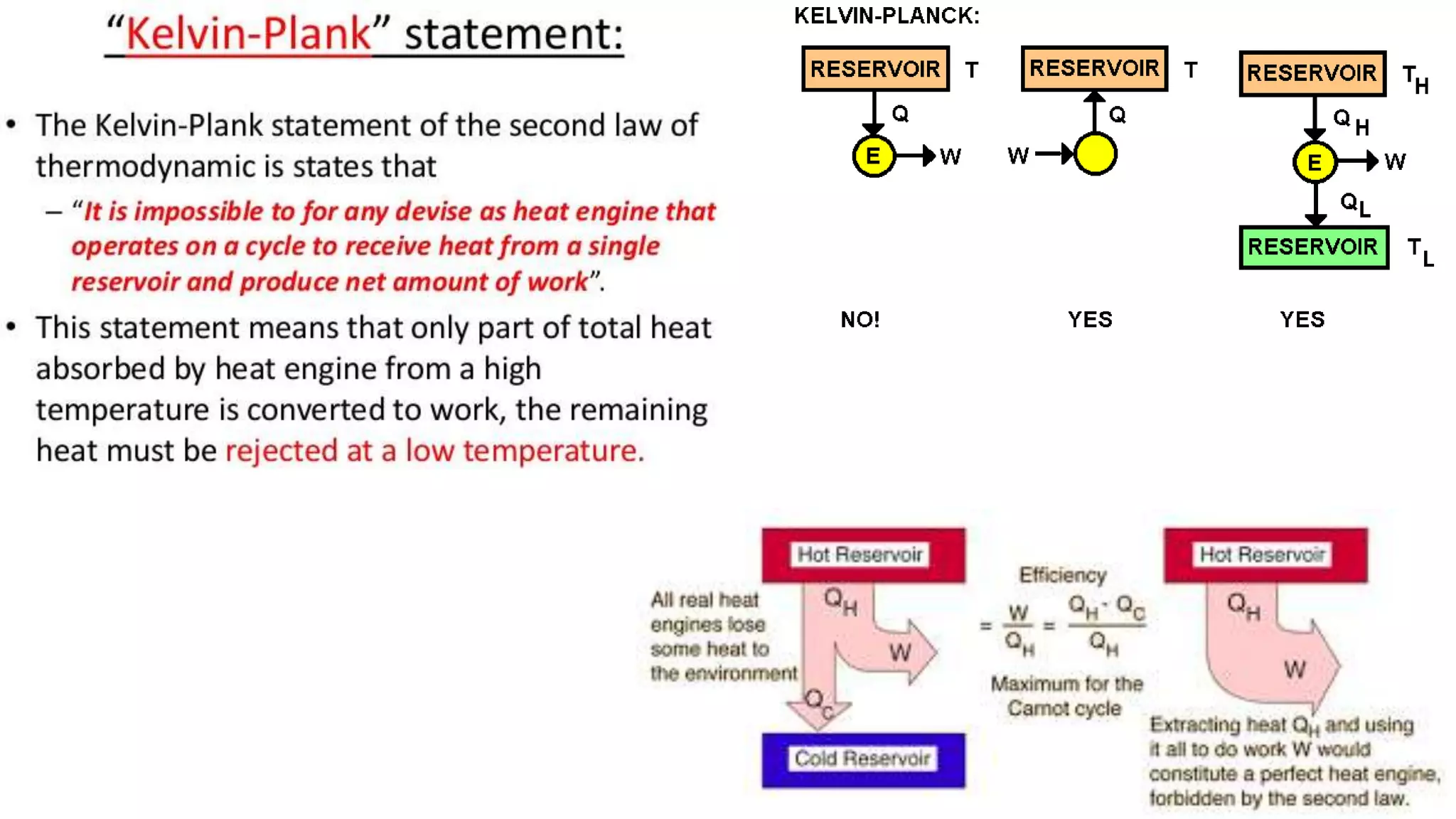
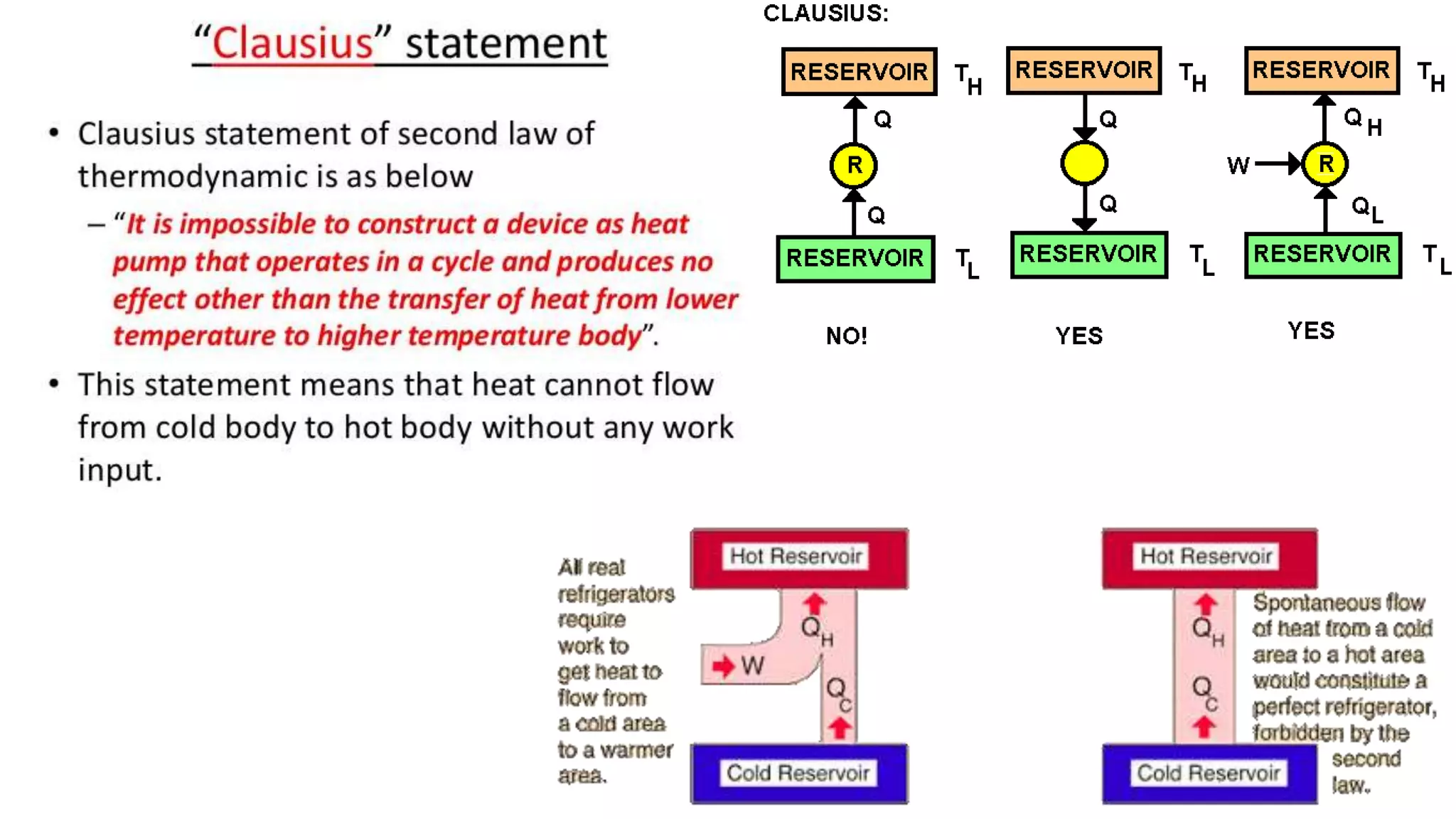
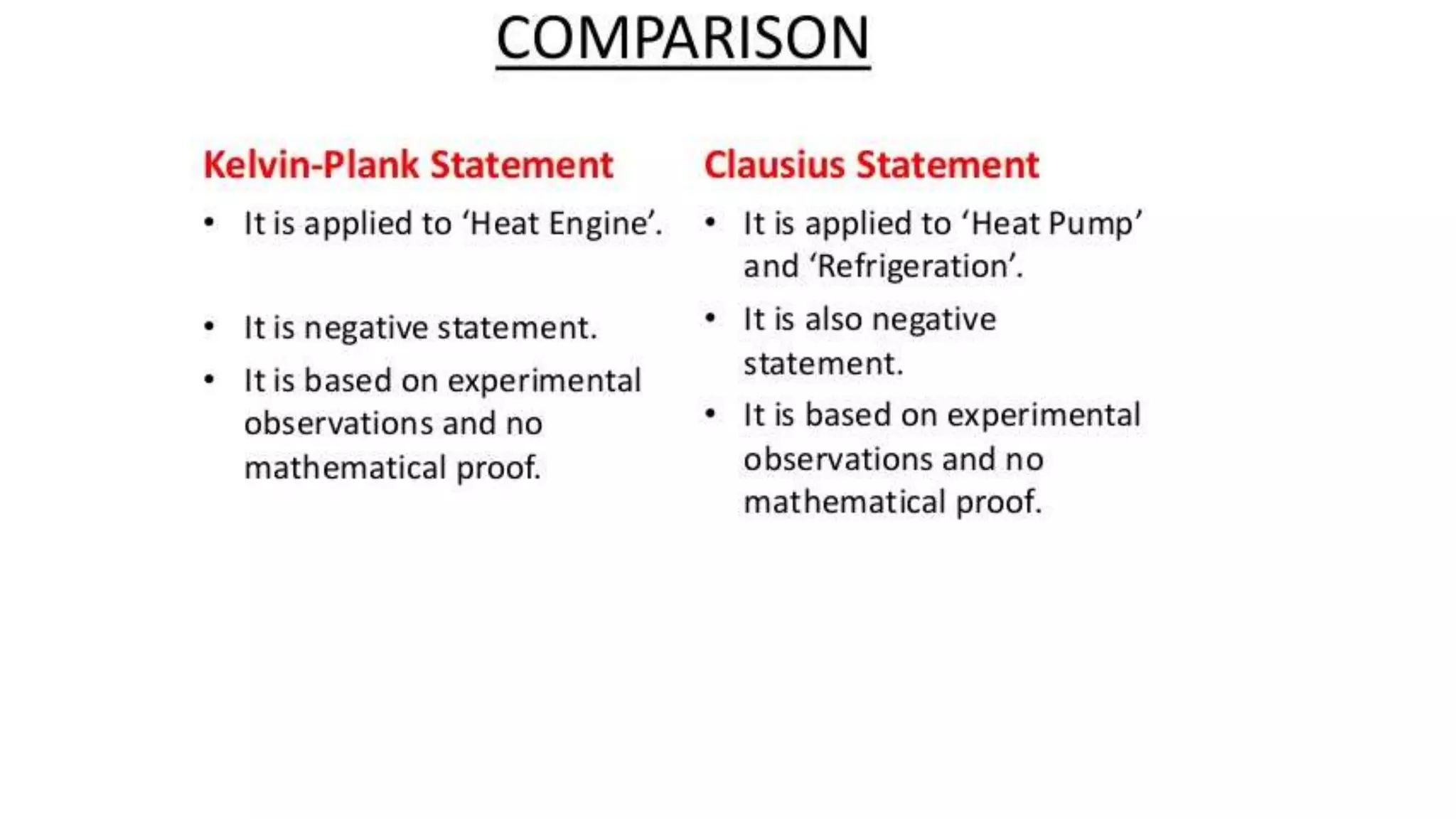
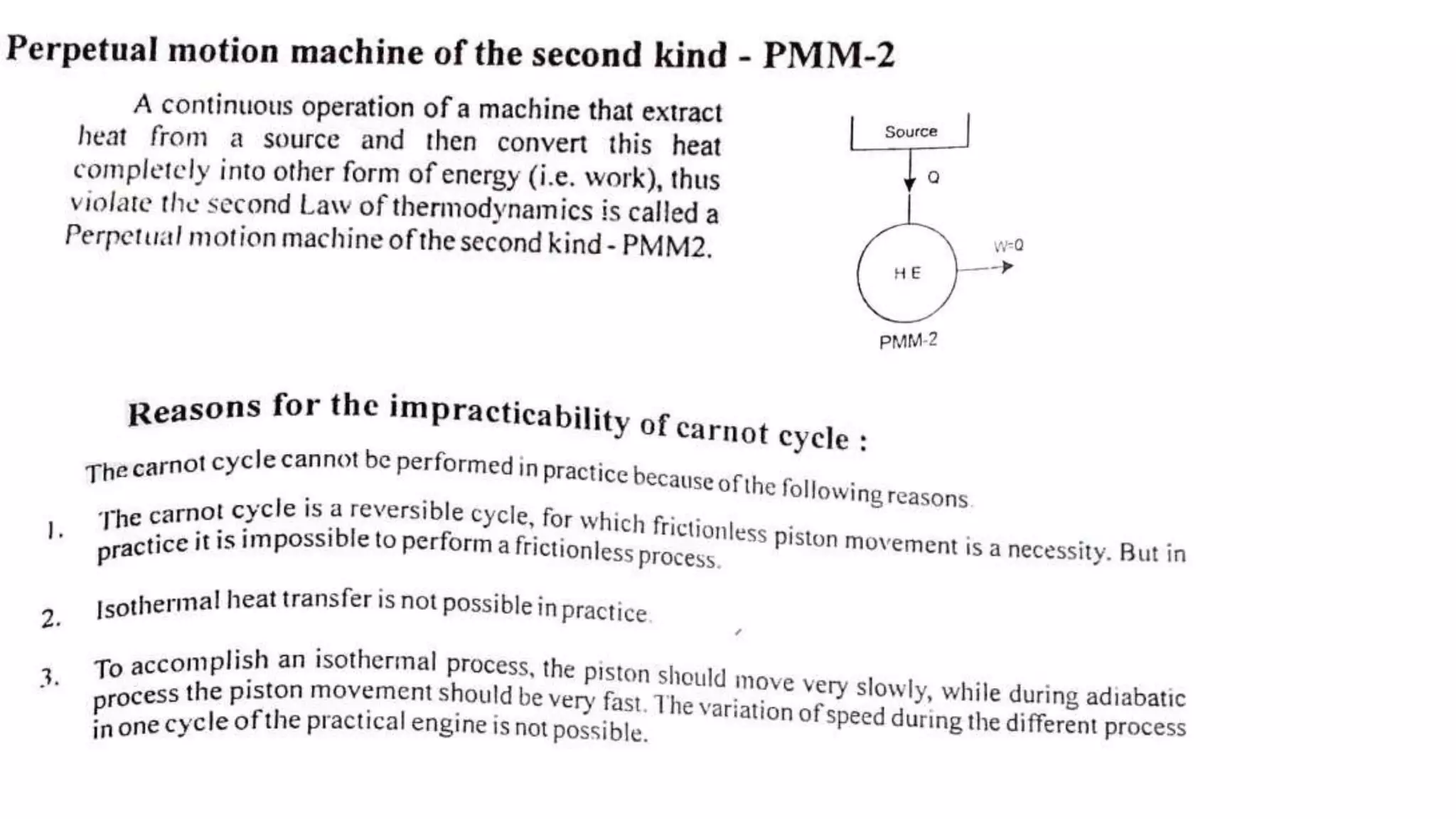
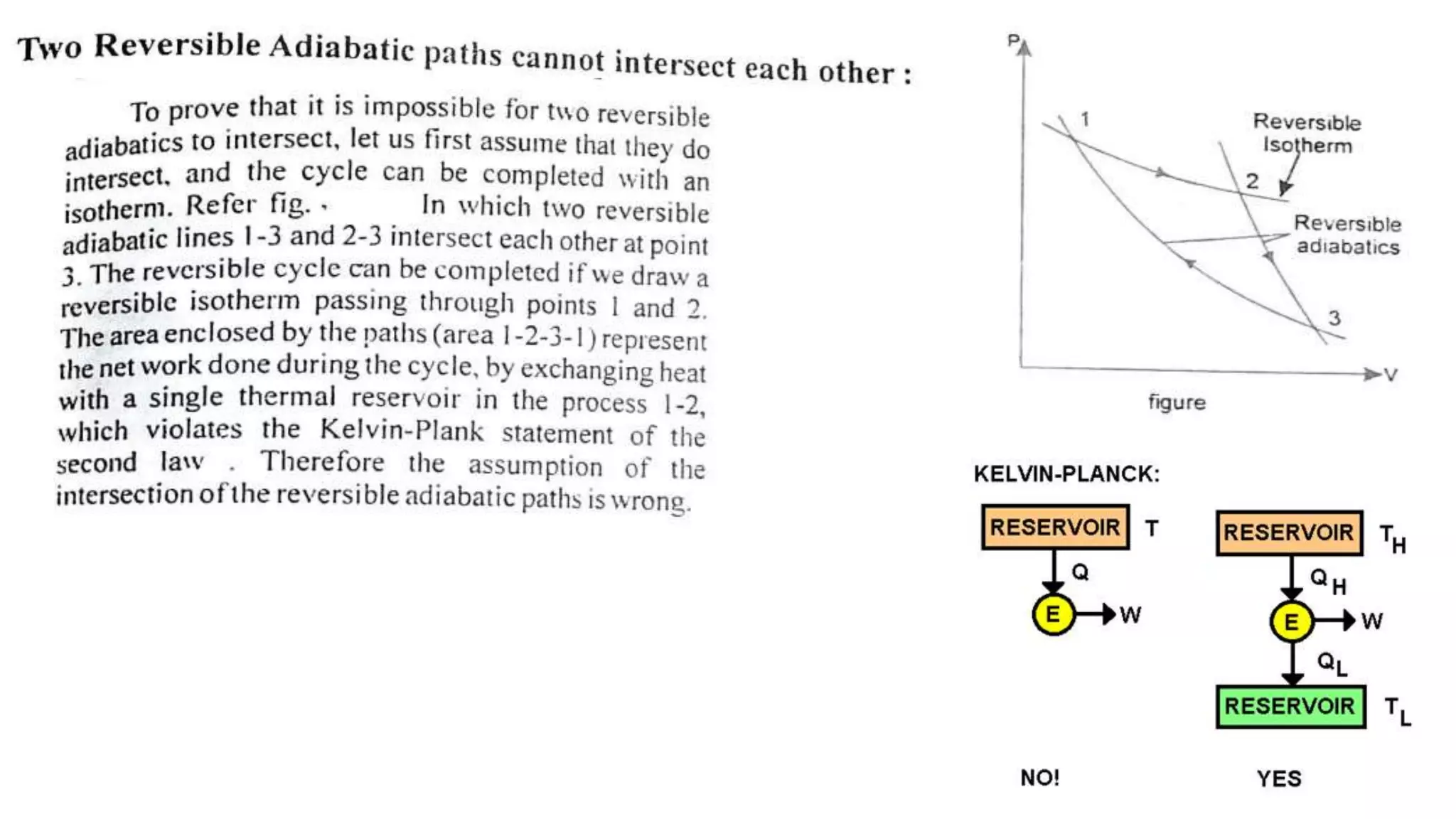
The Kelvin-Planck statement is the statement of the second law of thermodynamics for heat
engines, while the Clausius statement is the statement of the refrigerators and heat pumps.
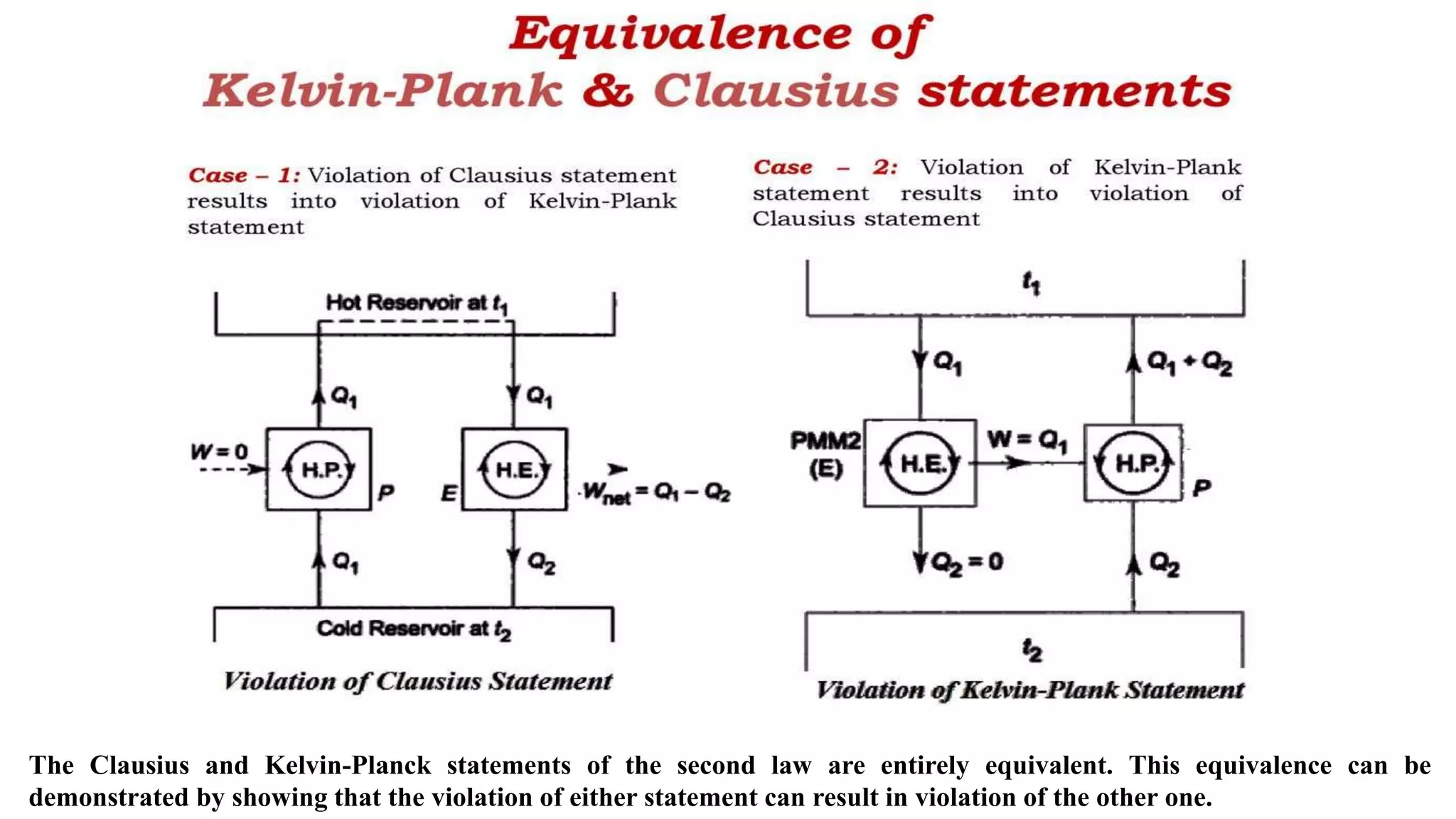
Equivalence of Kelvin-Planck and Clausius Statements
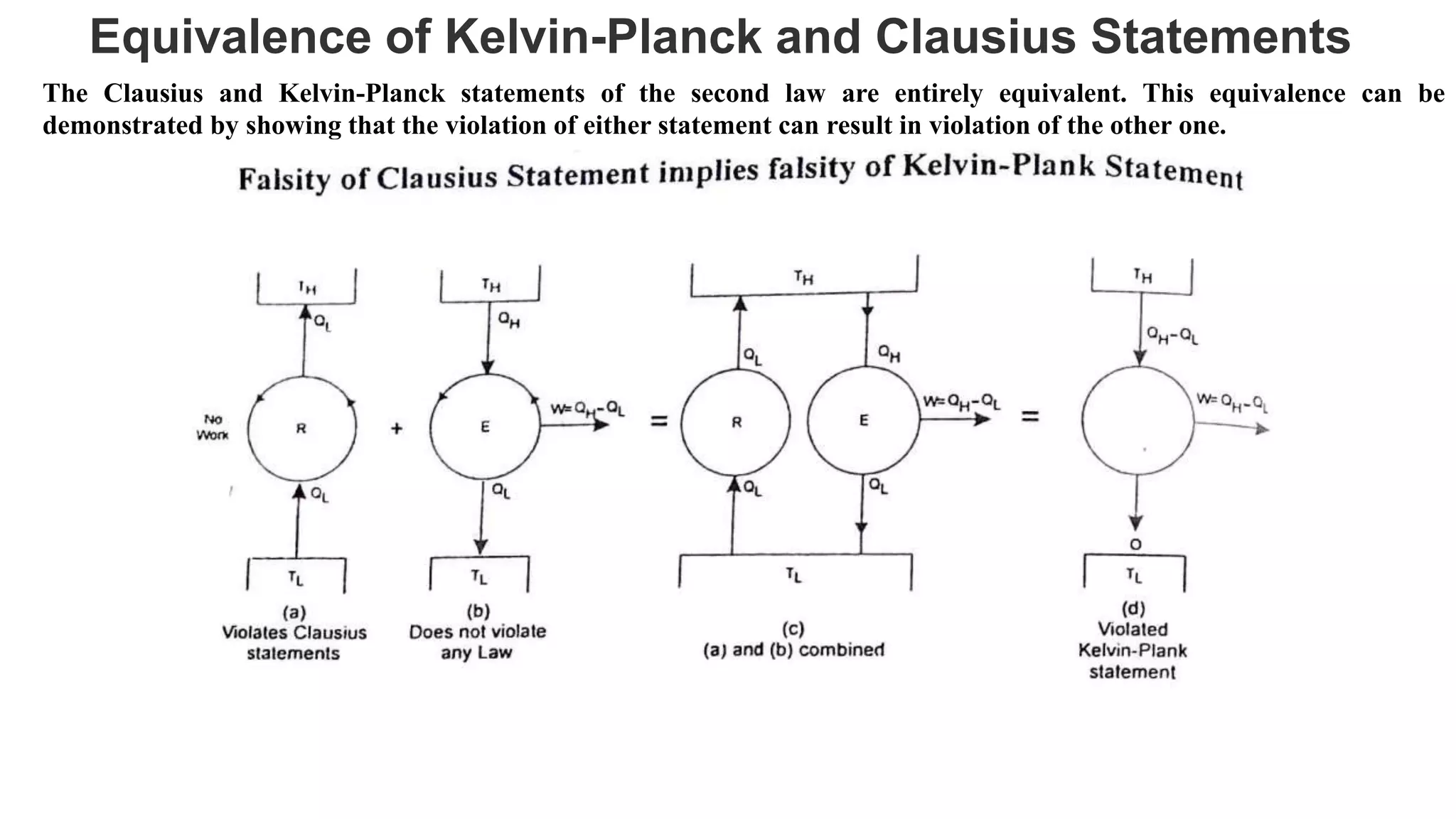
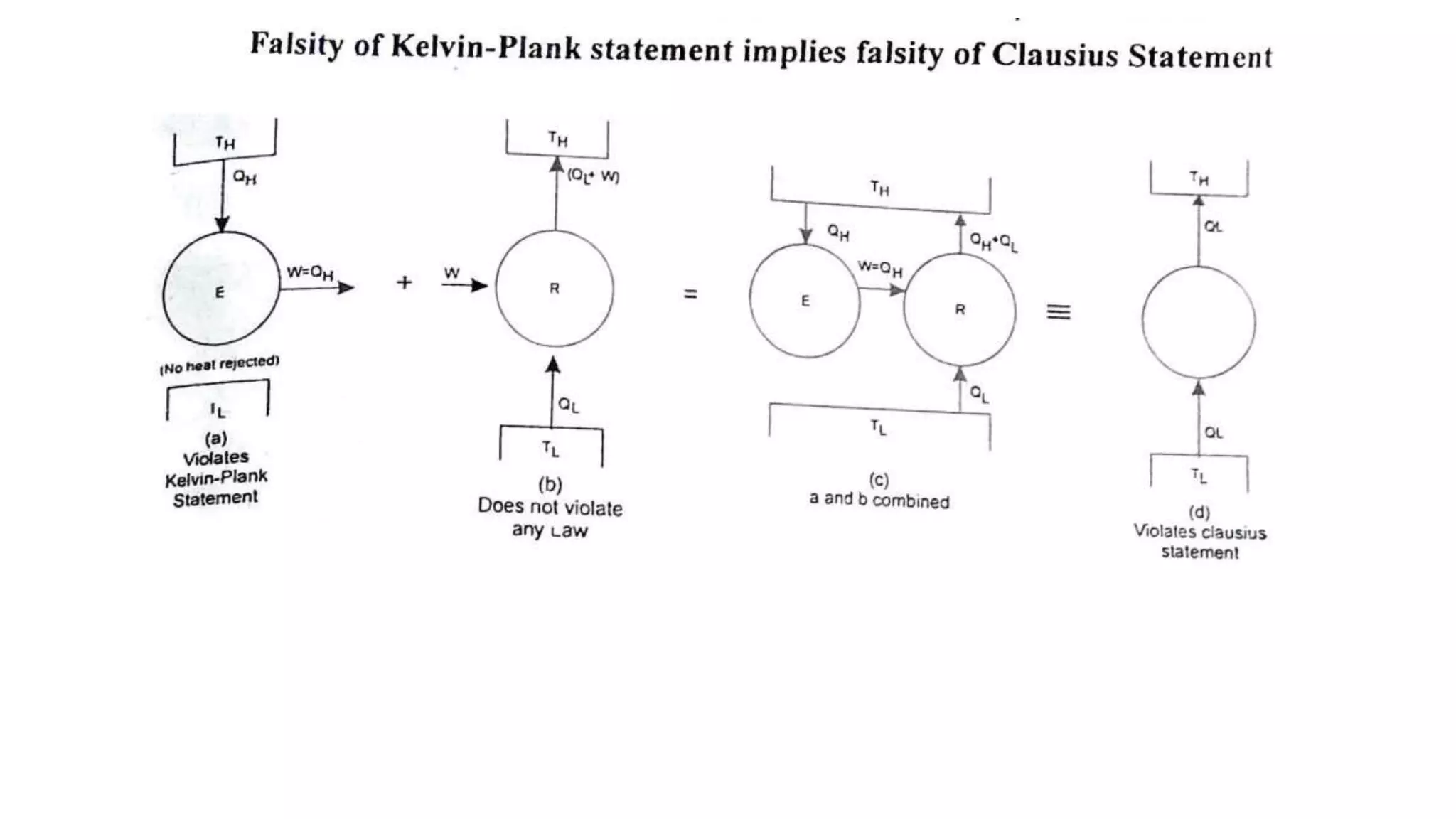
The Clausius and Kelvin-Planck statements of the second law are entirely equivalent. This equivalence can be
demonstrated by showing that the violation of either statement can result in violation of the other one.
The Clausius and Kelvin-Planck statements of the second law are entirely equivalent. This equivalence can be
demonstrated by showing that the violation of either statement can result in violation of the other one.
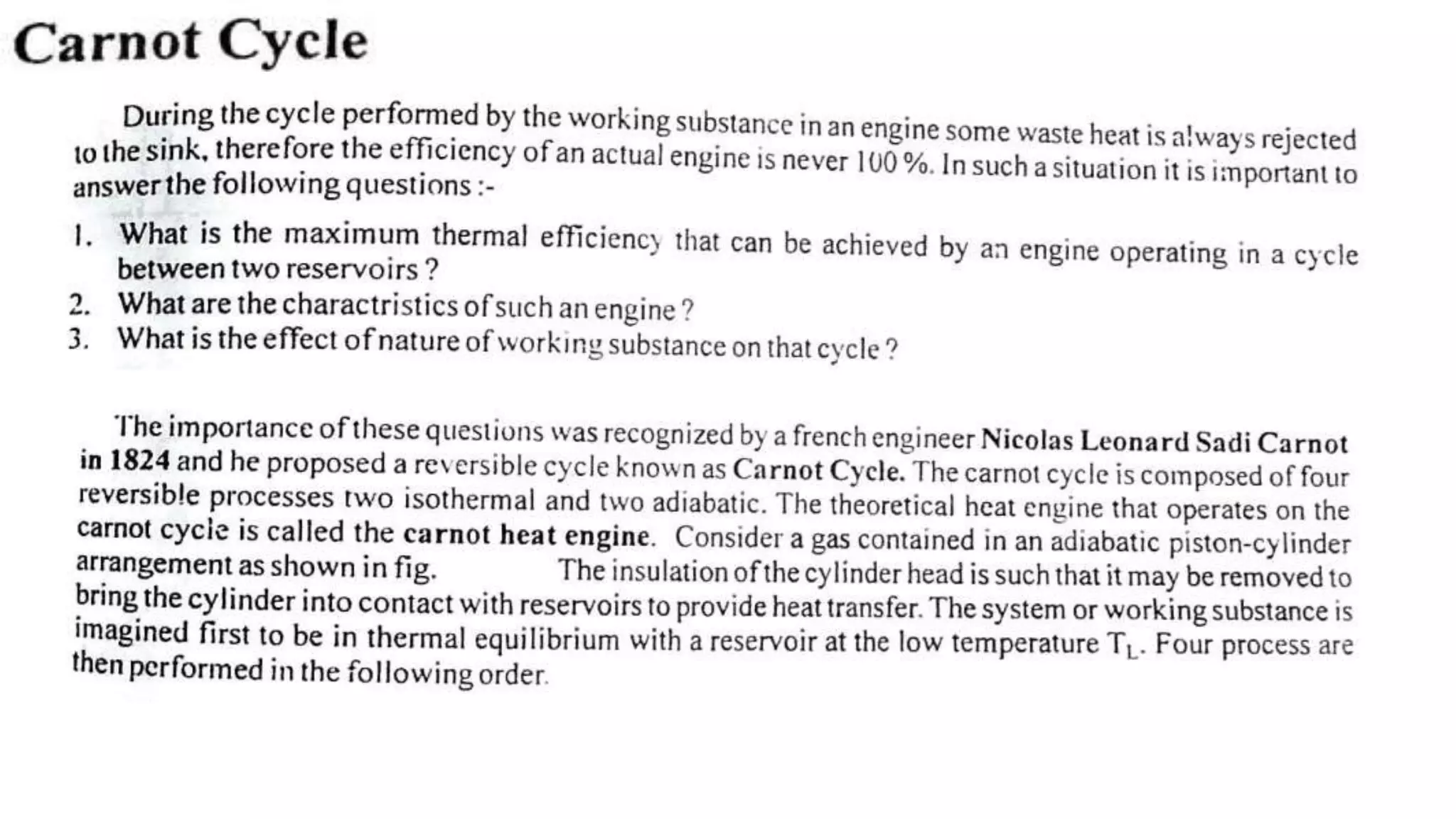
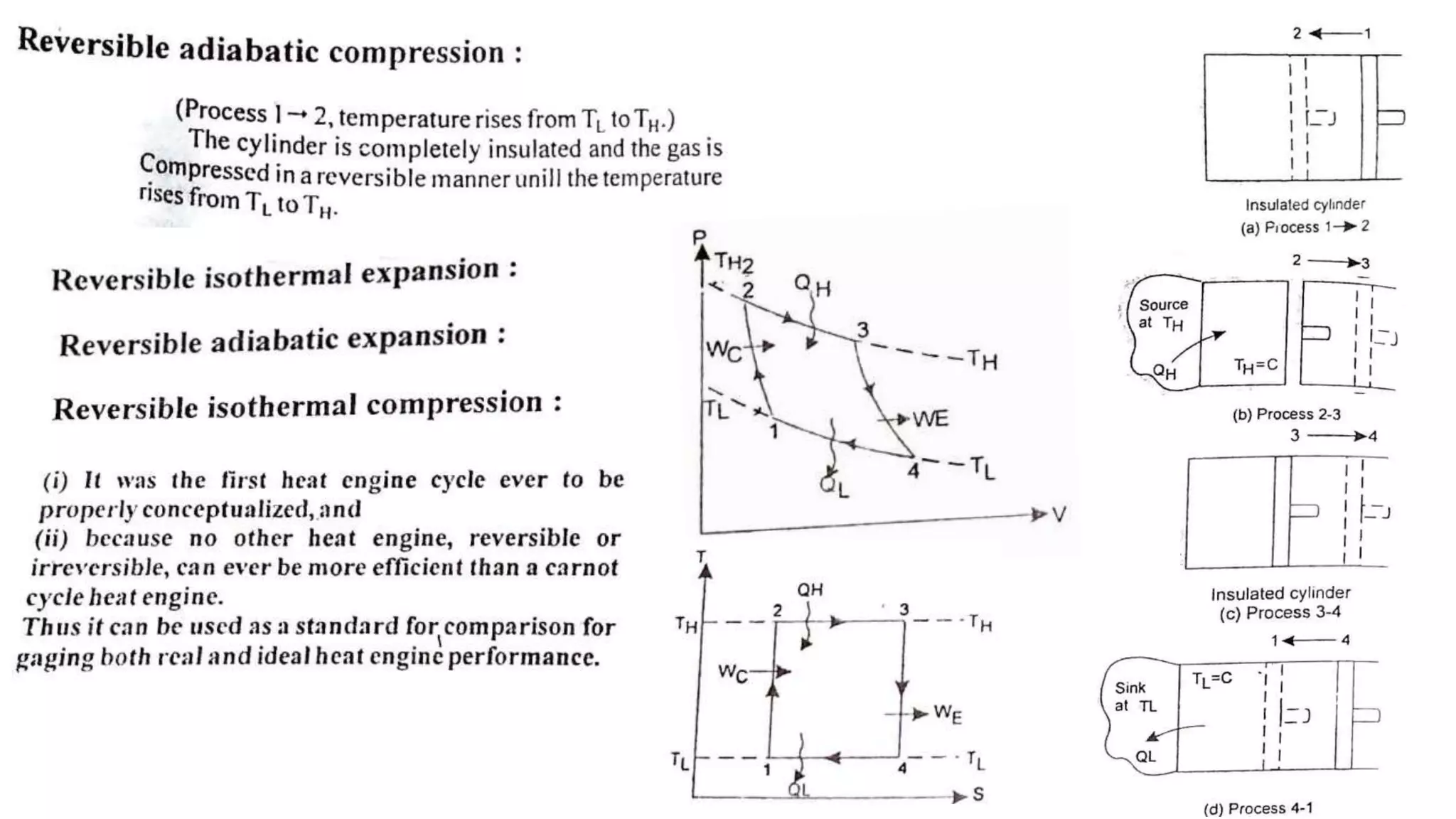
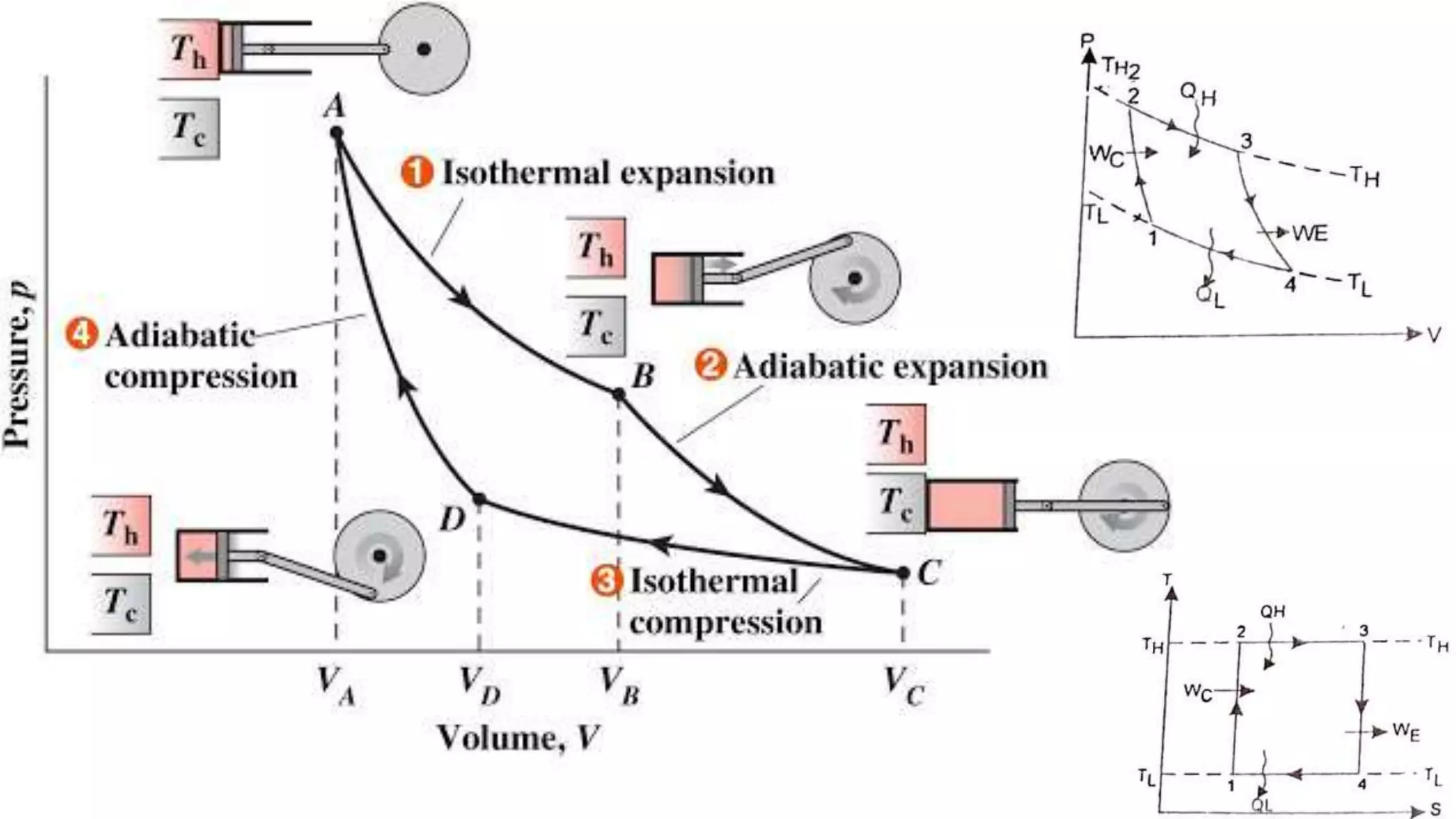
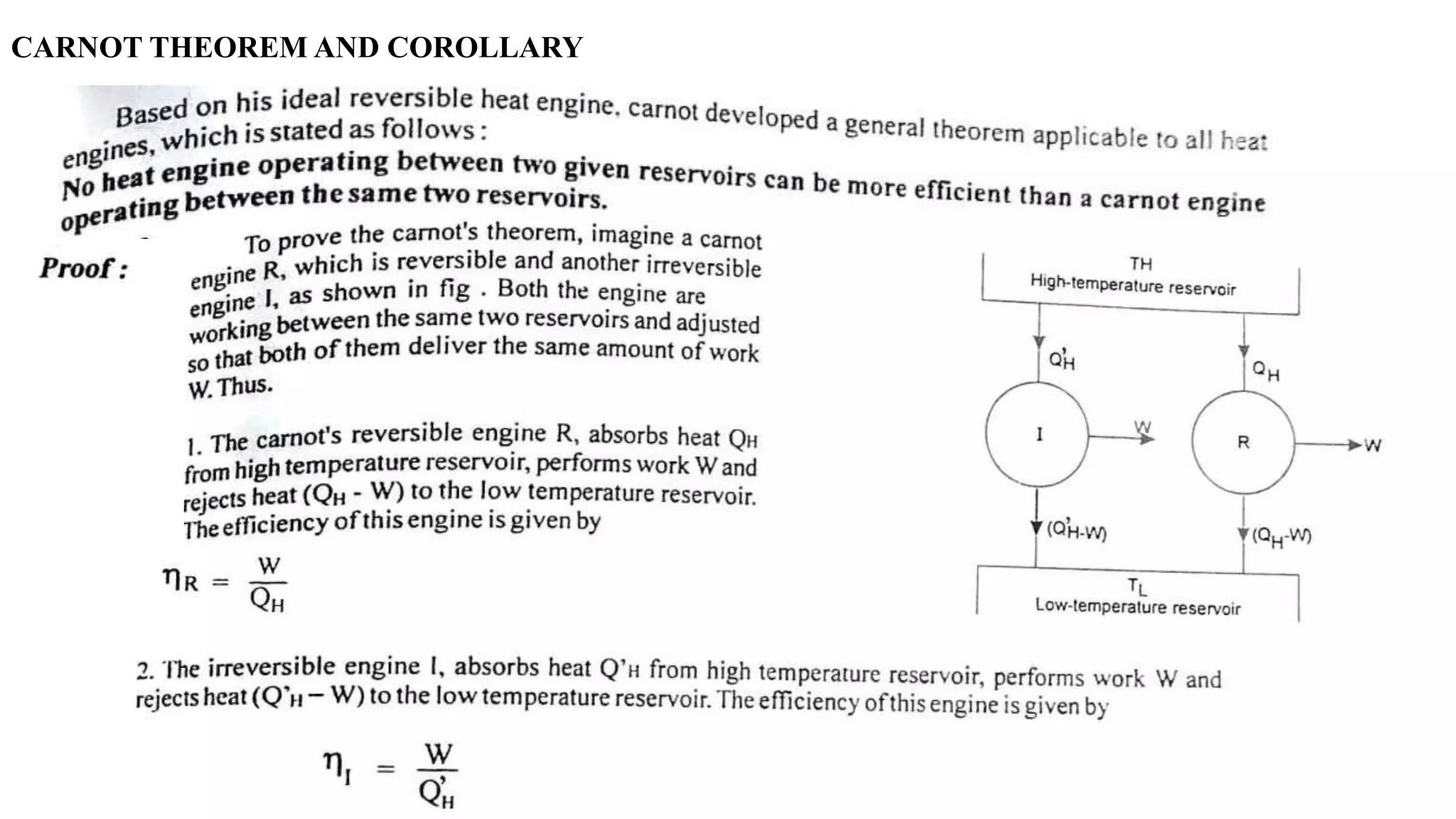
CARNOT THEOREM AND COROLLARY
Basic mechanical engineering(BMET-101/102) unit 2 (part-2) thermodynamics laws by varun pratap singh

Basic mechanical engineering(BMET-101/102) unit 2 (part-2) thermodynamics laws by varun pratap singh

  • 1.
    Basic Mechanical Engineering UNIT-2 Thermodynamics'Laws Part-Two (Second Law of Thermodynamics) By Mr. Varun Pratap Singh
  • 6.
  • 7.
    In thermodynamics andengineering, a heat engine is a system that converts heat to mechanical energy, which can then be used to do mechanical work. It does this by bringing a working substance from a higher state temperature to a lower state temperature.
  • 9.
    Reversible Heat Engine Everyreversible heat engine operating between the same two temperature reservoirs have identical efficiency. This means no matter how a reversible heat engine is constructed or what the working fluid is, its efficiency is the same as all other heat engines working from the same two temperatures.
  • 15.
    The Kelvin-Planck statementis the statement of the second law of thermodynamics for heat engines, while the Clausius statement is the statement of the refrigerators and heat pumps.
  • 19.
    Equivalence of Kelvin-Planckand Clausius Statements The Clausius and Kelvin-Planck statements of the second law are entirely equivalent. This equivalence can be demonstrated by showing that the violation of either statement can result in violation of the other one.
  • 21.
    The Clausius andKelvin-Planck statements of the second law are entirely equivalent. This equivalence can be demonstrated by showing that the violation of either statement can result in violation of the other one.
  • 28.