How to
perform basic
CPR
By: Julie Bobosh
CPR: What is it?
 CPR stands for cardio-pulmonary resuscitation
 Used when someone’s breathing or heartbeat stops
 Helps keep blood flowing to vital organs
 Untrained people can perform without mouth-mouth
Why do I need to know?
Starting CPR in the first minutes after a
heart has stopped can double or even triple
a person’s chance of survival while waiting
for emergency responders
Step 1 – Assess the situation
 Is the environment safe?
 Is the person conscious or unconscious?
 Tap shoulder and ask “Are you ok?
 No response? Call 9-1-1
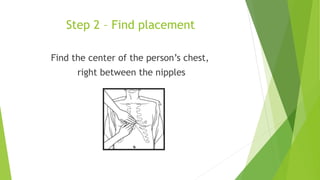
Step 2 – Find placement
Find the center of the person’s chest,
right between the nipples
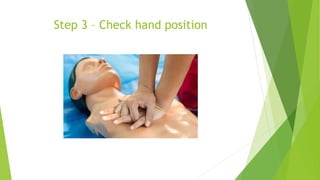
Step 3 – Check hand position
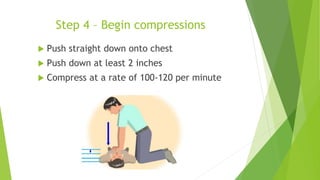
Step 4 – Begin compressions
 Push straight down onto chest
 Push down at least 2 inches
 Compress at a rate of 100-120 per minute
Continue CPR until licensed medical
professional have arrived..
What you need to remember
 Check scene for safety
 Check for consciousness
 Call for help or 9-1-1
 Check placement, position, begin CPR
 Save a life! 
Want to learn more?
Visit your local YMCA or
fire/police department for
training classes

Basic CPR

  • 1.
  • 2.
    CPR: What isit?  CPR stands for cardio-pulmonary resuscitation  Used when someone’s breathing or heartbeat stops  Helps keep blood flowing to vital organs  Untrained people can perform without mouth-mouth
  • 3.
    Why do Ineed to know? Starting CPR in the first minutes after a heart has stopped can double or even triple a person’s chance of survival while waiting for emergency responders
  • 4.
    Step 1 –Assess the situation  Is the environment safe?  Is the person conscious or unconscious?  Tap shoulder and ask “Are you ok?  No response? Call 9-1-1
  • 5.
    Step 2 –Find placement Find the center of the person’s chest, right between the nipples
  • 6.
    Step 3 –Check hand position
  • 7.
    Step 4 –Begin compressions  Push straight down onto chest  Push down at least 2 inches  Compress at a rate of 100-120 per minute
  • 8.
    Continue CPR untillicensed medical professional have arrived..
  • 9.
    What you needto remember  Check scene for safety  Check for consciousness  Call for help or 9-1-1  Check placement, position, begin CPR  Save a life! 
  • 10.
    Want to learnmore? Visit your local YMCA or fire/police department for training classes