A British Library / Klokan Technologies / Moravian Library partnership


Improvements to crowdsourced georeferencing
 using Georeferencer, and its implementation at
              the British Library
            Petr Pridal, Managing Director, Klokan Technologies GmbH
         Kimberly C. Kowal, Lead Curator Digital Mapping, The British Library
                          Vaclav Klusak, Moravian Library
Georeferencer

• Work by Klokan Technologies and the
  Moravian Library, part of the TEMAP.cz
  project.
• A free, on-line tool for georeferencing of map
  images already published on the web in
  digital repositories.
• Provides metadata enrichment and crowd-
  sourcing ability to libraries and other
  institutions for their scanned maps.
Workflow

• The library provides data for their map
  collection in the form of an Excel of CSV file
  (identifier, link to zoomable image,
  metadata).
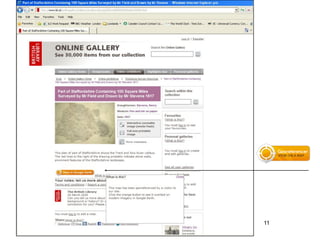
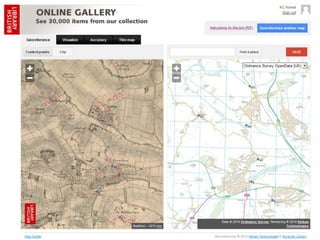
• Members of the general public work on
  georeferencing these maps through a
  customized web interface.
• The library receives geographical
  coordinates for their maps, usable eg. in
  MapRank Search.
Principles

• We use the original image repository.
  Integration & full credit (institution logo).
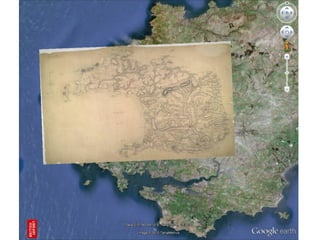
• We provide customized design, progress
  indicators, eye-catching graphs, live widgets,
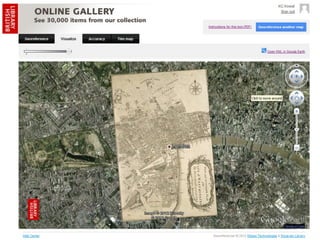
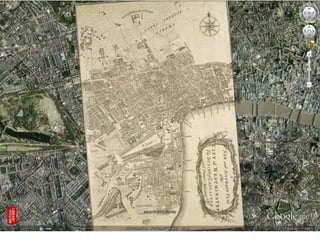
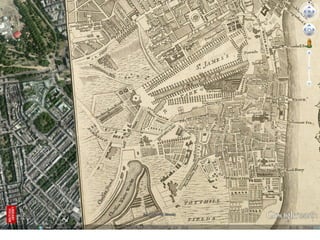
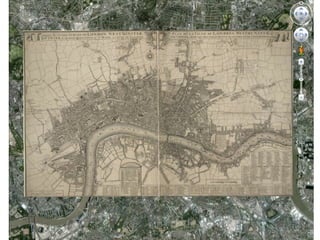
  and 3D visualizations (Google Earth) to
  motivate collaborators.
• We are able to deliver geodata or WMS
  service for the maps.
Status

• Stable. Work in progress.
• Public version at www.georeferencer.org.
• New features public soon:
  –Improved design for the user interface
  –Browser plugins (Chrome/Firefox/..)
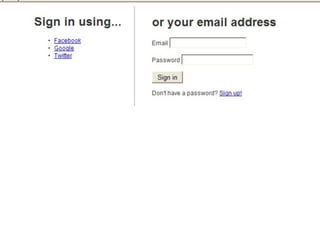
  –Authentication with Google/Facebook/Twitter
• Pilots in libraries
  –Customized design & crowd-sourcing widgets
  –Integration with library web, export for lib. catalog
Quick Facts
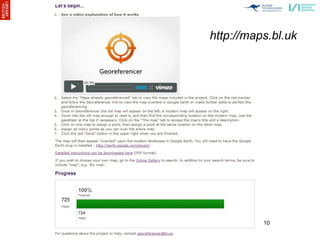
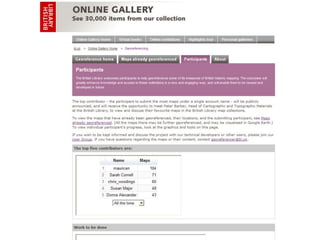
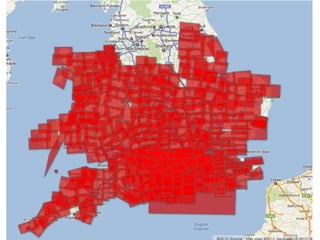
• 725 maps assigned spatial metadata
• finished in 5 days: 13-18 February 2012
• Publicity minimal – social media *key*
• ~90 participants
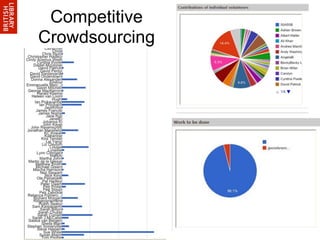
• Top five completed half the work
• Data quality good: <3% had errors >.
  005
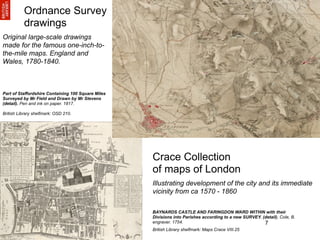
Ordnance Survey
          drawings
Original large-scale drawings
made for the famous one-inch-to-
the-mile maps. England and
Wales, 1780-1840.


Part of Staffordshire Containing 100 Square Miles
Surveyed by Mr Field and Drawn by Mr Stevens
(detail). Pen and ink on paper. 1817.

British Library shelfmark: OSD 210.


                                                    Crace Collection
                                                    of maps of London
                                                    Illustrating development of the city and its immediate
                                                    vicinity from ca 1570 - 1860

                                                    BAYNARDS CASTLE AND FARINGDON WARD WITHIN with their
                                                    Divisions into Parishes according to a new SURVEY. (detail). Cole, B.
                                                    engraver. 1754.                                     7
                                                    British Library shelfmark: Maps Crace VIII.25
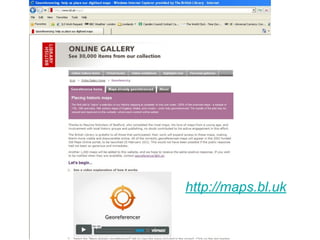
http://maps.bl.uk

             8
http://player.vimeo.com/video/36419466
http://maps.bl.uk


          10
11
12
14
15
16
17
19
20
21
Competitive
Crowdsourcing


                22
23
24
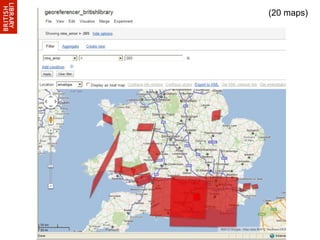
(20 maps)


25
What made it work…
Content relevant
Accessibility and convenience of application
Activity engaging
Immediate results and feedback
Competitive crowdsourcing tools
Recognition and visible overall contribution
Thank you.


             27

Barcelona georeferencer

  • 1.
    A British Library/ Klokan Technologies / Moravian Library partnership Improvements to crowdsourced georeferencing using Georeferencer, and its implementation at the British Library Petr Pridal, Managing Director, Klokan Technologies GmbH Kimberly C. Kowal, Lead Curator Digital Mapping, The British Library Vaclav Klusak, Moravian Library
  • 2.
    Georeferencer • Work byKlokan Technologies and the Moravian Library, part of the TEMAP.cz project. • A free, on-line tool for georeferencing of map images already published on the web in digital repositories. • Provides metadata enrichment and crowd- sourcing ability to libraries and other institutions for their scanned maps.
  • 3.
    Workflow • The libraryprovides data for their map collection in the form of an Excel of CSV file (identifier, link to zoomable image, metadata). • Members of the general public work on georeferencing these maps through a customized web interface. • The library receives geographical coordinates for their maps, usable eg. in MapRank Search.
  • 4.
    Principles • We usethe original image repository. Integration & full credit (institution logo). • We provide customized design, progress indicators, eye-catching graphs, live widgets, and 3D visualizations (Google Earth) to motivate collaborators. • We are able to deliver geodata or WMS service for the maps.
  • 5.
    Status • Stable. Workin progress. • Public version at www.georeferencer.org. • New features public soon: –Improved design for the user interface –Browser plugins (Chrome/Firefox/..) –Authentication with Google/Facebook/Twitter • Pilots in libraries –Customized design & crowd-sourcing widgets –Integration with library web, export for lib. catalog
  • 6.
    Quick Facts • 725maps assigned spatial metadata • finished in 5 days: 13-18 February 2012 • Publicity minimal – social media *key* • ~90 participants • Top five completed half the work • Data quality good: <3% had errors >. 005
  • 7.
    Ordnance Survey drawings Original large-scale drawings made for the famous one-inch-to- the-mile maps. England and Wales, 1780-1840. Part of Staffordshire Containing 100 Square Miles Surveyed by Mr Field and Drawn by Mr Stevens (detail). Pen and ink on paper. 1817. British Library shelfmark: OSD 210. Crace Collection of maps of London Illustrating development of the city and its immediate vicinity from ca 1570 - 1860 BAYNARDS CASTLE AND FARINGDON WARD WITHIN with their Divisions into Parishes according to a new SURVEY. (detail). Cole, B. engraver. 1754. 7 British Library shelfmark: Maps Crace VIII.25
  • 8.
  • 9.
  • 10.
  • 11.
  • 12.
  • 14.
  • 15.
  • 16.
  • 17.
  • 19.
  • 20.
  • 21.
  • 22.
  • 23.
  • 24.
  • 25.
  • 26.
    What made itwork… Content relevant Accessibility and convenience of application Activity engaging Immediate results and feedback Competitive crowdsourcing tools Recognition and visible overall contribution
  • 27.