Maps for Local Studies
LocScot Dayschool and AGM - National Library of Scotland
Weds 24 April 2013
10.00 Welcome and introduction (CILIP)
10.15 Maps for local history (Chris). An overview of historical maps of Scotland, their purposes, audiences, content and
value for local studies.
11.00 Cataloguing, metadata, and finding aids (Paula).
11.45 AGM (CILIP)
12.15 Lunch
13.30 Split into two groups: 1. Storage, map stacks, classification, and conservation (Paula)
2. Hands-on viewing of specific maps and finding aids (Chris)
(Groups swap around after half an hour)
14.30 Digital mapping and online resources (Chris). Including a brief look at map scanning, online delivery and
georeferencing, and then primarily looking at the best online sources of maps and related info (NLS Map Images, Old
Maps Online, ScotlandsPlaces, Map Curators' Toolbox)
15.30 Questions and wrap-up discussion
16.00 Finish
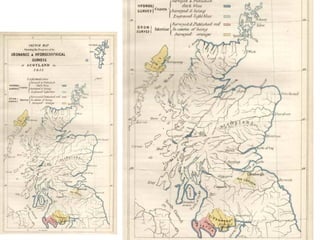
Maps for Local History
Rural Maps:
County Maps
Estate Maps
Enclosure / Commonty
Legal disputes
Town Plans
Military Maps
Coastal charts
Transportation Maps -
Canals / railways / roads
Ordnance Survey :
History
County Series
National Grid
Scales, map contents and editions
Legends and abbreviations
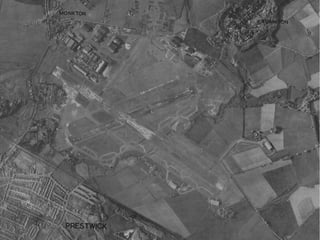
Air photos
General principles. Copyright
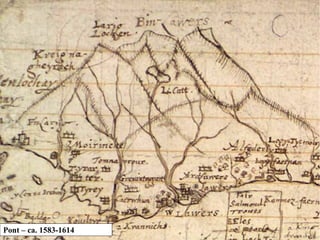
Pont – ca. 1583-1614
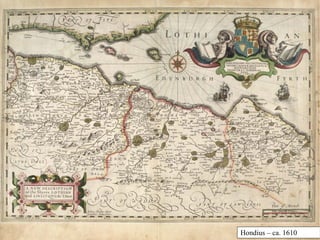
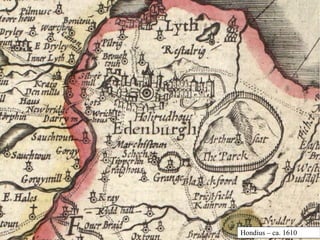
Hondius – ca. 1610
Hondius – ca. 1610
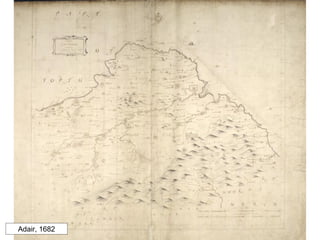
Adair, 1682
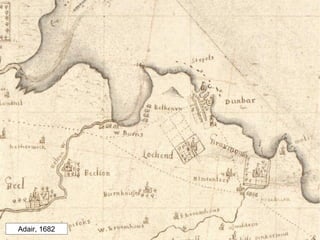
Adair, 1682
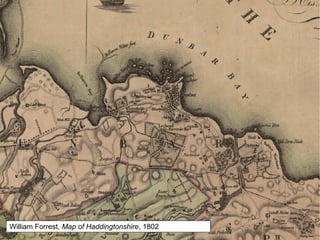
William Forrest, Map of Haddingtonshire, 1802
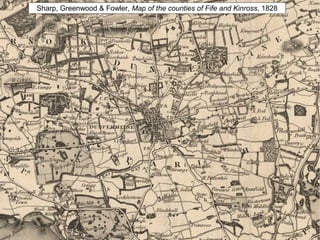
Sharp, Greenwood & Fowler, Map of the counties of Fife and Kinross, 1828
John Rocque, A Plan of ye Garden Plantation of Drumlangrig [sic] in Scotland,
the Seat of his Grace the Duke of Queensburry (1739)
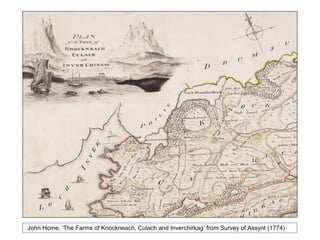
John Home, ā€˜The Farms of Knockneach, Culach and Inverchirkag’ from Survey of Assynt (1774)
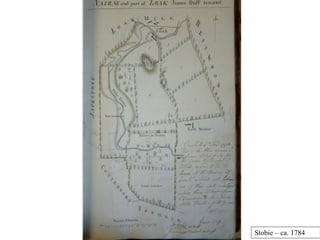
Stobie – ca. 1784
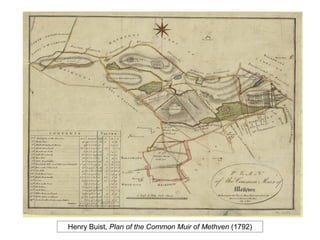
Henry Buist, Plan of the Common Muir of Methven (1792)
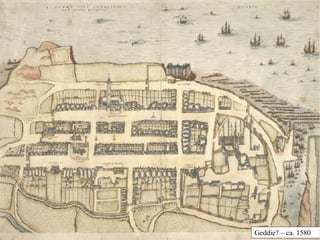
Geddie? – ca. 1580
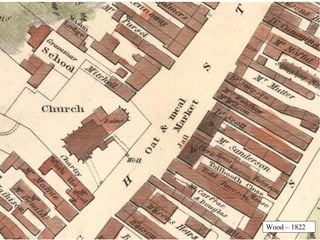
Wood – 1822
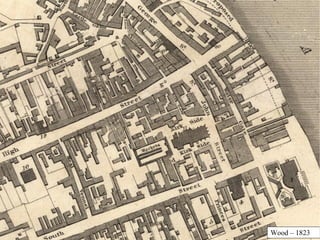
Wood – 1823
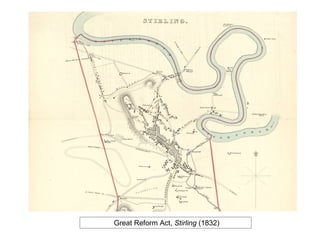
Great Reform Act, Stirling (1832)
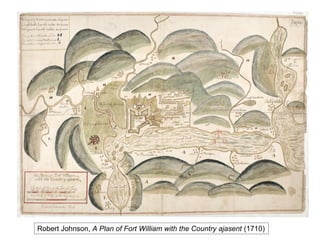
Robert Johnson, A Plan of Fort William with the Country ajasent (1710)
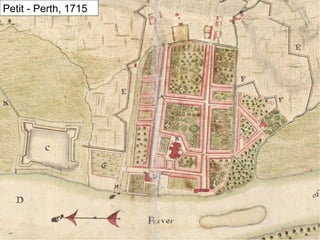
Petit - Perth, 1715
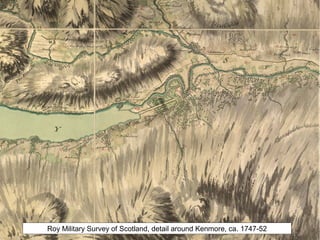
Roy Military Survey of Scotland, detail around Kenmore, ca. 1747-52
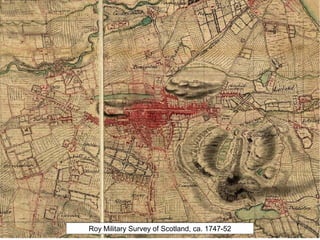
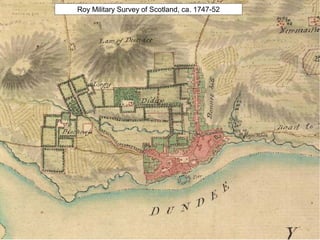
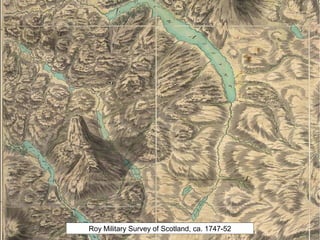
Roy Military Survey of Scotland, ca. 1747-52
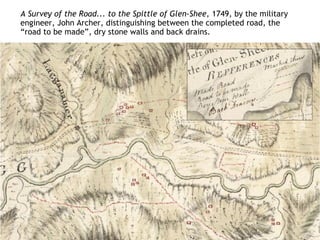
A Survey of the Road... to the Spittle of Glen-Shee, 1749, by the military
engineer, John Archer, distinguishing between the completed road, the
ā€œroad to be madeā€, dry stone walls and back drains.
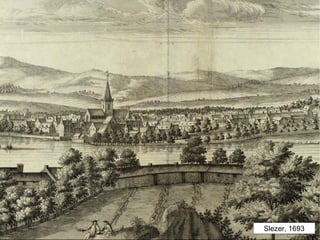
Slezer, 1693
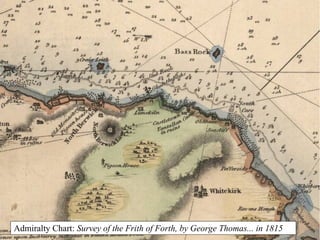
Admiralty Chart: Survey of the Frith of Forth, by George Thomas... in 1815
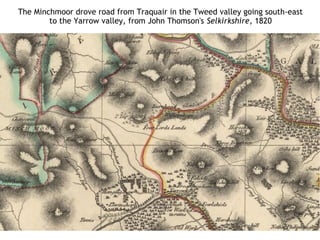
The Minchmoor drove road from Traquair in the Tweed valley going south-east
to the Yarrow valley, from John Thomson's Selkirkshire, 1820
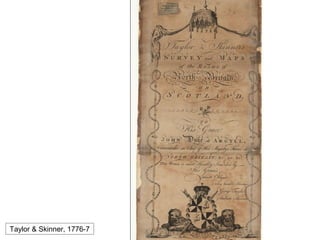
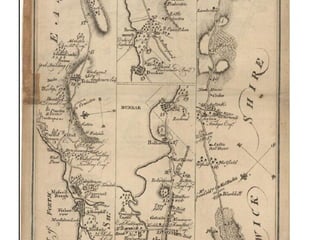
Taylor & Skinner, 1776-7
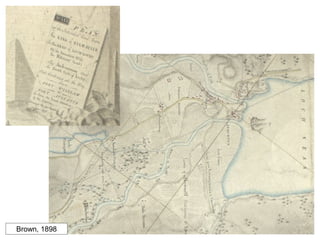
Brown, 1898
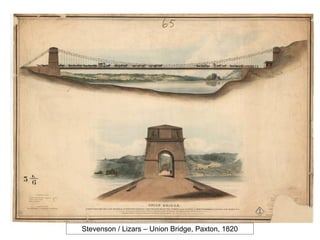
Stevenson / Lizars – Union Bridge, Paxton, 1820
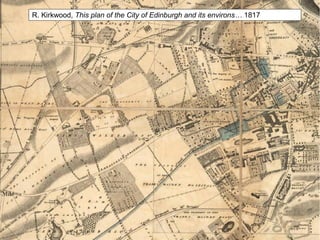
R. Kirkwood, This plan of the City of Edinburgh and its environs… 1817
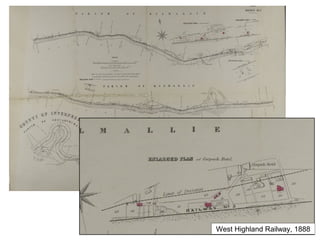
West Highland Railway, 1888
Ordnance Survey
1.History
2.County Series
3.National Grid
4.Scales, map contents and editions
5.Legends and abbreviations
Ordnance Survey
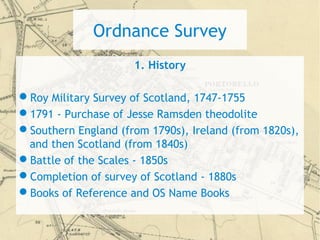
1. History
Roy Military Survey of Scotland, 1747-1755
1791 - Purchase of Jesse Ramsden theodolite
Southern England (from 1790s), Ireland (from 1820s),
and then Scotland (from 1840s)
Battle of the Scales - 1850s
Completion of survey of Scotland - 1880s
Books of Reference and OS Name Books
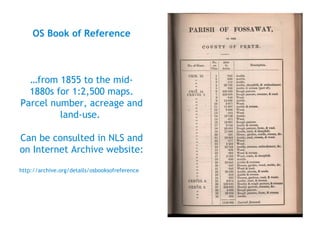
OS Book of Reference
…from 1855 to the mid-
1880s for 1:2,500 maps.
Parcel number, acreage and
land-use.
Can be consulted in NLS and
on Internet Archive website:
http://archive.org/details/osbooksofreference
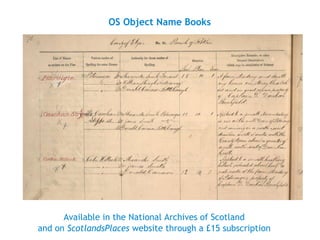
OS Object Name Books
Available in the National Archives of Scotland
and on ScotlandsPlaces website through a £15 subscription
Ordnance Survey
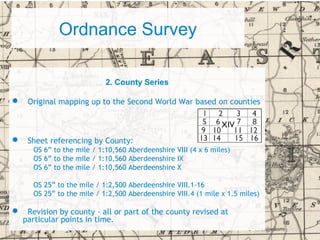
2. County Series
 Original mapping up to the Second World War based on counties
 Sheet referencing by County:
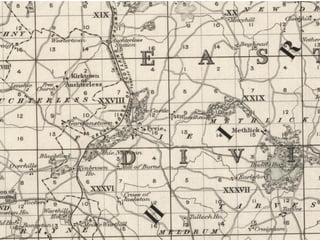
OS 6ā€ to the mile / 1:10,560 Aberdeenshire VIII (4 x 6 miles)
OS 6ā€ to the mile / 1:10,560 Aberdeenshire IX
OS 6ā€ to the mile / 1:10,560 Aberdeenshire X
OS 25ā€ to the mile / 1:2,500 Aberdeenshire VIII.1-16
OS 25ā€ to the mile / 1:2,500 Aberdeenshire VIII.4 (1 mile x 1.5 miles)
 Revision by county - all or part of the county revised at
particular points in time.
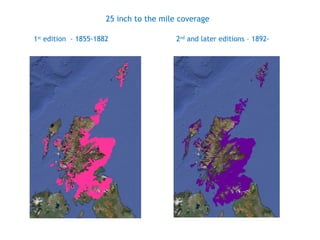
25 inch to the mile coverage
1st
edition - 1855-1882 2nd
and later editions – 1892-
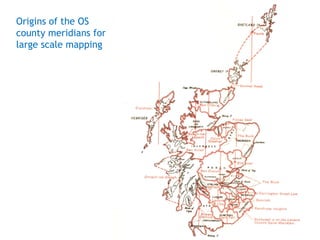
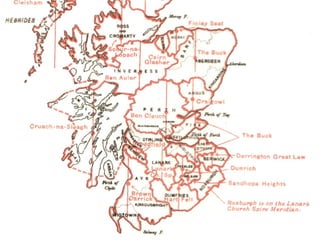
Origins of the OS
county meridians for
large scale mapping
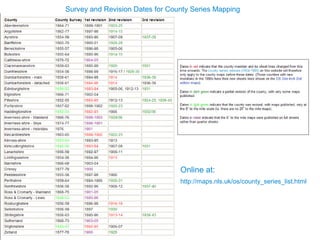
Survey and Revision Dates for County Series Mapping
Online at:
http://maps.nls.uk/os/county_series_list.html
Ordnance Survey
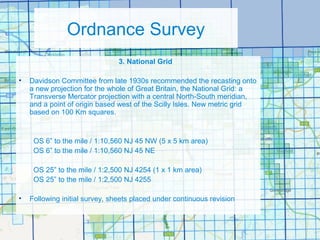
3.National Grid
• Davidson Committee from late 1930s recommended the recasting onto a new
projection for the whole of Great Britain, the National Grid: a Transverse Mercator
projection with a central North-South meridian, and a point of origin based west of
the Scilly Isles. New metric grid based on 100 Km squares.
OS 6ā€ to the mile / 1:10,560 NJ 45 NW (5 x 5 km area)
OS 6ā€ to the mile / 1:10,560 NJ 45 NE
OS 25ā€ to the mile / 1:2,500 NJ 4254 (1 x 1 km area)
OS 25ā€ to the mile / 1:2,500 NJ 4255
• Following initial survey, sheets placed under continuous revision
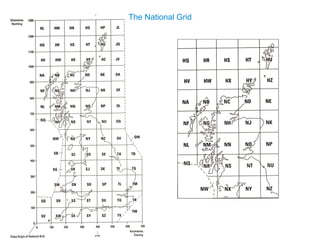
The National Grid
Ordnance Survey
3. National Grid
• Davidson Committee from late 1930s recommended the recasting onto
a new projection for the whole of Great Britain, the National Grid: a
Transverse Mercator projection with a central North-South meridian,
and a point of origin based west of the Scilly Isles. New metric grid
based on 100 Km squares.
OS 6ā€ to the mile / 1:10,560 NJ 45 NW (5 x 5 km area)
OS 6ā€ to the mile / 1:10,560 NJ 45 NE
OS 25ā€ to the mile / 1:2,500 NJ 4254 (1 x 1 km area)
OS 25ā€ to the mile / 1:2,500 NJ 4255
• Following initial survey, sheets placed under continuous revision
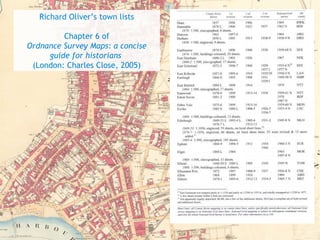
Richard Oliver’s town lists
Chapter 6 of
Ordnance Survey Maps: a concise
guide for historians
(London: Charles Close, 2005)
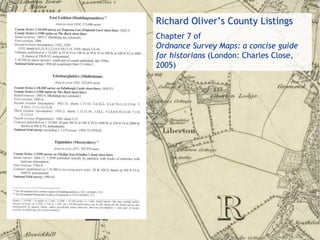
Richard Oliver’s County Listings
Chapter 7 of
Ordnance Survey Maps: a concise guide
for historians (London: Charles Close,
2005)
Ordnance Survey
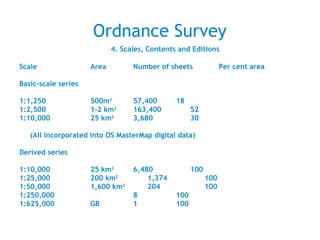
4. Scales, Contents and Editions
Scale Area Number of sheets Per cent area
Basic-scale series
1:1,250 500m2
57,400 18
1:2,500 1-2 km2
163,400 52
1:10,000 25 km2
3,680 30
(All incorporated into OS MasterMap digital data)
Derived series
1:10,000 25 km2
6,480 100
1:25,000 200 km2
1,374 100
1:50,000 1,600 km2
204 100
1:250,000 8 100
1:625,000 GB 1 100
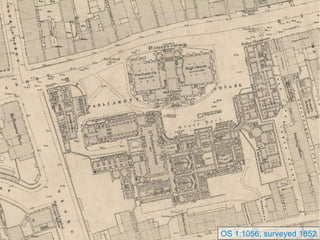
OS 1:1056, surveyed 1852
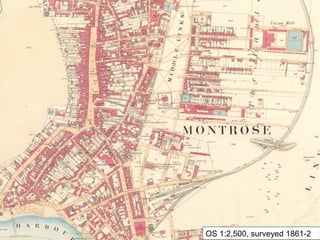
OS 1:2,500, surveyed 1861-2
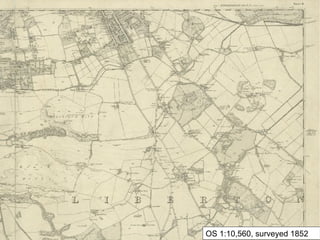
OS 1:10,560, surveyed 1852
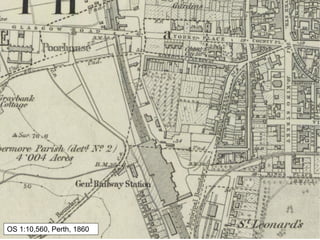
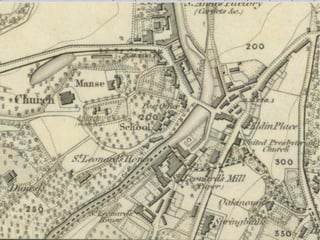
OS 1:10,560, Perth, 1860
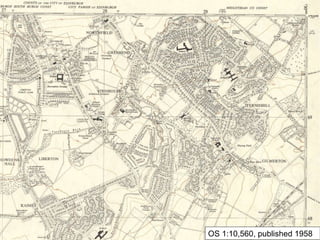
OS 1:10,560, published 1958
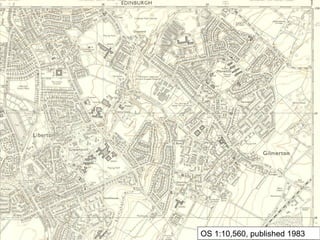
OS 1:10,560, published 1983
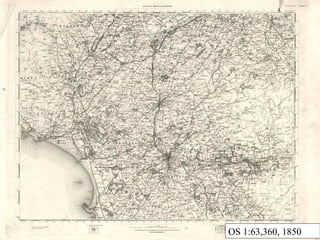
OS 1:63,360, 1850
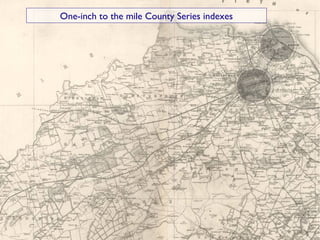
One-inch to the mile County Series indexes
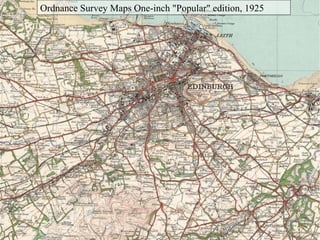
Ordnance Survey Maps One-inch "Popular" edition, 1925
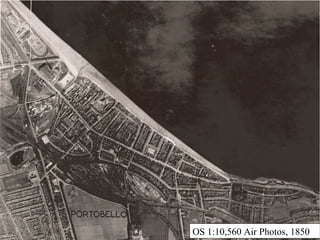
OS 1:10,560 Air Photos, 1850
Ordnance Survey
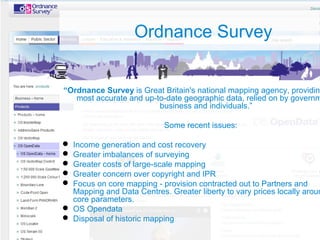
ā€œOrdnance Survey is Great Britain's national mapping agency, providing
most accurate and up-to-date geographic data, relied on by governm
business and individuals.ā€
Some recent issues:
 Income generation and cost recovery
 Greater imbalances of surveying
 Greater costs of large-scale mapping
 Greater concern over copyright and IPR
 Focus on core mapping - provision contracted out to Partners and
Mapping and Data Centres. Greater liberty to vary prices locally aroun
core parameters.
 OS Opendata
 Disposal of historic mapping
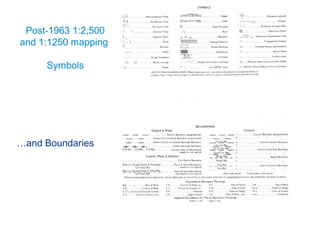
Post-1963 1:2,500
and 1:1250 mapping
Symbols
…and Boundaries
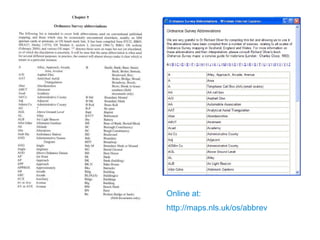
Online at:
http://maps.nls.uk/os/abbrev
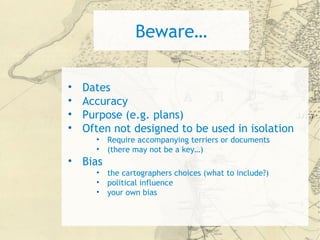
Beware…
• Dates
• Accuracy
• Purpose (e.g. plans)
• Often not designed to be used in isolation
• Require accompanying terriers or documents
• (there may not be a key…)
• Bias
• the cartographers choices (what to include?)
• political influence
• your own bias
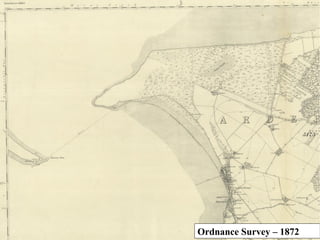
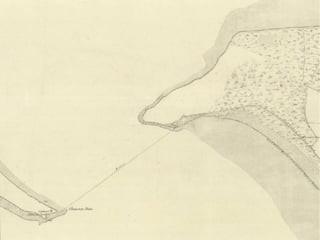
Ordnance Survey – 1872
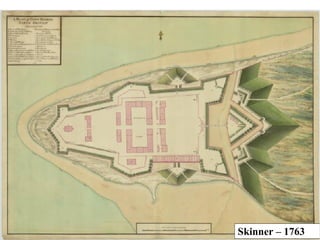
Skinner – 1763
RAF – 1951
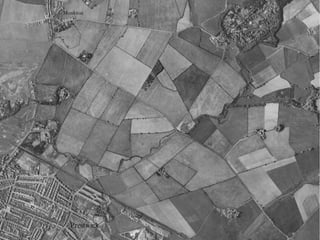
RAF – 1948
Copyright
Ordnance Survey maps are subject to Crown
Copyright, which lasts for 50 years from the end of
the year in which the map was published.
Most other commercially published maps are in
copyright for 70 years from the end of the year in
which the map was published.
Under fair dealing, OS allow ā€œlimited reproductionā€
(up to 4 identical A4-sized copies) of in copyright
maps for non-commercial research or private study
or Parliamentary or Judicial Proceedings
Licences
• OS have a wide range of licences for using in-copyright mapping,
depending upon who you are, and what you wish to do with their mapping:
• Paper Map Copying Licence
• Publishing Licence
• Framework Partner Licence
• Internet Licence
• From April 2013, NLS has become an OS Licensed Partner and is able to
supply full sheet copies of in-copyright maps
• Libraries also have rights over the onward publication of their maps. NLS
requests that permission be requested for all publications of our maps.
Usually there is no charge for non-commercial reproduction.
• NLS also has an annual permission licence (Ā£100 per annum) allowing
unlimited copying of NLS maps for unpublished reports for clients
Contact us…
Map Library
National Library of Scotland
159 Causewayside
Edinburgh
EH9 1PH
0131 623 3970
maps@nls.uk
maps.nls.uk
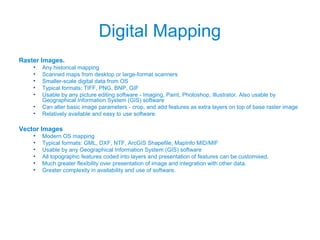
Digital Mapping
Raster Images.
• Any historical mapping
• Scanned maps from desktop or large-format scanners
• Smaller-scale digital data from OS
• Typical formats: TIFF, PNG, BNP, GIF
• Usable by any picture editing software - Imaging, Paint, Photoshop, Illustrator. Also usable by
Geographical Information System (GIS) software
• Can alter basic image parameters - crop, and add features as extra layers on top of base raster image
• Relatively available and easy to use software.
Vector Images
• Modern OS mapping
• Typical formats: GML, DXF, NTF, ArcGIS Shapefile, MapInfo MID/MIF
• Usable by any Geographical Information System (GIS) software
• All topographic features coded into layers and presentation of features can be customised.
• Much greater flexibility over presentation of image and integration with other data.
• Greater complexity in availability and use of software.

Maps for Local Studies - LocScot 24 April 2013

  • 1.
    Maps for LocalStudies LocScot Dayschool and AGM - National Library of Scotland Weds 24 April 2013 10.00 Welcome and introduction (CILIP) 10.15 Maps for local history (Chris). An overview of historical maps of Scotland, their purposes, audiences, content and value for local studies. 11.00 Cataloguing, metadata, and finding aids (Paula). 11.45 AGM (CILIP) 12.15 Lunch 13.30 Split into two groups: 1. Storage, map stacks, classification, and conservation (Paula) 2. Hands-on viewing of specific maps and finding aids (Chris) (Groups swap around after half an hour) 14.30 Digital mapping and online resources (Chris). Including a brief look at map scanning, online delivery and georeferencing, and then primarily looking at the best online sources of maps and related info (NLS Map Images, Old Maps Online, ScotlandsPlaces, Map Curators' Toolbox) 15.30 Questions and wrap-up discussion 16.00 Finish
  • 2.
    Maps for LocalHistory Rural Maps: County Maps Estate Maps Enclosure / Commonty Legal disputes Town Plans Military Maps Coastal charts Transportation Maps - Canals / railways / roads Ordnance Survey : History County Series National Grid Scales, map contents and editions Legends and abbreviations Air photos General principles. Copyright
  • 3.
    Pont – ca.1583-1614
  • 4.
  • 5.
  • 6.
  • 7.
  • 8.
    William Forrest, Mapof Haddingtonshire, 1802
  • 9.
    Sharp, Greenwood &Fowler, Map of the counties of Fife and Kinross, 1828
  • 10.
    John Rocque, APlan of ye Garden Plantation of Drumlangrig [sic] in Scotland, the Seat of his Grace the Duke of Queensburry (1739)
  • 11.
    John Home, ā€˜TheFarms of Knockneach, Culach and Inverchirkag’ from Survey of Assynt (1774)
  • 12.
  • 13.
    Henry Buist, Planof the Common Muir of Methven (1792)
  • 15.
  • 16.
  • 17.
  • 18.
    Great Reform Act,Stirling (1832)
  • 19.
    Robert Johnson, APlan of Fort William with the Country ajasent (1710)
  • 20.
  • 22.
    Roy Military Surveyof Scotland, detail around Kenmore, ca. 1747-52
  • 23.
    Roy Military Surveyof Scotland, ca. 1747-52
  • 24.
    Roy Military Surveyof Scotland, ca. 1747-52
  • 25.
    Roy Military Surveyof Scotland, ca. 1747-52
  • 26.
    A Survey ofthe Road... to the Spittle of Glen-Shee, 1749, by the military engineer, John Archer, distinguishing between the completed road, the ā€œroad to be madeā€, dry stone walls and back drains.
  • 27.
  • 28.
    Admiralty Chart: Surveyof the Frith of Forth, by George Thomas... in 1815
  • 29.
    The Minchmoor droveroad from Traquair in the Tweed valley going south-east to the Yarrow valley, from John Thomson's Selkirkshire, 1820
  • 30.
  • 32.
  • 33.
    Stevenson / Lizars– Union Bridge, Paxton, 1820
  • 34.
    R. Kirkwood, Thisplan of the City of Edinburgh and its environs… 1817
  • 35.
  • 36.
    Ordnance Survey 1.History 2.County Series 3.NationalGrid 4.Scales, map contents and editions 5.Legends and abbreviations
  • 37.
    Ordnance Survey 1. History RoyMilitary Survey of Scotland, 1747-1755 1791 - Purchase of Jesse Ramsden theodolite Southern England (from 1790s), Ireland (from 1820s), and then Scotland (from 1840s) Battle of the Scales - 1850s Completion of survey of Scotland - 1880s Books of Reference and OS Name Books
  • 39.
    OS Book ofReference …from 1855 to the mid- 1880s for 1:2,500 maps. Parcel number, acreage and land-use. Can be consulted in NLS and on Internet Archive website: http://archive.org/details/osbooksofreference
  • 40.
    OS Object NameBooks Available in the National Archives of Scotland and on ScotlandsPlaces website through a £15 subscription
  • 41.
    Ordnance Survey 2. CountySeries  Original mapping up to the Second World War based on counties  Sheet referencing by County: OS 6ā€ to the mile / 1:10,560 Aberdeenshire VIII (4 x 6 miles) OS 6ā€ to the mile / 1:10,560 Aberdeenshire IX OS 6ā€ to the mile / 1:10,560 Aberdeenshire X OS 25ā€ to the mile / 1:2,500 Aberdeenshire VIII.1-16 OS 25ā€ to the mile / 1:2,500 Aberdeenshire VIII.4 (1 mile x 1.5 miles)  Revision by county - all or part of the county revised at particular points in time.
  • 43.
    25 inch tothe mile coverage 1st edition - 1855-1882 2nd and later editions – 1892-
  • 44.
    Origins of theOS county meridians for large scale mapping
  • 46.
    Survey and RevisionDates for County Series Mapping Online at: http://maps.nls.uk/os/county_series_list.html
  • 47.
    Ordnance Survey 3.National Grid •Davidson Committee from late 1930s recommended the recasting onto a new projection for the whole of Great Britain, the National Grid: a Transverse Mercator projection with a central North-South meridian, and a point of origin based west of the Scilly Isles. New metric grid based on 100 Km squares. OS 6ā€ to the mile / 1:10,560 NJ 45 NW (5 x 5 km area) OS 6ā€ to the mile / 1:10,560 NJ 45 NE OS 25ā€ to the mile / 1:2,500 NJ 4254 (1 x 1 km area) OS 25ā€ to the mile / 1:2,500 NJ 4255 • Following initial survey, sheets placed under continuous revision
  • 48.
  • 49.
    Ordnance Survey 3. NationalGrid • Davidson Committee from late 1930s recommended the recasting onto a new projection for the whole of Great Britain, the National Grid: a Transverse Mercator projection with a central North-South meridian, and a point of origin based west of the Scilly Isles. New metric grid based on 100 Km squares. OS 6ā€ to the mile / 1:10,560 NJ 45 NW (5 x 5 km area) OS 6ā€ to the mile / 1:10,560 NJ 45 NE OS 25ā€ to the mile / 1:2,500 NJ 4254 (1 x 1 km area) OS 25ā€ to the mile / 1:2,500 NJ 4255 • Following initial survey, sheets placed under continuous revision
  • 50.
    Richard Oliver’s townlists Chapter 6 of Ordnance Survey Maps: a concise guide for historians (London: Charles Close, 2005)
  • 51.
    Richard Oliver’s CountyListings Chapter 7 of Ordnance Survey Maps: a concise guide for historians (London: Charles Close, 2005)
  • 52.
    Ordnance Survey 4. Scales,Contents and Editions Scale Area Number of sheets Per cent area Basic-scale series 1:1,250 500m2 57,400 18 1:2,500 1-2 km2 163,400 52 1:10,000 25 km2 3,680 30 (All incorporated into OS MasterMap digital data) Derived series 1:10,000 25 km2 6,480 100 1:25,000 200 km2 1,374 100 1:50,000 1,600 km2 204 100 1:250,000 8 100 1:625,000 GB 1 100
  • 53.
  • 55.
  • 57.
  • 58.
  • 60.
  • 61.
  • 62.
  • 63.
    One-inch to themile County Series indexes
  • 64.
    Ordnance Survey MapsOne-inch "Popular" edition, 1925
  • 65.
    OS 1:10,560 AirPhotos, 1850
  • 67.
    Ordnance Survey ā€œOrdnance Surveyis Great Britain's national mapping agency, providing most accurate and up-to-date geographic data, relied on by governm business and individuals.ā€ Some recent issues:  Income generation and cost recovery  Greater imbalances of surveying  Greater costs of large-scale mapping  Greater concern over copyright and IPR  Focus on core mapping - provision contracted out to Partners and Mapping and Data Centres. Greater liberty to vary prices locally aroun core parameters.  OS Opendata  Disposal of historic mapping
  • 68.
    Post-1963 1:2,500 and 1:1250mapping Symbols …and Boundaries
  • 69.
  • 70.
    Beware… • Dates • Accuracy •Purpose (e.g. plans) • Often not designed to be used in isolation • Require accompanying terriers or documents • (there may not be a key…) • Bias • the cartographers choices (what to include?) • political influence • your own bias
  • 71.
  • 73.
  • 74.
  • 75.
  • 76.
    Copyright Ordnance Survey mapsare subject to Crown Copyright, which lasts for 50 years from the end of the year in which the map was published. Most other commercially published maps are in copyright for 70 years from the end of the year in which the map was published. Under fair dealing, OS allow ā€œlimited reproductionā€ (up to 4 identical A4-sized copies) of in copyright maps for non-commercial research or private study or Parliamentary or Judicial Proceedings
  • 77.
    Licences • OS havea wide range of licences for using in-copyright mapping, depending upon who you are, and what you wish to do with their mapping: • Paper Map Copying Licence • Publishing Licence • Framework Partner Licence • Internet Licence • From April 2013, NLS has become an OS Licensed Partner and is able to supply full sheet copies of in-copyright maps • Libraries also have rights over the onward publication of their maps. NLS requests that permission be requested for all publications of our maps. Usually there is no charge for non-commercial reproduction. • NLS also has an annual permission licence (Ā£100 per annum) allowing unlimited copying of NLS maps for unpublished reports for clients
  • 78.
    Contact us… Map Library NationalLibrary of Scotland 159 Causewayside Edinburgh EH9 1PH 0131 623 3970 maps@nls.uk maps.nls.uk
  • 80.
    Digital Mapping Raster Images. •Any historical mapping • Scanned maps from desktop or large-format scanners • Smaller-scale digital data from OS • Typical formats: TIFF, PNG, BNP, GIF • Usable by any picture editing software - Imaging, Paint, Photoshop, Illustrator. Also usable by Geographical Information System (GIS) software • Can alter basic image parameters - crop, and add features as extra layers on top of base raster image • Relatively available and easy to use software. Vector Images • Modern OS mapping • Typical formats: GML, DXF, NTF, ArcGIS Shapefile, MapInfo MID/MIF • Usable by any Geographical Information System (GIS) software • All topographic features coded into layers and presentation of features can be customised. • Much greater flexibility over presentation of image and integration with other data. • Greater complexity in availability and use of software.

Editor's Notes

  • #3Ā County maps – again really at any detail from about 1770. - and in a more uniform style. Often 1 inch to the mile… Land/house owners names regularly appear – After this – move to the Ordnance Survey a which Chris will talk more about later Following on from estate plans,  some surveyors made the logical leap to making county maps, such as this one of Haddingtonshire by 1799 by William Forrest. These were at least partly funded up front by the collections of subscriptions. Remember that still only a tiny part of the population was educated and could read, and probably even fewer could afford to buy the maps.  This is a particularly fine example – and in this extract you can see the quality of the engraving. Remember that these were engraved backwards onto copper plates for engraving! The limited market had to be secured before production. Part of the sales pitch was undoubtedly to promise that the gentleman’s houses would be shown, and they were often issued with an accompanying list of subscribers... There are many examples of proposals for maps which never made it to production for want of the requisite number of subscriptions. It seems probable that the selection of content, or prominence given to particular areas would be determined by who subscribed. The surveyor may have already surveyed their estate in much greater detail and that knowledge could then come through onto the county map. This is a very good example of the type, described by John Thomson 30 years later as: ā€œ The masterly manner in which this map is executed is at once a memorial of industry, skill and enterprise, seldom found in one individual. The noblemen and gentlemen’s domains, the towns and villages, with the roads, the parish boundaries, the sea coast, the woods and rivers, are presented on paper as if reflected in a glass. The woods and pleasure grounds of Tyningham, the seat of the Earl of Haddington, may be cited as a specimen of delineation that may be equalled, but not surpassed .ā€
  • #7Ā John Adair. East Lothian. 1682
  • #15Ā 'Plan of the Forest of Mamlorn' was surveyed by Colin Foster in 1732. It is drawn in ink with a very faint grey wash to show relief on the hills and pale brown for rivers. It covers an area in Breadalbane, Perthshire, south of Loch Lyon. It related to a land dispute between the Earl of Breadalbane to the south, and the Laird of Culdares to the north. The map was used in an ensuing Court of Session case in 1735 which examined and settled the boundary between two landowners. Ownershuip is shown by being written on the map… Some areas were clearly not for negotiation…
  • #16Ā John Geddy. S. Andre sive Andreapolis Scotiae Universitas Metropolitana. [ca1780]
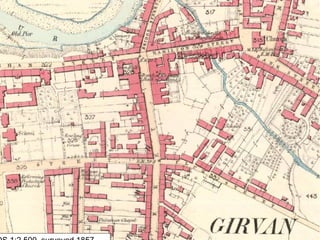
  • #55Ā Ordnance Survey. 1:2500. Ayrshire sheet LV.4 Girvan Parish. Surveyed 1856.
  • #60Ā Ordnance Survey. 1:10,560. Edinburghshire 7, surveyed 1852-3, published 1854.
  • #63Ā Ordnance Survey. 1:63,360. One inch to the mile Scotland. First edition. Sheet 22 Kilmarnock. Surveyed 1852 – 5.
  • #68Ā It is worth knowing a little bit about scale because the maps you are most likely to use come at a variety of scales. We are all familiar with the modern OS, and many people have the false impression that equivalent mapping will be available as far back as they can trace their family. Unfortunately this is not the case. For Scotland, the OS really came into being in the 1850’s. So for addresses and places after that there is a good chance of being able to locate an exact house or building. As a rough guide, the more populated an area, the more detailed mapping will be available, and in more editions. In some rural areas of Highlands and Perthshire there can be more than 70 years between editions. Just because you can’t find it on the map doesn’t mean it didn’t exist.
  • #71Ā caveats :  DATES often they do not represent the landscape at the time of publication but several or even 10s of years before. ACCURACY early maps were not measured... they show things which never happened changes happened which were never recorded PURPOSE they were made to show a particular feature so the rest is distorted may only show things related to that purpose... Often not designed to be used in isolation BIAS ALL MAPS ARE BIASED! Mapmakers choice of what to include (impossible to show everything ... 1:1) Their conscious and unconscious political environment Your reading of it is biased by your own views and knowledge All these caveats still hold true to some extent – it is impossible for a map to represent everything that’s on the ground.
  • #79Ā Approx 2 million items Whole world – not just Scotland Responsibility to collect for the Scottish people …. Website: approx 4,000 maps 6ā€ going up soon work on 1 st ed. Parish ed. 25ā€ just started – scanning Catalogue – individual maps rather than series (ie no OS) ca. 55,000 ASK!