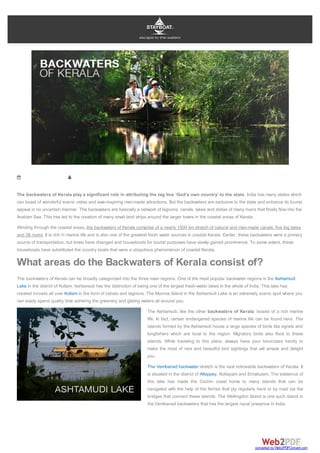
The backwaters of Kerala play a significant role in attributing the tag line ‘God’s own country’ to the state. India has many states which
can boast of wonderful scenic vistas and awe-inspiring man-made attractions. But the backwaters are exclusive to the state and enhance its tourist
appeal in no uncertain manner. The backwaters are basically a network of lagoons, canals, lakes and deltas of many rivers that finally flow into the
Arabian Sea. This has led to the creation of many small land strips around the larger towns in the coastal areas of Kerala.
Winding through the coastal areas, the backwaters of Kerala comprise of a nearly 1500 km stretch of natural and man-made canals, five big lakes
and 38 rivers. It is rich in marine life and is also one of the greatest fresh water sources in coastal Kerala. Earlier, these backwaters were a primary
source of transportation, but times have changed and houseboats for tourist purposes have slowly gained prominence. To some extent, these
houseboats have substituted the country boats that were a ubiquitous phenomenon of coastal Kerala.
What areas do the Backwaters of Kerala consist of?
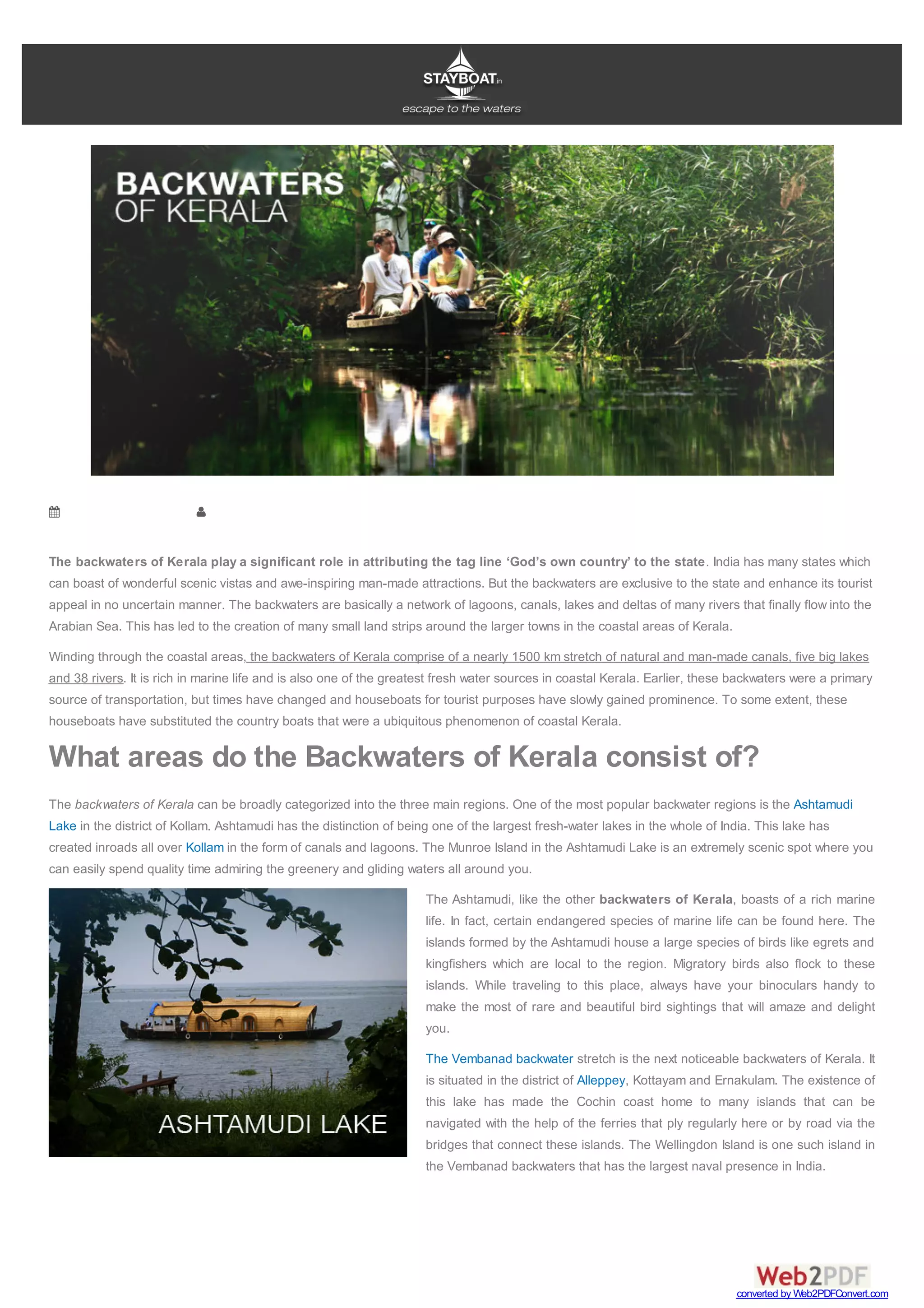
The backwaters of Kerala can be broadly categorized into the three main regions. One of the most popular backwater regions is the Ashtamudi
Lake in the district of Kollam. Ashtamudi has the distinction of being one of the largest fresh-water lakes in the whole of India. This lake has
created inroads all over Kollam in the form of canals and lagoons. The Munroe Island in the Ashtamudi Lake is an extremely scenic spot where you
can easily spend quality time admiring the greenery and gliding waters all around you.
The Ashtamudi, like the other backwaters of Kerala, boasts of a rich marine
life. In fact, certain endangered species of marine life can be found here. The
islands formed by the Ashtamudi house a large species of birds like egrets and
kingfishers which are local to the region. Migratory birds also flock to these
islands. While traveling to this place, always have your binoculars handy to
make the most of rare and beautiful bird sightings that will amaze and delight
you.
The Vembanad backwater stretch is the next noticeable backwaters of Kerala. It
is situated in the district of Alleppey, Kottayam and Ernakulam. The existence of
this lake has made the Cochin coast home to many islands that can be
navigated with the help of the ferries that ply regularly here or by road via the
bridges that connect these islands. The Wellingdon Island is one such island in
the Vembanad backwaters that has the largest naval presence in India.
 
converted by Web2PDFConvert.com
Kottayam and Kumarakom backwaters are all part of the backwaters of Kerala
formed by the Vembanad Lake. The backwaters of Kumarakom attract a lot of
tourists because of its ethereal beauty. In addition, the bird sanctuary at
Kumarakom is a renowned place where you will find rare migratory birds.
Kottayam is another famous spot that has been immortalized by the author
Arundhati Roy in her award-winning book ‘The God of Small Things’. It
resembles a somnolent village and yet is a coveted tourist spot because of its
enchanting beauty.
Besides the backwaters formed by the Ashtamudi and Vembanad Lakes, the
third major backwater stretch is the Kannur- Valiyaparambu backwaters situated
in Kasargod and Kannur. These backwaters are relatively lesser known both
internationally and in India, but that in no way is a reflection on its unspoilt
natural beauty. The entire area is dotted with tiny islands where you can plan a
day picnic with family and friends. If you are a tourist in search of unexplored and remote places, the Kannur- Valiyaparambu backwaters might just
be the perfect place you are looking for.
Apart from these three major “backwaters of Kerala”, the coastal areas of Kerala are home to various small lagoons that have acquired immense
local fame for their special attractions. Akkulam Tourist village in the Akkulam-Veli backwaters is a renowned eco-tourist project whereas
Thiruvallam lagoon in Thiruvananthapuram is frequented by religious tourists from all over Kerala.
The Kumbalangi backwaters of Kerala near Kochi offers you a one of a kind experience
with its canoes that have to be manoeuvred through a labyrinth of mangrove forests.
This backwater experience is very different from that of the other backwaters and will
have you wondering whether you are traveling through a magical realm – a realm where
you might come across strange and exotic creatures hitherto unheard of or seen by
mankind. Kallai backwaters in Kozhikode and Alumkadavu backwaters in Kollam are all
filled with natural attractions and have managed to retain their untouched splendour.
The backwaters of Kerala are the epitome of Nature in all its pristine glory. So,
plan a trip with us as soon as you can and enjoy the bounty of nature to the fullest! A
very simple way to go about is going to Stayboat.in and booking your vacation.

converted by Web2PDFConvert.com
Be the first of your
friends to like this.
Stayboat
If monsoon tourism
sounds enticing to
you, then you could
also try to catch the
Southwest monsoon
from June to
September. The
greenery of Alleppey
is further intensified
during the rains and
the whole
experience will be
one that you will
cherish for a long
time to come.
Read more
8hrs
Stayboat
1.2k likes
Like PageLike Page
converted by Web2PDFConvert.com

Backwaters of-kerala

  • 1.
    The backwaters ofKerala play a significant role in attributing the tag line ‘God’s own country’ to the state. India has many states which can boast of wonderful scenic vistas and awe-inspiring man-made attractions. But the backwaters are exclusive to the state and enhance its tourist appeal in no uncertain manner. The backwaters are basically a network of lagoons, canals, lakes and deltas of many rivers that finally flow into the Arabian Sea. This has led to the creation of many small land strips around the larger towns in the coastal areas of Kerala. Winding through the coastal areas, the backwaters of Kerala comprise of a nearly 1500 km stretch of natural and man-made canals, five big lakes and 38 rivers. It is rich in marine life and is also one of the greatest fresh water sources in coastal Kerala. Earlier, these backwaters were a primary source of transportation, but times have changed and houseboats for tourist purposes have slowly gained prominence. To some extent, these houseboats have substituted the country boats that were a ubiquitous phenomenon of coastal Kerala. What areas do the Backwaters of Kerala consist of? The backwaters of Kerala can be broadly categorized into the three main regions. One of the most popular backwater regions is the Ashtamudi Lake in the district of Kollam. Ashtamudi has the distinction of being one of the largest fresh-water lakes in the whole of India. This lake has created inroads all over Kollam in the form of canals and lagoons. The Munroe Island in the Ashtamudi Lake is an extremely scenic spot where you can easily spend quality time admiring the greenery and gliding waters all around you. The Ashtamudi, like the other backwaters of Kerala, boasts of a rich marine life. In fact, certain endangered species of marine life can be found here. The islands formed by the Ashtamudi house a large species of birds like egrets and kingfishers which are local to the region. Migratory birds also flock to these islands. While traveling to this place, always have your binoculars handy to make the most of rare and beautiful bird sightings that will amaze and delight you. The Vembanad backwater stretch is the next noticeable backwaters of Kerala. It is situated in the district of Alleppey, Kottayam and Ernakulam. The existence of this lake has made the Cochin coast home to many islands that can be navigated with the help of the ferries that ply regularly here or by road via the bridges that connect these islands. The Wellingdon Island is one such island in the Vembanad backwaters that has the largest naval presence in India.   converted by Web2PDFConvert.com
  • 2.
    Kottayam and Kumarakombackwaters are all part of the backwaters of Kerala formed by the Vembanad Lake. The backwaters of Kumarakom attract a lot of tourists because of its ethereal beauty. In addition, the bird sanctuary at Kumarakom is a renowned place where you will find rare migratory birds. Kottayam is another famous spot that has been immortalized by the author Arundhati Roy in her award-winning book ‘The God of Small Things’. It resembles a somnolent village and yet is a coveted tourist spot because of its enchanting beauty. Besides the backwaters formed by the Ashtamudi and Vembanad Lakes, the third major backwater stretch is the Kannur- Valiyaparambu backwaters situated in Kasargod and Kannur. These backwaters are relatively lesser known both internationally and in India, but that in no way is a reflection on its unspoilt natural beauty. The entire area is dotted with tiny islands where you can plan a day picnic with family and friends. If you are a tourist in search of unexplored and remote places, the Kannur- Valiyaparambu backwaters might just be the perfect place you are looking for. Apart from these three major “backwaters of Kerala”, the coastal areas of Kerala are home to various small lagoons that have acquired immense local fame for their special attractions. Akkulam Tourist village in the Akkulam-Veli backwaters is a renowned eco-tourist project whereas Thiruvallam lagoon in Thiruvananthapuram is frequented by religious tourists from all over Kerala. The Kumbalangi backwaters of Kerala near Kochi offers you a one of a kind experience with its canoes that have to be manoeuvred through a labyrinth of mangrove forests. This backwater experience is very different from that of the other backwaters and will have you wondering whether you are traveling through a magical realm – a realm where you might come across strange and exotic creatures hitherto unheard of or seen by mankind. Kallai backwaters in Kozhikode and Alumkadavu backwaters in Kollam are all filled with natural attractions and have managed to retain their untouched splendour. The backwaters of Kerala are the epitome of Nature in all its pristine glory. So, plan a trip with us as soon as you can and enjoy the bounty of nature to the fullest! A very simple way to go about is going to Stayboat.in and booking your vacation.  converted by Web2PDFConvert.com
  • 3.
    Be the firstof your friends to like this. Stayboat If monsoon tourism sounds enticing to you, then you could also try to catch the Southwest monsoon from June to September. The greenery of Alleppey is further intensified during the rains and the whole experience will be one that you will cherish for a long time to come. Read more 8hrs Stayboat 1.2k likes Like PageLike Page converted by Web2PDFConvert.com
  • 4.