Presented by:
Fatima Adnan
Presented by:
Fatima Adnan
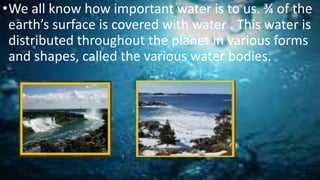
•We all know how important water is to us. ¾ of the
earth’s surface is covered with water . This water is
distributed throughout the planet in various forms
and shapes, called the various water bodies.
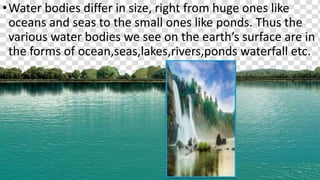
•Water bodies differ in size, right from huge ones like
oceans and seas to the small ones like ponds. Thus the
various water bodies we see on the earth’s surface are in
the forms of ocean,seas,lakes,rivers,ponds waterfall etc.
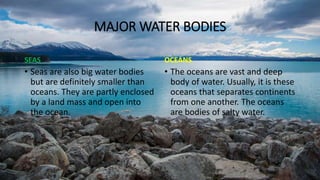
MAJOR WATER BODIES
SEAS
• Seas are also big water bodies
but are definitely smaller than
oceans. They are partly enclosed
by a land mass and open into
the ocean.
OCEANS
• The oceans are vast and deep
body of water. Usually, it is these
oceans that separates continents
from one another. The oceans
are bodies of salty water.
OCEANS
LARGEST WATER BODIES ON THE EARTH ARE OCEANS
AND THERE ARE FIVE OCEANS:
1) PACIFIC OCEANS
2) ATLANTIC OCEANS
3) INDIAN OCEANS
4) ARTIC OCEAN
5) ANTARTIC OCEAN
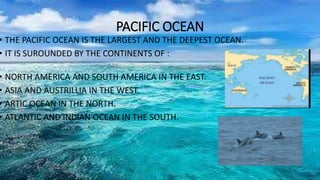
PACIFIC OCEAN
• THE PACIFIC OCEAN IS THE LARGEST AND THE DEEPEST OCEAN.
• IT IS SUROUNDED BY THE CONTINENTS OF :
• NORTH AMERICA AND SOUTH AMERICA IN THE EAST.
• ASIA AND AUSTRILLIA IN THE WEST.
• ARTIC OCEAN IN THE NORTH.
• ATLANTIC AND INDIAN OCEAN IN THE SOUTH.
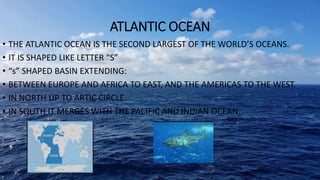
ATLANTIC OCEAN
• THE ATLANTIC OCEAN IS THE SECOND LARGEST OF THE WORLD’S OCEANS.
• IT IS SHAPED LIKE LETTER “S”
• “s” SHAPED BASIN EXTENDING:
• BETWEEN EUROPE AND AFRICA TO EAST, AND THE AMERICAS TO THE WEST.
• IN NORTH UP TO ARTIC CIRCLE.
• IN SOUTH IT MERGES WITH THE PACIFIC AND INDIAN OCEAN.
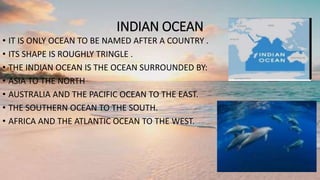
INDIAN OCEAN
• IT IS ONLY OCEAN TO BE NAMED AFTER A COUNTRY .
• ITS SHAPE IS ROUGHLY TRINGLE .
• THE INDIAN OCEAN IS THE OCEAN SURROUNDED BY:
• ASIA TO THE NORTH
• AUSTRALIA AND THE PACIFIC OCEAN TO THE EAST.
• THE SOUTHERN OCEAN TO THE SOUTH.
• AFRICA AND THE ATLANTIC OCEAN TO THE WEST.
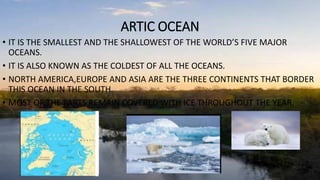
ARTIC OCEAN
• IT IS THE SMALLEST AND THE SHALLOWEST OF THE WORLD’S FIVE MAJOR
OCEANS.
• IT IS ALSO KNOWN AS THE COLDEST OF ALL THE OCEANS.
• NORTH AMERICA,EUROPE AND ASIA ARE THE THREE CONTINENTS THAT BORDER
THIS OCEAN IN THE SOUTH.
• MOST OF THE PARTS REMAIN COVERED WITH ICE THROUGHOUT THE YEAR.
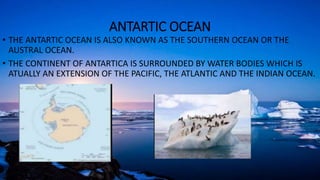
ANTARTIC OCEAN
• THE ANTARTIC OCEAN IS ALSO KNOWN AS THE SOUTHERN OCEAN OR THE
AUSTRAL OCEAN.
• THE CONTINENT OF ANTARTICA IS SURROUNDED BY WATER BODIES WHICH IS
ATUALLY AN EXTENSION OF THE PACIFIC, THE ATLANTIC AND THE INDIAN OCEAN.
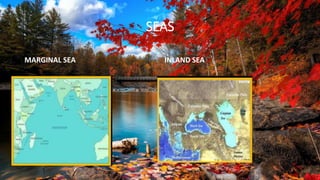
SEAS
MARGINAL SEAS
• A MARGINAL SEA IS A DIVISION
OF AN OCEAN, PARTIALLY
ENCLOSED BY ISLANDS, OR
PENINSULAS
• FOR EXAMPLS:
• BARENTS SEA, EAST SIBERIAN
SEA, CARIBBEAN SEA, BAY OF
BENGAL ETC.
INLAND SEA
• A sea that covers a central area
of a landmass.
• For example:
• Black sea, dead sea, Caspian sea
etc.
SEAS
MARGINAL SEA INLAND SEA
MINOR WATER BODIES
MINOR WATER BODIES
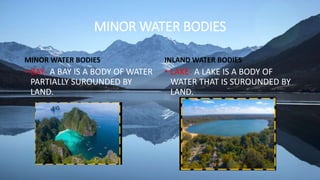
• BAY- A BAY IS A BODY OF WATER
PARTIALLY SUROUNDED BY
LAND.
INLAND WATER BODIES
• LAKE- A LAKE IS A BODY OF
WATER THAT IS SUROUNDED BY
LAND.
MINOR WATER BODIES
MINOR WATER BODIES
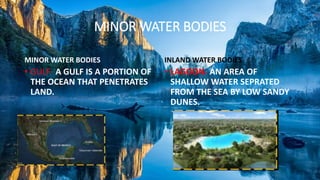
• GULF- A GULF IS A PORTION OF
THE OCEAN THAT PENETRATES
LAND.
INLAND WATER BODIES
• LAGOON- AN AREA OF
SHALLOW WATER SEPRATED
FROM THE SEA BY LOW SANDY
DUNES.
MINOR WATER BODIES
MINOR WATER BODIES
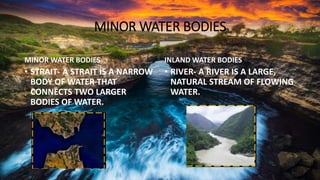
• STRAIT- A STRAIT IS A NARROW
BODY OF WATER THAT
CONNECTS TWO LARGER
BODIES OF WATER.
INLAND WATER BODIES
• RIVER- A RIVER IS A LARGE,
NATURAL STREAM OF FLOWING
WATER.
DEFORESTATION
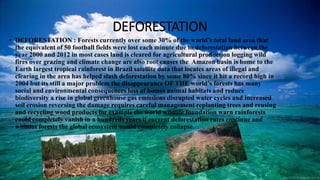
• DEFORESTATION : Forests currently over some 30% of the world’s total land area that
the equivalent of 50 football fields were lost each minute due to deforestation between the
year 2000 and 2012 in most cases land is cleared for agricultural production logging wild
fires over grazing and climate change are also root causes the Amazon basin is home to the
Earth largest tropical rainforest in Brazil satellite data that locates areas of illegal and
clearing in the area has helped slash deforestation by some 80% since it hit a record high in
2004 but its still a major problem the disappearance OF THE world’s forests has many
social and environmental consequences loss of homes animal habitats and reduce
biodiversity a rise in global greenhouse gas emissions disrupted water cycles and increased
soil erosion reversing the damage requires careful management replanting trees and reusing
and recycling wood products for example the world wildlife foundation warn rainforests
could completely vanish in a hundreds years if current deforestation rates continue and
without forests the global ecosystem would completely collapse.
IRRIGATION
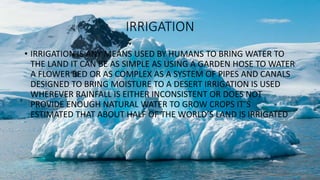
• IRRIGATION IS ANY MEANS USED BY HUMANS TO BRING WATER TO
THE LAND IT CAN BE AS SIMPLE AS USING A GARDEN HOSE TO WATER
A FLOWER BED OR AS COMPLEX AS A SYSTEM OF PIPES AND CANALS
DESIGNED TO BRING MOISTURE TO A DESERT IRRIGATION IS USED
WHEREVER RAINFALL IS EITHER INCONSISTENT OR DOES NOT
PROVIDE ENOUGH NATURAL WATER TO GROW CROPS IT’S
ESTIMATED THAT ABOUT HALF OF THE WORLD’S LAND IS IRRIGATED
seas
seas

seas

  • 1.
  • 2.
    •We all knowhow important water is to us. ¾ of the earth’s surface is covered with water . This water is distributed throughout the planet in various forms and shapes, called the various water bodies.
  • 3.
    •Water bodies differin size, right from huge ones like oceans and seas to the small ones like ponds. Thus the various water bodies we see on the earth’s surface are in the forms of ocean,seas,lakes,rivers,ponds waterfall etc.
  • 4.
    MAJOR WATER BODIES SEAS •Seas are also big water bodies but are definitely smaller than oceans. They are partly enclosed by a land mass and open into the ocean. OCEANS • The oceans are vast and deep body of water. Usually, it is these oceans that separates continents from one another. The oceans are bodies of salty water.
  • 5.
    OCEANS LARGEST WATER BODIESON THE EARTH ARE OCEANS AND THERE ARE FIVE OCEANS: 1) PACIFIC OCEANS 2) ATLANTIC OCEANS 3) INDIAN OCEANS 4) ARTIC OCEAN 5) ANTARTIC OCEAN
  • 6.
    PACIFIC OCEAN • THEPACIFIC OCEAN IS THE LARGEST AND THE DEEPEST OCEAN. • IT IS SUROUNDED BY THE CONTINENTS OF : • NORTH AMERICA AND SOUTH AMERICA IN THE EAST. • ASIA AND AUSTRILLIA IN THE WEST. • ARTIC OCEAN IN THE NORTH. • ATLANTIC AND INDIAN OCEAN IN THE SOUTH.
  • 7.
    ATLANTIC OCEAN • THEATLANTIC OCEAN IS THE SECOND LARGEST OF THE WORLD’S OCEANS. • IT IS SHAPED LIKE LETTER “S” • “s” SHAPED BASIN EXTENDING: • BETWEEN EUROPE AND AFRICA TO EAST, AND THE AMERICAS TO THE WEST. • IN NORTH UP TO ARTIC CIRCLE. • IN SOUTH IT MERGES WITH THE PACIFIC AND INDIAN OCEAN.
  • 8.
    INDIAN OCEAN • ITIS ONLY OCEAN TO BE NAMED AFTER A COUNTRY . • ITS SHAPE IS ROUGHLY TRINGLE . • THE INDIAN OCEAN IS THE OCEAN SURROUNDED BY: • ASIA TO THE NORTH • AUSTRALIA AND THE PACIFIC OCEAN TO THE EAST. • THE SOUTHERN OCEAN TO THE SOUTH. • AFRICA AND THE ATLANTIC OCEAN TO THE WEST.
  • 9.
    ARTIC OCEAN • ITIS THE SMALLEST AND THE SHALLOWEST OF THE WORLD’S FIVE MAJOR OCEANS. • IT IS ALSO KNOWN AS THE COLDEST OF ALL THE OCEANS. • NORTH AMERICA,EUROPE AND ASIA ARE THE THREE CONTINENTS THAT BORDER THIS OCEAN IN THE SOUTH. • MOST OF THE PARTS REMAIN COVERED WITH ICE THROUGHOUT THE YEAR.
  • 10.
    ANTARTIC OCEAN • THEANTARTIC OCEAN IS ALSO KNOWN AS THE SOUTHERN OCEAN OR THE AUSTRAL OCEAN. • THE CONTINENT OF ANTARTICA IS SURROUNDED BY WATER BODIES WHICH IS ATUALLY AN EXTENSION OF THE PACIFIC, THE ATLANTIC AND THE INDIAN OCEAN.
  • 11.
    SEAS MARGINAL SEAS • AMARGINAL SEA IS A DIVISION OF AN OCEAN, PARTIALLY ENCLOSED BY ISLANDS, OR PENINSULAS • FOR EXAMPLS: • BARENTS SEA, EAST SIBERIAN SEA, CARIBBEAN SEA, BAY OF BENGAL ETC. INLAND SEA • A sea that covers a central area of a landmass. • For example: • Black sea, dead sea, Caspian sea etc.
  • 12.
  • 13.
    MINOR WATER BODIES MINORWATER BODIES • BAY- A BAY IS A BODY OF WATER PARTIALLY SUROUNDED BY LAND. INLAND WATER BODIES • LAKE- A LAKE IS A BODY OF WATER THAT IS SUROUNDED BY LAND.
  • 14.
    MINOR WATER BODIES MINORWATER BODIES • GULF- A GULF IS A PORTION OF THE OCEAN THAT PENETRATES LAND. INLAND WATER BODIES • LAGOON- AN AREA OF SHALLOW WATER SEPRATED FROM THE SEA BY LOW SANDY DUNES.
  • 15.
    MINOR WATER BODIES MINORWATER BODIES • STRAIT- A STRAIT IS A NARROW BODY OF WATER THAT CONNECTS TWO LARGER BODIES OF WATER. INLAND WATER BODIES • RIVER- A RIVER IS A LARGE, NATURAL STREAM OF FLOWING WATER.
  • 16.
    DEFORESTATION • DEFORESTATION :Forests currently over some 30% of the world’s total land area that the equivalent of 50 football fields were lost each minute due to deforestation between the year 2000 and 2012 in most cases land is cleared for agricultural production logging wild fires over grazing and climate change are also root causes the Amazon basin is home to the Earth largest tropical rainforest in Brazil satellite data that locates areas of illegal and clearing in the area has helped slash deforestation by some 80% since it hit a record high in 2004 but its still a major problem the disappearance OF THE world’s forests has many social and environmental consequences loss of homes animal habitats and reduce biodiversity a rise in global greenhouse gas emissions disrupted water cycles and increased soil erosion reversing the damage requires careful management replanting trees and reusing and recycling wood products for example the world wildlife foundation warn rainforests could completely vanish in a hundreds years if current deforestation rates continue and without forests the global ecosystem would completely collapse.
  • 17.
    IRRIGATION • IRRIGATION ISANY MEANS USED BY HUMANS TO BRING WATER TO THE LAND IT CAN BE AS SIMPLE AS USING A GARDEN HOSE TO WATER A FLOWER BED OR AS COMPLEX AS A SYSTEM OF PIPES AND CANALS DESIGNED TO BRING MOISTURE TO A DESERT IRRIGATION IS USED WHEREVER RAINFALL IS EITHER INCONSISTENT OR DOES NOT PROVIDE ENOUGH NATURAL WATER TO GROW CROPS IT’S ESTIMATED THAT ABOUT HALF OF THE WORLD’S LAND IS IRRIGATED