B2 Exam Revision
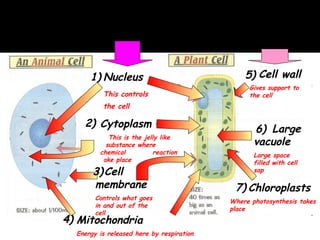
Plant cells vs. Animal cells
Both types of cell have these: Only plant cells
have these:
Nucleus
This controls
the cell
Cytoplasm
This is the jelly like
substance where
chemical reaction
take place
Cell wall
Gives support to
the cell
Large
vacuole
Large space
filled with cell
sapCell
membrane
Controls what goes
in and out of the
cell
1)
2)
3)
6)
5)
7)
Mitochondria
Energy is released here by respiration
4)
Chloroplasts
Where photosynthesis takes
place
Complete this definition of
Diffusion using the key words:
Diffusion is the _______ __________ of ______
from where there are lots of particles ( high
__________) to where there are less particles.
We say the particles diffuse down a concentration
_________.
In cells, the cell membrane has small holes that allow
small particles through, but not large molecules. We
call this membrane ________ ________.
The bigger the difference in concentration, the faster
the rate of ________.
Partially permeable
Diffusion
Concentration
Gradient
Random movement
Particles
Osmosis is diffusion but with …
WATER
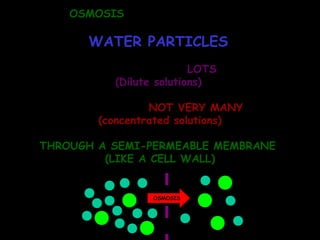
OSMOSIS IS THE MOVEMENT OF
WATER PARTICLES
FROM WHERE THERE ARE LOTS OF THEM
(Dilute solutions)
TO WHERE THERE ARE NOT VERY MANY OF THEM
(concentrated solutions)
THROUGH A SEMI-PERMEABLE MEMBRANE
(LIKE A CELL WALL)
OSMOSIS
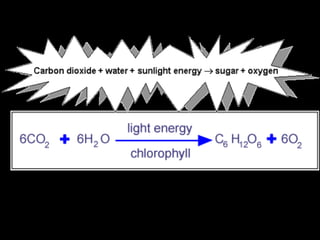
Photosynthesis - The equation
1. What factors are needed to make glucose?
2. What products are made by photosynthesis?
Limiting factors
• If you alter the levels of light, carbon
dioxide or change the temperature
the rate of photosynthesis will
change!
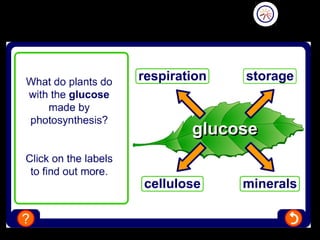
What happens to the glucose?
Mineral needs
Can you fill in this table?
Mineral Needed for Deficiency
disease
Nitrates
Magnesium
Mineral needs
Mineral Needed for Deficiency
disease
Nitrates Healthy leaves
Good all round
growth
Purple leaves, poor
growth
Magnesium To make chlorophyll Yellow leaves
Food chains
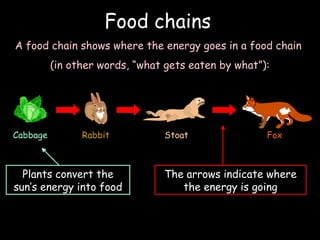
A food chain shows where the energy goes in a food chain
(in other words, “what gets eaten by what”):
Cabbage Rabbit Stoat Fox
The arrows indicate where
the energy is going
Plants convert the
sun’s energy into food
Pyramids of biomass
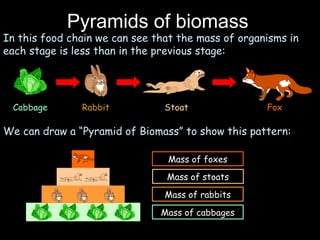
In this food chain we can see that the mass of organisms in
each stage is less than in the previous stage:
Cabbage Rabbit Stoat Fox
We can draw a “Pyramid of Biomass” to show this pattern:
Mass of cabbages
Mass of rabbits
Mass of stoats
Mass of foxes
Energy flow in a food chain
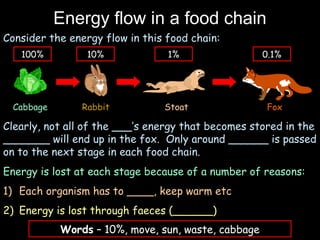
Consider the energy flow in this food chain:
Cabbage Rabbit Stoat Fox
100% 10% 1% 0.1%
Clearly, not all of the ___’s energy that becomes stored in the
_______ will end up in the fox. Only around ______ is passed
on to the next stage in each food chain.
Energy is lost at each stage because of a number of reasons:
1) Each organism has to ____, keep warm etc
2) Energy is lost through faeces (______)
Words – 10%, move, sun, waste, cabbage
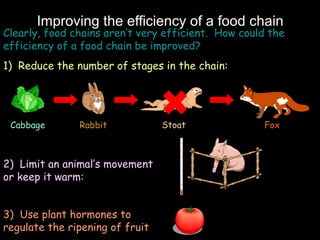
Improving the efficiency of a food chain
Clearly, food chains aren’t very efficient. How could the
efficiency of a food chain be improved?
1) Reduce the number of stages in the chain:
Cabbage Rabbit Stoat
2) Limit an animal’s movement
or keep it warm:
Fox
3) Use plant hormones to
regulate the ripening of fruit
Energy in food production
• Biomass and energy is lost at each stage of
a food chain. The efficiency of food
production can be improved by reducing the
number of stages in our food chains. It
would be most efficient if we all ate just
plants
• If you stop animals moving around and
keep them warm they lose a lot less energy
which makes food production more
efficient
Decay
• Decay is carried out by micro-
organisms which work faster in warm,
moist conditions with a good supply of
oxygen.
• The decay process releases
substances that plants need to grow.
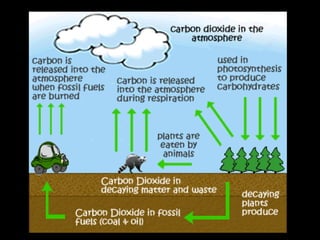
Carbon cycle
• The constant cycling of carbon is known as
the carbon cycle
• Carbon dioxide is removed from the
atmosphere by photosynthesis
• It is returned to the atmosphere by
respiration and combustion
• Microbes that decay waste and dead matter
respire and produce carbon dioxide
Map from memory
Enzymes
• Enzymes are biological catalysts, they
increase the rate of reactions.
• Enzymes are protein molecules made
up of long chains of amino acids.
• When enzymes are denatured the
active site changes shape.
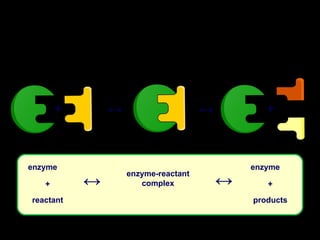
What happens at the active
site?
In the same way that a key fits into a lock, so a substrate is thought to fit into
an enzyme’s active site. The enzyme is the lock, and the reactant is the key.
+ ↔ ↔ +
enzyme
reactant
+
enzyme-reactant
complex↔
products
enzyme
+↔
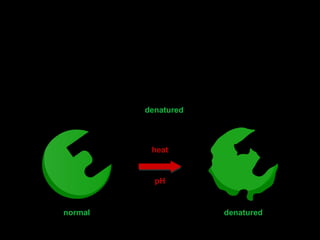
Factors affecting enzymes
If the temperature and pH changes sufficiently beyond an enzyme’s optimum, the
shape of the enzyme irreversibly changes.
normal denatured
heat
pH
This affects the shape of the active site and means that the enzyme will no
longer work.
When this happens the enzyme is denatured.
Aerobic Respiration
Oxygen + Glucose Carbon Dioxide + Water
Energy
+ +
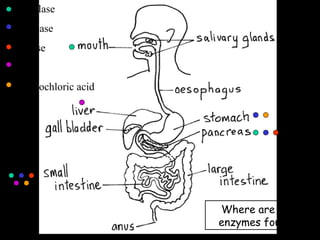
Amylase
Protease
Lipase
Bile
Hydrochloric acid
Where are the
enzymes found?
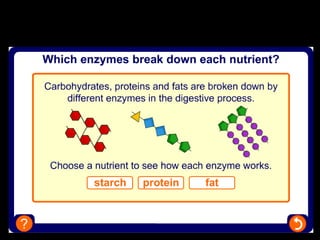
Enzymes of digestion
Homeostasis
• The internal conditions of your body need
to be controlled to maintain a constant
internal environment
• Waste products such as carbon dioxide and
urea need to be constantly removed
• Urea is produced by your liver as you break
down excess amino acids and is removed by
your kidneys as urine
Five factors we need to keep constant.
• 1. temperature
• 2. water
• 3. sugar
• 4.waste products (need to remove)
• 5. ions
B2
Homeostasis
Use these words to complete the notes.
receptors brain receptors
The thermo-regulatory centre of the ______
monitors and controls the temperature of
blood as it passes through.
This centre has __________which are
sensitive to the temperature of the blood.
The skin also has _________ sensitive to
temperature.
B2
Homeostasis
Glucose control
• Your blood glucose concentration is
monitored and controlled by your pancreas
• Insulin and glucagon are the hormones
involved in controlling blood sugar. Insulin
converts glucose to glycogen and glucagon
converts glycogen to glucose
• In diabetes the blood glucose may rise to
fatally high levels because the pancreas
does not produce enough insulin. It can be
controlled by injections and diet
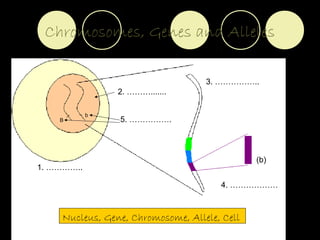
Chromosomes, Genes and Alleles
1. …………..
2. ……….......
3. ……………..
4. ………………
B
b
5. …………….
Nucleus, Gene, Chromosome, Allele, Cell
(b)
Why was his work not spread quickly?
• He was not a famous scientist –
nobody knew about him at the time.
• His job as abbot stopped him giving
lectures at universities.
• He published his work in an obscure
journal that few people read.
• Biologists at the time did not think
mathematics had anything to do with
Biology.
Gregor Mendel
(The Pea Plant Man)
Disease
• Some disorders are inherited
• Huntington’s disease is caused by a
dominant allele of a gene and can be
inherited from only one parent
• Cystic fibrosis is caused by a recessive
allele of a gene and so must be inherited
from both parents
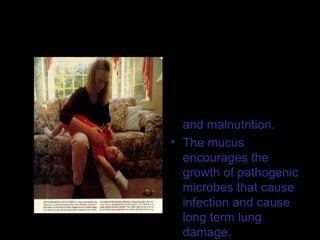
Cystic Fibrosis
• The treatment
involves chest
physiotherapy.
• They are very prone
to chest infections
and malnutrition.
• The mucus
encourages the
growth of pathogenic
microbes that cause
infection and cause
long term lung
damage.
PHEW!
•Good Luck

B2 exam revision

  • 1.
  • 2.
    Plant cells vs.Animal cells Both types of cell have these: Only plant cells have these: Nucleus This controls the cell Cytoplasm This is the jelly like substance where chemical reaction take place Cell wall Gives support to the cell Large vacuole Large space filled with cell sapCell membrane Controls what goes in and out of the cell 1) 2) 3) 6) 5) 7) Mitochondria Energy is released here by respiration 4) Chloroplasts Where photosynthesis takes place
  • 3.
    Complete this definitionof Diffusion using the key words: Diffusion is the _______ __________ of ______ from where there are lots of particles ( high __________) to where there are less particles. We say the particles diffuse down a concentration _________. In cells, the cell membrane has small holes that allow small particles through, but not large molecules. We call this membrane ________ ________. The bigger the difference in concentration, the faster the rate of ________. Partially permeable Diffusion Concentration Gradient Random movement Particles
  • 4.
    Osmosis is diffusionbut with … WATER
  • 5.
    OSMOSIS IS THEMOVEMENT OF WATER PARTICLES FROM WHERE THERE ARE LOTS OF THEM (Dilute solutions) TO WHERE THERE ARE NOT VERY MANY OF THEM (concentrated solutions) THROUGH A SEMI-PERMEABLE MEMBRANE (LIKE A CELL WALL) OSMOSIS
  • 6.
    Photosynthesis - Theequation 1. What factors are needed to make glucose? 2. What products are made by photosynthesis?
  • 7.
    Limiting factors • Ifyou alter the levels of light, carbon dioxide or change the temperature the rate of photosynthesis will change!
  • 8.
    What happens tothe glucose?
  • 9.
    Mineral needs Can youfill in this table? Mineral Needed for Deficiency disease Nitrates Magnesium
  • 10.
    Mineral needs Mineral Neededfor Deficiency disease Nitrates Healthy leaves Good all round growth Purple leaves, poor growth Magnesium To make chlorophyll Yellow leaves
  • 11.
    Food chains A foodchain shows where the energy goes in a food chain (in other words, “what gets eaten by what”): Cabbage Rabbit Stoat Fox The arrows indicate where the energy is going Plants convert the sun’s energy into food
  • 12.
    Pyramids of biomass Inthis food chain we can see that the mass of organisms in each stage is less than in the previous stage: Cabbage Rabbit Stoat Fox We can draw a “Pyramid of Biomass” to show this pattern: Mass of cabbages Mass of rabbits Mass of stoats Mass of foxes
  • 13.
    Energy flow ina food chain Consider the energy flow in this food chain: Cabbage Rabbit Stoat Fox 100% 10% 1% 0.1% Clearly, not all of the ___’s energy that becomes stored in the _______ will end up in the fox. Only around ______ is passed on to the next stage in each food chain. Energy is lost at each stage because of a number of reasons: 1) Each organism has to ____, keep warm etc 2) Energy is lost through faeces (______) Words – 10%, move, sun, waste, cabbage
  • 14.
    Improving the efficiencyof a food chain Clearly, food chains aren’t very efficient. How could the efficiency of a food chain be improved? 1) Reduce the number of stages in the chain: Cabbage Rabbit Stoat 2) Limit an animal’s movement or keep it warm: Fox 3) Use plant hormones to regulate the ripening of fruit
  • 15.
    Energy in foodproduction • Biomass and energy is lost at each stage of a food chain. The efficiency of food production can be improved by reducing the number of stages in our food chains. It would be most efficient if we all ate just plants • If you stop animals moving around and keep them warm they lose a lot less energy which makes food production more efficient
  • 16.
    Decay • Decay iscarried out by micro- organisms which work faster in warm, moist conditions with a good supply of oxygen. • The decay process releases substances that plants need to grow.
  • 17.
    Carbon cycle • Theconstant cycling of carbon is known as the carbon cycle • Carbon dioxide is removed from the atmosphere by photosynthesis • It is returned to the atmosphere by respiration and combustion • Microbes that decay waste and dead matter respire and produce carbon dioxide
  • 18.
  • 19.
    Enzymes • Enzymes arebiological catalysts, they increase the rate of reactions. • Enzymes are protein molecules made up of long chains of amino acids. • When enzymes are denatured the active site changes shape.
  • 20.
    What happens atthe active site? In the same way that a key fits into a lock, so a substrate is thought to fit into an enzyme’s active site. The enzyme is the lock, and the reactant is the key. + ↔ ↔ + enzyme reactant + enzyme-reactant complex↔ products enzyme +↔
  • 21.
    Factors affecting enzymes Ifthe temperature and pH changes sufficiently beyond an enzyme’s optimum, the shape of the enzyme irreversibly changes. normal denatured heat pH This affects the shape of the active site and means that the enzyme will no longer work. When this happens the enzyme is denatured.
  • 22.
    Aerobic Respiration Oxygen +Glucose Carbon Dioxide + Water Energy + +
  • 23.
  • 24.
  • 25.
    Homeostasis • The internalconditions of your body need to be controlled to maintain a constant internal environment • Waste products such as carbon dioxide and urea need to be constantly removed • Urea is produced by your liver as you break down excess amino acids and is removed by your kidneys as urine
  • 26.
    Five factors weneed to keep constant. • 1. temperature • 2. water • 3. sugar • 4.waste products (need to remove) • 5. ions B2 Homeostasis
  • 27.
    Use these wordsto complete the notes. receptors brain receptors The thermo-regulatory centre of the ______ monitors and controls the temperature of blood as it passes through. This centre has __________which are sensitive to the temperature of the blood. The skin also has _________ sensitive to temperature. B2 Homeostasis
  • 28.
    Glucose control • Yourblood glucose concentration is monitored and controlled by your pancreas • Insulin and glucagon are the hormones involved in controlling blood sugar. Insulin converts glucose to glycogen and glucagon converts glycogen to glucose • In diabetes the blood glucose may rise to fatally high levels because the pancreas does not produce enough insulin. It can be controlled by injections and diet
  • 29.
    Chromosomes, Genes andAlleles 1. ………….. 2. ………....... 3. …………….. 4. ……………… B b 5. ……………. Nucleus, Gene, Chromosome, Allele, Cell (b)
  • 31.
    Why was hiswork not spread quickly? • He was not a famous scientist – nobody knew about him at the time. • His job as abbot stopped him giving lectures at universities. • He published his work in an obscure journal that few people read. • Biologists at the time did not think mathematics had anything to do with Biology. Gregor Mendel (The Pea Plant Man)
  • 32.
    Disease • Some disordersare inherited • Huntington’s disease is caused by a dominant allele of a gene and can be inherited from only one parent • Cystic fibrosis is caused by a recessive allele of a gene and so must be inherited from both parents
  • 33.
    Cystic Fibrosis • Thetreatment involves chest physiotherapy. • They are very prone to chest infections and malnutrition. • The mucus encourages the growth of pathogenic microbes that cause infection and cause long term lung damage.
  • 34.

Editor's Notes

  • #3 <number>
  • #9 <number>
  • #25 Teacher notes This activity could be used to check students’ understanding of chemical digestion.