BIOLOGY

CORE revision session
Overview of the syllabus

   B1.1 Keeping healthy
   B1.2 Nerves and hormones
   B1.3 The use and abuse of drugs
   B1.4 Interdependence and adaptation
   B1.5 Energy and biomass in food chains
   B1.6 Waste materials from plants and
    animals
   B1.7 Genetic variation and its control
   B1.8 Evolution
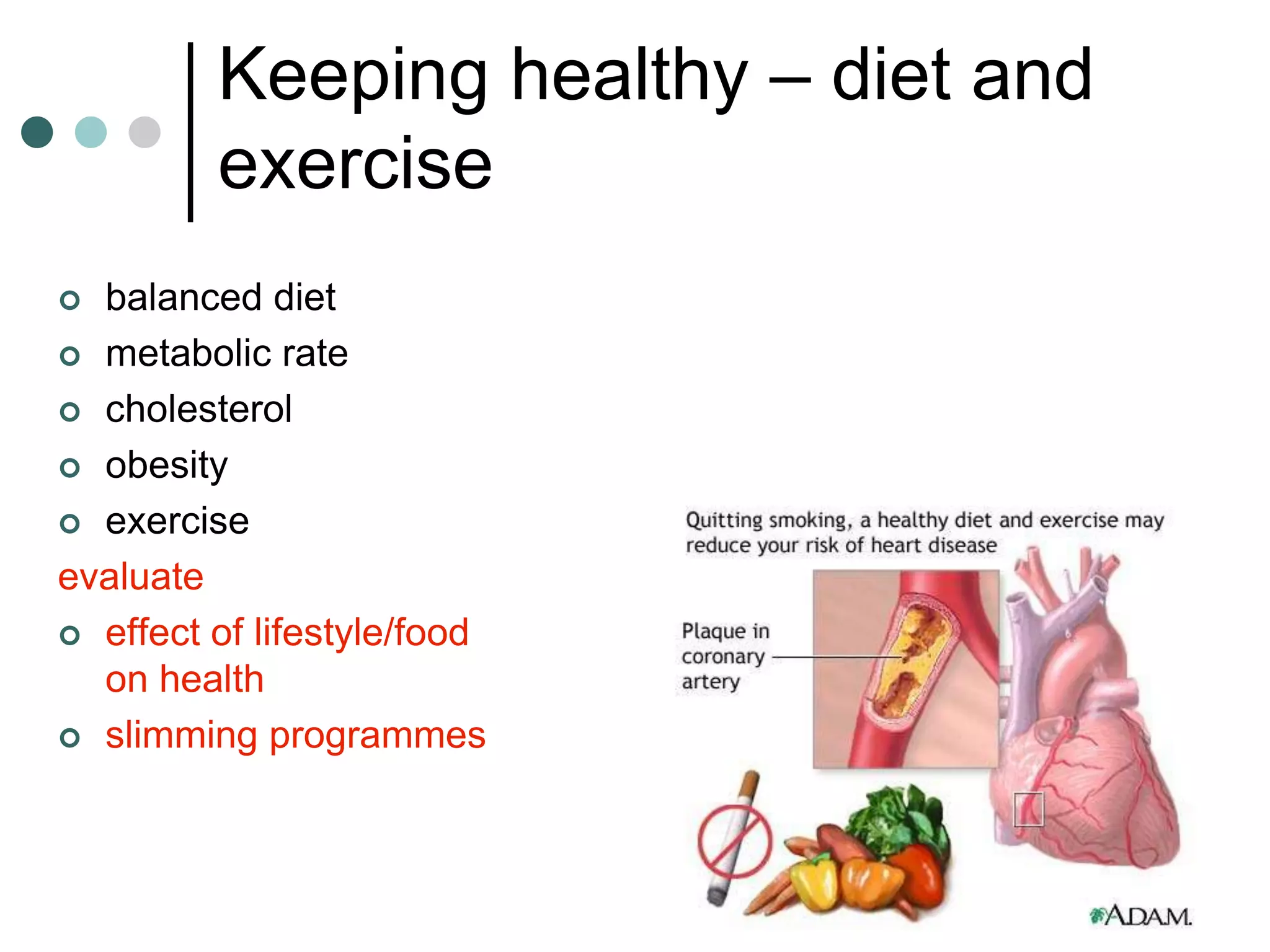
Keeping healthy – diet and
         exercise
 balanced diet
 metabolic rate

 cholesterol

 obesity

 exercise

evaluate
 effect of lifestyle/food
  on health
 slimming programmes
Keeping healthy –
         infectious disease
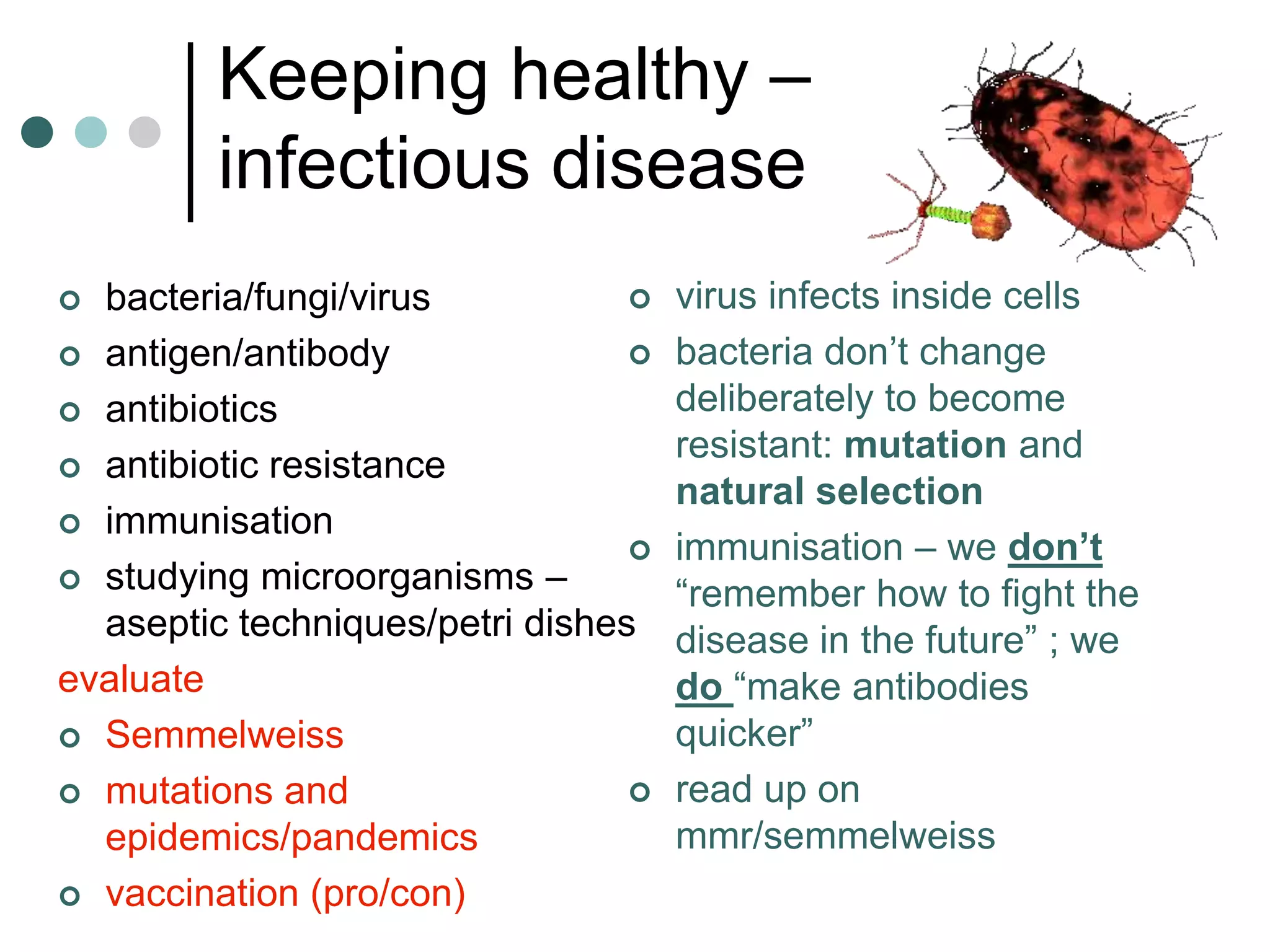
 bacteria/fungi/virus              virus infects inside cells
 antigen/antibody                  bacteria don’t change
 antibiotics                        deliberately to become
                                     resistant: mutation and
 antibiotic resistance
                                     natural selection
 immunisation
                                    immunisation – we don’t
 studying microorganisms –
                                     “remember how to fight the
  aseptic techniques/petri dishes    disease in the future” ; we
evaluate                             do “make antibodies
 Semmelweiss                        quicker”
 mutations and                     read up on
  epidemics/pandemics                mmr/semmelweiss
 vaccination (pro/con)
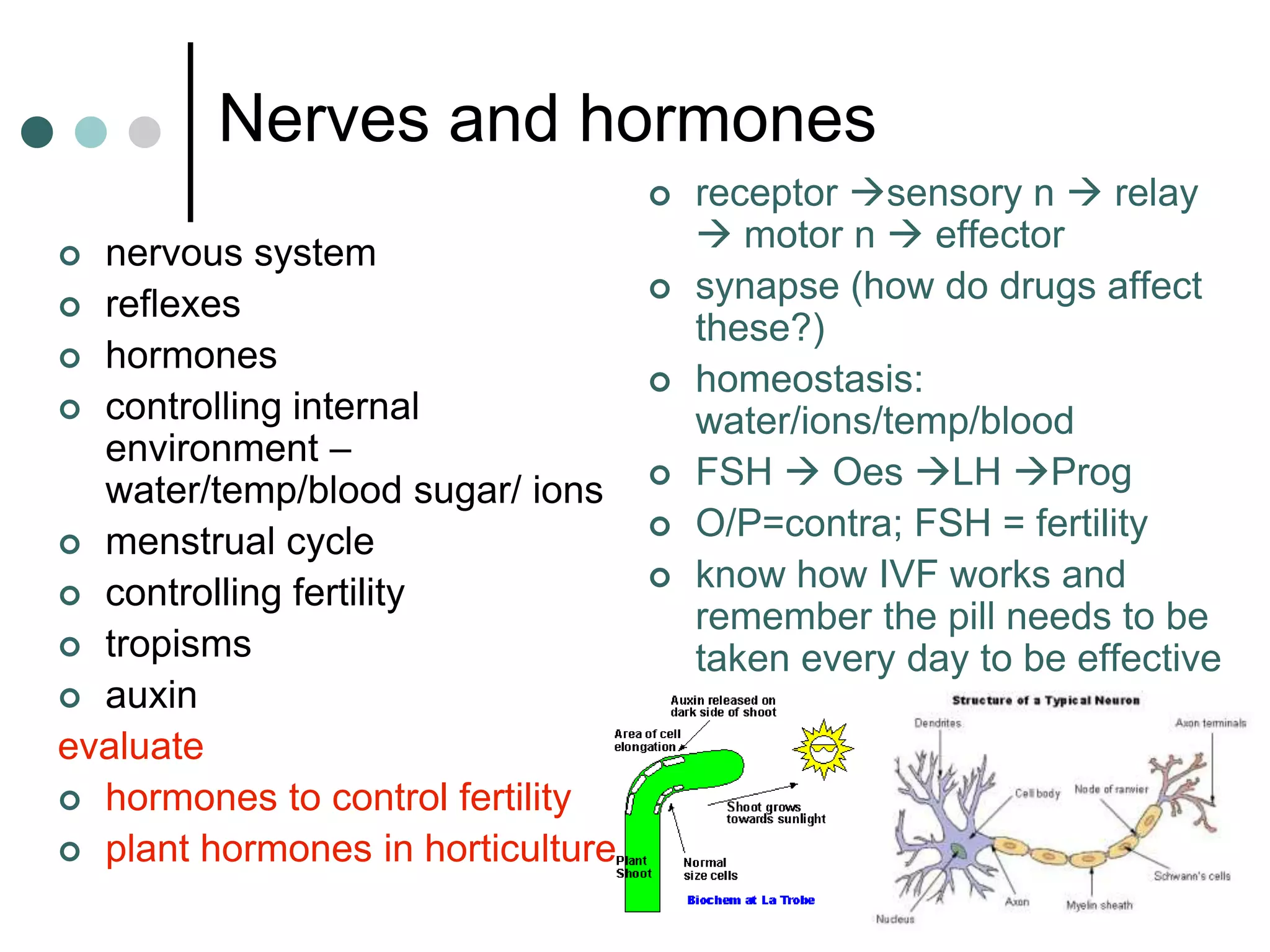
Nerves and hormones
                                      receptor sensory n  relay
 nervous system                        motor n  effector
 reflexes
                                      synapse (how do drugs affect
                                       these?)
 hormones
                                      homeostasis:
 controlling internal
                                       water/ions/temp/blood
  environment –
  water/temp/blood sugar/ ions        FSH  Oes LH Prog
 menstrual cycle
                                      O/P=contra; FSH = fertility
 controlling fertility
                                      know how IVF works and
                                       remember the pill needs to be
 tropisms
                                       taken every day to be effective
 auxin
evaluate
 hormones to control fertility
 plant hormones in horticulture
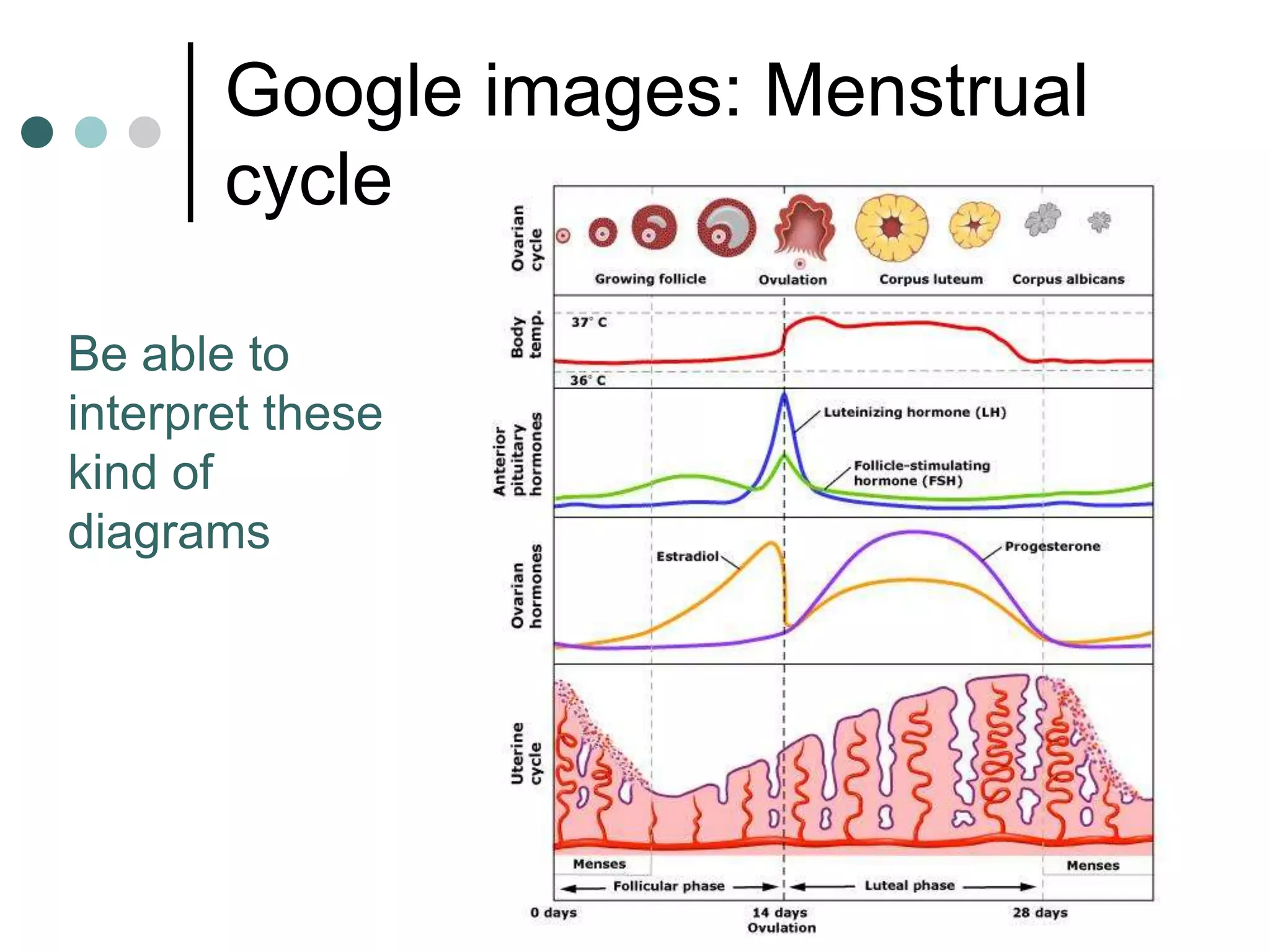
Google images: Menstrual
       cycle

Be able to
interpret these
kind of
diagrams
The use and abuse of drugs

 development of medicines        dependency/
  (clinical trials)                addiction/withdrawal
 legal/illegal drugs              symptoms
 cannabis
 thalidomide
Evaluate
 why use illegal drugs

 progression from recreational
  drugs to hard drugs
 effect of drugs on health
 performance enhancing drugs in
  sport
Interdependance and
         adaptation
 competition                  plants –
 adaptation                    water/minerals/light/sp
 extremophiles
                                ace
 lichens/invertebrate
                               animals –
                                food/mates/territory
evaluate
                               desert/arctic
   data on how
    environmental changes      detering predators
    affects distribution/
    behaviour of
    organisms.
Energy and biomass in
food chains
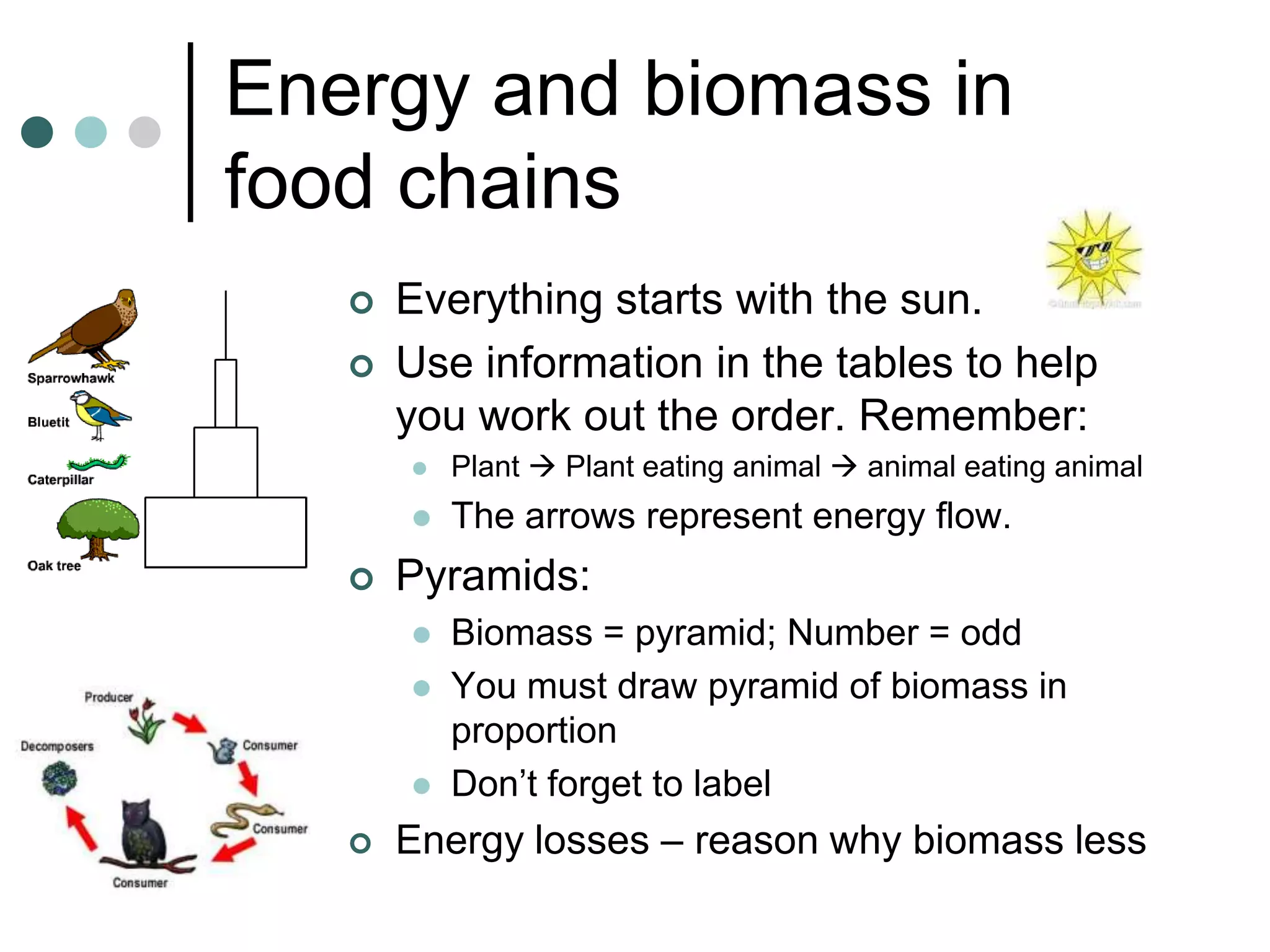
      Everything starts with the sun.
      Use information in the tables to help
       you work out the order. Remember:
          Plant  Plant eating animal  animal eating animal
          The arrows represent energy flow.
      Pyramids:
          Biomass = pyramid; Number = odd
          You must draw pyramid of biomass in
           proportion
          Don’t forget to label
      Energy losses – reason why biomass less
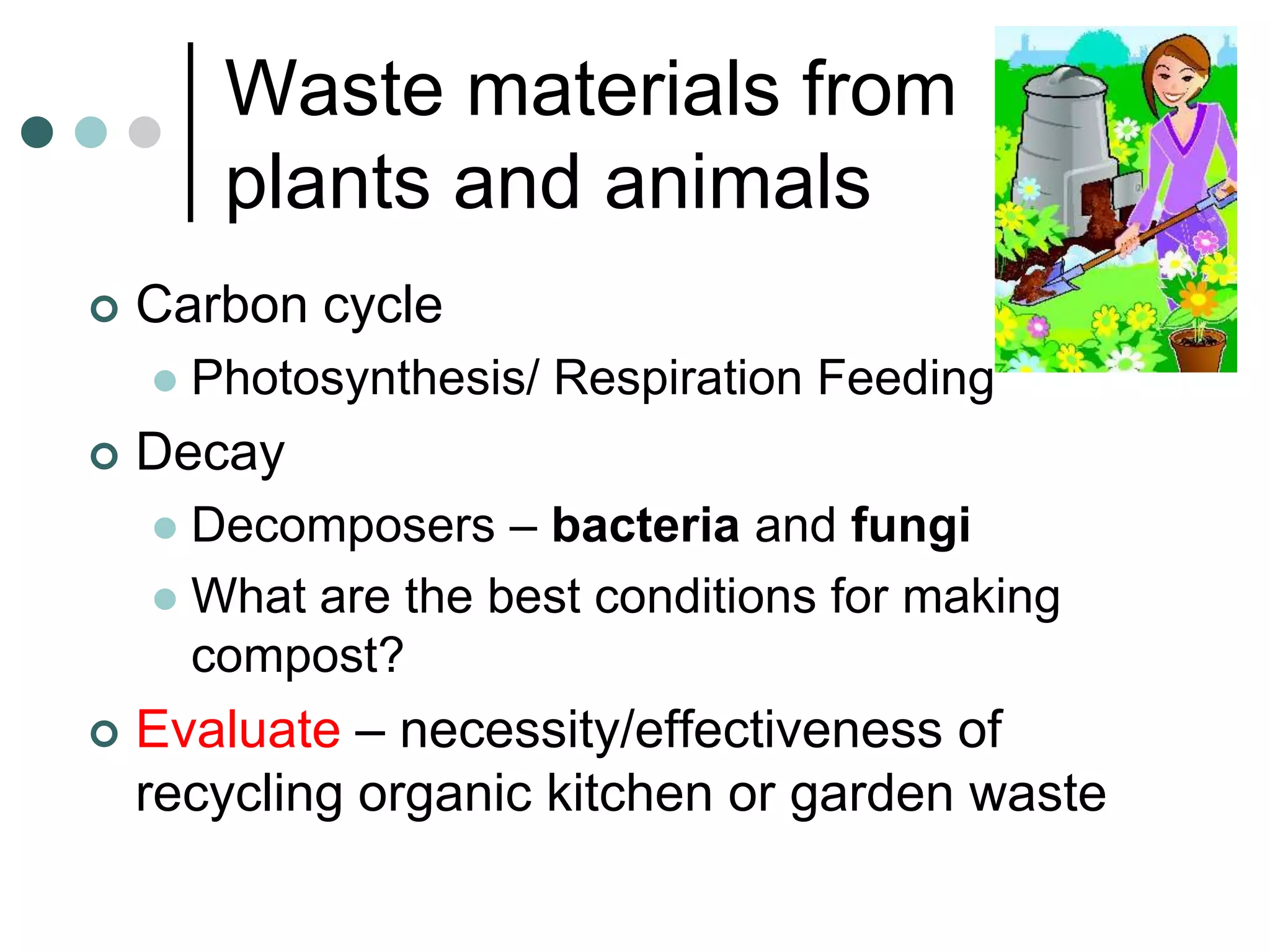
Waste materials from
         plants and animals
   Carbon cycle
       Photosynthesis/ Respiration Feeding
   Decay
     Decomposers – bacteria and fungi
     What are the best conditions for making
      compost?
   Evaluate – necessity/effectiveness of
    recycling organic kitchen or garden waste
Genetic variation and its
          control      plant cloning: cuttings/tissue
                       culture
                                  


                                     animal cloning: embryo
   cell  nucleus  DNA              splitting/ nuclear transfer
   asexual/sexual reproduction
   genetic engineering
   cloning
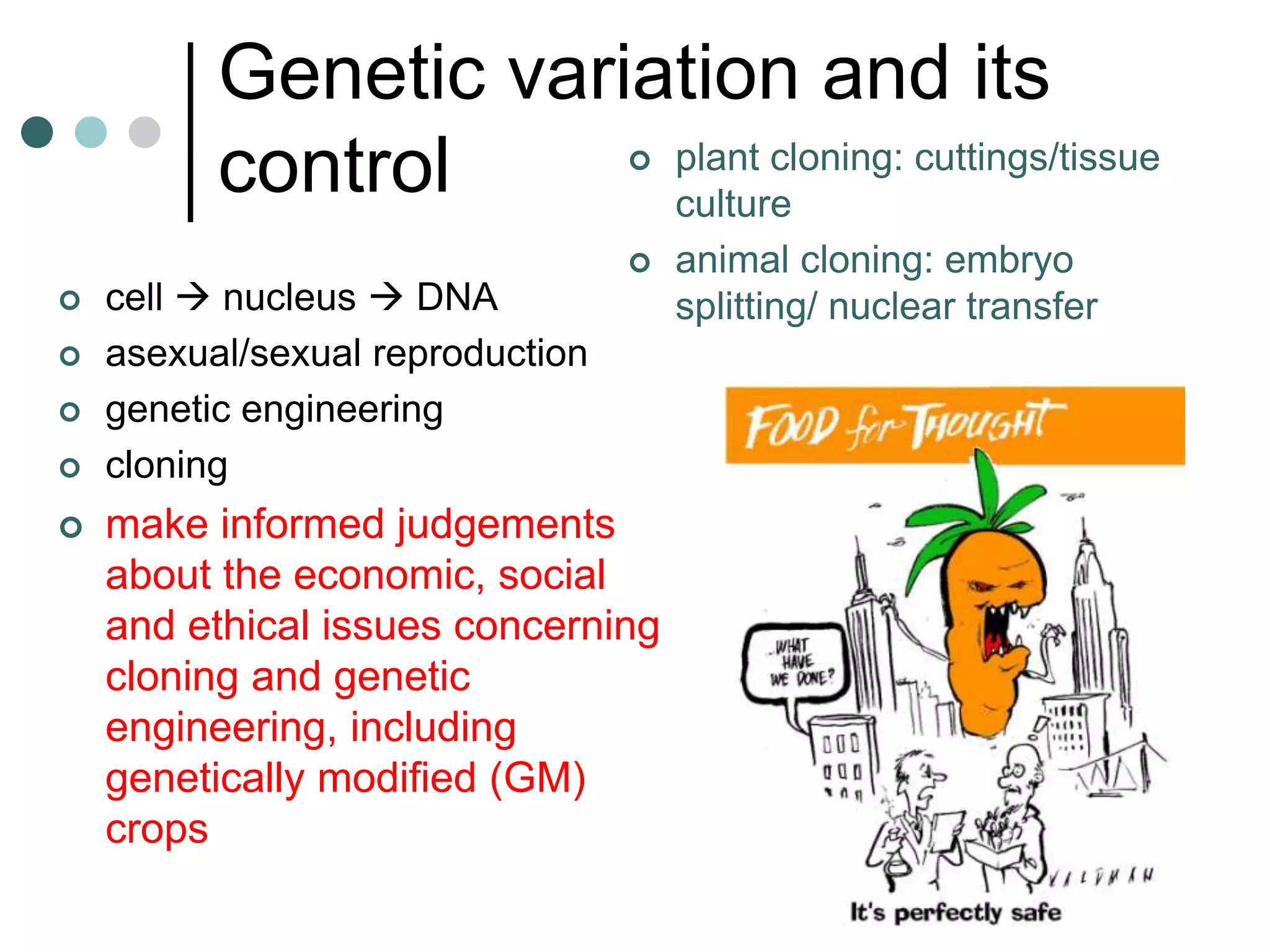
   make informed judgements
    about the economic, social
    and ethical issues concerning
    cloning and genetic
    engineering, including
    genetically modified (GM)
    crops
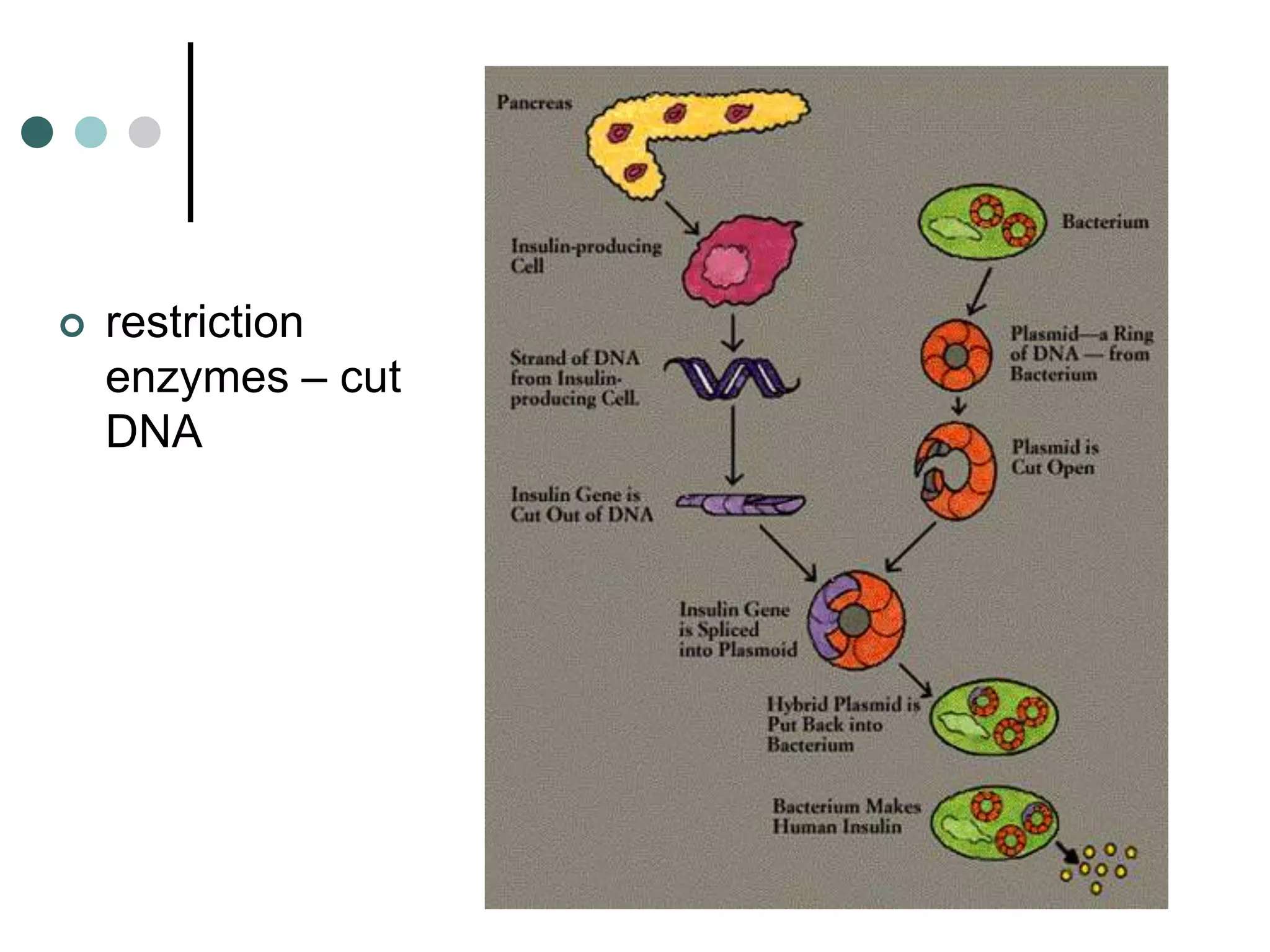
   restriction
    enzymes – cut
    DNA
Evolution

   evolution
   natural selection
   extinction
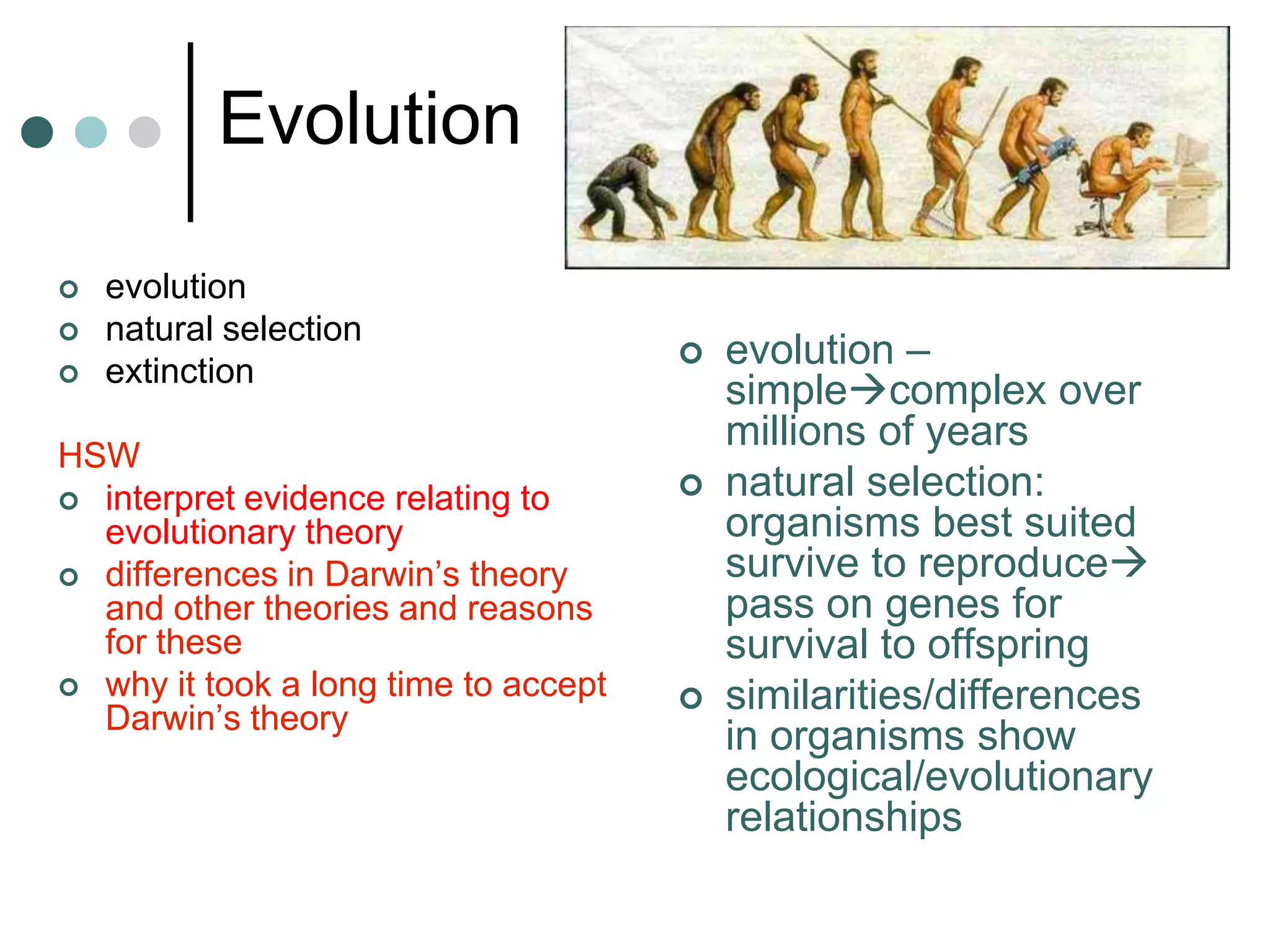
                                         evolution –
                                          simplecomplex over
                                          millions of years
HSW
 interpret evidence relating to
                                         natural selection:
  evolutionary theory                     organisms best suited
 differences in Darwin’s theory          survive to reproduce
  and other theories and reasons          pass on genes for
  for these                               survival to offspring
 why it took a long time to accept
  Darwin’s theory
                                         similarities/differences
                                          in organisms show
                                          ecological/evolutionary
                                          relationships
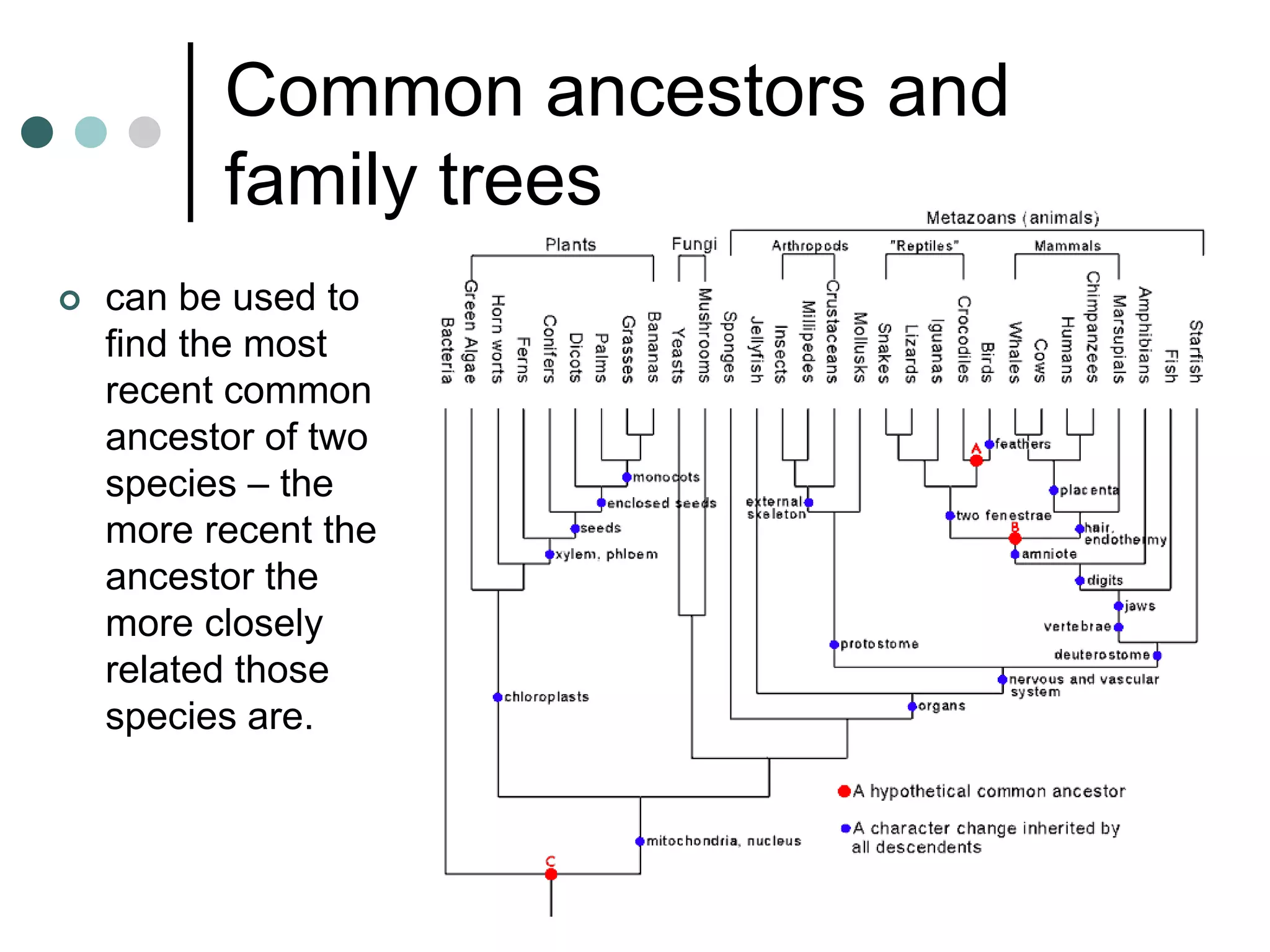
Common ancestors and
          family trees
   can be used to
    find the most
    recent common
    ancestor of two
    species – the
    more recent the
    ancestor the
    more closely
    related those
    species are.

Biology revision session core

  • 1.
  • 2.
    Overview of thesyllabus  B1.1 Keeping healthy  B1.2 Nerves and hormones  B1.3 The use and abuse of drugs  B1.4 Interdependence and adaptation  B1.5 Energy and biomass in food chains  B1.6 Waste materials from plants and animals  B1.7 Genetic variation and its control  B1.8 Evolution
  • 3.
    Keeping healthy –diet and exercise  balanced diet  metabolic rate  cholesterol  obesity  exercise evaluate  effect of lifestyle/food on health  slimming programmes
  • 4.
    Keeping healthy – infectious disease  bacteria/fungi/virus  virus infects inside cells  antigen/antibody  bacteria don’t change  antibiotics deliberately to become resistant: mutation and  antibiotic resistance natural selection  immunisation  immunisation – we don’t  studying microorganisms – “remember how to fight the aseptic techniques/petri dishes disease in the future” ; we evaluate do “make antibodies  Semmelweiss quicker”  mutations and  read up on epidemics/pandemics mmr/semmelweiss  vaccination (pro/con)
  • 5.
    Nerves and hormones  receptor sensory n  relay  nervous system  motor n  effector  reflexes  synapse (how do drugs affect these?)  hormones  homeostasis:  controlling internal water/ions/temp/blood environment – water/temp/blood sugar/ ions  FSH  Oes LH Prog  menstrual cycle  O/P=contra; FSH = fertility  controlling fertility  know how IVF works and remember the pill needs to be  tropisms taken every day to be effective  auxin evaluate  hormones to control fertility  plant hormones in horticulture
  • 6.
    Google images: Menstrual cycle Be able to interpret these kind of diagrams
  • 7.
    The use andabuse of drugs  development of medicines  dependency/ (clinical trials) addiction/withdrawal  legal/illegal drugs symptoms  cannabis  thalidomide Evaluate  why use illegal drugs  progression from recreational drugs to hard drugs  effect of drugs on health  performance enhancing drugs in sport
  • 8.
    Interdependance and adaptation  competition  plants –  adaptation water/minerals/light/sp  extremophiles ace  lichens/invertebrate  animals – food/mates/territory evaluate  desert/arctic  data on how environmental changes  detering predators affects distribution/ behaviour of organisms.
  • 9.
    Energy and biomassin food chains  Everything starts with the sun.  Use information in the tables to help you work out the order. Remember:  Plant  Plant eating animal  animal eating animal  The arrows represent energy flow.  Pyramids:  Biomass = pyramid; Number = odd  You must draw pyramid of biomass in proportion  Don’t forget to label  Energy losses – reason why biomass less
  • 10.
    Waste materials from plants and animals  Carbon cycle  Photosynthesis/ Respiration Feeding  Decay  Decomposers – bacteria and fungi  What are the best conditions for making compost?  Evaluate – necessity/effectiveness of recycling organic kitchen or garden waste
  • 11.
    Genetic variation andits control plant cloning: cuttings/tissue culture   animal cloning: embryo  cell  nucleus  DNA splitting/ nuclear transfer  asexual/sexual reproduction  genetic engineering  cloning  make informed judgements about the economic, social and ethical issues concerning cloning and genetic engineering, including genetically modified (GM) crops
  • 12.
    restriction enzymes – cut DNA
  • 13.
    Evolution  evolution  natural selection  extinction  evolution – simplecomplex over millions of years HSW  interpret evidence relating to  natural selection: evolutionary theory organisms best suited  differences in Darwin’s theory survive to reproduce and other theories and reasons pass on genes for for these survival to offspring  why it took a long time to accept Darwin’s theory  similarities/differences in organisms show ecological/evolutionary relationships
  • 14.
    Common ancestors and family trees  can be used to find the most recent common ancestor of two species – the more recent the ancestor the more closely related those species are.