Automotive electronics
AUTOMOTIVE
ELECTRONICS
Automotive electronics are a
set of electronic systems and
components used in vehicles.
The earliest electronic
systems available were vacuum
tube car radios, starting in the
early 1930s.
WHAT DO THEY DO?
These systems help control
and assist various functions,
from engine management and
safety to in-car entertainment.
CORE SYSTEMS AND COMPONENTS
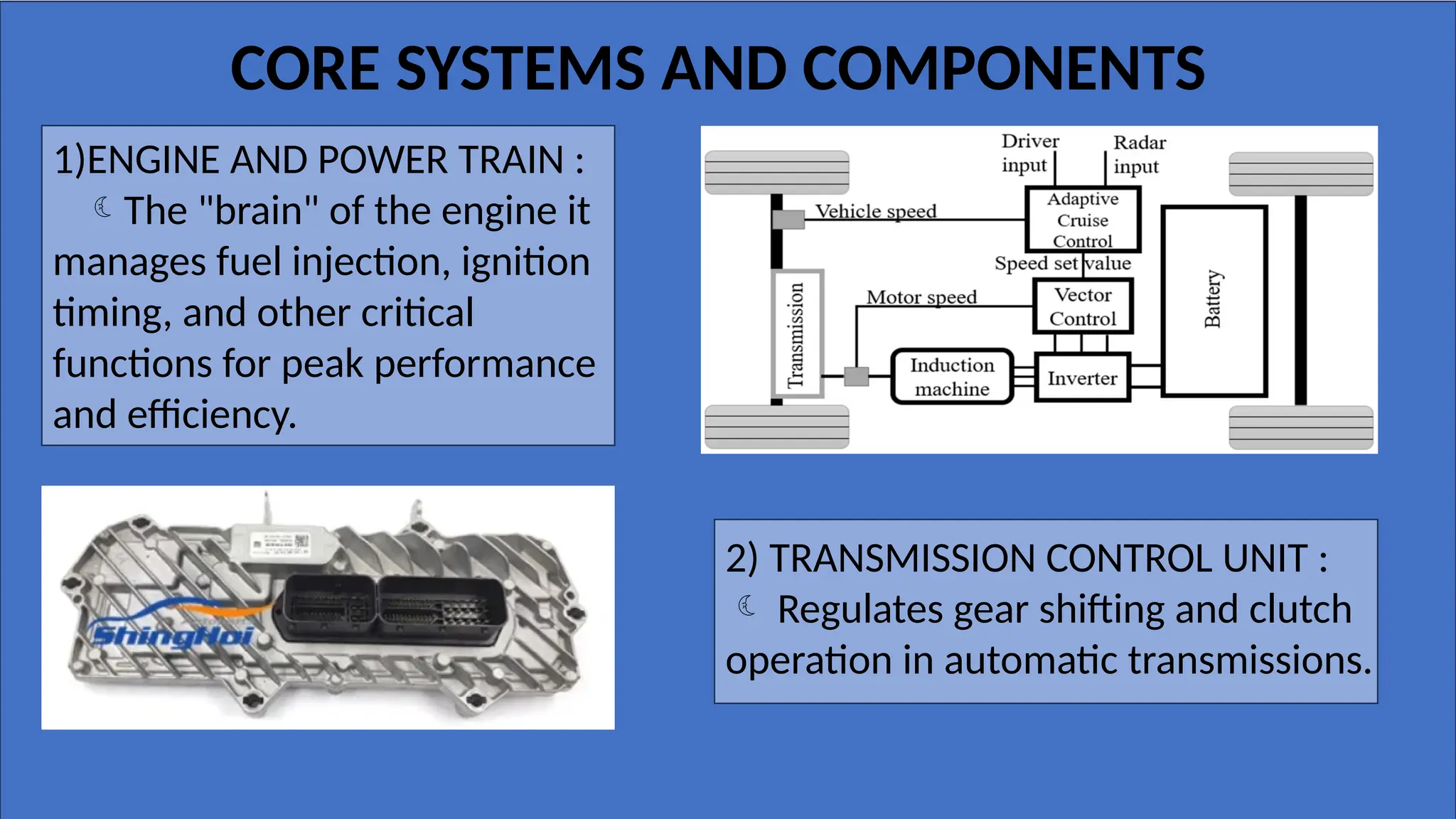
1)ENGINE AND POWER TRAIN :
The "brain" of the engine it
manages fuel injection, ignition
timing, and other critical
functions for peak performance
and efficiency.
2) TRANSMISSION CONTROL UNIT :
 Regulates gear shifting and clutch
operation in automatic transmissions.
SAFETY AND SECURITY
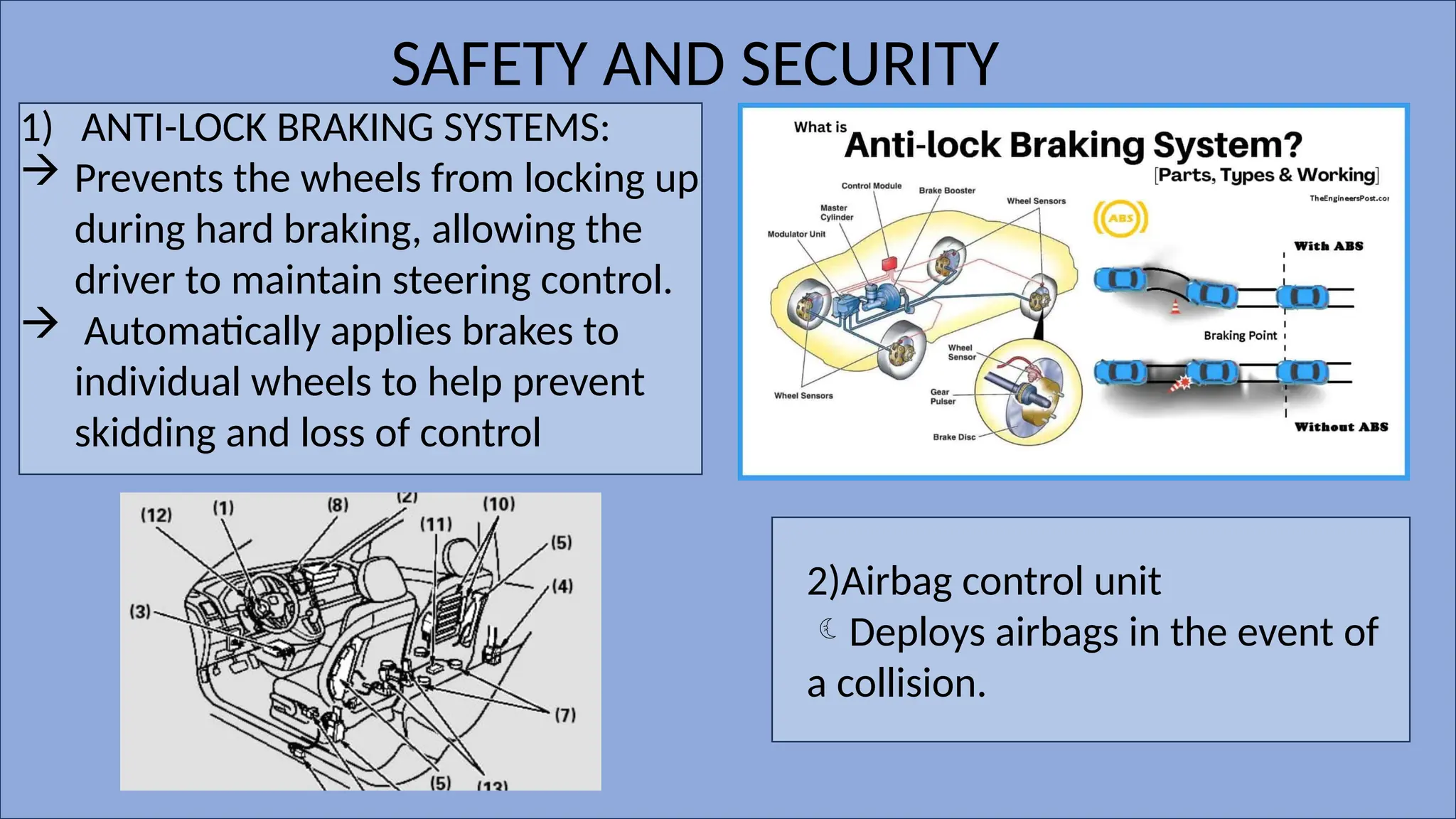
1) ANTI-LOCK BRAKING SYSTEMS:
 Prevents the wheels from locking up
during hard braking, allowing the
driver to maintain steering control.
 Automatically applies brakes to
individual wheels to help prevent
skidding and loss of control
2)Airbag control unit
Deploys airbags in the event of
a collision.
2)TIRE PRESSURE
MONITORING SYSTEM
Warns the driver when tire
pressure is low.
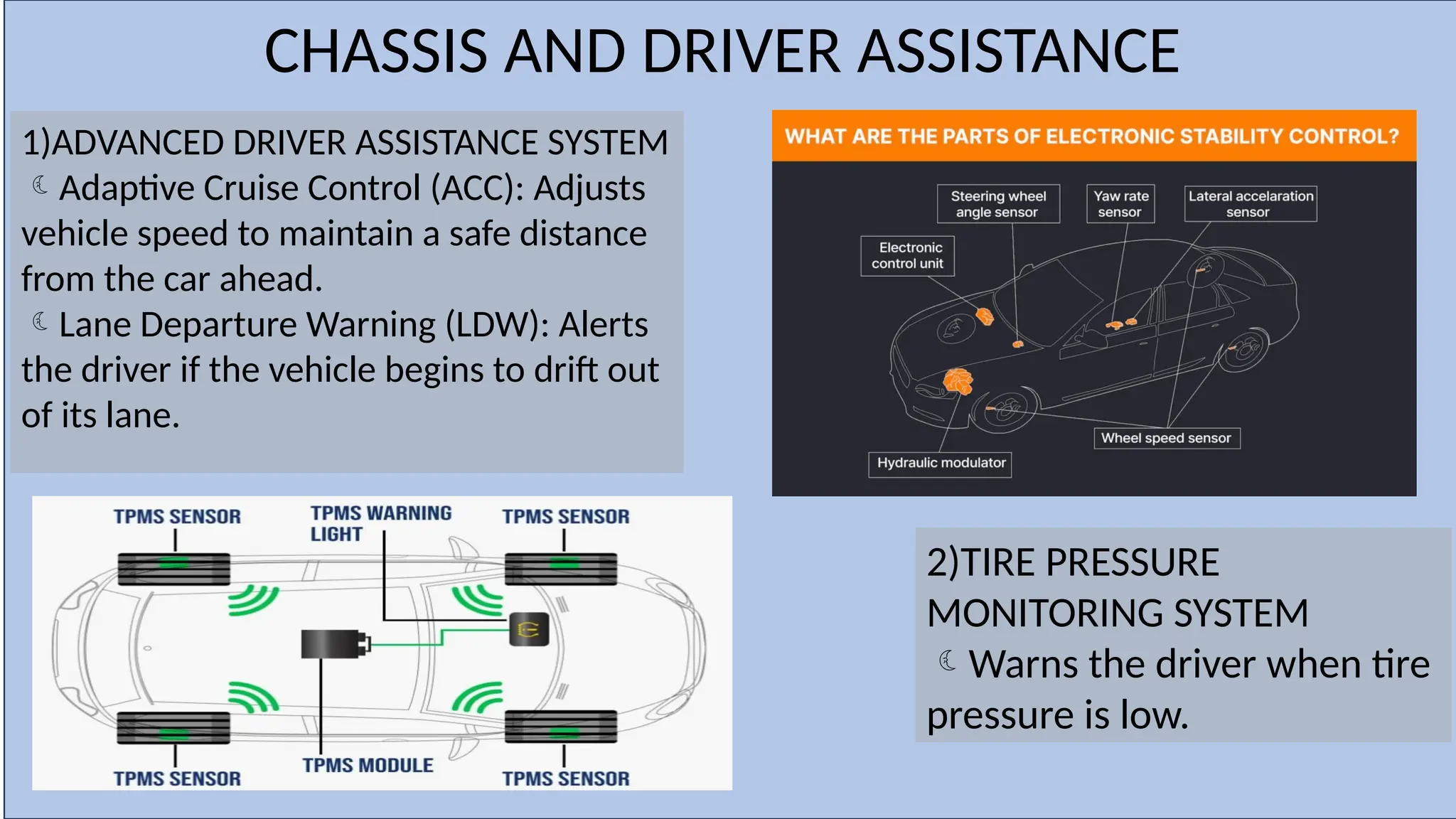
1)ADVANCED DRIVER ASSISTANCE SYSTEM
Adaptive Cruise Control (ACC): Adjusts
vehicle speed to maintain a safe distance
from the car ahead.
Lane Departure Warning (LDW): Alerts
the driver if the vehicle begins to drift out
of its lane.
CHASSIS AND DRIVER ASSISTANCE
BODY AND COMFORT ELECTRONICS
1)INFOTAINMENT SYSTEMS:
Integrate audio, navigation, and
connectivity features.
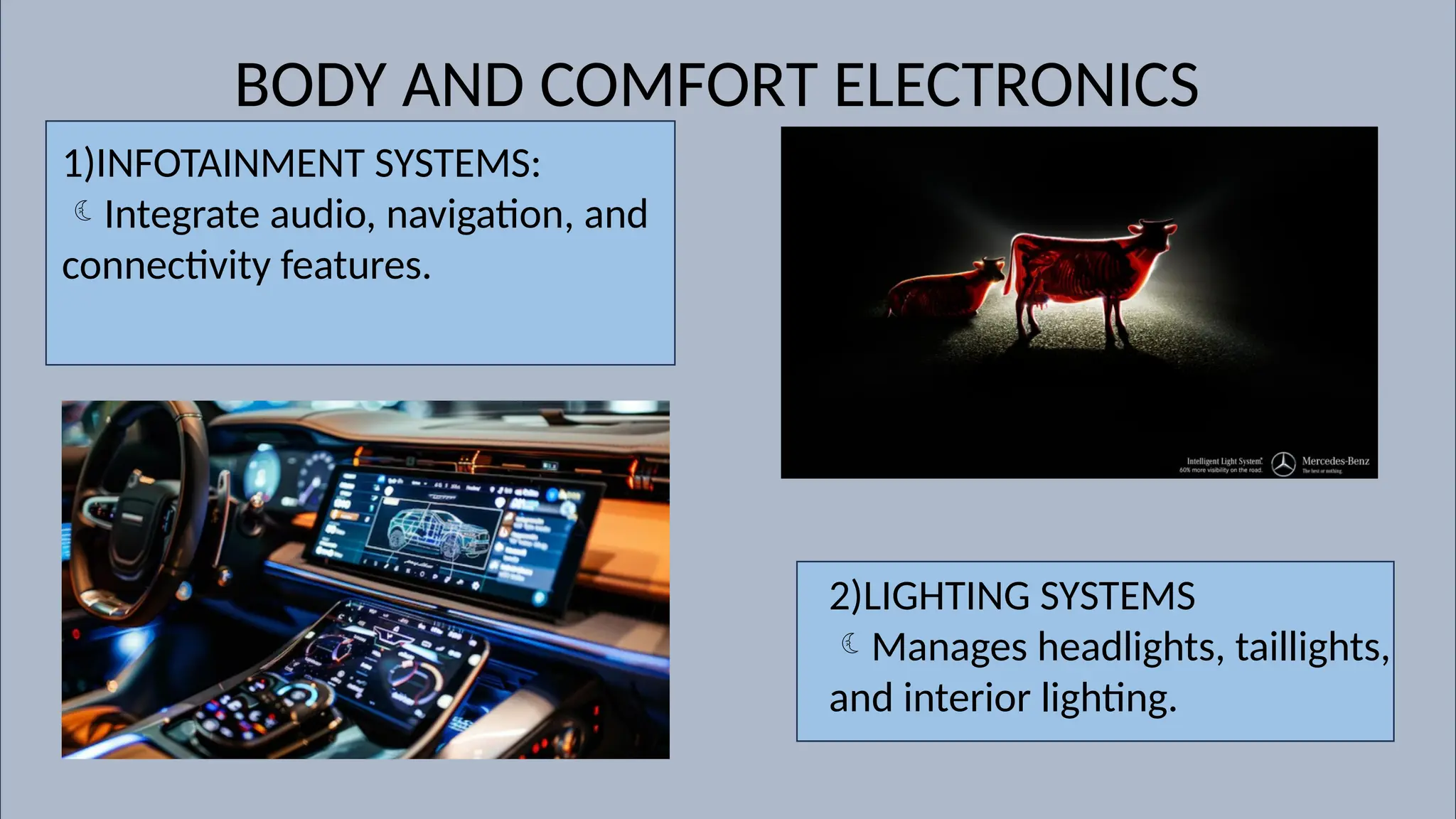
2)LIGHTING SYSTEMS
Manages headlights, taillights,
and interior lighting.
THE FUTURE OF AUTOMOTIVE ELECTRONICS
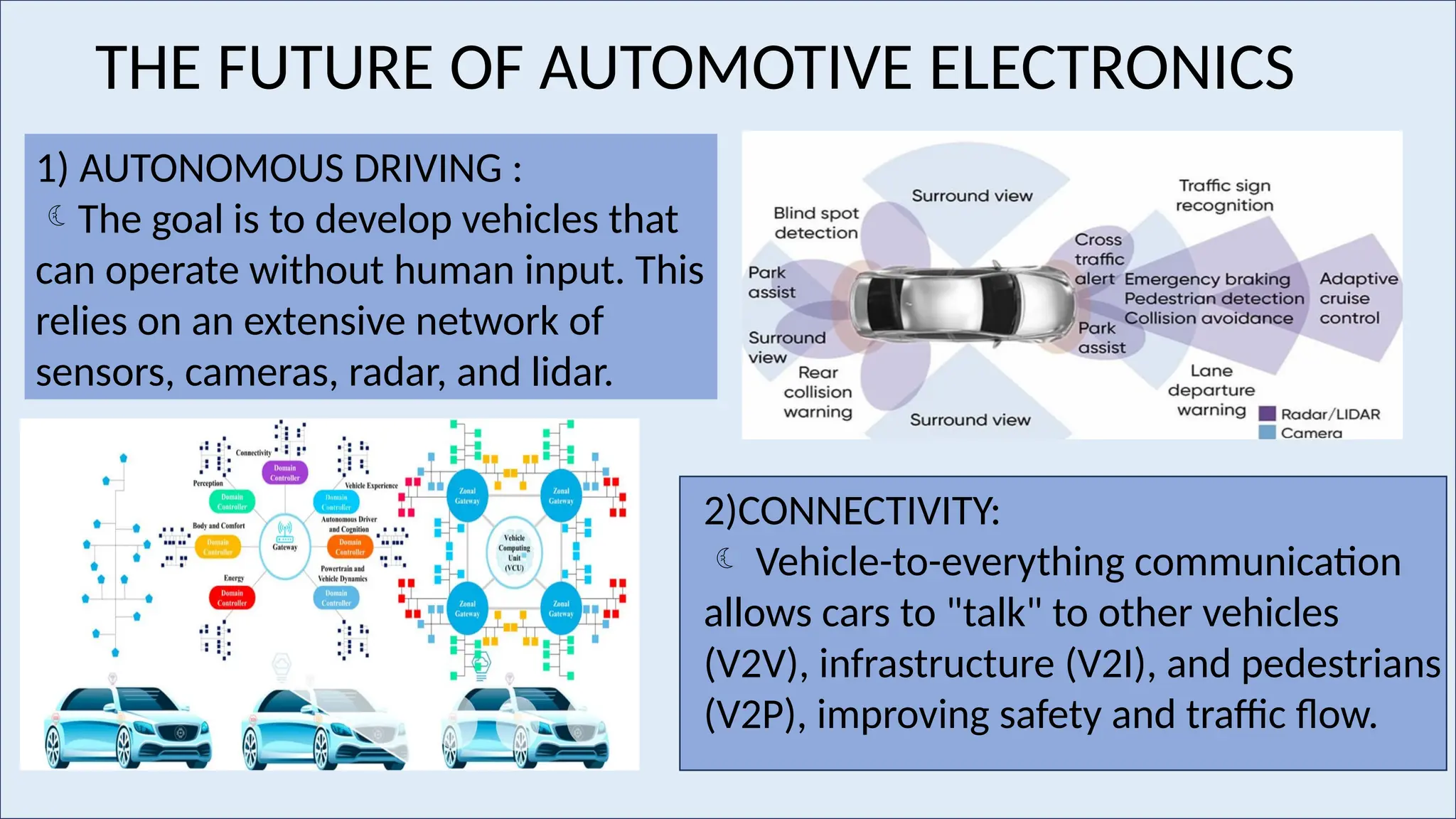
1) AUTONOMOUS DRIVING :
The goal is to develop vehicles that
can operate without human input. This
relies on an extensive network of
sensors, cameras, radar, and lidar.
2)CONNECTIVITY:
 Vehicle-to-everything communication
allows cars to "talk" to other vehicles
(V2V), infrastructure (V2I), and pedestrians
(V2P), improving safety and traffic flow.
THE FUTURE OF AUTOMOTIVE ELECTRONICS
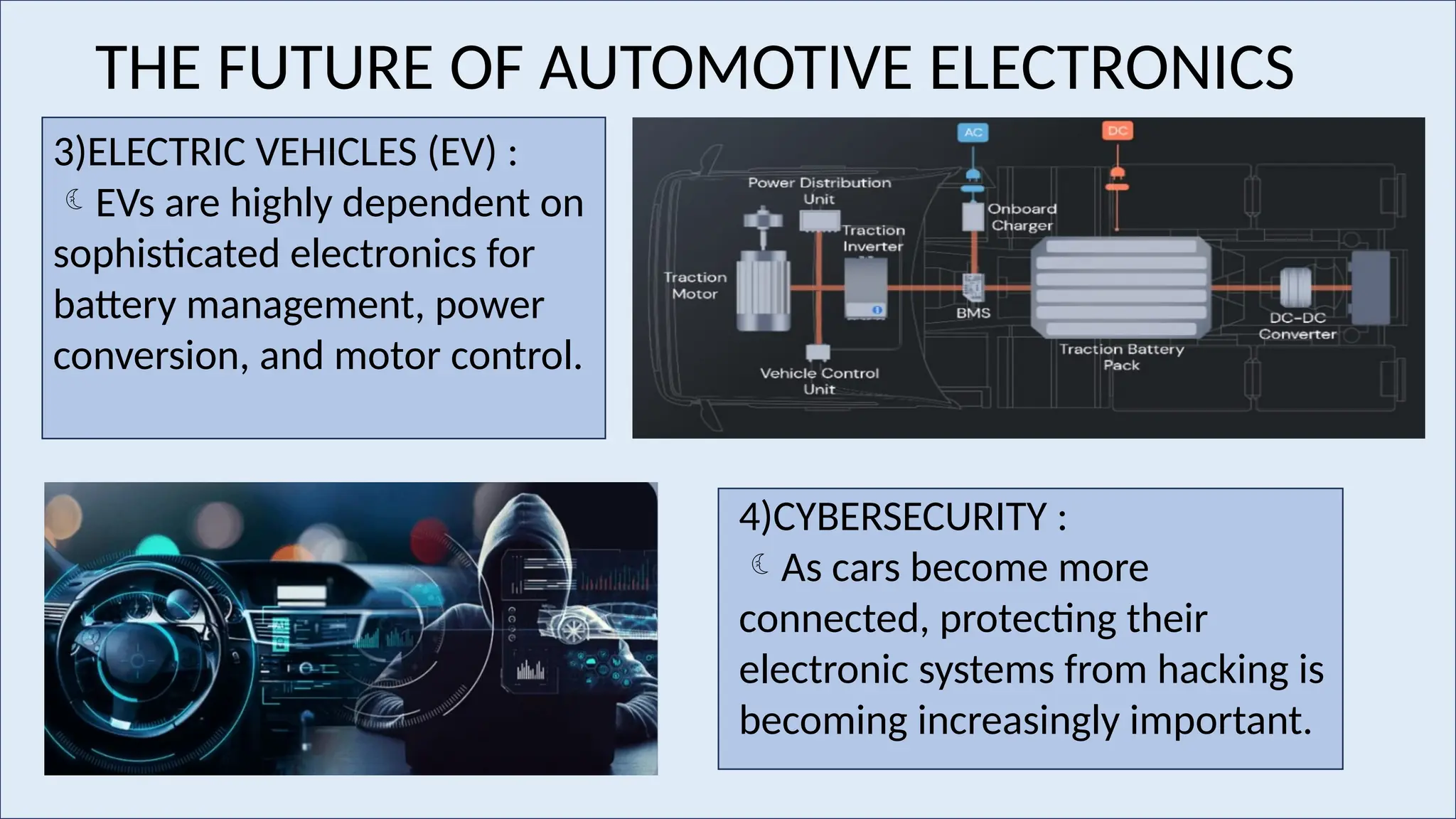
3)ELECTRIC VEHICLES (EV) :
EVs are highly dependent on
sophisticated electronics for
battery management, power
conversion, and motor control.
4)CYBERSECURITY :
As cars become more
connected, protecting their
electronic systems from hacking is
becoming increasingly important.
THANK YOU!!
PRESENTED BY
DIVYADHARSHINI
KANISKA SRI.S
NEHA KARTHIKAYANI

AUTOMOTIVE ELECTRONICS.pptx EEE core topic

  • 1.
  • 2.
    AUTOMOTIVE ELECTRONICS Automotive electronics area set of electronic systems and components used in vehicles. The earliest electronic systems available were vacuum tube car radios, starting in the early 1930s. WHAT DO THEY DO? These systems help control and assist various functions, from engine management and safety to in-car entertainment.
  • 3.
    CORE SYSTEMS ANDCOMPONENTS 1)ENGINE AND POWER TRAIN : The "brain" of the engine it manages fuel injection, ignition timing, and other critical functions for peak performance and efficiency. 2) TRANSMISSION CONTROL UNIT :  Regulates gear shifting and clutch operation in automatic transmissions.
  • 4.
    SAFETY AND SECURITY 1)ANTI-LOCK BRAKING SYSTEMS:  Prevents the wheels from locking up during hard braking, allowing the driver to maintain steering control.  Automatically applies brakes to individual wheels to help prevent skidding and loss of control 2)Airbag control unit Deploys airbags in the event of a collision.
  • 5.
    2)TIRE PRESSURE MONITORING SYSTEM Warnsthe driver when tire pressure is low. 1)ADVANCED DRIVER ASSISTANCE SYSTEM Adaptive Cruise Control (ACC): Adjusts vehicle speed to maintain a safe distance from the car ahead. Lane Departure Warning (LDW): Alerts the driver if the vehicle begins to drift out of its lane. CHASSIS AND DRIVER ASSISTANCE
  • 6.
    BODY AND COMFORTELECTRONICS 1)INFOTAINMENT SYSTEMS: Integrate audio, navigation, and connectivity features. 2)LIGHTING SYSTEMS Manages headlights, taillights, and interior lighting.
  • 7.
    THE FUTURE OFAUTOMOTIVE ELECTRONICS 1) AUTONOMOUS DRIVING : The goal is to develop vehicles that can operate without human input. This relies on an extensive network of sensors, cameras, radar, and lidar. 2)CONNECTIVITY:  Vehicle-to-everything communication allows cars to "talk" to other vehicles (V2V), infrastructure (V2I), and pedestrians (V2P), improving safety and traffic flow.
  • 8.
    THE FUTURE OFAUTOMOTIVE ELECTRONICS 3)ELECTRIC VEHICLES (EV) : EVs are highly dependent on sophisticated electronics for battery management, power conversion, and motor control. 4)CYBERSECURITY : As cars become more connected, protecting their electronic systems from hacking is becoming increasingly important.
  • 9.