AUTOMOTIVE CLUTCHES:
Operation and service
Clutch construction and operation
• The automotive drive train or power train carries power from the engine to
the drive wheels. In vehicles with a manual transmission. The power flows
through a clutch. This device engage and disengage between the transmission
and engine.
• The clutch is usually operated by the drivers foot.
• Various electronic devices may be used so that the clutch operates
automatically.
Types of clutches
1.Manual transmission clutch
• The clutch in a car transmission is what works to engage and disengage the
drive shaft's moving parts. In a manual transmission, the driver has to
manipulate a pedal or a lever in order to shift gears. The clutch is what allows
the gears to engage or disengage.
Automatic transmission clutch
• The clutches, or more correctly, clutch packs, are the driving force of the
gear changes in the automatic transmission. Between the different gear sets,
there are clutch packs that, when activated, combine the different gear sets
together, thus changing the overall gear ratio.
Function of the clutch
• The clutch has four function
1. It can be disengage (clutch pedal down). This allows engine cranking and permits the engine
freely without delivering power to the transmission.
2. While disengage ( clutch pedal down ), it permits the driver to shift the transmission in a
various gears. This allows the driver to select the proper gear (first, second, third, fourth, fifth,
reverse, or neutral) for the operating condition.
3. While engaging (clutch pedal moving up). This provides smooth engagement and lessens the
shock on gears, shafts and other drive train parts. As engine develops enough torque to
overcome the inertia of the vehicle, the drive wheels turn and the vehicle begins to move.
4. When engaged (clutch pedal up), the clutch transmit power from the engine to the
transmission.
Starting the engine and shifting gears
• The automotive engine cannot start under load. To remove the load, Place the
gearshift lever or transmission shift lever in neutral od disengage the clutch. Either
action disconnects the engine flywheel from the transmission. No power can flow
through.
• An automotive engine will normally start when cranked at 200 rpm or higher. After
the engine starts and with the clutch pedal down, the driver moves the gearshift
lever from neutral into the first gear. As the driver releases the clutch pedal, spring
force in the clutch causes it to engage. Powers flows through the transmission to the
drive wheels and the vehicle moves. To increase vehicle speed, the driver then
disengage the clutch and shifts the transmission to a higher gear.
Clutch construction
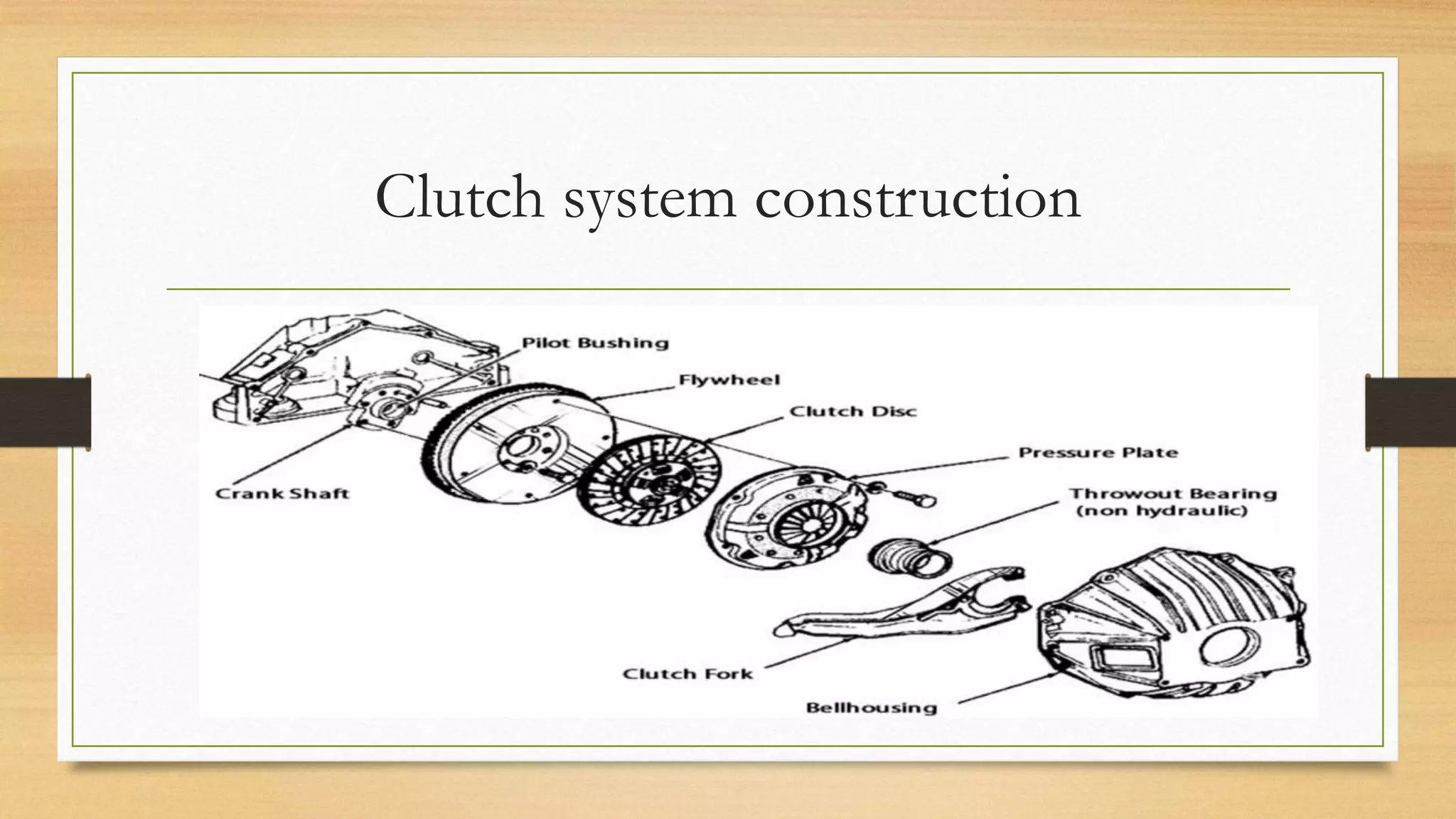
• The typical clutch consist of three basic parts these are:
1. Flywheel, heavy wheel attached to a rotating shaft so as to smooth out delivery of
power from a motor to a machine. The inertia of the flywheel opposes and
moderates fluctuations in the speed of the engine and stores the excess energy for
intermittent use.
The Flywheel has 3 main functions.
a) The first is to maintain a rotating mass (inertia) to assist the engine rotation and
provide a more consistent delivery of torque during running.
b) The second is to provide a ring gear for the starter motor to engage on.
c) The third is to provide one of the driving friction surfaces for the friction disc.
Flywheel
2. The Driven Friction Disc is connected to the transmission
input shaft via a spline. The disc drives the input shaft in the
transmission which translates movement at the wheels. The disc has
a sacrificial friction material that allows the clutch to be modulated
in order to control the drive when taking off from a standing start.
The disc also contains a sprung hub which absorbs engine vibration
when the clutch is driving and also absorbs torque when engaging
and disengaging drive.
Friction disc
Pressure plate
• A plate in an automobile dry disk clutch that is pressed against the flywheel
to transmit propulsion torque to the wheels.
Pressure plate
Clutch system construction

Automotive clutches

  • 1.
  • 2.
    Clutch construction andoperation • The automotive drive train or power train carries power from the engine to the drive wheels. In vehicles with a manual transmission. The power flows through a clutch. This device engage and disengage between the transmission and engine. • The clutch is usually operated by the drivers foot. • Various electronic devices may be used so that the clutch operates automatically.
  • 3.
    Types of clutches 1.Manualtransmission clutch • The clutch in a car transmission is what works to engage and disengage the drive shaft's moving parts. In a manual transmission, the driver has to manipulate a pedal or a lever in order to shift gears. The clutch is what allows the gears to engage or disengage.
  • 4.
    Automatic transmission clutch •The clutches, or more correctly, clutch packs, are the driving force of the gear changes in the automatic transmission. Between the different gear sets, there are clutch packs that, when activated, combine the different gear sets together, thus changing the overall gear ratio.
  • 6.
    Function of theclutch • The clutch has four function 1. It can be disengage (clutch pedal down). This allows engine cranking and permits the engine freely without delivering power to the transmission. 2. While disengage ( clutch pedal down ), it permits the driver to shift the transmission in a various gears. This allows the driver to select the proper gear (first, second, third, fourth, fifth, reverse, or neutral) for the operating condition. 3. While engaging (clutch pedal moving up). This provides smooth engagement and lessens the shock on gears, shafts and other drive train parts. As engine develops enough torque to overcome the inertia of the vehicle, the drive wheels turn and the vehicle begins to move. 4. When engaged (clutch pedal up), the clutch transmit power from the engine to the transmission.
  • 7.
    Starting the engineand shifting gears • The automotive engine cannot start under load. To remove the load, Place the gearshift lever or transmission shift lever in neutral od disengage the clutch. Either action disconnects the engine flywheel from the transmission. No power can flow through. • An automotive engine will normally start when cranked at 200 rpm or higher. After the engine starts and with the clutch pedal down, the driver moves the gearshift lever from neutral into the first gear. As the driver releases the clutch pedal, spring force in the clutch causes it to engage. Powers flows through the transmission to the drive wheels and the vehicle moves. To increase vehicle speed, the driver then disengage the clutch and shifts the transmission to a higher gear.
  • 8.
    Clutch construction • Thetypical clutch consist of three basic parts these are: 1. Flywheel, heavy wheel attached to a rotating shaft so as to smooth out delivery of power from a motor to a machine. The inertia of the flywheel opposes and moderates fluctuations in the speed of the engine and stores the excess energy for intermittent use. The Flywheel has 3 main functions. a) The first is to maintain a rotating mass (inertia) to assist the engine rotation and provide a more consistent delivery of torque during running. b) The second is to provide a ring gear for the starter motor to engage on. c) The third is to provide one of the driving friction surfaces for the friction disc.
  • 9.
  • 10.
    2. The DrivenFriction Disc is connected to the transmission input shaft via a spline. The disc drives the input shaft in the transmission which translates movement at the wheels. The disc has a sacrificial friction material that allows the clutch to be modulated in order to control the drive when taking off from a standing start. The disc also contains a sprung hub which absorbs engine vibration when the clutch is driving and also absorbs torque when engaging and disengaging drive.
  • 11.
  • 12.
    Pressure plate • Aplate in an automobile dry disk clutch that is pressed against the flywheel to transmit propulsion torque to the wheels.
  • 13.
  • 14.