Presented By :
Neeta Bhimrao Chavare
Content
 What is Automation
 History of Automation
 Types of Automation
 Automation Tools
 What is SCADA
 Subsystem of SCADA system
 Features of SCADA
 What is Robotics
 History of Robotics
 Robotics Technology
 Types of Robotics
 Application
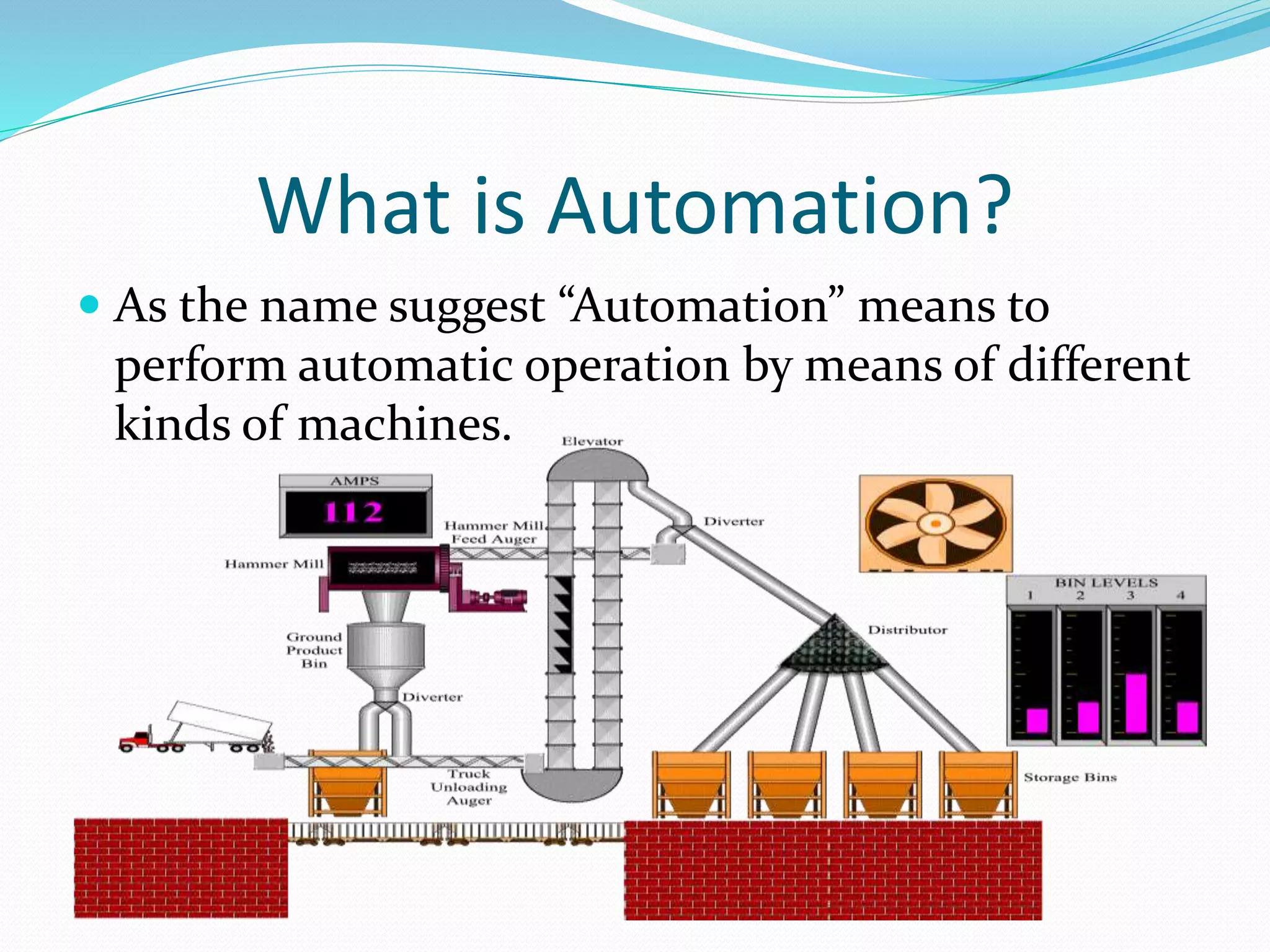
What is Automation?
 As the name suggest “Automation” means to
perform automatic operation by means of different
kinds of machines.
History Of Automation
 Programmable Logic Controller
 Electronic Controller using Logic Gates
 Hard Wired Logic Controller
 Pneumatic Control
 Manual Control
Types of Automation
 Fixed Automation
 Programmable Automation
 Flexible Automation
Automation Tools
 Programmable Logic Controller (PLC)
 Supervisory Control and Data Acquisition (SCADA)
 Sensors
 Robotics
 Human Machine Interface (HMI) or Touch Screen (TS)
 Programmable Automation Controller (PAC)
 Variable Frequency Drive (VFD)
Advantages
 Replacing human operators in tasks that involve hard
physical or monotonous work.
 Replacing humans in tasks done in dangerous
environments.
 Performing tasks that are beyond human capabilities
of size, weight, speed, endurance, etc.
 Economy improvement.
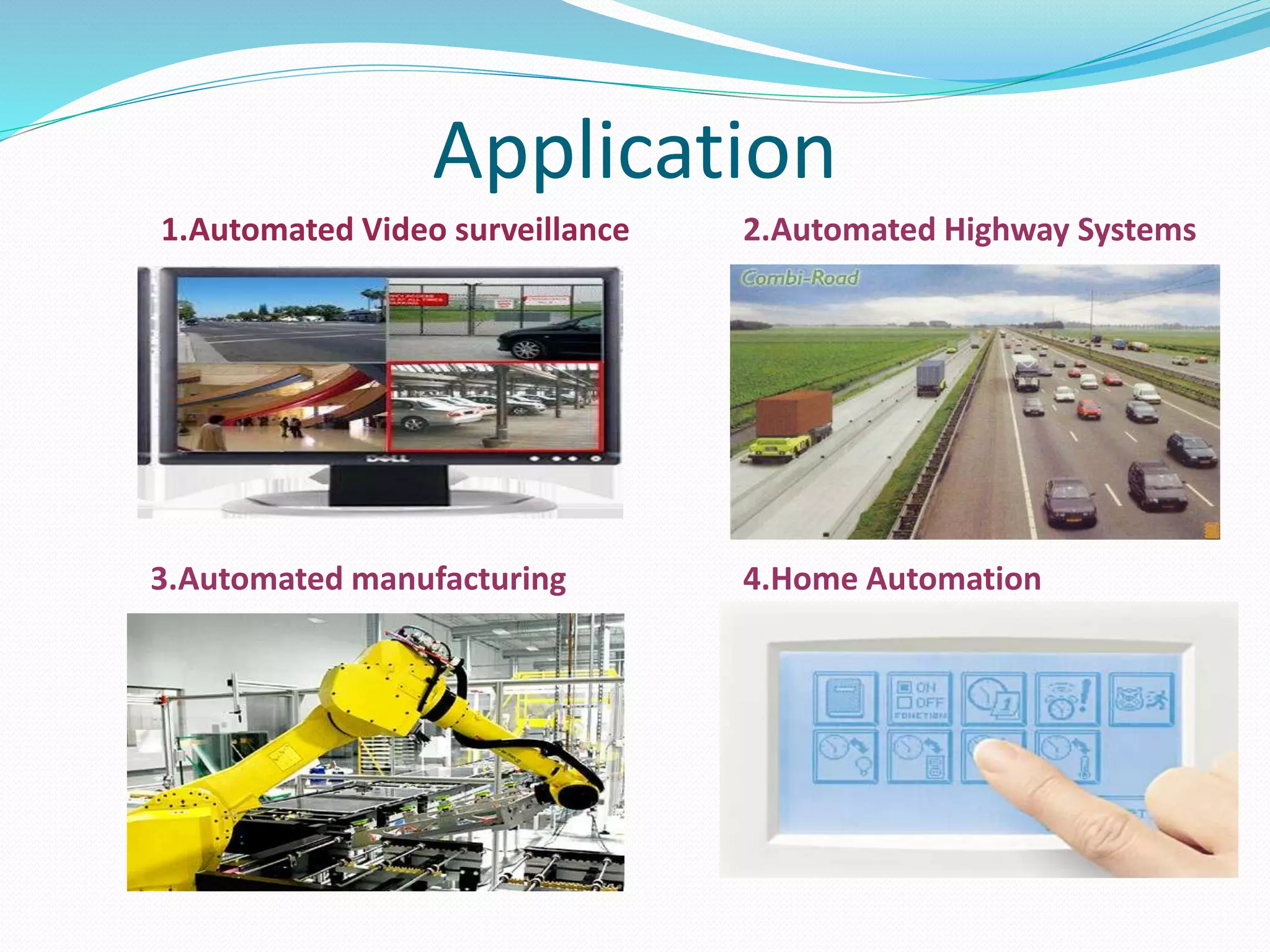
Application
1.Automated Video surveillance 2.Automated Highway Systems
3.Automated manufacturing 4.Home Automation
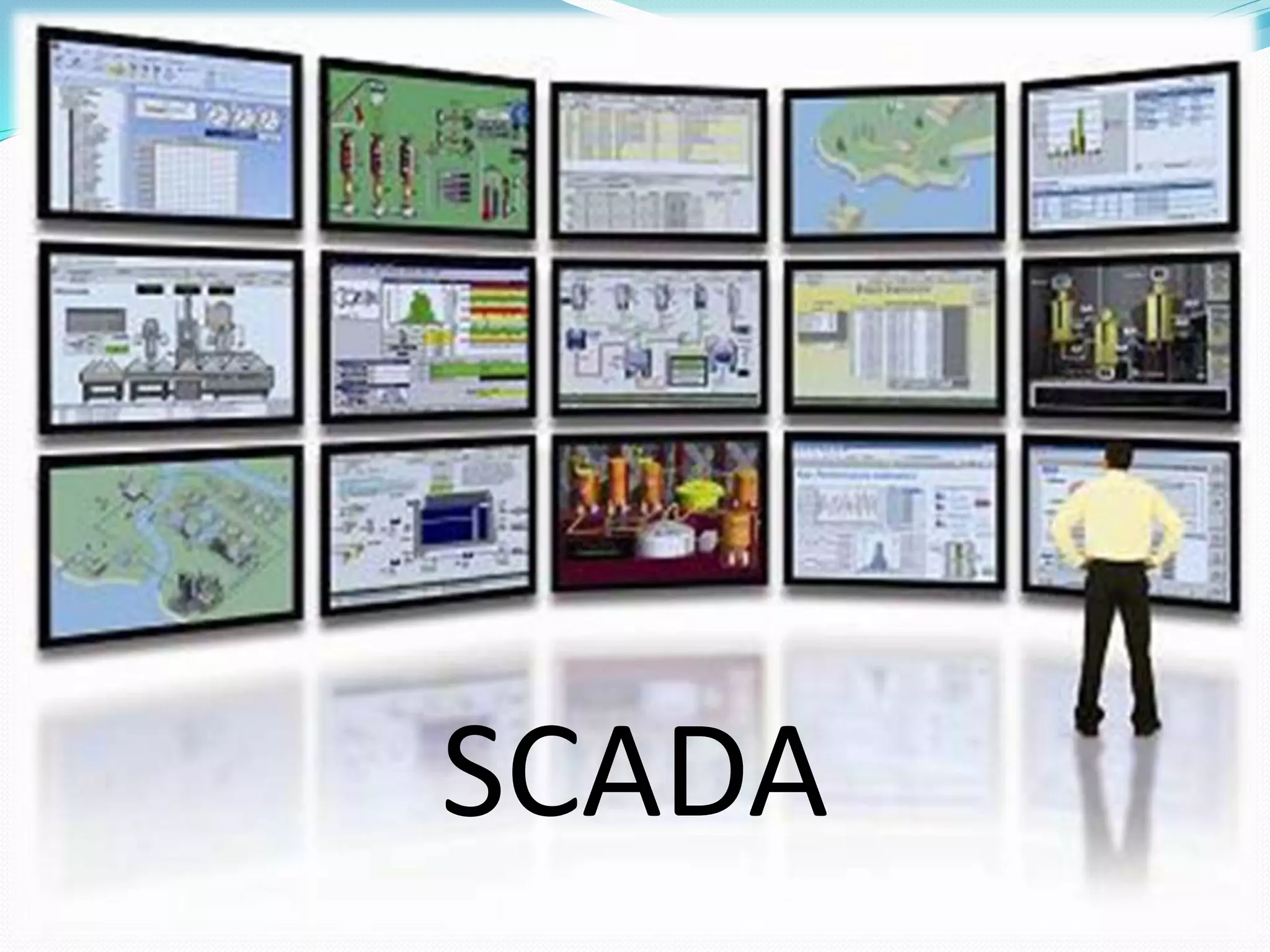
SCADA
What is SCADA ?
 SCADA stands for Supervisory Control And Data
Acquisitions.
 SCADA refers to a system that collects data from
various sensors at a factory.
Subsystem Of SCADA System
 Human Machine Interface
 Remote Terminal Units
 Programmable Logic Controller
 Communication Infrastructure
Features Of SCADA
 Real Time And Historical Trend
 Alarms
 Recipe Management
 Security
 Device Connectivity
Application
• Electric power generation, transmission and
distribution
• Water and sewage
• Buildings, facilities and environments
• Manufacturing
• Mass transit
• Traffic signals
What is Robot…?
 A re-programmable, multifunctional, automatic
industrial machine designed
to replace human in hazardous work.
What is Robotics ?
 Robotics is science of designing or building an
application of Robots.
Why is Robotics Needed ?
 Speed
 Can work in hazardous/dangerous temperature
 Can do repetitive task
 Can do work with Accuracy
Robotics History
 First Used of word Robotics
 Three laws of Robotics
 The first Robot “Ultimate”
Robotics Technology
Sensors Effectors
Controller Arm
Types of Robotics
 Mobile Robots
 Stationary Robots
 Autonomous Robots
 Remote controlled Robots
 Virtual Robots
Advantages
 Going to far away planets.
 Giving us information that humans can’t get.
 They can perform tasks faster than humans.
 Going far down into the unknown waters.
Disadvantages
 People can loss jobs in factories.
 It needs a supply of power.
 It needs maintenance to keep it running.
 It costs money to make or buy a robot.
Application
 Industry
 Medical
 Military
 Space Exploration
 Research and Development

Automation

  • 1.
    Presented By : NeetaBhimrao Chavare
  • 2.
    Content  What isAutomation  History of Automation  Types of Automation  Automation Tools  What is SCADA  Subsystem of SCADA system  Features of SCADA  What is Robotics  History of Robotics  Robotics Technology  Types of Robotics  Application
  • 3.
    What is Automation? As the name suggest “Automation” means to perform automatic operation by means of different kinds of machines.
  • 4.
    History Of Automation Programmable Logic Controller  Electronic Controller using Logic Gates  Hard Wired Logic Controller  Pneumatic Control  Manual Control
  • 5.
    Types of Automation Fixed Automation  Programmable Automation  Flexible Automation
  • 6.
    Automation Tools  ProgrammableLogic Controller (PLC)  Supervisory Control and Data Acquisition (SCADA)  Sensors  Robotics  Human Machine Interface (HMI) or Touch Screen (TS)  Programmable Automation Controller (PAC)  Variable Frequency Drive (VFD)
  • 7.
    Advantages  Replacing humanoperators in tasks that involve hard physical or monotonous work.  Replacing humans in tasks done in dangerous environments.  Performing tasks that are beyond human capabilities of size, weight, speed, endurance, etc.  Economy improvement.
  • 8.
    Application 1.Automated Video surveillance2.Automated Highway Systems 3.Automated manufacturing 4.Home Automation
  • 9.
  • 10.
    What is SCADA?  SCADA stands for Supervisory Control And Data Acquisitions.  SCADA refers to a system that collects data from various sensors at a factory.
  • 11.
    Subsystem Of SCADASystem  Human Machine Interface  Remote Terminal Units  Programmable Logic Controller  Communication Infrastructure
  • 12.
    Features Of SCADA Real Time And Historical Trend  Alarms  Recipe Management  Security  Device Connectivity
  • 13.
    Application • Electric powergeneration, transmission and distribution • Water and sewage • Buildings, facilities and environments • Manufacturing • Mass transit • Traffic signals
  • 15.
    What is Robot…? A re-programmable, multifunctional, automatic industrial machine designed to replace human in hazardous work.
  • 16.
    What is Robotics?  Robotics is science of designing or building an application of Robots. Why is Robotics Needed ?  Speed  Can work in hazardous/dangerous temperature  Can do repetitive task  Can do work with Accuracy
  • 17.
    Robotics History  FirstUsed of word Robotics  Three laws of Robotics  The first Robot “Ultimate”
  • 18.
  • 19.
    Types of Robotics Mobile Robots  Stationary Robots  Autonomous Robots  Remote controlled Robots  Virtual Robots
  • 20.
    Advantages  Going tofar away planets.  Giving us information that humans can’t get.  They can perform tasks faster than humans.  Going far down into the unknown waters.
  • 21.
    Disadvantages  People canloss jobs in factories.  It needs a supply of power.  It needs maintenance to keep it running.  It costs money to make or buy a robot.
  • 22.
    Application  Industry  Medical Military  Space Exploration  Research and Development