OpenID in Science  Authenticating Scientists on the Web Duncan Hull  http://twitter.com/dullhunk   The University of Manchester Science Online London The Royal Institution, August 2009
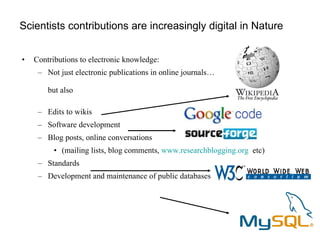
Scientists contributions are increasingly digital in Nature Contributions to electronic knowledge: Not just electronic publications in online journals… but also  Edits to wikis  Software development Blog posts, online conversations (mailing lists, blog comments,  www.researchblogging.org   etc) Standards Development and maintenance of public databases
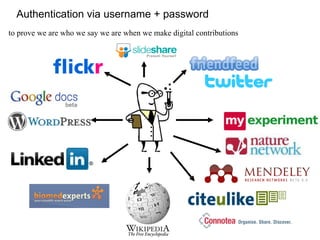
Authentication via username + password to prove we are who we say we are when we make digital contributions
We have way too many usernames and passwords! http://tinyurl.com/too-many-passwords   Simon Willison (The Guardian) The average user has [at least]  18 user accounts  and 3.49 passwords” This is the problem that OpenID is addressing
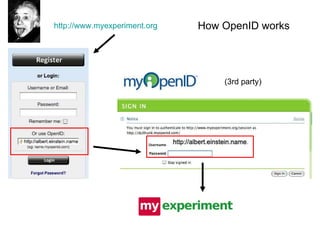
How OpenID works stuff http://www.myexperiment.org   (3rd party)
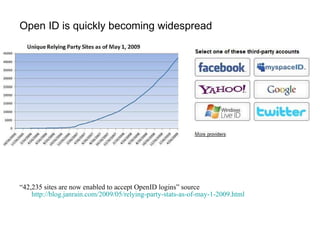
Open ID is quickly becoming widespread “ 42,235 sites are now enabled to accept OpenID logins” source http://blog.janrain.com/2009/05/relying-party-stats-as-of-may-1-2009.html
But there are usability “issues” http://albert.einstein.name   [email_address]   mcsquared OR + 84% 16% Out of 2,300  myexperiment users:
Conclusions The idea of having one username and password makes a lot of sense but:  Usability issues URL as a username can confuse Redirection to a third party on login can confuse Adoption of OpenID is growing but might not continue If you’d like to know more about OpenID and related topics in digital identity…
http://www.xmlsummerschool.com   Web services and Identity  http://xmlsummerschool.com/curriculum2009/web-services-identity/

Authenticating Scientists with OpenID

  • 1.
    OpenID in Science Authenticating Scientists on the Web Duncan Hull http://twitter.com/dullhunk The University of Manchester Science Online London The Royal Institution, August 2009
  • 2.
    Scientists contributions areincreasingly digital in Nature Contributions to electronic knowledge: Not just electronic publications in online journals… but also Edits to wikis Software development Blog posts, online conversations (mailing lists, blog comments, www.researchblogging.org etc) Standards Development and maintenance of public databases
  • 3.
    Authentication via username+ password to prove we are who we say we are when we make digital contributions
  • 4.
    We have waytoo many usernames and passwords! http://tinyurl.com/too-many-passwords Simon Willison (The Guardian) The average user has [at least] 18 user accounts and 3.49 passwords” This is the problem that OpenID is addressing
  • 5.
    How OpenID worksstuff http://www.myexperiment.org (3rd party)
  • 6.
    Open ID isquickly becoming widespread “ 42,235 sites are now enabled to accept OpenID logins” source http://blog.janrain.com/2009/05/relying-party-stats-as-of-may-1-2009.html
  • 7.
    But there areusability “issues” http://albert.einstein.name [email_address] mcsquared OR + 84% 16% Out of 2,300 myexperiment users:
  • 8.
    Conclusions The ideaof having one username and password makes a lot of sense but: Usability issues URL as a username can confuse Redirection to a third party on login can confuse Adoption of OpenID is growing but might not continue If you’d like to know more about OpenID and related topics in digital identity…
  • 9.
    http://www.xmlsummerschool.com Web services and Identity http://xmlsummerschool.com/curriculum2009/web-services-identity/

Editor's Notes

  • #4 Lots of great tools for sharing data and communicating on the web, facebook, wikis, friendfeed, twitter, flickr, linkedin, biomedexperts, wordpress, google docs (and spreadsheets) slideshare, blogger, connotea, citeulike etc…