Role of Quality Systems and Audits in
Pharmaceutical Manufacturing
Environment
CONTENTS
 Introduction
 Quality System Approach
 Management Responsibilities
 Resources
 Reference
Audit:
 Auditing is defined as the on-site verification activity, such as inspection
or examination, of a process or quality system, to ensure compliance to
requirements.
 The audit in simple terms could be defined as the inspection of a
or a system to ensure that it meets the requirements of its intended use.
 ISO defines the audits as “systematic, independent and documented
process for obtaining audit evidence and evaluating them objectively to
determine the degree to which the verification criteria are met.”
QUALITY AUDIT
 International Standard ISO, Quality vocabulary defined quality audit as
follows:
 Quality Audit - A systematic and independent examination to determine
whether quality activities and related results comply with planned
arrangement and whether these arrangements are implemented effectively
and are suitable to achieve objectives.
QUALITY AUDIT
Systemic and independent examination to determine whether activities and
related results comply with planned arrangements and whether these
arrangements are implemented effectively and are suitable to achieve
objectives.
Types of Audit:-
 Internal Audits
 External Audits
 Regulatory Audits
Objective:
 Determining effectiveness in meeting requirements and
objectives
 Meeting any contractual or regulatory requirements for
auditing
 To provide the audit team with an opportunity to improve
the quality system
 To meet the regulatory requirement
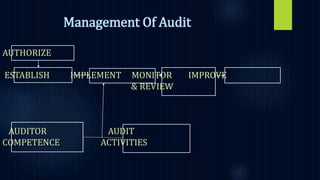
Management Of Audit
AUTHORIZE
ESTABLISH IMPLEMENT MONITOR IMPROVE
& REVIEW
AUDITOR AUDIT
COMPETENCE ACTIVITIES
QUALITY SYSTEM APPROACH
It involves:
 A management commitment to quality that is communicated throughout
the organization
 Identifying quality requirements using risk management and other methods
as appropriate
 Developing a quality policy, plan and objectives
 Establishing an organizational structure with identified responsibilities and
authorities that allows quality objectives to be met
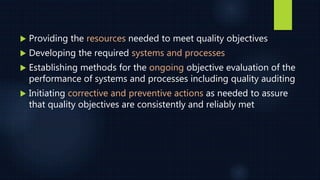
 Providing the resources needed to meet quality objectives
 Developing the required systems and processes
 Establishing methods for the ongoing objective evaluation of the
performance of systems and processes including quality auditing
 Initiating corrective and preventive actions as needed to assure
that quality objectives are consistently and reliably met
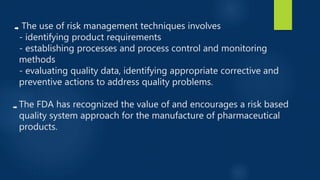
The use of risk management techniques involves
- identifying product requirements
- establishing processes and process control and monitoring
methods
- evaluating quality data, identifying appropriate corrective and
preventive actions to address quality problems.
The FDA has recognized the value of and encourages a risk based
quality system approach for the manufacture of pharmaceutical
products.
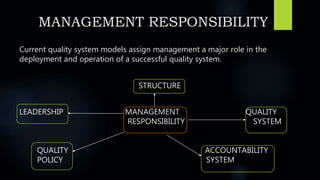
MANAGEMENT RESPONSIBILITY
Current quality system models assign management a major role in the
deployment and operation of a successful quality system.
STRUCTURE
LEADERSHIP MANAGEMENT QUALITY
RESPONSIBILITY SYSTEM
QUALITY ACCOUNTABILITY
POLICY SYSTEM
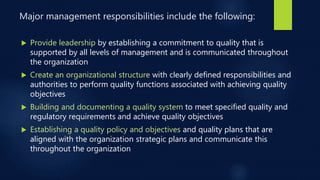
Major management responsibilities include the following:
 Provide leadership by establishing a commitment to quality that is
supported by all levels of management and is communicated throughout
the organization
 Create an organizational structure with clearly defined responsibilities and
authorities to perform quality functions associated with achieving quality
objectives
 Building and documenting a quality system to meet specified quality and
regulatory requirements and achieve quality objectives
 Establishing a quality policy and objectives and quality plans that are
aligned with the organization strategic plans and communicate this
throughout the organization
 Reviewing the system by establishing appropriate
accountability systems within the organization to monitor
and report quality data and system status to management
and assure that appropriate corrective and preventive
actions are taken in response to quality problems using
effective change control procedures and documented
RESOURCES
Resources is essential to the success of any endeavor and this is
particularly critical in a pharmaceutical manufacturing environment.
 Inadequate staffing, training, manufacturing equipments and facilities,
environmental controls and other resources can be sources of variability
leading to the production of product that does not meet specified
requirements.
 Modern quality system standards specifically address the issue of resources
by requiring the organization to determine and provide the human,
infrastructure and work environment resources necessary for the quality
system.
 The FDA discusses the need for adequate resources in developing,
implementing and managing a quality system that complies with the
cGMP regulations.
 Management is responsible for identifying resource requirements and
providing resources accordingly, including providing training that is
appropriate to the assigned activities.
 Under a quality system model, the specification of facility and
equipment requirements may be performed by technical experts who
have an understanding of the pharmaceutical science, manufacturing
processes and risk factors associated with the products and its
manufacture.
REFERENCE
 Siegel E.B , Barquest J.M, Pharmaceutical manufacturing Handbook, John
wiley publication pg. no. 202-212
 http://asp.org/quality-resources/quality-management-system
 www.slideshare.net.org
THANK
YOU

AUDIT Ph Manufacturing.pptx

  • 1.
    Role of QualitySystems and Audits in Pharmaceutical Manufacturing Environment
  • 2.
    CONTENTS  Introduction  QualitySystem Approach  Management Responsibilities  Resources  Reference
  • 3.
    Audit:  Auditing isdefined as the on-site verification activity, such as inspection or examination, of a process or quality system, to ensure compliance to requirements.  The audit in simple terms could be defined as the inspection of a or a system to ensure that it meets the requirements of its intended use.  ISO defines the audits as “systematic, independent and documented process for obtaining audit evidence and evaluating them objectively to determine the degree to which the verification criteria are met.”
  • 4.
    QUALITY AUDIT  InternationalStandard ISO, Quality vocabulary defined quality audit as follows:  Quality Audit - A systematic and independent examination to determine whether quality activities and related results comply with planned arrangement and whether these arrangements are implemented effectively and are suitable to achieve objectives.
  • 5.
    QUALITY AUDIT Systemic andindependent examination to determine whether activities and related results comply with planned arrangements and whether these arrangements are implemented effectively and are suitable to achieve objectives. Types of Audit:-  Internal Audits  External Audits  Regulatory Audits
  • 6.
    Objective:  Determining effectivenessin meeting requirements and objectives  Meeting any contractual or regulatory requirements for auditing  To provide the audit team with an opportunity to improve the quality system  To meet the regulatory requirement
  • 7.
    Management Of Audit AUTHORIZE ESTABLISHIMPLEMENT MONITOR IMPROVE & REVIEW AUDITOR AUDIT COMPETENCE ACTIVITIES
  • 8.
    QUALITY SYSTEM APPROACH Itinvolves:  A management commitment to quality that is communicated throughout the organization  Identifying quality requirements using risk management and other methods as appropriate  Developing a quality policy, plan and objectives  Establishing an organizational structure with identified responsibilities and authorities that allows quality objectives to be met
  • 9.
     Providing theresources needed to meet quality objectives  Developing the required systems and processes  Establishing methods for the ongoing objective evaluation of the performance of systems and processes including quality auditing  Initiating corrective and preventive actions as needed to assure that quality objectives are consistently and reliably met
  • 10.
    The use ofrisk management techniques involves - identifying product requirements - establishing processes and process control and monitoring methods - evaluating quality data, identifying appropriate corrective and preventive actions to address quality problems. The FDA has recognized the value of and encourages a risk based quality system approach for the manufacture of pharmaceutical products.
  • 11.
    MANAGEMENT RESPONSIBILITY Current qualitysystem models assign management a major role in the deployment and operation of a successful quality system. STRUCTURE LEADERSHIP MANAGEMENT QUALITY RESPONSIBILITY SYSTEM QUALITY ACCOUNTABILITY POLICY SYSTEM
  • 12.
    Major management responsibilitiesinclude the following:  Provide leadership by establishing a commitment to quality that is supported by all levels of management and is communicated throughout the organization  Create an organizational structure with clearly defined responsibilities and authorities to perform quality functions associated with achieving quality objectives  Building and documenting a quality system to meet specified quality and regulatory requirements and achieve quality objectives  Establishing a quality policy and objectives and quality plans that are aligned with the organization strategic plans and communicate this throughout the organization
  • 13.
     Reviewing thesystem by establishing appropriate accountability systems within the organization to monitor and report quality data and system status to management and assure that appropriate corrective and preventive actions are taken in response to quality problems using effective change control procedures and documented
  • 14.
    RESOURCES Resources is essentialto the success of any endeavor and this is particularly critical in a pharmaceutical manufacturing environment.  Inadequate staffing, training, manufacturing equipments and facilities, environmental controls and other resources can be sources of variability leading to the production of product that does not meet specified requirements.  Modern quality system standards specifically address the issue of resources by requiring the organization to determine and provide the human, infrastructure and work environment resources necessary for the quality system.
  • 15.
     The FDAdiscusses the need for adequate resources in developing, implementing and managing a quality system that complies with the cGMP regulations.  Management is responsible for identifying resource requirements and providing resources accordingly, including providing training that is appropriate to the assigned activities.  Under a quality system model, the specification of facility and equipment requirements may be performed by technical experts who have an understanding of the pharmaceutical science, manufacturing processes and risk factors associated with the products and its manufacture.
  • 16.
    REFERENCE  Siegel E.B, Barquest J.M, Pharmaceutical manufacturing Handbook, John wiley publication pg. no. 202-212  http://asp.org/quality-resources/quality-management-system  www.slideshare.net.org
  • 17.