Audience Theory
Bulmer & Katz – Uses & Gratification 
Theory 
Effects of the media from the POV of audiences 
The theory… 
• Looks @ motives of the people who use the media, e.g. why we watch the 
TV programmes we do 
• Makes the audience active – they choose and have control over what they 
consume 
• Explains that audience has social & psychological needs which generate 
certain expectations about mass media & what they’re exposed to 
People are motivated by a desire to gratify certain needs – the 4 different 
needs: 
• Surveillance – aware of what is going on in the world 
• Personal Identity – confirm the identity & positioning of ourselves within 
society 
• Personal Relationship – we form a relationship with the media & we use 
media within relationships with real people 
• Diversion – forget about our own lives & problems (escapism)
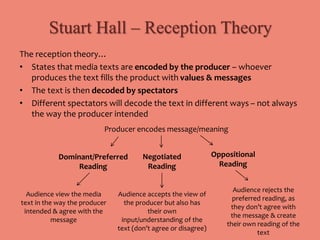
Stuart Hall – Reception Theory 
The reception theory… 
• States that media texts are encoded by the producer – whoever 
produces the text fills the product with values & messages 
• The text is then decoded by spectators 
• Different spectators will decode the text in different ways – not always 
the way the producer intended 
Producer encodes message/meaning 
Dominant/Preferred 
Reading 
Negotiated 
Reading 
Oppositional 
Reading 
Audience view the media 
text in the way the producer 
intended & agree with the 
message 
Audience accepts the view of 
the producer but also has 
their own 
input/understanding of the 
text (don’t agree or disagree) 
Audience rejects the 
preferred reading, as 
they don’t agree with 
the message & create 
their own reading of the 
text
Hypodermic Needle Theory 
Creator  Audience 
Whatever the creator says, the audience will believe… 
• Assumes audience will understand the message 
• Audience = passive – we soak up the media like a sponge 
• We don’t challenge – no individual differences 
Implies media had a direct, immediate & powerful effect on audiences – mass 
media in 40s & 50s were perceived as a powerful influence on behaviour change 
Several factors contribute to this “strong effects” theory of communication 
including: 
• Fast rise & popularisation of radio & TV 
• Emergence of the persuasion industries, such as ads & propaganda 
Suggests that… 
• Mass media could influence a large group of people directly & uniformly by 
‘shooting’ & ‘injecting’ them with appropriate messages designed to trigger a 
desired response 
• There’s a direct flow of info from sender  receiver 
• Media = a dangerous means of communicating an idea because receiver is 
powerless to resist the impact of the message 
This theory is outdated & invalid – more up to date theories have proved that 
audiences aren’t simply passive

Audience Theory

  • 1.
  • 2.
    Bulmer & Katz– Uses & Gratification Theory Effects of the media from the POV of audiences The theory… • Looks @ motives of the people who use the media, e.g. why we watch the TV programmes we do • Makes the audience active – they choose and have control over what they consume • Explains that audience has social & psychological needs which generate certain expectations about mass media & what they’re exposed to People are motivated by a desire to gratify certain needs – the 4 different needs: • Surveillance – aware of what is going on in the world • Personal Identity – confirm the identity & positioning of ourselves within society • Personal Relationship – we form a relationship with the media & we use media within relationships with real people • Diversion – forget about our own lives & problems (escapism)
  • 3.
    Stuart Hall –Reception Theory The reception theory… • States that media texts are encoded by the producer – whoever produces the text fills the product with values & messages • The text is then decoded by spectators • Different spectators will decode the text in different ways – not always the way the producer intended Producer encodes message/meaning Dominant/Preferred Reading Negotiated Reading Oppositional Reading Audience view the media text in the way the producer intended & agree with the message Audience accepts the view of the producer but also has their own input/understanding of the text (don’t agree or disagree) Audience rejects the preferred reading, as they don’t agree with the message & create their own reading of the text
  • 4.
    Hypodermic Needle Theory Creator  Audience Whatever the creator says, the audience will believe… • Assumes audience will understand the message • Audience = passive – we soak up the media like a sponge • We don’t challenge – no individual differences Implies media had a direct, immediate & powerful effect on audiences – mass media in 40s & 50s were perceived as a powerful influence on behaviour change Several factors contribute to this “strong effects” theory of communication including: • Fast rise & popularisation of radio & TV • Emergence of the persuasion industries, such as ads & propaganda Suggests that… • Mass media could influence a large group of people directly & uniformly by ‘shooting’ & ‘injecting’ them with appropriate messages designed to trigger a desired response • There’s a direct flow of info from sender  receiver • Media = a dangerous means of communicating an idea because receiver is powerless to resist the impact of the message This theory is outdated & invalid – more up to date theories have proved that audiences aren’t simply passive