Alan Smith
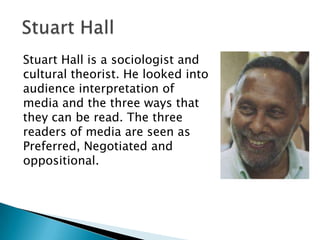
Stuart Hall is a sociologist and
cultural theorist. He looked into
audience interpretation of
media and the three ways that
they can be read. The three
readers of media are seen as
Preferred, Negotiated and
oppositional.
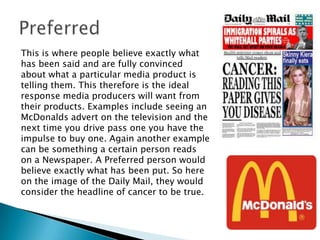
This is where people believe exactly what
has been said and are fully convinced
about what a particular media product is
telling them. This therefore is the ideal
response media producers will want from
their products. Examples include seeing an
McDonalds advert on the television and the
next time you drive pass one you have the
impulse to buy one. Again another example
can be something a certain person reads
on a Newspaper. A Preferred person would
believe exactly what has been put. So here
on the image of the Daily Mail, they would
consider the headline of cancer to be true.
This is where a person acknowledges what has
been said through the media. They believe
what has been put similarly to the preferred
view. However they put their own stamp on
what has been said to them. For Example
McDonalds again, they would notice the
commercial on the television but instead of
buying straight away the next time they see
one they would look at going but only on
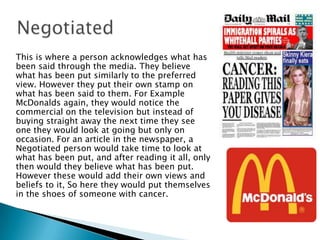
occasion. For an article in the newspaper, a
Negotiated person would take time to look at
what has been put, and after reading it all, only
then would they believe what has been put.
However these would add their own views and
beliefs to it, So here they would put themselves
in the shoes of someone with cancer.
This is where a person takes an alternative
message of what has been said, this is
seen as the opposite of preferred as this
rejects the idea of what the media is
suggesting. For example an Oppositional
person would reject everything about the
McDonalds advert because of how they are
made, these people could be health
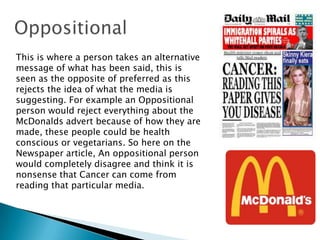
conscious or vegetarians. So here on the
Newspaper article, An oppositional person
would completely disagree and think it is
nonsense that Cancer can come from
reading that particular media.
This is where the audience can play an active role in collecting and
analysing data for a certain media product. This role can come in
many forms of two way networks and digital media such as
Facebook and Twitter to share views with others about the show
you are watching, Some people will even make video blogs and
podcasts to share what they think with the public.
This theory came about from Henry Jenkins who believed that ‘Not
everyone must participate, but everyone must believe that if they
participate it will be valued’ This means that with a much greater
community of viewers it is important to let them know their
contributions matters to what they watch,
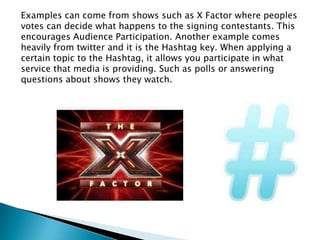
Examples can come from shows such as X Factor where peoples
votes can decide what happens to the signing contestants. This
encourages Audience Participation. Another example comes
heavily from twitter and it is the Hashtag key. When applying a
certain topic to the Hashtag, it allows you participate in what
service that media is providing. Such as polls or answering
questions about shows they watch.
Cultural Competence is the way we communicate with people
through technology and how from that we can understand
cultures from around the world. For example the internet, this
has improved a lot from when it first came about. We can
communicate with so many people using a variety of sites such
as Skype, Twitter, Facebook, Facetime and many more. However
some cultures are frowned upon for using such things on the
internet and are monitored on what they do. Using the internet
you can explore what is happening around the world and can
try to understand what other people are going through.
When looking at things on the internet you will see
things different to others looking at that source of
media. For example you could both see a car
however one could see a much deeper
understanding of what is represented by a car such
as wealth or power. Cultural Competence is
therefore important when understanding certain
aspects in the media. So say a commercial had a
person wearing a leather coat, this should you be a
Negotiated person would mean rebellion. On the
other hand should a preferred person see the
commercial then it will not say anything other then
what it says on the advert.
This is where fans of a similar interests come together and share
their views towards a media product. They often have interests in
minor details of that product. They are often migrated and found
on the internet due to a common conception that fans are lacking
social skills. Types of culture fans participate in to be closer to a
product can be Fanzines, conventions and digital forums.
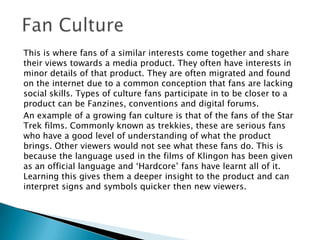
An example of a growing fan culture is that of the fans of the Star
Trek films. Commonly known as trekkies, these are serious fans
who have a good level of understanding of what the product
brings. Other viewers would not see what these fans do. This is
because the language used in the films of Klingon has been given
as an official language and ‘Hardcore’ fans have learnt all of it.
Learning this gives them a deeper insight to the product and can
interpret signs and symbols quicker then new viewers.
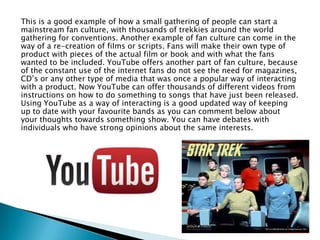
This is a good example of how a small gathering of people can start a
mainstream fan culture, with thousands of trekkies around the world
gathering for conventions. Another example of fan culture can come in the
way of a re-creation of films or scripts. Fans will make their own type of
product with pieces of the actual film or book and with what the fans
wanted to be included. YouTube offers another part of fan culture, because
of the constant use of the internet fans do not see the need for magazines,
CD’s or any other type of media that was once a popular way of interacting
with a product. Now YouTube can offer thousands of different videos from
instructions on how to do something to songs that have just been released.
Using YouTube as a way of interacting is a good updated way of keeping
up to date with your favourite bands as you can comment below about
your thoughts towards something show. You can have debates with
individuals who have strong opinions about the same interests.

Audience responses Task 5!

  • 1.
  • 2.
    Stuart Hall isa sociologist and cultural theorist. He looked into audience interpretation of media and the three ways that they can be read. The three readers of media are seen as Preferred, Negotiated and oppositional.
  • 3.
    This is wherepeople believe exactly what has been said and are fully convinced about what a particular media product is telling them. This therefore is the ideal response media producers will want from their products. Examples include seeing an McDonalds advert on the television and the next time you drive pass one you have the impulse to buy one. Again another example can be something a certain person reads on a Newspaper. A Preferred person would believe exactly what has been put. So here on the image of the Daily Mail, they would consider the headline of cancer to be true.
  • 4.
    This is wherea person acknowledges what has been said through the media. They believe what has been put similarly to the preferred view. However they put their own stamp on what has been said to them. For Example McDonalds again, they would notice the commercial on the television but instead of buying straight away the next time they see one they would look at going but only on occasion. For an article in the newspaper, a Negotiated person would take time to look at what has been put, and after reading it all, only then would they believe what has been put. However these would add their own views and beliefs to it, So here they would put themselves in the shoes of someone with cancer.
  • 5.
    This is wherea person takes an alternative message of what has been said, this is seen as the opposite of preferred as this rejects the idea of what the media is suggesting. For example an Oppositional person would reject everything about the McDonalds advert because of how they are made, these people could be health conscious or vegetarians. So here on the Newspaper article, An oppositional person would completely disagree and think it is nonsense that Cancer can come from reading that particular media.
  • 6.
    This is wherethe audience can play an active role in collecting and analysing data for a certain media product. This role can come in many forms of two way networks and digital media such as Facebook and Twitter to share views with others about the show you are watching, Some people will even make video blogs and podcasts to share what they think with the public. This theory came about from Henry Jenkins who believed that ‘Not everyone must participate, but everyone must believe that if they participate it will be valued’ This means that with a much greater community of viewers it is important to let them know their contributions matters to what they watch,
  • 7.
    Examples can comefrom shows such as X Factor where peoples votes can decide what happens to the signing contestants. This encourages Audience Participation. Another example comes heavily from twitter and it is the Hashtag key. When applying a certain topic to the Hashtag, it allows you participate in what service that media is providing. Such as polls or answering questions about shows they watch.
  • 8.
    Cultural Competence isthe way we communicate with people through technology and how from that we can understand cultures from around the world. For example the internet, this has improved a lot from when it first came about. We can communicate with so many people using a variety of sites such as Skype, Twitter, Facebook, Facetime and many more. However some cultures are frowned upon for using such things on the internet and are monitored on what they do. Using the internet you can explore what is happening around the world and can try to understand what other people are going through.
  • 9.
    When looking atthings on the internet you will see things different to others looking at that source of media. For example you could both see a car however one could see a much deeper understanding of what is represented by a car such as wealth or power. Cultural Competence is therefore important when understanding certain aspects in the media. So say a commercial had a person wearing a leather coat, this should you be a Negotiated person would mean rebellion. On the other hand should a preferred person see the commercial then it will not say anything other then what it says on the advert.
  • 10.
    This is wherefans of a similar interests come together and share their views towards a media product. They often have interests in minor details of that product. They are often migrated and found on the internet due to a common conception that fans are lacking social skills. Types of culture fans participate in to be closer to a product can be Fanzines, conventions and digital forums. An example of a growing fan culture is that of the fans of the Star Trek films. Commonly known as trekkies, these are serious fans who have a good level of understanding of what the product brings. Other viewers would not see what these fans do. This is because the language used in the films of Klingon has been given as an official language and ‘Hardcore’ fans have learnt all of it. Learning this gives them a deeper insight to the product and can interpret signs and symbols quicker then new viewers.
  • 11.
    This is agood example of how a small gathering of people can start a mainstream fan culture, with thousands of trekkies around the world gathering for conventions. Another example of fan culture can come in the way of a re-creation of films or scripts. Fans will make their own type of product with pieces of the actual film or book and with what the fans wanted to be included. YouTube offers another part of fan culture, because of the constant use of the internet fans do not see the need for magazines, CD’s or any other type of media that was once a popular way of interacting with a product. Now YouTube can offer thousands of different videos from instructions on how to do something to songs that have just been released. Using YouTube as a way of interacting is a good updated way of keeping up to date with your favourite bands as you can comment below about your thoughts towards something show. You can have debates with individuals who have strong opinions about the same interests.