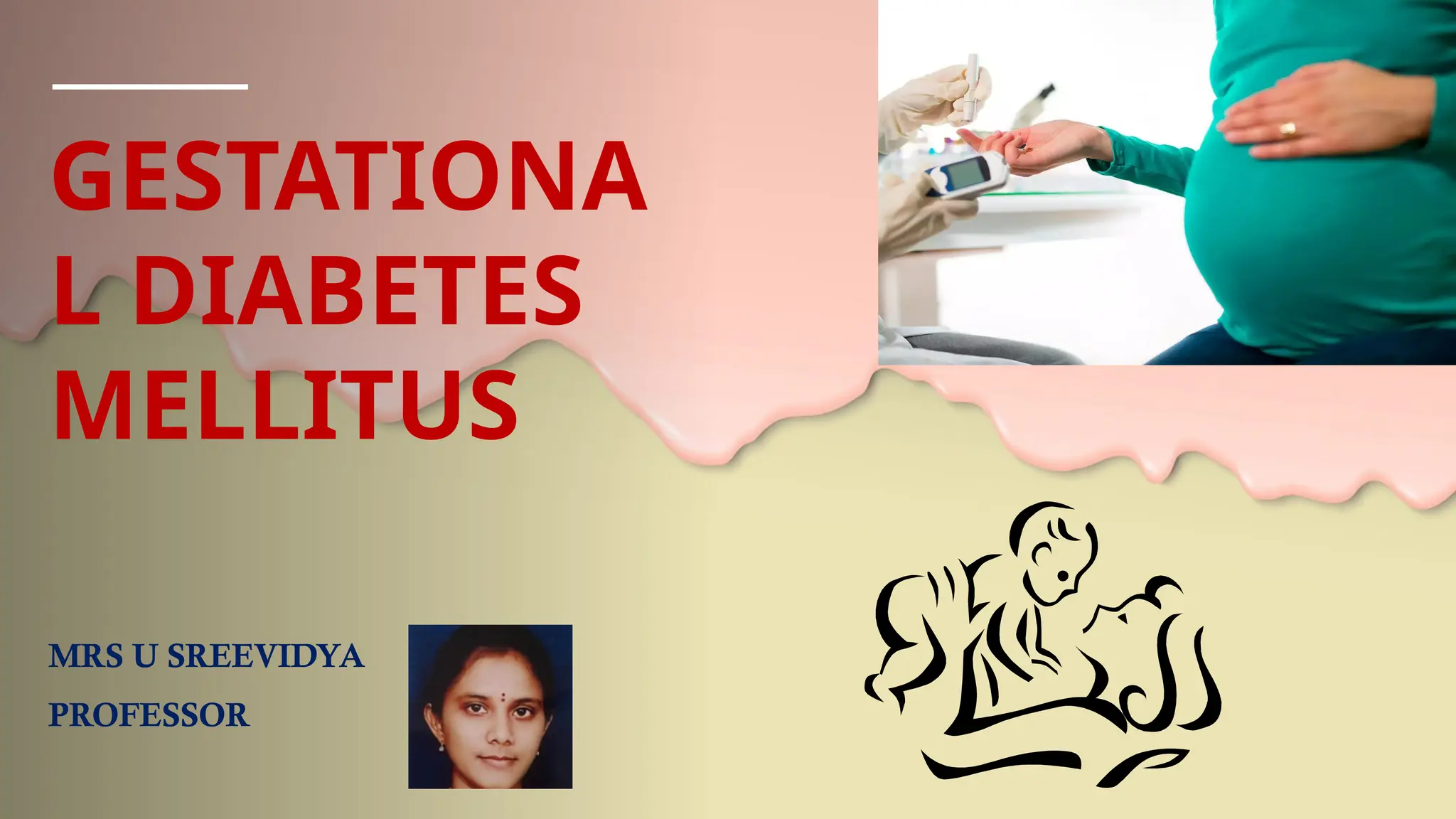
GESTATIONA
L DIABETES
MELLITUS
MRS U SREEVIDYA
PROFESSOR
Introduction
• Gestational Diabetes Mellitus (GDM) is defined
as Impaired Glucose Tolerance (IGT) with onset
of first recognition during pregnancy.
• Worldwide, one in 10 pregnancies is associated
with diabetes, 90% of which are GDM.
• Undiagnosed or inadequately treated GDM can
lead to significant maternal & foetal
complications.
• Women with GDM and their offsprings are at
increased risk of developing Type 2 diabetes
later in life.
The Problem
•In India, prevalence of GDM is appox. 10-
14.3% - much higher than the west
•As of 2010, India has:-
• 22 mill. women with diabetes in the age group of 20-
39 with an additional 54 mill. women in this age
group with impaired glucose tolerance (IGT)
•In view of high prevalence of GDM in Indian
women, Govt. of India has released National
Guidelines for Diagnosis & Management of
Gestational Diabetes Mellitus in Dec 2014.
Patho-physiology
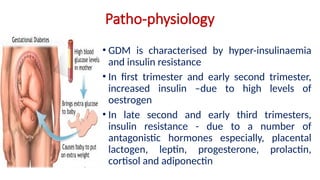
• GDM is characterised by hyper-insulinaemia
and insulin resistance
• In first trimester and early second trimester,
increased insulin –due to high levels of
oestrogen
• In late second and early third trimesters,
insulin resistance - due to a number of
antagonistic hormones especially, placental
lactogen, leptin, progesterone, prolactin,
cortisol and adiponectin
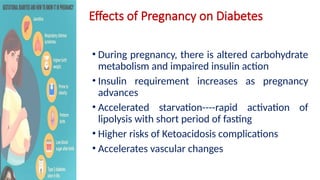
Effects of Pregnancy on Diabetes
• During pregnancy, there is altered carbohydrate
metabolism and impaired insulin action
• Insulin requirement increases as pregnancy
advances
• Accelerated starvation----rapid activation of
lipolysis with short period of fasting
• Higher risks of Ketoacidosis complications
• Accelerates vascular changes
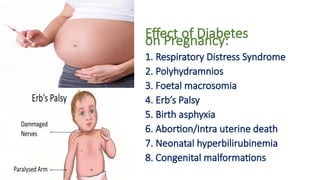
Effect of Diabetes
on Pregnancy:
1. Respiratory Distress Syndrome
2. Polyhydramnios
3. Foetal macrosomia
4. Erb’s Palsy
5. Birth asphyxia
6. Abortion/Intra uterine death
7. Neonatal hyperbilirubinemia
8. Congenital malformations
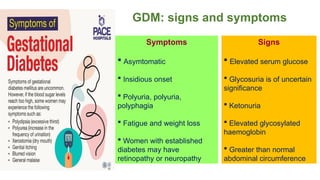
Signs
 Elevated serum glucose
 Glycosuria is of uncertain
significance
 Ketonuria
 Elevated glycosylated
haemoglobin
 Greater than normal
abdominal circumference
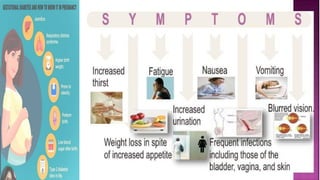
GDM: signs and symptoms
Symptoms
 Asymtomatic
 Insidious onset
 Polyuria, polyuria,
polyphagia
 Fatigue and weight loss
 Women with established
diabetes may have
retinopathy or neuropathy
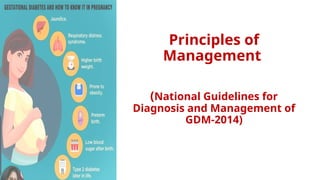
Principles of
Management
(National Guidelines for
Diagnosis and Management of
GDM-2014)
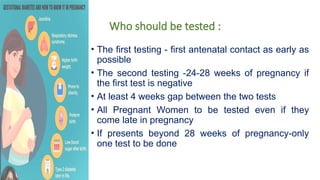
Who should be tested :
• The first testing - first antenatal contact as early as
possible
• The second testing -24-28 weeks of pregnancy if
the first test is negative
• At least 4 weeks gap between the two tests
• All Pregnant Women to be tested even if they
come late in pregnancy
• If presents beyond 28 weeks of pregnancy-only
one test to be done
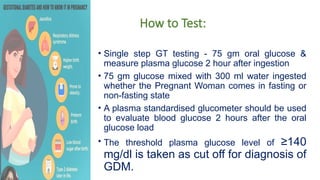
How to Test:
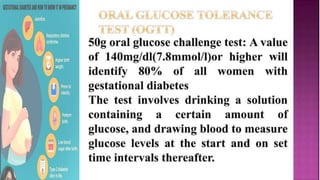
• Single step GT testing - 75 gm oral glucose &
measure plasma glucose 2 hour after ingestion
• 75 gm glucose mixed with 300 ml water ingested
whether the Pregnant Woman comes in fasting or
non-fasting state
• A plasma standardised glucometer should be used
to evaluate blood glucose 2 hours after the oral
glucose load
• The threshold plasma glucose level of ≥140
mg/dl is taken as cut off for diagnosis of
GDM.
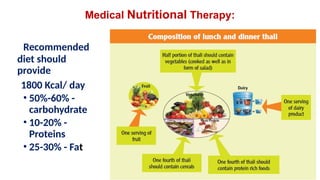
Medical Nutritional Therapy:
Recommended
diet should
provide
1800 Kcal/ day
• 50%-60% -
carbohydrate
• 10-20% -
Proteins
• 25-30% - Fat
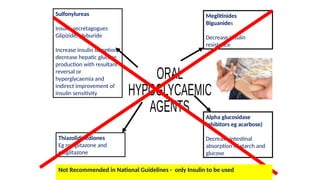
Sulfonylureas
Insulin secretagogues
Glipizide, glyburide
Increase insulin secretion,
decrease hepatic glucose
production with resultant
reversal or
hyperglycaemia and
indirect improvement of
insulin sensitivity
Meglitinides
Biguanides
Decrease insulin
resistance
Alpha glucosidase
inhibitors eg acarbose)
Decrease intestinal
absorption of starch and
glucose
Thiazolidinediones
Eg rosiglitazone and
pioglitazone
Not Recommended in National Guidelines - only Insulin to be used
Gestational Diabetes Mellitus
Associated Conditions
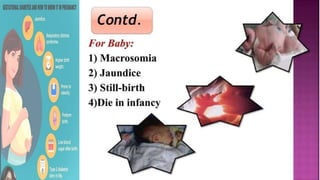
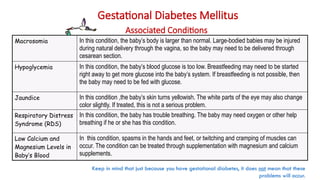
Macrosomia In this condition, the baby’s body is larger than normal. Large-bodied babies may be injured
during natural delivery through the vagina, so the baby may need to be delivered through
cesarean section.
Hypoglycemia In this condition, the baby’s blood glucose is too low. Breastfeeding may need to be started
right away to get more glucose into the baby’s system. If breastfeeding is not possible, then
the baby may need to be fed with glucose.
Jaundice In this condition ,the baby’s skin turns yellowish. The white parts of the eye may also change
color slightly. If treated, this is not a serious problem.
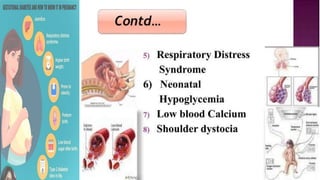
Respiratory Distress
Syndrome (RDS)
In this condition, the baby has trouble breathing. The baby may need oxygen or other help
breathing if he or she has this condition.
Low Calcium and
Magnesium Levels in
Baby’s Blood
In this condition, spasms in the hands and feet, or twitching and cramping of muscles can
occur. The condition can be treated through supplementation with magnesium and calcium
supplements.
Keep in mind that just because you have gestational diabetes, it does not mean that these
problems will occur.
GESTATIONAL DIABETES  MELLITUS.pptx  GDM

GESTATIONAL DIABETES MELLITUS.pptx GDM

  • 1.
  • 6.
    Introduction • Gestational DiabetesMellitus (GDM) is defined as Impaired Glucose Tolerance (IGT) with onset of first recognition during pregnancy. • Worldwide, one in 10 pregnancies is associated with diabetes, 90% of which are GDM. • Undiagnosed or inadequately treated GDM can lead to significant maternal & foetal complications. • Women with GDM and their offsprings are at increased risk of developing Type 2 diabetes later in life.
  • 7.
    The Problem •In India,prevalence of GDM is appox. 10- 14.3% - much higher than the west •As of 2010, India has:- • 22 mill. women with diabetes in the age group of 20- 39 with an additional 54 mill. women in this age group with impaired glucose tolerance (IGT) •In view of high prevalence of GDM in Indian women, Govt. of India has released National Guidelines for Diagnosis & Management of Gestational Diabetes Mellitus in Dec 2014.
  • 10.
    Patho-physiology • GDM ischaracterised by hyper-insulinaemia and insulin resistance • In first trimester and early second trimester, increased insulin –due to high levels of oestrogen • In late second and early third trimesters, insulin resistance - due to a number of antagonistic hormones especially, placental lactogen, leptin, progesterone, prolactin, cortisol and adiponectin
  • 13.
    Effects of Pregnancyon Diabetes • During pregnancy, there is altered carbohydrate metabolism and impaired insulin action • Insulin requirement increases as pregnancy advances • Accelerated starvation----rapid activation of lipolysis with short period of fasting • Higher risks of Ketoacidosis complications • Accelerates vascular changes
  • 14.
    Effect of Diabetes onPregnancy: 1. Respiratory Distress Syndrome 2. Polyhydramnios 3. Foetal macrosomia 4. Erb’s Palsy 5. Birth asphyxia 6. Abortion/Intra uterine death 7. Neonatal hyperbilirubinemia 8. Congenital malformations
  • 15.
    Signs  Elevated serumglucose  Glycosuria is of uncertain significance  Ketonuria  Elevated glycosylated haemoglobin  Greater than normal abdominal circumference GDM: signs and symptoms Symptoms  Asymtomatic  Insidious onset  Polyuria, polyuria, polyphagia  Fatigue and weight loss  Women with established diabetes may have retinopathy or neuropathy
  • 17.
    Principles of Management (National Guidelinesfor Diagnosis and Management of GDM-2014)
  • 18.
    Who should betested : • The first testing - first antenatal contact as early as possible • The second testing -24-28 weeks of pregnancy if the first test is negative • At least 4 weeks gap between the two tests • All Pregnant Women to be tested even if they come late in pregnancy • If presents beyond 28 weeks of pregnancy-only one test to be done
  • 19.
    How to Test: •Single step GT testing - 75 gm oral glucose & measure plasma glucose 2 hour after ingestion • 75 gm glucose mixed with 300 ml water ingested whether the Pregnant Woman comes in fasting or non-fasting state • A plasma standardised glucometer should be used to evaluate blood glucose 2 hours after the oral glucose load • The threshold plasma glucose level of ≥140 mg/dl is taken as cut off for diagnosis of GDM.
  • 31.
    Medical Nutritional Therapy: Recommended dietshould provide 1800 Kcal/ day • 50%-60% - carbohydrate • 10-20% - Proteins • 25-30% - Fat
  • 37.
    Sulfonylureas Insulin secretagogues Glipizide, glyburide Increaseinsulin secretion, decrease hepatic glucose production with resultant reversal or hyperglycaemia and indirect improvement of insulin sensitivity Meglitinides Biguanides Decrease insulin resistance Alpha glucosidase inhibitors eg acarbose) Decrease intestinal absorption of starch and glucose Thiazolidinediones Eg rosiglitazone and pioglitazone Not Recommended in National Guidelines - only Insulin to be used
  • 43.
    Gestational Diabetes Mellitus AssociatedConditions Macrosomia In this condition, the baby’s body is larger than normal. Large-bodied babies may be injured during natural delivery through the vagina, so the baby may need to be delivered through cesarean section. Hypoglycemia In this condition, the baby’s blood glucose is too low. Breastfeeding may need to be started right away to get more glucose into the baby’s system. If breastfeeding is not possible, then the baby may need to be fed with glucose. Jaundice In this condition ,the baby’s skin turns yellowish. The white parts of the eye may also change color slightly. If treated, this is not a serious problem. Respiratory Distress Syndrome (RDS) In this condition, the baby has trouble breathing. The baby may need oxygen or other help breathing if he or she has this condition. Low Calcium and Magnesium Levels in Baby’s Blood In this condition, spasms in the hands and feet, or twitching and cramping of muscles can occur. The condition can be treated through supplementation with magnesium and calcium supplements. Keep in mind that just because you have gestational diabetes, it does not mean that these problems will occur.