
OCTOBER / 2014 
ATLAS: 
FACEBOOK’S 
NEXT-GENERATION 
ADVERTISING PLATFORM
overview 
Atlas is an advertising platform that Facebook is 
re-releasing after having acquired it from Microsoft 
in 2013. The platform, which dynamically serves 
ads to Facebook users based on their Facebook 
behavior, had previously been functioning on 
the industry standard, cookie-based model. This 
model has largely proved ineffective in the age of 
smartphones, as cookies cannot track between 
devices and, therefore, do not reflect how user 
behavior has evolved from single devices to 
multiple, complementary usage occasions. 
Over the past year, though, Facebooks’ and 
Atlas’ engineers have rebuilt the platform using 
Facebook’s advanced tracking and measurement 
capabilities as the backbone. This revamping could, 
in theory, give Facebook and Atlas the capacity to 
challenge Google as a go-to platform for advertisers 
and media buyers.
TWO RECENT 
CHANGES HAVE 
ADDED TO ATLAS’S 
STRENGTH
I 
IT NOW INCORPORATES 
FACEBOOK’S PERSISTENT ID 
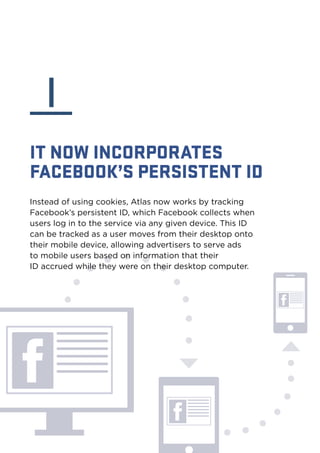
Instead of using cookies, Atlas now works by tracking 
Facebook’s persistent ID, which Facebook collects when 
users log in to the service via any given device. This ID 
can be tracked as a user moves from their desktop onto 
their mobile device, allowing advertisers to serve ads 
to mobile users based on information that their 
ID accrued while they were on their desktop computer.
2 
IT IS PLATFORM AGONISTIC 
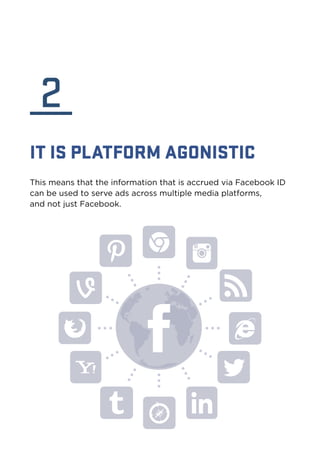
This means that the information that is accrued via Facebook ID 
can be used to serve ads across multiple media platforms, 
and not just Facebook.
WHAT ATLAS 
MEANS FOR 
BRANDS
I 
MAPPING THE CONSUMER 
JOURNEY HAS NEVER BEEN 
SO IMPORTANT 
For media and creative agencies, Atlas’s revamp means 
that mapping individual consumer journeys can now take 
on a much higher degree of relevance in the planning process. 
Detailed consumer journeys – including the journey from 
desktop to mobile – can be expected to apply with 
more detail and with a more realistic vision of 
the actual implementation.
2 
THERE IS NO LIMIT TO 
HIGHLY TARGETED, 
CUSTOMIZED CONTENT 
With more advanced targeting capabilities comes an increased 
ability to serve custom content. In the past, if a brand was 
hoping to target unique subsets of consumers within two 
general population spheres, it would still have to create 
generalized content in the hopes that it would, additionally, 
appeal across the subset groups as well. With Atlas – coupled 
with emerging dynamic video technology – the possibilities 
for custom video content are finally becoming a reality. 
Theoretically, this means that multiple versions of the same ad, 
each targeting different user profiles, could be produced and 
then served accurately via Atlas.
3 
A GREATER ABILITY TO 
TRACK THE EFFECTIVENESS 
OF SOCIAL MEDIA 
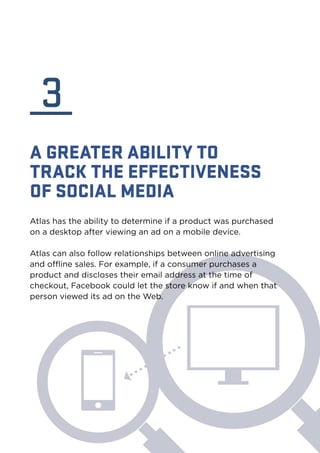
Atlas has the ability to determine if a product was purchased 
on a desktop after viewing an ad on a mobile device. 
Atlas can also follow relationships between online advertising 
and offline sales. For example, if a consumer purchases a 
product and discloses their email address at the time of 
checkout, Facebook could let the store know if and when that 
person viewed its ad on the Web.
key takeaway 
Facebook’s Atlas shows considerable promise, and its shift 
away from cookie-based tracking is almost sure to be a 
harbinger of bigger industry shifts to come. If anything, Atlas 
is a serious challenge to Google’s DoubleClick platform, and 
it positions Facebook to become a dominant player in the ad 
serving industry. What we do not know is whether the cookie 
model is truly ready to be abandoned, or if it can indeed 
be replaced with more accuracy by the unique ID from one 
particular social network – in this case, that of Facebook’s. 
At the very least, Atlas’s cross-device capability is recognition 
of the extent to which advertisers must now be making 
mobile — and planning for mobile — a priority. 
For more information, contact your Engagement Planner or 
reach out to Daniel Charness (daniel.charness@bbdo.com) or 
Bec Nadilo (rebecca.nadilo@bbdo.com).
ATLAS: FACEBOOK’S NEXT GENERATION 
ADVERTISING PLATFORM 
by 
DANIEL CHARNESS 
REBECCA NADILO 
designed by 
NICK (NINJ) SUEMURA 
WWW.BBDO.COM 
WWW.PROXIMITYWORLD.COM 
WWW.DIGITALLABBLOG.COM

Atlas: Facebook's Next-Generation Advertising Platform

  • 1.
    OCTOBER / 2014 ATLAS: FACEBOOK’S NEXT-GENERATION ADVERTISING PLATFORM
  • 2.
    overview Atlas isan advertising platform that Facebook is re-releasing after having acquired it from Microsoft in 2013. The platform, which dynamically serves ads to Facebook users based on their Facebook behavior, had previously been functioning on the industry standard, cookie-based model. This model has largely proved ineffective in the age of smartphones, as cookies cannot track between devices and, therefore, do not reflect how user behavior has evolved from single devices to multiple, complementary usage occasions. Over the past year, though, Facebooks’ and Atlas’ engineers have rebuilt the platform using Facebook’s advanced tracking and measurement capabilities as the backbone. This revamping could, in theory, give Facebook and Atlas the capacity to challenge Google as a go-to platform for advertisers and media buyers.
  • 3.
    TWO RECENT CHANGESHAVE ADDED TO ATLAS’S STRENGTH
  • 4.
    I IT NOWINCORPORATES FACEBOOK’S PERSISTENT ID Instead of using cookies, Atlas now works by tracking Facebook’s persistent ID, which Facebook collects when users log in to the service via any given device. This ID can be tracked as a user moves from their desktop onto their mobile device, allowing advertisers to serve ads to mobile users based on information that their ID accrued while they were on their desktop computer.
  • 5.
    2 IT ISPLATFORM AGONISTIC This means that the information that is accrued via Facebook ID can be used to serve ads across multiple media platforms, and not just Facebook.
  • 6.
    WHAT ATLAS MEANSFOR BRANDS
  • 7.
    I MAPPING THECONSUMER JOURNEY HAS NEVER BEEN SO IMPORTANT For media and creative agencies, Atlas’s revamp means that mapping individual consumer journeys can now take on a much higher degree of relevance in the planning process. Detailed consumer journeys – including the journey from desktop to mobile – can be expected to apply with more detail and with a more realistic vision of the actual implementation.
  • 8.
    2 THERE ISNO LIMIT TO HIGHLY TARGETED, CUSTOMIZED CONTENT With more advanced targeting capabilities comes an increased ability to serve custom content. In the past, if a brand was hoping to target unique subsets of consumers within two general population spheres, it would still have to create generalized content in the hopes that it would, additionally, appeal across the subset groups as well. With Atlas – coupled with emerging dynamic video technology – the possibilities for custom video content are finally becoming a reality. Theoretically, this means that multiple versions of the same ad, each targeting different user profiles, could be produced and then served accurately via Atlas.
  • 9.
    3 A GREATERABILITY TO TRACK THE EFFECTIVENESS OF SOCIAL MEDIA Atlas has the ability to determine if a product was purchased on a desktop after viewing an ad on a mobile device. Atlas can also follow relationships between online advertising and offline sales. For example, if a consumer purchases a product and discloses their email address at the time of checkout, Facebook could let the store know if and when that person viewed its ad on the Web.
  • 10.
    key takeaway Facebook’sAtlas shows considerable promise, and its shift away from cookie-based tracking is almost sure to be a harbinger of bigger industry shifts to come. If anything, Atlas is a serious challenge to Google’s DoubleClick platform, and it positions Facebook to become a dominant player in the ad serving industry. What we do not know is whether the cookie model is truly ready to be abandoned, or if it can indeed be replaced with more accuracy by the unique ID from one particular social network – in this case, that of Facebook’s. At the very least, Atlas’s cross-device capability is recognition of the extent to which advertisers must now be making mobile — and planning for mobile — a priority. For more information, contact your Engagement Planner or reach out to Daniel Charness (daniel.charness@bbdo.com) or Bec Nadilo (rebecca.nadilo@bbdo.com).
  • 11.
    ATLAS: FACEBOOK’S NEXTGENERATION ADVERTISING PLATFORM by DANIEL CHARNESS REBECCA NADILO designed by NICK (NINJ) SUEMURA WWW.BBDO.COM WWW.PROXIMITYWORLD.COM WWW.DIGITALLABBLOG.COM