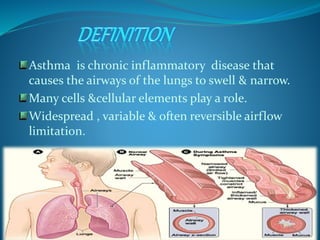


Asthma is chronic inflammatory disease that 
causes the airways of the lungs to swell & narrow. 
Many cells &cellular elements play a role. 
Widespread , variable & often reversible airflow 
limitation.
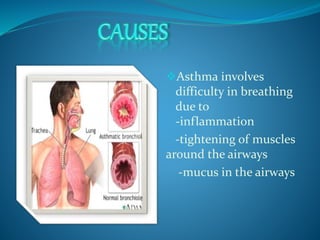
Asthma involves 
difficulty in breathing 
due to 
-inflammation 
-tightening of muscles 
around the airways 
-mucus in the airways
Allergens (pollens , mites & 
molds, animal dander) 
Respiratory infection 
Air pollution 
Smoke(Tobacco, sulfur dioxide) 
Food( egg, wheat , nuts) 
Occupational sensitizers 
Weather changes 
Exercise & hyperventilation 
Medication(aspirin,anti-inflammatory 
drugs) 
Genetic 
-atopy 
-airway 
Gender 
Obesity
Caugh 
Shortness of breath 
Wheezing- 
Comes in episodes with symptom free 
May be worse at night or in early morning 
May go away on its own 
Gets better when using drugs that open the 
airways(broncodilators) 
Gets worse with exercise 
Gets worse with heartburn 
Usually begins suddenly
Bluish color to the lips & face 
Decreased level alterness such as drowsiness & confusion 
Extreme difficulty breathing 
Rapid pulse 
Sweating 
Sneezy & runny nose 
Itchy & inflamed eyes 
Abnormal breathing pattern 
Breathing temporarily stops 
Tightness in the chest
Allergy test 
Arterial blood gas test 
Blood tests to measure eosinophil count & 
IgE 
Chest X-ray 
Lung function test 
Peak flow measurements
Reduce exposure to indoor allergens 
Avoid tobacco smoke 
Avoid vehicle emission 
Identify irritants in the workplace & avoid them 
Influenza vaccination should be provided to patients 
Control airway swelling 
Control drugs to prevent attack 
Avoid sulfite-containing foods 
Use only unscented detergents & cleaning materials. 
Keep the house clean & keep foods in containers. 
Visit doctor regularly & follow doctor’s advice. 
Take medication 
Life style change
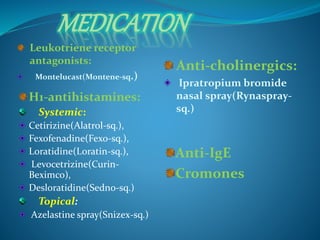
MEDICATION 
Leukotriene receptor 
antagonists: 
Montelucast(Montene-sq.) 
Anti-cholinergics: 
Ipratropium bromide 
nasal spray(Rynaspray-sq.) 
H1-antihistamines: 
Systemic: 
Cetirizine(Alatrol-sq.), 
Fexofenadine(Fexo-sq.), 
Loratidine(Loratin-sq.), 
Levocetrizine(Curin- 
Beximco), 
Desloratidine(Sedno-sq.) 
Topical: 
Azelastine spray(Snizex-sq.) 
Anti-IgE 
Cromones
Nasal decongestants Corticosteroids 
Systemic: 
Phenylephrine 
Pseudoephedrine(Preecof- 
Incepta) 
Topical: 
Xylometazoline(Antazol-sq.) 
Oxymetazoline(Nocon-sq.) 
Hypertonic saline 
Nasal: 
Beclomethasone 
(Decomit-Beximco) 
Budesonide(Aeronoid- 
Beximco) 
Fluticasone(Perinase- 
Beximco) 
Mometasone 
Injection: 
Methylprednisolone 
Oral: 
Prednisolone
REFERENCE
ASTHMA

ASTHMA

  • 2.
    Asthma is chronicinflammatory disease that causes the airways of the lungs to swell & narrow. Many cells &cellular elements play a role. Widespread , variable & often reversible airflow limitation.
  • 3.
    Asthma involves difficultyin breathing due to -inflammation -tightening of muscles around the airways -mucus in the airways
  • 4.
    Allergens (pollens ,mites & molds, animal dander) Respiratory infection Air pollution Smoke(Tobacco, sulfur dioxide) Food( egg, wheat , nuts) Occupational sensitizers Weather changes Exercise & hyperventilation Medication(aspirin,anti-inflammatory drugs) Genetic -atopy -airway Gender Obesity
  • 5.
    Caugh Shortness ofbreath Wheezing- Comes in episodes with symptom free May be worse at night or in early morning May go away on its own Gets better when using drugs that open the airways(broncodilators) Gets worse with exercise Gets worse with heartburn Usually begins suddenly
  • 6.
    Bluish color tothe lips & face Decreased level alterness such as drowsiness & confusion Extreme difficulty breathing Rapid pulse Sweating Sneezy & runny nose Itchy & inflamed eyes Abnormal breathing pattern Breathing temporarily stops Tightness in the chest
  • 7.
    Allergy test Arterialblood gas test Blood tests to measure eosinophil count & IgE Chest X-ray Lung function test Peak flow measurements
  • 8.
    Reduce exposure toindoor allergens Avoid tobacco smoke Avoid vehicle emission Identify irritants in the workplace & avoid them Influenza vaccination should be provided to patients Control airway swelling Control drugs to prevent attack Avoid sulfite-containing foods Use only unscented detergents & cleaning materials. Keep the house clean & keep foods in containers. Visit doctor regularly & follow doctor’s advice. Take medication Life style change
  • 9.
    MEDICATION Leukotriene receptor antagonists: Montelucast(Montene-sq.) Anti-cholinergics: Ipratropium bromide nasal spray(Rynaspray-sq.) H1-antihistamines: Systemic: Cetirizine(Alatrol-sq.), Fexofenadine(Fexo-sq.), Loratidine(Loratin-sq.), Levocetrizine(Curin- Beximco), Desloratidine(Sedno-sq.) Topical: Azelastine spray(Snizex-sq.) Anti-IgE Cromones
  • 10.
    Nasal decongestants Corticosteroids Systemic: Phenylephrine Pseudoephedrine(Preecof- Incepta) Topical: Xylometazoline(Antazol-sq.) Oxymetazoline(Nocon-sq.) Hypertonic saline Nasal: Beclomethasone (Decomit-Beximco) Budesonide(Aeronoid- Beximco) Fluticasone(Perinase- Beximco) Mometasone Injection: Methylprednisolone Oral: Prednisolone
  • 11.