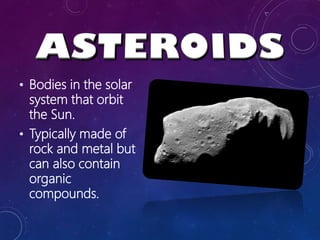
• Bodies in the solar
system that orbit
the Sun.
• Typically made of
rock and metal but
can also contain
organic
compounds.
• Very greatly in size and can be as large as
hundreds of miles wide.
• Mainly made of materials left over from the
formation of the solar system.
• Similar to comets but do not have a coma (tail)
that is visible.
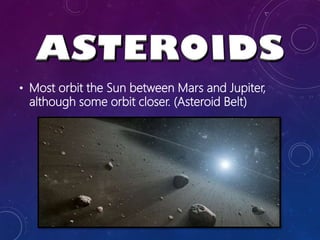
• Most orbit the Sun between Mars and Jupiter,
although some orbit closer. (Asteroid Belt)
• The asteroid belt is divided into an inner belt
and an outer belt.
• The inner belt, is made up of asteroids that are
within 250 million miles of the Sun, contains
asteroids that are made of metals.
• The outer belt, includes asteroids 250 million
miles beyond the Sun, consists of rocky
asteroids.
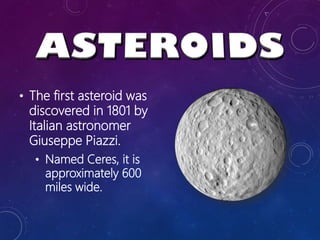
• The first asteroid was
discovered in 1801 by
Italian astronomer
Giuseppe Piazzi.
• Named Ceres, it is
approximately 600
miles wide.
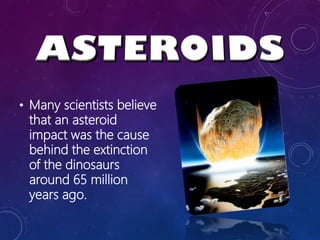
• Many scientists believe
that an asteroid
impact was the cause
behind the extinction
of the dinosaurs
around 65 million
years ago.
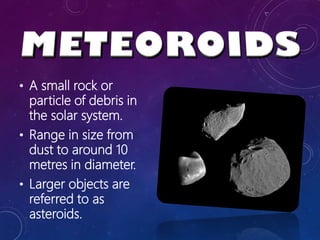
• A small rock or
particle of debris in
the solar system.
• Range in size from
dust to around 10
metres in diameter.
• Larger objects are
referred to as
asteroids.
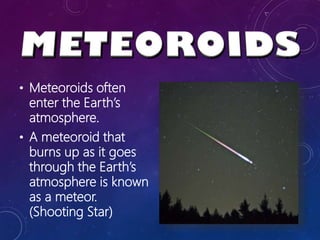
• Meteoroids often
enter the Earth’s
atmosphere.
• A meteoroid that
burns up as it goes
through the Earth’s
atmosphere is known
as a meteor.
(Shooting Star)
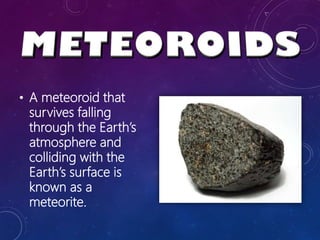
• A meteoroid that
survives falling
through the Earth’s
atmosphere and
colliding with the
Earth’s surface is
known as a
meteorite.
• Approximately 500 meteorites reach the Earth’s
surface every year but of those only around 5
ever make it to scientists for study.
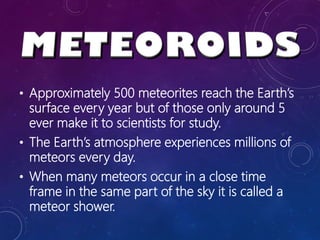
• The Earth’s atmosphere experiences millions of
meteors every day.
• When many meteors occur in a close time
frame in the same part of the sky it is called a
meteor shower.
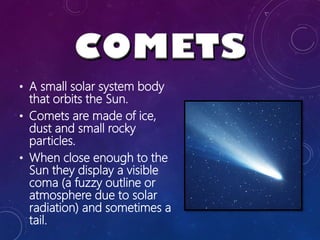
• A small solar system body
that orbits the Sun.
• Comets are made of ice,
dust and small rocky
particles.
• When close enough to the
Sun they display a visible
coma (a fuzzy outline or
atmosphere due to solar
radiation) and sometimes a
tail.
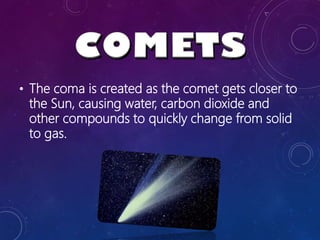
• The coma is created as the comet gets closer to
the Sun, causing water, carbon dioxide and
other compounds to quickly change from solid
to gas.
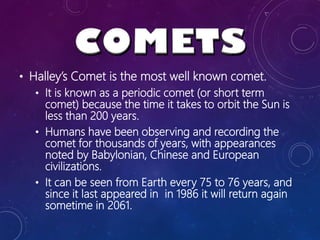
• Halley’s Comet is the most well known comet.
• It is known as a periodic comet (or short term
comet) because the time it takes to orbit the Sun is
less than 200 years.
• Humans have been observing and recording the
comet for thousands of years, with appearances
noted by Babylonian, Chinese and European
civilizations.
• It can be seen from Earth every 75 to 76 years, and
since it last appeared in in 1986 it will return again
sometime in 2061.
THIS IS A PREVIEW OF MY LARGER ASTEROIDS,
COMETS AND METEORS RESOURCE THAT
INCLUDES A STUDENT COPY FOR NOTE-TAKING
AND A RELATED ACTIVITY SHEET!

Asteroids comets and meteoroids whats the difference power point

  • 2.
    • Bodies inthe solar system that orbit the Sun. • Typically made of rock and metal but can also contain organic compounds.
  • 3.
    • Very greatlyin size and can be as large as hundreds of miles wide. • Mainly made of materials left over from the formation of the solar system. • Similar to comets but do not have a coma (tail) that is visible.
  • 4.
    • Most orbitthe Sun between Mars and Jupiter, although some orbit closer. (Asteroid Belt)
  • 5.
    • The asteroidbelt is divided into an inner belt and an outer belt. • The inner belt, is made up of asteroids that are within 250 million miles of the Sun, contains asteroids that are made of metals. • The outer belt, includes asteroids 250 million miles beyond the Sun, consists of rocky asteroids.
  • 6.
    • The firstasteroid was discovered in 1801 by Italian astronomer Giuseppe Piazzi. • Named Ceres, it is approximately 600 miles wide.
  • 7.
    • Many scientistsbelieve that an asteroid impact was the cause behind the extinction of the dinosaurs around 65 million years ago.
  • 8.
    • A smallrock or particle of debris in the solar system. • Range in size from dust to around 10 metres in diameter. • Larger objects are referred to as asteroids.
  • 9.
    • Meteoroids often enterthe Earth’s atmosphere. • A meteoroid that burns up as it goes through the Earth’s atmosphere is known as a meteor. (Shooting Star)
  • 10.
    • A meteoroidthat survives falling through the Earth’s atmosphere and colliding with the Earth’s surface is known as a meteorite.
  • 11.
    • Approximately 500meteorites reach the Earth’s surface every year but of those only around 5 ever make it to scientists for study. • The Earth’s atmosphere experiences millions of meteors every day. • When many meteors occur in a close time frame in the same part of the sky it is called a meteor shower.
  • 12.
    • A smallsolar system body that orbits the Sun. • Comets are made of ice, dust and small rocky particles. • When close enough to the Sun they display a visible coma (a fuzzy outline or atmosphere due to solar radiation) and sometimes a tail.
  • 13.
    • The comais created as the comet gets closer to the Sun, causing water, carbon dioxide and other compounds to quickly change from solid to gas.
  • 14.
    • Halley’s Cometis the most well known comet. • It is known as a periodic comet (or short term comet) because the time it takes to orbit the Sun is less than 200 years. • Humans have been observing and recording the comet for thousands of years, with appearances noted by Babylonian, Chinese and European civilizations. • It can be seen from Earth every 75 to 76 years, and since it last appeared in in 1986 it will return again sometime in 2061.
  • 15.
    THIS IS APREVIEW OF MY LARGER ASTEROIDS, COMETS AND METEORS RESOURCE THAT INCLUDES A STUDENT COPY FOR NOTE-TAKING AND A RELATED ACTIVITY SHEET!