Assistive Technology is any device 
or service that helps a student with 
a disability to meet the 
individualized education program 
(IEP) goals and to participate in the 
general education classroom to the 
best of his or her ability.
IDEA defines Assistive Technology as 
any item, piece of equipment, or product 
system that is used to increase, maintain, 
or improve functional capabilities of a child 
with a disability.
IDEA defines Assistive Technology Service as 
any service that directly assists a child 
with a disability in the selection, 
acquisition, or use of an assistive 
technology device, such as selecting, 
designing, customizing, adapting, 
applying, repairing, or replacing
Individual with Disabilities Education 
Act (IDEA 2004) requires: 
• IEP teams to consider the assistive technology 
of all children with disabilities. 
• School district to provide assistive technology 
and service for students that qualify based on 
their IEP. 
• Schools to use assistive technology devices and 
services to maximize accessibility for children 
with disabilities. 
• Schools to provide assistive technology training 
for the teachers, child, and family.
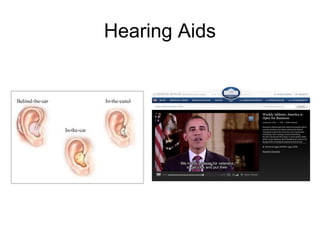
Hearing Aids and amplifiers can 
improve hearing ability in persons with 
hearing problems. 
Closed captioning allows people with 
hearing impairments to enjoy movies 
and television programs.
Hearing Aids
• Computer software and hardware, such as 
voice recognition programs, screen 
readers, and screen enlargement 
applications help students that are seeing 
impaired.
Seeing Impaired
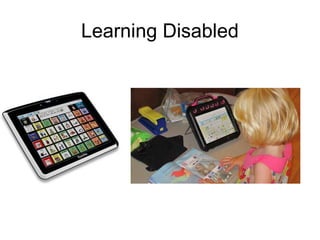
• Computer based instruction software is an 
assistive tool that can help students with 
learning disabilities in reading, writing, 
math, and other subject areas.
Learning Disabled
• Assistive technology can help people that 
have a physical disability that affect their 
motor skills, such as wheelchairs, 
scooters, and prosthetic devices.
References 
• The Iris Center. (n.d.). Retrieved November 1, 2014, 
from http://iris.peabody.vanderbilt.edu/at/chalcycle.htm 
• Wrightslaw. (n.d.). Retrieved November 1, 2014, from 
www.wrightslaw.com/info/atech.index.htm 
• PBS. (n.d.). Retrieved November 1, 2014, from 
www.pbs.org/parents

Assistive technology

  • 2.
    Assistive Technology isany device or service that helps a student with a disability to meet the individualized education program (IEP) goals and to participate in the general education classroom to the best of his or her ability.
  • 3.
    IDEA defines AssistiveTechnology as any item, piece of equipment, or product system that is used to increase, maintain, or improve functional capabilities of a child with a disability.
  • 4.
    IDEA defines AssistiveTechnology Service as any service that directly assists a child with a disability in the selection, acquisition, or use of an assistive technology device, such as selecting, designing, customizing, adapting, applying, repairing, or replacing
  • 5.
    Individual with DisabilitiesEducation Act (IDEA 2004) requires: • IEP teams to consider the assistive technology of all children with disabilities. • School district to provide assistive technology and service for students that qualify based on their IEP. • Schools to use assistive technology devices and services to maximize accessibility for children with disabilities. • Schools to provide assistive technology training for the teachers, child, and family.
  • 6.
    Hearing Aids andamplifiers can improve hearing ability in persons with hearing problems. Closed captioning allows people with hearing impairments to enjoy movies and television programs.
  • 7.
  • 8.
    • Computer softwareand hardware, such as voice recognition programs, screen readers, and screen enlargement applications help students that are seeing impaired.
  • 9.
  • 10.
    • Computer basedinstruction software is an assistive tool that can help students with learning disabilities in reading, writing, math, and other subject areas.
  • 11.
  • 12.
    • Assistive technologycan help people that have a physical disability that affect their motor skills, such as wheelchairs, scooters, and prosthetic devices.
  • 14.
    References • TheIris Center. (n.d.). Retrieved November 1, 2014, from http://iris.peabody.vanderbilt.edu/at/chalcycle.htm • Wrightslaw. (n.d.). Retrieved November 1, 2014, from www.wrightslaw.com/info/atech.index.htm • PBS. (n.d.). Retrieved November 1, 2014, from www.pbs.org/parents