Assistive Technology
Presented by
April Hodges
Objectives
•
•
•
•
•

Define Individualized Education Programs
List disabilities that are eligible for an IEP
Define assistive technology
Identify various types of assistive technology
Determine the types of assistive technology that are beneficial for
certain disabilities
• List forms of instructional practice that does not require technology
Students with Disabilities
• Students with a disability must have an Individualized Education Program. (IEP)
• Some examples of disabilities that are eligible for IEPs are:
▫
▫
▫
▫
▫
▫
▫
▫
▫

learning disabilities
attention deficit hyperactivity disorder (ADHD)
emotional disorders
cognitive challenges
autism
hearing impairment
visual impairment
speech or language impairment
developmental delay

• The IEP must outline the services and goals set forth for the student for the current year.
• Some students may require assistive technology to be successful.
Assistive Technology
• Assistive technology is defined as assistive, adaptive, and rehabilitative
devices for people with disabilities.
• Assistive technology allows people with disabilities to have a greater
independence and perform task that were previously too difficult or
even impossible for them.
• There are numerous types of assistive technology that range from
wheelchairs to electronic devices.
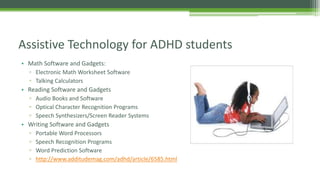
Assistive Technology for ADHD students
• Math Software and Gadgets:
▫ Electronic Math Worksheet Software
▫ Talking Calculators

• Reading Software and Gadgets
▫ Audio Books and Software
▫ Optical Character Recognition Programs
▫ Speech Synthesizers/Screen Reader Systems

• Writing Software and Gadgets
▫
▫
▫
▫

Portable Word Processors
Speech Recognition Programs
Word Prediction Software
http://www.additudemag.com/adhd/article/6585.html
Assistive Technology for Auditory Disability Students
•
•
•
•
•

Personal FM Systems
Sound Field Systems
Infrared Systems
Audio Frequency Induction Loop Systems
Personal Amplifiers

• http://www.nidcd.nih.gov/health/hearing/pages/assistive-devices.aspx
Assistive Technology for Mild Learning Disabilities
•
•
•
•

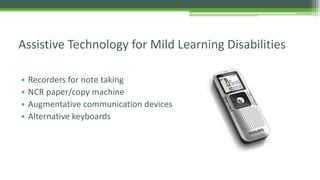
Recorders for note taking
NCR paper/copy machine
Augmentative communication devices
Alternative keyboards
Instructional Practices
• Assistive Technology can be applied in Instruction in the following areas:
▫
▫
▫
▫
▫
▫
▫

OrganizationNote Taking
Writing Assistance
Productivity
Access to Reference Materials
Cognitive Assistance
Material Modification

• https://www.teachervision.com/assistive-technology/teaching-methods/3791.html?detoured=1
Instructional Practices without Technology
• All instruction does not depend
on assistive technology:
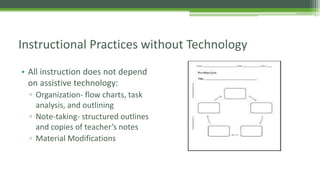
▫ Organization- flow charts, task
analysis, and outlining
▫ Note-taking- structured outlines
and copies of teacher’s notes
▫ Material Modifications
Additional Helpful Resources
•
•
•
•
•
•
•
•

Background on evaluating students and Individualized Education Plans
Wikipedia's Definition of Assistive Technology
Guidelines to choosing Assistive Technology
Overview of Assistive Technology
Assistive Technology for Mild Disabilities
Assistive Listening Devices
Examples of Products
Georgia Project for Assistive Technology

Assistive technology

  • 1.
  • 2.
    Objectives • • • • • Define Individualized EducationPrograms List disabilities that are eligible for an IEP Define assistive technology Identify various types of assistive technology Determine the types of assistive technology that are beneficial for certain disabilities • List forms of instructional practice that does not require technology
  • 3.
    Students with Disabilities •Students with a disability must have an Individualized Education Program. (IEP) • Some examples of disabilities that are eligible for IEPs are: ▫ ▫ ▫ ▫ ▫ ▫ ▫ ▫ ▫ learning disabilities attention deficit hyperactivity disorder (ADHD) emotional disorders cognitive challenges autism hearing impairment visual impairment speech or language impairment developmental delay • The IEP must outline the services and goals set forth for the student for the current year. • Some students may require assistive technology to be successful.
  • 4.
    Assistive Technology • Assistivetechnology is defined as assistive, adaptive, and rehabilitative devices for people with disabilities. • Assistive technology allows people with disabilities to have a greater independence and perform task that were previously too difficult or even impossible for them. • There are numerous types of assistive technology that range from wheelchairs to electronic devices.
  • 5.
    Assistive Technology forADHD students • Math Software and Gadgets: ▫ Electronic Math Worksheet Software ▫ Talking Calculators • Reading Software and Gadgets ▫ Audio Books and Software ▫ Optical Character Recognition Programs ▫ Speech Synthesizers/Screen Reader Systems • Writing Software and Gadgets ▫ ▫ ▫ ▫ Portable Word Processors Speech Recognition Programs Word Prediction Software http://www.additudemag.com/adhd/article/6585.html
  • 6.
    Assistive Technology forAuditory Disability Students • • • • • Personal FM Systems Sound Field Systems Infrared Systems Audio Frequency Induction Loop Systems Personal Amplifiers • http://www.nidcd.nih.gov/health/hearing/pages/assistive-devices.aspx
  • 7.
    Assistive Technology forMild Learning Disabilities • • • • Recorders for note taking NCR paper/copy machine Augmentative communication devices Alternative keyboards
  • 8.
    Instructional Practices • AssistiveTechnology can be applied in Instruction in the following areas: ▫ ▫ ▫ ▫ ▫ ▫ ▫ OrganizationNote Taking Writing Assistance Productivity Access to Reference Materials Cognitive Assistance Material Modification • https://www.teachervision.com/assistive-technology/teaching-methods/3791.html?detoured=1
  • 9.
    Instructional Practices withoutTechnology • All instruction does not depend on assistive technology: ▫ Organization- flow charts, task analysis, and outlining ▫ Note-taking- structured outlines and copies of teacher’s notes ▫ Material Modifications
  • 10.
    Additional Helpful Resources • • • • • • • • Backgroundon evaluating students and Individualized Education Plans Wikipedia's Definition of Assistive Technology Guidelines to choosing Assistive Technology Overview of Assistive Technology Assistive Technology for Mild Disabilities Assistive Listening Devices Examples of Products Georgia Project for Assistive Technology