Diagnostic Learning Logs


        Tanya Wrobleski
          Assignment #2
           PIDP 3230


     Instructor: Doug Mauger
Objectives of this Discussion
   To provide an overview of Diagnostic
    Learning logs

   To discuss the „how's‟ and „why's‟ of
    using this technique

   To discuss the implementation process
    to ensure reliability and validity

   To discuss challenges associated with
    using this tool
“Self knowledge is our best resources
  for making informed choices in an
       unpredictable universe”


                 (Fenwick et al, 2009)
A Diagnostic Learning Log:

   Is an informal assessment tool

   Allows learners to track their learning
    during in-class teaching, assignments or
    exams

   Provides regular feedback for the
    instructor and learners
Context for using this Tool

   Courses with consistent types of
    formative assessments and performance
    activities

   Courses that provide regular feedback
    on performance

   Upper level courses
How can the Diagnostic Learning
Log be used?

   Instructors can apply this tool to any part
    of their curriculum

   Provides opportunities for feedback and
    instructor/ learner collaboration

   Instructors can monitor the impact of the
    changes made in response to the
    learning logs
Example A:
  Lecture on a specific topic:
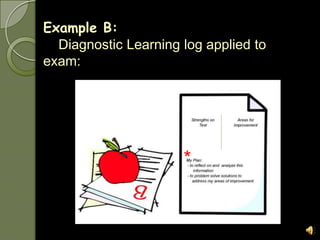
Example B:
  Diagnostic Learning log applied to
exam:


      Example,
        Lecture on a
        specific topic:
Why choose the Diagnostic
Learning Log?
   Provides the instructor with
    instructional focus

   Serves as a framework to develop
    practice skills for self directed learning

   Develops accurate self assessment
Summary of Benefits for
Learners
   Track their learning

   Allows for collaboration around
    teaching focus

   Develop accurate self assessment

   Provides a framework for self directed
    learning
Summary of Benefits for
Instructors
   Versatile application

   Provides instructional focus

   Provides feedback on learners knowledge

   Allows for collaboration around students
    learning

   Impact of changes made as a result of these
    logs can be monitored

   Vehicle for promoting the skill of self directed
    learning
Ensuring Successful
Implementation
   Allow sufficient time to introduce the tool

   Be specific in your instructions

   Provide a sample format with guiding
    questions

   Inform learners that they will be:
       - Keeping a record of what they learned
       - Assessing their own learning

   Copies of these logs, should be submitted at
Sample Guiding Questions
   Briefly describe the assignment or test. What was it
    about?

    Give one or two examples of your most successful
    responses. Try to explain what things you did to
    make them successful.

   Give one or two examples, if relevant, of errors or
    less successful responses. What did you do wrong
    or fail to do in each case?

   The next time you confront a similar situation, what,
    if anything, could you do differently to increase your
    learning?
                                                 (Angelo et al, 1993)
Reliability and Validity

   Content Validity

   Consequences Validity

   Predictive Validity

   Process Validity

   Reliability


                            (Mauger, 2012)
Challenges with this tool
   Requires preparation and class time to
    introduce and implement effectively

   Link between using the tool and program
    outcomes needs to be clear

   Feedback from instructor is needed at
    regular intervals

   Balanced focus is vital to ensure learners
    do not become discouraged
Thank you & Good Luck
References
   Angelo, T. A. & Cross, K, P. (1993).
Classroom assessment techniques: a
handbook for college teachers. (2nd ed.) San
Francisco: Jossey-Bass.

    Fenwick, T. J. & Parsons, J. (2009). The
art of evaluation. (2nd ed.). Toronto, Ontario:
Thompson Educational Publishing Inc.

   Mauger, D. (2012). PIDP 3230 –
evaluation of learning. Online Course

Assignmment #2 diagnostic learning logs

  • 2.
    Diagnostic Learning Logs Tanya Wrobleski Assignment #2 PIDP 3230 Instructor: Doug Mauger
  • 3.
    Objectives of thisDiscussion  To provide an overview of Diagnostic Learning logs  To discuss the „how's‟ and „why's‟ of using this technique  To discuss the implementation process to ensure reliability and validity  To discuss challenges associated with using this tool
  • 4.
    “Self knowledge isour best resources for making informed choices in an unpredictable universe” (Fenwick et al, 2009)
  • 5.
    A Diagnostic LearningLog:  Is an informal assessment tool  Allows learners to track their learning during in-class teaching, assignments or exams  Provides regular feedback for the instructor and learners
  • 6.
    Context for usingthis Tool  Courses with consistent types of formative assessments and performance activities  Courses that provide regular feedback on performance  Upper level courses
  • 7.
    How can theDiagnostic Learning Log be used?  Instructors can apply this tool to any part of their curriculum  Provides opportunities for feedback and instructor/ learner collaboration  Instructors can monitor the impact of the changes made in response to the learning logs
  • 8.
    Example A: Lecture on a specific topic:
  • 9.
    Example B: Diagnostic Learning log applied to exam: Example, Lecture on a specific topic:
  • 10.
    Why choose theDiagnostic Learning Log?  Provides the instructor with instructional focus  Serves as a framework to develop practice skills for self directed learning  Develops accurate self assessment
  • 11.
    Summary of Benefitsfor Learners  Track their learning  Allows for collaboration around teaching focus  Develop accurate self assessment  Provides a framework for self directed learning
  • 12.
    Summary of Benefitsfor Instructors  Versatile application  Provides instructional focus  Provides feedback on learners knowledge  Allows for collaboration around students learning  Impact of changes made as a result of these logs can be monitored  Vehicle for promoting the skill of self directed learning
  • 13.
    Ensuring Successful Implementation  Allow sufficient time to introduce the tool  Be specific in your instructions  Provide a sample format with guiding questions  Inform learners that they will be: - Keeping a record of what they learned - Assessing their own learning  Copies of these logs, should be submitted at
  • 14.
    Sample Guiding Questions  Briefly describe the assignment or test. What was it about?  Give one or two examples of your most successful responses. Try to explain what things you did to make them successful.  Give one or two examples, if relevant, of errors or less successful responses. What did you do wrong or fail to do in each case?  The next time you confront a similar situation, what, if anything, could you do differently to increase your learning? (Angelo et al, 1993)
  • 15.
    Reliability and Validity  Content Validity  Consequences Validity  Predictive Validity  Process Validity  Reliability (Mauger, 2012)
  • 16.
    Challenges with thistool  Requires preparation and class time to introduce and implement effectively  Link between using the tool and program outcomes needs to be clear  Feedback from instructor is needed at regular intervals  Balanced focus is vital to ensure learners do not become discouraged
  • 17.
    Thank you &Good Luck
  • 18.
    References Angelo, T. A. & Cross, K, P. (1993). Classroom assessment techniques: a handbook for college teachers. (2nd ed.) San Francisco: Jossey-Bass. Fenwick, T. J. & Parsons, J. (2009). The art of evaluation. (2nd ed.). Toronto, Ontario: Thompson Educational Publishing Inc. Mauger, D. (2012). PIDP 3230 – evaluation of learning. Online Course

Editor's Notes

  • #7 Diagnostic Learning logs require a level of commitment to self improvement and achievement
  • #8 Learners keep a list of points they understood and a list of points that are unclearProvides feedback on areas where learning is strong, or areas where additional learning is requiredLearners design several questions that would meet their learning needs
  • #16 Consequences Validity – may take a bit to get used to the process