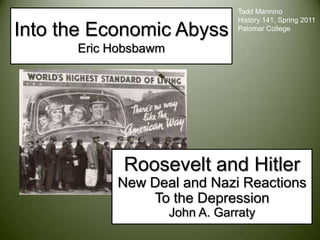
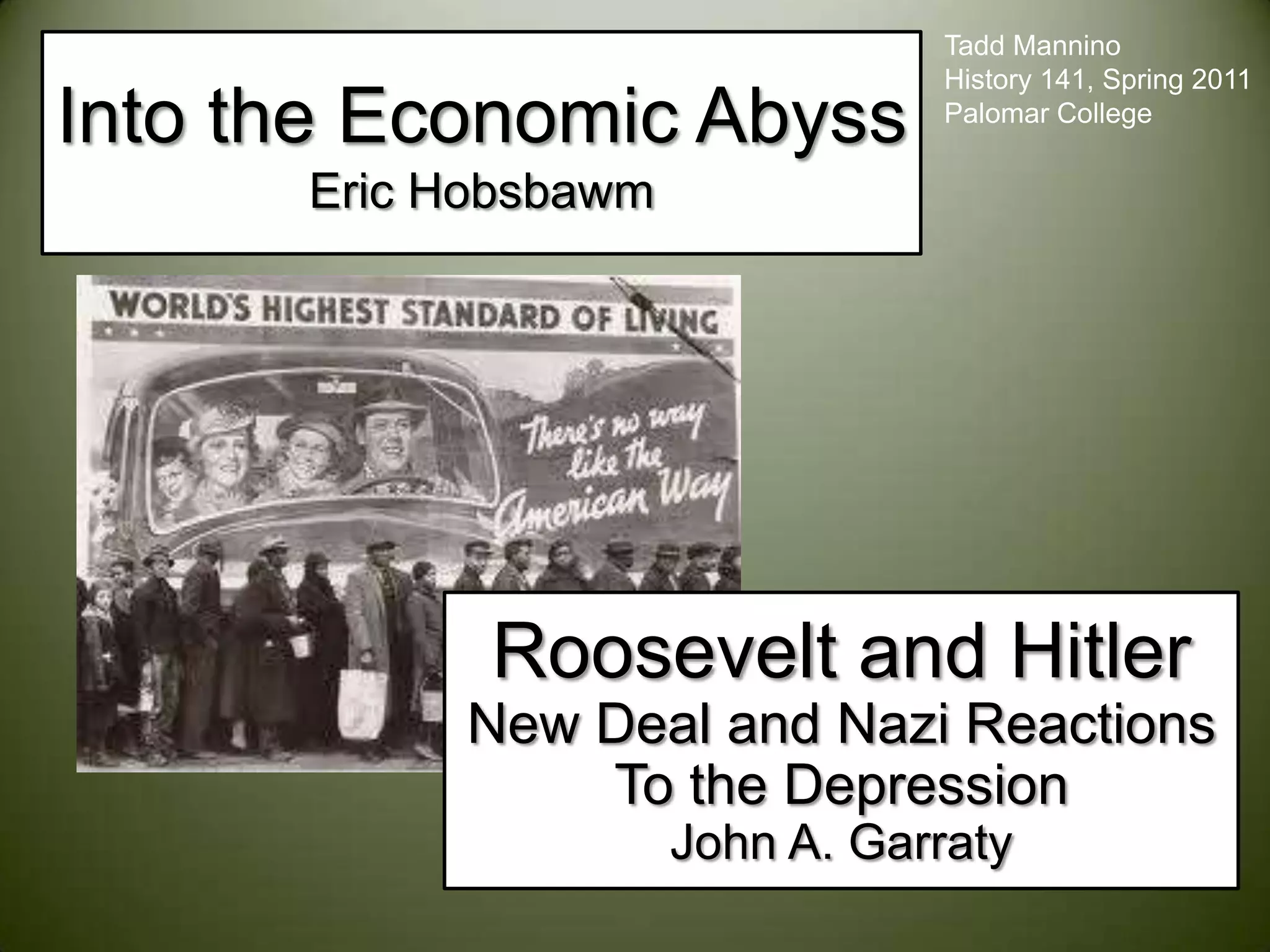
Tadd ManninoHistory 141, Spring 2011Palomar CollegeInto the Economic AbyssEric HobsbawmRoosevelt and HitlerNew Deal and Nazi ReactionsTo the DepressionJohn A. Garraty
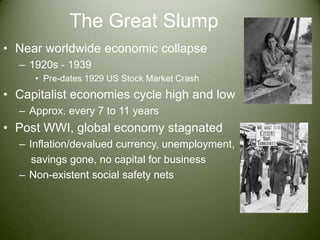
The Great SlumpNear worldwide economic collapse1920s - 1939Pre-dates 1929 US Stock Market CrashCapitalist economies cycle high and lowApprox. every 7 to 11 yearsPost WWI, global economy stagnatedInflation/devalued currency, unemployment,    savings gone, no capital for businessNon-existent social safety nets
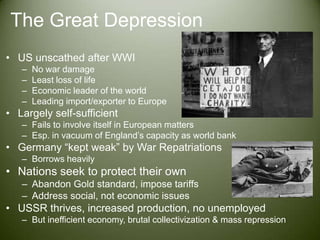
The Great DepressionUS unscathed after WWINo war damageLeast loss of lifeEconomic leader of the worldLeading import/exporter to EuropeLargely self-sufficientFails to involve itself in European mattersEsp. in vacuum of England’s capacity as world bankGermany “kept weak” by War RepatriationsBorrows heavilyNations seek to protect their ownAbandon Gold standard, impose tariffsAddress social, not economic issuesUSSR thrives, increased production, no unemployedBut inefficient economy, brutal collectivization & mass repression
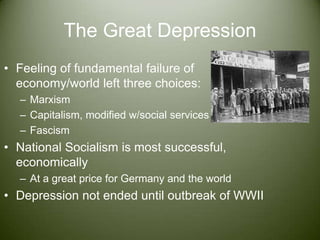
The Great DepressionFeeling of fundamental failure of economy/world left three choices:MarxismCapitalism, modified w/social servicesFascismNational Socialism is most successful, economicallyAt a great price for Germany and the worldDepression not ended until outbreak of WWII
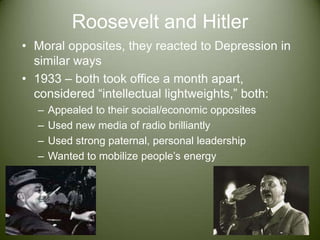
Roosevelt and HitlerMoral opposites, they reacted to Depression in similar ways1933 – both took office a month apart, considered “intellectual lightweights,” both:Appealed to their social/economic oppositesUsed new media of radio brilliantlyUsed strong paternal, personal leadershipWanted to mobilize people’s energy
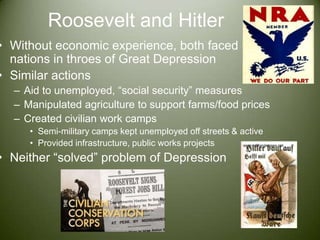
Roosevelt and HitlerWithout economic experience, both faced nations in throes of Great DepressionSimilar actionsAid to unemployed, “social security” measuresManipulated agriculture to support farms/food pricesCreated civilian work campsSemi-military camps kept unemployed off streets & activeProvided infrastructure, public works projectsNeither “solved” problem of Depression
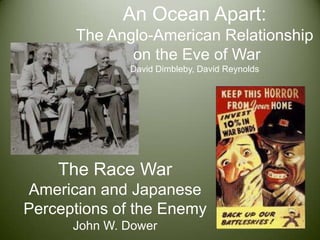
An Ocean Apart:The Anglo-American Relationshipon the Eve of WarDavid Dimbleby, David ReynoldsThe Race WarAmerican and Japanese Perceptions of the EnemyJohn W. Dower
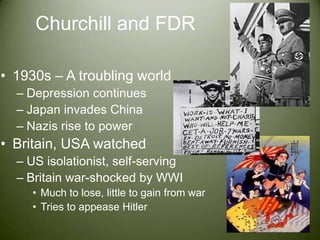
Churchill and FDR1930s – A troubling worldDepression continuesJapan invades ChinaNazis rise to powerBritain, USA watchedUS isolationist, self-servingBritain war-shocked by WWIMuch to lose, little to gain from warTries to appease Hitler
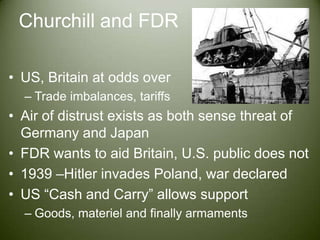
Churchill and FDRUS, Britain at odds overTrade imbalances, tariffsAir of distrust exists as both sense threat of Germany and JapanFDR wants to aid Britain, U.S. public does not1939 –Hitler invades Poland, war declaredUS “Cash and Carry” allows supportGoods, materiel and finally armaments
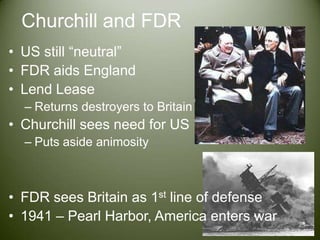
Churchill and FDRUS still “neutral”FDR aids EnglandLend LeaseReturns destroyers to BritainChurchill sees need for USPuts aside animosityFDR sees Britain as 1st line of defense1941 – Pearl Harbor, America enters war
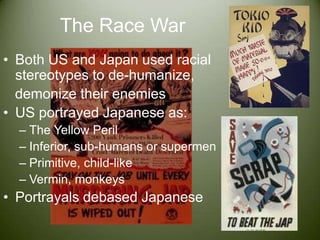
The Race WarBoth US and Japan used racial stereotypes to de-humanize,  demonize their enemiesUS portrayed Japanese as:The Yellow PerilInferior, sub-humans or supermenPrimitive, child-likeVermin, monkeysPortrayals debased Japanese
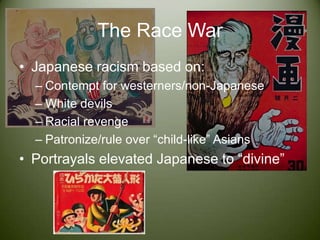
The Race WarJapanese racism based on:Contempt for westerners/non-JapaneseWhite devilsRacial revengePatronize/rule over “child-like” AsiansPortrayals elevated Japanese to “divine”

Assignment 6 - Comparative History Articles

  • 1.
    Tadd ManninoHistory 141,Spring 2011Palomar CollegeInto the Economic AbyssEric HobsbawmRoosevelt and HitlerNew Deal and Nazi ReactionsTo the DepressionJohn A. Garraty
  • 2.
    The Great SlumpNearworldwide economic collapse1920s - 1939Pre-dates 1929 US Stock Market CrashCapitalist economies cycle high and lowApprox. every 7 to 11 yearsPost WWI, global economy stagnatedInflation/devalued currency, unemployment, savings gone, no capital for businessNon-existent social safety nets
  • 3.
    The Great DepressionUSunscathed after WWINo war damageLeast loss of lifeEconomic leader of the worldLeading import/exporter to EuropeLargely self-sufficientFails to involve itself in European mattersEsp. in vacuum of England’s capacity as world bankGermany “kept weak” by War RepatriationsBorrows heavilyNations seek to protect their ownAbandon Gold standard, impose tariffsAddress social, not economic issuesUSSR thrives, increased production, no unemployedBut inefficient economy, brutal collectivization & mass repression
  • 4.
    The Great DepressionFeelingof fundamental failure of economy/world left three choices:MarxismCapitalism, modified w/social servicesFascismNational Socialism is most successful, economicallyAt a great price for Germany and the worldDepression not ended until outbreak of WWII
  • 5.
    Roosevelt and HitlerMoralopposites, they reacted to Depression in similar ways1933 – both took office a month apart, considered “intellectual lightweights,” both:Appealed to their social/economic oppositesUsed new media of radio brilliantlyUsed strong paternal, personal leadershipWanted to mobilize people’s energy
  • 6.
    Roosevelt and HitlerWithouteconomic experience, both faced nations in throes of Great DepressionSimilar actionsAid to unemployed, “social security” measuresManipulated agriculture to support farms/food pricesCreated civilian work campsSemi-military camps kept unemployed off streets & activeProvided infrastructure, public works projectsNeither “solved” problem of Depression
  • 7.
    An Ocean Apart:TheAnglo-American Relationshipon the Eve of WarDavid Dimbleby, David ReynoldsThe Race WarAmerican and Japanese Perceptions of the EnemyJohn W. Dower
  • 8.
    Churchill and FDR1930s– A troubling worldDepression continuesJapan invades ChinaNazis rise to powerBritain, USA watchedUS isolationist, self-servingBritain war-shocked by WWIMuch to lose, little to gain from warTries to appease Hitler
  • 9.
    Churchill and FDRUS,Britain at odds overTrade imbalances, tariffsAir of distrust exists as both sense threat of Germany and JapanFDR wants to aid Britain, U.S. public does not1939 –Hitler invades Poland, war declaredUS “Cash and Carry” allows supportGoods, materiel and finally armaments
  • 10.
    Churchill and FDRUSstill “neutral”FDR aids EnglandLend LeaseReturns destroyers to BritainChurchill sees need for USPuts aside animosityFDR sees Britain as 1st line of defense1941 – Pearl Harbor, America enters war
  • 11.
    The Race WarBothUS and Japan used racial stereotypes to de-humanize, demonize their enemiesUS portrayed Japanese as:The Yellow PerilInferior, sub-humans or supermenPrimitive, child-likeVermin, monkeysPortrayals debased Japanese
  • 12.
    The Race WarJapaneseracism based on:Contempt for westerners/non-JapaneseWhite devilsRacial revengePatronize/rule over “child-like” AsiansPortrayals elevated Japanese to “divine”