ASSETS,LIABILITIES &CAPITAL
Professor: ELIÁS VASQUEZ G
Members
Noemí moreno 9-748-1088
Nélida Ibarguen 9-748-1532
Edwin Díaz 9-747-1585
DEFINITION
Accounting is a fundamental tool in the development of organizations.
Analyze and evaluate the economic results obtained a certain institution, company or
organization handles.
Also plans and collects control procedures to establish compliance with the business
objectives.
Another important function is the register and classify the company's operations.
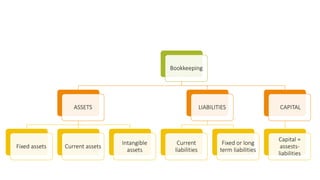
Bookkeeping
CAPITAL
Capital =
assests-
liabilities
LIABILITIES
Fixed or long
term liabilities
Current
liabilities
ASSETS
Intangible
assets
Current assetsFixed assets
ASSETS
REFER TO ALL PROPERTIES OWNED BY AN INDIVIDUAL OR A BUSINESS.
They can be classified as:
A. Fixed assets: they are anything considered as a permanent or fixed past of a business.
B. Current assets: involves cash and other asset or resources identified as those expected to
be converted into cash quickly.
C. Intangible assets: these are items lacking material existence such as goodwill.
LIABILITIES
the present obligations of a business, which must be paid or otherwise satisfied at a
definite time in the future, according to the terms of the agreements with creditors.
A. Current liabilities: include all the obligations to be paid within a year from the
balance sheet date .
B. Fixed or long term liabilities: these liabilities involve all due obligations acquired,
the payment of which will be made after the periods required for the current
liabilities.
Capital
This represents the economic rights or equities in the assets of business of the person
or persons who own it .
The amount of capital, furthermore, results from deducting total liabilities and
withdrawals from total assets plus profits.
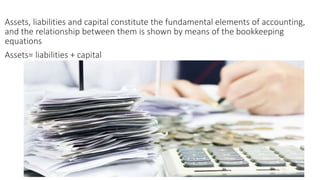
Assets, liabilities and capital constitute the fundamental elements of accounting,
and the relationship between them is shown by means of the bookkeeping
equations
Assets= liabilities + capital
CONCLUSION
Accounting is a discipline that deals especially with study and
measurements on finances and wealth as well as individuals or
companies for thus know for certain the status of accounts and thus they
can have better money, plan investments, purchases, among other
operations, and on the other hand, that they comply in a timely way with
taxes and regulations in tax sense.

Assets,liabilities &capital

  • 1.
  • 2.
    Members Noemí moreno 9-748-1088 NélidaIbarguen 9-748-1532 Edwin Díaz 9-747-1585
  • 3.
    DEFINITION Accounting is afundamental tool in the development of organizations. Analyze and evaluate the economic results obtained a certain institution, company or organization handles. Also plans and collects control procedures to establish compliance with the business objectives. Another important function is the register and classify the company's operations.
  • 4.
    Bookkeeping CAPITAL Capital = assests- liabilities LIABILITIES Fixed orlong term liabilities Current liabilities ASSETS Intangible assets Current assetsFixed assets
  • 5.
    ASSETS REFER TO ALLPROPERTIES OWNED BY AN INDIVIDUAL OR A BUSINESS. They can be classified as: A. Fixed assets: they are anything considered as a permanent or fixed past of a business. B. Current assets: involves cash and other asset or resources identified as those expected to be converted into cash quickly. C. Intangible assets: these are items lacking material existence such as goodwill.
  • 6.
    LIABILITIES the present obligationsof a business, which must be paid or otherwise satisfied at a definite time in the future, according to the terms of the agreements with creditors. A. Current liabilities: include all the obligations to be paid within a year from the balance sheet date . B. Fixed or long term liabilities: these liabilities involve all due obligations acquired, the payment of which will be made after the periods required for the current liabilities.
  • 7.
    Capital This represents theeconomic rights or equities in the assets of business of the person or persons who own it . The amount of capital, furthermore, results from deducting total liabilities and withdrawals from total assets plus profits.
  • 8.
    Assets, liabilities andcapital constitute the fundamental elements of accounting, and the relationship between them is shown by means of the bookkeeping equations Assets= liabilities + capital
  • 9.
    CONCLUSION Accounting is adiscipline that deals especially with study and measurements on finances and wealth as well as individuals or companies for thus know for certain the status of accounts and thus they can have better money, plan investments, purchases, among other operations, and on the other hand, that they comply in a timely way with taxes and regulations in tax sense.