T
T E
E
K W Y
H
A A A
INTERES
TING!
A PRESENTATION BY: GROUP 4
NICE!
WELCOME TO
PODCAST
ASSESSING
LEARNING AND
TEACHING
PERFORMANCE IN
MULTIGRADE
CLASSES
Let’s talk about
THE
MEMBERS
GROUP 4
Realyn Carpio
Realyn Carpio
Te Ann Ildefonso
Te Ann Ildefonso
Christian Jay
Pagaduan
Christian Jay
Pagaduan
Emma Ann
Damian
Emma Ann
Damian
Clariza Abraham
Clariza Abraham
Jorielyn
Apostol
Jorielyn
Apostol
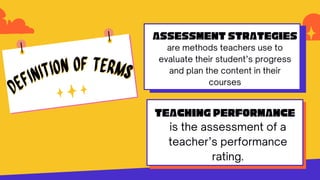
ASSESSMENT STRATEGIES
DEFINITION OF TERMS
DEFINITION OF TERMS
TEACHING PERFORMANCE
is the assessment of a
teacher’s performance
rating.
are methods teachers use to
evaluate their student’s progress
and plan the content in their
courses
Most of these assessments are
similar to the monograde class's
way of assessing their students.
Here are as follows:
Assessment Strategies in
Multigrade Schools
Multigrade Schools
Is a method of teaching in which
content, instructional
technology, and pace of learning
is based upon the abilities and
interest of each learner.
INDIVIDUALIZED LEARNING
SELF-ASSESSMENT
SELF-ASSESSMENT
Is a powerful mechanism
for enhacing learning.
is a technique to help students
focus on what they are learning
in their class.
log
log
E N
L R N
I G
A
Is a process of producing
a written work as a group.
COLLABORATIVE
COLLABORATIVE
WRITING
WRITING
MAKEUP
BEAUTY
EYESHADOW
LIPSTICK
BLUSH
EYELINER
PARCEL
DELIVERY
GIFT
MAIL
ORDER
PACKAGE
LEARNER
ASSESSMENT,
AND
ASSESSMENT
OF YOUR
OWN
TEACHING
1 2
Assessing learning and
teaching performance in
multigrade classes
multigrade classes
This section looks at two
important uses of assessment
ASSESSMENT
ASSESSMENT
is a process to:
is a process to:
Keep track of the learners’ progress
Promote self-reflection and personal accountability among students about their own
learning and;
Provide basis for the profiting of the student performance on the learning competencies
and standards of the curriculum.
Is an ongoing process of identifying, gathering, organizing, and interpreting
quantitative information about what learners know and can do.
Focusing more on learner
assessment than on Evaluation
Individual learning
assessment is just as
important as comparative
evaluation across students.
Students in a multigrade
classroom learn in a
continuum, moving from
easier to more difficult
material and from simple to
more complex learning steps.
1 2
Focusing more on learner
assessment than on Evaluation
Self- paced learning, as an
integral part of multigrade
teaching, promotes social,
emotional, physical, aesthetic,
and cognitive development.
One goal for you is to focus not only
on cognitive/academic anchievement
(e.g reading and writing skills) but
also to continue psychomotor skills
and the psychological and emotional
development of your students.
3 4
Focusing more on learner
assessment than on Evaluation
Another goal you should have
is to develop a positive
attitude among students
about teachers and about
learning.
5
PURPOSE OF THE
ASSESSMENT
Before a new topic
is introduced- to
determine what
experiences or
understanding
students already
have about the
topic.
During a lesson
– to find out if
your students
are learning the
concepts being
tought.
At the end of a topic –
to assess mastery prior
to progression to the
next topic decide if
futher remediation is
required to some
students and provide
feedback to you about
your own teaching
methods.
At the end of a term
or school year- to
assess if students
have retained their
understanding of the
lessons delivered.
Methods of
Assessment
04
01
03
02
Individual Assessment – select activities that help measure the
learning of each student.
Group Assessment – observe how well each group works as a
team.
Self Assessment – ask your students about their favorite most
favorite subject.
Peer Assessment – ask the peer tutors you have selected about the
progress of each of the students they are working with is making.
01
02
03
04
Reporting,
narrating,
drawing
pictures, picture
reading, filling
in maps, Etc.
Listening
talking,
expressing
opinions.
Questioning
by expressing
curiosity,
asking
questions
Analyzing
and drawing
inferences
You may wish to observe and assess the
following skills and attitudes:
You may wish to observe and assess the
following skills and attitudes:
Learning
by Doing
Expressing concern
and sensitivity
towards students with
are disadvantaged
and have various
kinds of disabilities.
Showing
cooperation by
taking
responsibilities
seriously sharing
and Working
together.
05
06
07
Practicing self
reflection in
your teaching
and students
learning Periodically reflecting
on how you carried out
these activities and
what kinds of results
were achieved.
Assessment from your
head-teacher/
principal, fellow
teachers, or feedback
from your students.
Improve your teaching
and develop new and
better practice
1
Keep a record of
your teaching
activities.
2
3 4
Thanks everyone
Thanks everyone
for listening!
for listening!
You all are very clever indeed.
See you at our next Presentation Party!
GROUP 4

Assessing Learning and Teaching Performance in Multigrade Classes

  • 1.
    T T E E K WY H A A A INTERES TING! A PRESENTATION BY: GROUP 4 NICE! WELCOME TO PODCAST
  • 2.
  • 3.
    THE MEMBERS GROUP 4 Realyn Carpio RealynCarpio Te Ann Ildefonso Te Ann Ildefonso Christian Jay Pagaduan Christian Jay Pagaduan Emma Ann Damian Emma Ann Damian Clariza Abraham Clariza Abraham Jorielyn Apostol Jorielyn Apostol
  • 4.
    ASSESSMENT STRATEGIES DEFINITION OFTERMS DEFINITION OF TERMS TEACHING PERFORMANCE is the assessment of a teacher’s performance rating. are methods teachers use to evaluate their student’s progress and plan the content in their courses
  • 5.
    Most of theseassessments are similar to the monograde class's way of assessing their students. Here are as follows: Assessment Strategies in Assessment Strategies in Multigrade Schools Multigrade Schools
  • 6.
    Is a methodof teaching in which content, instructional technology, and pace of learning is based upon the abilities and interest of each learner. INDIVIDUALIZED LEARNING INDIVIDUALIZED LEARNING
  • 7.
    SELF-ASSESSMENT SELF-ASSESSMENT Is a powerfulmechanism for enhacing learning.
  • 8.
    is a techniqueto help students focus on what they are learning in their class. log log E N L R N I G A
  • 9.
    Is a processof producing a written work as a group. COLLABORATIVE COLLABORATIVE WRITING WRITING
  • 10.
    MAKEUP BEAUTY EYESHADOW LIPSTICK BLUSH EYELINER PARCEL DELIVERY GIFT MAIL ORDER PACKAGE LEARNER ASSESSMENT, AND ASSESSMENT OF YOUR OWN TEACHING 1 2 Assessinglearning and Assessing learning and teaching performance in teaching performance in multigrade classes multigrade classes This section looks at two important uses of assessment
  • 11.
    ASSESSMENT ASSESSMENT is a processto: is a process to: Keep track of the learners’ progress Promote self-reflection and personal accountability among students about their own learning and; Provide basis for the profiting of the student performance on the learning competencies and standards of the curriculum. Is an ongoing process of identifying, gathering, organizing, and interpreting quantitative information about what learners know and can do.
  • 12.
    Focusing more onlearner assessment than on Evaluation Individual learning assessment is just as important as comparative evaluation across students. Students in a multigrade classroom learn in a continuum, moving from easier to more difficult material and from simple to more complex learning steps. 1 2
  • 13.
    Focusing more onlearner assessment than on Evaluation Self- paced learning, as an integral part of multigrade teaching, promotes social, emotional, physical, aesthetic, and cognitive development. One goal for you is to focus not only on cognitive/academic anchievement (e.g reading and writing skills) but also to continue psychomotor skills and the psychological and emotional development of your students. 3 4
  • 14.
    Focusing more onlearner assessment than on Evaluation Another goal you should have is to develop a positive attitude among students about teachers and about learning. 5
  • 15.
    PURPOSE OF THE ASSESSMENT Beforea new topic is introduced- to determine what experiences or understanding students already have about the topic. During a lesson – to find out if your students are learning the concepts being tought. At the end of a topic – to assess mastery prior to progression to the next topic decide if futher remediation is required to some students and provide feedback to you about your own teaching methods. At the end of a term or school year- to assess if students have retained their understanding of the lessons delivered.
  • 16.
    Methods of Assessment 04 01 03 02 Individual Assessment– select activities that help measure the learning of each student. Group Assessment – observe how well each group works as a team. Self Assessment – ask your students about their favorite most favorite subject. Peer Assessment – ask the peer tutors you have selected about the progress of each of the students they are working with is making.
  • 17.
    01 02 03 04 Reporting, narrating, drawing pictures, picture reading, filling inmaps, Etc. Listening talking, expressing opinions. Questioning by expressing curiosity, asking questions Analyzing and drawing inferences You may wish to observe and assess the following skills and attitudes:
  • 18.
    You may wishto observe and assess the following skills and attitudes: Learning by Doing Expressing concern and sensitivity towards students with are disadvantaged and have various kinds of disabilities. Showing cooperation by taking responsibilities seriously sharing and Working together. 05 06 07
  • 19.
    Practicing self reflection in yourteaching and students learning Periodically reflecting on how you carried out these activities and what kinds of results were achieved. Assessment from your head-teacher/ principal, fellow teachers, or feedback from your students. Improve your teaching and develop new and better practice 1 Keep a record of your teaching activities. 2 3 4
  • 20.
    Thanks everyone Thanks everyone forlistening! for listening! You all are very clever indeed. See you at our next Presentation Party! GROUP 4