Assessing Eyewitness
Identification
Christina Rosado
Statistics
• The FBI estimates that U.S. law enforcement
made 12,196,959 arrests in 2012.
• The FBI estimates that 521,196 of these
arrests were for violent crimes.
• A survey from 1989 estimates that at least
80,000 eyewitnesses make identifications of
suspects in criminal investigations each year.
• Since 1989 there have been 300+ post-
conviction DNA exonerations in the U.S.
Purpose of Report
• Assess existing scientific research on
eyewitness identification
• Identify gaps in literature and suggest further
research
• Assess what can be learned from research
fields outside of eyewitness identification
• Offer recommendations for law enforcement
• Offer recommendations for developing jury
instruction
Eyewitness Identification Procedures
• Officers typically use the following:
– Showups
– Presentation of photo arrays
– Live lineups
• Photo arrays are the most common identification
procedure
• Many agencies do not have formal policies or
training for administration of identification
procedures or interactions with witnesses
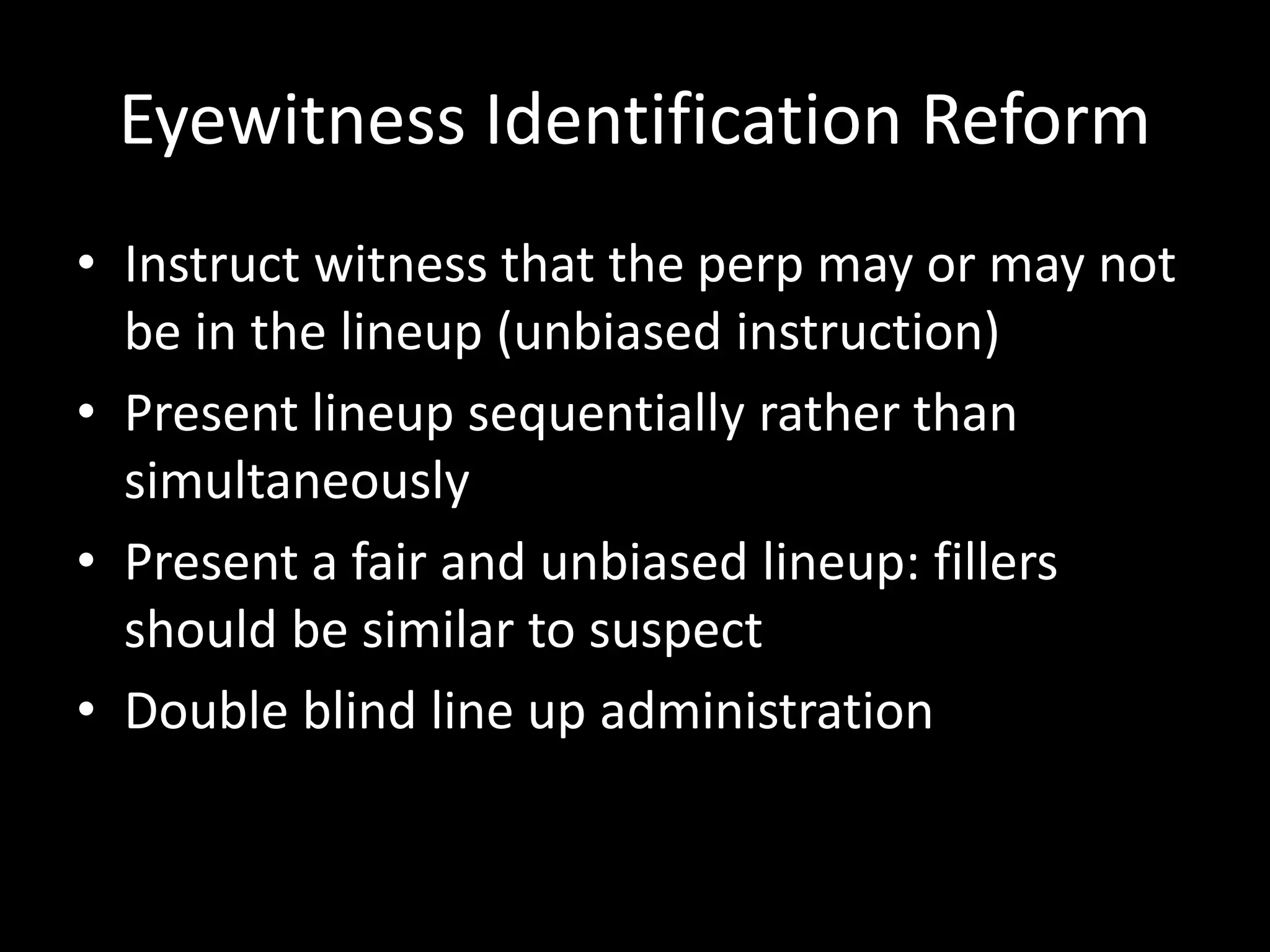
Eyewitness Identification Reform
• Instruct witness that the perp may or may not
be in the lineup (unbiased instruction)
• Present lineup sequentially rather than
simultaneously
• Present a fair and unbiased lineup: fillers
should be similar to suspect
• Double blind line up administration
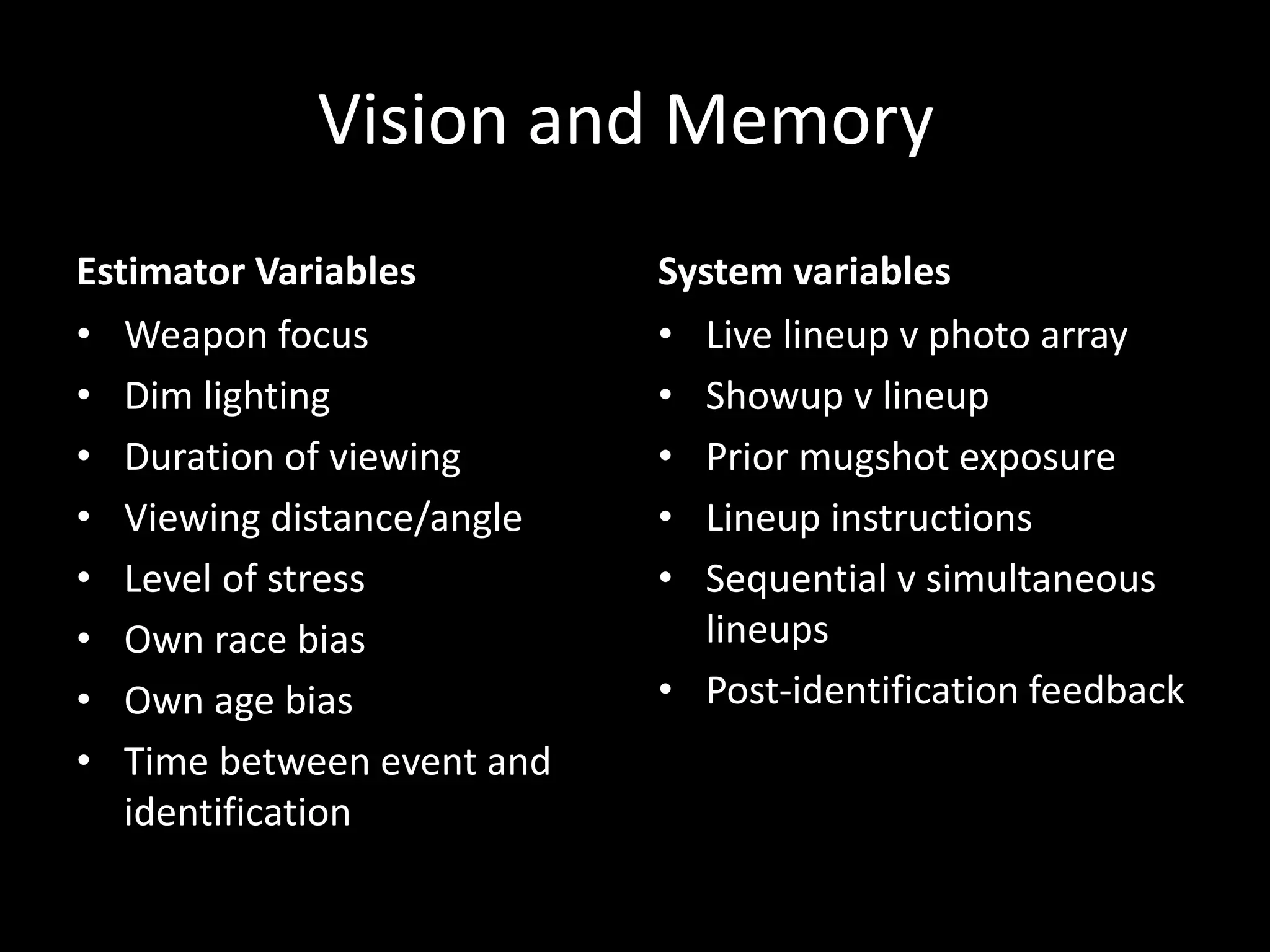
Vision and Memory
Estimator Variables
• Weapon focus
• Dim lighting
• Duration of viewing
• Viewing distance/angle
• Level of stress
• Own race bias
• Own age bias
• Time between event and
identification
System variables
• Live lineup v photo array
• Showup v lineup
• Prior mugshot exposure
• Lineup instructions
• Sequential v simultaneous
lineups
• Post-identification feedback
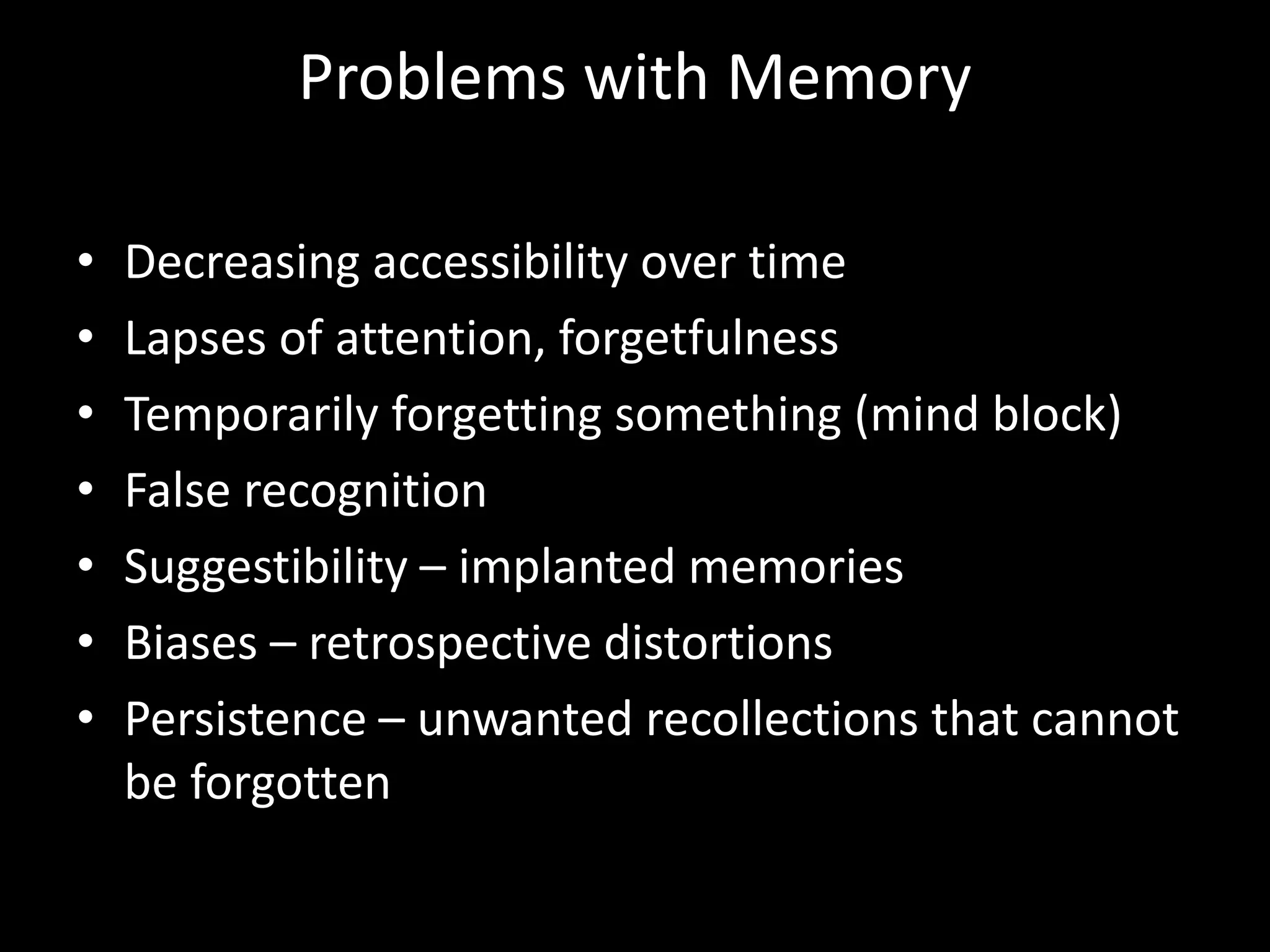
Problems with Memory
• Decreasing accessibility over time
• Lapses of attention, forgetfulness
• Temporarily forgetting something (mind block)
• False recognition
• Suggestibility – implanted memories
• Biases – retrospective distortions
• Persistence – unwanted recollections that cannot
be forgotten
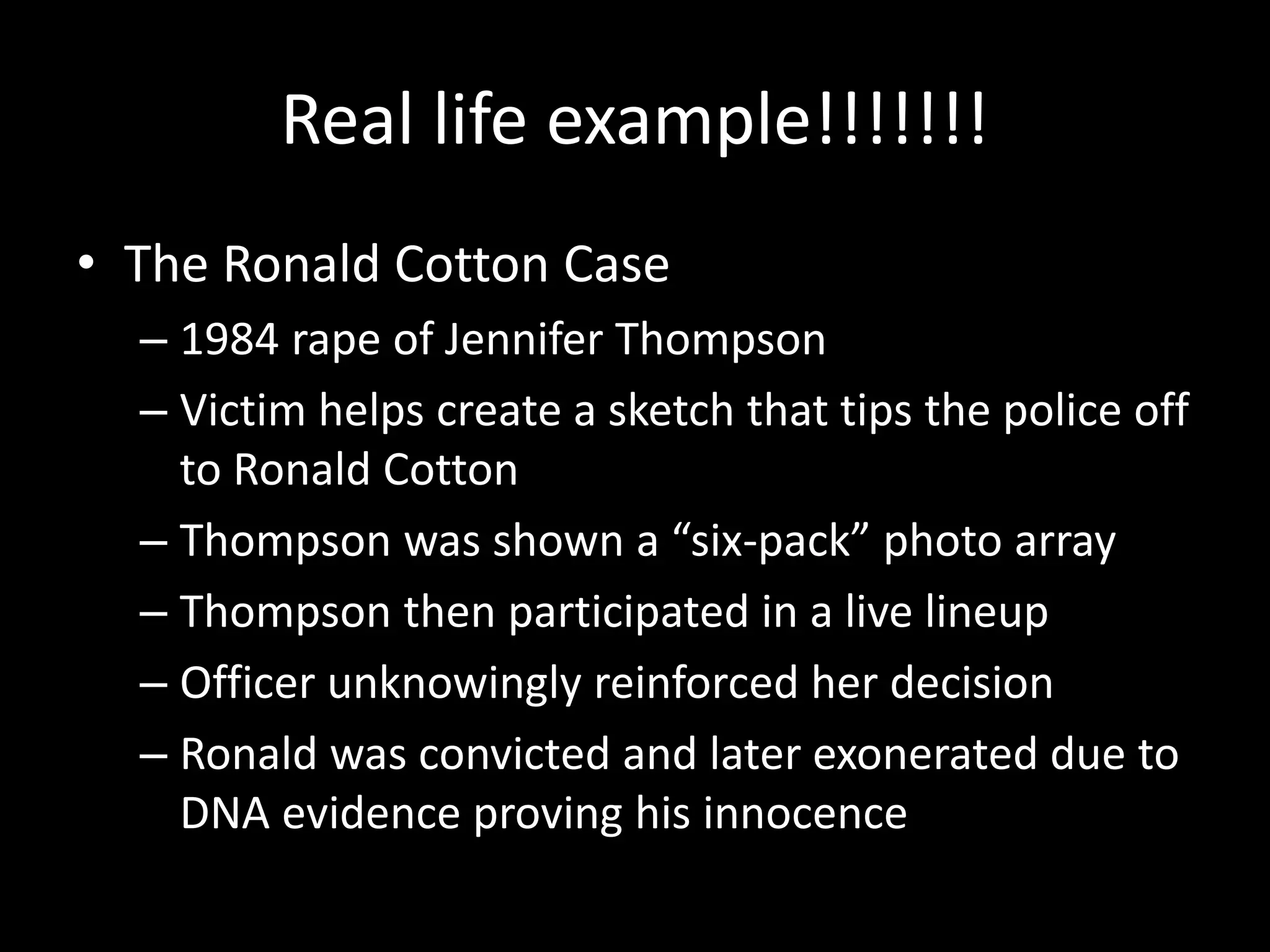
Real life example!!!!!!!
• The Ronald Cotton Case
– 1984 rape of Jennifer Thompson
– Victim helps create a sketch that tips the police off
to Ronald Cotton
– Thompson was shown a “six-pack” photo array
– Thompson then participated in a live lineup
– Officer unknowingly reinforced her decision
– Ronald was convicted and later exonerated due to
DNA evidence proving his innocence
Legal Framework for Assessment of
Eyewitness Identification Evidence
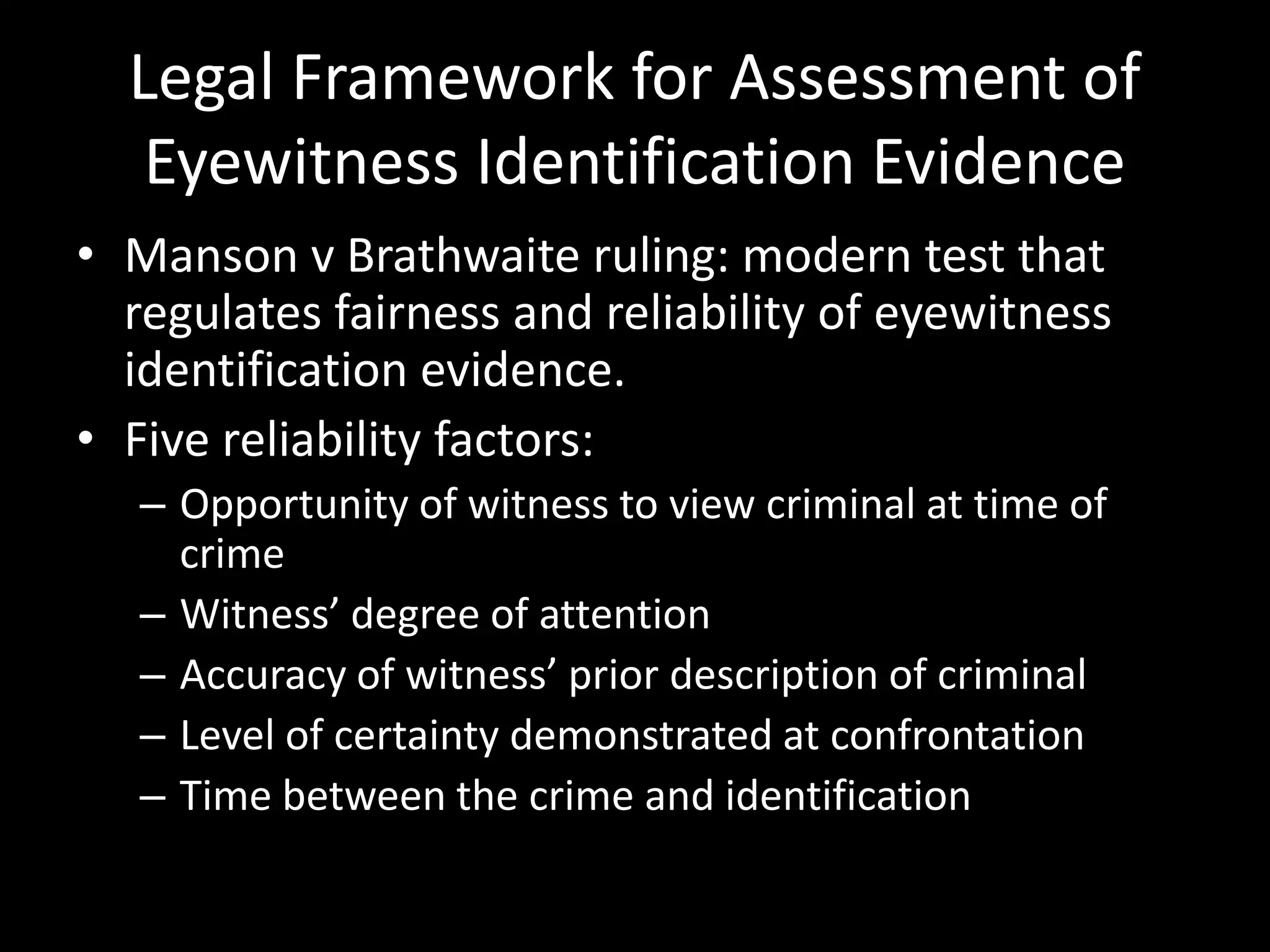
• Manson v Brathwaite ruling: modern test that
regulates fairness and reliability of eyewitness
identification evidence.
• Five reliability factors:
– Opportunity of witness to view criminal at time of
crime
– Witness’ degree of attention
– Accuracy of witness’ prior description of criminal
– Level of certainty demonstrated at confrontation
– Time between the crime and identification
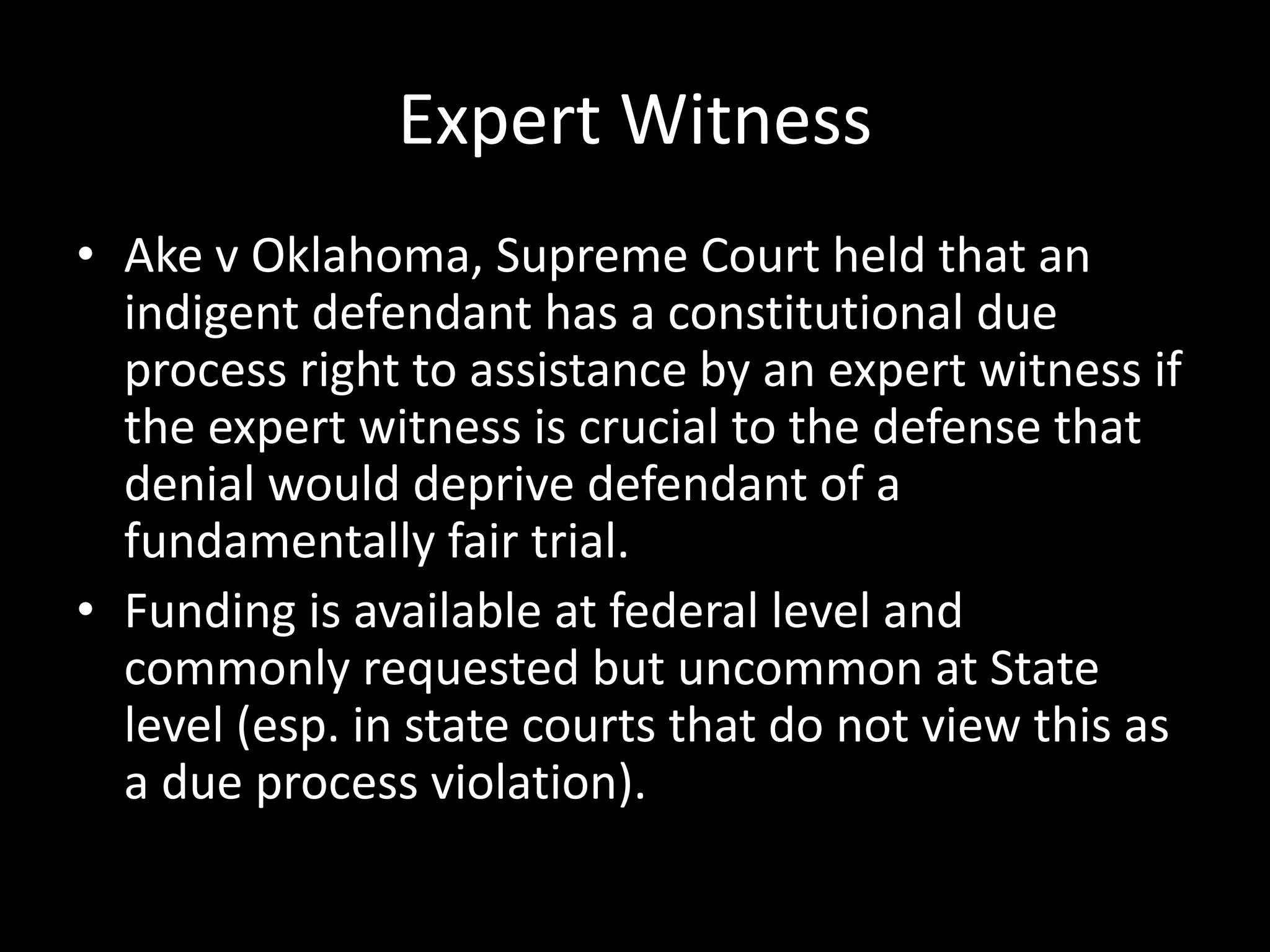
Expert Witness
• Ake v Oklahoma, Supreme Court held that an
indigent defendant has a constitutional due
process right to assistance by an expert witness if
the expert witness is crucial to the defense that
denial would deprive defendant of a
fundamentally fair trial.
• Funding is available at federal level and
commonly requested but uncommon at State
level (esp. in state courts that do not view this as
a due process violation).
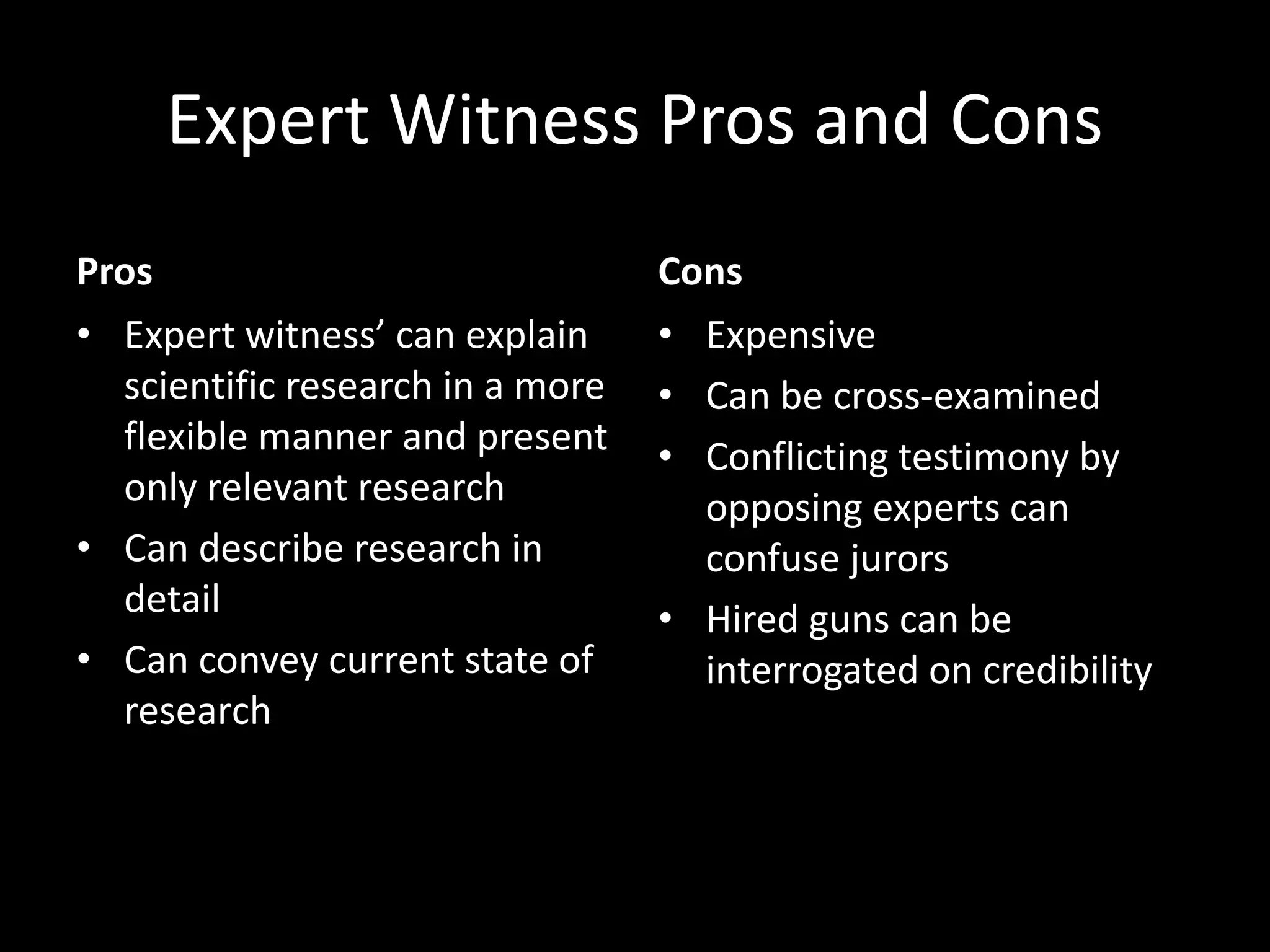
Expert Witness Pros and Cons
Pros
• Expert witness’ can explain
scientific research in a more
flexible manner and present
only relevant research
• Can describe research in
detail
• Can convey current state of
research
Cons
• Expensive
• Can be cross-examined
• Conflicting testimony by
opposing experts can
confuse jurors
• Hired guns can be
interrogated on credibility
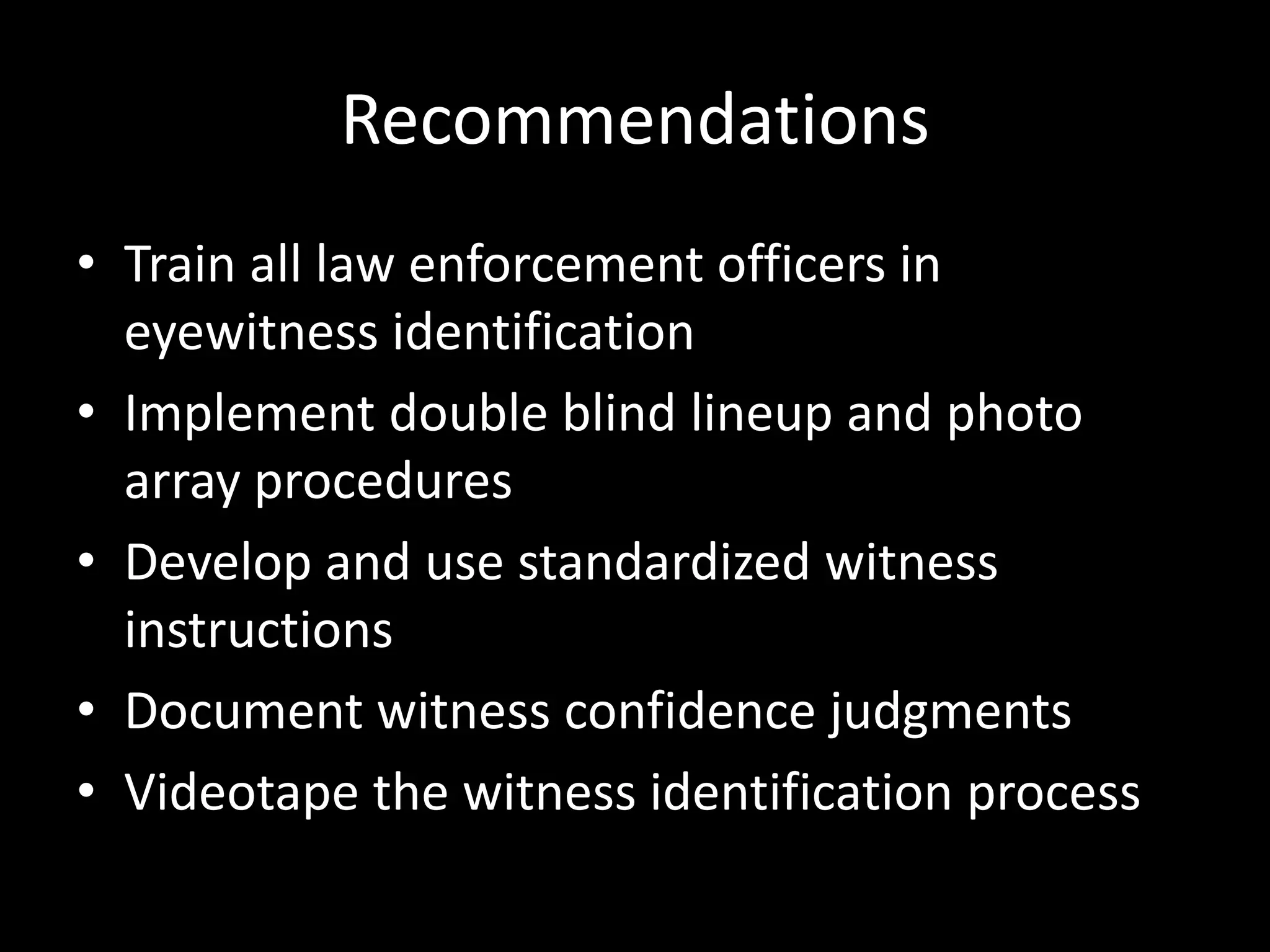
Recommendations
• Train all law enforcement officers in
eyewitness identification
• Implement double blind lineup and photo
array procedures
• Develop and use standardized witness
instructions
• Document witness confidence judgments
• Videotape the witness identification process
Recommendations (cont’d)
• Conduct pretrial judicial inquiry
• Make juries aware of prior identifications
• Use scientific framework expert testimony
• Use jury instructions as an alternative means to
convey information
• Establish a National Research Initiative on
Eyewitness Identification
• Conduct additional research on System and
Estimator variables

Assessing eyewitness identification

  • 1.
  • 2.
    Statistics • The FBIestimates that U.S. law enforcement made 12,196,959 arrests in 2012. • The FBI estimates that 521,196 of these arrests were for violent crimes. • A survey from 1989 estimates that at least 80,000 eyewitnesses make identifications of suspects in criminal investigations each year. • Since 1989 there have been 300+ post- conviction DNA exonerations in the U.S.
  • 3.
    Purpose of Report •Assess existing scientific research on eyewitness identification • Identify gaps in literature and suggest further research • Assess what can be learned from research fields outside of eyewitness identification • Offer recommendations for law enforcement • Offer recommendations for developing jury instruction
  • 4.
    Eyewitness Identification Procedures •Officers typically use the following: – Showups – Presentation of photo arrays – Live lineups • Photo arrays are the most common identification procedure • Many agencies do not have formal policies or training for administration of identification procedures or interactions with witnesses
  • 5.
    Eyewitness Identification Reform •Instruct witness that the perp may or may not be in the lineup (unbiased instruction) • Present lineup sequentially rather than simultaneously • Present a fair and unbiased lineup: fillers should be similar to suspect • Double blind line up administration
  • 6.
    Vision and Memory EstimatorVariables • Weapon focus • Dim lighting • Duration of viewing • Viewing distance/angle • Level of stress • Own race bias • Own age bias • Time between event and identification System variables • Live lineup v photo array • Showup v lineup • Prior mugshot exposure • Lineup instructions • Sequential v simultaneous lineups • Post-identification feedback
  • 7.
    Problems with Memory •Decreasing accessibility over time • Lapses of attention, forgetfulness • Temporarily forgetting something (mind block) • False recognition • Suggestibility – implanted memories • Biases – retrospective distortions • Persistence – unwanted recollections that cannot be forgotten
  • 8.
    Real life example!!!!!!! •The Ronald Cotton Case – 1984 rape of Jennifer Thompson – Victim helps create a sketch that tips the police off to Ronald Cotton – Thompson was shown a “six-pack” photo array – Thompson then participated in a live lineup – Officer unknowingly reinforced her decision – Ronald was convicted and later exonerated due to DNA evidence proving his innocence
  • 9.
    Legal Framework forAssessment of Eyewitness Identification Evidence • Manson v Brathwaite ruling: modern test that regulates fairness and reliability of eyewitness identification evidence. • Five reliability factors: – Opportunity of witness to view criminal at time of crime – Witness’ degree of attention – Accuracy of witness’ prior description of criminal – Level of certainty demonstrated at confrontation – Time between the crime and identification
  • 10.
    Expert Witness • Akev Oklahoma, Supreme Court held that an indigent defendant has a constitutional due process right to assistance by an expert witness if the expert witness is crucial to the defense that denial would deprive defendant of a fundamentally fair trial. • Funding is available at federal level and commonly requested but uncommon at State level (esp. in state courts that do not view this as a due process violation).
  • 11.
    Expert Witness Prosand Cons Pros • Expert witness’ can explain scientific research in a more flexible manner and present only relevant research • Can describe research in detail • Can convey current state of research Cons • Expensive • Can be cross-examined • Conflicting testimony by opposing experts can confuse jurors • Hired guns can be interrogated on credibility
  • 12.
    Recommendations • Train alllaw enforcement officers in eyewitness identification • Implement double blind lineup and photo array procedures • Develop and use standardized witness instructions • Document witness confidence judgments • Videotape the witness identification process
  • 13.
    Recommendations (cont’d) • Conductpretrial judicial inquiry • Make juries aware of prior identifications • Use scientific framework expert testimony • Use jury instructions as an alternative means to convey information • Establish a National Research Initiative on Eyewitness Identification • Conduct additional research on System and Estimator variables