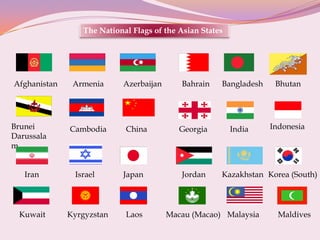
The National Flags of the Asian States
Afghanistan Armenia Azerbaijan Bahrain Bangladesh Bhutan
Brunei
Darussala
m
Cambodia China Georgia India Indonesia
Iran Israel Japan Jordan Kazakhstan Korea (South)
Kuwait Kyrgyzstan Laos Macau (Macao) Malaysia Maldives
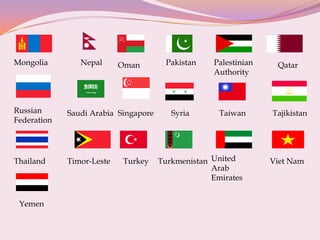
Mongolia Nepal Oman Pakistan Palestinian
Authority
Qatar
Russian
Federation
Saudi Arabia Singapore Syria Taiwan Tajikistan
Thailand Timor-Leste Turkey Turkmenistan United
Arab
Emirates
Viet Nam
Yemen
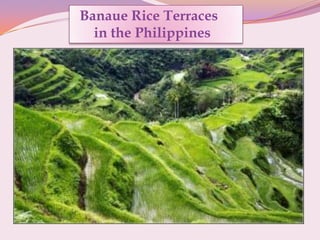
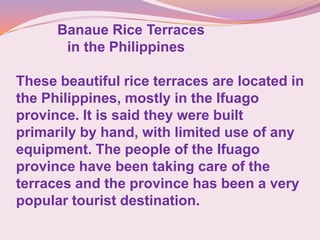
Banaue Rice Terraces
in the Philippines
Banaue Rice Terraces
in the Philippines
These beautiful rice terraces are located in
the Philippines, mostly in the Ifuago
province. It is said they were built
primarily by hand, with limited use of any
equipment. The people of the Ifuago
province have been taking care of the
terraces and the province has been a very
popular tourist destination.
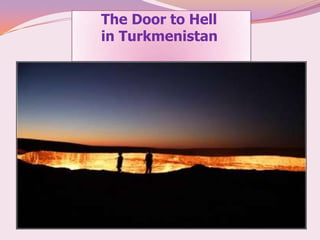
The Door to Hell
in Turkmenistan
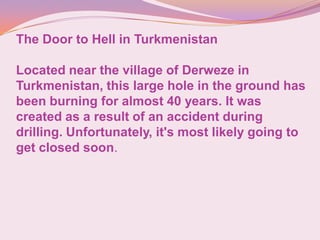
The Door to Hell in Turkmenistan
Located near the village of Derweze in
Turkmenistan, this large hole in the ground has
been burning for almost 40 years. It was
created as a result of an accident during
drilling. Unfortunately, it's most likely going to
get closed soon.
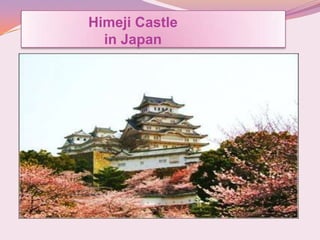
Himeji Castle
in Japan
Himeji Castle in Japan
This beautiful complex is located on a
hilltop in Himeji in Hyougo Prefecture,
Japan. Most of its exterior is white, which
is why it's sometimes referred to as the
"White Heron Castle." The castle
miraculously survived the Second World
War, even though Himeji was bombed
twice.
Shrine of Hazrat Ali
in Afghanistan
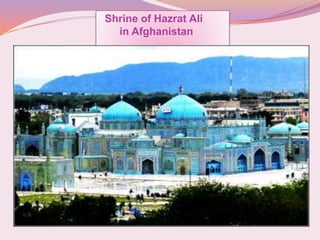
Shrine of Hazrat Ali in Afghanistan
It's also known as the Blue Mosque and
it's located in Mazar-i-Sharif in
Afghanistan. It's one of the most popular
tourist destinations in Afghanistan. The
place is well known for the white pigeons
that live in the complex; it's believed that
when a grey pigeon finds itself near the
shrine complex, it turns white within 40
days.
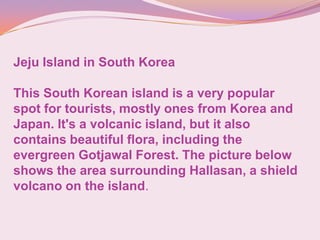
Jeju Island
in South Korea
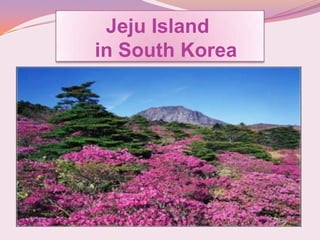
Jeju Island in South Korea
This South Korean island is a very popular
spot for tourists, mostly ones from Korea and
Japan. It's a volcanic island, but it also
contains beautiful flora, including the
evergreen Gotjawal Forest. The picture below
shows the area surrounding Hallasan, a shield
volcano on the island.
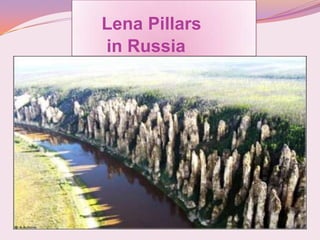
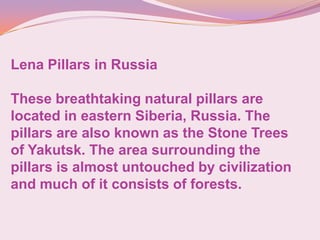
Lena Pillars
in Russia
Lena Pillars in Russia
These breathtaking natural pillars are
located in eastern Siberia, Russia. The
pillars are also known as the Stone Trees
of Yakutsk. The area surrounding the
pillars is almost untouched by civilization
and much of it consists of forests.
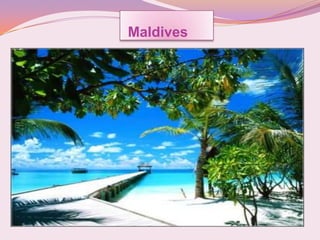
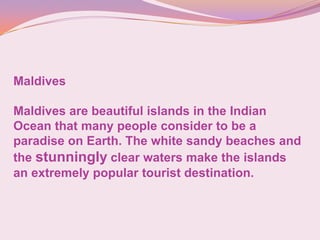
Maldives
Maldives
Maldives are beautiful islands in the Indian
Ocean that many people consider to be a
paradise on Earth. The white sandy beaches and
the stunningly clear waters make the islands
an extremely popular tourist destination.
Valley of Flowers
in India
Valley of Flowers in India
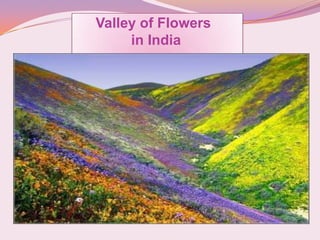
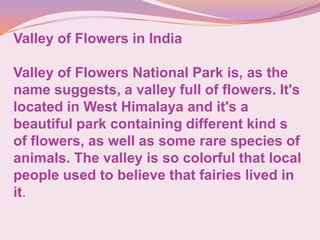
Valley of Flowers National Park is, as the
name suggests, a valley full of flowers. It's
located in West Himalaya and it's a
beautiful park containing different kind s
of flowers, as well as some rare species of
animals. The valley is so colorful that local
people used to believe that fairies lived in
it.
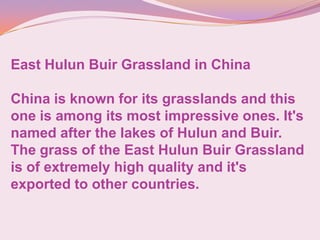
East Hulun Buir Grassland
in China
East Hulun Buir Grassland in China
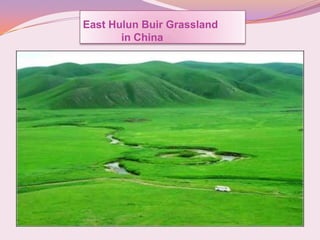
China is known for its grasslands and this
one is among its most impressive ones. It's
named after the lakes of Hulun and Buir.
The grass of the East Hulun Buir Grassland
is of extremely high quality and it's
exported to other countries.
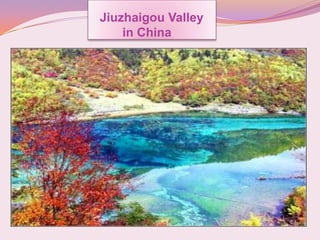
Jiuzhaigou Valley
in China
Jiuzhaigou Valley in China
This nature reserve located in the province of
Sichuan, China, is known for beautiful lakes
and waterfalls. The name of the valley means
"Valley of Nine Villages", as nine villages are
situated along the valley, seven of which are
still inhabited by people. The valley contains
beautiful forests that look especially attractive
during autumn.
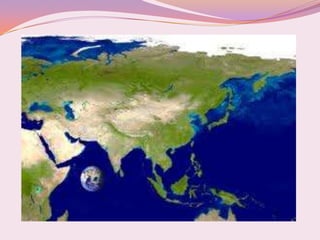
Ang Asya ang pinakamalaki na kontinente at
sumasaklaw sa humigit-kumulang na ikatlong
bahagi ng mundo. May sukat itong 49,694,700 milya
kuwadrado (mi2).
The culture of Asia is human civilization in Asia. It
features different kinds of cultural heritage of
many nationalities, societies, andethnic groups in
the region, traditionally called a continent from a
Western-centric perspective, of Asia. The region or
"continent" is more commonly divided into more
natural geographic and cultural subregions,
including Central Asia, East Asia, North Asia, South
Asia, Southeast Asia and West Asia.
Geographically, Asia is not a distinct continent;
culturally, there has been little unity or common
history for many of the cultures and peoples of
Asia.
There are an abundance of ethnic groups
throughout Asia, with adaptations to the climate
zones of Asia, which can perate, subtropical or
tropical. The ethnic groups have adapted to
mountains, deserts, grasslands, and forests. On the
coasts of Asia, the ethnic groups have adopted
various methods of harvest and transport. Some
groups are primarily hunter-gatherers, some
practice transhumance(nomadic lifestyle), others
have been agrarian/rural for millennia and others
are becoming industrial/urban. Some
groups/countries of Asia are completely urban
(Singapore and Hong Kong). The colonization of
Asia was largely ended in the twentieth century,
with national drives for independence and self-
determination across the continent.
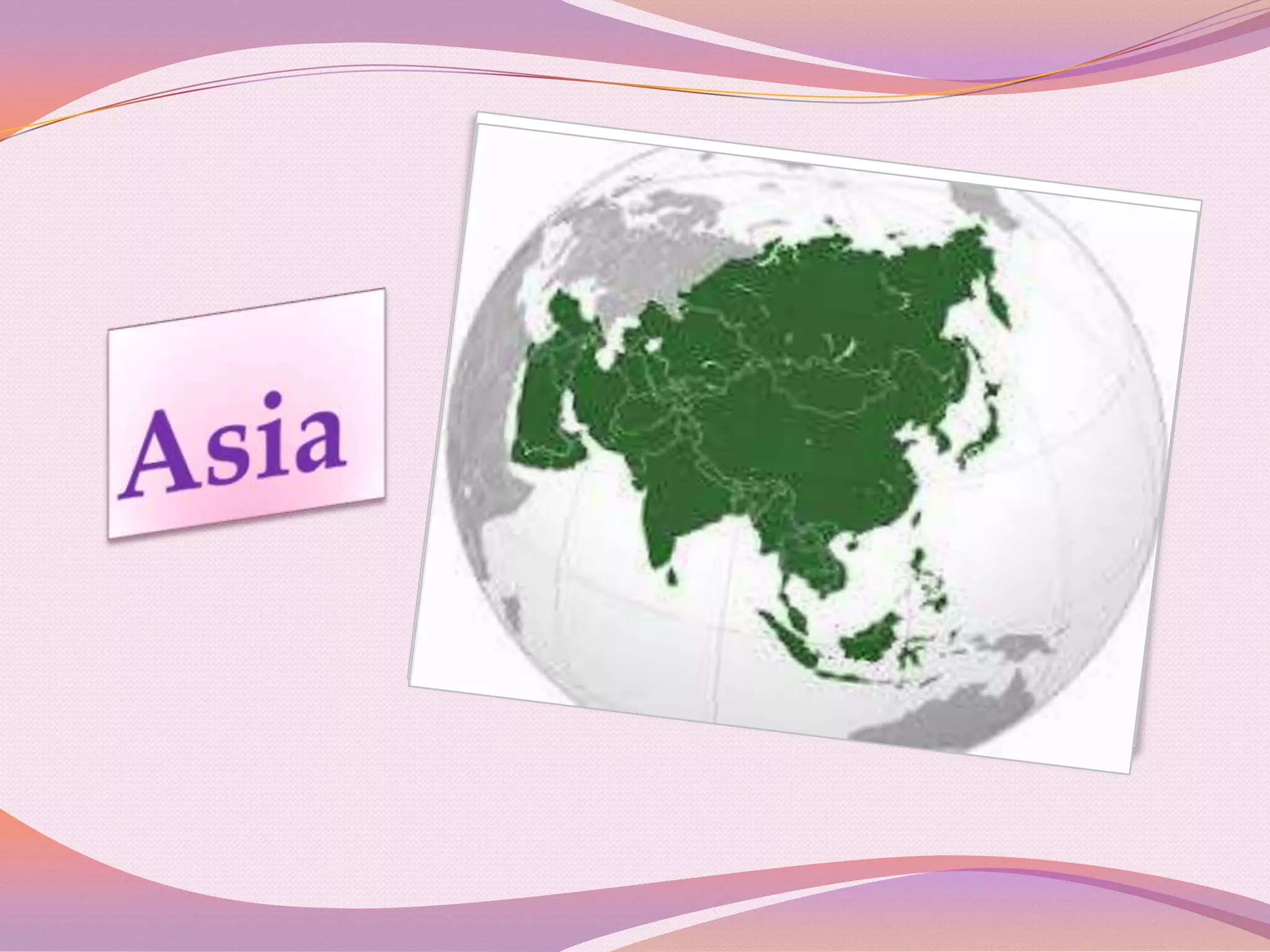
Asia

Asia

  • 2.
    The National Flagsof the Asian States Afghanistan Armenia Azerbaijan Bahrain Bangladesh Bhutan Brunei Darussala m Cambodia China Georgia India Indonesia Iran Israel Japan Jordan Kazakhstan Korea (South) Kuwait Kyrgyzstan Laos Macau (Macao) Malaysia Maldives
  • 3.
    Mongolia Nepal OmanPakistan Palestinian Authority Qatar Russian Federation Saudi Arabia Singapore Syria Taiwan Tajikistan Thailand Timor-Leste Turkey Turkmenistan United Arab Emirates Viet Nam Yemen
  • 5.
    Banaue Rice Terraces inthe Philippines
  • 6.
    Banaue Rice Terraces inthe Philippines These beautiful rice terraces are located in the Philippines, mostly in the Ifuago province. It is said they were built primarily by hand, with limited use of any equipment. The people of the Ifuago province have been taking care of the terraces and the province has been a very popular tourist destination.
  • 7.
    The Door toHell in Turkmenistan
  • 8.
    The Door toHell in Turkmenistan Located near the village of Derweze in Turkmenistan, this large hole in the ground has been burning for almost 40 years. It was created as a result of an accident during drilling. Unfortunately, it's most likely going to get closed soon.
  • 9.
  • 10.
    Himeji Castle inJapan This beautiful complex is located on a hilltop in Himeji in Hyougo Prefecture, Japan. Most of its exterior is white, which is why it's sometimes referred to as the "White Heron Castle." The castle miraculously survived the Second World War, even though Himeji was bombed twice.
  • 11.
    Shrine of HazratAli in Afghanistan
  • 12.
    Shrine of HazratAli in Afghanistan It's also known as the Blue Mosque and it's located in Mazar-i-Sharif in Afghanistan. It's one of the most popular tourist destinations in Afghanistan. The place is well known for the white pigeons that live in the complex; it's believed that when a grey pigeon finds itself near the shrine complex, it turns white within 40 days.
  • 13.
  • 14.
    Jeju Island inSouth Korea This South Korean island is a very popular spot for tourists, mostly ones from Korea and Japan. It's a volcanic island, but it also contains beautiful flora, including the evergreen Gotjawal Forest. The picture below shows the area surrounding Hallasan, a shield volcano on the island.
  • 15.
  • 16.
    Lena Pillars inRussia These breathtaking natural pillars are located in eastern Siberia, Russia. The pillars are also known as the Stone Trees of Yakutsk. The area surrounding the pillars is almost untouched by civilization and much of it consists of forests.
  • 17.
  • 18.
    Maldives Maldives are beautifulislands in the Indian Ocean that many people consider to be a paradise on Earth. The white sandy beaches and the stunningly clear waters make the islands an extremely popular tourist destination.
  • 19.
  • 20.
    Valley of Flowersin India Valley of Flowers National Park is, as the name suggests, a valley full of flowers. It's located in West Himalaya and it's a beautiful park containing different kind s of flowers, as well as some rare species of animals. The valley is so colorful that local people used to believe that fairies lived in it.
  • 21.
    East Hulun BuirGrassland in China
  • 22.
    East Hulun BuirGrassland in China China is known for its grasslands and this one is among its most impressive ones. It's named after the lakes of Hulun and Buir. The grass of the East Hulun Buir Grassland is of extremely high quality and it's exported to other countries.
  • 23.
  • 24.
    Jiuzhaigou Valley inChina This nature reserve located in the province of Sichuan, China, is known for beautiful lakes and waterfalls. The name of the valley means "Valley of Nine Villages", as nine villages are situated along the valley, seven of which are still inhabited by people. The valley contains beautiful forests that look especially attractive during autumn.
  • 27.
    Ang Asya angpinakamalaki na kontinente at sumasaklaw sa humigit-kumulang na ikatlong bahagi ng mundo. May sukat itong 49,694,700 milya kuwadrado (mi2). The culture of Asia is human civilization in Asia. It features different kinds of cultural heritage of many nationalities, societies, andethnic groups in the region, traditionally called a continent from a Western-centric perspective, of Asia. The region or "continent" is more commonly divided into more natural geographic and cultural subregions, including Central Asia, East Asia, North Asia, South Asia, Southeast Asia and West Asia. Geographically, Asia is not a distinct continent; culturally, there has been little unity or common history for many of the cultures and peoples of Asia.
  • 28.
    There are anabundance of ethnic groups throughout Asia, with adaptations to the climate zones of Asia, which can perate, subtropical or tropical. The ethnic groups have adapted to mountains, deserts, grasslands, and forests. On the coasts of Asia, the ethnic groups have adopted various methods of harvest and transport. Some groups are primarily hunter-gatherers, some practice transhumance(nomadic lifestyle), others have been agrarian/rural for millennia and others are becoming industrial/urban. Some groups/countries of Asia are completely urban (Singapore and Hong Kong). The colonization of Asia was largely ended in the twentieth century, with national drives for independence and self- determination across the continent.