ใบความรู้ที่ 1 ASEAN National Flowers
แผนการเรียนรู้ย่อย: รอบรู้อาเซียน (ASEAN Learning)           จานวน 2 ชั่วโมง/สัปดาห์ รวม 4 ชั่วโมง
หน่วยที่ 2 Talking about ASEAN                                                    โดยนางกฤตยา ศรีริ
กลุ่มสาระการเรียนรู้ภาษาต่างประเทศ                                  โรงเรียนภัทรบพิตร จังหวัดบุรีรัมย์

Brunei Darussalam1
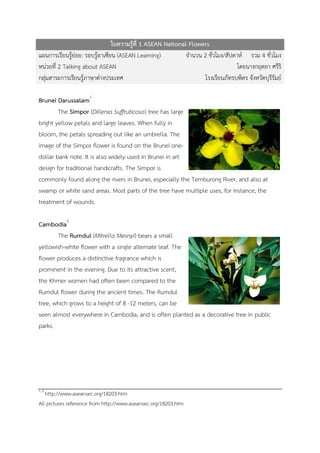
        The Simpor (Dillenia Suffruticosa) tree has large
bright yellow petals and large leaves. When fully in
bloom, the petals spreading out like an umbrella. The
image of the Simpor flower is found on the Brunei one-
dollar bank note. It is also widely used in Brunei in art
design for traditional handicrafts. The Simpor is
commonly found along the rivers in Brunei, especially the Temburong River, and also at
swamp or white sand areas. Most parts of the tree have multiple uses, for instance, the
treatment of wounds.

Cambodia2
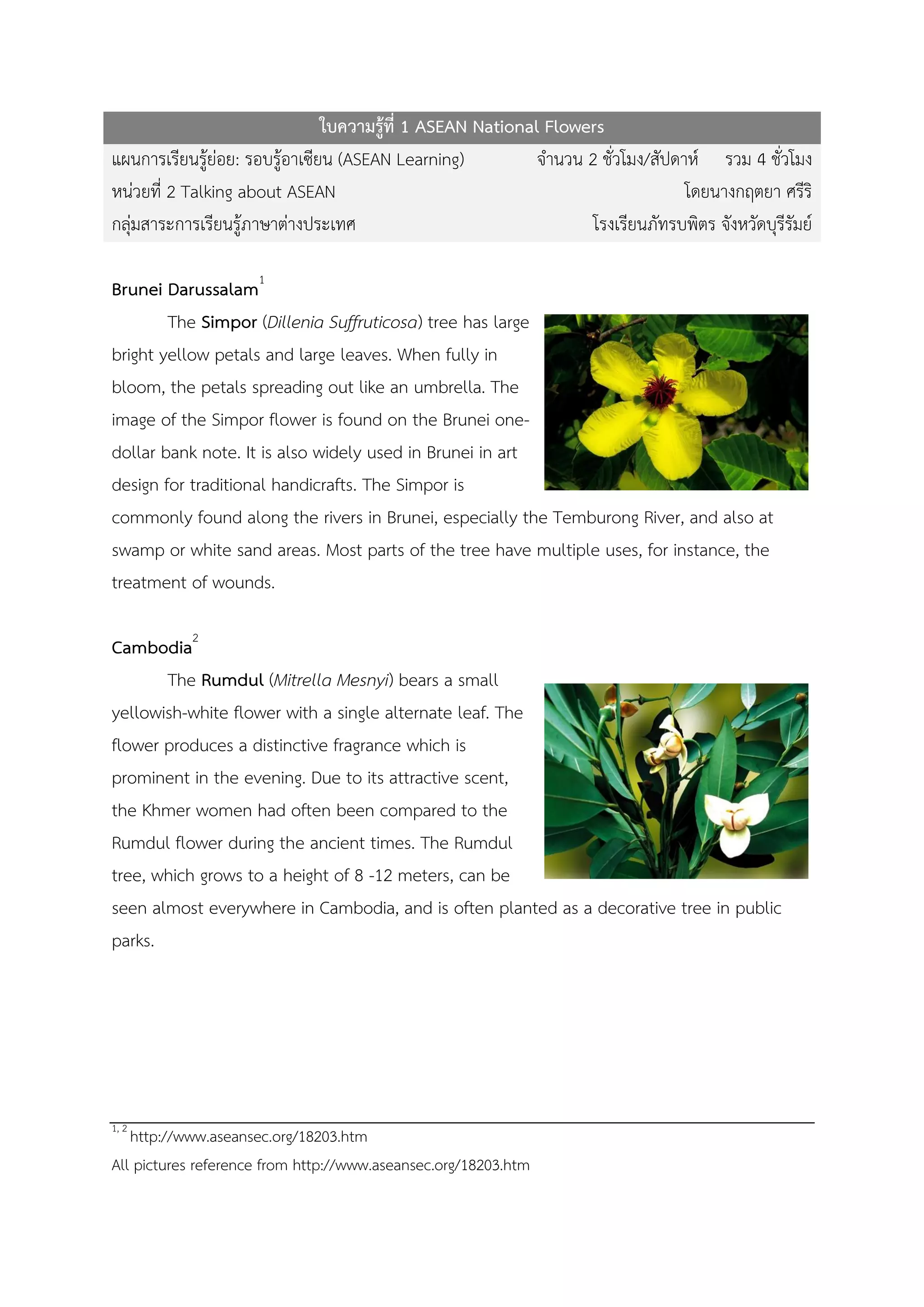
       The Rumdul (Mitrella Mesnyi) bears a small
yellowish-white flower with a single alternate leaf. The
flower produces a distinctive fragrance which is
prominent in the evening. Due to its attractive scent,
the Khmer women had often been compared to the
Rumdul flower during the ancient times. The Rumdul
tree, which grows to a height of 8 -12 meters, can be
seen almost everywhere in Cambodia, and is often planted as a decorative tree in public
parks.


1, 2
   http://www.aseansec.org/18203.htm
All pictures reference from http://www.aseansec.org/18203.htm
Indonesia3
       The Moon Orchid or Angrek bulan
(Phalaenopsis Amabilis) is one of Indonesia’s three
national flowers. The other two are Jasminum sambac
and the Rafflesia arnoldii. The Moon Orchid is one of
the longest blooming orchids. The inflorescence are
branched and can last from two to six months before
dropping. The Moon Orchid usually blooms two to three times a year once it has reached
maturity. It thrives in moist temperature so it is widely found in the lowlands of Indonesia.

Lao PDR4
        The Dok Champa (Plumeria) is the national
flower and official symbol of Lao PDR. The waxy flower
with a sweet scent can be found in many colors: red,
yellow, pink and multiple pastels. For the Lao people,
Dok Champa represents sincerity and joy in life. The
flower is often used as a decoration in ceremonies or
made into a garland to welcoming guests. The Dok Champa blooms everyday and lasts a
long time. The trees are planted throughout the country and in particular, can be seen near
the monastic areas.

Malaysia5
        The five-petaled Bunga raya (Hibiscus Rosa-
Sinensis) has been Malaysia’s national flower since
1960. Symbolically, the five petals of the bunga raya
represent the “Five Principles of Nationhood” –
Malaysia’s national philosophy in strengthening national
unity and tolerance -- while the red colour represents
courage. The flower can be found throughout the country and parts of the Bunga raya’s
shrub have medicinal and cosmetic uses.

3, 4, 5
     http://www.aseansec.org/18203.htm
All pictures reference from http://www.aseansec.org/18203.htm
Myanmar6
         The Paduak (Pterocarpus Indicus) blossoms in
tiny fragrant yellow-gold flowers after the first showers
in April, coinciding with the Myanmar New Year festival.
Once in bloom, the entire tree turns gold overnight.
The Myanmar people regard the Paduak tree as the
symbol of strength and durability. The beautiful flower
also signifies youth, love and romance. The flower
plays an indispensable part in traditional and religious ceremonies. The Paduak can be found
throughout the country. The wood of the tree is also used for making furniture.

Philippines7
        The Sampaguita Jasmine (Arabian Jasmine)
was adopted as the national flower of the Philippines
since 1934. The Sampaguita bears a white, star-shaped
flower which blooms for the full year. The flower
opens at night and lasts for about one day, producing a
unique sweet scent. For the Filipino people, the flower
is the symbol of purity, simplicity, humility and strength. Its blossom is celebrated in
Philippine legends, stories and songs. It is believed that the flower was brought from the
Himalayan areas to the Philippines in the 17th century.

Singapore8
         The best known orchid in Singapore is the
national flower, Vanda Miss Joaquim. The orchid is a
hybrid and was named after its breeder. The orchid
bears an exquisitely beautiful (purple) color and shape.
It blooms throughout the year. Its unique features won
it the status of the official national flower of Singapore,
over forty contenders, in 1981. Vanda Miss Joaquim is commonly planted in Singapore.

6, 7, 8
     http://www.aseansec.org/18203.htm
All pictures reference from http://www.aseansec.org/18203.htm
Thailand9
        The Ratchaphruek (Cassia Fistula Linn) tree
bears beautiful yellow cluster-shaped flowers. The Thai
people regard its yellow hue as the colour of Buddhism
and the colour of glory. Ratchaphruek blooms annually
from February to May and symbolises the unity and
harmony of the Thai people. While the flowers are
blossoming, the tree sheds its leaves, leaving only
bright yellow flowers hanging on its branches. The Ratchaphruek is widely known in Thailand
and is grown in abundance along the roadsides.

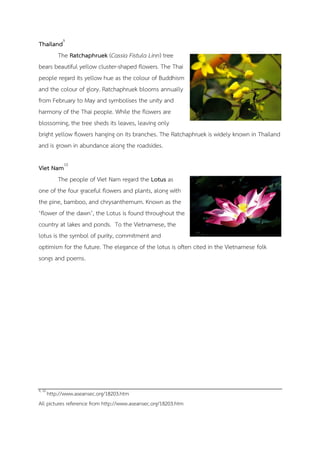
Viet Nam10
        The people of Viet Nam regard the Lotus as
one of the four graceful flowers and plants, along with
the pine, bamboo, and chrysanthemum. Known as the
‘flower of the dawn’, the Lotus is found throughout the
country at lakes and ponds. To the Vietnamese, the
lotus is the symbol of purity, commitment and
optimism for the future. The elegance of the lotus is often cited in the Vietnamese folk
songs and poems.


9, 10
    http://www.aseansec.org/18203.htm
All pictures reference from http://www.aseansec.org/18203.htm

Asean national flowers

  • 1.
    ใบความรู้ที่ 1 ASEANNational Flowers แผนการเรียนรู้ย่อย: รอบรู้อาเซียน (ASEAN Learning) จานวน 2 ชั่วโมง/สัปดาห์ รวม 4 ชั่วโมง หน่วยที่ 2 Talking about ASEAN โดยนางกฤตยา ศรีริ กลุ่มสาระการเรียนรู้ภาษาต่างประเทศ โรงเรียนภัทรบพิตร จังหวัดบุรีรัมย์ Brunei Darussalam1 The Simpor (Dillenia Suffruticosa) tree has large bright yellow petals and large leaves. When fully in bloom, the petals spreading out like an umbrella. The image of the Simpor flower is found on the Brunei one- dollar bank note. It is also widely used in Brunei in art design for traditional handicrafts. The Simpor is commonly found along the rivers in Brunei, especially the Temburong River, and also at swamp or white sand areas. Most parts of the tree have multiple uses, for instance, the treatment of wounds. Cambodia2 The Rumdul (Mitrella Mesnyi) bears a small yellowish-white flower with a single alternate leaf. The flower produces a distinctive fragrance which is prominent in the evening. Due to its attractive scent, the Khmer women had often been compared to the Rumdul flower during the ancient times. The Rumdul tree, which grows to a height of 8 -12 meters, can be seen almost everywhere in Cambodia, and is often planted as a decorative tree in public parks. 1, 2 http://www.aseansec.org/18203.htm All pictures reference from http://www.aseansec.org/18203.htm
  • 2.
    Indonesia3 The Moon Orchid or Angrek bulan (Phalaenopsis Amabilis) is one of Indonesia’s three national flowers. The other two are Jasminum sambac and the Rafflesia arnoldii. The Moon Orchid is one of the longest blooming orchids. The inflorescence are branched and can last from two to six months before dropping. The Moon Orchid usually blooms two to three times a year once it has reached maturity. It thrives in moist temperature so it is widely found in the lowlands of Indonesia. Lao PDR4 The Dok Champa (Plumeria) is the national flower and official symbol of Lao PDR. The waxy flower with a sweet scent can be found in many colors: red, yellow, pink and multiple pastels. For the Lao people, Dok Champa represents sincerity and joy in life. The flower is often used as a decoration in ceremonies or made into a garland to welcoming guests. The Dok Champa blooms everyday and lasts a long time. The trees are planted throughout the country and in particular, can be seen near the monastic areas. Malaysia5 The five-petaled Bunga raya (Hibiscus Rosa- Sinensis) has been Malaysia’s national flower since 1960. Symbolically, the five petals of the bunga raya represent the “Five Principles of Nationhood” – Malaysia’s national philosophy in strengthening national unity and tolerance -- while the red colour represents courage. The flower can be found throughout the country and parts of the Bunga raya’s shrub have medicinal and cosmetic uses. 3, 4, 5 http://www.aseansec.org/18203.htm All pictures reference from http://www.aseansec.org/18203.htm
  • 3.
    Myanmar6 The Paduak (Pterocarpus Indicus) blossoms in tiny fragrant yellow-gold flowers after the first showers in April, coinciding with the Myanmar New Year festival. Once in bloom, the entire tree turns gold overnight. The Myanmar people regard the Paduak tree as the symbol of strength and durability. The beautiful flower also signifies youth, love and romance. The flower plays an indispensable part in traditional and religious ceremonies. The Paduak can be found throughout the country. The wood of the tree is also used for making furniture. Philippines7 The Sampaguita Jasmine (Arabian Jasmine) was adopted as the national flower of the Philippines since 1934. The Sampaguita bears a white, star-shaped flower which blooms for the full year. The flower opens at night and lasts for about one day, producing a unique sweet scent. For the Filipino people, the flower is the symbol of purity, simplicity, humility and strength. Its blossom is celebrated in Philippine legends, stories and songs. It is believed that the flower was brought from the Himalayan areas to the Philippines in the 17th century. Singapore8 The best known orchid in Singapore is the national flower, Vanda Miss Joaquim. The orchid is a hybrid and was named after its breeder. The orchid bears an exquisitely beautiful (purple) color and shape. It blooms throughout the year. Its unique features won it the status of the official national flower of Singapore, over forty contenders, in 1981. Vanda Miss Joaquim is commonly planted in Singapore. 6, 7, 8 http://www.aseansec.org/18203.htm All pictures reference from http://www.aseansec.org/18203.htm
  • 4.
    Thailand9 The Ratchaphruek (Cassia Fistula Linn) tree bears beautiful yellow cluster-shaped flowers. The Thai people regard its yellow hue as the colour of Buddhism and the colour of glory. Ratchaphruek blooms annually from February to May and symbolises the unity and harmony of the Thai people. While the flowers are blossoming, the tree sheds its leaves, leaving only bright yellow flowers hanging on its branches. The Ratchaphruek is widely known in Thailand and is grown in abundance along the roadsides. Viet Nam10 The people of Viet Nam regard the Lotus as one of the four graceful flowers and plants, along with the pine, bamboo, and chrysanthemum. Known as the ‘flower of the dawn’, the Lotus is found throughout the country at lakes and ponds. To the Vietnamese, the lotus is the symbol of purity, commitment and optimism for the future. The elegance of the lotus is often cited in the Vietnamese folk songs and poems. 9, 10 http://www.aseansec.org/18203.htm All pictures reference from http://www.aseansec.org/18203.htm