ASA DIFFICULT AIRWAY ALGORITHM
Dr Murugesh Sukumar MD
Sr Consultant
Anaesthesia and ICU
Khawla Hospital Muscat
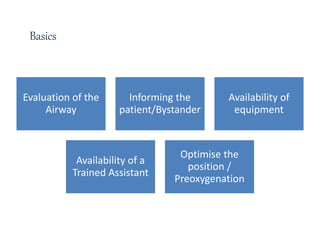
Basics
Evaluation of the
Airway
Informing the
patient/Bystander
Availability of
equipment
Availability of a
Trained Assistant
Optimise the
position /
Preoxygenation
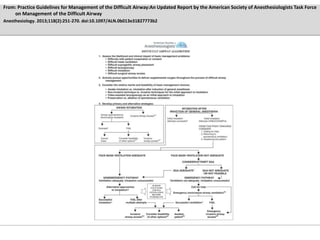
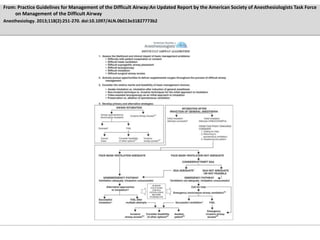
From: Practice Guidelines for Management of the Difficult Airway:An Updated Report by the American Society of Anesthesiologists Task Force
on Management of the Difficult Airway
Anesthesiology. 2013;118(2):251-270. doi:10.1097/ALN.0b013e31827773b2
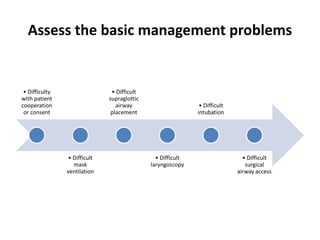
Assess the basic management problems
• Difficulty
with patient
cooperation
or consent
• Difficult
mask
ventilation
• Difficult
supraglottic
airway
placement
• Difficult
laryngoscopy
• Difficult
intubation
• Difficult
surgical
airway access
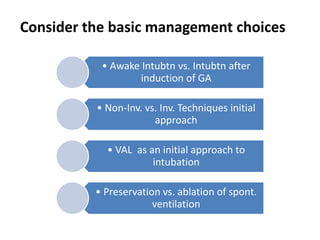
Consider the basic management choices
• Awake Intubtn vs. Intubtn after
induction of GA
• Non-Inv. vs. Inv. Techniques initial
approach
• VAL as an initial approach to
intubation
• Preservation vs. ablation of spont.
ventilation
Throughout the process of difficult airway
 Actively deliver supplemental OXYGEN
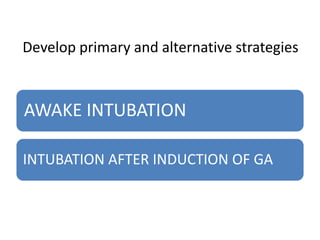
Develop primary and alternative strategies
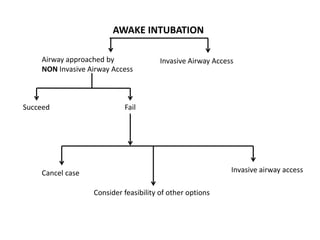
AWAKE INTUBATION
INTUBATION AFTER INDUCTION OF GA
AWAKE INTUBATION
Airway approached by
NON Invasive Airway Access
Invasive Airway Access
Succeed Fail
Cancel case
Consider feasibility of other options
Invasive airway access
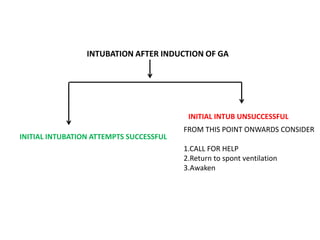
INTUBATION AFTER INDUCTION OF GA
INITIAL INTUBATION ATTEMPTS SUCCESSFUL
INITIAL INTUB UNSUCCESSFUL
FROM THIS POINT ONWARDS CONSIDER
1.CALL FOR HELP
2.Return to spont ventilation
3.Awaken
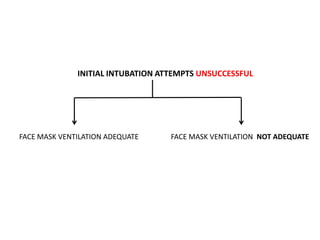
INITIAL INTUBATION ATTEMPTS UNSUCCESSFUL
FACE MASK VENTILATION ADEQUATE FACE MASK VENTILATION NOT ADEQUATE
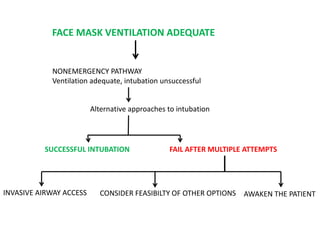
FACE MASK VENTILATION ADEQUATE
NONEMERGENCY PATHWAY
Ventilation adequate, intubation unsuccessful
Alternative approaches to intubation
SUCCESSFUL INTUBATION FAIL AFTER MULTIPLE ATTEMPTS
INVASIVE AIRWAY ACCESS CONSIDER FEASIBILTY OF OTHER OPTIONS AWAKEN THE PATIENT
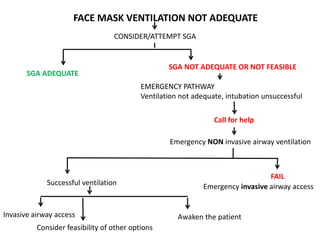
FACE MASK VENTILATION NOT ADEQUATE
CONSIDER/ATTEMPT SGA
SGA ADEQUATE
SGA NOT ADEQUATE OR NOT FEASIBLE
EMERGENCY PATHWAY
Ventilation not adequate, intubation unsuccessful
Call for help
Emergency NON invasive airway ventilation
Successful ventilation
FAIL
Emergency invasive airway access
Invasive airway access
Consider feasibility of other options
Awaken the patient
From: Practice Guidelines for Management of the Difficult Airway:An Updated Report by the American Society of Anesthesiologists Task Force
on Management of the Difficult Airway
Anesthesiology. 2013;118(2):251-270. doi:10.1097/ALN.0b013e31827773b2
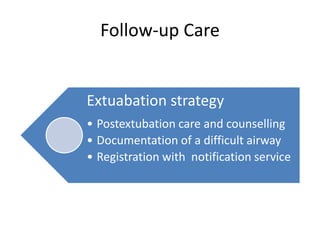
Follow-up Care
Extuabation strategy
• Postextubation care and counselling
• Documentation of a difficult airway
• Registration with notification service
Thank you !

Asa difficult airway algorithm

  • 1.
    ASA DIFFICULT AIRWAYALGORITHM Dr Murugesh Sukumar MD Sr Consultant Anaesthesia and ICU Khawla Hospital Muscat
  • 2.
    Basics Evaluation of the Airway Informingthe patient/Bystander Availability of equipment Availability of a Trained Assistant Optimise the position / Preoxygenation
  • 3.
    From: Practice Guidelinesfor Management of the Difficult Airway:An Updated Report by the American Society of Anesthesiologists Task Force on Management of the Difficult Airway Anesthesiology. 2013;118(2):251-270. doi:10.1097/ALN.0b013e31827773b2
  • 4.
    Assess the basicmanagement problems • Difficulty with patient cooperation or consent • Difficult mask ventilation • Difficult supraglottic airway placement • Difficult laryngoscopy • Difficult intubation • Difficult surgical airway access
  • 5.
    Consider the basicmanagement choices • Awake Intubtn vs. Intubtn after induction of GA • Non-Inv. vs. Inv. Techniques initial approach • VAL as an initial approach to intubation • Preservation vs. ablation of spont. ventilation
  • 6.
    Throughout the processof difficult airway  Actively deliver supplemental OXYGEN
  • 7.
    Develop primary andalternative strategies AWAKE INTUBATION INTUBATION AFTER INDUCTION OF GA
  • 8.
    AWAKE INTUBATION Airway approachedby NON Invasive Airway Access Invasive Airway Access Succeed Fail Cancel case Consider feasibility of other options Invasive airway access
  • 9.
    INTUBATION AFTER INDUCTIONOF GA INITIAL INTUBATION ATTEMPTS SUCCESSFUL INITIAL INTUB UNSUCCESSFUL FROM THIS POINT ONWARDS CONSIDER 1.CALL FOR HELP 2.Return to spont ventilation 3.Awaken
  • 10.
    INITIAL INTUBATION ATTEMPTSUNSUCCESSFUL FACE MASK VENTILATION ADEQUATE FACE MASK VENTILATION NOT ADEQUATE
  • 11.
    FACE MASK VENTILATIONADEQUATE NONEMERGENCY PATHWAY Ventilation adequate, intubation unsuccessful Alternative approaches to intubation SUCCESSFUL INTUBATION FAIL AFTER MULTIPLE ATTEMPTS INVASIVE AIRWAY ACCESS CONSIDER FEASIBILTY OF OTHER OPTIONS AWAKEN THE PATIENT
  • 12.
    FACE MASK VENTILATIONNOT ADEQUATE CONSIDER/ATTEMPT SGA SGA ADEQUATE SGA NOT ADEQUATE OR NOT FEASIBLE EMERGENCY PATHWAY Ventilation not adequate, intubation unsuccessful Call for help Emergency NON invasive airway ventilation Successful ventilation FAIL Emergency invasive airway access Invasive airway access Consider feasibility of other options Awaken the patient
  • 13.
    From: Practice Guidelinesfor Management of the Difficult Airway:An Updated Report by the American Society of Anesthesiologists Task Force on Management of the Difficult Airway Anesthesiology. 2013;118(2):251-270. doi:10.1097/ALN.0b013e31827773b2
  • 14.
    Follow-up Care Extuabation strategy •Postextubation care and counselling • Documentation of a difficult airway • Registration with notification service
  • 15.

Editor's Notes

  • #3 Evaluation of the Airway: A directed patient history A directed airway physical examination Diagnostic tests (e.g., radiography) Basic Preparation for Difficult Airway Management: Informing the patient with a known or suspected difficult airway Availability of equipment for management of a difficult airway (i.e., a portable storage unit) Availability of an assigned individual to provide assistance when a difficult airway is encountered Preanesthetic preoxygenation by facemask before induction of anesthesia
  • #5 Assess the likelihood and clinical impact of basic management problems
  • #6 Consider the relative merits and feasibility of basic management choices
  • #15 Postextubation care and counselling Documentation of a difficult airway and its management Registration with an emergency notification service