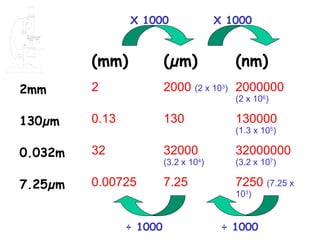
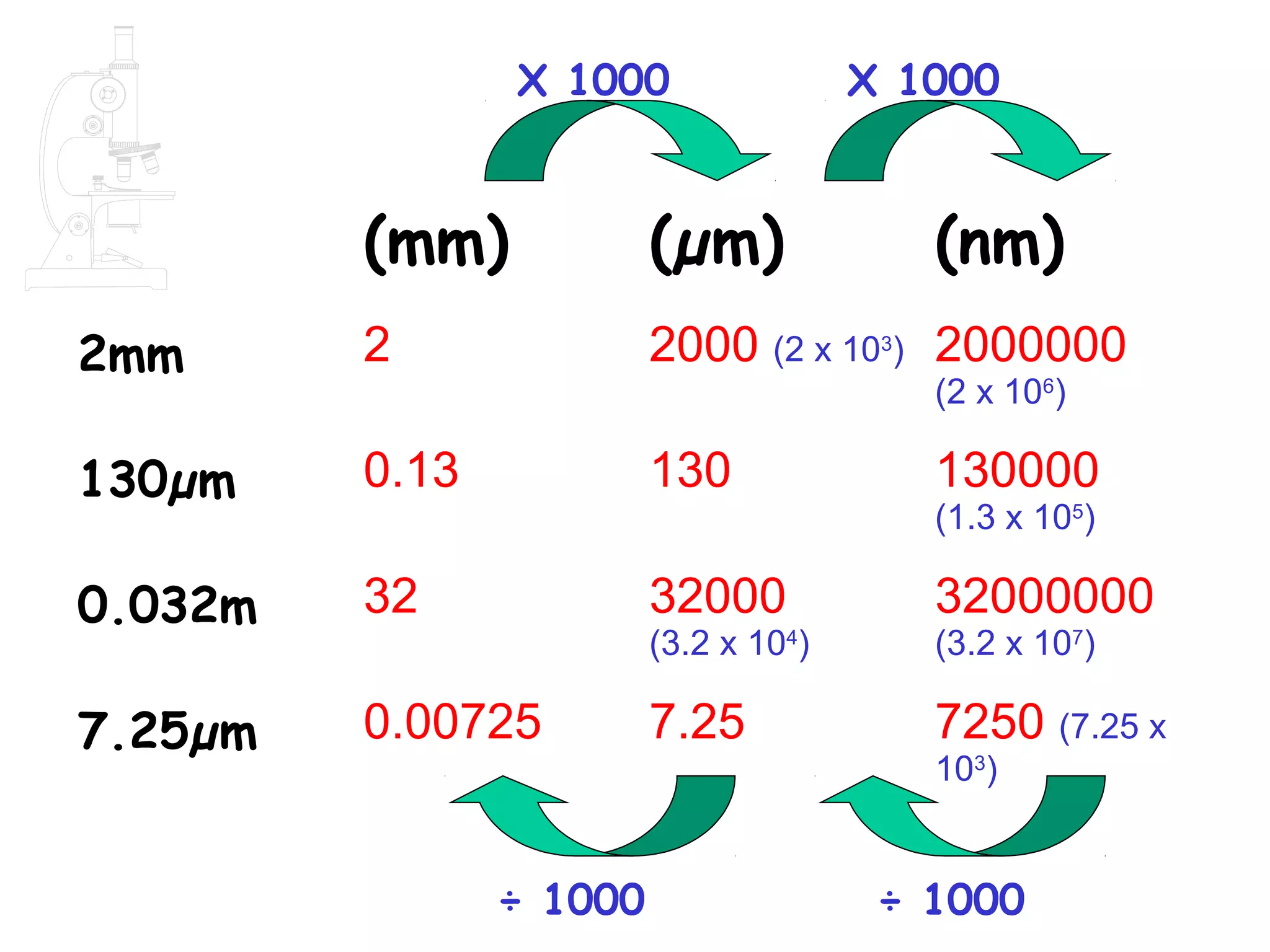
X 1000                 X 1000


         (mm)            (µm)             (nm)
2mm      2               2000 (2 x 10³) 2000000
                                          (2 x 10⁶)

130µm    0.13            130              130000
                                          (1.3 x 10⁵)

0.032m   32              32000            32000000
                         (3.2 x 10⁴)      (3.2 x 10⁷)

7.25µm   0.00725         7.25             7250 (7.25 x
                                          103)


                ÷ 1000                  ÷ 1000
Learning Objectives
- [PA] use an eyepiece graticule and stage
micrometer scale to measure cells and be
familiar with units (millimetre, micrometre,
nanometre) used in cell studies;
-[PA] calculate linear magnification of
drawings and photographs;
-(h) [PA] calculate actual sizes of specimens
from drawings and photographs;
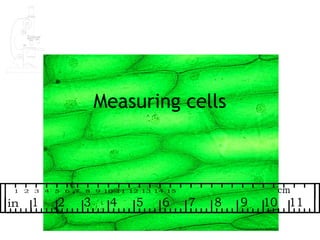
Measuring cells
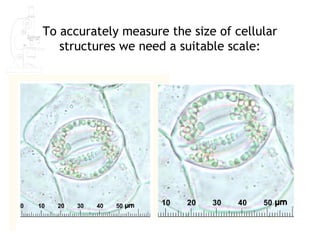
To accurately measure the size of cellular
   structures we need a suitable scale:
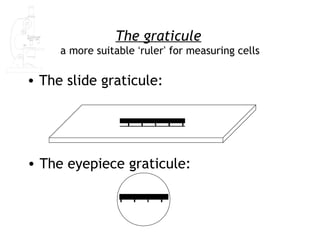
The graticule
     a more suitable ‘ruler’ for measuring cells

• The slide graticule:


• The eyepiece graticule:
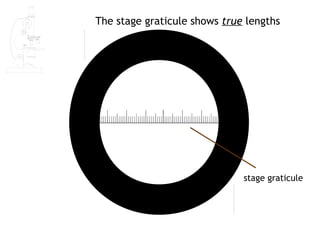
The stage graticule shows true lengths


                              stage graticule
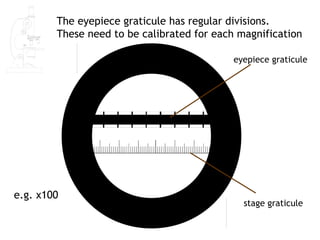
The eyepiece graticule has regular divisions.
        These need to be calibrated for each magnification

                                            eyepiece graticule


e.g. x100
                                              stage graticule
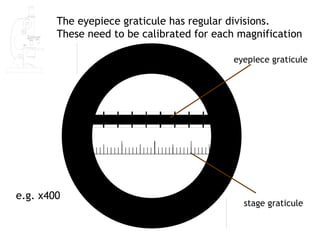
The eyepiece graticule has regular divisions.
        These need to be calibrated for each magnification

                                            eyepiece graticule


e.g. x400
                                              stage graticule
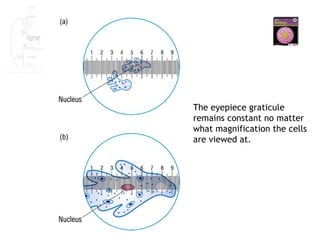
The eyepiece graticule
remains constant no matter
what magnification the cells
are viewed at.
The eyepiece graticule
remains constant no matter
what magnification the cells
are viewed at.
The eyepiece graticule
remains constant no matter
what magnification the cells
are viewed at.
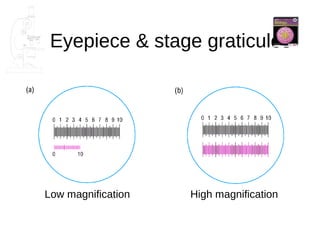
Eyepiece & stage graticules


Low magnification   High magnification
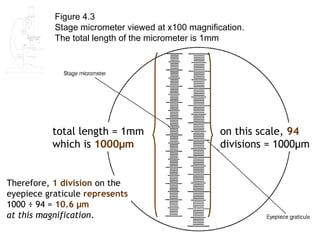
Figure 4.3
           Stage micrometer viewed at x100 magnification.
           The total length of the micrometer is 1mm


          total length = 1mm                       on this scale, 94
          which is 1000μm                          divisions = 1000μm


Therefore, 1 division on the
eyepiece graticule represents
1000 ÷ 94 = 10.6 μm
at this magnification.
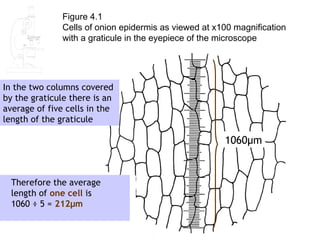
Figure 4.1
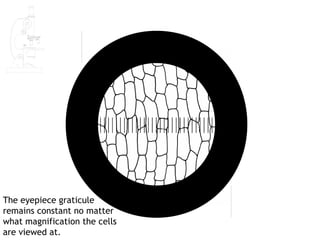
               Cells of onion epidermis as viewed at x100 magnification
               with a graticule in the eyepiece of the microscope


We know that at this
In the two columns covered
magnification, 1 division
by the graticule there is an
on the eyepiece graticule
average of five cells in the
represents 10.6 μm
length of the graticule

                                                       1060μm


  Therefore the average
Therefore the total length
oflength of one cell is
   the eyepiece graticule
represents = 212μm = 1060μm
  1060 ÷ 5 10.6 x 100
at this magnification
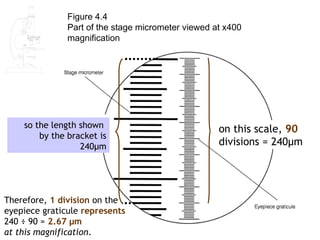
Figure 4.4
               Part of the stage micrometer viewed at x400
               magnification


remember thatshown
   so the length each                               on this scale, 90
division here is 10μm
       by the bracket is
                  240μm                             divisions = 240μm


Therefore, 1 division on the
eyepiece graticule represents
240 ÷ 90 = 2.67 μm
at this magnification.
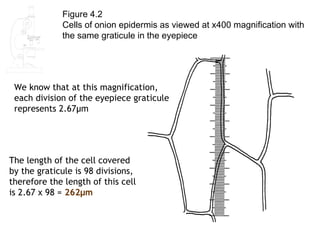
Figure 4.2
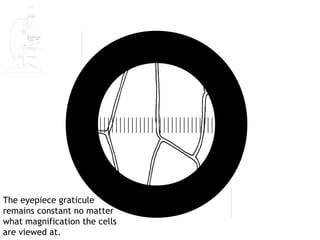
             Cells of onion epidermis as viewed at x400 magnification with
             the same graticule in the eyepiece


 We know that at this magnification,
 each division of the eyepiece graticule
 represents 2.67μm


The length of the cell covered
by the graticule is 98 divisions,
therefore the length of this cell
is 2.67 x 98 = 262μm
We now have two measurements for the length of an onion cell;
       212μm and 262 μm.
       Which of these is the more accurate estimate of the length of onion
       epidermal cells?


•   The answer from Q. 2 [212 μm]
•   because this is a mean of several cells.
•   Only one cell was measured in Q.3, and this one
    may not be representative.
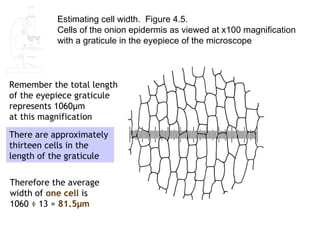
Estimating cell width. Figure 4.5.
           Cells of the onion epidermis as viewed at x100 magnification
           with a graticule in the eyepiece of the microscope


Remember the total length
of the eyepiece graticule
represents 1060μm
at this magnification

There are approximately
thirteen cells in the
length of the graticule

Therefore the average
width of one cell is
1060 ÷ 13 = 81.5μm
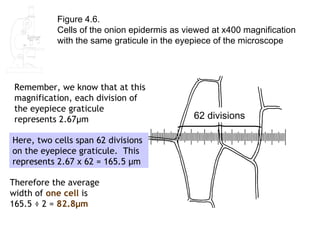
Figure 4.6.
           Cells of the onion epidermis as viewed at x400 magnification
           with the same graticule in the eyepiece of the microscope


 Remember, we know that at this
 magnification, each division of
 the eyepiece graticule
 represents 2.67μm                           62 divisions

Here, two cells span 62 divisions
on the eyepiece graticule. This
represents 2.67 x 62 = 165.5 μm

Therefore the average
width of one cell is
165.5 ÷ 2 = 82.8μm

AS Biology Lesson 2 - Measuring Cells

  • 1.
    X 1000 X 1000 (mm) (µm) (nm) 2mm 2 2000 (2 x 10³) 2000000 (2 x 10⁶) 130µm 0.13 130 130000 (1.3 x 10⁵) 0.032m 32 32000 32000000 (3.2 x 10⁴) (3.2 x 10⁷) 7.25µm 0.00725 7.25 7250 (7.25 x 10³) ÷ 1000 ÷ 1000
  • 2.
    Learning Objectives - [PA]use an eyepiece graticule and stage micrometer scale to measure cells and be familiar with units (millimetre, micrometre, nanometre) used in cell studies; -[PA] calculate linear magnification of drawings and photographs; -(h) [PA] calculate actual sizes of specimens from drawings and photographs;
  • 3.
  • 4.
    To accurately measurethe size of cellular structures we need a suitable scale:
  • 5.
    The graticule a more suitable ‘ruler’ for measuring cells • The slide graticule: • The eyepiece graticule:
  • 6.
    The stage graticuleshows true lengths stage graticule
  • 7.
    The eyepiece graticulehas regular divisions. These need to be calibrated for each magnification eyepiece graticule e.g. x100 stage graticule
  • 8.
    The eyepiece graticulehas regular divisions. These need to be calibrated for each magnification eyepiece graticule e.g. x400 stage graticule
  • 9.
    The eyepiece graticule remainsconstant no matter what magnification the cells are viewed at.
  • 10.
    The eyepiece graticule remainsconstant no matter what magnification the cells are viewed at.
  • 11.
    The eyepiece graticule remainsconstant no matter what magnification the cells are viewed at.
  • 12.
    Eyepiece & stagegraticules Low magnification High magnification
  • 13.
    Figure 4.3 Stage micrometer viewed at x100 magnification. The total length of the micrometer is 1mm total length = 1mm on this scale, 94 which is 1000μm divisions = 1000μm Therefore, 1 division on the eyepiece graticule represents 1000 ÷ 94 = 10.6 μm at this magnification.
  • 14.
    Figure 4.1 Cells of onion epidermis as viewed at x100 magnification with a graticule in the eyepiece of the microscope We know that at this In the two columns covered magnification, 1 division by the graticule there is an on the eyepiece graticule average of five cells in the represents 10.6 μm length of the graticule 1060μm Therefore the average Therefore the total length oflength of one cell is the eyepiece graticule represents = 212μm = 1060μm 1060 ÷ 5 10.6 x 100 at this magnification
  • 15.
    Figure 4.4 Part of the stage micrometer viewed at x400 magnification remember thatshown so the length each on this scale, 90 division here is 10μm by the bracket is 240μm divisions = 240μm Therefore, 1 division on the eyepiece graticule represents 240 ÷ 90 = 2.67 μm at this magnification.
  • 16.
    Figure 4.2 Cells of onion epidermis as viewed at x400 magnification with the same graticule in the eyepiece We know that at this magnification, each division of the eyepiece graticule represents 2.67μm The length of the cell covered by the graticule is 98 divisions, therefore the length of this cell is 2.67 x 98 = 262μm
  • 17.
    We now havetwo measurements for the length of an onion cell; 212μm and 262 μm. Which of these is the more accurate estimate of the length of onion epidermal cells? • The answer from Q. 2 [212 μm] • because this is a mean of several cells. • Only one cell was measured in Q.3, and this one may not be representative.
  • 18.
    Estimating cell width.Figure 4.5. Cells of the onion epidermis as viewed at x100 magnification with a graticule in the eyepiece of the microscope Remember the total length of the eyepiece graticule represents 1060μm at this magnification There are approximately thirteen cells in the length of the graticule Therefore the average width of one cell is 1060 ÷ 13 = 81.5μm
  • 19.
    Figure 4.6. Cells of the onion epidermis as viewed at x400 magnification with the same graticule in the eyepiece of the microscope Remember, we know that at this magnification, each division of the eyepiece graticule represents 2.67μm 62 divisions Here, two cells span 62 divisions on the eyepiece graticule. This represents 2.67 x 62 = 165.5 μm Therefore the average width of one cell is 165.5 ÷ 2 = 82.8μm