THE ELEMENTS OF ART
The building blocks or ingredients of art.
LINE
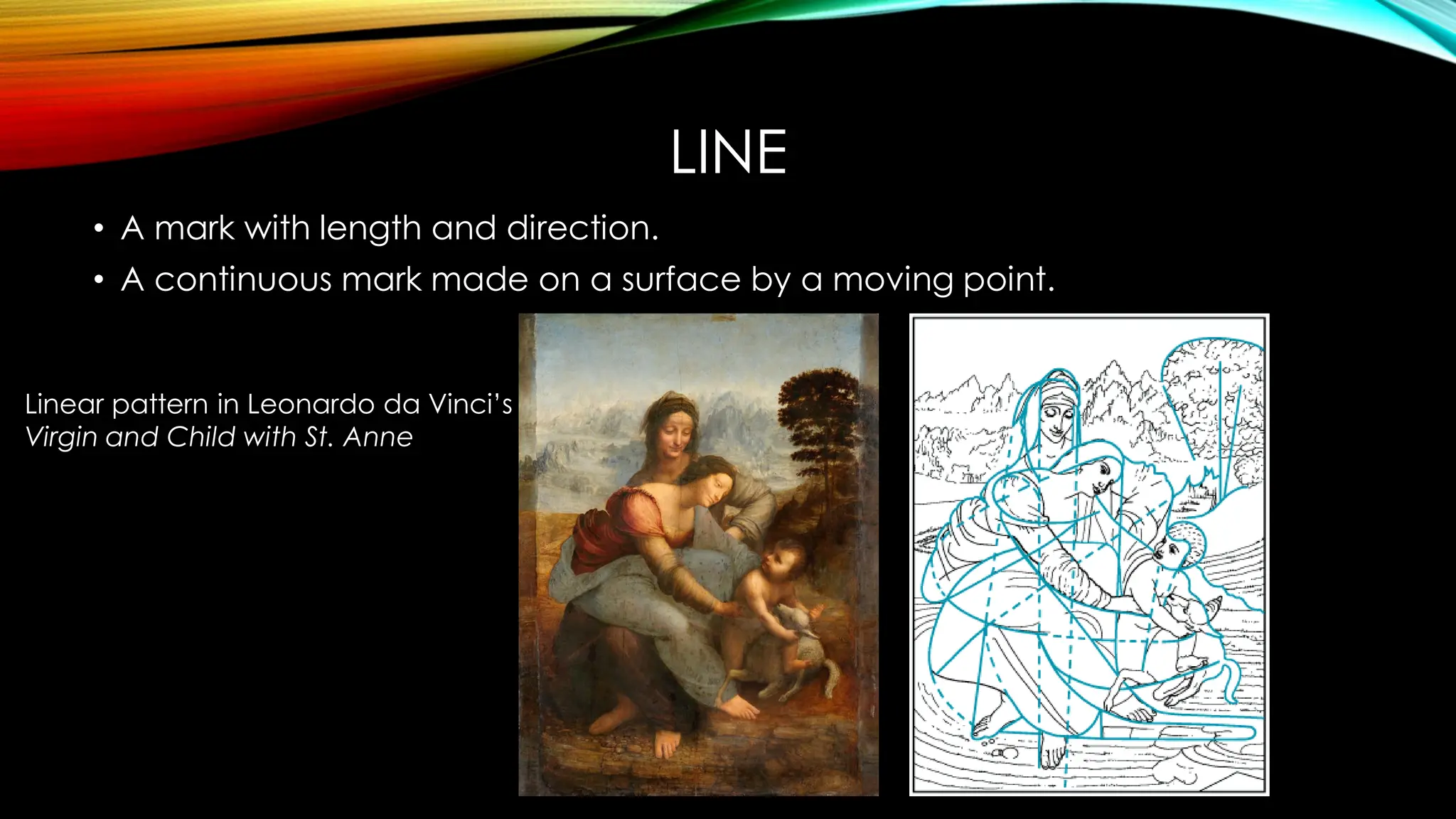
• A mark with length and direction.
• A continuous mark made on a surface by a moving point.
Linear pattern in Leonardo da Vinci’s
Virgin and Child with St. Anne
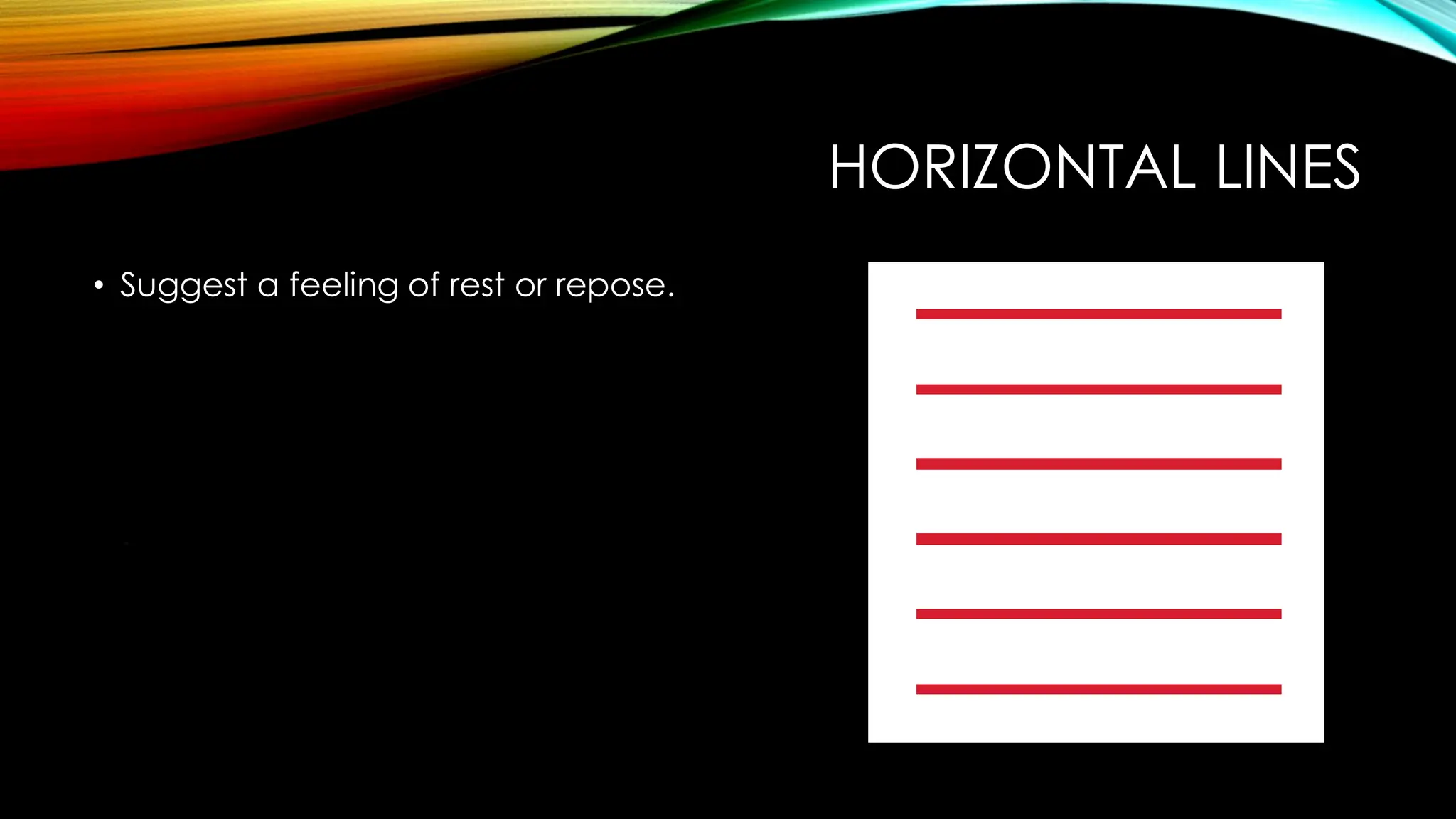
HORIZONTAL LINES
• Suggest a feeling of rest or repose.
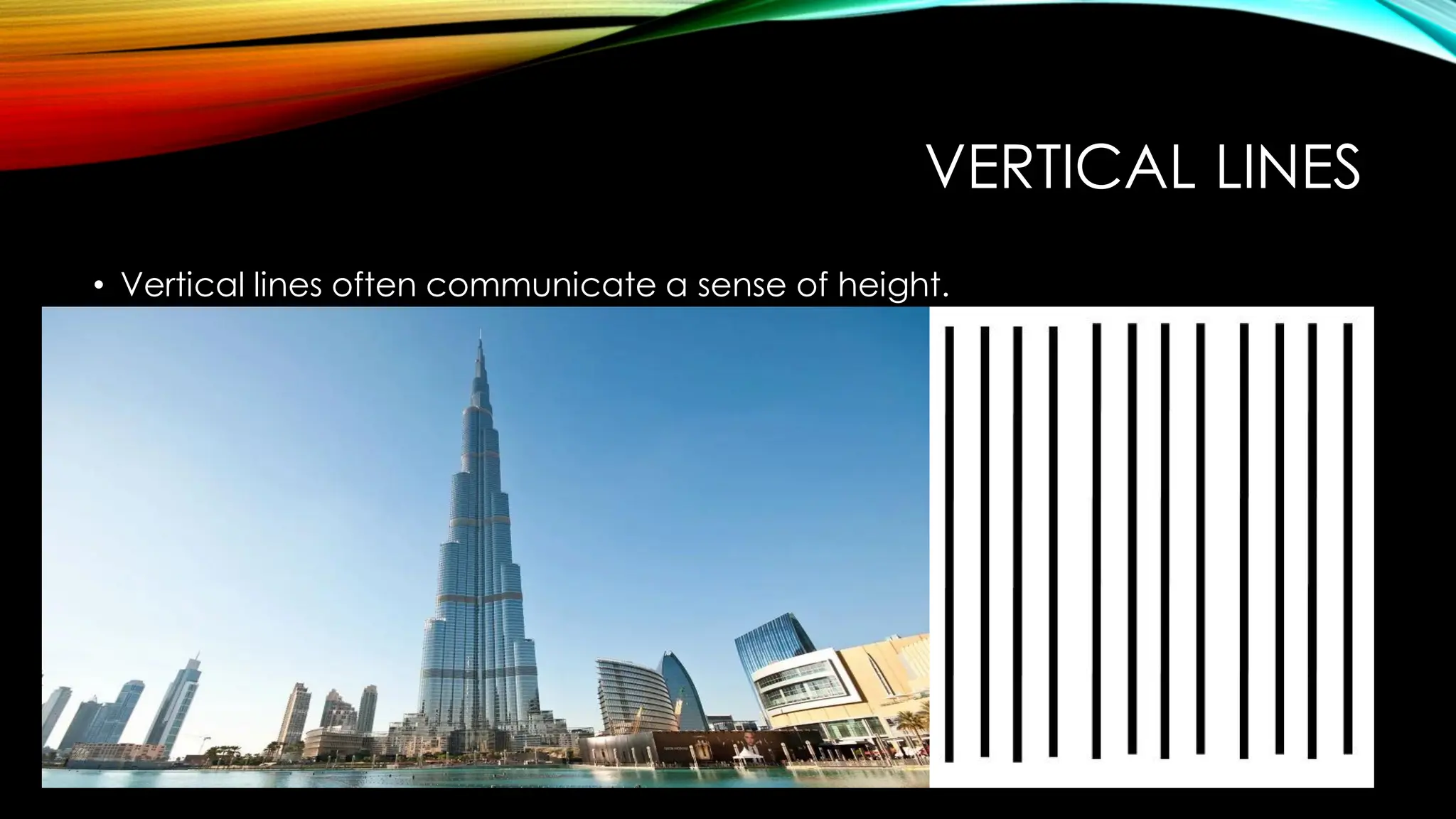
VERTICAL LINES
• Vertical lines often communicate a sense of height.
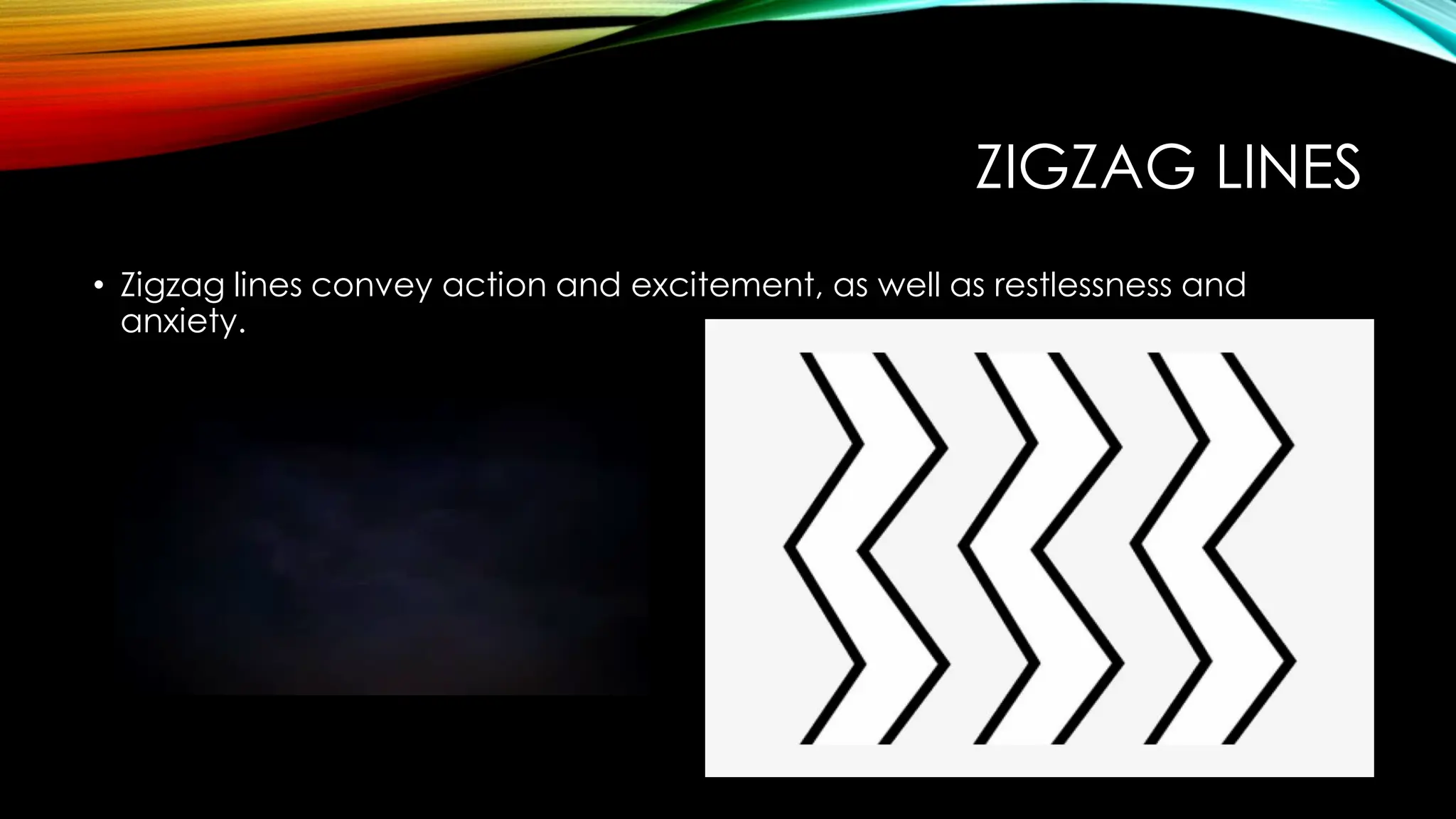
ZIGZAG LINES
• Zigzag lines convey action and excitement, as well as restlessness and
anxiety.
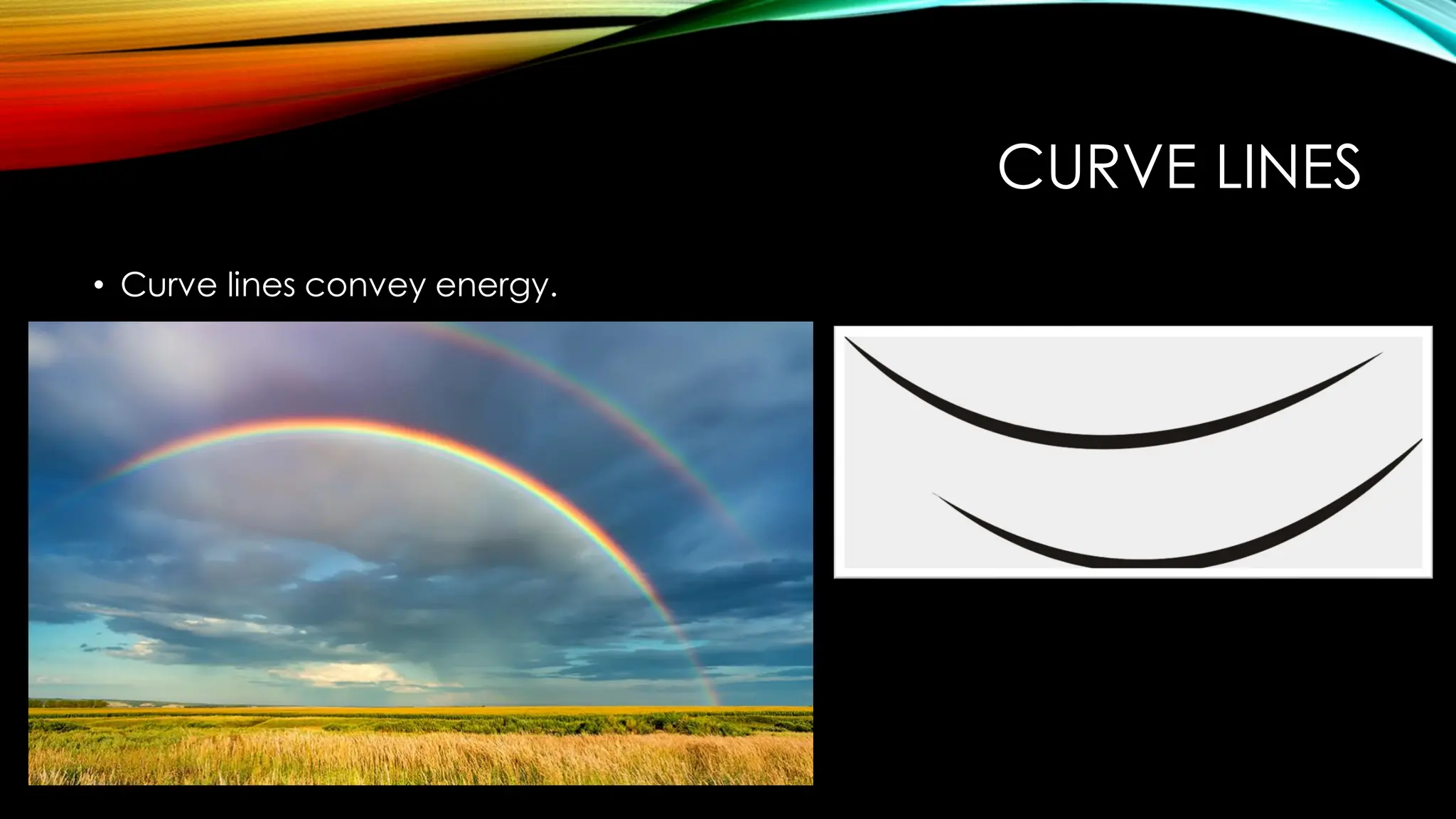
CURVE LINES
• Curve lines convey energy.
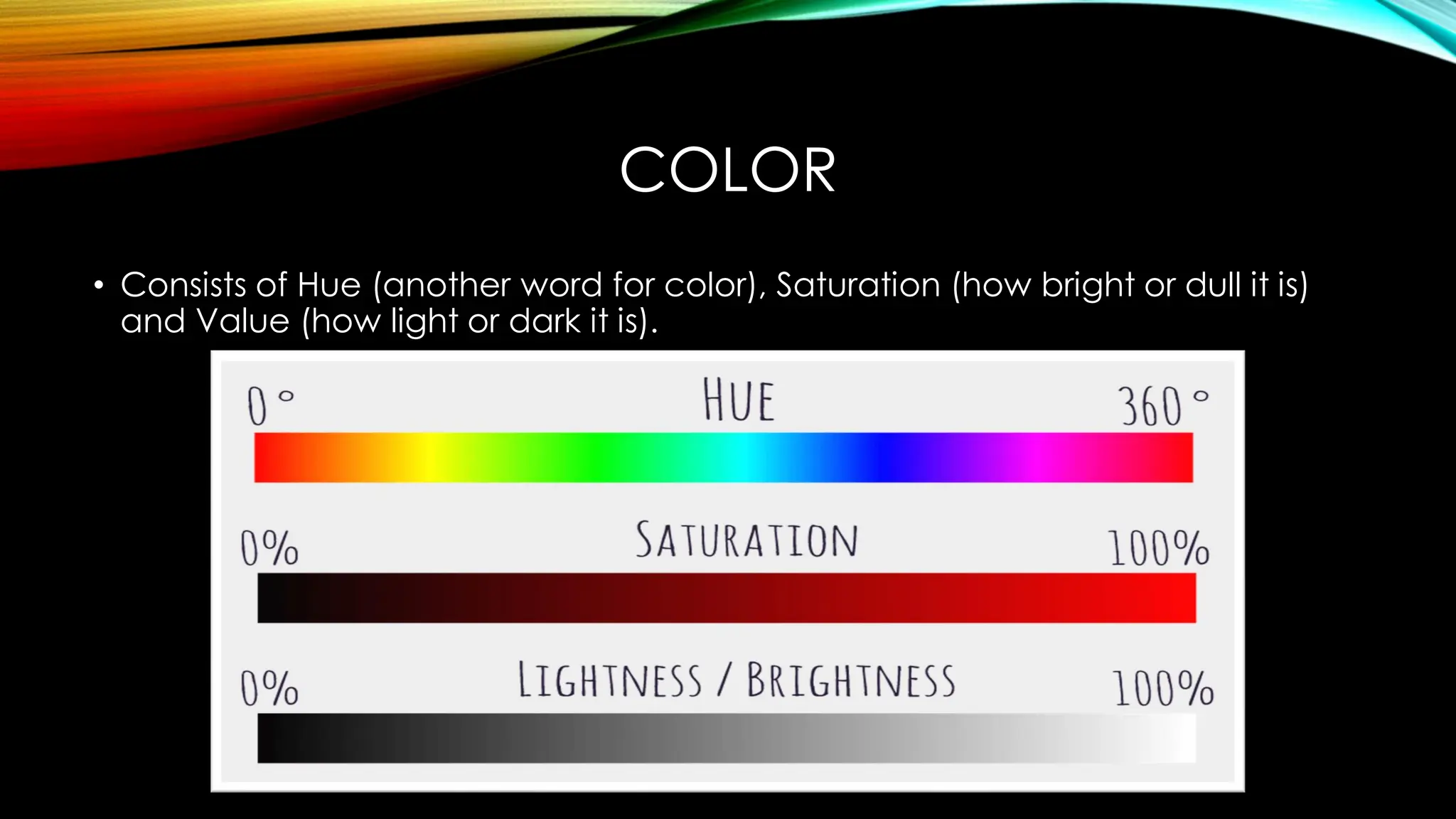
COLOR
• Consists of Hue (another word for color), Saturation (how bright or dull it is)
and Value (how light or dark it is).
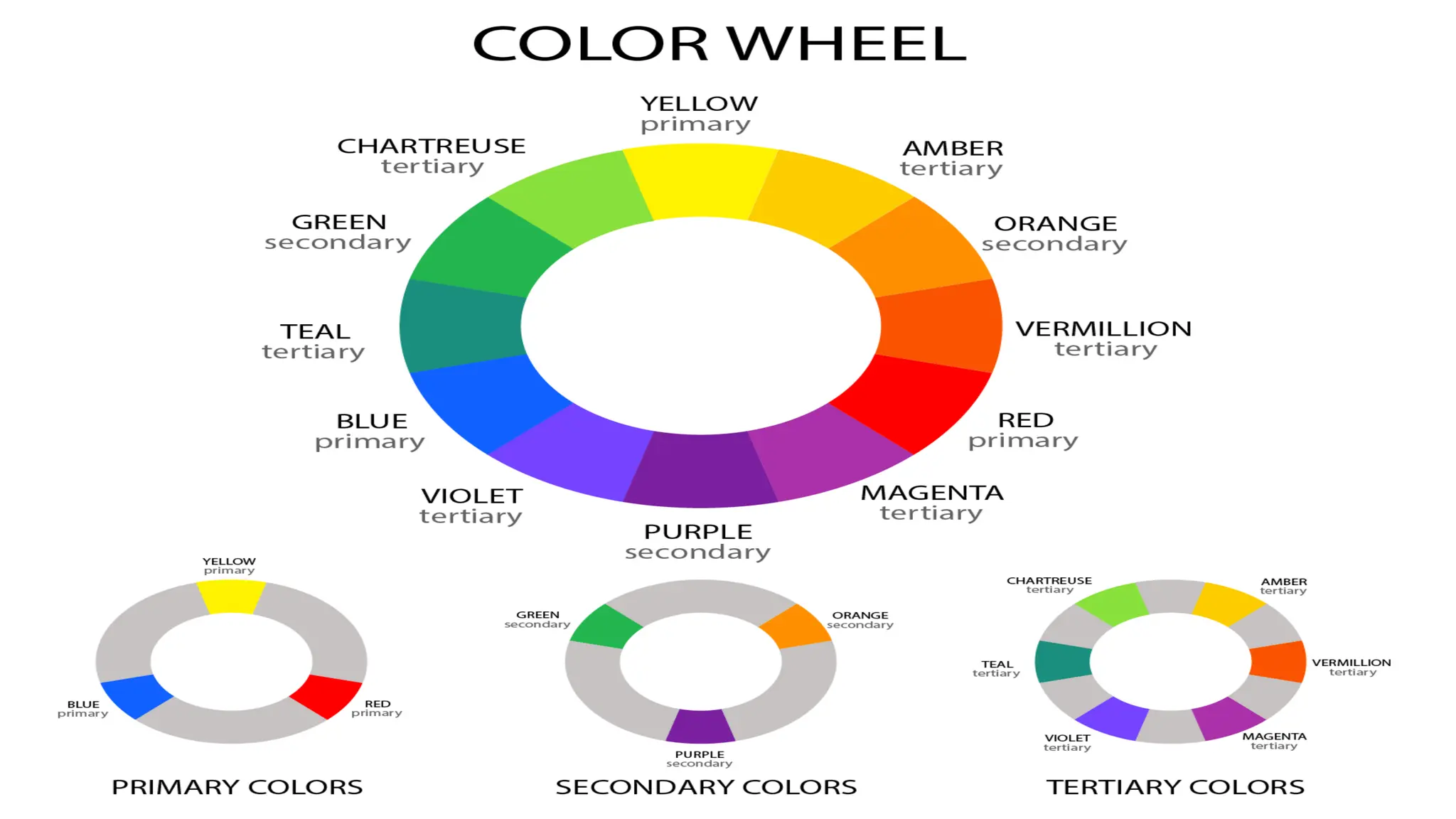
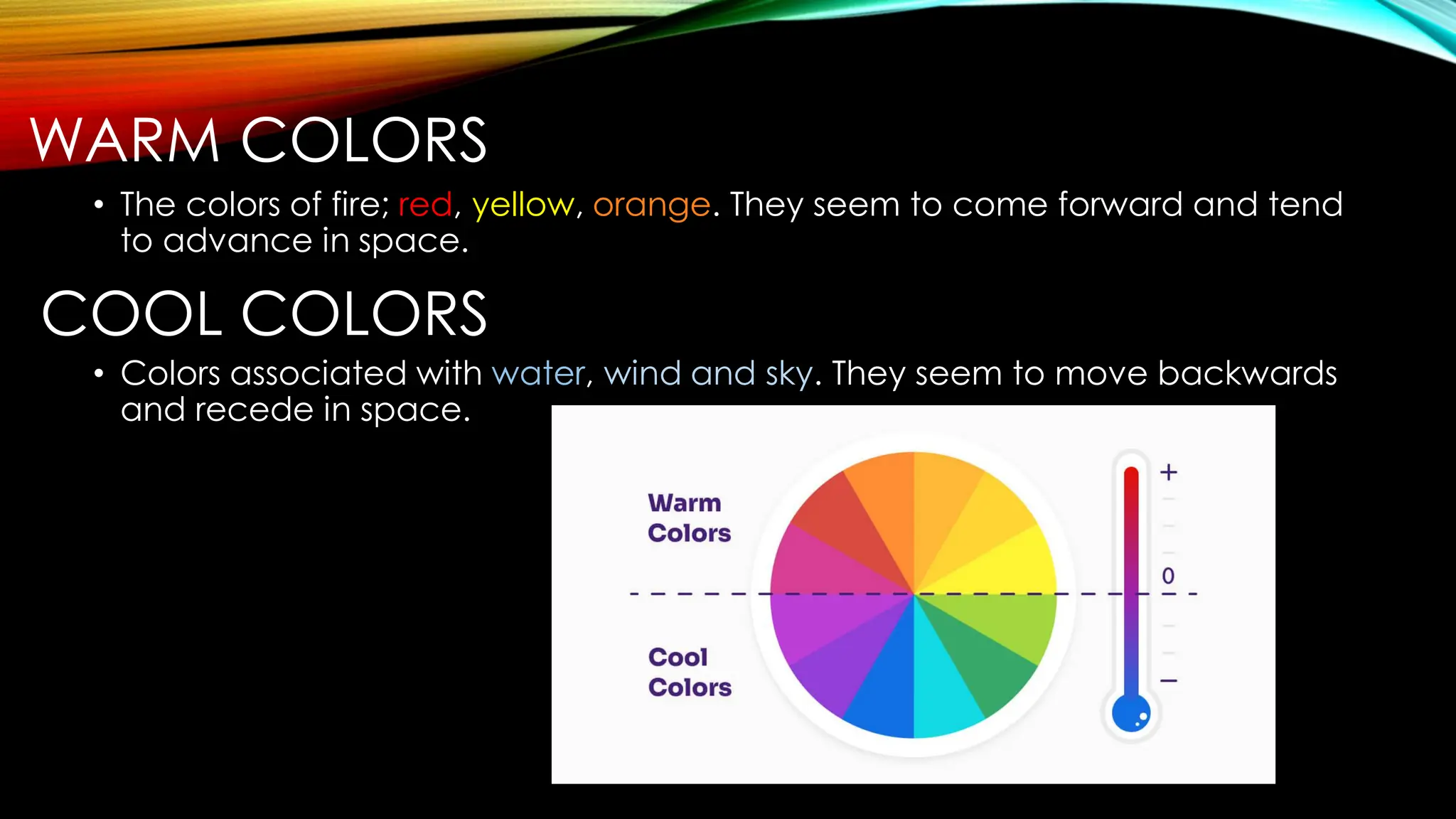
WARM COLORS
• The colors of fire; red, yellow, orange. They seem to come forward and tend
to advance in space.
COOL COLORS
• Colors associated with water, wind and sky. They seem to move backwards
and recede in space.
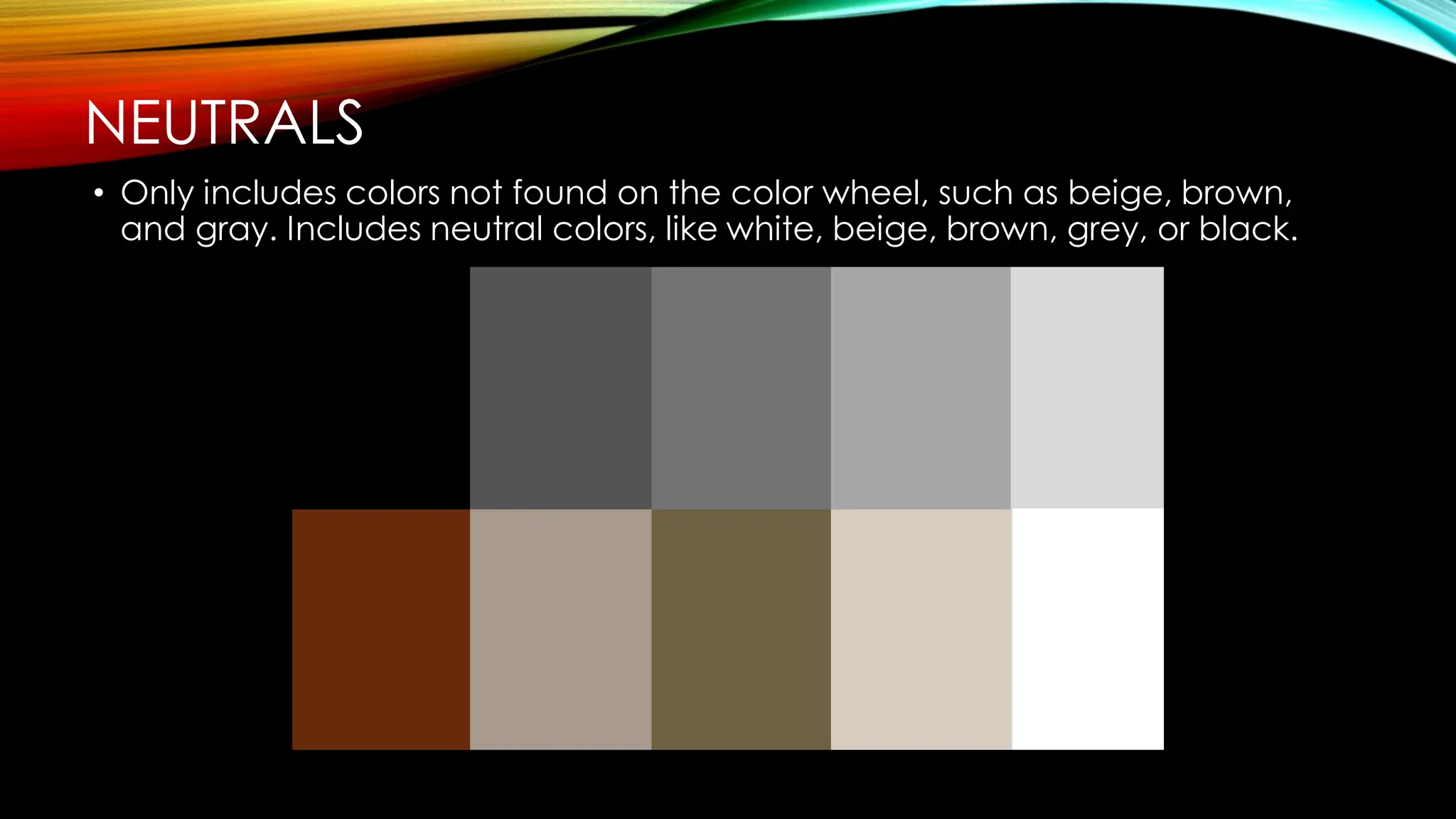
NEUTRALS
• Only includes colors not found on the color wheel, such as beige, brown,
and gray. Includes neutral colors, like white, beige, brown, grey, or black.
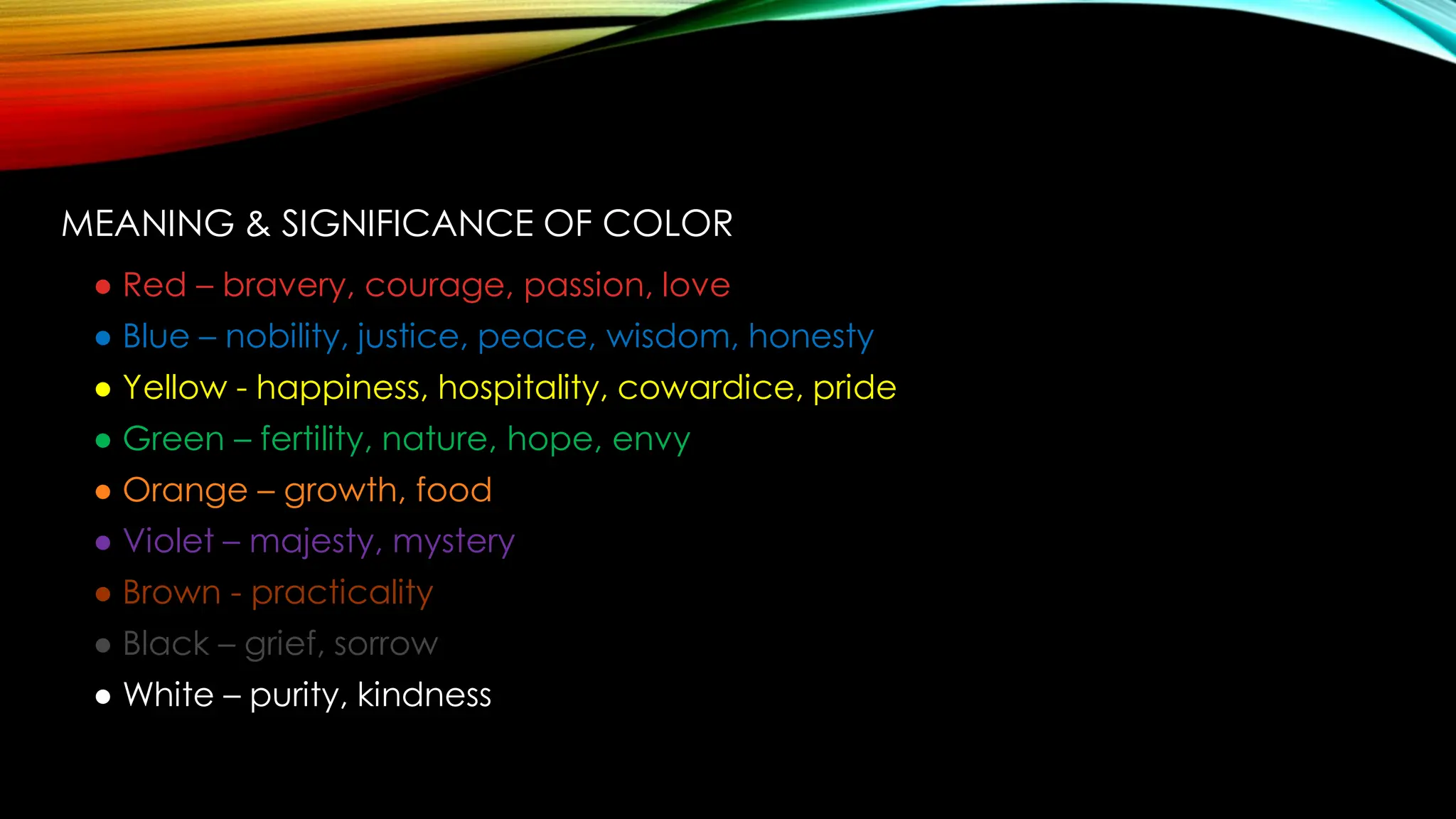
MEANING & SIGNIFICANCE OF COLOR
● Red – bravery, courage, passion, love
● Blue – nobility, justice, peace, wisdom, honesty
● Yellow - happiness, hospitality, cowardice, pride
● Green – fertility, nature, hope, envy
● Orange – growth, food
● Violet – majesty, mystery
● Brown - practicality
● Black – grief, sorrow
● White – purity, kindness
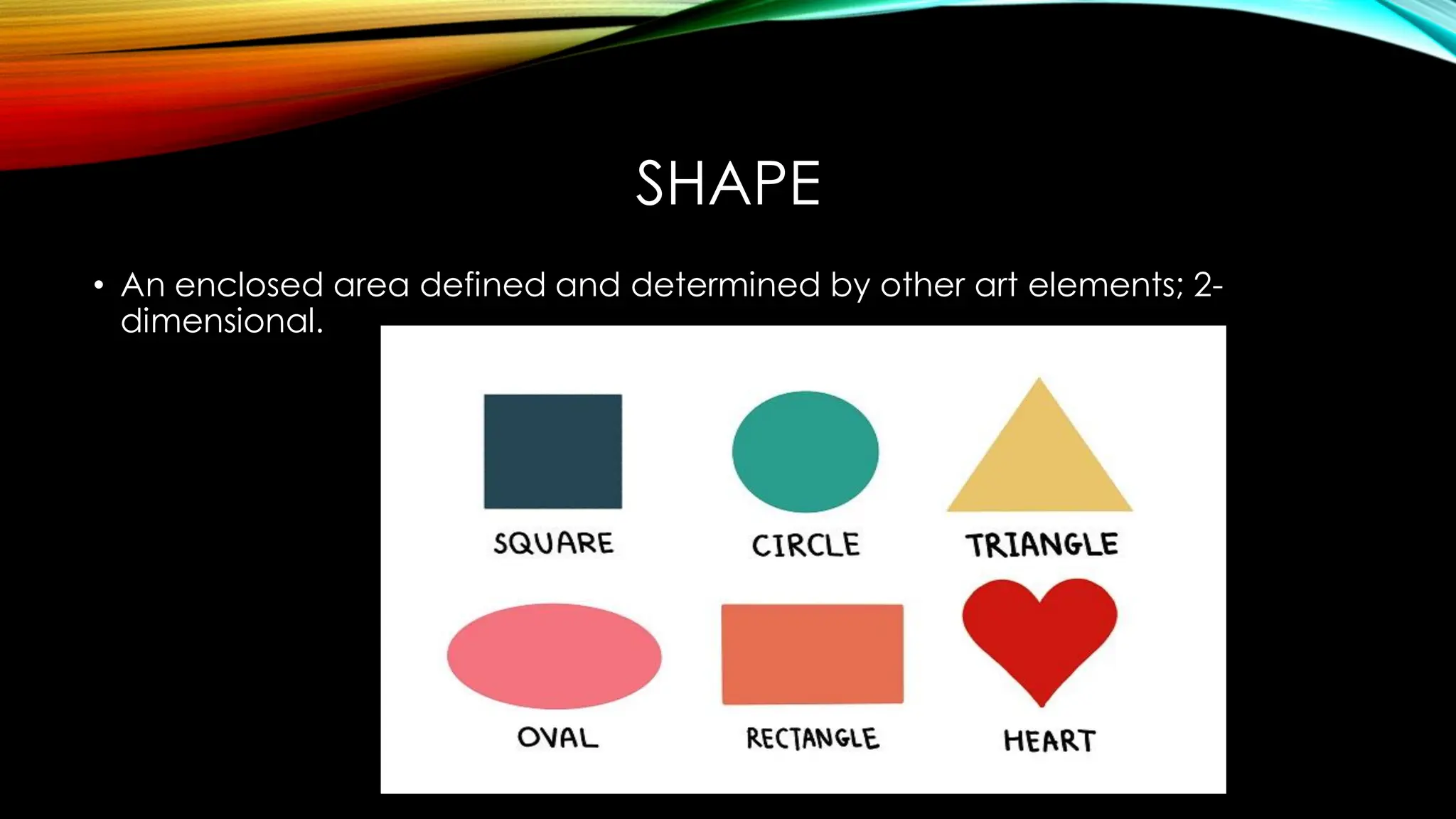
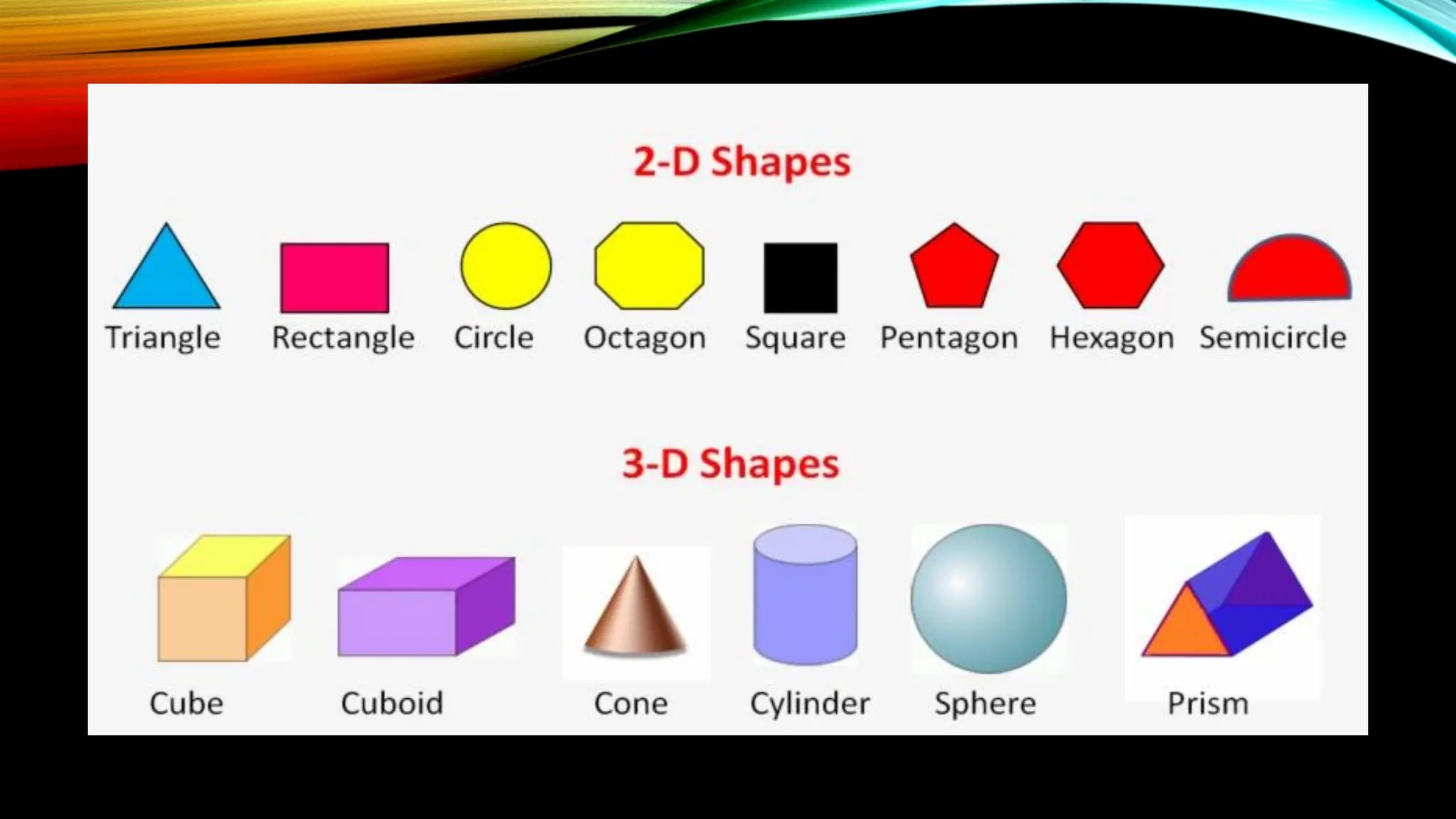
SHAPE
• An enclosed area defined and determined by other art elements; 2-
dimensional.
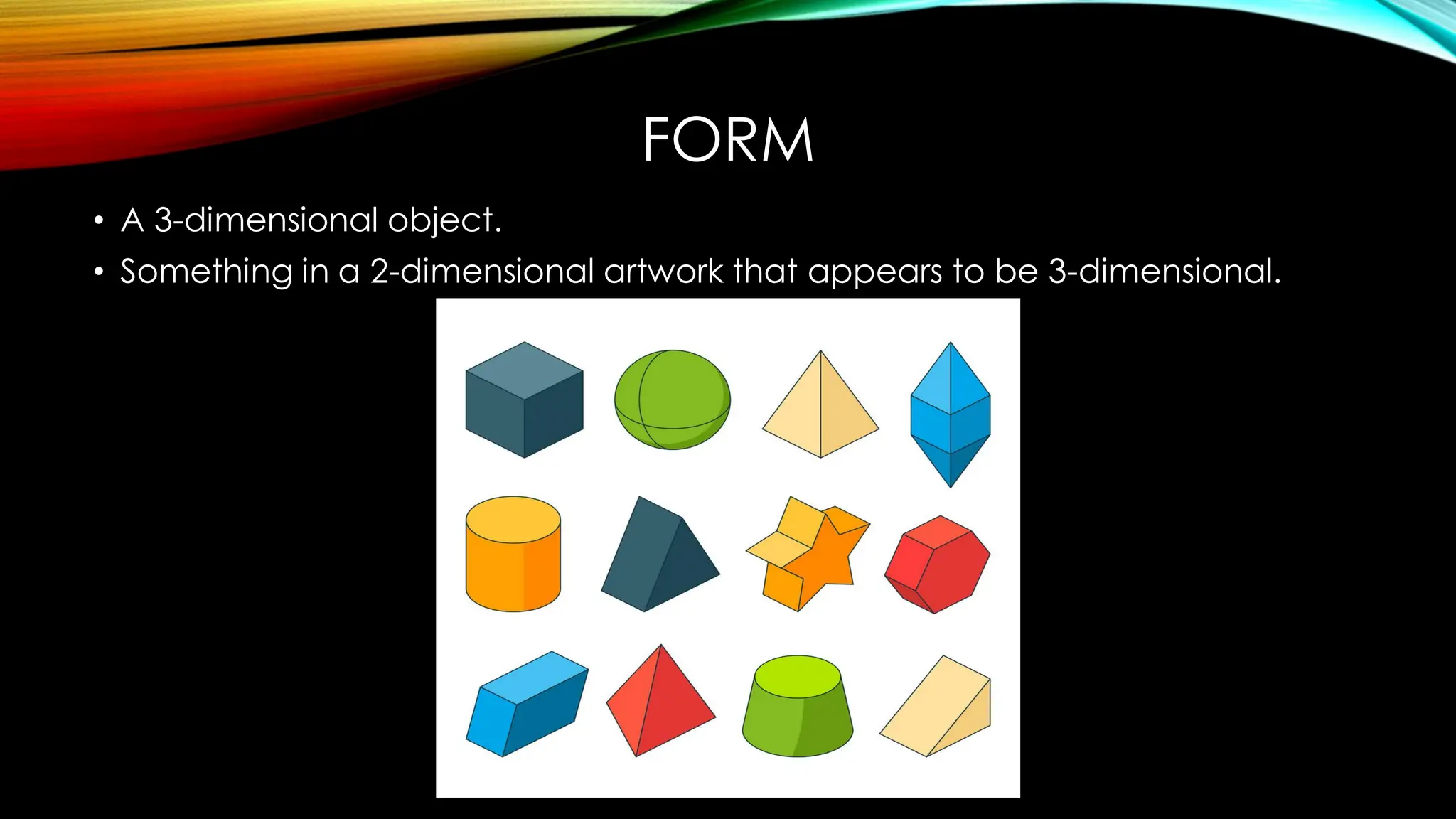
FORM
• A 3-dimensional object.
• Something in a 2-dimensional artwork that appears to be 3-dimensional.
SPACE
• The distance or area between, around, above, below, or within things.
• In a two-dimensional drawing or painting, it refers to the arrangement of
objects on the picture plane to create an illusion of depth.
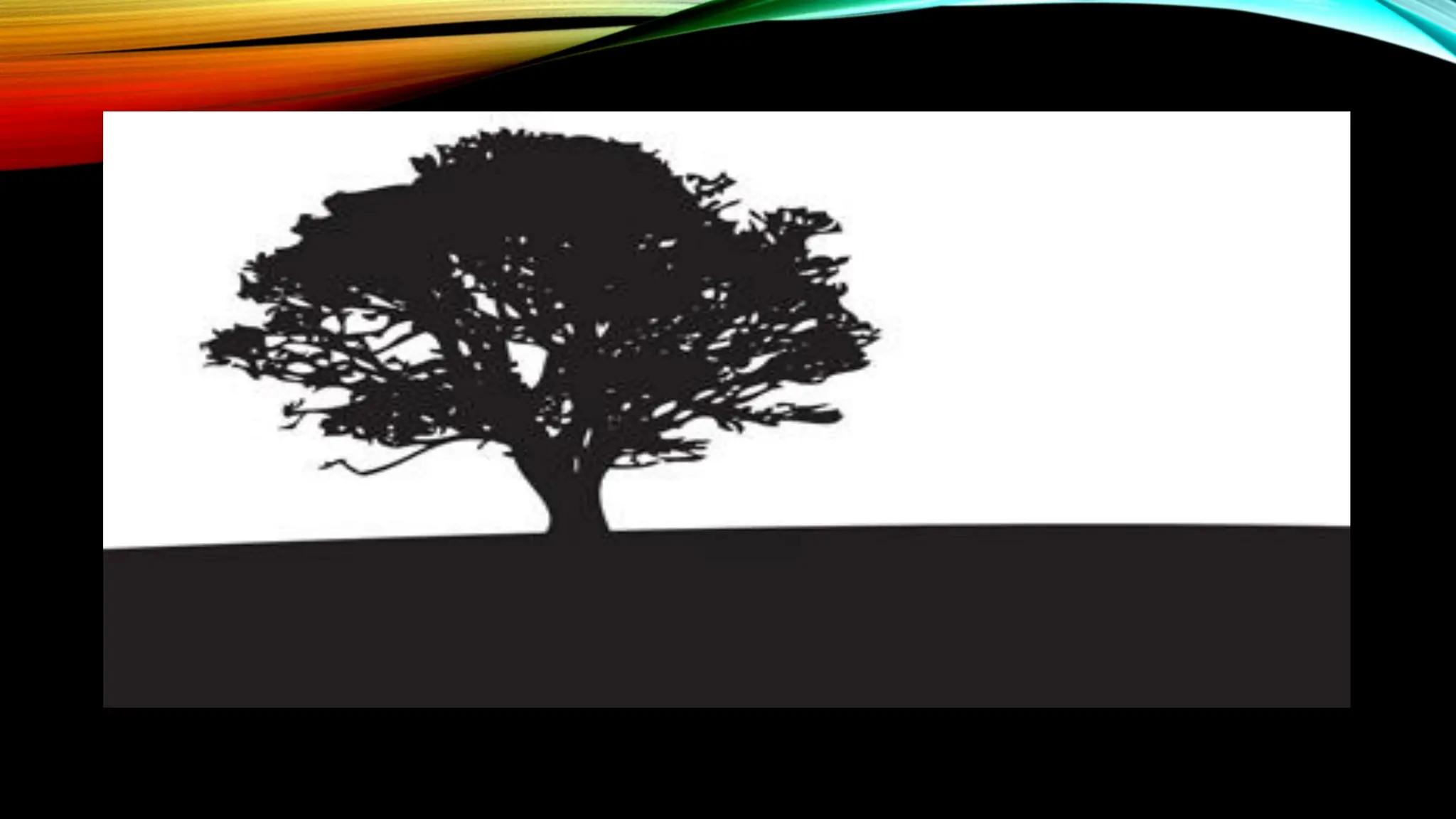
• The area around the primary objects in a work of art is known as negative
space, while the space occupied by the primary objects is known as positive
space.
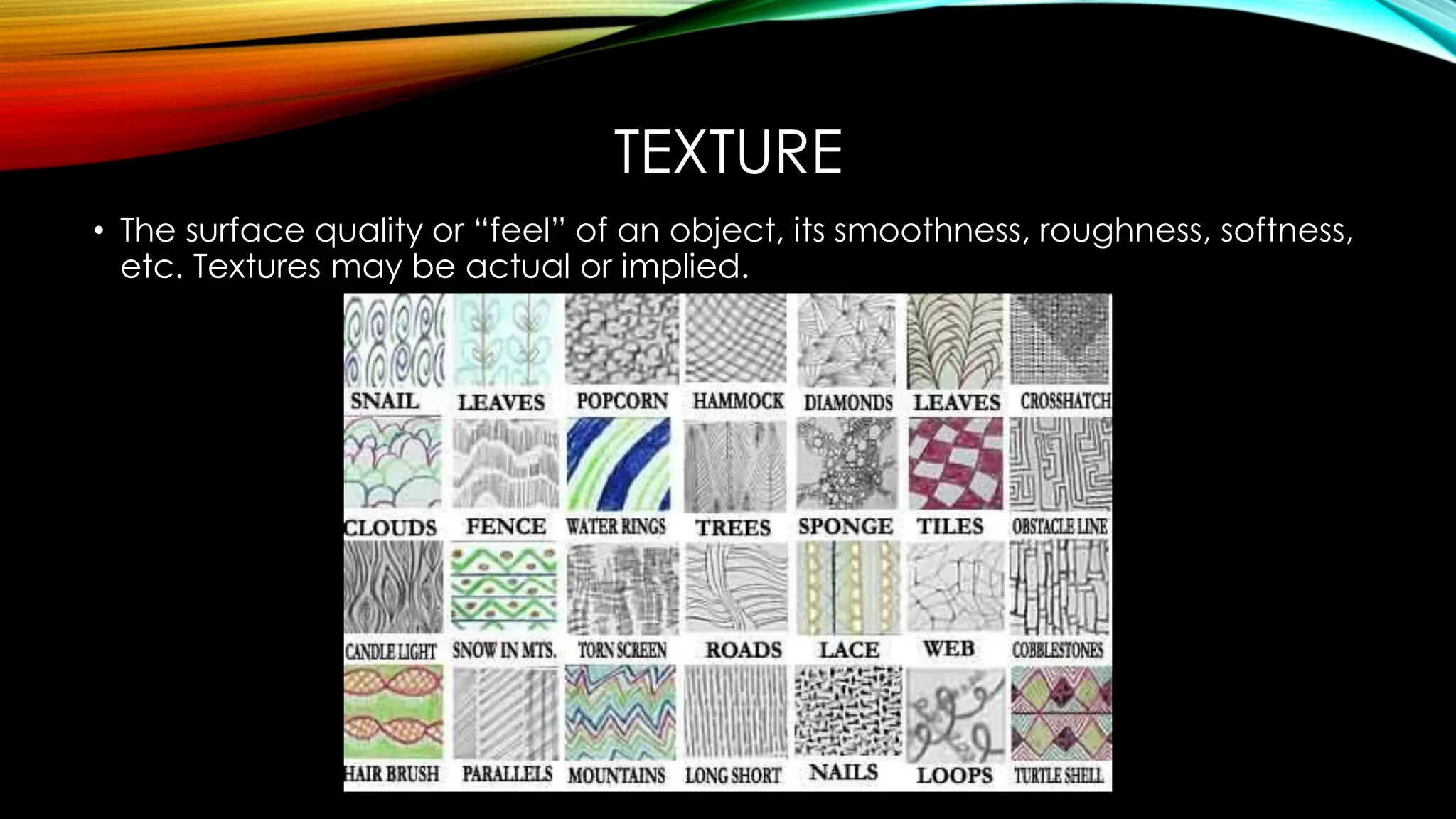
TEXTURE
• The surface quality or “feel” of an object, its smoothness, roughness, softness,
etc. Textures may be actual or implied.
THE PRINCIPLES OF ART
What we use to organize the Elements of Art,
or the tools to make art.
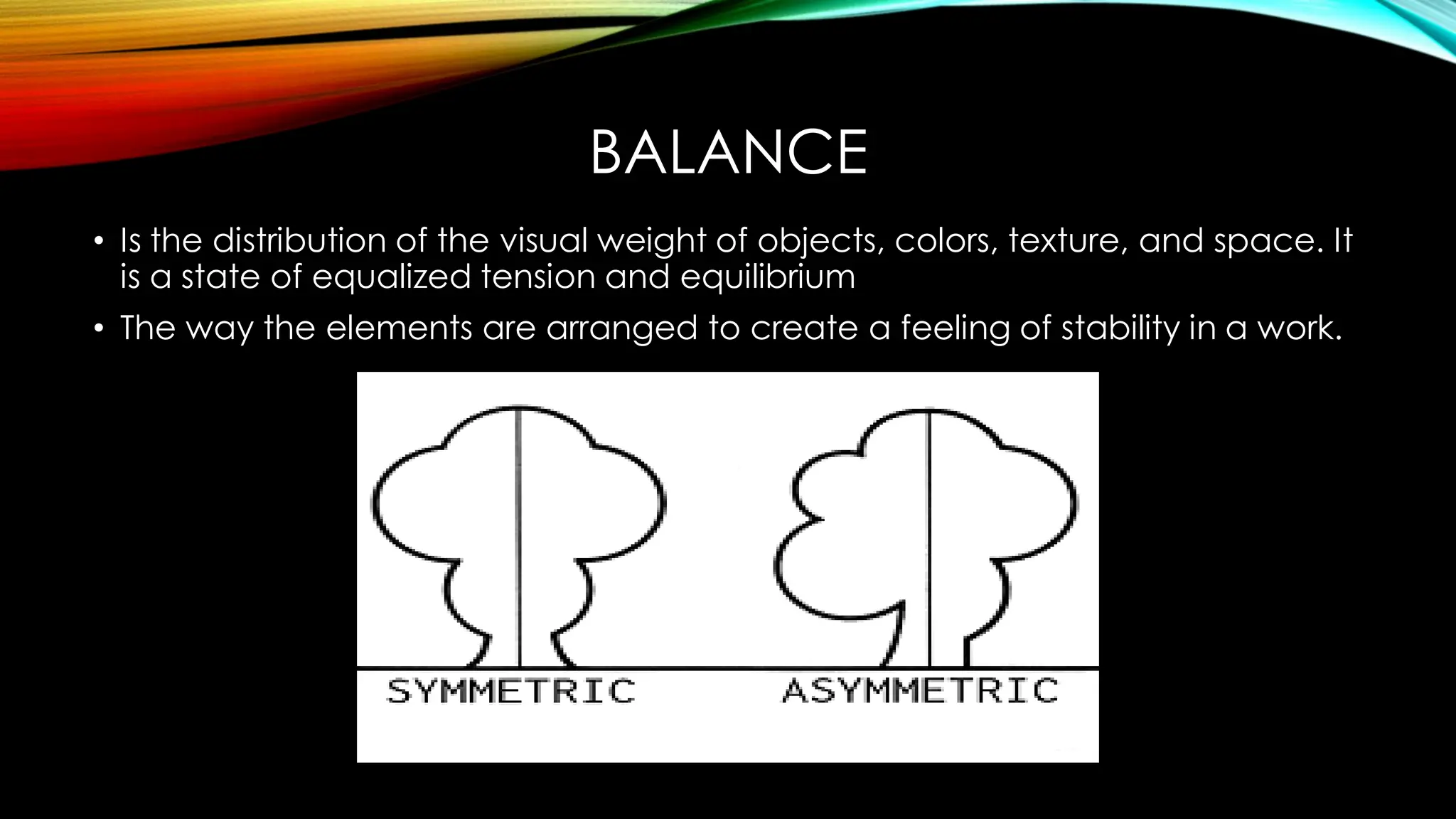
BALANCE
• Is the distribution of the visual weight of objects, colors, texture, and space. It
is a state of equalized tension and equilibrium
• The way the elements are arranged to create a feeling of stability in a work.
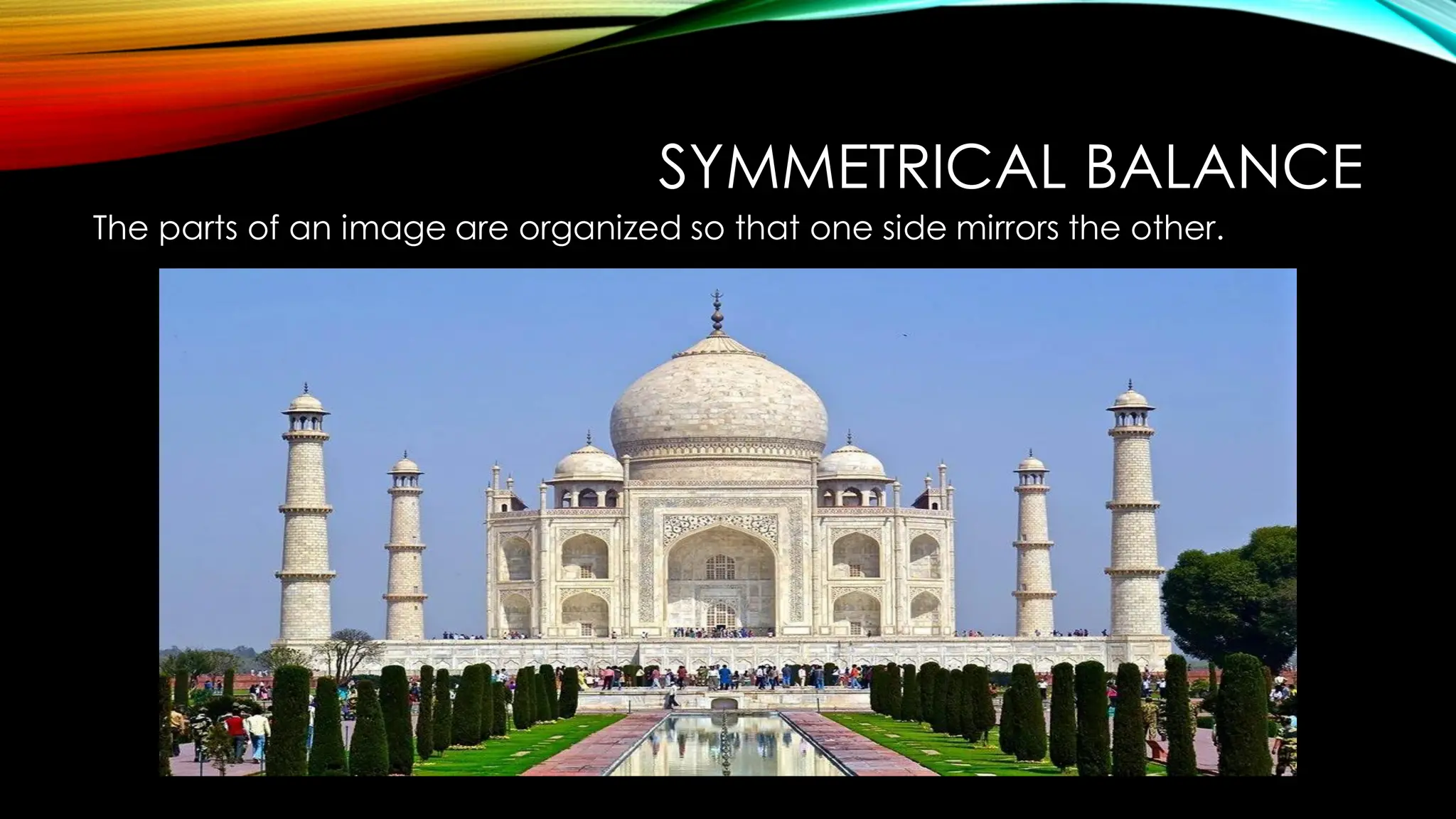
SYMMETRICAL BALANCE
The parts of an image are organized so that one side mirrors the other.
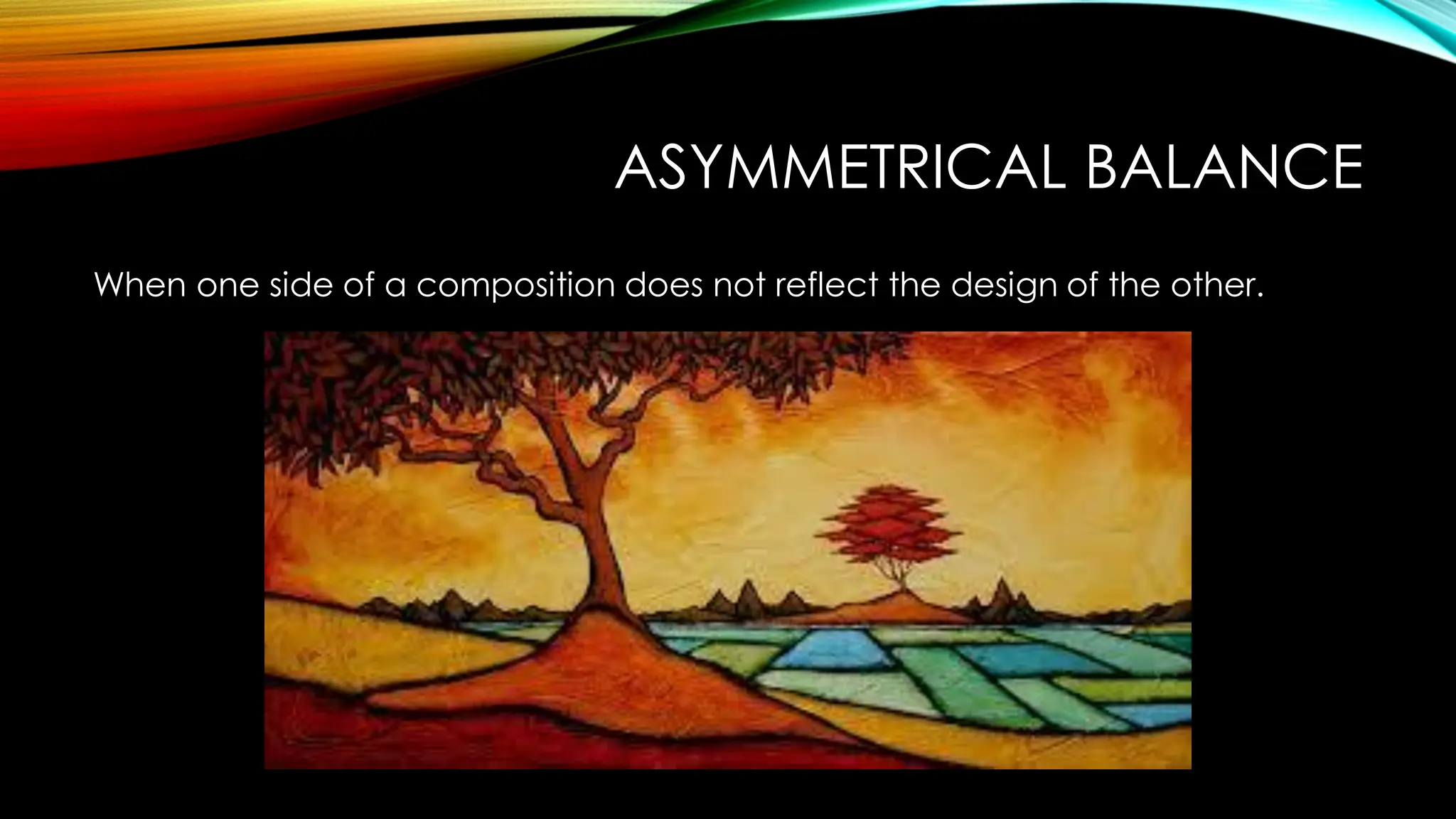
ASYMMETRICAL BALANCE
When one side of a composition does not reflect the design of the other.
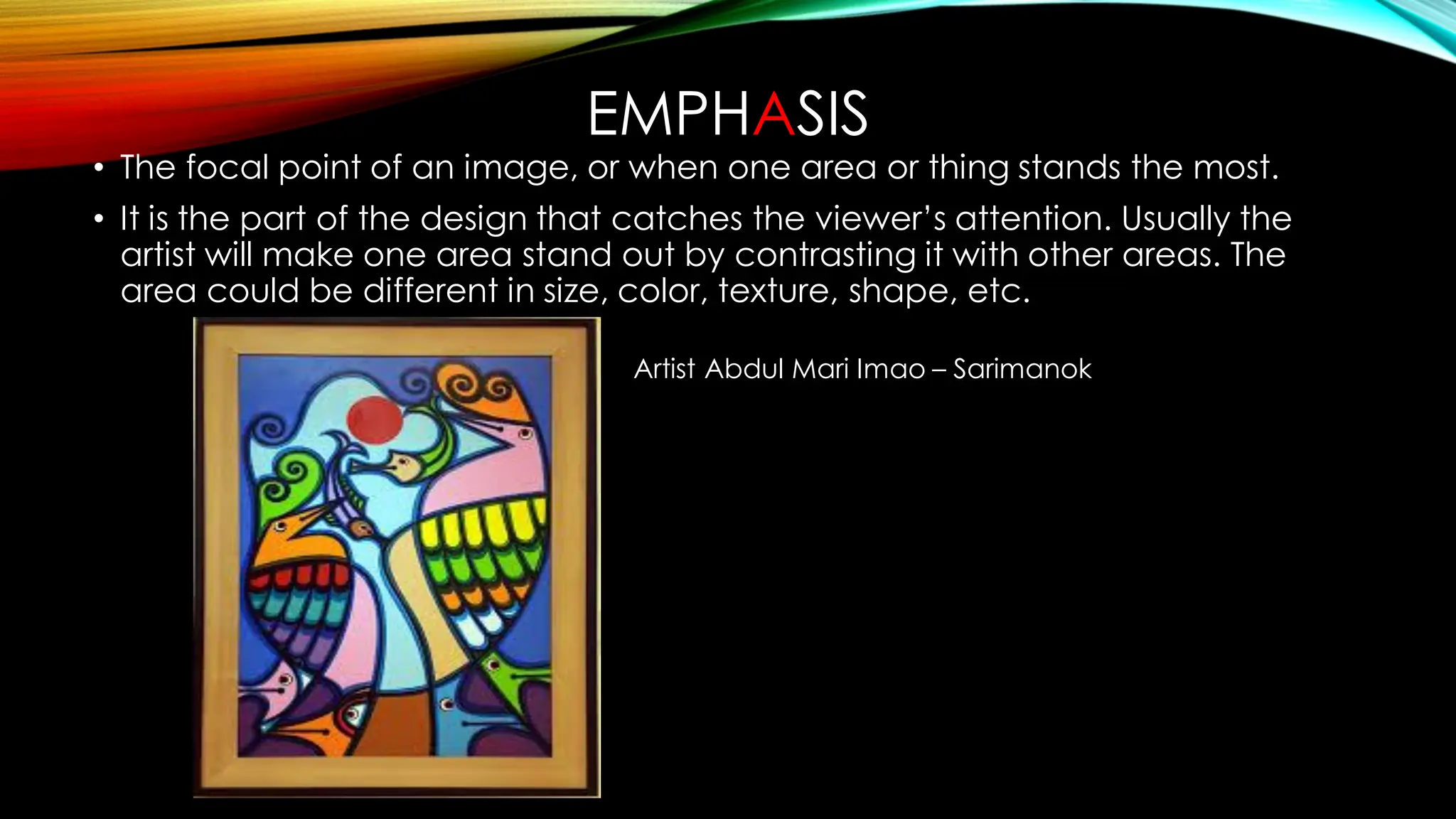
EMPHASIS
• The focal point of an image, or when one area or thing stands the most.
• It is the part of the design that catches the viewer’s attention. Usually the
artist will make one area stand out by contrasting it with other areas. The
area could be different in size, color, texture, shape, etc.
Artist Abdul Mari Imao – Sarimanok
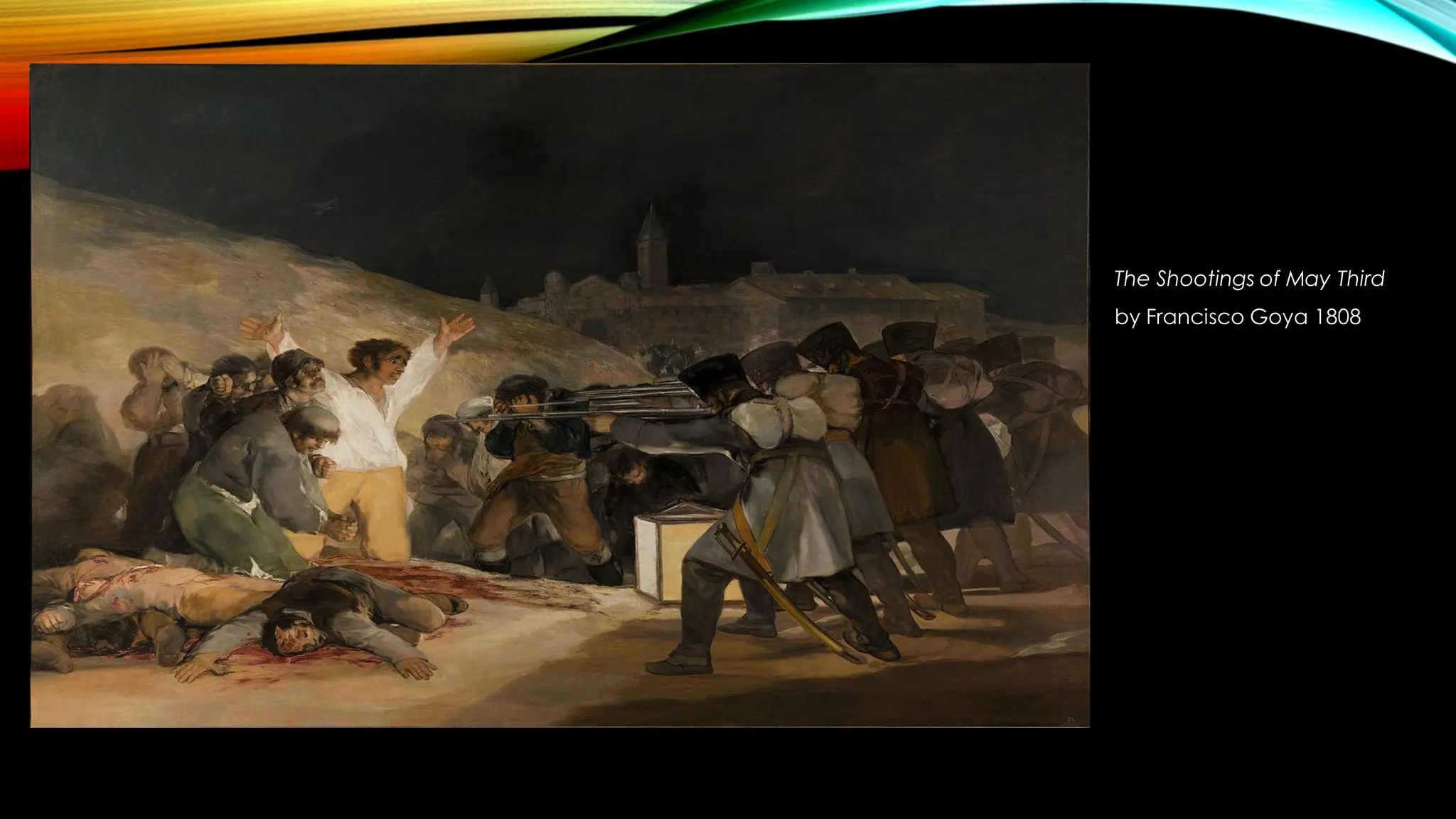
The Shootings of May Third
by Francisco Goya 1808
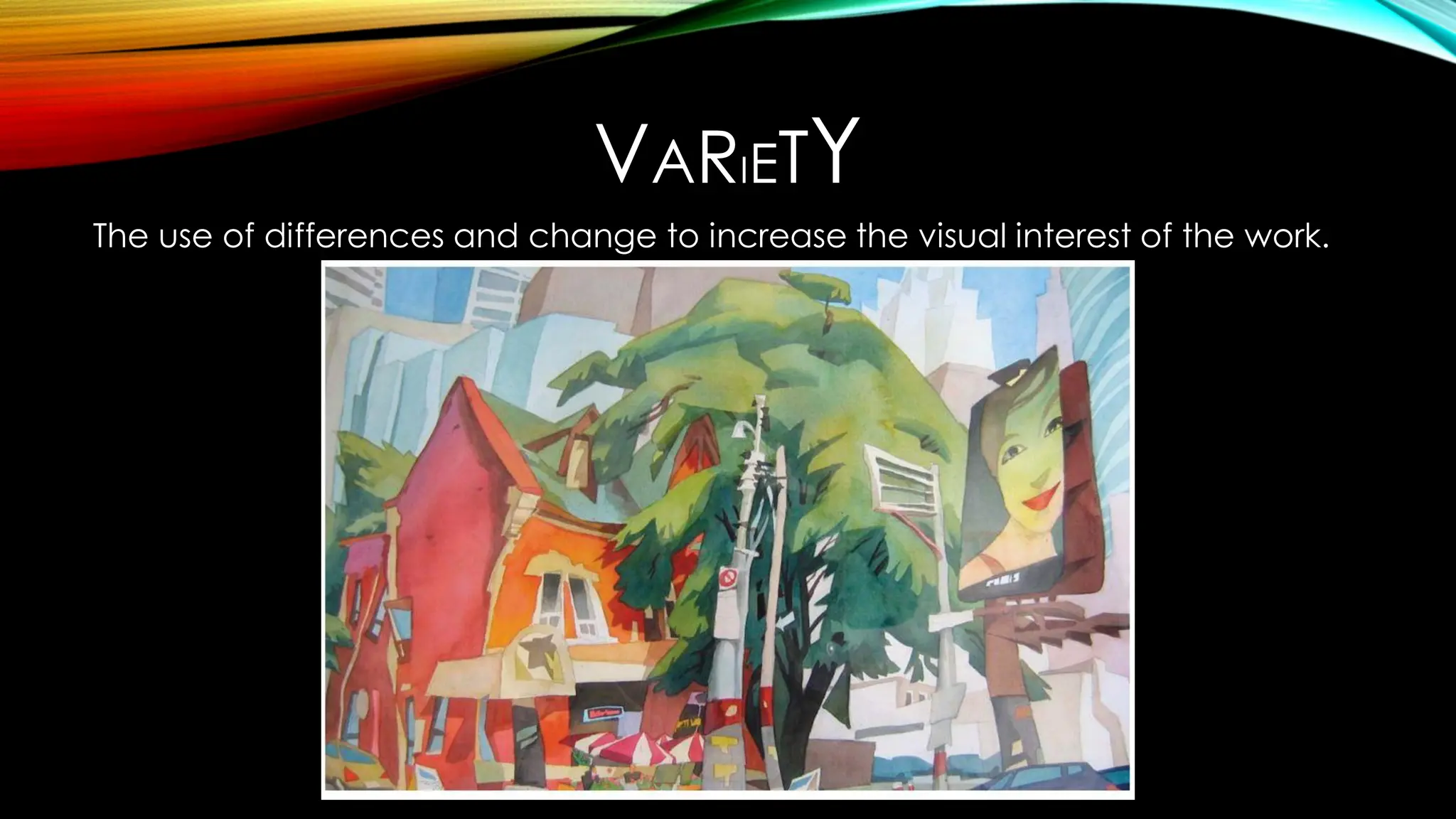
VARIETY
The use of differences and change to increase the visual interest of the work.
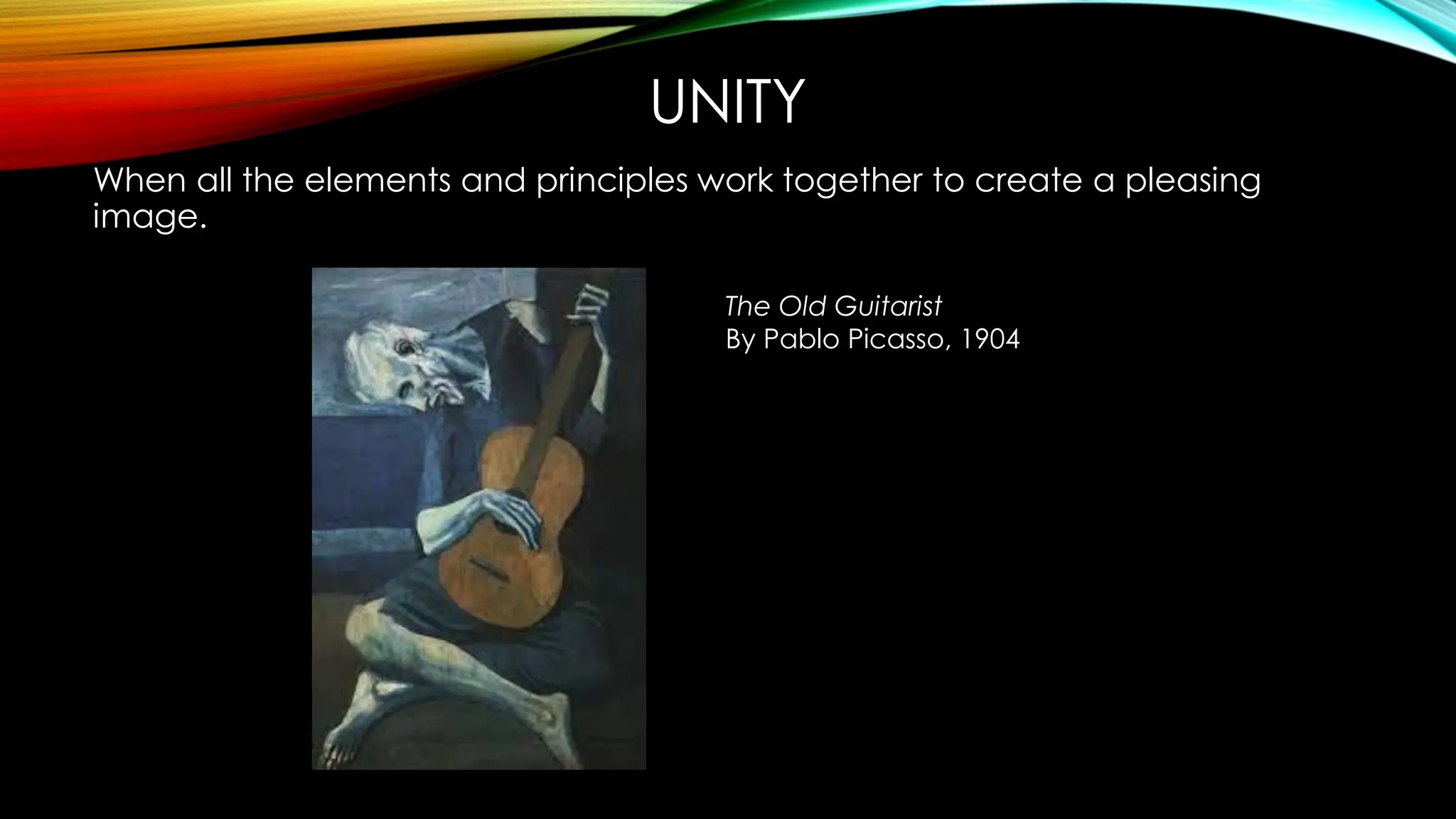
UNITY
When all the elements and principles work together to create a pleasing
image.
The Old Guitarist
By Pablo Picasso, 1904
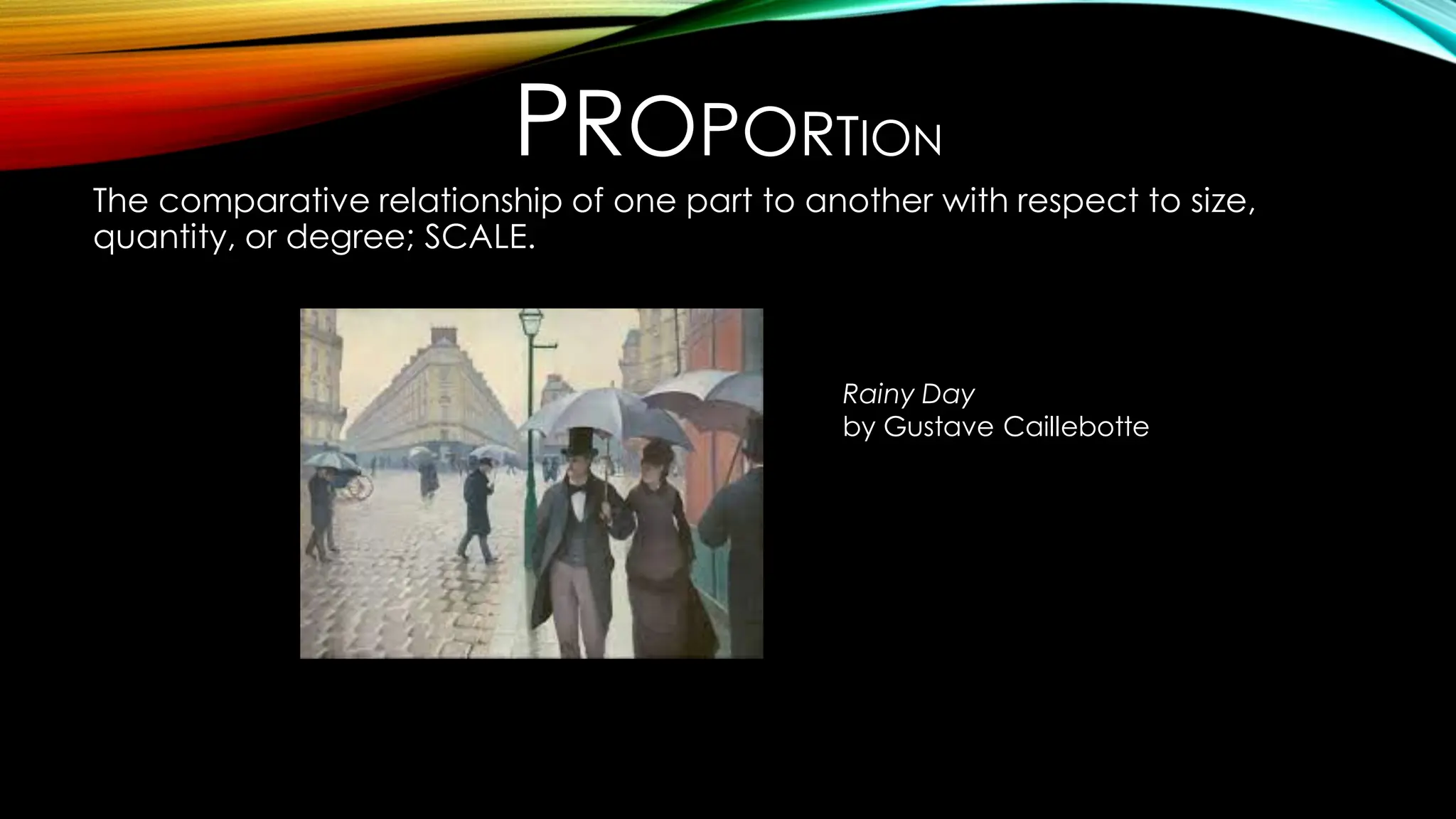
PROPORTION
The comparative relationship of one part to another with respect to size,
quantity, or degree; SCALE.
Rainy Day
by Gustave Caillebotte
RHYTHM
• A regular repetition of elements to produce the look and feel of movement.
• It is created when one or more elements of design are used repeatedly to
create a feeling of organized movement.
• To keep rhythm exciting and active, variety is essential.
Achieved through:
Repetition
Progression
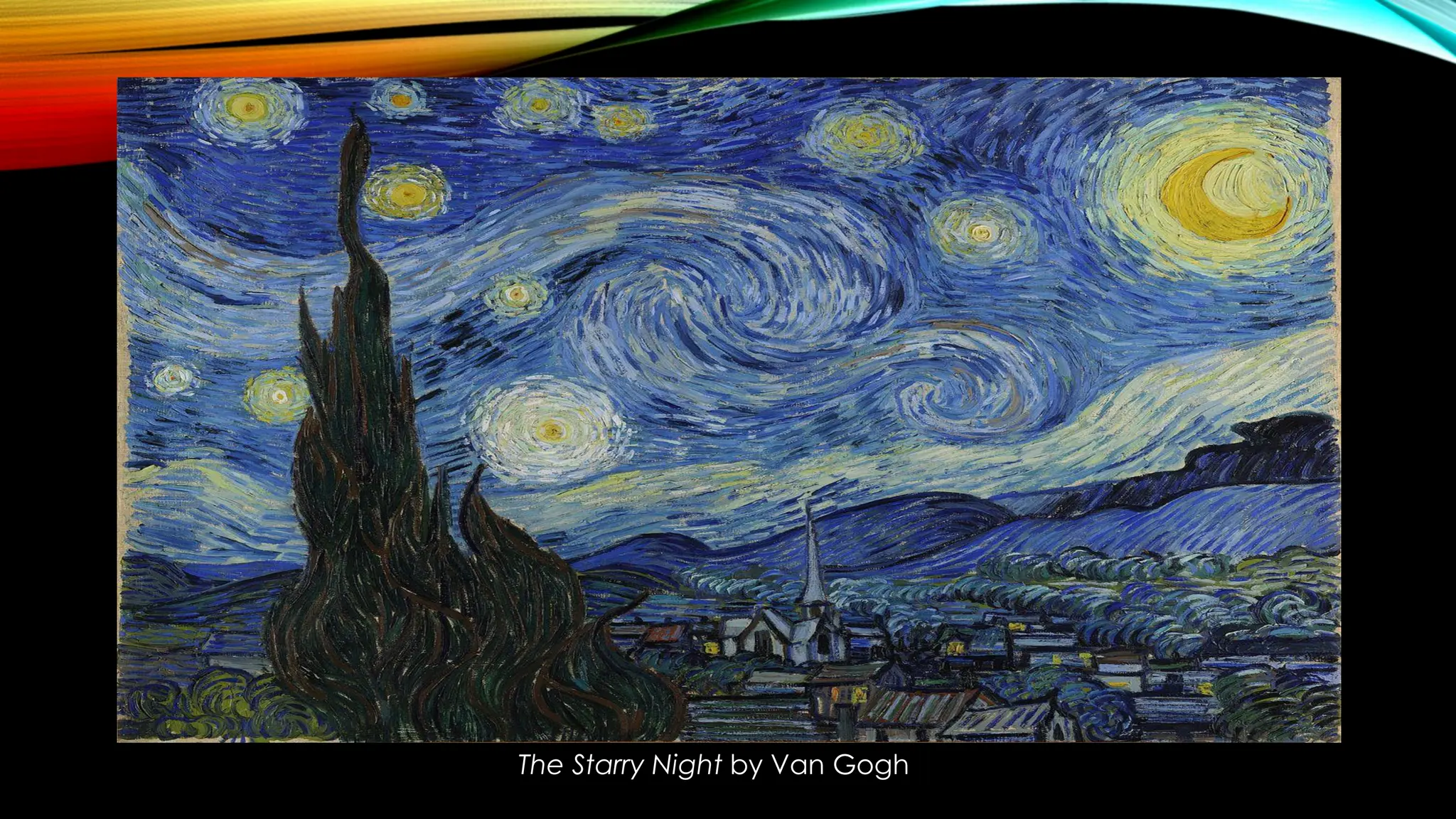
The Starry Night by Van Gogh
CONTRAST
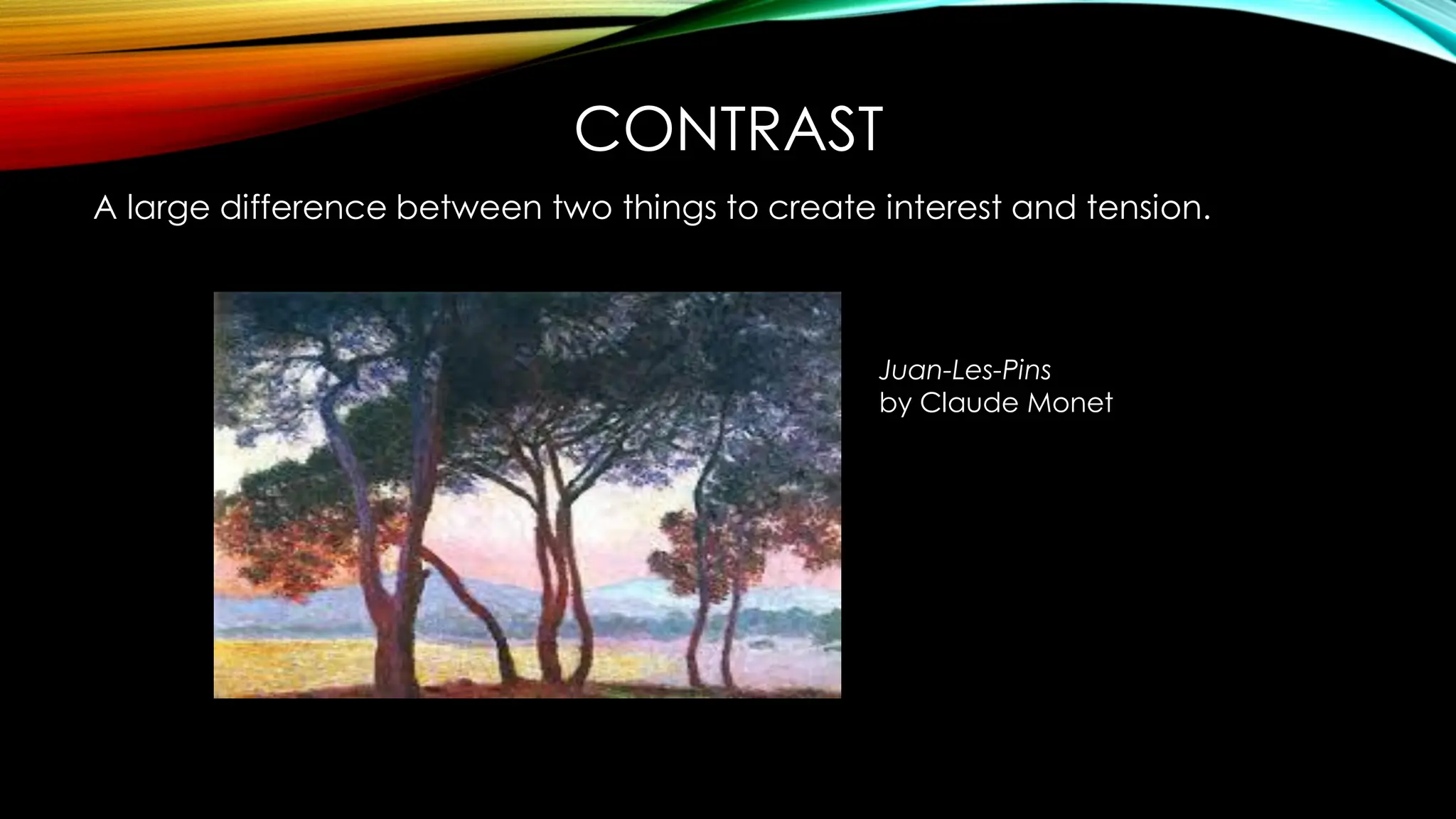
A large difference between two things to create interest and tension.
Juan-Les-Pins
by Claude Monet
THANK YOU FOR
LISTENING!

The-Elements-and-Principles-of-art-pdf--

  • 1.
    THE ELEMENTS OFART The building blocks or ingredients of art.
  • 2.
    LINE • A markwith length and direction. • A continuous mark made on a surface by a moving point. Linear pattern in Leonardo da Vinci’s Virgin and Child with St. Anne
  • 3.
    HORIZONTAL LINES • Suggesta feeling of rest or repose.
  • 4.
    VERTICAL LINES • Verticallines often communicate a sense of height.
  • 6.
    ZIGZAG LINES • Zigzaglines convey action and excitement, as well as restlessness and anxiety.
  • 7.
    CURVE LINES • Curvelines convey energy.
  • 8.
    COLOR • Consists ofHue (another word for color), Saturation (how bright or dull it is) and Value (how light or dark it is).
  • 10.
    WARM COLORS • Thecolors of fire; red, yellow, orange. They seem to come forward and tend to advance in space. COOL COLORS • Colors associated with water, wind and sky. They seem to move backwards and recede in space.
  • 11.
    NEUTRALS • Only includescolors not found on the color wheel, such as beige, brown, and gray. Includes neutral colors, like white, beige, brown, grey, or black.
  • 12.
    MEANING & SIGNIFICANCEOF COLOR ● Red – bravery, courage, passion, love ● Blue – nobility, justice, peace, wisdom, honesty ● Yellow - happiness, hospitality, cowardice, pride ● Green – fertility, nature, hope, envy ● Orange – growth, food ● Violet – majesty, mystery ● Brown - practicality ● Black – grief, sorrow ● White – purity, kindness
  • 13.
    SHAPE • An enclosedarea defined and determined by other art elements; 2- dimensional.
  • 14.
    FORM • A 3-dimensionalobject. • Something in a 2-dimensional artwork that appears to be 3-dimensional.
  • 16.
    SPACE • The distanceor area between, around, above, below, or within things. • In a two-dimensional drawing or painting, it refers to the arrangement of objects on the picture plane to create an illusion of depth. • The area around the primary objects in a work of art is known as negative space, while the space occupied by the primary objects is known as positive space.
  • 18.
    TEXTURE • The surfacequality or “feel” of an object, its smoothness, roughness, softness, etc. Textures may be actual or implied.
  • 19.
    THE PRINCIPLES OFART What we use to organize the Elements of Art, or the tools to make art.
  • 20.
    BALANCE • Is thedistribution of the visual weight of objects, colors, texture, and space. It is a state of equalized tension and equilibrium • The way the elements are arranged to create a feeling of stability in a work.
  • 21.
    SYMMETRICAL BALANCE The partsof an image are organized so that one side mirrors the other.
  • 22.
    ASYMMETRICAL BALANCE When oneside of a composition does not reflect the design of the other.
  • 23.
    EMPHASIS • The focalpoint of an image, or when one area or thing stands the most. • It is the part of the design that catches the viewer’s attention. Usually the artist will make one area stand out by contrasting it with other areas. The area could be different in size, color, texture, shape, etc. Artist Abdul Mari Imao – Sarimanok
  • 24.
    The Shootings ofMay Third by Francisco Goya 1808
  • 25.
    VARIETY The use ofdifferences and change to increase the visual interest of the work.
  • 26.
    UNITY When all theelements and principles work together to create a pleasing image. The Old Guitarist By Pablo Picasso, 1904
  • 27.
    PROPORTION The comparative relationshipof one part to another with respect to size, quantity, or degree; SCALE. Rainy Day by Gustave Caillebotte
  • 28.
    RHYTHM • A regularrepetition of elements to produce the look and feel of movement. • It is created when one or more elements of design are used repeatedly to create a feeling of organized movement. • To keep rhythm exciting and active, variety is essential. Achieved through: Repetition Progression
  • 29.
    The Starry Nightby Van Gogh
  • 30.
    CONTRAST A large differencebetween two things to create interest and tension. Juan-Les-Pins by Claude Monet
  • 31.